Honmyoji Temple sits on a forested hillside in western Kumamoto city, looking straight across the rooftops toward the towers of Kumamoto Castle. This Nichiren Buddhist complex is the head temple of the sect in Kyushu and the final resting place of Kato Kiyomasa, the warrior-lord who built the castle below. The site is free to enter, the views are excellent, and the 176-step stone staircase — the Munatsuki Gangi, or "feel-it-in-your-chest steps" — gives the whole visit a satisfying physical rhythm. This guide covers everything you need to arrive prepared in 2026.
Honmyoji Temple Kumamoto
The temple occupies a hillside at roughly the same elevation as the upper floors of Kumamoto Castle, creating a visual axis between the two landmarks. From the Munatsuki Gangi staircase you can watch the castle's white turrets emerge above the city grid as you climb — a deliberate design choice that links the two monuments across the city. The address is 4-13-1 Hanazono, Nishi-ku, Kumamoto-shi, 860-0072; the nearest tram stop is Honmyoji-iriguchi on the Kumamoto City Tram.
At the top of the stairs stands the mausoleum of Kato Kiyomasa, a sacred enclosure that requires respectful, quiet behavior. Continue up a further 130 steps beyond the grave and you reach Honmyoji Park, where a large statue of Kiyomasa surveys the city in his distinctive tall helmet. The park level offers the widest panoramic views and is often missed by visitors who turn back at the mausoleum.
The main temple courtyard contains the Hondo (main hall) and, to its right, a small treasure museum displaying personal artifacts of Kiyomasa, including one of his unusually tall ceremonial hats. The Niomon gate at the base of the complex deserves a pause: unlike most temple guardian gates in Japan, this one is a massive concrete structure, and the fierce Nio statues are positioned so high inside it that they appear small — an unnerving inversion of the usual scale.
History of Honmyo-ji Temple
Kato Kiyomasa founded Honmyoji in Osaka in 1585 to console the spirit of his deceased father, reflecting his deep personal commitment to Nichiren Buddhism. When Kiyomasa moved to Kumamoto in 1586 to serve Toyotomi Hideyoshi, he brought the temple with him and rebuilt it inside the castle grounds. After his death in 1611 his body was interred on the hill above, and the temple was rebuilt at its present site below the grave in 1614, following a fire that destroyed the castle-precinct building.
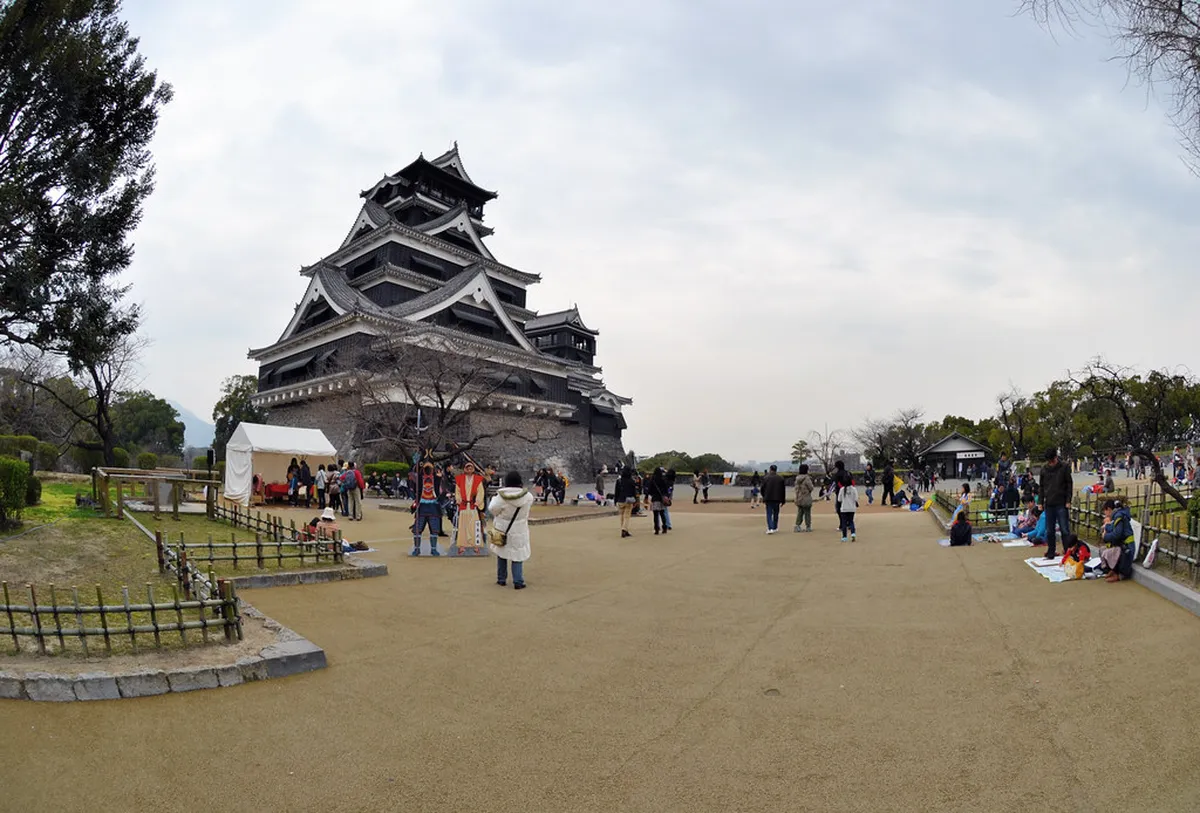
The current main hall dates from 1884. The previous structure burned during the Satsuma Rebellion of 1877, the final major samurai uprising in Japanese history. That event gives the temple an extra layer of Meiji-era drama: the rebellion's forces used the hill as a vantage point during the siege of the castle, and the fire that destroyed the hall was a direct consequence of the fighting. The rebuilding in 1884 preserved the architectural style while incorporating stone and tile work meant to be more fire-resistant.
Local reverence for Kiyomasa has never faded. Residents still leave offerings at the mausoleum, and the temple functions as an active parish community, not merely a tourist site. The Nichiren sect's head-temple status in Kyushu means monks from across the island attend training periods here, which gives the complex a more serious, lived-in atmosphere than many heritage sites of comparable size.
Quick Facts
Entrance to the temple grounds, staircase, mausoleum, and Honmyoji Park is free. The Treasure Museum charges ¥300 for adults, ¥200 for university and high school students, and ¥100 for elementary and junior high students. Groups of 20 or more receive a ¥100 discount per person. Groups of 10 or more may visit the museum on any day with advance reservation; otherwise it opens only on Saturdays, Sundays, and public holidays from 09:00 to 16:30 (closed 28–31 December).
Temple grounds are open daily from 06:00 to 17:00. The whole site — grounds, staircase, mausoleum, and park — takes 60 to 90 minutes at a relaxed pace. Parking is available nearby, though the slope makes it awkward for larger vehicles. Tram access via Honmyoji-iriguchi stop is the most straightforward option for visitors staying in central Kumamoto; from the stop it is a 10-minute walk northwest to the temple gates along Route 1.
- Address: 4-13-1 Hanazono, Nishi-ku, Kumamoto-shi 860-0072
- Phone: 096-354-1411
- Grounds: free, open daily 06:00–17:00
- Treasure Museum: ¥300 adults / ¥200 students / ¥100 children; weekends and holidays only, 09:00–16:30
- Tram: Honmyoji-iriguchi stop, then 10 min walk
- Steps to mausoleum: 176 (Munatsuki Gangi); further 130 to Honmyoji Park
| Area / Feature | Admission | Hours |
|---|---|---|
| Temple grounds, staircase, mausoleum, park | Free | Daily 06:00–17:00 |
| Treasure Museum (adults) | ¥300 | Weekends & holidays 09:00–16:30 |
| Treasure Museum (university/high school students) | ¥200 | Weekends & holidays 09:00–16:30 |
| Treasure Museum (elementary/junior high students) | ¥100 | Weekends & holidays 09:00–16:30 |
| Treasure Museum (groups 20+) | ¥100 discount per person | Any day with advance reservation |
Honmyo-ji Temple 本妙寺,熊本
The name translates roughly as the Temple of the Wonderful Dharma, a reference to the Lotus Sutra central to Nichiren practice. The complex spreads across multiple levels up the hill: the flat approach lined with stone lanterns and subsidiary temple buildings, the main courtyard with the Hondo, and the two upper zones leading to the mausoleum and park. Most of the subsidiary buildings on the lower slope hold services for parishioners and have limited interest for visitors, but the foliage surrounding them in autumn is dense and colorful enough to justify a slow walk.
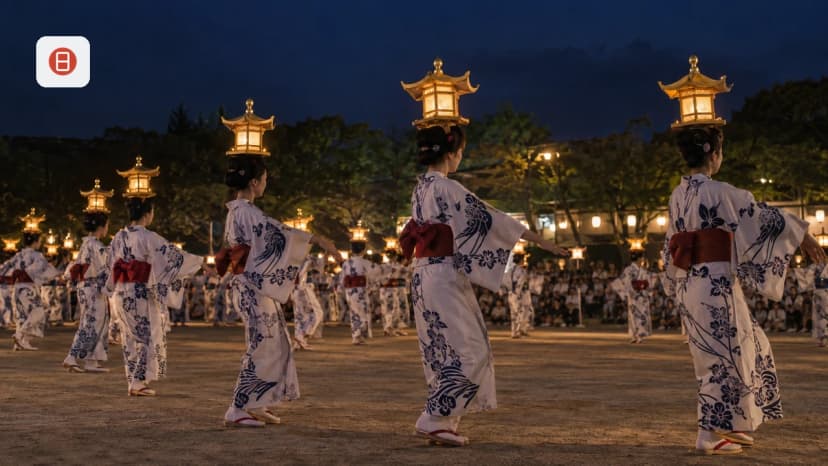
The most celebrated annual event is the Seishoko-matsuri festival, held on the last weekend of July. Thousands of participants carry paper lanterns up the staircase to the mausoleum, illuminating the entire hillside after dark. The event commemorates Kiyomasa's death anniversary and draws a large local crowd. If you are in Kumamoto in late July, this is one of the most visually striking festivals in Kyushu — and it costs nothing to watch from the lower slope.
A second key date is the Night-time Cherry Blossom Festival on the last weekend of March. The cherry trees along the approach are lit up, lanterns line the slope, and concerts are held in the courtyard. Visiting on either of these festival weekends requires arriving early in the evening and accepting crowds, but the atmosphere is worth the trade-off.
Plans like a pro. Thinks like you
Arrive by 08:00 on weekdays to have the staircase to yourself. Morning light from the east falls directly on the stone lanterns and makes the climb photogenic without a harsh overhead glare. Wear proper walking shoes — the stone steps are uneven and can be slippery after rain. Bring water in summer; humidity in July and August makes the climb genuinely tiring, and there are no vending machines on the upper slope.
Do not stop at the mausoleum and turn back. The extra 130 steps to Honmyoji Park and the Kiyomasa statue take 10 more minutes and the view from that level is noticeably wider. Most visitors miss this section entirely, which means you will have it almost to yourself even on weekends. From the park you can see both the castle and the distant volcanic profile of Mt. Aso on clear days.
Pair the temple with Kumamoto Castle on the same morning. Take the tram to Honmyoji-iriguchi first, visit the temple, then ride back to the Kumamoto Castle area for the afternoon. This order is preferable because the temple is less crowded early, while the castle grounds absorb midday visitors more easily. Both sites together take a full half-day at a comfortable pace.
Affordable omamori (good-luck amulets) are sold at the main hall for around ¥500–¥700 — notably cheaper than those at more touristic temples in Kyoto or Tokyo. They make practical souvenirs that take up no luggage space.
Do not stop at the mausoleum and turn back. The extra 130 steps to Honmyoji Park take only 10 more minutes and reward you with a panoramic view of both the castle and the distant volcanic profile of Mt. Aso on clear days — a view most visitors miss entirely.
Is Kumamoto Worth Visiting?
Kumamoto rewards travelers who want historical depth without the crowds of Kyoto or Nara. The city anchors a day-trip radius that includes the active volcano caldera of Mt. Aso and the white-water gorges of the Kuma River. Within the city itself the three major sites — castle, Suizenji Garden, and Honmyoji Temple — form a coherent cultural triangle that most visitors can cover in one full day or two relaxed days.
The local food scene is a draw independent of sightseeing. Horse meat sashimi (basashi) and karashi renkon (lotus root stuffed with mustard miso and deep-fried) are the signature dishes, both available cheaply at covered arcades like Shimotori. Prices are considerably lower than in the major Honshu cities, and the quality at mid-range restaurants is high. This combination of history, nature access, and food value makes Kumamoto one of the better-value stops in a Kyushu itinerary.
The 2016 earthquake caused significant damage to the castle, and ongoing reconstruction means some sections of the grounds remain cordoned off through 2026. The main keep has been restored and is open to visitors, but checking the castle's official site for the current access status before your visit avoids surprises.
The 176 stone steps are uneven and can be slippery after rain — wear proper walking shoes. In July and August, the humidity makes the climb genuinely tiring; there are no vending machines on the upper slope, so bring water. The Treasure Museum is only open on weekends and public holidays.
The Bottom Line
Honmyoji Temple is the most historically significant Buddhist site in Kumamoto and earns two to three hours of your itinerary. It is free, uncrowded on weekday mornings, and offers a direct line-of-sight connection to the castle that reinforces how the two landmarks were always meant to be read together. The Munatsuki Gangi staircase provides a physical challenge that is manageable for most adults but tough in summer heat — plan accordingly.
The Treasure Museum is worth the ¥300 if you have even a passing interest in samurai material culture; the Kiyomasa artifacts there are genuinely rare. The festival dates (July lantern procession, March night-time blossom event) are worth timing a visit around if your schedule allows. Outside those windows, the temple is simply one of the most peaceful places in the city to spend a quiet morning.
Where to Stay in Kumamoto
The area around Kumamoto Station is practical for travelers arriving by Shinkansen and planning day trips. Modern business hotels here are plentiful, prices are mid-range, and the tram network connects you to the castle and temple districts within 20 minutes. This neighborhood suits visitors with tight schedules who need to reach other Kyushu cities quickly.
Staying near Shimotori arcade in Chuo-ku puts you within walking distance of the castle, the covered shopping streets, and the main bar and restaurant area. Boutique hotels and older business hotels share the district, with rates that vary considerably. This is the better choice for first-timers who want walkability and evening dining variety.
The Suizenji district, east of the city center, suits travelers who prioritize quiet and prefer a traditional inn (ryokan) experience. The famous stroll garden is on the doorstep, and the area has a residential calm that the downtown lacks. Premium ryokan options are available here, though they require booking well in advance, especially during cherry blossom season.
How Many Days Should Your Itinerary Last?
One day covers the essentials: Kumamoto Castle in the morning, Honmyoji Temple in the afternoon (or reversed as suggested above), and dinner at the Shimotori arcade. This pace requires moving efficiently and skips Suizenji Garden, but works for transit visitors stopping over between Fukuoka and Kagoshima.
Two days allows a far more comfortable experience. Use the first day for the castle and temple, and the second for Suizenji Garden and a longer walk through the historic Shimotori and Sunroad Shinshigai arcades. An evening at an izakaya sampling basashi and karashi renkon adds a food dimension that one-day visitors almost always regret missing.
Three days opens up the Aso region. A day trip to the Aso caldera — active crater, grasslands, and Aso Shrine — is one of the most dramatic natural experiences in Japan and is straightforward from Kumamoto by local rail or rental car. Combine with a visit to Reigando Cave where Miyamoto Musashi wrote the Book of Five Rings, and you have a Kyushu itinerary with real depth.
My Favorite Things to Do in Kumamoto
No visit to the city is complete without walking the grounds of Kumamoto Castle. The main keep restoration finished in 2021, and the castle museum inside provides excellent English-language panels on Kiyomasa, the 2016 earthquake damage, and the engineering of the restoration. The castle and Honmyoji Temple together give you the full Kiyomasa story in one morning.
I also recommend spending an hour at Suizenji Garden. This 17th-century landscape garden miniaturizes the 53 stages of the Tokaido road around a spring-fed pond. The lakeside teahouse serves matcha and seasonal sweets for around ¥800. The pond stays crystal clear year-round because it is fed directly by groundwater from the Mt. Aso volcanic system.
For something more rugged and contemplative, Reigando Cave delivers. Miyamoto Musashi spent two years here in seclusion and wrote the Go Rin No Sho (Book of Five Rings) inside it around 1643. The cave is ringed by hundreds of stone Rakan statues and has an atmosphere entirely unlike any urban temple. It is about 25 minutes from the city center and easy to combine with Suizenji Garden on the same route.
If you have a fourth day, consider the rural Tsujunkyo Bridge to the southeast. This Edo-period stone arch bridge is famous for its engineered side-water jets, which discharge dramatically on scheduled dates. The surrounding rice terraces make it one of the most photogenic rural stops in Kyushu.
Frequently Asked Questions
How do I get to Honmyoji Temple from the city center?
You can take the Kumamoto City Tram to the Honmyoji-iriguchi stop. From there, it is a pleasant 10-minute walk to the temple gates. For more transit tips, check our guide to Kumamoto city travel. Taxis are also readily available from the main station for a faster trip.
Is there an entrance fee for the temple?
Entrance to the main temple grounds and the staircase is completely free for all visitors. Some of the smaller treasure houses or special exhibitions may charge a small fee. Most travelers find the free areas provide a full and satisfying experience. It is a great budget-friendly activity for history lovers.
Are there many steps to climb at Honmyoji?
Yes, there are exactly 176 stone steps leading up to the main mausoleum. The climb is steady but can be tiring in the summer heat. Most people take about 15 minutes to reach the top at a relaxed pace. There are plenty of spots to stop and rest along the way up.
What is the best time of year to visit?
Spring and autumn are the most popular times due to the cherry blossoms and fall foliage. The weather is also much more comfortable for climbing the stone steps during these seasons. Winter offers clear skies and the best views of the distant mountains. Summer can be very humid, so early morning visits are highly recommended then.
Honmyoji Temple earns its place on any Kumamoto itinerary through the combination of genuine historical depth, free access, and views that reward the climb. The Munatsuki Gangi staircase and the Kiyomasa connection give it a narrative spine that most free temples lack. Whether you arrive on a quiet weekday morning or during the July lantern festival, the experience is calibrated and unhurried in a way that the castle, for all its grandeur, cannot quite match.
Plan for 90 minutes minimum, wear the right shoes, carry water in summer, and do not stop at the mausoleum — keep going the extra 130 steps to Honmyoji Park. That upper level, overlooking the city with the castle in the distance, is the payoff the whole climb is building toward.
For the latest official information, see the Honmyoji Temple official site and Honmyoji Temple on Wikipedia.
For more Kumamoto trip planning, see our Kumamoto Attractions, Kumamoto 2-Day Itinerary, Kumamoto Day Trip Itinerary guides.