
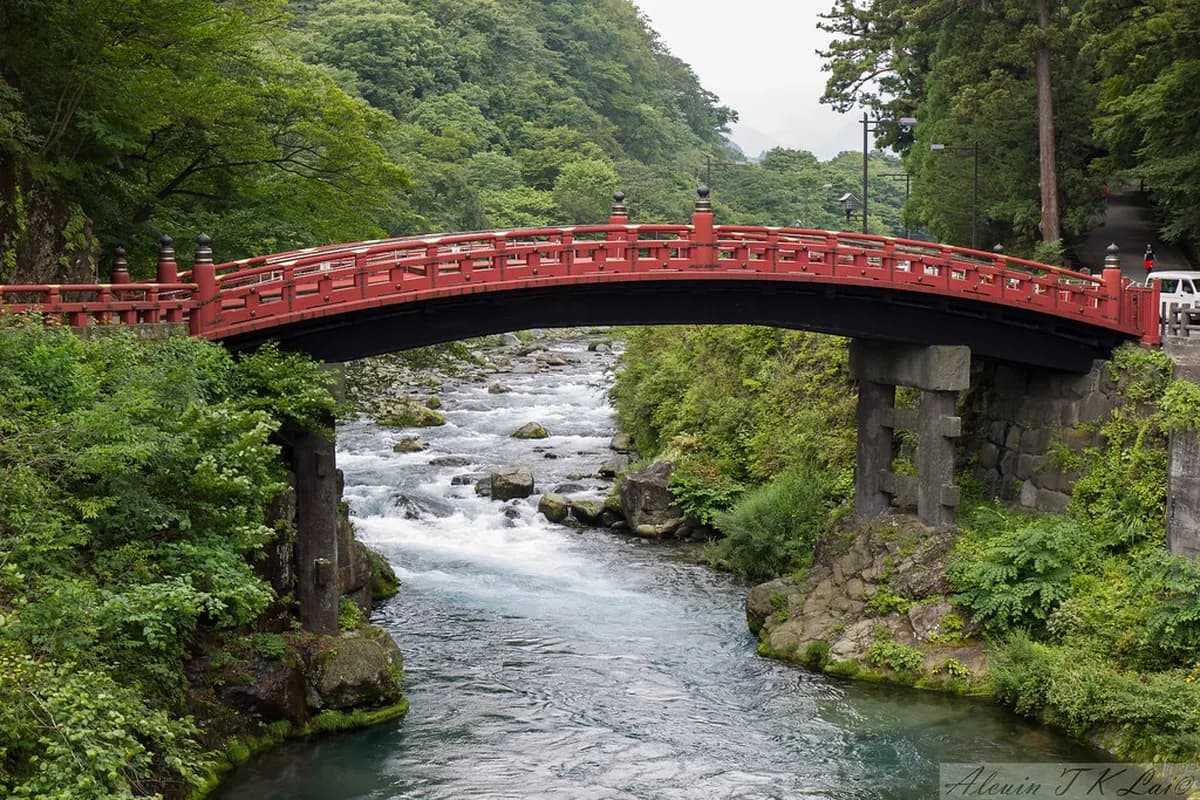
Shinkyo Bridge stands as one of the most iconic symbols of spiritual Japan. This vermillion-lacquered structure marks the entrance to the sacred shrines and temples of Nikko. Many travelers consider it a mandatory stop on any Nikko day trip itinerary. Our 2026 guide covers everything from ancient legends to the best spots for your camera.
The bridge arches gracefully over the rushing waters of the Daiya River. It serves as a beautiful introduction to the UNESCO World Heritage site nearby. You will find that the bridge offers different moods depending on the season and time of day. Understanding the history of this site adds deep meaning to your physical visit.
The Sacred History and Legend of the Snake Bridge
The origins of the bridge trace back to the legend of Shodo Shonin. He was the monk who founded the first mountain temple in Nikko during the 8th century. According to lore, he was unable to cross the fierce Daiya River during a storm. He prayed for help to complete his journey into the sacred mountains.
The god Jinja-Daiou appeared in response to the monk's sincere prayers. This deity released two massive snakes, one red and one blue, to form a path. Sedge grass grew over the snakes to create a stable crossing for the holy man. This miraculous event gave the bridge its original name, Yamasuge no Ja-bashi.
The current structure dates back to 1636 during the early Edo period. It was rebuilt to honor the spirit of the original legendary snake crossing. For centuries, only the Emperor and high-ranking generals could walk across these sacred planks. Today, the bridge remains a property of the Futarasan Shrine complex.
Why Shinkyo Bridge is Worth Visiting
Shinkyo Bridge is traditionally counted among Japan's Three Great Unusual Bridges. Its striking red color creates a perfect contrast against the deep green forest. The bridge earned its UNESCO World Heritage designation as part of the Nikko shrines. It represents a unique blend of religious significance and architectural beauty.
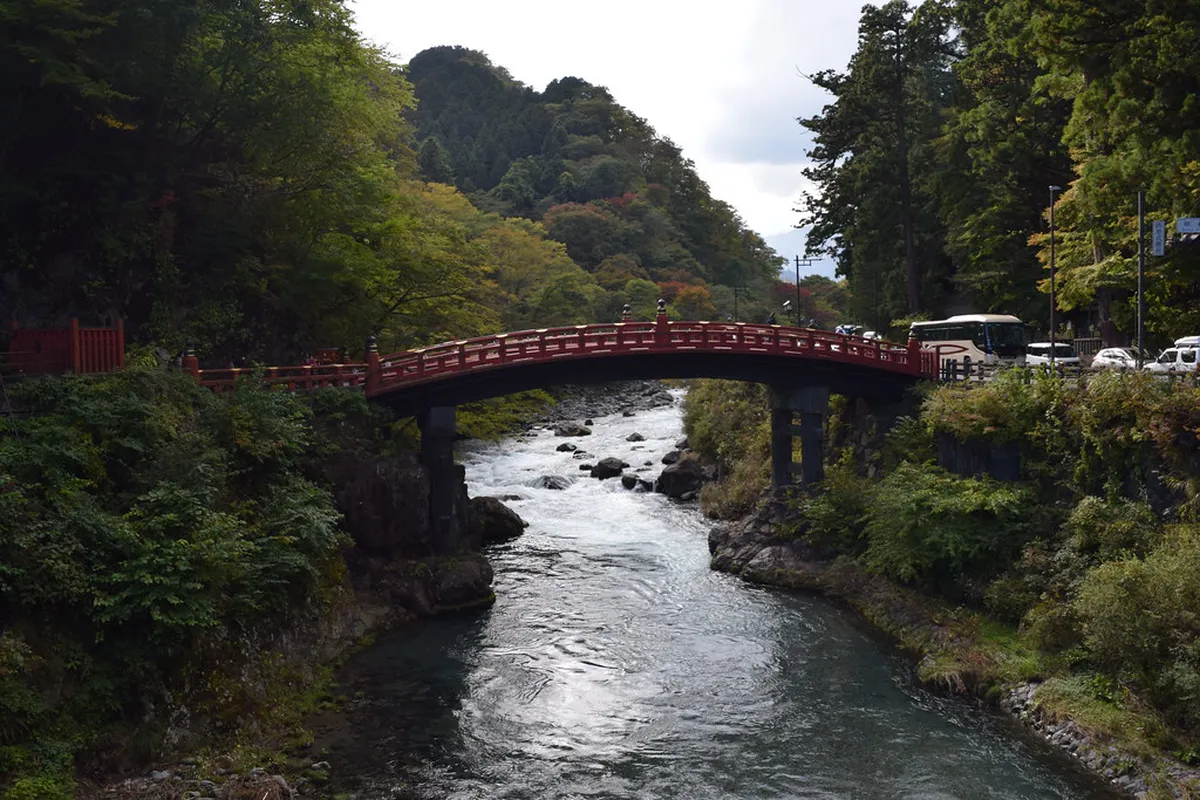
Visiting this site provides a rare look at traditional Japanese lacquering techniques. The curved design is meant to mimic the natural flow of the surrounding landscape. Photographers love how the bridge frames the mountains in the background. It acts as a physical and spiritual gateway to the mountain's inner sanctum.
The site offers a peaceful atmosphere despite its proximity to the main road. Listening to the river below provides a meditative start to your Nikko exploration. You can feel the weight of history as you stand near the ancient stone foundations. It is a landmark that defines the aesthetic identity of the entire region.
Best Time to Visit for Photography and Festivals
The best free photo angle is from the modern road bridge just downstream — you get the full vermillion arch framed by cedar forest without paying ¥300. Morning light from the east illuminates the lacquer without glare; arrive before 09:00 during autumn to avoid tour groups.
Autumn is widely considered the most spectacular season for a visit. The surrounding maple trees turn brilliant shades of orange and deep red. This peak foliage usually occurs from late October through early November. Plan to arrive early in the morning to avoid the largest tourist crowds.
Lighting is a critical factor for capturing the bridge's true colors. Morning light from the east illuminates the red lacquer without harsh shadows. Afternoon sun can cause significant glare on the water and the bridge surface. Position yourself on the modern road bridge for the most classic wide-angle shot, but keep clear of traffic and wait for gaps rather than stepping into the road.
A rare three-day illumination event typically takes place in late October. During this window, powerful lights showcase the bridge against the dark night sky. Check local 2026 event calendars to confirm the exact dates for this display. Night photography here requires a tripod to handle the low-light conditions.
Winter offers a different but equally stunning perspective of the sacred site. Fresh snow on the red railings creates a quiet and minimalist scene. Spring brings fresh greenery that makes the vermillion color pop with energy. Rainy days can also work well because the wet stone and river mist deepen the bridge's color, but the paid walkway may be more slippery.
Practical Visitor Information: Hours, Fees, and Crossing
| Option | Cost | Hours | Experience |
|---|---|---|---|
| Free roadside viewing | Free | 24 hours | Best wide-angle photo angle |
| Paid crossing (Apr–Oct) | ¥300 adults | 08:00–17:00 | Walk onto the sacred planks |
| Paid crossing (Nov–Mar) | ¥300 adults | 09:00–16:00 | Walk onto the sacred planks |
You can view the bridge for free from the adjacent sidewalk and road bridge. Most visitors choose this option to get the best wide-angle photographs. However, paying the small fee allows you to actually walk on the sacred structure. The paid visit is best understood as a short walk onto the bridge for close-up viewing, not a practical river crossing.
The ticket office is located on the east side of the bridge entrance. Staff members provide a small commemorative postcard with each paid entry. Note that the bridge may close during heavy snow or maintenance periods. Always check the weather forecast before committing to a paid crossing.
Even with a paid ticket you cannot cross to the opposite bank — the bridge ends partway and you must turn back. The bridge may also close during heavy snow or maintenance periods, so check conditions on the day if visiting in winter.
Accessibility is easiest from the roadside viewing areas because they are close to the bus stop and do not require joining the shrine approach. The forest paths toward the World Heritage shrines include slopes, stone surfaces, and stairs, so visitors with mobility needs should budget extra time or use the bus between stops where possible.
- Paid Bridge Crossing Option
- Cost: 500 Japanese Yen
- Hours: 8:00 AM to 5:00 PM
- Experience: Walking sacred planks
- Benefit: Close-up architectural details
- Free Roadside Viewing Option
- Cost: Free of charge
- Hours: Available 24 hours
- Experience: Distant landscape view
- Benefit: Best wide photography angles
How to Get to Shinkyo Bridge (Bus Stop 7)
The bridge is located about 1.5 kilometers from the main train stations. You can find the exact Shinkyo Bridge location on digital maps for easy navigation. Walking from the station takes about 20 minutes along a steady uphill incline. This route is lined with souvenir shops and local snack vendors, but it can feel longer with luggage or in summer humidity.
Most travelers prefer taking the World Heritage Sightseeing Bus. Board any bus heading toward the shrines and exit at Stop Number 7. The ride takes approximately 7 minutes from the Tobu Nikko Station. Check the Tobu Nikko Bus Timetable for the latest departure times.
Deciding between the Nikko Pass and individual tickets depends on your plans. The Nikko All Area Pass covers all bus rides and is very convenient if you are continuing to Lake Chuzenji, Kegon Falls, or multiple shrine-area stops. If you only visit the bridge and Toshogu, individual fares might be cheaper. Calculate your total trips to see if the pass offers real savings.
- Transit Decision Guide
- Walk from station: Best for light bags, mild weather, and travelers who want the shop-lined approach.
- Bus to Stop 7: Best for saving energy before the uphill shrine precinct.
- Nikko All Area Pass: Best when your 2026 plan includes bus-heavy sightseeing beyond central Nikko.
- Individual fares: Best for a short bridge and shrine visit near the station area.
Nearby UNESCO Spots: Toshogu Shrine and Beyond
Shinkyo Bridge serves as the perfect starting point for a UNESCO walking tour. A stone staircase near the bridge leads directly into the forest. This path takes you toward the magnificent Nikko Toshogu Shrine complex. The walk is steep but offers a beautiful immersion into the mountain atmosphere.
You can also visit the Futarasan Shrine which is the bridge's official owner. This shrine is dedicated to the three sacred mountains of the Nikko region. The forest paths between these sites are well-marked and easy to follow. Plan for about 10 to 15 minutes of walking between each major attraction.
Be sure to check the official Nikko Toshogu Shrine website for special closing dates. Some areas of the shrines may undergo periodic restoration work in 2026. Early morning visits help you experience the spiritual silence of the woods. Late afternoon visits often provide softer light for the ornate gold carvings.
A common mistake is treating Shinkyo Bridge as a quick roadside photo and then rushing uphill without checking shrine closing times. If you arrive after lunch, photograph the bridge first, then prioritize Toshogu before returning to the river for softer late-day light.
- The Forest Walking Route
- Start: Shinkyo Bridge entrance
- Stop 1: Rinno-ji Temple
- Stop 2: Toshogu Shrine
- Stop 3: Futarasan Shrine
Essential Japanese Phrases for Your Nikko Trip
Learning a few basic phrases can greatly enhance your travel experience. Most shrine staff speak limited English but appreciate attempts at Japanese. Politeness is highly valued when visiting these sacred religious sites. Carry a small phrasebook or use a translation app for complex questions.
Asking for directions is the most common need for international visitors. You might need to find the nearest bus stop or restroom facility. Use standard polite endings like 'desu' or 'masu' to sound more natural. A simple 'Arigato' goes a long way in showing your gratitude.
- Common Travel Phrases
- Where is: ...wa doko desu ka?
- How much: Ikura desu ka?
- Thank you: Arigato gozaimasu
- Excuse me: Sumimasen
- Is this bus going to Shinkyo: Kono basu wa Shinkyo ni ikimasu ka?
Frequently Asked Questions
What is the legend of the Shinkyo Bridge?
The legend tells of the monk Shodo Shonin who needed to cross the Daiya River. Two giant snakes appeared and formed a bridge covered in sedge grass to help him. This miraculous event established the site as a sacred gateway to the mountains of Nikko.
Is it worth paying the fee to cross Shinkyo Bridge?
Paying the 500 yen fee is worth it for travelers who want a spiritual experience. It allows you to walk on the bridge and see the architecture up close. However, if you only want a classic photo, viewing it for free from the road is sufficient.
How much time do you need at Shinkyo Bridge?
Most visitors spend about 15 to 30 minutes at the bridge. This provides enough time to take photos from multiple angles and read the historical plaques. If you choose to pay for a crossing, add another 10 minutes to your schedule for the experience.
What is the best bus stop for Shinkyo Bridge?
The best bus stop is Stop Number 7 on the World Heritage Sightseeing Bus line. It is located directly across from the bridge entrance for easy access. Buses run frequently from both the Tobu Nikko and JR Nikko train stations throughout the day.
Can you see Shinkyo Bridge for free?
Yes, you can see the bridge for free from the public sidewalk and the modern road bridge. This vantage point actually offers the best perspective for wide-angle landscape photography. You only need to pay if you wish to physically walk across the lacquered structure itself.
Shinkyo Bridge is more than just a beautiful photo opportunity in Tochigi. It represents the deep spiritual history and legendary beginnings of Nikko. Whether you pay to cross or view it for free, the bridge is unforgettable. Make sure to include it as your first stop before heading to Kegon Falls later.
Early morning visits will give you the most peaceful experience at the river. The sound of the water combined with the red bridge is truly magical. We hope this guide helps you plan a perfect visit to this sacred site. Enjoy your journey through one of Japan's most historic and beautiful regions. For comprehensive planning of your Nikko visit, refer to our Nikko itinerary and Nikko travel guide, as well as our Nikko attractions overview.
For authoritative information, refer to the Shinkyo Bridge official site and Shinkyo Bridge on Wikipedia.
