Dejima offers a rare look into Japan's era of isolation during the Edo period. This fan-shaped island served as the only window to the Western world for more than two centuries. You can explore beautifully restored buildings that showcase what daily life looked like in Nagasaki when the rest of the country was sealed shut. It remains a top choice for history enthusiasts who want to understand Japan's complicated relationship with global trade and ideas.
Is Dejima Worth Visiting?
History enthusiasts will appreciate the detailed exhibits on Dutch trade, Rangaku scholarship, and the strict protocols that governed life on the island. Walking through the gates feels like stepping into the seventeenth century. You can see how foreign merchants lived under close Japanese supervision and understand why the Dutch stuck around when every other European nation was expelled.
Families often enjoy the open-air museum atmosphere and various interactive displays. The site is compact and easy to navigate in under two hours. It sits conveniently near the city center, within walking distance of Nagasaki Chinatown and the waterfront, making it easy to combine with other sights.
At ¥1,100 for adults, Dejima is among the most affordable full-scale historical reconstructions in Kyushu. The site is open until 21:00 daily, which means you can visit after dinner and see the illuminated buildings at night — something very few open-air museums in Japan offer. Most visitors leave with a much clearer sense of how one tiny island reshaped the intellectual trajectory of an entire nation.
Dejima is open until 21:00 daily — arrive late afternoon to catch both the daylight exhibits and the evening illuminations for the price of one ticket. The buildings are lit dramatically after dark.
Why Was Dejima Built?
The Tokugawa shogunate ordered the construction of Dejima in 1634. The primary goal was to isolate Portuguese missionaries who were spreading Christianity throughout southern Japan. By confining foreigners to a single artificial island, the government could control all outside contact and maintain the national isolation policy known as Sakoku. This Dejima history reflects Japan's carefully orchestrated approach to controlling foreign influence during the isolationist era.
The Portuguese were expelled from Japan entirely in 1639. The Dutch East India Company then moved their operations from Hirado to Dejima in 1641. Unlike other Europeans, the Dutch agreed to focus solely on commerce rather than religion. This pragmatic arrangement allowed them to remain the only Westerners permitted in Japan for the next two centuries.
The fan shape was an engineering choice that maximized the shoreline for docking cargo ships while keeping the perimeter easy for guards to monitor. The island measured just 120 metres by 75 metres — roughly 15,000 square metres in total. Local Nagasaki merchants funded the construction and collected annual rent from the Dutch traders who occupied it. A single guarded bridge connected the island to the mainland, with soldiers posted at both ends around the clock.
How Dejima Changed Over Time
Dejima lost its island status during the rapid modernisation of the Meiji era. Land reclamation projects gradually surrounded the site with urban development, and the original canals were filled in to make room for new city streets. By the early 1900s, the historic trading post had been completely swallowed by Nagasaki's expanding harbour district, and the fan-shaped outline had vanished from all maps.
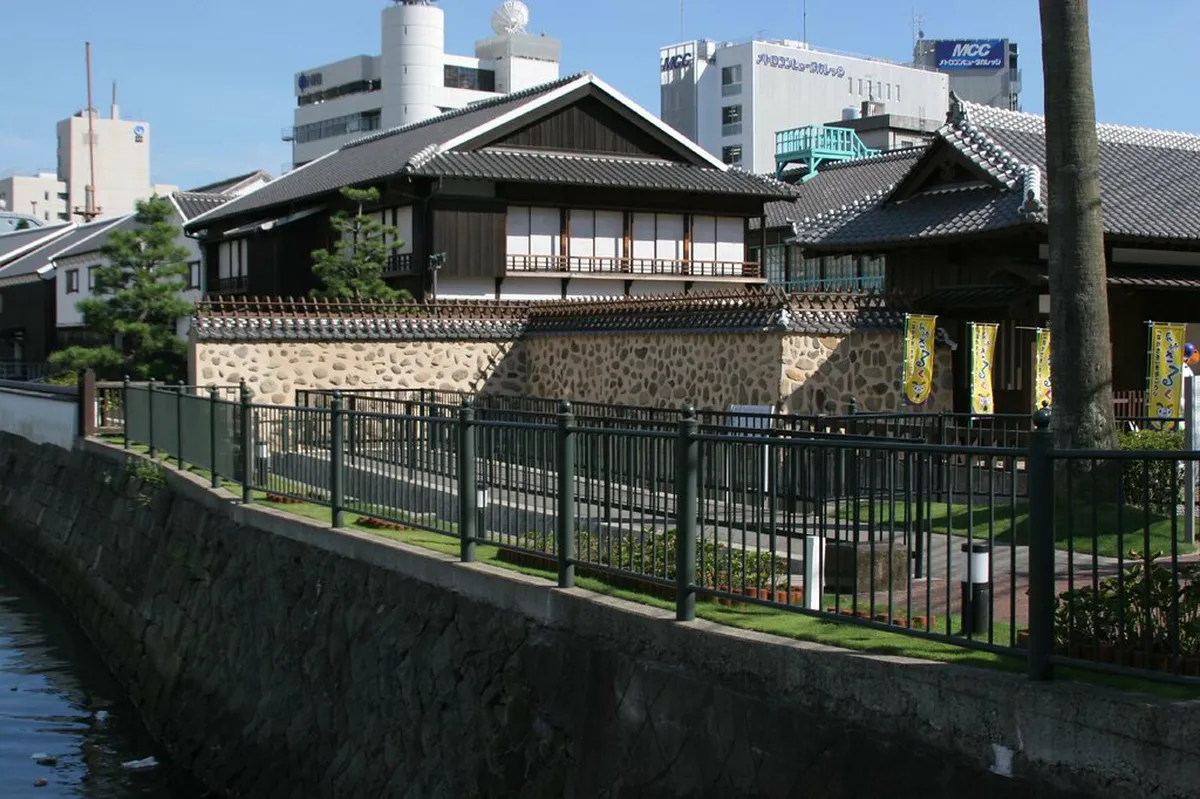
The site was designated a Japanese national historic site in 1922, but serious restoration only began in 1953. From 1996 onward, Nagasaki launched a major project to reconstruct the island's Edo-period buildings using archaeological excavations, original blueprints, and period documents. Builders replicated construction methods from the 1820s wherever possible, down to the timber joinery in the warehouses.
Today the site features 16 fully reconstructed buildings, with the project targeting 25 structures in total. The long-term goal is to re-dig the surrounding canals so Dejima once again sits as a true island in the city. If you visit in 2026, you may see active archaeological work or fresh reconstruction underway — signage throughout the site explains which phases have been completed and what remains ahead.
Life and Trade on Dejima Under Japanese Oversight
Life for the Dutch residents was strictly regulated. Traders were forbidden from leaving the island without official permission and a Japanese escort. High walls and guarded gates kept the foreign population separate from the city. Only authorised officials, interpreters, licensed merchants, and designated courtesans were permitted to cross the bridge.
Inside those walls, conditions were surprisingly comfortable. VOC employees kept chickens, cows, pigs, and at one point even housed an elephant. They imported beer, chocolate, and European vegetables like cabbage, introducing these goods to Japan for the first time. Trade focused on Dutch imports of silk, sugar, deer pelts, and scientific instruments in exchange for Japanese copper, silver, lacquerware, and porcelain. Every transaction was recorded meticulously by government tax collectors stationed on the island.
Japanese interpreters were the essential gatekeepers of all knowledge passing in and out of Dejima. They translated business deals and scientific texts for the shogunate, and over time became Japan's first experts in Western medicine, astronomy, and geography. The Opperhoofd — the chief Dutch factor — was required to make an annual journey to Edo to pay tribute to the Shogun. These long journeys across Japan effectively turned the post's leader into a roving ambassador for European ideas.
The Dutch East India Company's Role in Transmitting Western Knowledge
The Dutch East India Company, known as the VOC, dominated global trade routes in the seventeenth century. Their presence in Nagasaki made the city a hub for Rangaku — literally "Dutch learning." Scholars from across Japan traveled to Nagasaki to study translated Dutch texts on anatomy, astronomy, chemistry, and military science. This movement gave Japan a crucial scientific foundation it would draw on heavily during the Meiji Restoration.
From the late eighteenth to the early nineteenth century, VOC employees sold over 10,000 foreign books to Japanese buyers. Rangaku scholars translated these texts, built replica scientific instruments, and conducted experiments based on Dutch methods. Innovations like the electrostatic generator, hot air balloon technology, and early photography all entered Japan via Dejima. You can see examples of these translated texts and replica instruments in the museum exhibits today.
Between 1641 and 1847, a total of 606 Dutch ships called at Nagasaki, peaking at around seven ships per year before 1671. In the early decades the Dejima post earned profits of 50 percent or more per voyage. Even as trade volumes declined across the eighteenth century, the cultural and intellectual exchange only intensified — making Dejima far more than a trading post.
Key Dutch Figures: Opperhoofd, Scholars, and Physicians
Three physician-scholars left an especially lasting impact on Japan. German naturalist Engelbert Kaempfer lived on Dejima from 1690 to 1692 and later published the highly influential History of Japan in 1727 — the first systematic account of Japanese society for European readers. Swedish botanist Carl Peter Thunberg served as Dejima physician from 1775 to 1776, teaching Western medicine to local students and assembling major botanical collections that eventually reached European institutions.
Philipp Franz von Siebold stayed from 1823 to 1829, establishing a medical school near the island that trained dozens of Japanese physicians. He amassed plant and cultural collections celebrated in Europe to this day. He was eventually expelled after allegedly collecting secret maps of Japan — a reminder that the Dutch presence on Dejima was always conditional on obeying strict rules.
One of Dejima's stranger historical footnotes came during the Napoleonic Wars. When France occupied the Netherlands, Dejima briefly became the only place on earth still flying the Dutch flag — the sole point where Dutch sovereignty technically continued. The Opperhoofd Hendrik Doeff made that declaration himself and ran the post for years without resupply ships, a story that illustrates just how resilient and diplomatically peculiar the Nagasaki arrangement was.
What to See at Dejima Today
The Chief Factor's Residence is the most impressive building on the site. It features a distinctive blend of Japanese architecture and European interior design, with a large banquet hall that illustrates how the Opperhoofd entertained Japanese officials. The Capitan Room offers the best photography opportunities — the combination of Dutch furnishings and tatami-framed doorways is striking and difficult to find anywhere else in Japan.
The Dutch Trading Warehouse near the original wharf area shows how sugar, silk, and medicinal goods were stored and catalogued. Exhibits explain the specific VOC trade routes and the weighing protocols used by Edo-period customs officials. Authentic artifacts recovered during archaeological excavations are displayed throughout, including ceramic fragments, trade ledgers, and personal effects belonging to former residents.
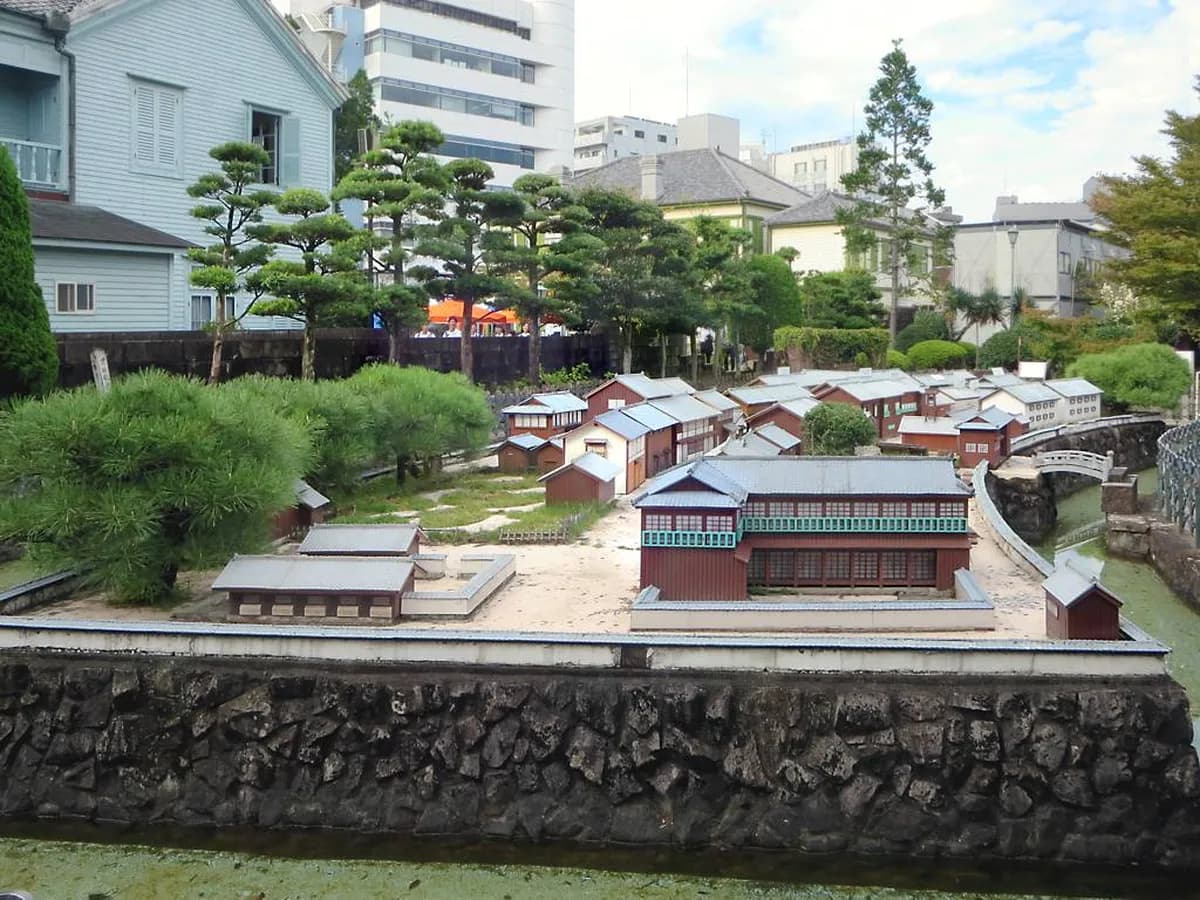
Begin your visit with the scale model near the entrance. It shows the full fan-shaped island in relation to Nagasaki harbour and makes it much easier to orient yourself before you explore the reconstructed streets. English signage is thorough throughout the complex, and audio guides are available for rent in English. Do not attempt to leave and return: re-entry is not permitted once you exit, so plan to see everything in a single visit.
Re-entry is not permitted once you exit Dejima. If you plan to eat at an outside restaurant, do so before entering — the on-site restaurant closes at 18:00.
- The Chief Factor's Residence — the largest building on site, with a banquet hall and Dutch-furnished living quarters in the center of the island.
- Dutch Trading Warehouse — timber-framed storage building near the wharf, packed with trade goods and customs records from the active trading era.
- The Sea Gate — the reconstructed southern cargo entrance where ships once unloaded directly onto the island, offering views across the former moat area.
- Scale model room near the entrance — a detailed miniature of Dejima at its 1820 peak, essential for understanding the layout before you explore.
Entry Fees and Opening Hours
Admission in 2026 is ¥1,100 for adults and ¥550 for high school, junior high, and elementary school students. The site is open daily from 08:00 to 21:00, with last entry at 20:40. That late closing time is deliberate — the illuminated reconstruction after dark is genuinely atmospheric, and visiting late afternoon lets you catch both the daylight exhibits and the evening lighting for the price of a single ticket.
| Visitor type | Admission (¥) | Hours |
|---|---|---|
| Adult | 1,100 | 08:00–21:00 (last entry 20:40) |
| High school / junior high / elementary student | 550 | 08:00–21:00 |
| Museum shop | — | 09:00–18:00 |
| Restaurant | — | 11:00–18:00 |
You can purchase tickets at the main entrance gate. The site accepts cash, WeChat Pay, and Alipay. There is a museum shop open from 09:00 to 18:00 and a restaurant open from 11:00 to 18:00 inside the complex. Wheelchair rental is available on-site, making Dejima one of the more accessible historical sites in Kyushu for visitors with mobility needs. Note that re-entry is not permitted, so finish your lunch before going in if you plan to eat outside.
Early morning weekday visits are quietest — school groups typically arrive mid-morning. Late afternoons on weekdays are also calm and offer the bonus of seeing the buildings as the sun sets over the harbour. Check the official website before visiting to confirm any seasonal schedule changes or special exhibitions in 2026.
A Quick History Your Kids Will Actually Find Interesting
The simplest way to explain Dejima to children: Japan once decided it did not want foreigners around. For roughly 220 years during the Edo period, the country closed itself off from almost the entire Western world — except for one tiny island in Nagasaki harbour where Dutch traders were permitted to stay, but could not leave without permission. Children inevitably ask whether it was a prison. It was not exactly, but the question leads to a great conversation about trade, power, and how countries deal with each other.
Kids will enjoy the scale model at the entrance, the interactive touchscreens with trade games and Edo-period quizzes, and the costumed staff in period dress. At several points on the site, children can try on replica Dutch merchant clothing or Edo-period Japanese attire and take photos in front of the historic buildings. This costume experience tends to be the standout memory for younger visitors. The museum shop sells Dutch-themed toys, castella cake, and local sweets.
Children aged six and up get the most from the exhibits. The site is stroller-friendly on all outdoor paths, though individual buildings have traditional wooden steps. If your children are old enough to understand the concept of isolation, Dejima will reward them. If they are younger, the costumes, the open spaces, and the staff interactions are still entertaining enough to justify the visit.
Getting to Dejima
Reaching the site is straightforward using the Nagasaki tram system. Take tram line 1 and exit at the Dejima stop — the entrance gate is a two-minute walk from the platform. The tram is the easiest option for most visitors, and a single-day tram pass offers good value if you plan to visit multiple sights across the city.
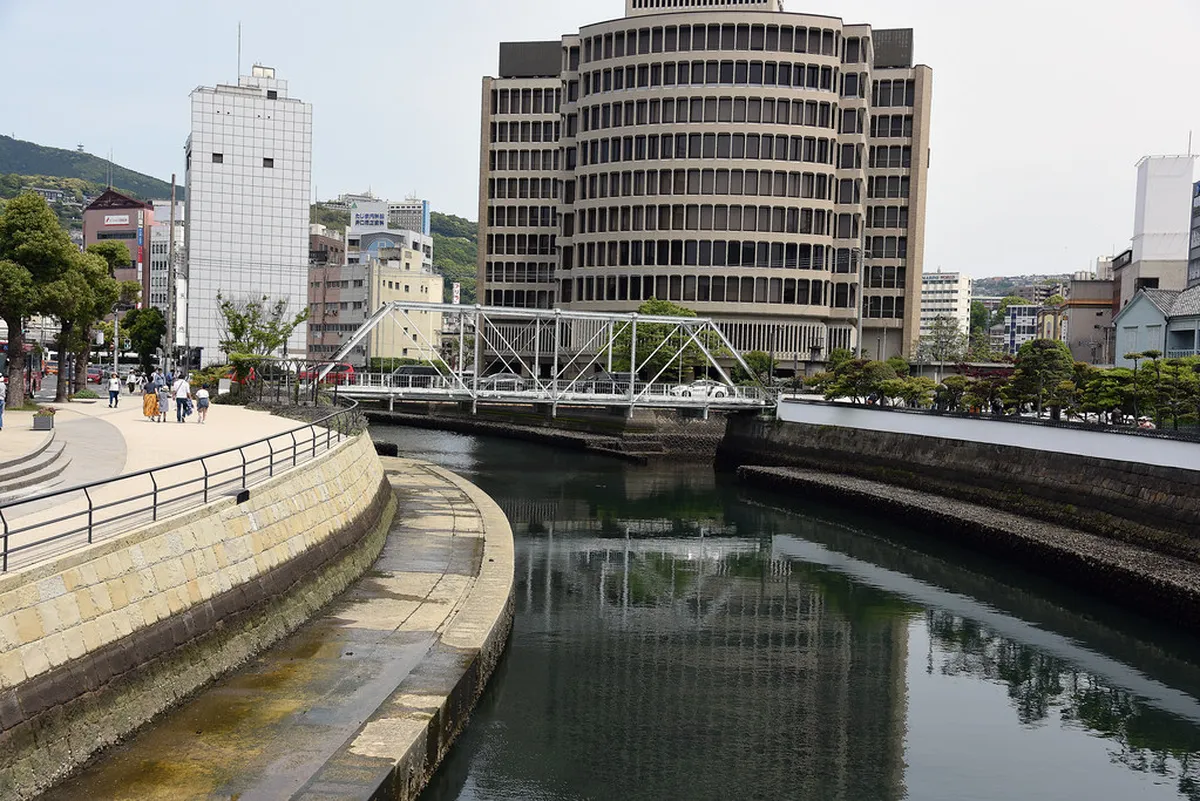
The island sits within walking distance of many downtown hotels and is very close to the famous Megane Bridge and the modern waterfront area. Walking from the waterfront allows you to see the harbour approach that Dutch ships once used. If you are arriving from Fukuoka by shinkansen, change at Hakata to the limited express Kamome service into Nagasaki Station, then board the tram from there.
The city's compact layout makes it easy to combine Dejima with other nearby sites on the same day. You might also enjoy the historic atmosphere of Glover Garden in the afternoon, which covers a different chapter of Nagasaki's international history and offers excellent panoramic harbour views.
Combining Dejima with Nagasaki Chinatown and Nearby History Spots
Nagasaki Shinchi Chinatown is a 10 to 15 minute walk from Dejima and makes the ideal lunch stop. It is the oldest Chinatown in Japan, and the local dishes are excellent. Order champon — a rich milky noodle soup loaded with seafood and vegetables — or sara udon, crispy noodles with a similar topping. Both are Nagasaki specialties that children and adults tend to enjoy.
The historical connection is worth explaining to older visitors. During Japan's period of isolation, Chinese traders were also permitted in Nagasaki, confined to their own separate settlement. This made Nagasaki uniquely multicultural among Edo-period Japanese cities — two groups of foreigners, strictly controlled but present, while the rest of the country was sealed. Seeing both sites on the same day makes this parallel vivid in a way that reading about it alone cannot.
After lunch, consider walking toward Hollander Slope for its charming Western-style hillside houses, or take the tram to the Nagasaki Atomic Bomb Museum to cover a completely different chapter of the city's history. Together, Dejima, Chinatown, and one further site form a coherent full day in Nagasaki without feeling rushed.
Frequently Asked Questions
How long should I spend at Dejima?
Most visitors find that ninety minutes to two hours is sufficient for a full tour. This timeframe allows you to explore the reconstructed buildings and read the museum exhibits. It is easy to combine this visit with other Nagasaki attractions nearby.
Is Dejima free for children?
Admission is not free for children, but the fees are very low for younger visitors. Elementary and junior high students typically pay around 100 yen for entry. Very young children under school age can usually enter the site for free. Check the gate for any seasonal family discounts.
Can you wear a kimono at Dejima?
Yes, wearing a kimono is a popular activity for many tourists visiting this historic site. You can find rental shops nearby that offer traditional outfits for a few hours. Walking through the Edo-period streets in a kimono makes for excellent photography opportunities during your trip.
Can you use a stroller at Dejima?
The site is generally stroller-friendly, though some historic buildings have narrow entrances or small steps. You might need to leave your stroller outside when entering certain reconstructed wooden houses. Most of the main paths are flat and easy to navigate with wheels.
Dejima remains an essential stop for anyone wanting to explore the deep history of Nagasaki. The combination of reconstructed architecture, authentic artifacts, and evening illuminations makes it one of the most complete historical experiences in Kyushu. Plan your visit early on a weekday for the quietest experience, or arrive late afternoon to catch both the daylight exhibits and the lit-up buildings after dark.
You can easily pair your visit with a trip to the Nagasaki Atomic Bomb Museum for a full picture of the city across different eras. Other great spots include Mount Inasa for stunning evening views of the harbour. Enjoy your journey through Japan's fascinating past and vibrant present.
For a deeper dive into the region, consider exploring our comprehensive Nagasaki attractions guide or planning your visit with our Nagasaki itinerary article for a well-rounded city experience.
Useful links: official Dejima site and Wikipedia.