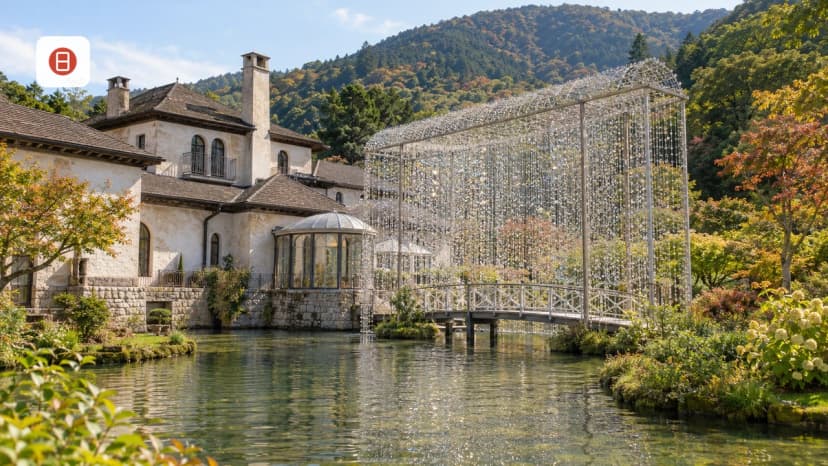
The Hakone Open-Air Museum is the easiest Hakone art stop to recommend to first-time visitors: it pairs large outdoor sculptures with mountain views, indoor galleries, family-friendly installations, and a hot-spring footbath.
Use this 2026 visitor guide to decide whether it fits your route, how much time to allow, what to prioritize on the grounds, and what mistakes to avoid when combining it with Lake Ashi, Owakudani, or Hakone Shrine.
Why Visit the Hakone Open-Air Museum
Opened in 1969 as Japan's first open-air museum, the museum is known for outdoor sculpture lawns, landscaped walking paths, the Picasso Pavilion, and the stained-glass Symphonic Sculpture. The appeal is not only the collection; it is the way modern sculpture sits against Hakone's hills, mist, autumn color, and changing light.
The museum works well for travelers who want a softer Hakone day than the full ropeway-and-cruise loop. It is also one of the area's stronger rainy-day choices because the outdoor grounds still feel atmospheric in mist, while indoor galleries give you breaks from bad weather.
Quick Facts for 2026
- Best for: first-time Hakone visitors, art lovers, families, photographers, and travelers who want an attraction close to the Hakone Tozan Railway.
- Time needed: allow 2-3 hours for a normal visit, or half a day if you want the Picasso Pavilion, children's areas, footbath, cafe break, and unhurried photography.
- Opening hours: The museum is open daily from 9:00 to 17:00, with last admission at 16:30.
- Same-day admission: Same-day admission is ¥2,000 for adults, ¥1,600 for university and high school students, and ¥800 for middle and elementary school students.
- Online tickets: Online ticket prices are lower: ¥1,800 for adults, ¥1,400 for university and high school students, and ¥600 for middle and elementary school students.
- Nearest station: Chokoku-no-Mori Station on the Hakone Tozan Railway.
How to Get There
The simplest route is by Hakone Tozan Railway to Chokoku-no-Mori Station, then a short walk to the entrance. From Hakone-Yumoto, ride the Tozan Railway toward Gora; from Gora, the museum is just one stop away by train or a short local bus ride depending on your route.
If you are coming from Tokyo, most visitors travel through Odawara or Hakone-Yumoto. The Limited Express Romancecar from Shinjuku is convenient for a direct paid seat to Hakone-Yumoto, while budget-focused travelers can use regular Odakyu or JR connections and transfer onward. The Hakone Free Pass is most useful when the museum is part of a wider Hakone loop rather than your only stop.
Do not plan the museum as a quick detour between far-apart Hakone sights. Local transfers are scenic but slow, and the mountain railway can be busy on weekends, holidays, hydrangea season, and autumn foliage dates.
What to See First
Start with the open-air galleries while your energy is high. The museum's lawns and paths are the main reason to come, and the sculptures are best enjoyed at walking pace rather than treated like checklist photo stops.
The Symphonic Sculpture is the signature experience: a stained-glass tower with a spiral staircase and views from the top. Visit early in your route if you want cleaner photos, because it becomes a natural bottleneck when tour groups and families arrive.
The Picasso Pavilion is the indoor anchor of the museum and a useful weather break. It gives the visit more depth than sculpture photos alone, especially if you are deciding between this museum and other Hakone art stops such as Pola Museum of Art, Okada Museum of Art, or Hakone Venetian Glass Museum.
Families should leave time for the children's installations and the open grounds. Some works are interactive, but not every sculpture is touchable, so check signs before children climb or enter anything.
Best Time to Visit
Morning is the safest time for a smoother visit, especially if you want photos without the densest foot traffic. It also protects your schedule if you plan to continue to Gora, Owakudani, or Lake Ashi afterward.
Spring and autumn are the most comfortable seasons for the outdoor galleries. Summer can still be enjoyable, but the open lawns, stairs, and exposed paths make heat and sudden rain more noticeable. Winter is quieter and often clearer, though you should dress for cold mountain air.
Rain is not an automatic reason to cancel. Mist can make the sculptures and mountains more dramatic, but you should bring waterproof shoes or an umbrella and spend more time in the indoor galleries. For strong rain, high winds, or transport disruptions, check official operating updates before committing to a tight Hakone loop.
Open Air Galleries
The open-air galleries are spread across landscaped grounds rather than one straight path. Give yourself permission to wander, but keep an eye on your exit direction if you have a train, bus, or hotel check-in time after the visit.
Henry Moore's sculptures are among the defining outdoor works, and the museum also features modern and contemporary pieces that use scale, slope, and mountain backdrop as part of the experience. The best photos usually come from stepping back and including the surrounding hills rather than shooting only the object.
The official museum site is the best place to confirm current exhibitions and facility notices before you go: Hakone Open-Air Museum official site.
Accessibility and Mobility Notes
The museum is more accessible than many mountain attractions in Hakone, but it is not completely flat or barrier-free. Expect outdoor distances, slopes, and some areas where visitors with limited mobility may need extra time.
Wheelchair users and travelers who have difficulty with stairs should ask staff for the elevator route instead of using the main escalator approach. Some indoor or elevated features may not be fully accessible, including the upper experience of the Symphonic Sculpture, so prioritize the outdoor galleries and accessible indoor areas if mobility is a concern.
If you need station staff assistance at Chokoku-no-Mori Station, build in a buffer and avoid returning at the last minute. Accessibility support on mountain transport can be more limited than in major Tokyo stations.
How It Fits a Hakone Itinerary
For a one-day Hakone trip, choose the museum if art, gardens, and a slower pace matter more than completing every segment of the Hakone loop. A practical day is Hakone-Yumoto to the museum, lunch around Gora, then either continue toward Owakudani if weather is clear or stay in the Gora area for another museum or onsen.
For a two-day trip, the museum fits especially well on the second day before returning to Tokyo. This keeps your first day open for Lake Ashi, Hakone Shrine, Owakudani, and any ryokan check-in timing.
Nearby combinations that make sense:
- Art-focused half day: Hakone Open-Air Museum plus Gora Park or Hakone Museum of Art.
- Classic first visit: museum in the morning, then Owakudani and ropeway if weather and time cooperate.
- Relaxed overnight: museum after breakfast, then an onsen or cafe stop before leaving Hakone.
- Family route: museum plus the Hakone Tozan Railway ride, keeping Lake Ashi for another day if children tire easily.
Common Mistakes to Avoid
The biggest mistake is underestimating travel time inside Hakone. Distances look short on a map, but trains, buses, cable cars, and ropeways are part of the experience and rarely feel fast when you are rushing.
Do not arrive close to last admission unless you only want a brief look. The museum is open daily from 9:00 to 17:00, with last admission at 16:30, but a late arrival leaves too little time for the grounds, Picasso Pavilion, and any rest stops.
Do not build your whole decision around Mount Fuji views. The museum is worthwhile even when Fuji is hidden, while Lake Ashi and the ropeway are more dependent on visibility. On cloudy days, this can be the smarter Hakone anchor.
Finally, avoid treating the brief's unrelated Tokyo and Kanazawa event topics as planning advice for this page. They are not relevant to the Hakone Open-Air Museum visitor decision and should not replace local transit, weather, accessibility, and itinerary guidance.
Is It Worth Including on a Short Itinerary?
Yes, if you want one Hakone stop that combines art, gardens, family appeal, and easy railway access. It is especially worth it for visitors staying in Gora, travelers who have already seen Lake Ashi, or anyone who wants a less weather-dependent alternative to Fuji-view chasing.
Skip or shorten it if your only goal is the classic postcard Hakone route: ropeway, Owakudani, Lake Ashi cruise, and Hakone Shrine. In that case, the museum can make the day too crowded unless you start early or stay overnight.
Frequently Asked Questions
When is the best time to visit the Hakone Open-Air Museum?
The best time is generally spring (April-May) or autumn (October-November). These seasons offer pleasant weather for walking outdoors and vibrant natural scenery. Avoid peak summer crowds if possible, but the museum is enjoyable year-round.
How much time should I allow for the Hakone Open-Air Museum?
Plan to spend at least 2-3 hours exploring the museum's extensive grounds and indoor galleries. Art enthusiasts might want to allocate half a day to fully appreciate all the exhibits. The museum is quite large, so comfortable shoes are essential.
Is the Hakone Open-Air Museum suitable for children?
Yes, the museum is very family-friendly, with many interactive sculptures and spaces for children. The 'Symphonic Sculpture' and various play structures are popular with younger visitors. It offers a unique and engaging experience for all ages.
How do I get to the Hakone Open-Air Museum?
The museum is easily accessible by public transport. Take the Hakone Tozan Railway to Chokoku-no-Mori Station, then walk to the entrance. Many visitors use the Hakone Free Pass for convenient travel throughout the area.
What should travelers avoid when planning the Hakone Open-Air Museum?
Avoid squeezing it between too many distant Hakone stops. Plan enough time for the outdoor galleries, indoor exhibitions, and mountain transport connections, especially on weekends or in peak foliage season.
Is the Hakone Open-Air Museum worth visiting in bad weather?
Often, yes. The outdoor sculptures can look atmospheric in mist or light rain, and the indoor galleries provide breaks. In heavy rain or transport disruption, confirm current conditions before traveling.
Which Hakone Open-Air Museum visitor guide option fits first-time visitors?
First-time visitors should use a simple 2-3 hour plan: start with the outdoor sculptures, visit the Symphonic Sculpture, continue to the Picasso Pavilion, then decide whether to add Gora or the wider Hakone loop.
The Hakone Open-Air Museum is one of Hakone's strongest attraction choices because it does not depend on a single view or one short photo stop. It rewards slow walking, works for families, and remains useful when mountain weather changes your original plan.
For the smoothest 2026 visit, arrive earlier in the day, allow at least 2-3 hours, check current notices on the official museum site, and pair it with nearby Gora or one major Hakone loop segment rather than trying to do everything at once.
For authoritative information, refer to the Hakone Open-Air Museum on Wikipedia.
Planning the rest of your trip? See our things to do in Hakone guide and Hakone itinerary, or read up on where to stay in Hakone.