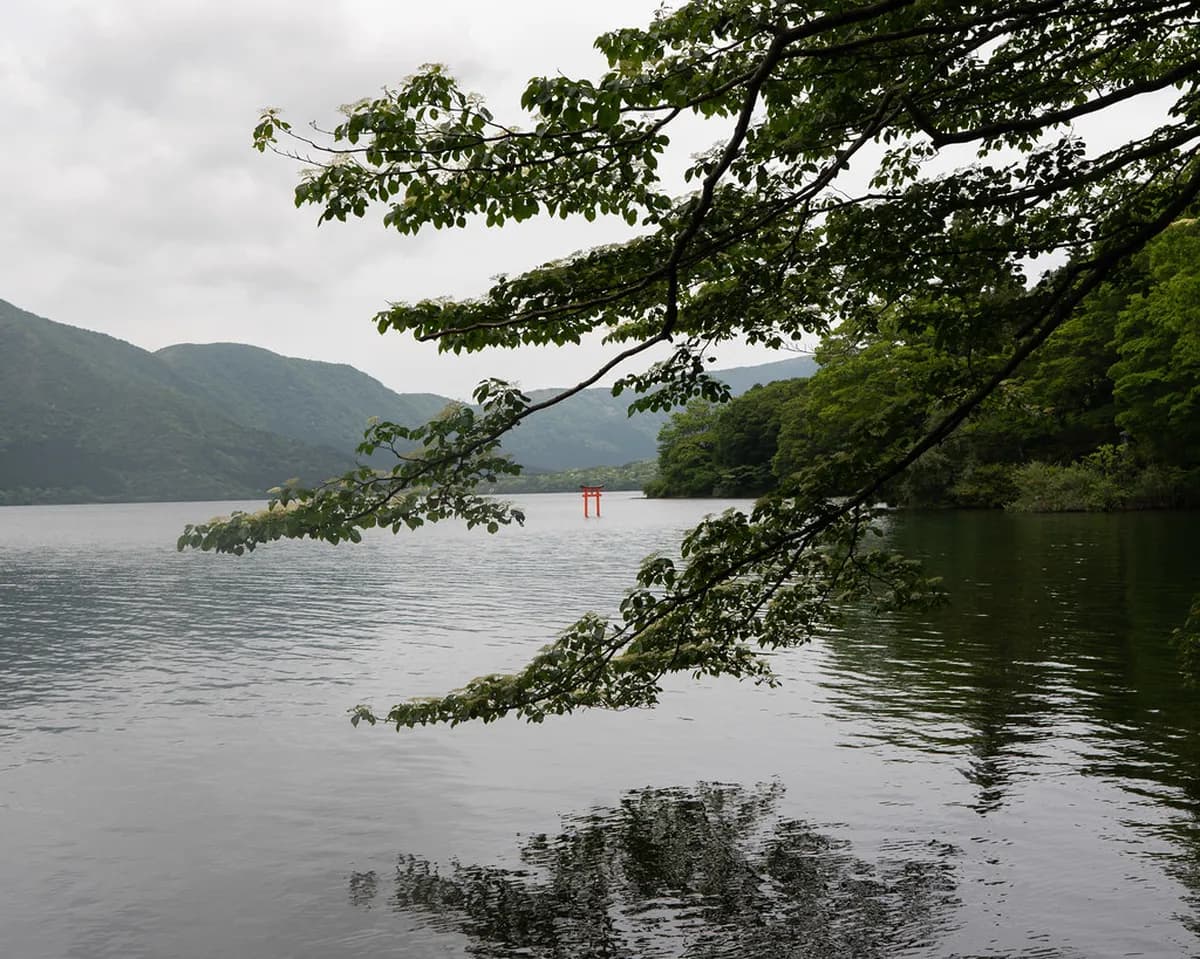
Hakone Shrine stands as a spiritual beacon amid Hakone's forested mountains and Lake Ashi scenery. This ancient Shinto shrine is best known for the vermillion Heiwa-no-Torii rising from the lake, but the cedar-lined approach, main sanctuary, and mountain setting are just as important to the visit.
This 2026 Hakone Shrine visitor guide is written for travelers planning the attraction as part of a Hakone day trip, overnight stay, or Lake Ashi route. It covers history, current visitor basics, access choices, crowd strategy, accessibility notes, and the common planning mistakes that make the shrine feel rushed.
Use it to decide when to arrive, how to connect the shrine with Moto-Hakone, Lake Ashi, Owakudani, and the wider Hakone loop, and how to visit respectfully. The goal is a smooth, practical visit that still leaves time to slow down in one of Hakone's most atmospheric sacred places.
Hakone Shrine: History and Spiritual Significance
Hakone Shrine, or Hakone-jinja, has a history stretching back more than 1,200 years. Secondary sources commonly cite its founding in 757, and the shrine is closely tied to older mountain worship around Mount Komagatake before its lakeside site became the main focus for most visitors.
The shrine is deeply associated with good fortune, safe travel, business success, and protection. Many Japanese visitors still treat it as a Hakone power spot, so the atmosphere is closer to an active place of worship than a sightseeing monument.
Enshrined here are three deities, including Ninigi-no-Mikoto, a grandson of the sun goddess Amaterasu. The mountain, lake, cedar forest, and lakeside torii all reinforce the shrine's role as a guardian site for travelers moving through the Hakone region.
Planning Your Visit: Essential Information
For 2026 planning, separate the shrine grounds from the staffed facilities. Shrine grounds: open daily, no closing days. Amulet/goshuin counter: 8:15-17:00. Treasure Hall (Homotsuden): 9:00-16:00.
There is no entrance fee to access the main shrine grounds. Admission is ¥500 for adults and ¥300 for children, open 9:00-16:00. Plan about 60 to 90 minutes for the torii gate, cedar approach, main shrine, and a relaxed walk back toward Moto-Hakone; allow two hours if you want photos, goshuin, or the Treasure Hall.
The best time to visit is early morning on a weekday, especially if the lakeside torii photo is important. Midday bus and cruise arrivals bring the biggest groups, while weekends, Japanese public holidays, Golden Week, Obon, autumn foliage weekends, and the New Year shrine-visiting period can feel very busy.
| Visitor Need | Best Timing | Why It Works |
|---|---|---|
| Quiet prayer and forest atmosphere | Early morning | Fewer tour groups and softer light on the cedar approach |
| Torii photos | Morning or late afternoon | Shorter queues than midday and better lake light |
| Mount Fuji views nearby | Clear winter mornings | Air is often clearer around Lake Ashi, though visibility is never guaranteed |
| Easy transport connections | Late morning to mid-afternoon | More frequent onward buses and cruise departures around Moto-Hakone |
Getting to Hakone Shrine: Transportation Guide
Reaching Hakone Shrine usually starts with Tokyo to Odawara or Hakone-Yumoto, then a local transfer to Moto-Hakone. The Odakyu Romancecar is a comfortable direct option from Shinjuku to Hakone-Yumoto, while the Tokaido Shinkansen is faster to Odawara if you are starting near Tokyo or Shinagawa Station.
From Odawara or Hakone-Yumoto, the Hakone Free Pass can simplify local travel if you plan to ride several buses, trains, ropeways, or sightseeing boat trips on Lake Ashi. If Hakone Shrine is your only stop, compare the pass against individual fares before buying.
The easiest arrival point is Moto-Hakone. From Moto-Hakone Port, the lakeside path to the torii gate and shrine entrance usually takes 10 to 15 minutes on foot. Buses also stop near Hakone Jinja-iriguchi, which is helpful in rain or when traveling with limited mobility.
| Route | Best For | Tradeoff |
|---|---|---|
| Romancecar to Hakone-Yumoto, then bus to Moto-Hakone | First-time visitors from Shinjuku | Simple, scenic, and usually easier than changing trains several times |
| Shinkansen to Odawara, then bus toward Moto-Hakone | Travelers near Tokyo Station or Shinagawa | Fast to Odawara, but local bus time still matters |
| Hakone loop via Gora, ropeway, Lake Ashi cruise, then Moto-Hakone | Full-day sightseeing | Memorable, but it can leave too little time at the shrine if you start late |
| Bus or taxi from Hakone-Yumoto | Families, luggage, or poor weather | More direct, though road traffic can slow the trip on busy days |
- From Tokyo to Odawara or Hakone-Yumoto: choose the train based on your departure station, budget, and whether you want speed or fewer transfers.
- Within Hakone: buses are the most direct way to Moto-Hakone, while the train, cable car, ropeway, and cruise route works better as a scenic circuit.
- From Moto-Hakone to the shrine: walk the lakefront if conditions are good, or use the nearest bus stop if stairs, rain, or crowds are a concern.
What to See: Key Attractions and Highlights
The most iconic sight at Hakone Shrine is the Heiwa-no-Torii, often called the Gate of Peace, standing in Lake Ashi. This vermillion gate provides a strong contrast against the water, forest, and mountains, and it is the photo spot that creates the longest queue.
After the lakeside gate, ascend the stone steps to the main shrine complex, nestled among towering cedar trees. The route is part of the experience: it moves from lake views to a shaded forest approach before opening into the prayer area.
Beyond the main shrine, look for the dragon hand-washing fountain, the smaller sub-shrines, and the Treasure Hall (Homotsuden), which displays artifacts connected to Hakone Shrine's history. The Treasure Hall helps add context if you want more than a quick photo stop.
Hakone Shrine Reviews and Visitor Experience
Visitors consistently praise Hakone Shrine for its lake scenery, cedar forest, and calm atmosphere. Many reviews focus on the beauty of the torii gate in Lake Ashi, but the main shrine grounds are often the more rewarding part for travelers who linger after taking photos.
The main complaint is crowding at the lakeside torii. The line can move slowly because many visitors take individual photos at the water's edge, so build in extra time or enjoy the gate from the side if you do not need the classic centered shot.
Travelers often combine a visit to Hakone Shrine with a Lake Ashi cruise or a trip to Owakudani. This works well for a full Hakone day, but the shrine feels better when it is not squeezed between tight transport connections.
Integrating Hakone Shrine into Your Hakone Itinerary
For a day trip from Tokyo, start early and make Hakone Shrine one of your first major stops around Lake Ashi. A practical route is Tokyo to Hakone-Yumoto or Odawara, bus to Moto-Hakone, Hakone Shrine, Lake Ashi cruise, then Owakudani if ropeway conditions and time allow.
If you have two days, spend one day around the shrine, Lake Ashi, Moto-Hakone, and the old checkpoint area. Use the second day for the Hakone Open-Air Museum, Gora, an onsen, or the ropeway section, which gives the trip a calmer pace.
Families often enjoy pairing the shrine with a pirate ship cruise on Lake Ashi, because the walk from Moto-Hakone is short and easy to understand. Nature-focused travelers can connect the shrine with Mount Komagatake or lake viewpoints, but should check weather before committing to view-heavy plans.
Nearby Attractions and Things to Do in Hakone
Just a short walk from Hakone Shrine, you'll find the Hakone Checkpoint Museum. This historical site recreates an Edo-period checkpoint, offering a glimpse into Japan's past. It showcases the strict travel regulations of that era.
Lake Ashi itself provides numerous activities, including scenic boat rides. You can also explore the charming town of Moto-Hakone, with its shops and restaurants. Many visitors enjoy renting paddle boats to get closer to the torii gate.
Other popular attractions include the Hakone Open-Air Museum, known for its impressive sculptures. Owakudani, the 'Great Boiling Valley,' offers volcanic hot springs and unique black eggs. Consider a visit to a traditional ryokan for an authentic Japanese experience in Hakone.
Photography Tips for Hakone Shrine
The iconic torii gate in Lake Ashi is best photographed in the early morning or late afternoon. Golden hour light can warm the red gate and water, while overcast weather often gives softer detail on the forest and shrine buildings.
To capture the torii gate without a long wait, arrive soon after sunrise or take a wider side-angle photo instead of joining the centered queue. From the water, a sightseeing cruise gives a different view of the gate and the lakeshore, though it will not replace the classic shore-level composition.
Inside the main shrine grounds, focus on the stone steps, cedar trees, lanterns, and architectural details. Avoid blocking worshippers at the main hall, and keep tripod use conservative when paths are narrow or crowded.
Hakone Shrine Etiquette and Cultural Insights
When visiting Hakone Shrine, observe traditional Shinto etiquette to show respect. Before approaching the main hall, purify your hands and mouth at the temizuya (water pavilion). Use the ladle provided, pouring water over your left hand, then right, then mouth, and finally the ladle handle.
At the main prayer hall, stand before the offering box, bow twice, and clap your hands twice. Then, offer a silent prayer and bow once more. This gesture is a sign of respect to the enshrined deities.
Dress modestly, especially when entering sacred areas. Speak in a quiet tone and avoid loud conversations to maintain the serene atmosphere. Remember that this is a place of worship for many, so act respectfully throughout your visit.
Accessibility and Common Mistakes
Hakone Shrine is beautiful, but it is not a fully flat attraction. The lakeside area around Moto-Hakone is easier to navigate, while the main shrine approach includes stone steps, uneven surfaces, and forest paths that can be slippery after rain.
Travelers with limited mobility can still enjoy the lakeside torii area, views from Moto-Hakone, and parts of the lower approach, but reaching the main sanctuary may be difficult. If you use a stroller, consider leaving it folded near the lower area and carrying young children up the steps when conditions are safe.
- Do not plan the shrine as a 20-minute photo stop if you also need to catch a specific cruise or bus.
- Do not assume Mount Fuji will be visible; weather around Lake Ashi changes quickly.
- Do not rely only on the Hakone loop if you start late from Tokyo; direct buses can protect your schedule.
- Do not skip cash entirely, especially if you want small offerings, charms, goshuin, or Treasure Hall admission.
- Do not stand in the torii photo line before checking how long it is; the main shrine may be a better use of limited time.
Frequently Asked Questions
Which Hakone Shrine visitor guide options fit first-time visitors?
First-time visitors should use Hakone Shrine as part of a Moto-Hakone and Lake Ashi plan rather than treating it as an isolated stop. Prioritize the lakeside torii, cedar approach, main shrine, and nearby waterfront before adding longer Hakone loop segments.
How much time should you plan for Hakone Shrine?
Plan to spend about 1 to 2 hours exploring Hakone Shrine. This allows enough time to see the main torii gate, ascend to the main shrine, and soak in the atmosphere. Additional time might be needed if you visit the Treasure Hall or explore nearby shops.
What is the significance of Hakone Shrine?
Hakone Shrine holds deep spiritual significance as a 'power spot' for good fortune and safe travels. It has been a revered Shinto site for over 1,200 years. The shrine's deities protect travelers and bring prosperity to those who visit.
Are there any entrance fees for Hakone Shrine?
No, there are no entrance fees to access the main grounds of Hakone Shrine. Visitors can freely explore the torii gate and the main shrine complex. Admission is ¥500 for adults and ¥300 for children, open 9:00-16:00.
What are the opening hours for Hakone Shrine?
Shrine grounds: open daily, no closing days. Amulet/goshuin counter: 8:15-17:00. Treasure Hall (Homotsuden): 9:00-16:00.
What are the best ways to get to Hakone Shrine from Tokyo?
Most travelers go from Tokyo to Hakone-Yumoto or Odawara, then continue by bus to Moto-Hakone. A more scenic full-day route uses the Hakone Tozan Railway, cable car, ropeway, Lake Ashi cruise, and a walk from Moto-Hakone, but it needs an early start.
Can you see Mount Fuji from Hakone Shrine?
While you cannot directly see Mount Fuji from the immediate Hakone Shrine grounds, clear views are possible from other spots around Lake Ashi. Consider taking a Lake Ashi cruise or visiting the Hakone Ropeway for excellent Fuji views. On very clear days, it might be visible from the lake's western shore.
Is Hakone Shrine worth including on a short itinerary?
Yes, Hakone Shrine is worth including if your short itinerary already reaches Moto-Hakone or Lake Ashi. It is less efficient if you only have a few hours in Hakone and are staying around Hakone-Yumoto or Gora without time for the lake area.
What else is there to do near Hakone Shrine?
Nearby options include Moto-Hakone, Lake Ashi cruises, the Hakone Checkpoint Museum, lakeside viewpoints, and onward travel toward Owakudani or the Hakone Open-Air Museum. The best choice depends on whether you want history, scenery, art, or a full transport loop.
What should travelers avoid when planning a Hakone Shrine visit?
Avoid visiting Hakone Shrine during peak holiday periods or midday on weekends if you prefer fewer crowds. Also, avoid disrespecting local customs; always follow shrine etiquette. Do not litter or make excessive noise on the sacred grounds.
Hakone Shrine offers a truly unforgettable experience, blending spiritual tranquility with stunning natural beauty. This iconic site is a must-visit for anyone exploring the Hakone region. Its rich history and cultural significance provide a deep insight into Japanese traditions.
By following this visitor guide, you are well-equipped to plan a smooth and enriching trip. Remember to embrace the serene atmosphere and respect local customs during your visit. We hope your journey to Hakone Shrine is filled with wonder and lasting memories.
From its majestic torii gate in Lake Ashi to the ancient cedar forests, Hakone Shrine promises a captivating adventure. Start planning your trip today and discover the magic of this revered Japanese landmark. Enjoy your travels to this spiritual 'power spot'!
For official details, visit the Hakone Shrine official site and Hakone Shrine on Wikipedia.
Planning the rest of your trip? See our things to do in Hakone guide and Hakone itinerary, or read up on the best onsen in Hakone.