Komyozenji Temple offers a serene escape in Dazaifu, renowned for its exquisite Zen gardens. This comprehensive komyozenji temple visitor guide helps you plan a peaceful and respectful visit. Discover the temple's rich history and stunning landscapes.
The temple is a must-see for those seeking tranquility and artistic beauty in Fukuoka Prefecture. Its unique dry landscape gardens, crafted by Mirei Shigemori, are a highlight for many visitors. Prepare to immerse yourself in a truly special Japanese cultural experience.
Our guide covers everything from admission details to essential etiquette. You will also find tips for combining your visit with other Dazaifu attractions. Make your trip to Komyozenji Temple memorable and enriching with this expert advice.
Komyozenji Opening Hours and Exceptions
Komyozenji does not publish regular opening hours, and Dazaifu City's most recent notice (March 26, 2025) says the temple is not currently accepting visitors. Before you go, phone the temple on 092-922-4053 to check whether viewing has resumed.
| Place | Regular hours | Exception dates | Hours on those dates | Why |
|---|---|---|---|---|
| Temple buildings and gardens (including the Shigemori Mirei garden) | Not published: "contact the temple" (Fukuoka City tourism) | Since at least March 26, 2025, until further notice | Not accepting visitors | Dazaifu City notice when the main hall became a city cultural property |
| Whole temple | Not published | Buddhist services and temple events (no fixed dates) | May be closed to visitors | Closed days are irregular (Fukuoka City tourism) |
No official source gives seasonal or autumn-foliage hours. Verified against Dazaifu City (Komyoji main hall designation notice), Fukuoka City Official Tourist Guide and Yokanavi.
Komyozenji Admission Fees and Tickets
No official source currently publishes an admission fee for Komyozenji, and no tickets are sold in advance. Viewing is suspended according to Dazaifu City, so there is no ticket to buy at present.
| Ticket / product | Adult price | Child price | Currency | Price valid from | Where to buy |
|---|---|---|---|---|---|
| Temple and garden viewing | Not published | Not published | JPY | — | No advance sales; viewing currently not accepted. Contact the temple (092-922-4053) |
Verified against Dazaifu City and Fukuoka City Official Tourist Guide; neither lists a fee.
What is Komyozenji Temple? (History, Significance, and Zen Tradition)
Komyozenji Temple, also known as Kōmyō-ji, is a historic Zen Buddhist temple located in Dazaifu. It belongs to the Rinzai school of Zen, specifically the Tofuku-ji branch. This temple offers a quiet sanctuary away from the bustling crowds. The temple was founded in 1273 during the Kamakura period, making it a site of significant historical importance. Its long history contributes to the profound sense of peace found within its grounds. Komyozenji is particularly famous for its beautiful karesansui, or dry landscape gardens. These gardens are considered masterpieces of Japanese garden design.
Visitors come to Komyozenji Temple to experience its tranquil atmosphere and admire its artistic gardens. The temple embodies the essence of Zen philosophy through its minimalist design. It provides a perfect setting for contemplation and quiet reflection. The temple's serene environment encourages visitors to slow down and appreciate the beauty of nature. This makes it a popular destination for those seeking a spiritual or cultural experience. Many find deep calm within its ancient walls.
Komyozenji Temple plays an important role in preserving Zen traditions in Dazaifu. It continues to be an active place of worship and spiritual practice. Understanding its history enhances the visitor's appreciation for its enduring legacy. This guide helps you navigate its unique offerings.
The Zen Gardens of Mirei Shigemori: A Masterpiece of Dry Landscape
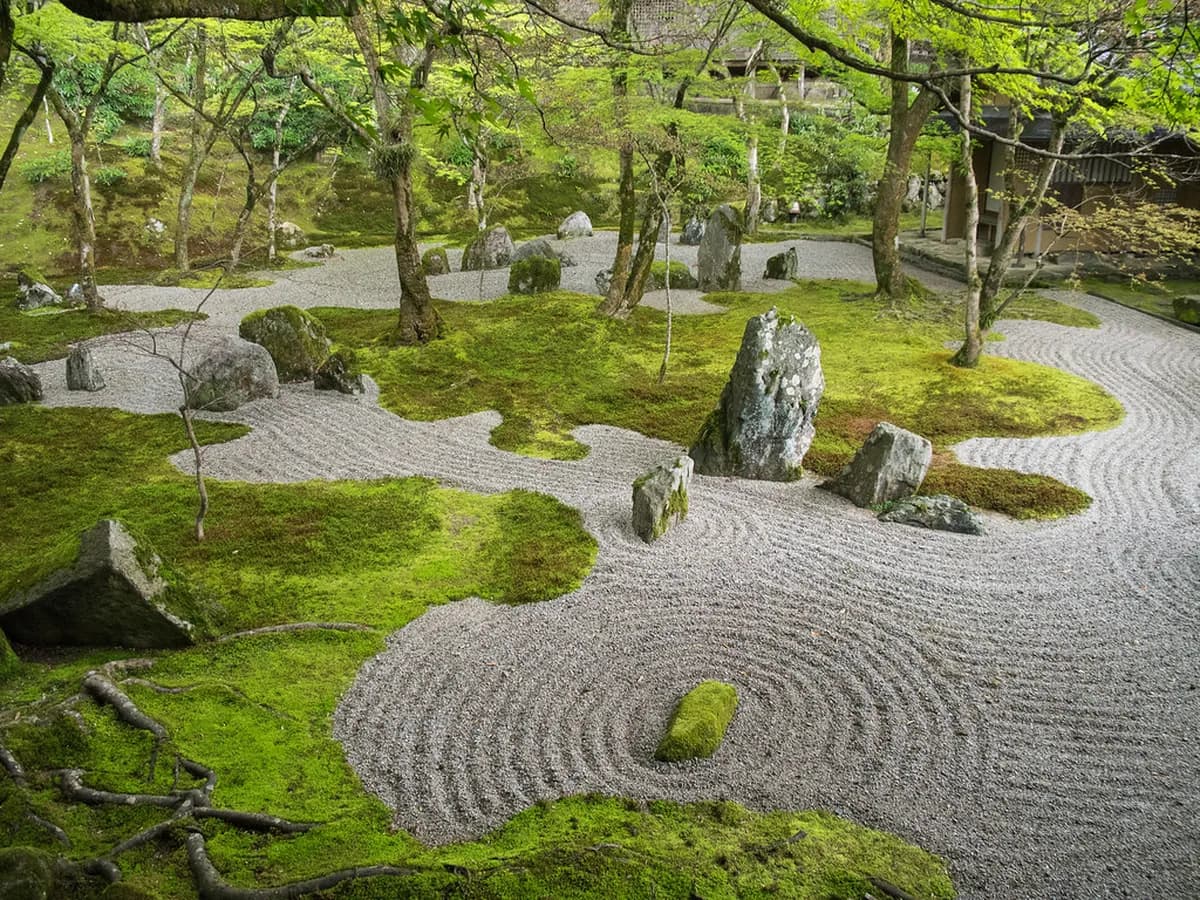
Komyozenji Temple is celebrated for its two distinct Zen gardens, both designed by the renowned landscape architect Mirei Shigemori. His work at Komyozenji showcases his innovative approach to traditional Japanese rock garden design principles. These gardens are truly captivating, and each rewards a different kind of attention. The front garden, sometimes called the moss garden, arranges raked stones so that the rock groupings themselves spell out the kanji for "light" (光) when viewed from the veranda — a detail many first-time visitors miss because it only reads clearly from one seated angle near the entrance. This design creates a lush, green tapestry that changes with the seasons.
The rear garden, known as Ittekikaitei (一滴海庭) or "A Drop of Ocean", is a masterpiece of karesansui. This garden uses white gravel to symbolize the ocean and carefully placed stones to represent islands. It evokes a powerful sense of vastness and tranquility. The "A Drop of Ocean" garden is particularly famous for its autumn foliage: maple leaves, when they fall, create a vibrant red and orange "sea" on the white gravel. Where the front garden rewards a quiet, seated study of line and symbol, the back garden rewards a slower circuit walk around its edge to watch the color shift with the light.
Shigemori's gardens at Komyozenji are not merely decorative; they are designed for contemplation and meditation. Each element holds symbolic meaning, encouraging visitors to reflect on nature and existence. Spend time observing the details for a deeper experience — most visitors give the front garden thirty seconds and the back garden five minutes, but reversing that ratio is where the temple's real value shows.
Current Admission Status, Opening Hours, and Visiting Rules
Dazaifu City's most recent notice (March 2025) says Komyozenji is not currently accepting visitors, and official tourism listings give no fixed hours or admission fee, only a phone number (092-922-4053). Confirm by phone before your trip, and prepare cash in case viewing has resumed and a fee is collected.
Visitors should be aware of specific rules to maintain the temple's serene atmosphere. Photography is usually allowed in the gardens but may be restricted inside certain temple buildings. Always look for posted signs or ask staff if unsure. Maintain a quiet demeanor throughout your visit to respect other visitors and the temple's sacred nature. Avoid loud conversations or disruptive behavior. These courtesies ensure a peaceful experience for everyone.
The temple may have special closures or altered hours during national holidays or specific temple events. It is recommended to check official Dazaifu tourism resources for the most up-to-date information before your 2026 trip, since a small independent temple like this can adjust hours with less notice than the major shrine down the road. Planning ahead helps avoid any unexpected disappointments.
Best Time to Visit Komyozenji Temple (Including Autumn Foliage & Photography Tips)
The autumn season is arguably the most spectacular time to visit Komyozenji Temple. From late November to early December, the maple trees burst into vibrant shades of red and orange. This creates an unforgettable landscape, especially in the 'A Drop of Ocean' garden. The contrast of the colorful leaves against the white gravel is breathtaking. In 2026, based on Fukuoka's typical foliage timing, the peak color window should again fall in the last week of November through the first week of December, though a warm autumn can push it a few days later. This period draws many visitors, so expect larger crowds. Plan your visit for early mornings to enjoy more tranquility.
For photographers, arriving before 9:00 AM is highly recommended. The soft morning light illuminates the gardens beautifully, enhancing the colors and textures. This early hour also offers a quieter atmosphere before other visitors arrive. Capturing the gardens in this light creates stunning images. Consider bringing a tripod for long exposure shots if permitted, especially during low light conditions. Focus on details like individual leaves or patterns in the moss. Experiment with different angles to highlight the garden's depth and symbolism.
Spring also offers a lovely, less crowded experience with fresh greenery and blooming azaleas. The moss garden looks particularly vibrant after spring rains. Summer can be hot and humid, but the lush green gardens provide a cool contrast. Winter offers a stark, serene beauty, perfect for quiet contemplation without the crowds.
Essential Etiquette for Visiting Komyozenji Temple (What First-Timers Often Get Wrong)
Visiting a Japanese temple requires a certain level of respect and awareness of local customs. Many first-time visitors might unknowingly make small etiquette mistakes. Understanding these helps ensure a pleasant experience for everyone. Always observe and follow local practices. The most important rule is to maintain a quiet and respectful demeanor. Temples are places of worship and contemplation, not tourist attractions for loud conversations. Keep your voice low and avoid shouting.
When entering temple buildings, remember to remove your shoes. Look for shoe racks or designated areas where you can leave them neatly. Wear socks, as walking barefoot can be uncomfortable or considered impolite. Photography is usually allowed in the gardens but may be restricted inside the temple halls. Always check for 'no photography' signs. If you are unsure, it is best to refrain or ask a temple official for clarification.
Avoid touching the garden elements, especially the raked gravel or moss. These are meticulously maintained and easily disturbed. Stay on designated paths to protect the delicate landscape. Respecting these boundaries preserves the beauty for all future visitors.
Do not sit on ledges or areas not designated for seating. This can block views or disrespect the sacred space. Remember that the temple is an active religious site. Showing reverence enhances your own experience and that of others.
How to Get to Komyozenji Temple from Dazaifu Station (Combining with Dazaifu Tenman-gū)
Komyozenji Temple is conveniently located within easy walking distance from Dazaifu Station. After arriving at Dazaifu Station, the temple is just a short 5-minute walk away. This makes it very accessible for visitors. To reach Dazaifu, take the Nishitetsu Tenjin Omuta Line from Fukuoka's Tenjin Station to Nishitetsu Futsukaichi Station. From there, transfer to the Nishitetsu Dazaifu Line for a quick ride to Dazaifu Station. The journey is straightforward and scenic.
Komyozenji Temple is also perfectly situated to combine with a visit to the famous Dazaifu Tenman-gū Shrine. From Dazaifu Station, walk towards Dazaifu Tenman-gū. The temple is located just a short distance south of the main shrine grounds. This allows for an efficient exploration of both sites.
If you are combining your temple visit with the Kyushu National Museum, the walking route is also manageable. From the museum, tunnel south past Dazaifu Tenman-gū, and continue to Komyozenji Temple. This walk typically takes about 15 minutes in total. This route offers a pleasant stroll through Dazaifu's cultural heart. You can also explore things to do in Dazaifu more broadly.
You can easily locate the temple at 2 Chome-16-1 Saifu, Dazaifu, Fukuoka 818-0117, Japan (Google Maps). The clear signage around Dazaifu helps guide visitors. Walking is the best way to soak in the atmosphere of this historic town.
Planning Your Visit: Suggested Itineraries & Time Allocation
Planning your visit to Komyozenji Temple helps maximize your experience in Dazaifu. Allocate at least 30 to 45 minutes at the temple itself to fully appreciate the gardens. This allows for unhurried contemplation and photography. A quick visit might focus solely on the gardens, while a longer stay allows for deeper reflection. Consider your interests and available time when planning your schedule. There are many ways to enjoy this serene location.
For a half-day cultural immersion, start your morning at Dazaifu Tenman-gū Shrine. Explore its expansive grounds and vibrant market street. Afterwards, take a leisurely 5-minute walk to Komyozenji Temple for quiet reflection. This combination offers a balance of cultural vibrancy and serene beauty. Then, consider visiting the Kyushu National Museum, which is a 15-minute walk from Komyozenji. This itinerary provides a comprehensive look at Dazaifu's major attractions. It combines history, art, and nature seamlessly.
If you have a full day, you can also include a visit to Kanzeonji Temple, another significant historical site in Dazaifu. This ancient temple offers a different architectural style and a deeper dive into local history. It is a peaceful addition to any Dazaifu itinerary. Remember to factor in travel time between locations and allow for breaks. Dazaifu also offers charming cafes and shops for a relaxing interlude. Enjoy the local delicacies and unique souvenirs.
Who Gets the Most Out of Komyozenji: Photographers, Families, and Solo Travelers
Komyozenji rewards different visitors in different ways, and knowing which kind of traveler you are helps you budget your time. Photographers should treat the front garden as a five-minute stop and save most of their time for the back garden, since the low veranda sightline and the maple canopy create the most workable compositions; a small travel tripod is usually tolerated on the veranda itself but should never be extended onto the gravel or moss. Families with young children will find the temple short enough to hold attention — 15 to 20 minutes is realistic before restlessness sets in — but should be ready to keep kids off the raked gravel, since staff will gently intervene if a child steps onto it. Solo travelers seeking quiet reflection get the most out of a weekday morning visit, when the veranda is often empty enough to sit for ten minutes without another visitor passing through the frame.
A short "know before you go" checklist covers what most first-time visitors forget to prepare for:
- Bring cash in small bills in case viewing has resumed and a fee is collected — official sources do not publish one.
- Wear slip-on shoes or clean socks without holes, since shoes come off before the veranda and you'll be seated on tatami-adjacent flooring.
- Skip the flash indoors and check for posted signage before photographing any interior room, not just the gardens.
- Wheelchair and stroller access is limited — the veranda viewing areas are the easiest to reach, but the inner garden paths involve steps and loose gravel.
- Budget only 20 to 30 minutes if you're stacking Komyozenji into a packed Dazaifu itinerary; it's a quiet interlude, not a half-day sight.
Nearby Attractions: Things to Do Around Komyozenji in Dazaifu
Dazaifu is rich with cultural and historical sites, making it an excellent day trip destination from Fukuoka. Beyond Komyozenji Temple, several other attractions are within easy reach. These sites offer diverse experiences for every traveler. The most famous nearby attraction is Dazaifu Tenman-gū Shrine, dedicated to Sugawara no Michizane, the deity of scholarship. This expansive shrine features beautiful grounds, a charming market street, and a museum. It is a vibrant and popular spot.
Just a short walk from Dazaifu Tenman-gū is the Kyushu National Museum. This modern museum showcases the history and culture of Kyushu and other Asian regions. Its impressive architecture and engaging exhibits provide a fascinating contrast to the ancient temples. It is a great place to spend a few hours.
Another noteworthy site is Kanzeonji Temple, one of Japan's oldest and most important Buddhist temples. It houses a collection of ancient Buddhist statues and a large bell. This temple offers a quieter, more historical experience than Komyozenji. Explore its serene grounds and ancient artifacts.
The area around Dazaifu Station and Dazaifu Tenman-gū also offers numerous shops and restaurants. You can sample local delicacies like Umegae Mochi, a sweet rice cake. Browse for unique souvenirs and enjoy the lively atmosphere before or after your visit to the temple's quieter grounds.
Weather in Dazaifu: What to Expect Season by Season
Understanding Dazaifu's weather patterns helps you pack appropriately and plan your activities. Dazaifu experiences four distinct seasons, each offering a different charm. Preparing for the climate ensures a comfortable visit. Spring (March to May) brings mild temperatures and blooming flowers, making it a very pleasant time to visit. Expect comfortable daytime temperatures, ideal for walking and exploring outdoors. Light layers are usually sufficient.
Summer (June to August) in Dazaifu is typically hot and humid, with temperatures often exceeding 30°C (86°F). This season also marks the rainy season, so be prepared for occasional heavy downpours. Lightweight, breathable clothing and an umbrella are essential. The lush greenery of the gardens thrives in the summer heat. Hydration is key during this time. Plan indoor activities or seek shade during the hottest parts of the day.
Autumn (September to November) offers crisp, comfortable temperatures and stunning foliage, as mentioned earlier. This is a popular time, with pleasant days perfect for sightseeing. Pack layers to adjust to temperature changes between day and night. The vibrant colors of the maple leaves are a major draw during autumn. Early morning visits are particularly rewarding. Enjoy the mild weather and beautiful scenery.
Winter (December to February) is generally cool, with occasional light snowfall, though heavy snow is rare. Temperatures can drop close to freezing, especially in the mornings and evenings. Warm coats, scarves, and gloves are recommended. Visiting in winter means fewer crowds and a serene, stark beauty in the gardens. Some attractions might have reduced hours, so always check ahead. Enjoy the quiet contemplation that winter offers.
Summary: Key Takeaways for Your Komyozenji Visit
Komyozenji Temple is a tranquil Zen retreat in Dazaifu, famous for its exquisite dry landscape gardens by Mirei Shigemori. Plan to spend at least 30-45 minutes appreciating the artistry and serene atmosphere. This allows for a truly immersive experience. The temple's 'A Drop of Ocean' garden is particularly stunning during late November to early December, when autumn leaves create a vibrant spectacle. Arrive early for the best light and fewer crowds. This ensures memorable photographs and quiet contemplation.
Remember to practice respectful temple etiquette, including removing shoes and maintaining a quiet demeanor. Komyozenji is easily accessible from Dazaifu Station and combines well with Dazaifu Tenman-gū and the Kyushu National Museum. Create your itinerary to suit your interests and time. Whether you seek artistic inspiration, spiritual reflection, or simply a peaceful escape, Komyozenji Temple offers a unique and enriching experience. Use this komyozenji temple visitor guide to ensure a smooth and enjoyable journey. Embrace the tranquility of this special place.
Frequently Asked Questions
What is Komyozenji Temple?
Komyozenji Temple is a historic Zen Buddhist temple in Dazaifu, Japan, founded in 1273. It belongs to the Rinzai school of Zen. The temple is most renowned for its two exquisite dry landscape (karesansui) gardens, designed by Mirei Shigemori. These gardens offer a serene setting for contemplation and are considered masterpieces of Japanese garden art.
Is Komyozenji Temple currently open to the public?
Not according to the latest official information. Dazaifu City's notice of March 2025 says the temple is not currently accepting visitors, and official tourism listings give no fixed hours or fee. Phone the temple on 092-922-4053 before your visit to check whether viewing has resumed.
What is the best time to see autumn leaves at Komyozenji?
The best time to witness the spectacular autumn leaves at Komyozenji Temple is typically from late November to early December. During this period, the maple trees transform into vibrant reds and oranges, creating a stunning contrast with the white gravel of the 'A Drop of Ocean' garden. Arriving before 9:00 AM is recommended for optimal photography and a quieter experience.
How do I get to Komyozenji Temple from Dazaifu Station?
Komyozenji Temple is conveniently located just a 5-minute walk from Dazaifu Station. From Fukuoka's Tenjin Station, take the Nishitetsu Tenjin Omuta Line to Nishitetsu Futsukaichi Station, then transfer to the Nishitetsu Dazaifu Line. Once at Dazaifu Station, follow signs towards Dazaifu Tenman-gū, and the temple is a short distance south of the shrine grounds. It's an easy walk to combine with other Dazaifu attractions like the Kyushu National Museum.
Are there any specific etiquette rules for Komyozenji Temple?
Yes, several etiquette rules apply when visiting Komyozenji Temple. Always maintain a quiet and respectful demeanor, as it is a place of worship. Remove your shoes before entering temple buildings. Avoid touching the garden elements, especially the raked gravel. Photography is generally allowed in the gardens but may be restricted inside buildings. Always check for signs and be mindful of other visitors seeking contemplation.
Komyozenji Temple stands as a testament to Zen aesthetics and tranquil beauty in Dazaifu. Its iconic dry landscape gardens, crafted by Mirei Shigemori, offer a profound experience for all visitors. This guide aims to prepare you for a respectful and enriching journey.
From understanding the temple's history to mastering local etiquette, you now have the tools to fully appreciate this cultural gem. Remember to plan your visit strategically, especially if you hope to witness the stunning autumn foliage. Embrace the serenity and artistic depth.
A trip to Komyozenji Temple is more than just sightseeing; it is an opportunity for quiet reflection and appreciation. Allow yourself to be captivated by its peaceful gardens and spiritual atmosphere. Your visit will surely be a highlight of your Dazaifu adventure.
For authoritative information, refer to the Komyozenji Temple official site and Komyozenji Temple on Wikipedia.
Related Dazaifu guides: Komyozenji garden guide.