Kawagoe Hikawa Shrine is a historic matchmaking shrine in Saitama, about an hour from central Tokyo and easy to combine with a Little Edo day trip. The attraction is best known for love and family blessings, but it also works well as a quiet cultural stop before Kawagoe's warehouse streets.
Visitors come for the Enmusubi-dama charm tradition, Tai Omikuji fishing fortunes, the Ema tunnel, and the summer wind chime festival. This kawagoe hikawa shrine visitor guide covers the 2026 details that matter most: transport, timing, accessibility, and common mistakes.
History and Significance of Kawagoe Hikawa Shrine
This sacred site traces its origins back approximately 1,500 years to the reign of Emperor Kinmei. It serves as the primary shrine for the Kawagoe area and remains tied to local rites, family visits, and the city's festival calendar.
The shrine honors five distinct deities who are recognized as a single family unit in Shinto tradition. These figures include two married couples and their son, which is why the shrine is associated with matchmaking, harmonious marriage, and family harmony.
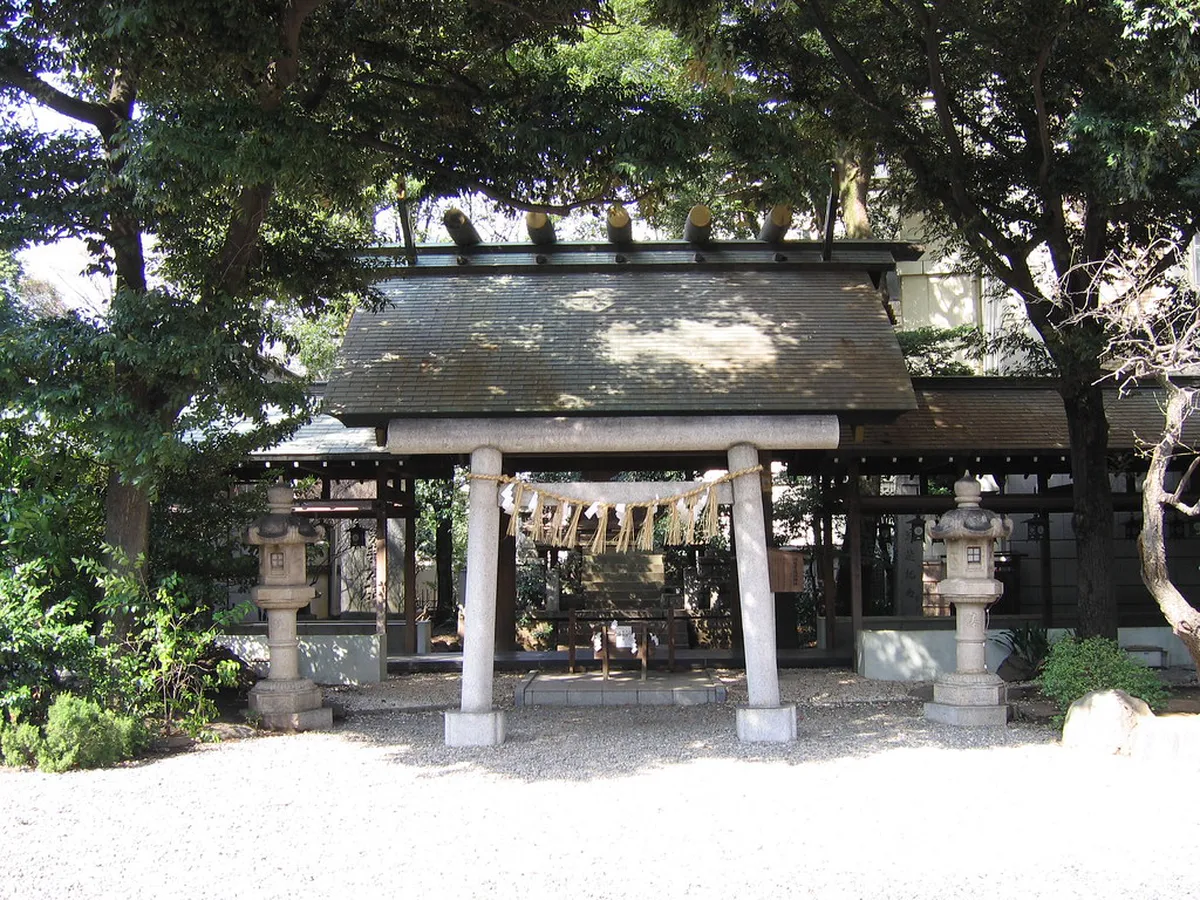
The architecture is equally memorable, featuring a massive wooden torii gate that stands fifteen meters tall. The grounds also include wooded paths, votive plaques, sacred trees, and a small stream used for purification rituals.
Top Highlights: Matchmaking, Wind Chimes, and Fishing Fortunes
One of the most sought-after items at the shrine is the limited Enmusubi-dama, or matchmaking charm. These small stones are hand-picked by shrine maidens, wrapped in delicate nets, and treated as a symbolic good-match blessing.
You can also participate in the unique Tai Omikuji, where you literally fish for your fortune. Using a small rod, you catch a red or pink wooden fish that contains a hidden message about your future.
The Hitogata Nagashi ritual offers a simple way to reflect, purify your spirit, and remove bad luck. You blow on a paper doll, touch it to your body, and float it down the shrine stream to wash away impurities.
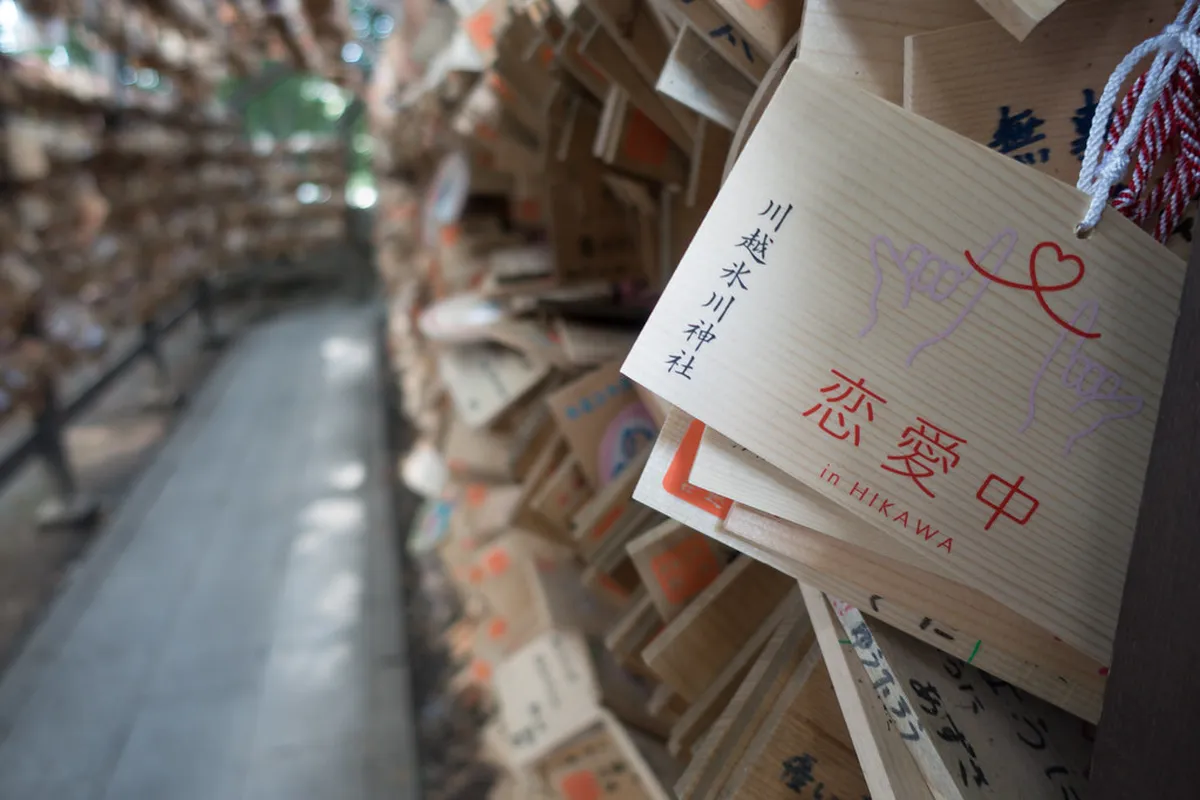
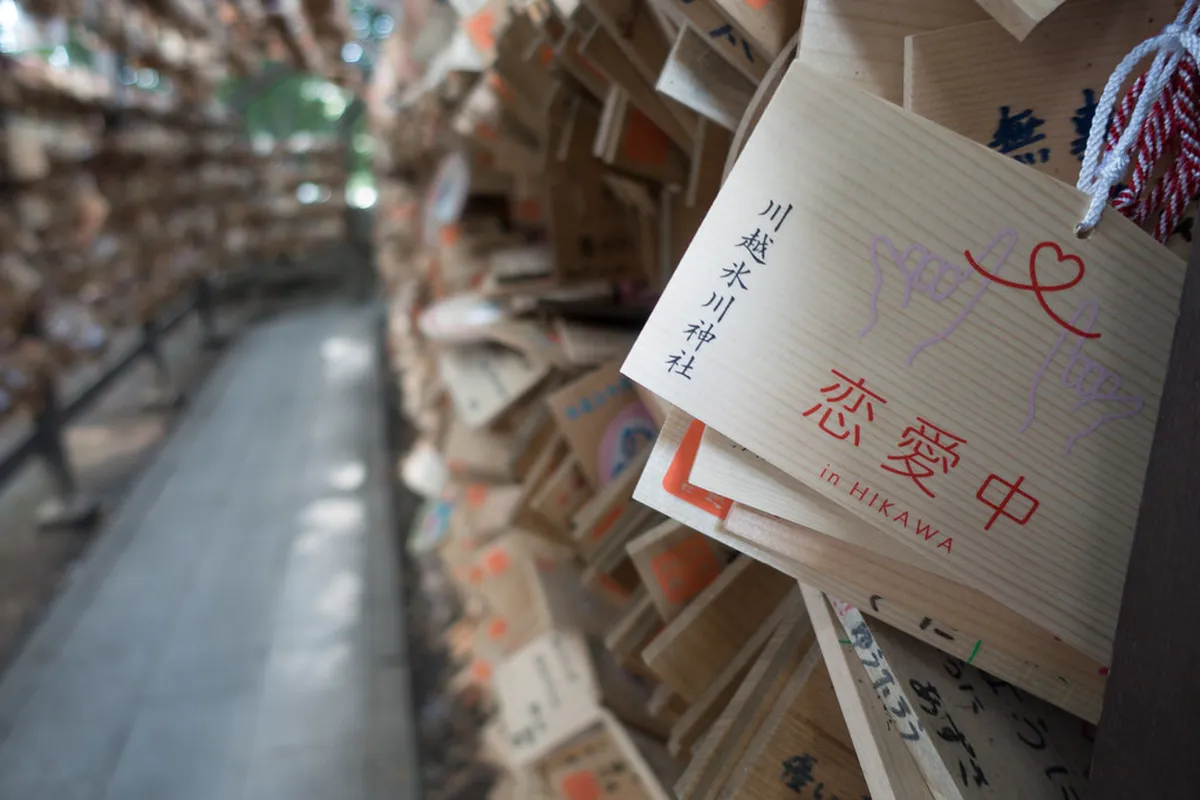
Exploring the grounds reveals beautiful details like the tunnel of wooden prayer plaques known as Ema. Thousands of visitors leave their wishes here, creating a colorful and spiritual path through the shrine forest.
- The Enmusubi-dama Morning Charm Tradition
- Limit: 20 charms daily
- Cost: Free for visitors
- Arrival: Before 7:30 AM
- Significance: Hand-picked sacred pebbles
- Tai Omikuji Fishing Fortune Mechanics
- Red Fish: General luck
- Pink Fish: Love life
- Method: Use fishing rod
- Cost: 300 yen each
- Hitogata Nagashi Paper Doll Ritual
- Step 1: Blow three times
- Step 2: Touch body
- Step 3: Float paper
- Location: Shrine stream
If you receive an Enmusubi-dama and later return as a couple, local guidance says you can return the pebble charm with gratitude. If the limited charm is gone, you can still buy regular amulets and fish for a Tai Omikuji without queueing before dawn.
Seasonal Events: Summer Wind Chimes and Autumn Festivals
The Enmusubi Wind Chime Festival is the most popular summer event, running from July through early September. Over 2,000 colorful glass wind chimes hang throughout the grounds, creating a melodic and cooling atmosphere.
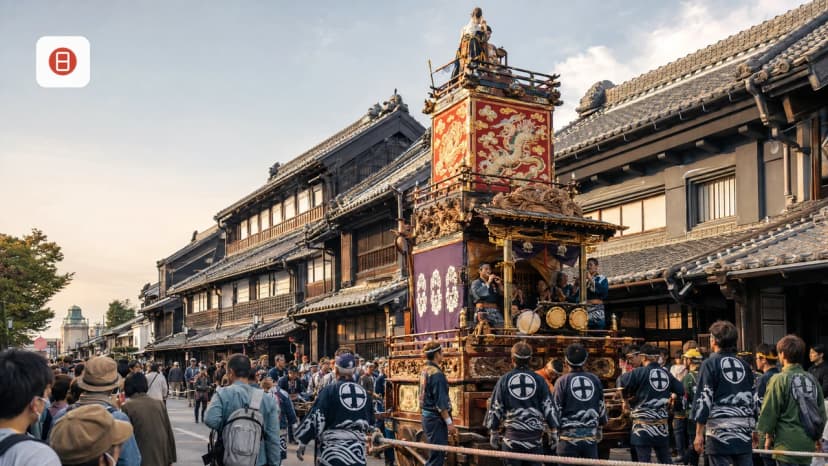
During this time, the shrine stays open late for beautiful nighttime illuminations and special light displays. In October, the shrine also plays a central role in the Kawagoe Festival, a UNESCO Intangible Cultural Heritage event with massive decorative floats.
For 2026 planning, check shrine and city event calendars before travel because illumination hours, special charm distribution, and festival crowd controls can vary by date.
| Season | Best For | Visitor Tip |
|---|---|---|
| Spring | Cherry blossoms near the Shingashi River | Combine the shrine with a riverside walk before the warehouse district gets busy. |
| Summer | Enmusubi Wind Chimes and evening atmosphere | Visit on a weekday or after late afternoon for easier photos. |
| Autumn | Kawagoe Festival and family rites | Expect large crowds on festival weekends and build in extra transit time. |
| Winter | Quieter shrine grounds and Hatsumode season | Early January can be busy with New Year worshippers. |
How to Get to Kawagoe Hikawa Shrine from Tokyo
Traveling from central Tokyo to Kawagoe is convenient and takes roughly one hour and nineteen minutes depending on your starting station and connection. Most travelers begin at Ikebukuro Station or Shinjuku Station, then transfer to a bus or walk through town.
From Ikebukuro, the Tobu Tojo Line runs to Kawagoe Station in about thirty minutes. From Shinjuku, the Seibu Shinjuku Line is convenient for Hon-Kawagoe Station.
Once you arrive, take a Tobu bus from the East Exit for fifteen minutes. Look for buses serving Miyashita-machi, Kawagoe Hikawa Shrine, or Hikawa Shrine-mae depending on the operator and route display.
Walking is another option, taking about thirty minutes from Hon-Kawagoe Station. The route is relatively flat, but the bus is easier in summer heat or when traveling with family, luggage, or limited mobility.
- Direct Route from Ikebukuro Station
- Line: Tobu Tojo
- Time: 30 minutes
- Station: Kawagoe Station
- Frequency: Every 10 minutes
- Direct Route from Shinjuku Station
- Line: Seibu Shinjuku
- Time: 45-60 minutes
- Station: Hon-Kawagoe Station
- Best for: Shinjuku stays
- Local Bus Transfer Instructions
- Bus: Tobu Bus
- Exit: East Exit
- Stop: Miyashita-machi
- Duration: 15 minutes
Practical Visitor Information: Hours, Fees, and Etiquette
The shrine grounds are open twenty-four hours a day, but the main office operates on a fixed schedule. You can purchase charms and amulets starting at 8:00 AM every morning until the late afternoon.
Entry to the shrine is completely free, making it an accessible stop for any budget traveler in Saitama. You should bring small coins for the fortune fishing and other ritual offerings during your visit.
Proper etiquette includes bowing once at the torii gate and washing your hands at the purification fountain. When praying at the main hall, follow the traditional pattern of two bows, two claps, and one final bow.
If you have old charms from previous years, you can return them to the designated box at the shrine. Accessibility is easiest by bus; gravel areas and narrow photo spots can slow visitors with strollers, luggage, or mobility needs.
- Best time for low crowds: weekday morning outside festival periods
- Best time for Enmusubi-dama: before 7:30 AM
- Best time for summer photos: late afternoon into evening when illuminations are scheduled
- Best way to avoid fatigue: bus to the shrine, then walk back through Kawagoe's old town
- Common etiquette mistake: treating the Ema tunnel as only a photo set and blocking worshippers
Kawagoe Discount Passes and Transport Tips
Using a discount pass can reduce travel costs when visiting from Tokyo. The Seibu Kawagoe Rail Pass is a popular choice for those departing from the Shinjuku area.
The Tobu Kawagoe Discount Pass is ideal for travelers using the Ikebukuro route and often includes local bus perks. Within Kawagoe, the Koedo Loop Bus helps link the shrine, warehouse district, and other landmarks.
Plan your bus route before leaving the station. Always check the latest schedules for the Miyashita-machi stop to avoid confusion on the return to Tokyo.
- Seibu Kawagoe Rail Pass Comparison
- Departure: Shinjuku/Takadanobaba
- Validity: One day
- Best for: Budget travelers
- Inclusions: Round-trip train
- Tobu Kawagoe Discount Pass Benefits
- Departure: Ikebukuro
- Validity: One day
- Best for: Fast travel
- Inclusions: Train and bus
- Koedo Loop Bus Daily Pass
- Type: Hop-on hop-off
- Coverage: All major sites
- Frequency: 20-30 minutes
- Cost: 500 yen
| Pass or Ticket | Choose It If | Watch Out For |
|---|---|---|
| Seibu Kawagoe Rail Pass | You are staying near Shinjuku, Takadanobaba, or the Seibu line. | It is less convenient if your hotel is closer to Ikebukuro. |
| Tobu Kawagoe Discount Pass | You want the fast Ikebukuro route and may use local buses. | Confirm whether your pass version includes bus coverage. |
| IC card or regular tickets | You prefer maximum flexibility or are connecting from JR lines. | You may miss pass discounts if you ride several local buses. |
Nearby Attractions in Little Edo Kawagoe
Most visitors spend about forty-five to sixty minutes at the shrine before exploring the rest of the town. Walk through Kurazukuri Street to see traditional clay-walled warehouses, then continue to the Toki no Kane bell tower.
If you have a sweet tooth, head to Kashiya Yokocho for traditional candies and snacks. You can also visit Kita-in temple to see palace buildings from the original Edo Castle and 540 unique stone statues.
A practical 2026 route is to ride the bus to Kawagoe Hikawa Shrine first, then walk back toward the old town. This keeps the shrine from becoming an out-and-back detour.
Frequently Asked Questions for Visitors
Morning visits are best for lower crowds and limited charms. Afternoon or evening visits work better for summer illuminations when they are scheduled.
The shrine is photogenic, but avoid blocking pathways and follow posted photography signs. The biggest planning mistake is treating Kawagoe Hikawa Shrine as if it sits beside the station; budget time for the bus, a 30-minute walk from Hon-Kawagoe Station, or a one-way sightseeing walk through town.
Frequently Asked Questions
Is Kawagoe Hikawa Shrine worth visiting?
Yes, it is absolutely worth visiting for its unique rituals and beautiful atmosphere. The shrine offers a distinct cultural experience with its fishing fortunes and wind chime festivals. It is a perfect addition to a Kawagoe day trip from Tokyo.
How do I get the limited Enmusubi-dama charm?
You must arrive very early to receive one of the twenty free charms distributed daily. Most visitors join the queue by 7:30 AM before the office opens at 8:00 AM. These sacred pebbles are highly coveted and run out almost immediately.
How much time do I need at Hikawa Shrine?
Most visitors spend between 45 and 60 minutes exploring the shrine grounds and participating in rituals. If you visit during the wind chime festival, you may want extra time for photography. Plan for a total of four hours in the city.
What is the best time to visit for the wind chime festival?
The best time is between July and early September when the Enmusubi Wind Chime Festival is active. Weekdays are generally less crowded than weekends during this popular summer event. Evening visits offer the best views of the illuminated glass chimes.
Kawagoe Hikawa Shrine blends ancient tradition, seasonal beauty, and memorable visitor rituals. From fishing for your fortune to walking through wind chimes in summer, it gives a Kawagoe day trip a clear cultural anchor.
For the smoothest 2026 visit, check local bus schedules, use the bus if accessibility or summer heat is a concern, and arrive early if you want the most exclusive charms. The shrine is still worth visiting even if you only have 45 to 60 minutes.
For authoritative information, refer to the Kawagoe Hikawa Shrine official site and Kawagoe Hikawa Shrine on Wikipedia.