Kawagoe Sake and Craft Beer: A Guide to Koedo Kurari and Local Brews
How to taste Kawagoe sake and craft beer in 2026: Koedo Kurari's vending machines, Kagamiyama's Brewing Vault, and where COEDO turns up in Kurazukuri.
On this page
Last updated August 2026. Kawagoe sake and craft beer sit within a few blocks of each other in the Kurazukuri warehouse district, where a 19th-century brewery revival now shares the street with modern taproom pours. Koedo Kurari's token-fed vending machines make sampling Saitama sake approachable for first-time tasters, and Kagamiyama's Brewing Vault sells the bottles behind those pours. This guide covers both tracks, plus where they overlap with Kawagoe's street food.
The Kawagoe Drinking Scene: Sake and Craft Beer
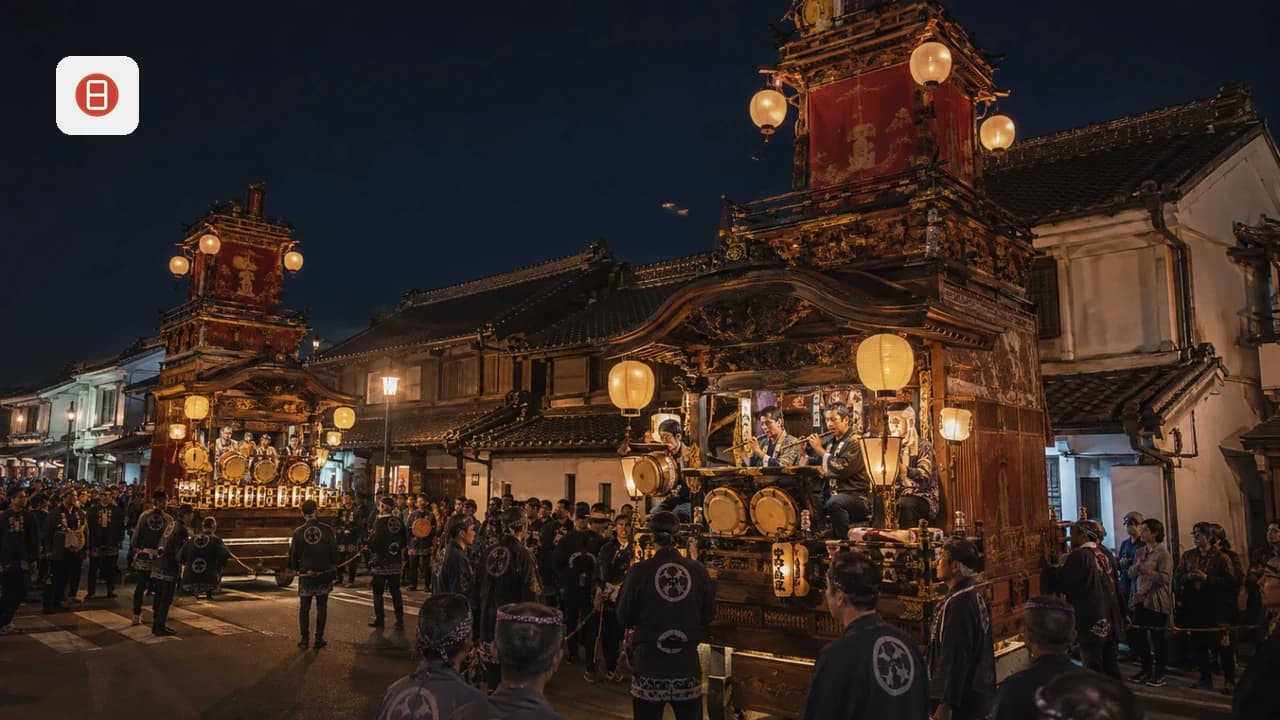
Kurazukuri holds two distinct drinking experiences worth separating before you plan a route. For sake, head to Koedo Kurari's Showa-era tasting hall, where a coin-fed machine pours from more than 35 varieties. For craft beer, look for COEDO on tap or in bottles at taprooms and stalls scattered through the same warehouse streets, since the production brewery itself sits outside the historic core. Sake here means one specific, revived local label: Kagamiyama. Craft beer means a brand that started in this town and now distributes far beyond it. Kurazukuri's warehouse streets grew up as a merchant trading district in the Edo period, and Kagamiyama was one of the neighborhood's sake breweries before production stopped in 2000 and later restarted. The Kurazukuri townscape earned recognition as a national Important Preservation District in 1999, which is part of why so many of these warehouse buildings, sake included, remain standing today. Pair either drink with the stalls covered in the Kawagoe street food guide. The broader Kawagoe food guide covers how both drinks fit into a full day of eating.
Koedo Kurari: Three Warehouses and the Sake Vending Machines
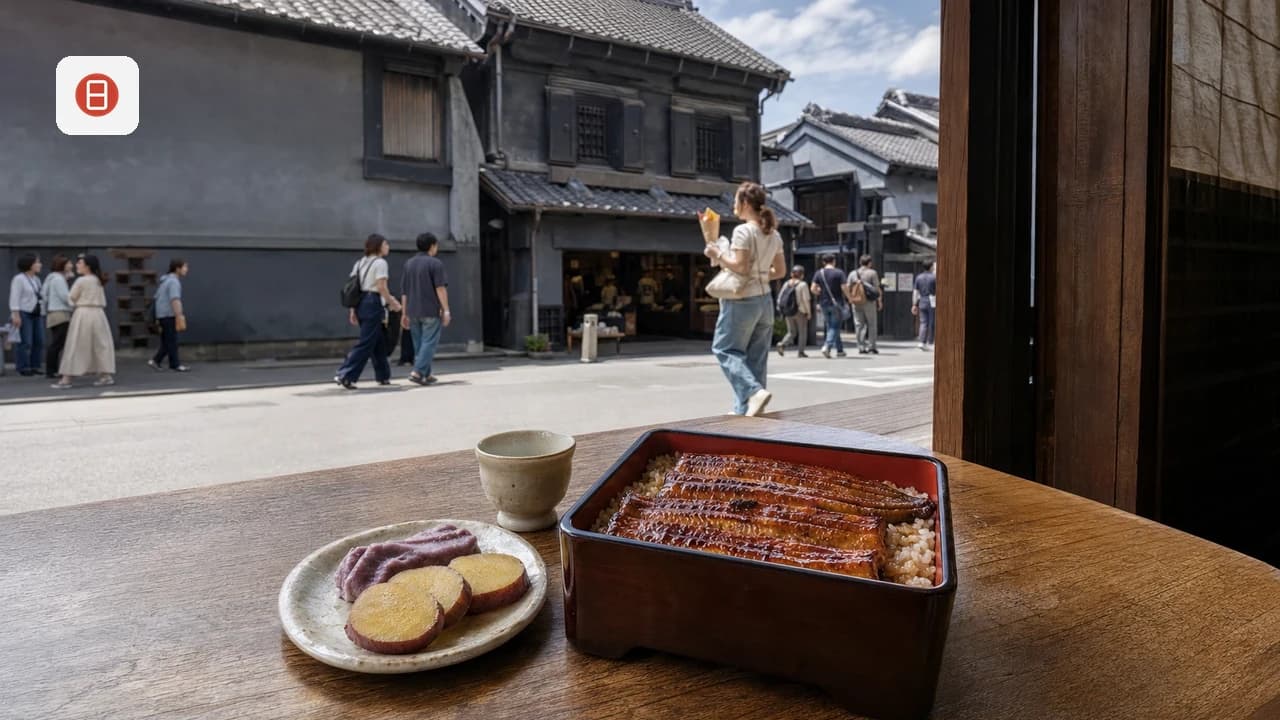
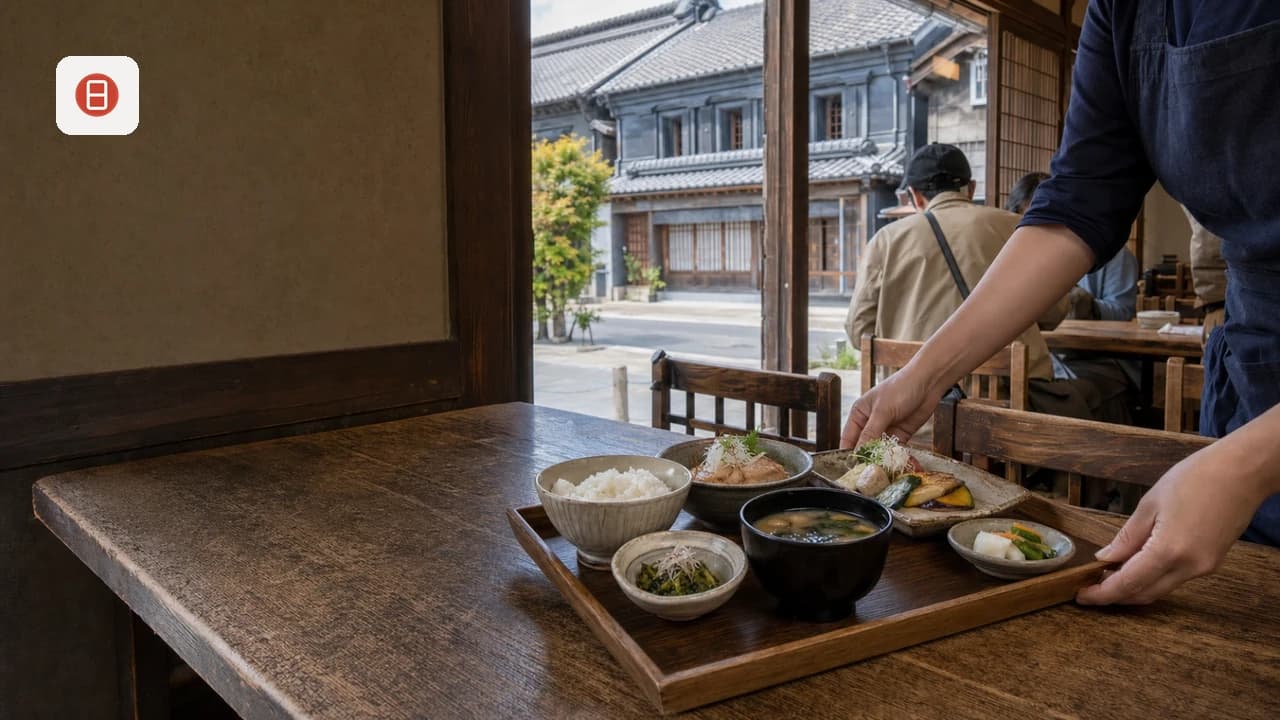
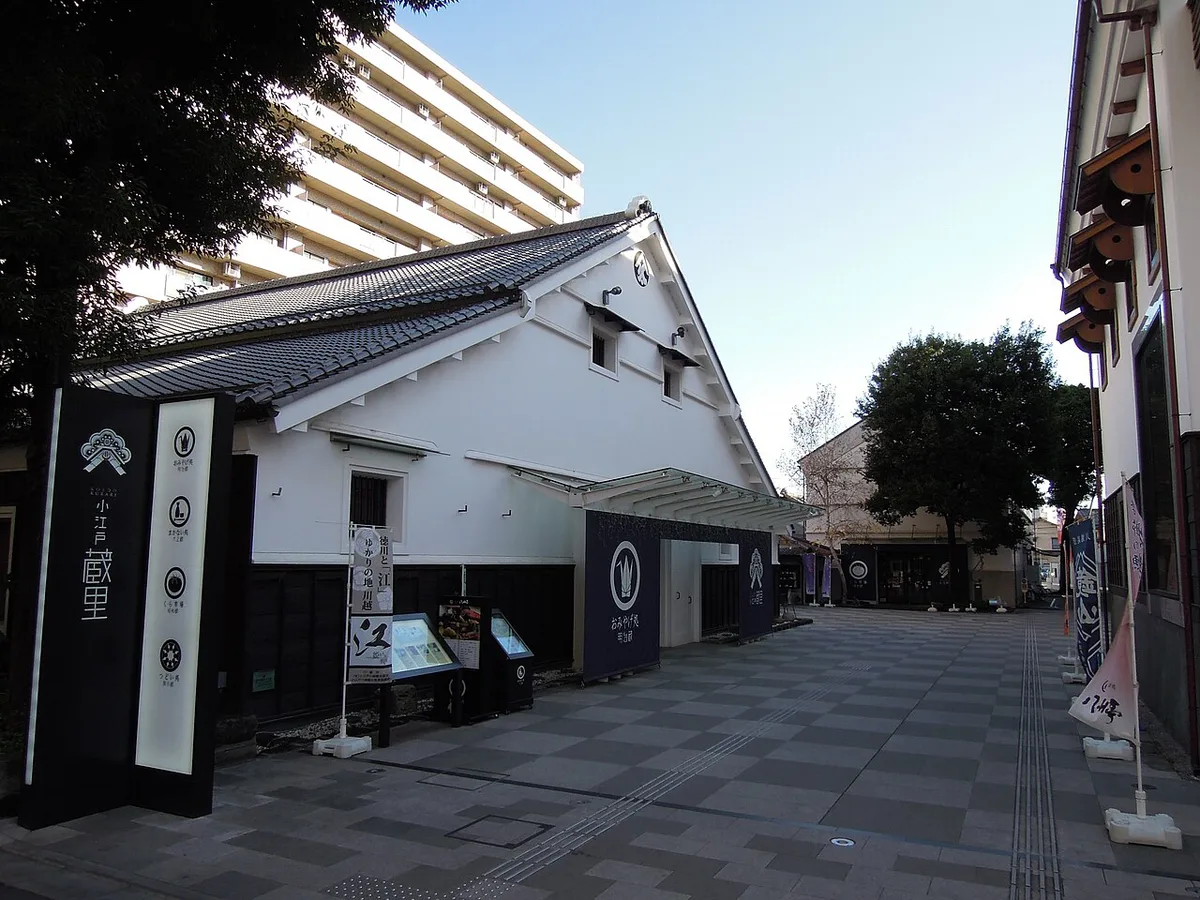
Koedo Kurari occupies three renovated warehouses from the former Kagamiyama brewery site, each dated to a different imperial era. Omiyage Dokoro, the Meiji-era building, holds a souvenir shop selling local sweets and goods, plus a small café for non-alcoholic breaks. Makanai Dokoro, built in the Taisho era, houses a restaurant serving Saitama-style dishes. Kikizake Dokoro, built in 1931 during the Showa era, is the sake tasting hall, recognizable by the three cedar pillars holding up its roof. Saitama ranks among Japan's larger sake-producing prefectures, and this hall is built to show off that range in one stop. As of 2026, the process inside Kikizake Dokoro still works the same way for every visitor. With more than 35 Saitama sake varieties on the wall, most first-time tasters do best comparing two contrasting pours rather than working through the whole lineup. Try a dry, light style next to a sweeter, fuller one to feel the range before committing tokens to a bottle purchase. Sake service in Japan is restricted to those 20 and older, and the tasting counter's own guidance is to drink in moderation. Not tasting? Omiyage Dokoro's café and Makanai Dokoro's restaurant serve non-alcoholic options, so non-drinkers can still spend time in the other two buildings. Back at the counter, a rich Junmaishu style pairs naturally with the grilled eel dishes in the Kawagoe Unagi Restaurants: Where to Eat Grilled Eel in Little Edo (2026 Guide), especially alongside a sweet tare glaze.
- Change a ¥500 coin for 4 tasting tokens at the counter. Only ¥500 coins work in the machine.
- Read the bottle labels on the vending machine wall. Aroma notes appear in Japanese and English, plus a dry, sweet, light, or strong style tag.
- Insert one token per pour. Each token buys exactly one cup from that machine.
- Set your cup under the faucet and press the button for your chosen sake.
- For a warm pour, use the water bath station timed with the paper hourglass: 60 seconds for nurukan, about 40°C, or 120 seconds for atsukan, about 50°C.
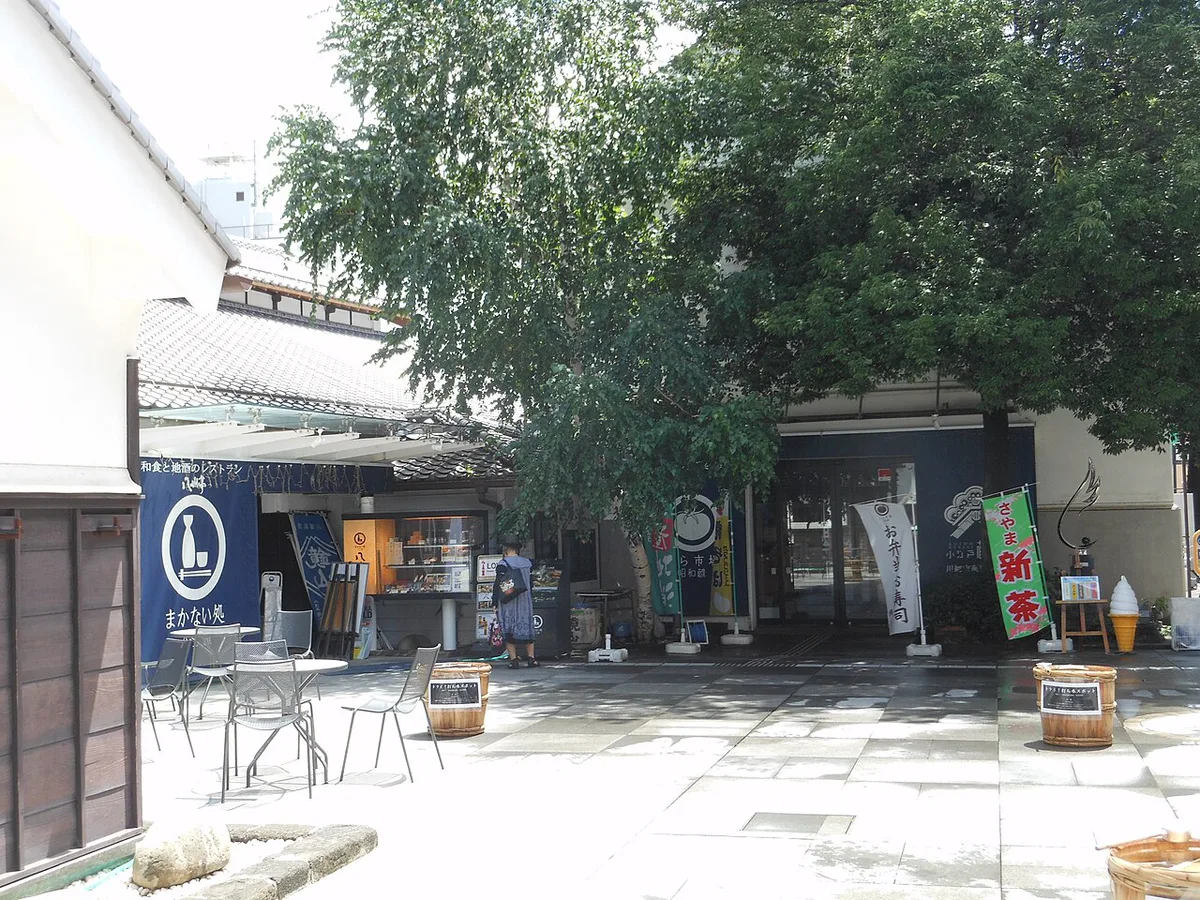
Koedo Kagamiyama: A Sake Brewery Revived in 2007
Kagamiyama traces back to 1875, when it operated as one of Kawagoe's original sake breweries in the Kurazukuri district. Three sake breweries had operated in this neighborhood after World War II, and Kagamiyama's predecessor was the last of them still active before production stopped. A lack of a successor forced the brewery to close in 2000, ending sake production in the neighborhood. Local government and citizen volunteers revived the label in February 2007, brewing again under the name Koedo Kagamiyama Sake Brewery. Its current brewing space sits in a garden loaned by neighboring Matsumoto Shoyu, roughly the size of a tennis court and one of the smallest working sake warehouses in Japan. That neighborly arrangement made sense historically: the original Kagamiyama site sat about 500 meters from Matsumoto Shoyu, and both drew on the same groundwater from the Chichibu mountains. Managing Director Akihiro Igarashi, whose family runs Igarashi Sake Brewery, has led the revival since Kagamiyama's 2007 return. Kagamiyama uses six small thermal tanks for its whole lineup instead of switching to larger batches for cheaper lines. Some of its sake is still pressed with a traditional screw-type press, a method few breweries keep using today. Kagamiyama's current lineup leans on Sake Musashi, a Saitama-bred rice developed in 2004 and used across most of the brewery's line. Junmaishu is the entry style, rich and full-bodied with a harmonious, elegant aroma. Daiginjo goes drier and more fragrant, wrapped in a fruity ginjo scent that suits a wider range of dishes. Tobin Tori Shizuku Daiginjo is the rarest bottle, made by hanging mash in cloth bags and collecting only the sake that drips out under its own weight. According to the brewery, its 2019 Tobin Tori Shizuku Daiginjo won a Gold Award at the National New Sake Appraisal, brewed entirely from Sake Musashi rice. Visiting the brewery itself is not possible, since production is not open for public tours. The Brewing Vault shop at 10-13 Nakacho is the closest public-facing stop instead. It sells eight types of Kagamiyama sake alongside local soy sauce, plus free samples of pickles and soy sauce. The shop is a 1-minute walk from Toki no Kane, Kawagoe's bell tower landmark, and it opens free of charge from 9:00 to 17:00 with irregular holidays. Right next door, Matsumoto Shoyu runs free tours of a soy sauce brewery that dates to 1764 and still uses 40 cedar fermentation vats from the Edo period. Combine both stops with a walk through the wider 12 Essential Tips and Things To Do In Kawagoe (2026) list to fill out the rest of the district.
After production stopped in 2000 and Kagamiyama was revived in 2007, visitors now access the heritage brewery's free-entry shop and tastings during morning-to-afternoon hours (9:00-17:00), about a 10-minute walk from Honkawagoe Station.
Craft Beer in the Kurazukuri Warehouse District
COEDO is Kawagoe's best-known beverage export, a craft beer brand that started in the city and now distributes across Japan and abroad. Its production brewery sits outside the historic core, so this is not a tour stop inside Kurazukuri. Instead, look for COEDO on tap or by the bottle at izakaya, taprooms, and stalls along the historic district's warehouse streets. Menus and pours change, so confirm what is available before crossing town for one specific style. Prices for a pint or bottle vary by venue, so treat the historic district's food stalls as the easiest place to compare a few pours in one walk. Beniaka is the label's clearest link to Kawagoe itself, a beer brewed with local sweet potato that echoes the same crop behind the city's imo confections. A glass of it pairs well with the fried potato snacks in the Kawagoe Sweet Potato Food Guide: Top Snacks, Meals, and Shops (2026). It also works as a break between courses at a stop from the Where to Eat Lunch in Kawagoe: 12 Best Restaurants in Little Edo (2026 Guide). A cold pour cuts through the richness of grilled eel or fried snacks sold along the same streets just as well. Alcohol service across Kurazukuri taprooms follows the same rule as the sake hall: only those 20 and older are served.
Practical Logistics and Timing
Both the Brewing Vault and Koedo Kurari sit inside walking distance of Kawagoe's main sightseeing loop, so timing the visit around opening hours matters more than transport. Honkawagoe Station on the Seibu Shinjuku Line is the closest rail stop, a 10-minute walk from the Vault. Shops in the district tend to open around 9:00 or 10:00 and close by 17:00 or 18:00, though hours shift seasonally, so confirm current times before a late-afternoon visit. The Vault welcomes guide and service dogs and offers English and Korean language support. Free parking covers up to six cars, capped at the first 30 minutes, with no space for buses. The Nakacho Tourist Information Center, at the entrance to the district, offers free Wi-Fi and paid baggage storage, useful if you're carrying bags before or after a tasting stop. Day-trippers from Tokyo often treat this as the day's one sit-down stop, pairing tokens or a pint with a slower walk through the warehouse streets. Most visitors combine the tasting stop with a walk to Toki no Kane. From there, continue toward Kashiya Yokocho candy alley. A wider loop through the 12 Essential Tips and Things To Do In Kawagoe (2026) list covers the rest of the afternoon.
The Brewing Vault closes at 17:00, making an early afternoon start essential—arriving after mid-afternoon risks missing both the token-tasting machines at Koedo Kurari and the Brewing Vault shop before they close.
| Detail | Specifics |
|---|---|
| Sake tasting cost | ¥500 for 4 tokens (1 token = 1 cup) at Koedo Kurari's Kikizake Dokoro |
| Brewing Vault hours | 9:00-17:00, irregular holidays, free entry |
| Access | 10-minute walk from Honkawagoe Station, Seibu Shinjuku Line |
| Distance to Toki no Kane | About 1 minute on foot from the Brewing Vault |
| Parking at the Vault | Free for 6 cars, first 30 minutes; no bus parking |
| Legal drinking age | 20, under Japanese law |
Mistakes to Avoid When Drinking in Kawagoe
A few planning slips turn an easy afternoon into a wasted trip across town. Watch for these before setting out.
- Don't expect a Kagamiyama brewery tour. Production is not open to the public, so visit the Brewing Vault shop or the free Matsumoto Shoyu tour instead.
- Don't arrive after mid-afternoon. Many Kurazukuri shops, including the Vault and Koedo Kurari, close by 17:00 or 18:00.
- Don't forget the ¥500 coin. Koedo Kurari's tasting machines take only that coin, so break larger bills before heading to the tasting hall.
- Don't lose track of Japan's drinking age. Alcohol service is restricted to those 20 and older, and the tasting counter's posted guidance is to drink in moderation.
- Don't assume every stall stocks COEDO. Pours and bottle lists change, so confirm what's on the menu before walking across the district for one specific beer.
Frequently Asked Questions
Can you tour the Kagamiyama sake brewery in Kawagoe?
No. Production at the brewery is not open to public tours. The adjoining Brewing Vault shop sells its sake, and Matsumoto Shoyu next door runs a free soy sauce brewery tour instead.
How does the Koedo Kurari sake vending machine work?
Exchange a ¥500 coin for 4 tokens, then use one token per cup at the machine of your choice. Read each bottle's dry-to-sweet style notes before picking a pour, and use the hourglass-timed water bath if you want a warm nurukan or atsukan serving.
Where can you find COEDO craft beer in Kawagoe?
COEDO's production brewery sits outside the historic center, so it is not a stop inside Kurazukuri itself. Look instead for it on tap or by the bottle at izakaya, taprooms, and food stalls along the warehouse district. Try Beniaka, the sweet-potato beer with the clearest local tie.
What is the legal drinking age in Kawagoe and the rest of Japan?
Japan's legal drinking age is 20, and identification checks are standard at bars, taprooms, and tasting counters. Koedo Kurari's own posted guidance also asks visitors to drink in moderation.
How do you get to the Koedo Kurari and Kagamiyama sake area?
Honkawagoe Station on the Seibu Shinjuku Line is the closest rail stop, about a 10-minute walk from the Brewing Vault. That Vault sits roughly 1 minute on foot from Toki no Kane, so most visitors combine both stops with a walk to the bell tower.
Is there anything to do at Koedo Kurari if you don't drink alcohol?
Yes. The Meiji-era souvenir building has a café, and the Taisho-era building runs a restaurant, both with non-alcoholic menus. Non-drinkers can enjoy two of the three warehouses without visiting the tasting hall.
What should you buy at the Kagamiyama Brewing Vault?
Kagamiyama's Brewing Vault stocks eight types of sake, including the Junmaishu and Daiginjo styles poured at Koedo Kurari, plus local soy sauce. Free samples of pickles and soy sauce are usually available at the counter before you decide.
What time of day is best to visit for sake and beer tasting in Kawagoe?
Aim for late morning or early afternoon, since many Kurazukuri shops, including the Brewing Vault, close by 17:00. Arriving after mid-afternoon risks missing the tasting counter or the Vault's shop hours entirely.
Free guide: Japan's Hidden Gems
12 under-the-radar places beyond Tokyo & Kyoto — with the best season to visit each and a local tip you won't find in the guidebooks.
You might also like

Continue reading
More guides you'll find useful