What to Eat in Kawagoe: 10 Best Foods in Little Edo
Discover what to eat in Kawagoe: 10 best foods from sweet potato chips to historic unagi, with 2026 prices, hours, and access tips.
On this page
Last updated August 2026, this guide answers what to eat in Kawagoe with a short, practical list instead of an endless restaurant directory. Little Edo's food scene centers on three staples: satsuma-imo sweet potato, river-raised unagi, and the penny candy of Kashiya Yokocho. Ten picks below cover street snacks, a sit-down unagi lunch, and a modern coffee stop, each priced and timed for a Tokyo day trip.
Kawagoe's Big Three: Sweet Potato, Unagi, and Candy Alley
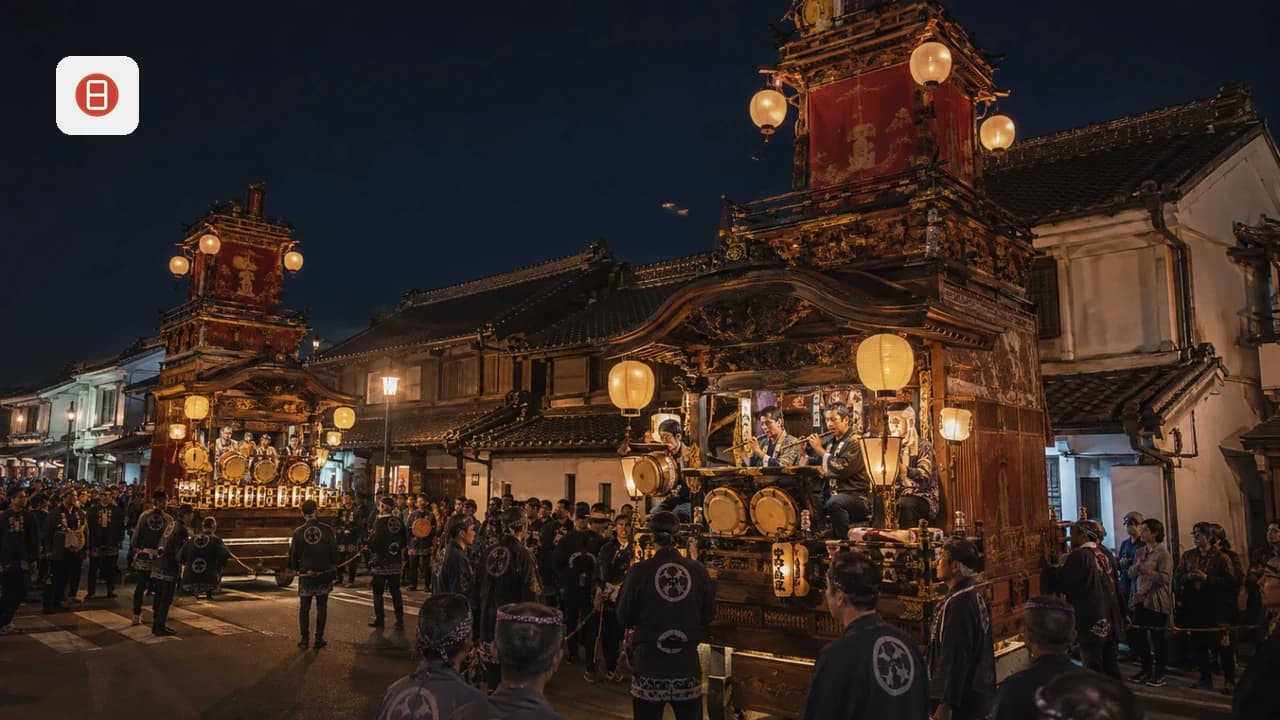
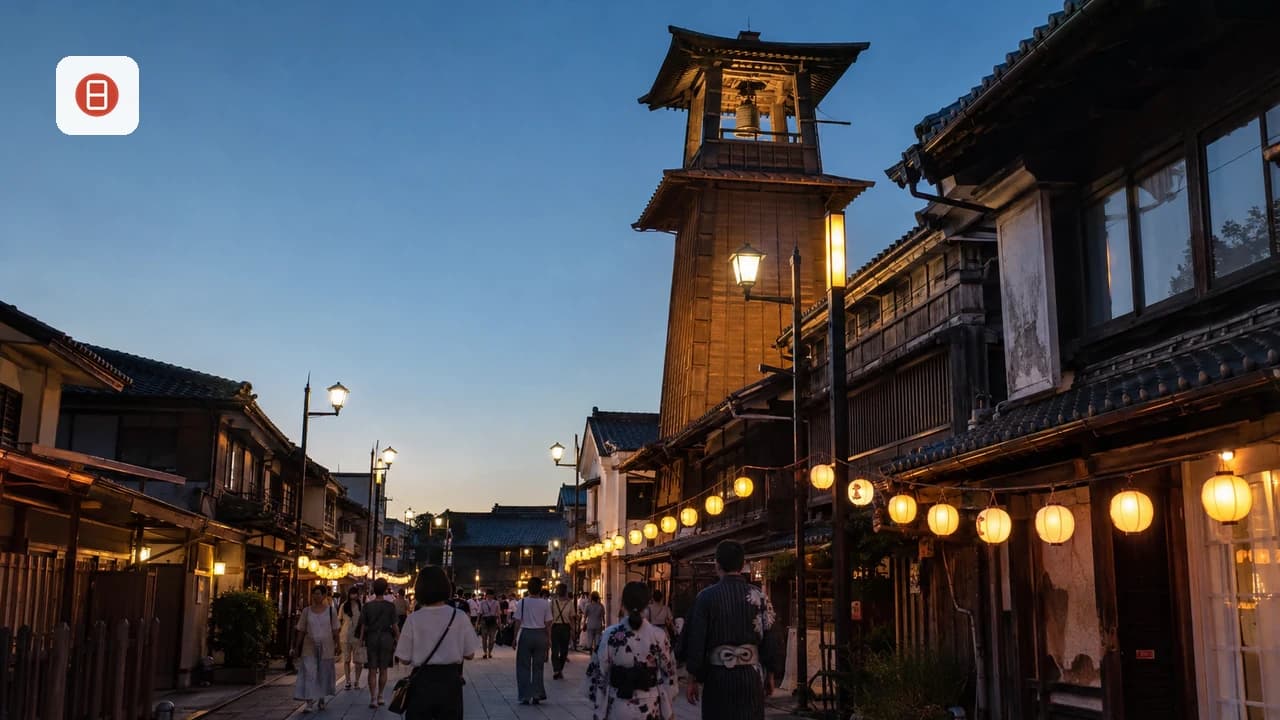
Kawagoe grew up as a supply town for Edo-period Tokyo, and its food identity still traces back to that role. Locals and guidebooks both call the old town Little Edo, or Koedo, for how closely its warehouse row still resembles the Edo period. Sandy soil around the old castle town suited satsuma-imo sweet potato cultivation, and merchants shipped the crop downriver to the capital. That same river trade brought fresh unagi, and Edo-style grilling techniques took root in Kawagoe's restaurants. After the 1923 Great Kanto Earthquake disrupted Tokyo's candy supply, Kawagoe became a producer, and Kashiya Yokocho, or Candy Alley, dates to that shift. Food and history overlap constantly here, so it is common to eat a snack, look at a kura warehouse, and eat again within the same block. Pair the food stops below with the Toki no Kane bell tower and the rest of the old town using our guide to 12 Essential Tips and Things To Do In Kawagoe (2026).
Which Station to Start From: Kawagoe Station or Hon-Kawagoe
Where you get off the train changes which food is easiest to reach first. Kawagoe Station serves the JR line and the Tobu Tojo Line, about 30 minutes from Ikebukuro, and sits closer to Crea Mall and newer restaurants. Hon-Kawagoe Station, the Seibu terminus, sits nearer the old warehouse district, Kashiya Yokocho, and Kawagoe Ichinoya. Most of the stops in this guide sit within a 10 to 15 minute walk of Hon-Kawagoe Station. Because both operators run private railways rather than JR lines, a JR Pass or Tokyo Wide Pass will not cover the fare. Budget for one of the operator passes below instead.
| Station | Operator / Line | Pass Option | Fare |
|---|---|---|---|
| Kawagoe Station | JR / Tobu Tojo Line | Kawagoe Discount Pass | ¥710 round trip from Ikebukuro |
| Kawagoe Station | JR / Tobu Tojo Line | Kawagoe Discount Pass Premium | ¥1,050, adds a local bus/rail zone ticket |
| Hon-Kawagoe Station | Seibu Shinjuku / Seibu Ikebukuro | Kawagoe One-Day Pass | ¥700 |
10 Best Foods to Eat in Kawagoe
Work through this list in roughly the order it appears, starting near Kawagoe Station and finishing toward Hon-Kawagoe and Ichinoya.
- Koedo Osatsuan Sweet Potato Chips
- Thick-cut, deep-fried sweet potato chips from Koedo Osatsuan became a viral photo stop on Kurazukuri Street, and the shop regularly draws a queue that stretches past its own storefront.
- Arrive before 11:00 am or after 2:00 pm to cut the wait.
- A bag runs in the ¥200 to ¥600 street-snack range typical of Kurazukuri Street stalls. See more sweet potato picks in the Kawagoe Sweet Potato Food Guide: Top Snacks, Meals, and Shops (2026).
- Imokoi and Sweet Potato Soft Serve at Kajo Umon
- Imokoi from Kajo Umon stacks steamed sweet potato under a layer of red bean paste, and the shop steams each batch in full view of passersby on Kurazukuri Street.
- The same shop also sells cold sweet potato soft serve, covering both the warm and cold ends of Kawagoe's sweet potato menu in one stop.
- Both items sit in the same ¥200 to ¥600 street-snack bracket as the rest of the street.
- Yaki-Onigiri at Nakaichi Honten
- Grilled rice balls brushed with soy sauce and topped with bonito flakes offer a savory break from the sweet stalls nearby.
- They often sell out by early afternoon, so treat this as a late-morning stop rather than a lunchtime one.
- It is one of several stalls covered in the Kawagoe street food guide.
- Mitarashi Dango at Iseya
- Iseya has operated since 1926 and serves rice-cake skewers in a thick, sweet soy-based mitarashi glaze alongside seasonal flavors like matcha and sakura.
- The shop is small, so plan to eat standing near the storefront rather than looking for seating.
- Expect to pay in the same ¥200 to ¥600 street-snack range as other Kurazukuri stalls.
- Yaki Dango at Tanakaya
- Tanakaya has been open near the Toki no Kane bell tower since 1861 and grills flat, chewy dango with a salty soy glaze instead of a sweet one.
- A small eat-in counter lets you sit down briefly, which is rare among the alley's stand-and-eat stalls.
- Its location makes it an easy stop between sightseeing at the bell tower and the next food stall.
- Unagi Kaiseki at Kawagoe Ichinoya
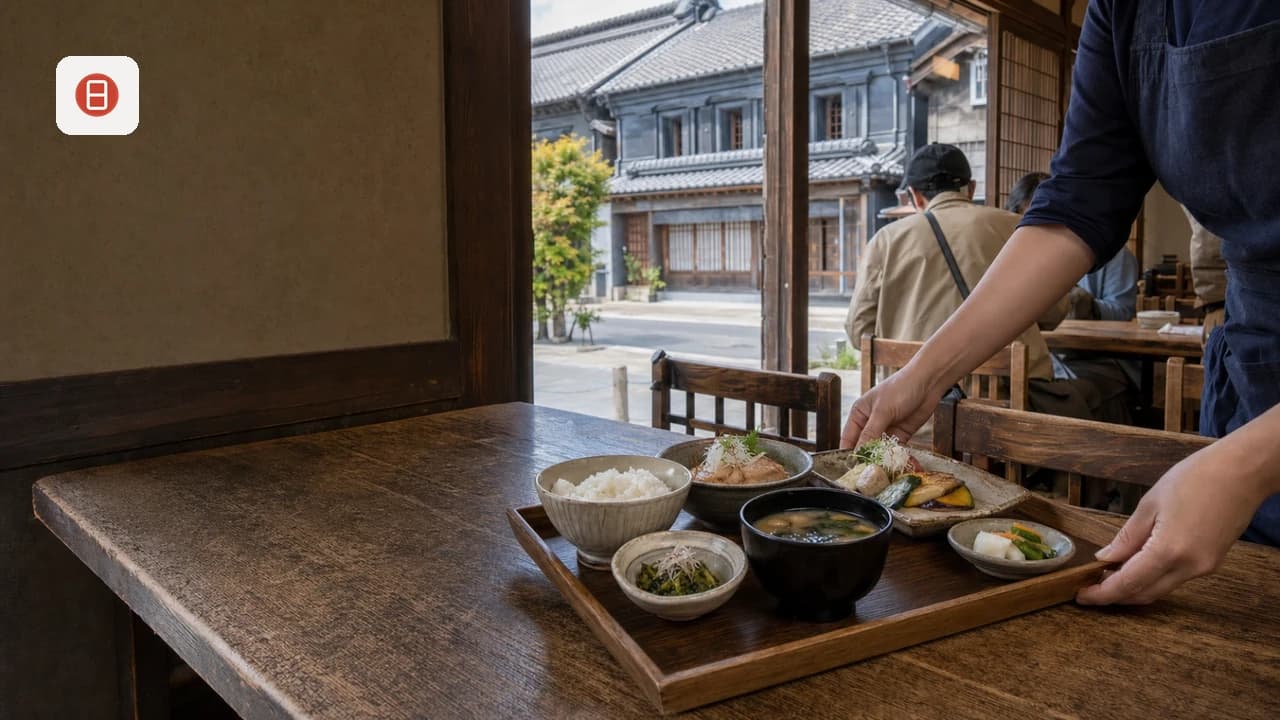
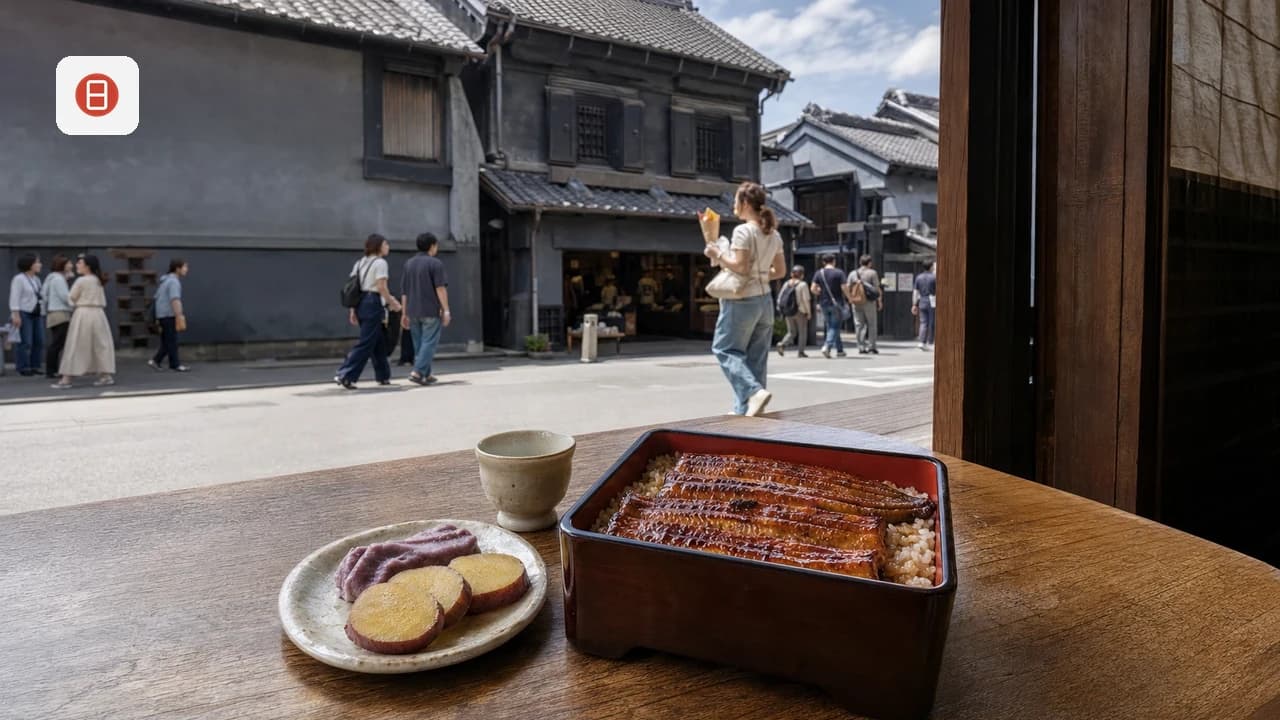
- Open since 1832, Ichinoya steams its eel before grilling instead of skipping straight to shirayaki, which keeps the texture soft under a glazed, smoky crust.
- Lunch runs ¥4,001 to ¥5,000 and dinner runs ¥5,001 to ¥7,000, and the restaurant sits about 8 minutes on foot from Hon-Kawagoe Station.
- It is closed Mondays; full hours are in the timing section below.
- Umaki at Unagi Denbe
- Denbe grills a dashi-broth egg omelet wrapped around eel, served with grated daikon and soy sauce, for a fraction of a full unagi set.
- It is the practical way to taste Kawagoe's signature eel without committing to a full-price sit-down meal.
- Denbe also serves full eel and eel liver dishes for anyone who wants to go beyond the omelet.
- Fugashi in Kashiya Yokocho
- Fugashi are large, brittle brown-sugar puffed wheat snacks, among the oldest treats still sold along Candy Alley.
- Bring small bills and coins; most of the alley's stalls are cash-only.
- Prices sit in the alley's usual ¥200 to ¥600 street-snack range.
- Coedo Beniaka Sweet Potato Beer
- Coedo Brewery's Beniaka is brewed with local sweet potato and is one of the clearest ways to taste the ingredient outside a dessert.
- Pair a bottle with an early dinner rather than treating it as a special detour, since stockists cluster around the old town.
- For where to drink it and other local sake, see the Kawagoe sake and craft beer guide.
- Specialty Coffee at Hill Pine's Espresso
- Located on Taisho Roman Street, Hill Pine's Espresso roasts and sells beans on-site alongside espresso drinks like lattes and flat whites.
- It works as a palate reset after a morning of sweet stalls and before an unagi lunch or dinner.
- Beans are sold by the bag, so the stop doubles as a take-home souvenir.
The Unagi Decision: Sit-Down Feast or Street-Side Sample
Unagi is Kawagoe's most expensive specialty, so it helps to decide upfront how much of it you want. Ichinoya delivers a sit-down kaiseki-style meal with eel prepared several ways. Denbe's umaki instead folds the same eel into an egg omelet at a lower price. Neither approach is wrong. Budget and remaining time before the next train usually decide it. For restaurant-by-restaurant detail beyond these two, see the Kawagoe Unagi Restaurants: Where to Eat Grilled Eel in Little Edo (2026 Guide).
Ichinoya's mid-afternoon break, Tue–Fri 11:00 am–3:00 pm and 4:30–8:30 pm, allows you to eat street snacks while the shop is closed, returning for dinner after other stalls have shut down.
| Kawagoe Ichinoya | Unagi Denbe | |
|---|---|---|
| Format | Sit-down restaurant | Street-side counter |
| Price | ¥4,001–¥7,000 per set | Well under ¥1,000 for umaki |
| Hours | Tue–Fri 11:00 am–3:00 pm and 4:30–8:30 pm; Sat/Sun/holidays 11:00 am–9:00 pm; closed Mondays | Check current hours locally |
| Best for | A planned, unhurried lunch or dinner | A quick taste between other stops |
Kashiya Yokocho: Walking Candy Alley for Fugashi
Kashiya Yokocho, or Candy Alley, is a short lane of small shops selling penny sweets, and it rewards a slow walk rather than a rush-through. Roasting sugar and cinnamon send their smell down the street before you reach the first stall. The alley traces back to 1923, when the Great Kanto Earthquake disrupted Tokyo's candy supply and Kawagoe stepped in as a producer. Vendor numbers have fallen since that early peak, but the surviving shops still sell fugashi and other traditional candy side by side. Most transactions here are small and cash-only, so keep coins on hand before you start browsing. Some stalls sell single pieces, which makes the alley an easy way to sample several kinds of candy without committing to a full bag of any one. Kashiya Yokocho pairs naturally with a wider street-food crawl. See the complete list in the Kashiya Yokocho guide.
Budgeting a Realistic Kawagoe Food Day
A Kawagoe food crawl can run cheap or add up quickly, depending on how much unagi is on the itinerary. Street snacks across Kurazukuri Street and Kashiya Yokocho generally run ¥200 to ¥600 per item, so five or six stops there stay under ¥3,000. Unagi is the outlier: a full Ichinoya set runs ¥4,001 to ¥7,000, while Denbe's umaki delivers the same flavor for close to street-snack prices. Add a ¥700 to ¥1,050 train pass and a Coedo beer or Hill Pine's coffee, and a generous full day of eating still lands well under ¥10,000 per person for travelers who skip the sit-down unagi course.
| Category | Typical Price | Examples |
|---|---|---|
| Street snacks | ¥200–¥600 | Koedo Osatsuan chips, Kajo Umon imokoi, dango |
| Street-side unagi sample | Under ¥1,000 | Unagi Denbe umaki |
| Sit-down unagi set | ¥4,001–¥7,000 | Kawagoe Ichinoya lunch or dinner |
| Train pass | ¥700–¥1,050 | Kawagoe Discount Pass, Kawagoe One-Day Pass |
Timing Your Kawagoe Food Crawl
Most food stalls in the old town open around 10:00 am and close by 5:00 pm, earlier than many first-time visitors expect. Peak lunch hours run from 11:30 am to 1:30 pm, and popular counters like Kotobuki an's soba have reported waits of about 20 minutes during that window. Plan a sit-down unagi meal around that rush rather than inside it. Because most stalls close by 5:00 pm, treat any food after that hour as restaurant-only, not stall-based. The Koedo Meguri sightseeing bus connects the Kawagoe Station and Hon-Kawagoe Station areas, useful if an afternoon of walking starts to add up. If you are renting a kimono for the day, ask each shop about a small discount. Several vendors in the old town offer one to kimono-clad visitors. For a plan that sequences these stops into a single afternoon, use the Where to Eat Lunch in Kawagoe: 12 Best Restaurants in Little Edo (2026 Guide).
Street snacks sell out hours before shops close. Most food stalls run from 10:00 am and close by 5:00 pm, but popular items vanish by early afternoon, compressing your actual eating window to the morning hours.
| Time | Stop | Note |
|---|---|---|
| 10:00 am | Koedo Osatsuan chips | Arrive early to beat the queue |
| 10:30 am | Kajo Umon imokoi or soft serve | Warm or cold, your choice |
| 11:00 am | Nakaichi Honten yaki-onigiri | Often sells out by early afternoon |
| 11:30 am–1:00 pm | Ichinoya unagi or Denbe umaki | Pick one based on budget |
| 1:30 pm | Iseya or Tanakaya dango | Sweet mitarashi vs. savory yaki |
| 2:00 pm | Kashiya Yokocho fugashi | Cash only |
| 3:00 pm | Coedo Beniaka beer | With a snack or early dinner |
| 3:30 pm | Hill Pine's Espresso | Coffee before the train home |
Mistakes to Avoid When Eating Your Way Through Kawagoe
A few small planning errors account for most disappointing food days in Kawagoe.
- Waiting Until Late Afternoon
- Many popular items, including Nakaichi Honten's yaki-onigiri, sell out well before the 5:00 pm closing time most stalls keep.
- Treat late morning through early afternoon as prime eating hours, not the tail end of the day.
- Build the afternoon around Ichinoya or Denbe instead, and save later hours for coffee rather than fresh street snacks.
- Not Carrying Cash
- Kashiya Yokocho and several street stalls are cash-only, and the nearest ATM can be a few minutes' walk away.
- Withdraw cash at Kawagoe Station or Hon-Kawagoe Station before starting the food crawl rather than searching mid-route.
- Most single stall items cost well under ¥1,000, so a modest amount of cash covers a lot of ground.
- Eating While Walking
- Tabearuki, eating while strolling, is generally discouraged in Japan.
- The norm is to stand near the stall and finish before moving on, and most vendors set out a small standing area for exactly that.
- This norm holds at each of the ten stops above, not only in Kashiya Yokocho.
An Edo-Style Coffee Break Near Toki no Kane
Starbucks Coffee Kawagoe Kanetsuki-dori offers a useful seated break near the Toki no Kane bell tower. Its dark timber frontage blends with the traditional buildings around Kurazukuri Street.
The interior incorporates Saitama-grown cedar and artwork inspired by Kawagoe Tozan, a local striped fabric. Seating faces a Japanese-style courtyard garden, making this branch more memorable than a typical station café.
Visit after the bell tower and before continuing north toward Kashiya Yokocho. This keeps the stop on the natural old-town walking route without requiring a separate detour.
The café is best treated as an architectural rest stop rather than a destination for Kawagoe-specific food. Choose Hill Pine’s Espresso for locally roasted specialty coffee. Choose this Starbucks when seating, familiar drinks, and an atmospheric garden matter more.
Explore food in other cities
Frequently Asked Questions
What is Kawagoe most famous for eating?
Kawagoe is best known for satsuma-imo sweet potato dishes, unagi grilled in the Edo style, and the penny candy sold along Kashiya Yokocho. Each traces back to Kawagoe's history as a supply town for Edo-period Tokyo.
How much does unagi cost in Kawagoe?
At Kawagoe Ichinoya, lunch sets run ¥4,001 to ¥5,000 and dinner sets run ¥5,001 to ¥7,000. Unagi Denbe's umaki egg roll offers a lower-cost way to sample the same eel.
Is Kashiya Yokocho cash-only?
Most of the small vendors along Candy Alley accept cash only, so carry coins and small bills before browsing. Larger sit-down restaurants near the stations are more likely to accept cards, so save those for bigger meals.
How much time should I plan for a Kawagoe food day trip?
A half day covers the main stalls and one sit-down meal, while a full day leaves room for both Ichinoya and Kashiya Yokocho without rushing. Stalls generally run from about 10:00 am to 5:00 pm, so plan around that window.
Can I use a JR Pass to get to Kawagoe?
A JR Pass will not cover Kawagoe. Both Tobu and Seibu run private lines, not JR, so budget for one of their own discount tickets instead.
What is the best time of day to start eating in Kawagoe?
Start by mid-morning, since stalls open around 10:00 am and popular items like Nakaichi Honten's yaki-onigiri can sell out by early afternoon. Save the sit-down unagi meal for the 11:30 am to 1:30 pm window or just after it.
Explore Kawagoe Food and Dining
Use these guides to compare local dishes, dining areas and practical food experiences in Kawagoe.
Food and Dining Guides
- Kawagoe attractions hub: tickets, hours & maps
- 11 Essential Kawagoe Street Food Stops and Tips
- 10 Best Shops in Kashiya Yokocho Candy Alley Kawagoe
- Kawagoe Sweet Potato Food Guide
- Kawagoe Unagi Restaurants
- Kawagoe Sake and Craft Beer: A Guide to Koedo Kurari and Local Brews
- Where to Eat Lunch in Kawagoe
Free guide: Japan's Hidden Gems
12 under-the-radar places beyond Tokyo & Kyoto — with the best season to visit each and a local tip you won't find in the guidebooks.
You might also like

Continue reading
More guides you'll find useful