

What to Eat in Inuyama: 9 Best Foods in the Castle Town (2026 Guide)
What to eat in Inuyama: 9 castle-town dishes, from gohei-mochi to ayu sweetfish, plus a station-loop route and a ¥3,000 snack budget for 2026.
On this page
Last updated July 2026, this guide covers what to eat in Inuyama castle town, a 30-minute ride from Nagoya on the Meitetsu Line. Below Inuyama Castle, the Honmachi-suji approach mixes Edo-period snacking traditions like gohei-mochi and miso dengaku with modern, camera-ready treats like temari sushi and colorful dango. Kiso River ayu sweetfish adds a seasonal layer to the walk. Nearly every stall and teahouse closes by late afternoon, so timing the route matters as much as choosing what to order.
Inuyama's Castle-Town Food Culture: Tabe-Aruki Below a National Treasure
Inuyama's food identity rests on three strands. Edo-period snacking culture along Honmachi-suji, below Inuyama Castle, forms the first strand. Kiso River ayu sweetfish traditions form the second. Camera-ready modern treats born in the same streets complete the third. Three dishes anchor the traditional side: gohei-mochi, dengaku, and Kiso River ayu, covered first in the list below.
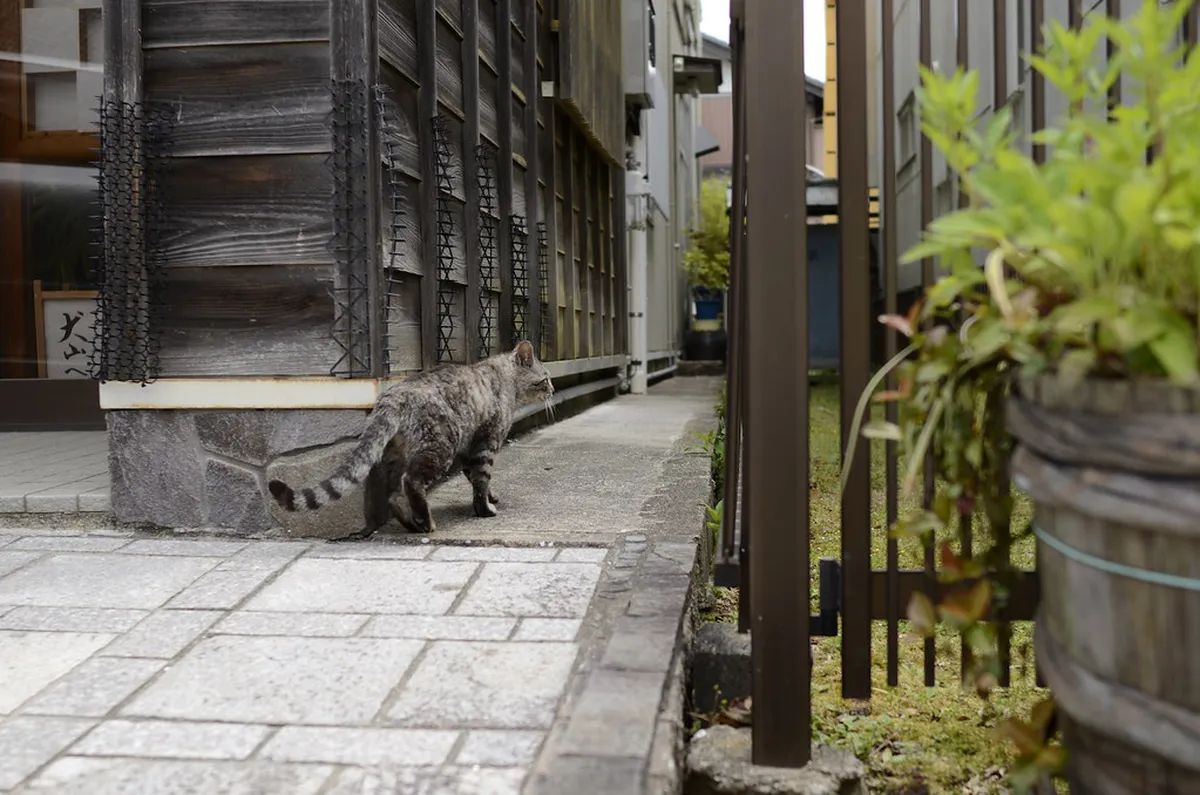
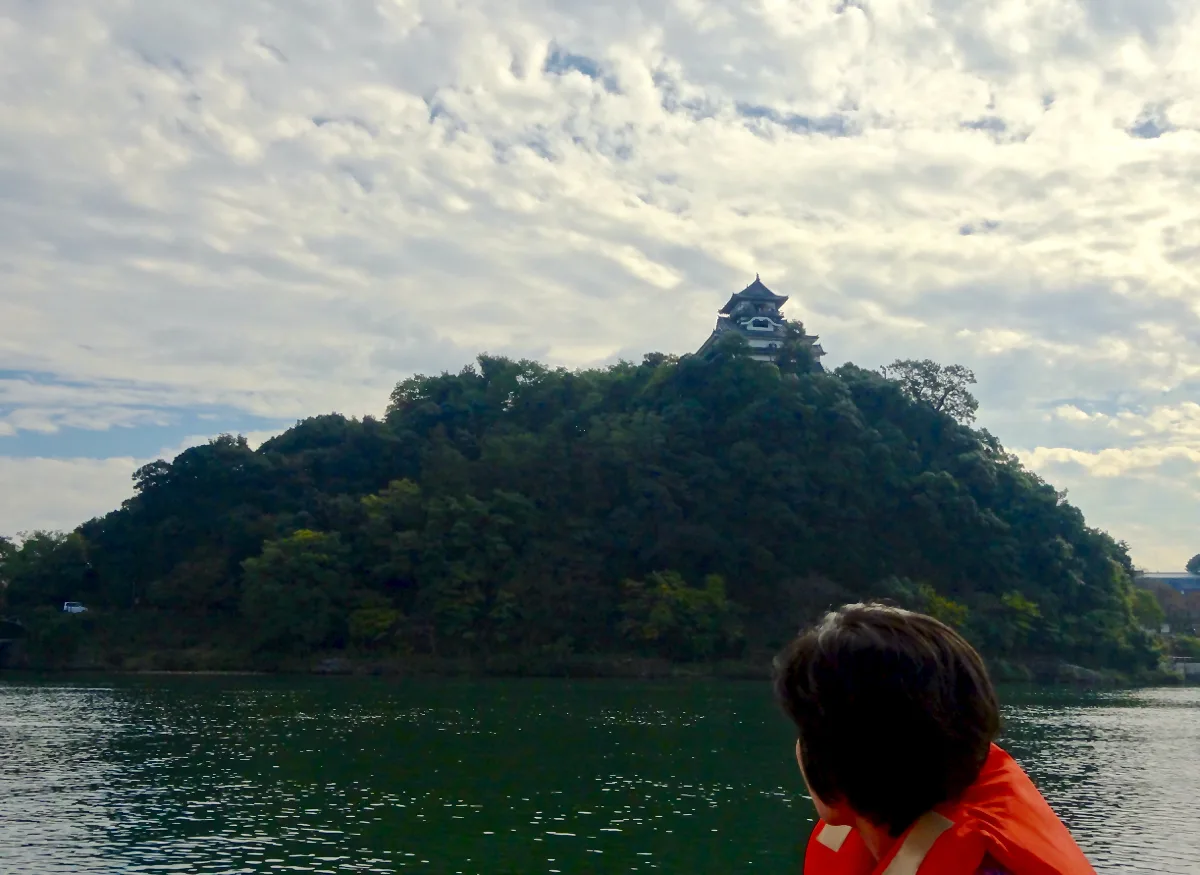
Aichi Prefecture designates the district around the castle as its Jokamachi, or castle town. Shops first grew along the Honmachi-suji approach during the Edo period, feeding samurai and merchants heading toward the gate. Vassals of Oda Nobunaga, Toyotomi Hideyoshi, and Tokugawa Ieyasu occupied the castle at various points in its history, and the merchant town below grew to supply that garrison and its visitors. Kiso River water quality supported tofu-making in Inuyama for generations, which is part of why dengaku remains one of the district's signature dishes today. Aichi's dense red miso shows up across half the district's savory snacks, a regional signature worth tasting more than once. Today that same stretch runs Japan's tabe-aruki circuit: eating while walking, one skewer or cup at a time.
For a full rundown of the district's snack stalls and stands, see the castle town street food guide. Beyond food, the wider approach also holds shrines, museums, and shops, covered in the Inuyama attractions guide. Sanko Inari Shrine, a Shinto shrine known for matchmaking wishes, sits along the same walk near the castle. During the summer Inuyama Matsuri festival, temporary food stalls line sections of this same route alongside the floats and lanterns that define the event.
The 9 Best Foods to Eat in Inuyama Castle Town
These nine dishes split into two broad categories worth knowing before the walk starts. Traditional, regional dishes, gohei-mochi, dengaku, and ayu, come from Aichi's older Edo-period food culture tied to the Kiso River and its red miso. Modern, photogenic treats, among them temari sushi, colorful dango, and the teahouse dengaku set, grew up around the last decade's tabe-aruki and photo-driven food culture. Both categories sit within a few minutes' walk of each other along Honmachi-suji. Work through the list roughly in the order the dishes appear along that approach, from the station end toward the castle gate.
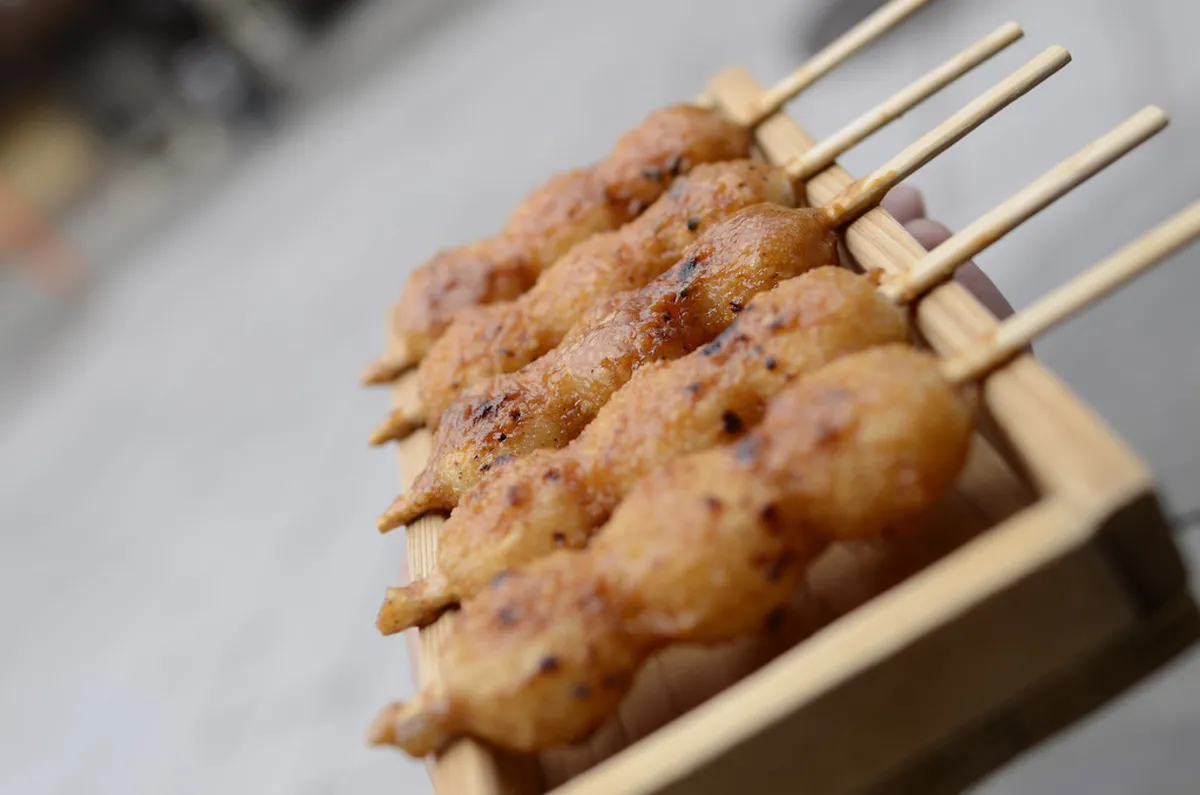
- Gohei-mochi (skewered grilled rice cakes)
- Sticky pounded rice is shaped around a flat skewer, dipped in a soy-based sauce with a hint of walnut, then charcoal-grilled until the glaze caramelizes and the outside firms up.
- Yamada Goheimochiten is the castle town's known specialty shop for this snack, selling it hot off the grill for eating on the walk toward the castle.
- The gohei-mochi deep dive covers the shop's exact spot on Honmachi-suji and how the glaze recipe varies stall to stall.
- Dengaku (miso-glazed tofu skewers)
- Soft tofu squares are skewered, coated in Aichi's dense red miso, and grilled until the surface firms while the center stays soft.
- Sakura Chaya, just steps from the stone stairs up to the castle, sells dengaku for ¥100 per skewer plus tax, with benches out front for eating it on the spot.
- Finish the skewer before continuing up toward Inuyama Castle: A Complete Travel Guide, since the stairs get crowded and stalls prefer food eaten near the point of purchase rather than carried inside.
- Kiso River ayu (salt-grilled sweetfish)
- Whole ayu are skewered and salt-grilled over charcoal at Kisogawa Shoten, a river specialty light enough that most visitors eat it head, fins, and all.
- It's a seasonal river fish, so check the Best Time to Visit Inuyama: 2026 Guide guide before planning a trip around it.
- The Kiso River ayu guide covers where the fish is farmed and served in more detail.
- Temari sushi (bite-sized colorful sushi balls)
- Small rounds of vinegared rice are topped with colorful fish, vegetables, and garnishes, styled to resemble temari, the traditional thread balls the dish is named for.
- Iseya Sunaoroshi, on the Honmachi-suji stretch through the Honmachi castle town district, is the named stop for this dish.
- Portions come boxed and bite-sized, so a single order works well split between two people walking together.
- Colorful dango and soft-serve
- Skewered dango come glazed in bright, multi-colored coatings, a style shops like Kuraya built a following around.
- Soft-serve flavors in the district run from matcha to roasted green tea, often paired with a baked treat rather than served alone.
- The Inuyama cafes and desserts guide lists more dessert stops along the same street.
- Seasonal wagashi
- Sakuraya Kaho sells traditional Japanese sweets shaped to the season, from spring motifs to autumn leaf designs.
- Wagashi here is sold individually or in small boxes, making it easy to add to a walking-snack lineup without committing to a full set.
- Flavors and shapes rotate with the season, so a visit in spring, summer, or autumn turns up a different design each time.
- Seven-flavor dengaku set at a castle-town teahouse
- Honmachi Saryo, a renovated century-old house on Honmachi-dori, serves a seven-flavor dengaku set pairing tofu, konjac, and namafu with sweet miso, sansho miso, yuzu miso, and other glazes.
- Colorful Dengaku Gozen runs about ¥1,380, and ChaSoba Dengaku Gozen, paired with green tea soba, runs about ¥1,480.
- Hours run 11:00 AM to 5:00 PM with last order around 4:30 PM, and payment is mostly cash, so treat the visit as a sit-down midpoint rather than a final stop.
- Handmade soba noodles
- Matsui is the castle town's known destination for handmade buckwheat soba, served as chilled zaru-soba piled on a sieve-like tray, dipped in a soy-based sauce with scallion and fresh-grated wasabi.
- After the noodles, servers bring soba-yu, the hot noodle-cooking water, to mix with the remaining dipping sauce into a drinkable broth.
- For more sit-down options nearby, see the sit-down restaurant picks for Inuyama.
- Showa Yokocho and Mori no Marche food courts
- Showa Yokocho, styled after Japan's mid-20th-century Showa period, houses counter grill Goku, which serves fresh oysters alongside local sake.
- Mori no Marche is the modern counterpart, with sushi, pizza, craft beer, broiled skewers, and Hida beef among the stalls.
- Both work as relief stops when the main street's stalls have long lines, since each food court holds several vendors under one roof.
Photogenic vs. Traditional: Choosing an Inuyama Food Style
Nine dishes above split by style as well as by order along the route. Traditional, regional dishes lean on Aichi's red miso and the Kiso River's ayu tradition. Photogenic, modern treats lean on color, plating, and the last decade's social-media food culture. Most visitors end up mixing both styles rather than choosing one, since traditional and photogenic stalls sit within a few doors of each other along Honmachi-suji.
Two more castle-town snacks show up often enough to flag beyond the nine above. Age-yomogi are deep-fried, then grilled, mugwort-mochi balls finished with a thick miso dab, a green, springtime-flavored variation on the mochi theme. Saba-zushi, pressed mackerel sushi sold in shops through the district, travels well as a takeaway bite for later in the day, since it holds up outside a fridge better than most of the fresh skewers above.
| Dish | Style | Best For |
|---|---|---|
| Gohei-mochi | Traditional | A quick bite near the start of the walk |
| Dengaku | Traditional | Pairing with the walk up to the castle |
| Kiso River ayu | Traditional | Seasonal, regional flavor |
| Temari sushi | Photogenic | Variety in one small box |
| Colorful dango and soft-serve | Photogenic | A dessert stop mid-route |
| Seasonal wagashi | Traditional | A sit-down tea pairing |
| Seven-flavor dengaku set | Both | A sit-down, photo-friendly midpoint |
| Handmade soba | Traditional | A full lunch stop |
| Showa Yokocho / Mori no Marche | Both | Crowd relief when stalls queue up |
Planning the Castle-Town Food Route: Stations, Timing, and a Sample Budget
Inuyama Station and Inuyama-yuen Station sit at opposite ends of the Honmachi-suji approach, and both are a similar distance from the castle. Arrive at one and leave from the other to cover the full route without doubling back. The West Exit of Inuyama Station feeds directly onto the main Honmachi approach, the logical starting point for the walk described here. Limited Express and Rapid Limited Express trains save the most time on the Nagoya run. Visitors carrying luggage can use coin lockers inside the train station or at the castle itself, so a bag doesn't have to slow down the food route. For step-by-step transit options, see the How to Get to Inuyama: 2026 Transit Guide guide. For a route that folds in the castle and shrine visits around the food stops, see the Inuyama day trip from Nagoya guide.
Dengaku at ¥100 must be eaten immediately at the stall due to castle-stair crowds; visiting within the 11:00 AM to 3:00 PM window ensures access before stalls close by 5:00 PM.
Aim for an 11:00 AM to 3:00 PM window. Stalls open through the late morning, and by 5:00 PM most close, in line with Honmachi Saryo's own 4:30 PM last order. This is a lunch-and-snack destination, not a dinner stop. Day-trippers should plan dinner back in Nagoya or wherever they're staying that night; anyone extending the visit can check the Where To Stay In Inuyama Travel Guide guide. Those building a longer day around the food route can pair it with the full-day Inuyama itinerary, which sequences the castle, shrine, and garden visits around these same stalls.
Two nearby stops pair naturally with the food route. Sanko Inari Shrine, a three-minute walk from the castle, sells heart-shaped ema for ¥500 plus tax for visitors making a matchmaking wish. Urakuen Garden, home to the historic Jo-an teahouse, charges ¥1,200 for entry and an additional ¥600 for matcha and a sweet, a natural pairing with the wagashi and tea culture already on the food route.
A 2026 price snapshot below covers transit, the castle, and several of the dishes above. Stacking five or six castle-town snacks against these figures shows how the district's own roughly ¥3,000 food-budget framing holds up. A ¥100 dengaku skewer plus a few similarly priced bites already adds up quickly. Add a ¥700 soft-serve and there's still room for the ¥1,380 sit-down dengaku set at Honmachi Saryo. All of it fits inside a ¥3,000 ceiling before drinks.
| Item | Price |
|---|---|
| Meitetsu Nagoya to Inuyama Station | ¥630 |
| Meitetsu μ-SKY, Centrair to Inuyama-yuen Station | ¥1,700 |
| Inuyama Castle entrance, adult | ¥550 |
| Inuyama Castle entrance, elementary/junior high | ¥110 |
| Dengaku skewer, Sakura Chaya | ¥100 (plus tax) |
| Sweet potato soft-serve, Cafe En | ¥700 |
| Colorful Dengaku Gozen set, Honmachi Saryo | approx. ¥1,380 |
| Urakuen Garden entry | ¥1,200 |
| Urakuen Garden matcha and sweet | ¥600 |
- Start point
- Inuyama Station, West Exit, feeds directly onto the main Honmachi-suji approach.
- Finish point
- Inuyama-yuen Station sits at the opposite end of the route, a similar distance from the castle, so leaving from here avoids backtracking.
- Best window
- 11:00 AM to 3:00 PM, ahead of the late-afternoon close-down that hits most stalls and teahouses by 5:00 PM.
- Walking distances
- Sanko Inari Shrine sits a three-minute walk from the castle, and the castle town's main stretch is a further five-minute walk from the shrine.
- Nearby pairing
- Sanko Inari Shrine and Urakuen Garden both sit along the same walk, for those extending the visit beyond food.
Mistakes to Avoid When Eating Your Way Through Inuyama
A few avoidable mistakes shape whether the food route goes smoothly.
Small shops in the castle town often close on specific weekdays. Sweet Potato Cafe En, for one, is closed on Tuesdays, and several other stalls follow their own weekday patterns. Check a shop's hours before building a route around it, since one closed stall can void half a planned stop.
Tabe-aruki has limits. Eat near the stall where the snack was bought rather than carrying it through the crowd, since some Japanese municipalities now discourage open wandering while eating on dense pedestrian streets. Standing space and benches near stalls like Sakura Chaya exist for exactly this reason.
Trash goes back to where it came from. Return wrappers, skewers, and cups to the stall that sold the item rather than searching for a public bin. Public bins are scarce along the approach, and most vendors keep one at the counter for their own packaging.
Long queues form at the most-photographed stalls by early afternoon. When a line runs long, Showa Yokocho and Mori no Marche both offer seated alternatives with shorter waits, since each food court holds several vendors under one roof.
Portions run small by design, which makes overordering the easiest way to run past a ¥3,000 budget. Split a few of the boxed items, like temari sushi, between two people rather than ordering one each.
Explore food in other cities
Frequently Asked Questions
What is the single best dish to try with limited time in Inuyama?
Dengaku at Sakura Chaya covers the most ground in one stop. It pairs Aichi's red miso with tofu at a grill a few steps from the castle stairs, for ¥100 per skewer plus tax.
Is Inuyama better suited to lunch or dinner?
Plan Inuyama as a lunch-and-snack stop, not a dinner destination. Most castle-town stalls and teahouses, including Honmachi Saryo, wind down by late afternoon, with last orders around 4:30 PM.
Which station should the food route start from?
Start at Inuyama Station's West Exit, which feeds directly onto the main Honmachi-suji approach. Finishing at Inuyama-yuen Station afterward covers the route without backtracking.
How much should a day of castle-town snacking cost?
Budget around ¥3,000 for several skewer-style snacks plus one sit-down set. That figure is based on prices like the ¥100 Sakura Chaya dengaku and the roughly ¥1,380 Honmachi Saryo dengaku set.
Are Inuyama's food stalls open every day of the week?
Not always. Several small shops, including Sweet Potato Cafe En, close on Tuesdays, and others follow their own weekday closures, so check hours before visiting.
What's the practical difference between Inuyama Station and Inuyama-yuen Station for a food-focused visit?
Both stations sit a similar distance from the castle, but the West Exit of Inuyama Station feeds directly onto the main Honmachi-suji approach. Starting there and finishing at Inuyama-yuen Station covers the full food route without doubling back.
Do the castle-town stalls and cafes accept credit cards?
Not reliably. Many stalls and even sit-down spots like Honmachi Saryo are mostly cash-only, with only some accepting mobile payment like PayPay, so carry yen rather than relying on cards.
Explore Inuyama Food & Dining
From castle-town snack stalls to riverside ayu feasts, here's how to eat your way through Inuyama.
Street Food & Snacks
- Inuyama attractions hub: tickets, hours & maps
- Gohei Mochi in Inuyama
- Inuyama Castle Town Food
- Inuyama Honmachi Castle Town Street Guide
River Cuisine & Seasonal Food
- A Guide to Kiso River Sweetfish
- Best Time to Visit Inuyama: 2026 Guide
- Inuyama Matsuri Festival Travel Guide
Where to Eat
Tea, Cafes & Dessert
Free guide: Japan's Hidden Gems
12 under-the-radar places beyond Tokyo & Kyoto — with the best season to visit each and a local tip you won't find in the guidebooks.
You might also like


Continue reading
More guides you'll find useful


