Gohei Mochi in Inuyama: Price, Discount Ticket, and Where to Eat It
Gohei mochi in Inuyama means grilled rice skewers at Yamada Gohei Mochi Ten on Honmachi-dori. Here's the price, the Meitetsu ticket discount, and timing tips.
On this page
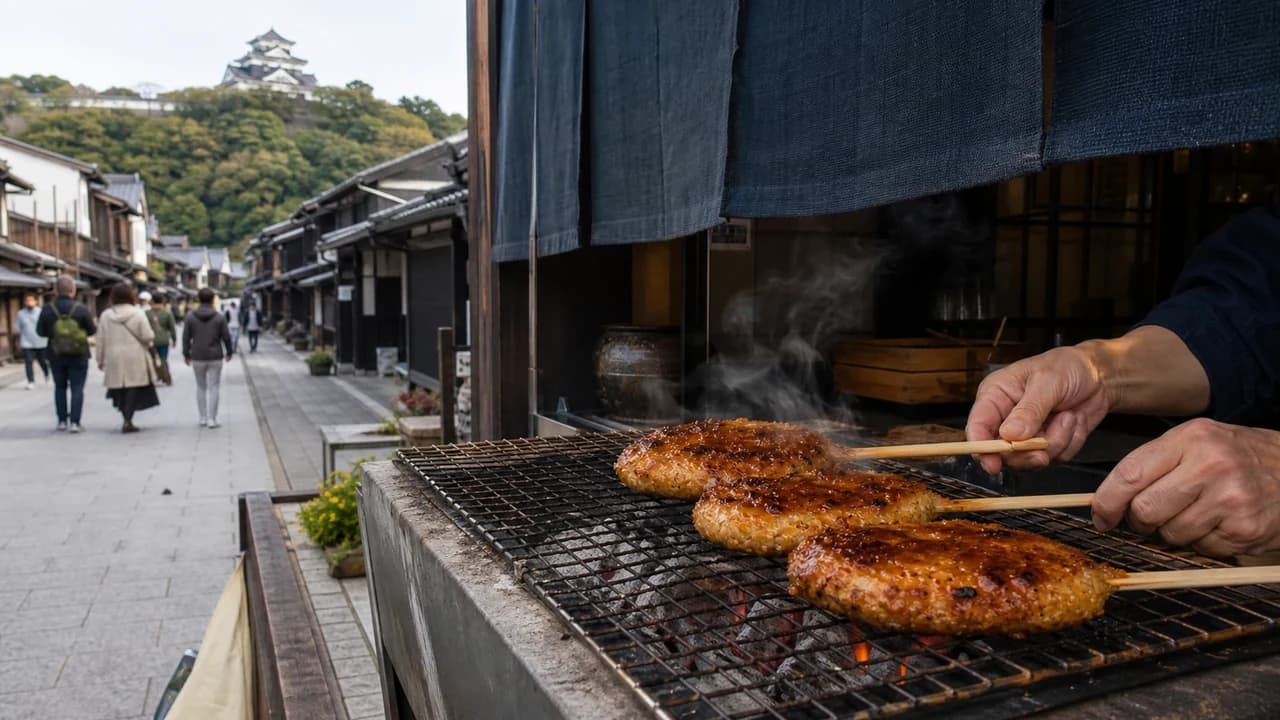
Last updated July 2026: gohei mochi in Inuyama is a flattened rice cake on a skewer, grilled over charcoal and brushed with a sweet-savory glaze. Locals treat it as the castle town's signature snack, and the top stop is Yamada Gohei Mochi Ten on Honmachi-dori, a grill-to-order stall priced around ¥100 a skewer. This guide covers the Tabelog recognition, the Meitetsu ticket discount, and how to fit gohei mochi into a castle-town food crawl.
What Is Gohei Mochi? Inuyama's Signature Castle-Town Snack
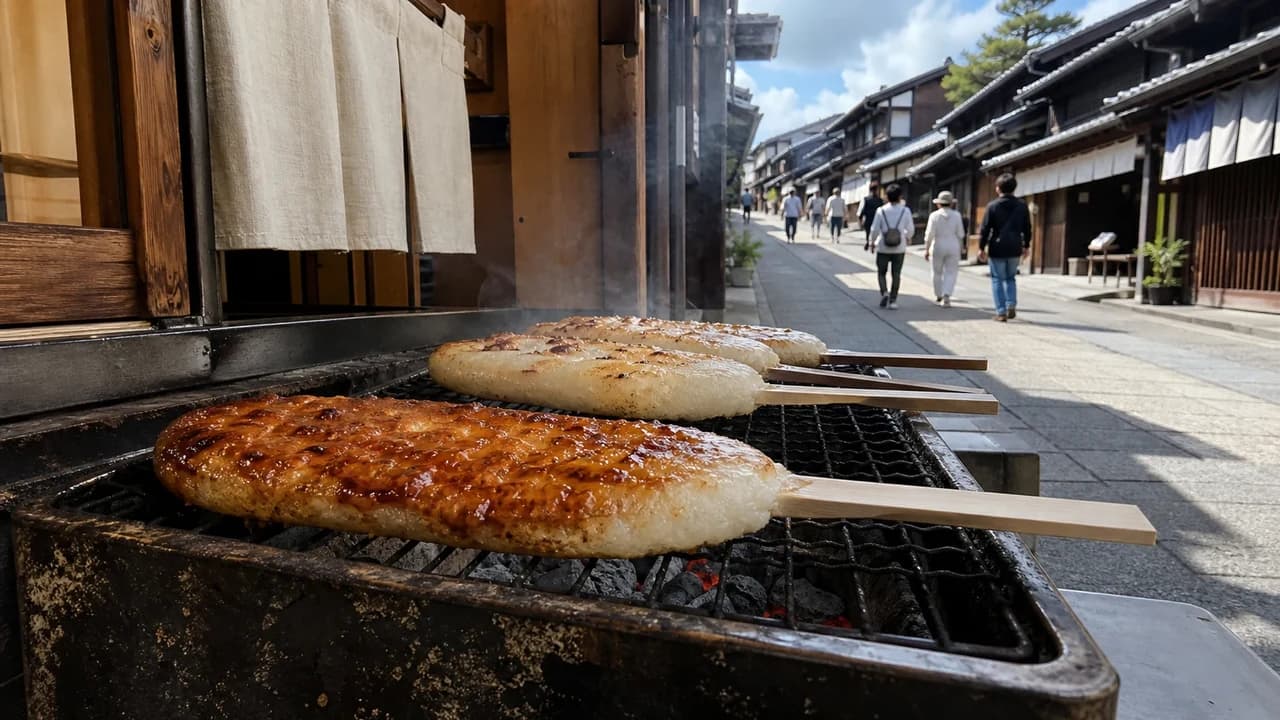
Gohei mochi is a regional rice snack from the mountain-and-river belt spanning Aichi, Gifu, and Nagano prefectures. Cooks press cooked rice around a flat skewer instead of pounding glutinous mochigome, the way standard mochi is made. That difference matters for texture. Expect a grainier, chewier bite than smooth New Year's mochi, not a flaw but the point. The shape itself is functional. Rice is flattened around the skewer rather than rolled into balls. That gives the glaze more surface area to cling to during grilling. Gohei mochi is easy to mistake for dango at a glance, since both arrive on skewers. Dango uses whole glutinous rice balls, while gohei mochi is a single pressed, flattened piece. Vendors grill the skewer over charcoal, then brush on a sweet-savory glaze. Recipes vary by shop, but sesame, walnuts, miso, and peanuts are the common bases. The right piece holds its shape without turning smooth. Over-pressing the rice pushes the texture toward something that reads as mass-produced rather than handmade. Kyoto-style wagashi aims for refinement and seasonal artistry, plated and eaten slowly. Gohei mochi aims for something rougher: fuel for walking, sold where people are already moving between sights. In Inuyama specifically, the snack has become shorthand for the castle town itself. That local framing is why most Inuyama food guides list gohei mochi before any other single dish. For background on how it fits Inuyama's wider eating scene, see the Inuyama food guide. For a walkable route past other stalls, check the castle town street food guide.
Yamada Gohei Mochi Ten: The Top-Rated Choice in Inuyama Castle Town
Yamada Gohei Mochi Ten is the shop most guides point to first. It earned a spot on the 2023 Tabelog 100 list for Japanese traditional sweets, a competitive category dominated by formal wagashi houses rather than street stalls. Commentary on the shop frames this as unusual: a regional rice-cake stall competing inside a serious wagashi conversation typically led by established sweets shops. Its Tabelog user score sits at 3.56, notable for a stand-up snack rather than a seated restaurant. The shop grills each skewer to order, a process that takes about three minutes. That wait is the tradeoff for a rice cake that stays warm and a glaze that has not dried under a heat lamp. Service is counter-only, and the space itself is small, closer to a walk-up window than a cafe with seating. The house sauce blends sesame, walnuts, and peanuts. That combination is worth flagging for travelers with nut allergies. It is baked into the standard recipe rather than offered as a substitutable topping. The menu shifts slightly with the seasons. Baked sweet potatoes appear in winter, while soft serve and shaved ice, kakigori, carry the warmer months. Gohei mochi itself stays the year-round anchor regardless of these seasonal additions. A single skewer costs about ¥100, keeping a full stop well under ¥1,000 even with several skewers split between two people.
Each skewer costs about ¥100, yet ordering just two or three pieces per stop allows visitors to combine three or four stands for under ¥1,000 across an afternoon.
- 2023 Tabelog 100 selection: Japanese traditional sweets category
- Tabelog user score: 3.56
- Grill time: about 3 minutes per skewer, made to order
- Price: about ¥100 per skewer, under ¥1,000 for a full stop
How to Use the Inuyama Castle Town Ticket for a Discount
The Meitetsu Inuyama Castle Town Ticket brings the price of Yamada's gohei mochi down further. The coupon cuts each skewer from ¥100 to ¥70, though the discount applies only to the first five skewers per ticket. It works at more than 10 participating shops around the castle town, not just the mochi stall. Meitetsu sells the ticket at its stations, including Nagoya Station, bundled with train fare to Inuyama. Check current pricing and validity windows before the visit, since coupon terms can change between seasons. Bring the physical ticket to the counter and mention it before ordering. This is not a reservation system. It is closer to a same-day coupon book handed out alongside a train ticket. The ticket is designed to pair with train travel to Inuyama, not to function as a standalone discount card. For a day built around several stops, the combined discounts across participating shops can offset a meaningful share of small food and shopping costs.
| Participating stop | Discount with the ticket |
|---|---|
| Yamada Gohei Mochi Ten | ¥100 skewer drops to ¥70 (first 5 skewers) |
| Juhyoya Inuyama Inouetei | A ¥170 soy sauce skewer earns an entry in a prize draw |
| Showa Yokocho (Koikomachi Dango) | ¥50 off |
| Inuyama Loreley Beer Hall | ¥100 off the first draft beer |
| Inuyama Biyori | Kimono 1-day rental drops from ¥4,400 to ¥3,850 (advance reservation only) |
- Regular price: ¥100 per skewer
- Discounted price with the ticket: ¥70 per skewer
- Discount limit: first 5 skewers per ticket
- Participating shops: more than 10 around the castle town
Best Time to Visit and What to Expect at the Grill
Honmachi-dori narrows as it nears the castle, and the food along it shifts from restaurant plates to handheld skewers with short waits. Mid-morning, before the lunch rush, is the easiest window to get a skewer without a wait. A second good window opens right after descending from Inuyama Castle: A Complete Travel Guide, when foot traffic briefly thins before tour groups regroup. Because each skewer is grilled to order, expect a short queue even in slow periods. The three-minute cook time is fixed. It does not speed up during a rush. A rushed glaze would undercut the reason to wait for one in the first place. Treat the wait as part of the format rather than a delay to route around. This is a stand-and-eat or walk-and-eat stall, not a seated restaurant with tables. Plan to keep moving once the skewer is in hand, since the counter itself has little room to linger.
Beyond the Mochi: Building an Inuyama Castle-Town Food Crawl
Gohei mochi works best as one stop in a longer grazing route rather than the whole visit. Showa Yokocho serves Koikomachi Dango, a multicolored dango skewer that has become a popular photo stop along Honmachi-dori. Juhyoya's Inuyama-an location sells Moriguchi-zuke soft serve and a Japanese burger, both built around the same pickled-vegetable tradition the shop is known for. Inuyama Loreley Beer Hall pours a German-style draft brewed locally. The beer skips heat treatment and filtration, a method associated with the German brewers who helped establish it. None of these stops requires a sit-down meal. Stringing three or four together, gohei mochi included, fills an afternoon without ever sitting at a table. For a fuller walking sequence through the historic streets, see the Honmachi castle town guide. If dessert is the priority instead of savory snacks, the Inuyama cafes and desserts guide covers more options. Travelers building a full day around the castle can start from the Inuyama Itinerary One Day: Castle Town Guide and slot the food crawl in around castle opening hours. Inuyama sits along the Kiso River, and ayu sweetfish from those waters is another local specialty, covered in the ayu sweetfish guide. Pairing a gohei mochi stop with river-side attractions rounds out a food-focused day. Broader sightseeing options sit in the Inuyama attractions guide.
What a Gohei Mochi Stop Actually Costs
A single skewer at Yamada Gohei Mochi Ten runs about ¥100, or ¥70 with the Meitetsu Inuyama Castle Town Ticket for the first five skewers. Most travelers order two to three pieces, which keeps the stop closer to ¥200 or ¥300 than to a full meal price. Even without the ticket, a gohei mochi stop costs less than most seated lunches in the castle town. Pairing it with one more stand, such as Koikomachi Dango's ¥50 ticket discount or a discounted Loreley draft, still keeps a two- or three-stop crawl under ¥1,000 per person in most cases. Skipping one seated meal in favor of two or three street stops, gohei mochi included, can meaningfully lower the day's food budget. Combined with the ticket's kimono rental discount, a single Inuyama Castle Town Ticket can offset costs across food and paid activities in the same afternoon. That makes gohei mochi one of the lower-cost ways to spend time in Inuyama's castle town. For a wider view of what meals run across town, the Inuyama restaurants guide breaks down seated-restaurant pricing for comparison.
Getting to Honmachi-dori and Planning the Day Trip
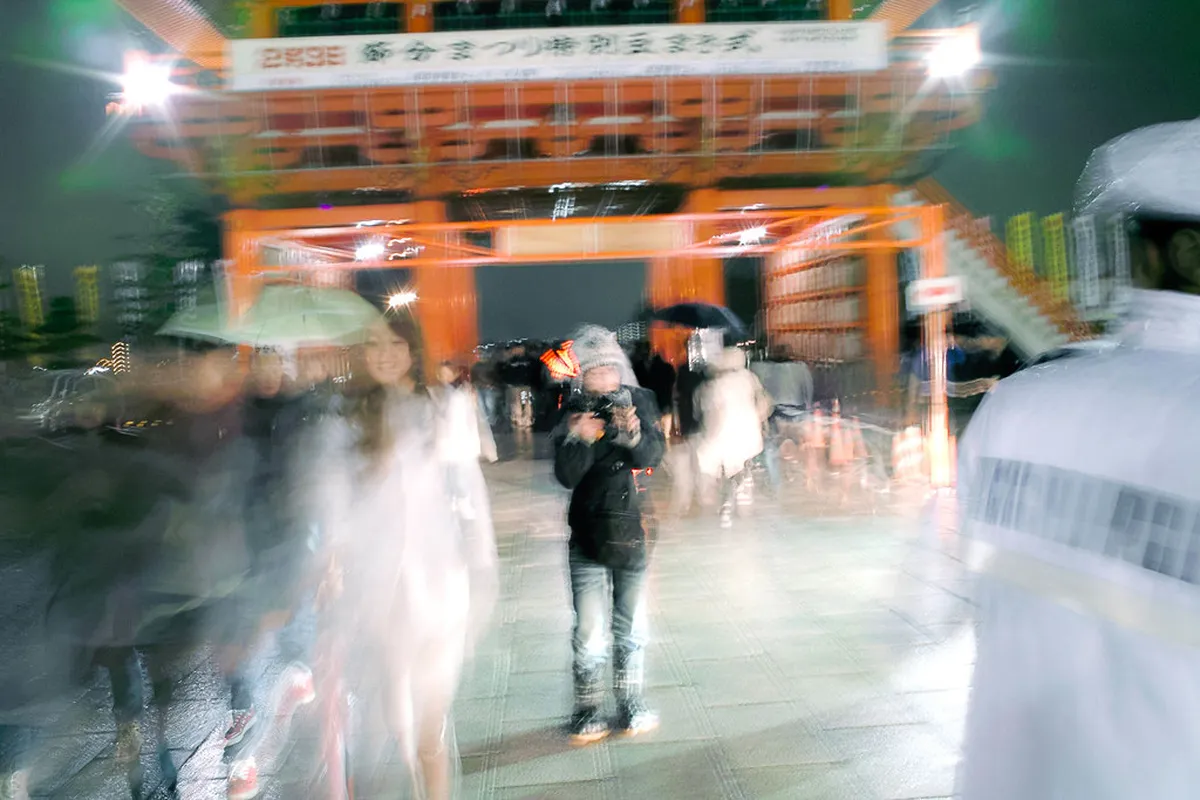
Yamada Gohei Mochi Ten sits on Honmachi-dori, the castle town's main shopping street. It is roughly a 10 to 15 minute walk from Inuyama Station or Inuyama-yuen Station, the two stops that serve the town. Both stations sit on the Meitetsu network, making a same-day trip from Nagoya straightforward. The street itself is lined with small shopfronts rather than large stores, keeping the walk from station to castle slow by design. Treat the walk as part of the food crawl, not just transit between sights. Many travelers treat gohei mochi as a mid-route stop on a day trip from Nagoya built around the castle and the old streets. Full transit options and journey times are covered in the getting to Inuyama guide. Travelers staying overnight instead of doing a same-day run can compare options in the where to stay in Inuyama guide. Seasonal timing matters too. The town gets busier during the Inuyama Matsuri Festival Travel Guide festival. Build extra queue time into any food stop on those dates. General seasonal advice, including quieter months for a slower crawl, is in the best time to visit Inuyama guide. Shop hours and holiday closures shift through the year, so confirm current hours before building a tight schedule around the visit.
Despite each skewer taking about three minutes to grill, visits during the Inuyama Matsuri festival require building significantly extra queue time, since the fixed cook time doesn't accelerate and foot traffic spikes.
For trip-planning details, see Inuyama Castle - Wikipedia.
Frequently Asked Questions
Is gohei mochi in Inuyama kid-friendly?
Yes. It is a small, warm, not-spicy snack on a stick, easy for kids to eat while walking. Portion size is modest. Pair it with a second stop, like Koikomachi Dango, if a child wants more after one skewer.
Do you need a reservation for Yamada Gohei Mochi Ten?
No. It is a walk-up counter, not a seated restaurant. There is no booking system to use. Expect to queue briefly while each skewer grills to order.
What is the biggest mistake first-time visitors make with gohei mochi?
Treating it as a full meal is the most common mistake. Gohei mochi is a snack, sized to complement a longer castle-town food crawl, not replace lunch. Budget for a second or third stop to actually feel full.
Does the gohei mochi sauce contain nuts?
Yes, and this matters for allergies. Yamada Gohei Mochi Ten's house glaze blends sesame, walnuts, and peanuts together, not offered separately. Ask staff about the current recipe before ordering, since the nut content is baked into the standard sauce rather than added as a topping.
How is gohei mochi different from regular mochi?
Regular mochi comes from pounded glutinous rice, called mochigome, giving it a smooth, stretchy texture. Gohei mochi uses mashed ordinary rice pressed onto a skewer, so the bite is grainier and less stretchy. Expect texture closer to a dense rice cracker crossed with a rice ball, not the pull of New Year's mochi.
How much does a gohei mochi stop typically cost?
A single skewer runs about ¥100, or ¥70 with the Meitetsu Inuyama Castle Town Ticket. Most travelers order two or three skewers. A full stop rarely climbs past a few hundred yen, well under ¥1,000 even before any discount.
Does gohei mochi in Inuyama get busier during festivals?
Yes. Foot traffic on Honmachi-dori rises during the Inuyama Matsuri festival dates, and grill queues lengthen along with it. Visiting mid-morning still helps, but budget extra time specifically on festival weekends.
Free guide: Japan's Hidden Gems
12 under-the-radar places beyond Tokyo & Kyoto — with the best season to visit each and a local tip you won't find in the guidebooks.
You might also like


Continue reading
More guides you'll find useful