Inuyama Castle Town Food: A Honmachi-dori Eating Guide (2026)
A practical guide to Inuyama castle town food: dengaku, gohei-mochi, and ayu stalls along Honmachi-dori, plus a ¥3,000 budget and walking route for 2026.
On this page
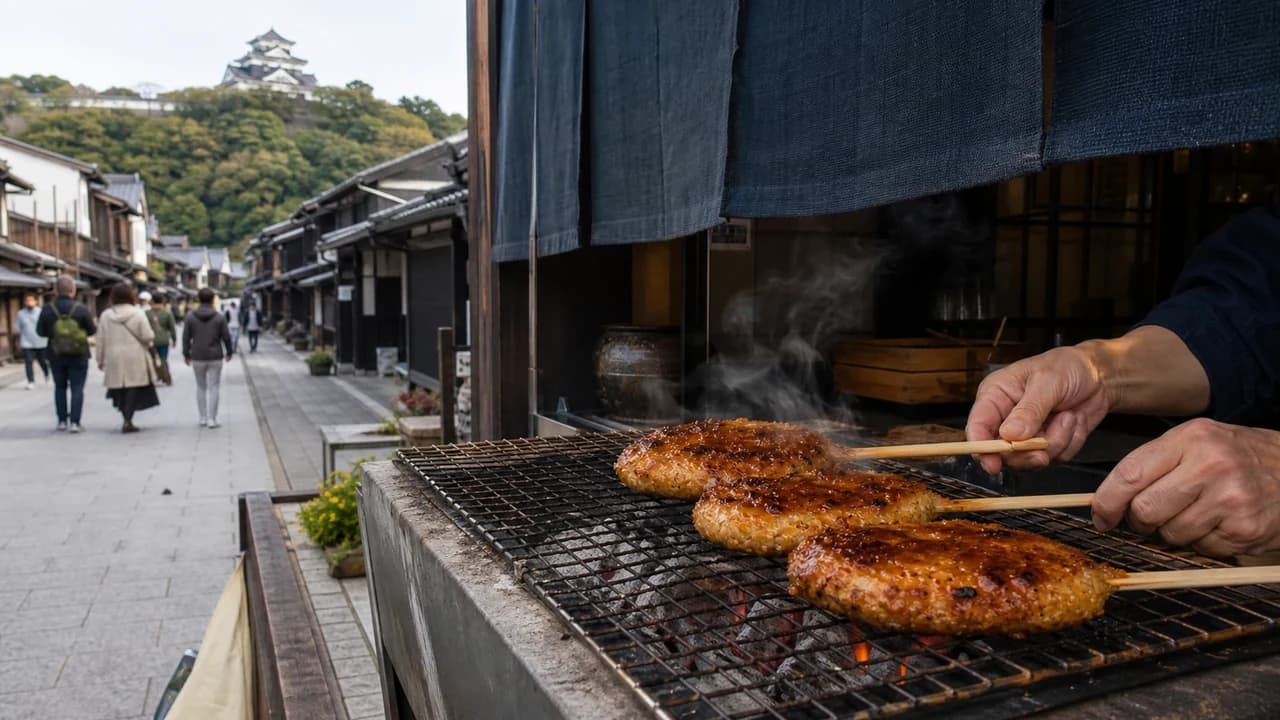
Last updated July 2026: Inuyama castle town food centers on Honmachi-dori, the lane linking Inuyama Station to the castle's stone stairs. Skewered dengaku, salt-grilled ayu, and hand-shaped gohei-mochi anchor the walk, and most visitors piece together a meal from several stalls rather than one sit-down restaurant. This guide covers the savory stops, the sweet stops, the three main food hubs, and a realistic walking route with a sample budget.
Inuyama Castle Town Food: Honmachi-dori and Tabe-Aruki Culture
Honmachi-dori runs from the west exit of Inuyama Station north toward the castle's stone stairs. Wooden merchant buildings from the Edo period now hold food stalls, cafes, and craft shops side by side. That stretch falls inside what locals call the Honmachi castle town area. Eating while strolling is known locally as tabe-aruki, and Inuyama built its reputation on that habit well before street food became a common travel phrase.
First-timers with limited time should prioritize three items: tofu dengaku, gohei-mochi, and temari sushi. Each costs a few hundred yen or less and takes only a minute to eat on the move. For sit-down options and a broader survey of where to eat across the city, the Inuyama food guide covers restaurants beyond the castle town stalls.
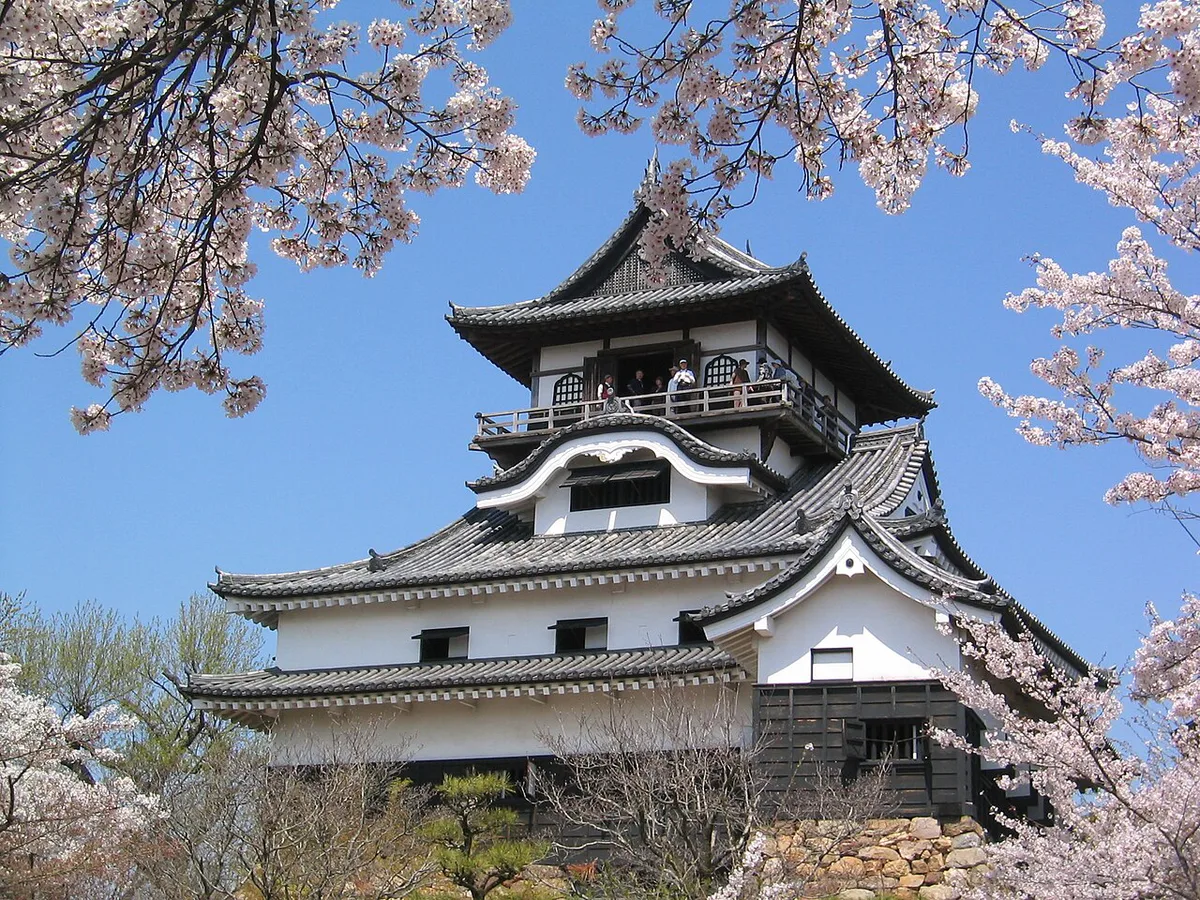
Sanko Inari Shrine sits just off the main street, a few minutes' walk from the castle end of Honmachi-dori. Its row of red torii gates draws a steady stream of visitors, and many combine a stop there with a snack on either side of the shrine visit. That overlap makes the shrine a natural midpoint marker when planning where to eat first and where to save for later.
Savory Specialties: Dengaku, Ayu, and Gohei-mochi
Savory stalls dominate the stretch of Honmachi-dori nearest the station, and red miso ties most of them together. That reddish-brown miso is saltier and more pungent than the lighter miso common elsewhere in Japan, and it defines much of the castle town's savory flavor. Tofu dengaku is usually the easiest vegetarian option on the street, though it is worth confirming the miso base at each individual stall. Portions at every stall are small by design, which makes it possible to sample four or five items without filling up before lunch.
- Tofu dengaku at Sakura Chaya: soft tofu grilled and coated in a red miso glaze, about ¥100 per skewer as of 2026, a short walk from the castle's stone stairs.
- Salt-grilled ayu (sweetfish) from the Kiso River, sold whole from stalls including Kisogawa Shoten along the main street and often eaten head to tail. A closer look at the fish's role in local river cuisine sits in the ayu guide.
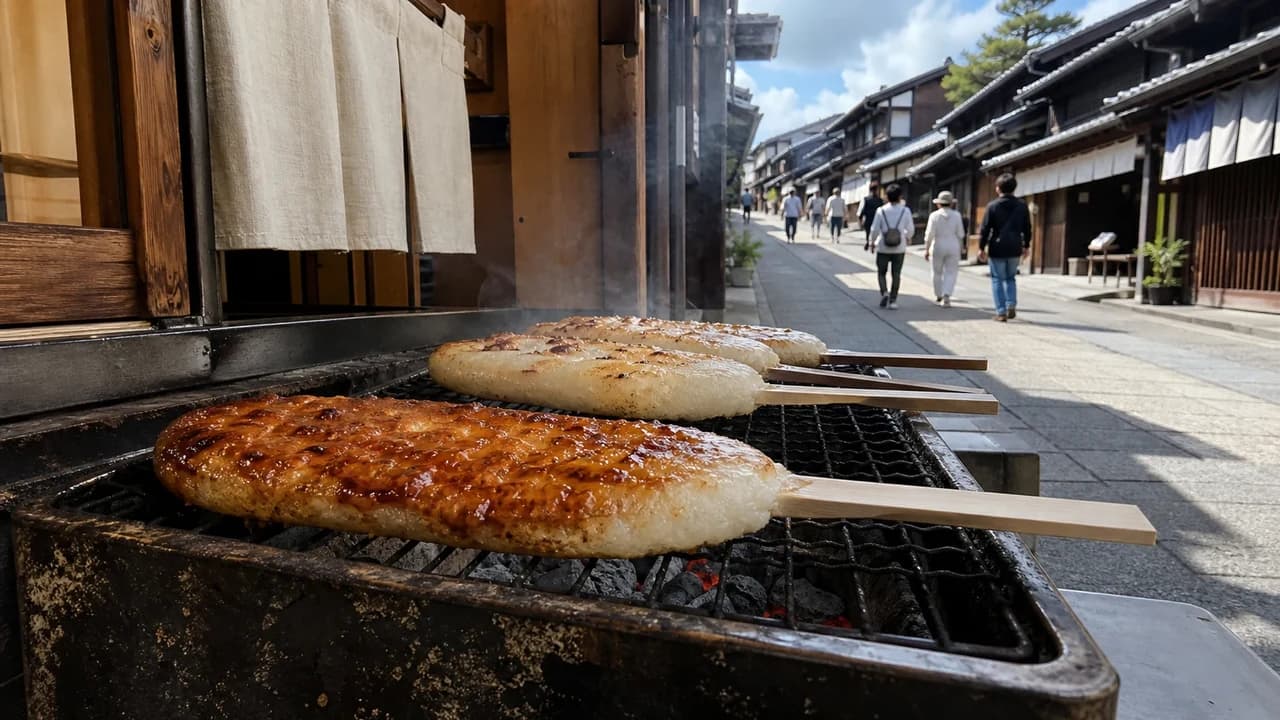
- Gohei-mochi at Yamada Goheimochiten: hand-shaped mochi rice on a skewer, dipped in a walnut-soy glaze and grilled over charcoal. Its Edo-period origins get a fuller treatment in the gohei-mochi guide.
- Hida beef skewers, a pricier option sold inside the food-court hubs. A short walk from the station, Hida Beef Sukiyaki Nikubei serves the same beef as a seated sukiyaki meal, open 11:00 AM to 5:00 PM. Other sit-down options appear in the restaurant guide.
- Age-yomogi: mochi balls mixed with Japanese mugwort, deep-fried, then grilled, and finished with a thick miso sauce when purchased.
- Saba-zushi: pressed mackerel sushi sold at castle-town shops, better suited to eating later than to eating on the move.
Sweets and Photogenic Treats Along Honmachi-dori
Dessert stalls cluster in the same stretch as the savory ones, and several build their reputation on color and shape as much as on flavor. A fuller list of cafes and dessert stops beyond the main street lives at the Inuyama cafes and desserts guide.
- Temari sushi at Iseya Sunaoroshi: small, round, colorful pressed sushi shaped like temari balls, sized for one or two bites.
- Colorful dango at Kuraya: skewered rice dumplings in bright glazes that circulate widely online.
- Dengaku sets at Honmachi Saryo, a renovated century-old house: a seven-flavor dengaku set runs roughly ¥1,380 to ¥1,480 depending on the pairing, as of 2026. It is open 11:00 AM to 5:00 PM, with last orders around 4:30 PM.
- Wagashi at Sakuraya Kaho, for a quieter, traditional-sweets stop.
- Baked sweet potato with shiratama ice cream at Sweet Potato Cafe En: about ¥700 as of 2026, open 11:00 AM to 5:00 PM, closed Tuesdays.
Showa Alley, Mori no Marche, and Inuyama Square: Choosing a Food Hub
Three enclosed hubs branch off Honmachi-dori, and each has a different personality. Picking the right one depends on weather, budget, and whether an indoor curated space or open-air stalls fit the plan better. Showa Alley's low ceilings and vintage signage suit a wet afternoon better than the open stalls on the main street. Mori no Marche works best for groups with mixed cravings, since its stalls span several cuisines under one roof. Inuyama Square leans upscale, pairing wagyu with traditional sweets rather than quick skewers. All three sit within a few minutes of each other, so trying two hubs in one visit is realistic if time allows.
| Food hub | Style | Best for | Notable |
|---|---|---|---|
| Showa Alley (Showa Yoko-cho) | 1950s-themed indoor alley | Rainy days, nostalgic atmosphere | Oyster and sake counter Goku |
| Mori no Marche | Modern outdoor food court | Variety: sushi, pizza, craft beer, oysters | Broiled meat and vegetable skewers |
| Inuyama Square | Traditional, premium | Wagyu beef and traditional sweets | Near the Inuyama Ninjutsu Dojo |
The ¥3,000 Food Crawl: A Sample Budget
A full castle-town food tour comfortably fits inside about ¥3,000 per person, split across one savory snack, one lunch-style set, one dessert, and one drink. That combination lands close to ¥3,000 once tax is added, leaving room for one more skewer if the budget allows. Splitting the same spread across a group instead of building one big lunch keeps the pace closer to tabe-aruki than to a sit-down meal. Castle entry runs separately, priced at ¥550 for adults and ¥110 for elementary and junior high students as of 2026. Its own guide, the Inuyama Castle guide, covers the keep in full.
Arriving by 3:30 PM is critical to executing the ¥3,000 budget; popular items like dengaku sets sell out before the 5:00 PM closing, and missing key dishes forces reprioritizing available stalls.
| Course | Example | Approx. price |
|---|---|---|
| Savory snack | Tofu dengaku, 1 skewer at Sakura Chaya | ¥100 |
| Lunch-style set | Dengaku Gozen set at Honmachi Saryo | ¥1,380–¥1,480 |
| Dessert | Baked sweet potato with shiratama ice cream at Sweet Potato Cafe En | ¥700 |
| Drink | Sencha or hojicha tea | a few hundred yen |
Tea, Festival Floats, and Other Pairings
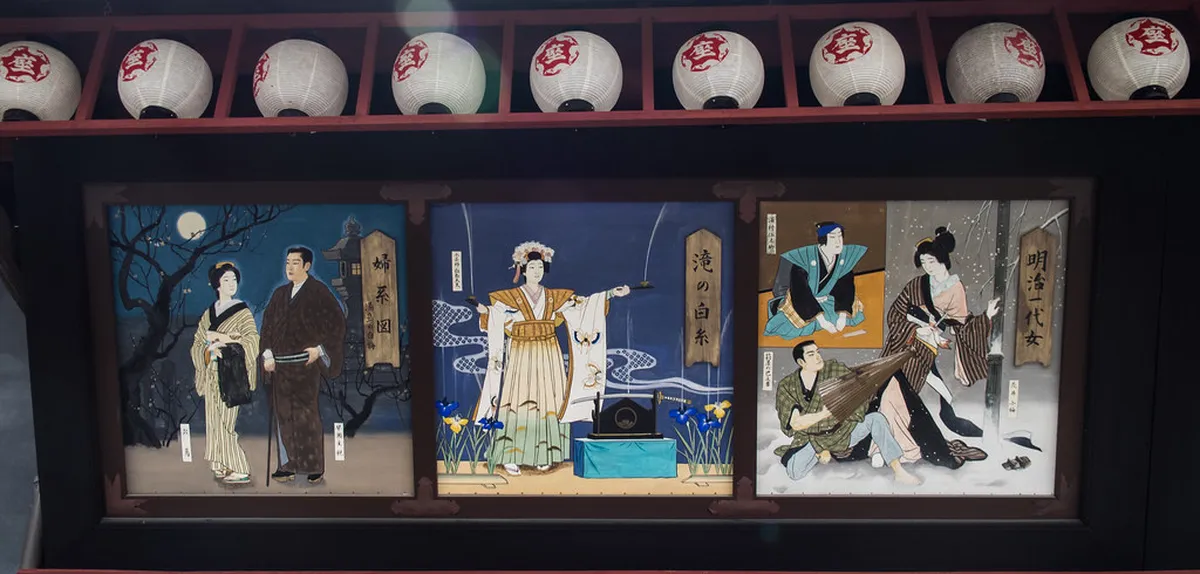
Not every stop in the castle town is eaten on the move. Urakuen Garden holds Joan, a National Treasure tea house, and its formal tea service is a slower counterpoint to the tabe-aruki pace on Honmachi-dori. Pairing the two works best as a bridge between snacks rather than as the whole afternoon. Neither stop requires a reservation for a casual visit. A formal tea ceremony at Joan may need one, so check current details before planning around it. Known locally as Donden Kan, the Inuyama Festival Floats Museum works well as a short indoor stop between food stalls. It displays the towering floats used in the city's festival. Its own Inuyama Matsuri guide covers the festival itself and when the floats actually parade through town. Cormorant fishing (ukai) dinner cruises on the Kiso River are a seasonal, higher-cost option for a different kind of meal on the water. Availability and pricing change by season, so check current status before building a visit around it.
Planning the Walk: Station Choice and Route
Two train stations serve the castle town, and which one to use depends on the plan. Inuyama-Yuen Station sits about a 15-minute walk from the castle, closer to the top of the route. Inuyama Station's west exit sits closer to the start of Honmachi-dori, roughly a 10-minute, 650-meter walk into the food street itself. From Nagoya, the Meitetsu Inuyama Line runs from Meitetsu Nagoya Station to Inuyama Station in about 25 to 32 minutes, with a fare around ¥630 as of 2026. That route and its timetables get fuller coverage in the getting to Inuyama guide. A logical route starts at Inuyama Station, heads north through Honmachi-dori, passes Sanko Inari Shrine, continues to Inuyama Castle, then loops back toward the Kiso River. Looping back along the river after the castle gives a quieter final stretch before returning to the station. Day-trippers building this into a single outing from the city can lean on the Nagoya day trip guide for a full-day structure. Coin lockers are available at the station and near the castle for anyone carrying luggage on a same-day trip from Nagoya. Honmachi Saryo has no dedicated parking lot, but coin-operated lots sit nearby for anyone arriving by car.
Practical Tips: Hours, Cash, and Timing Mistakes to Avoid
Most stalls operate roughly 10:00 AM to 5:00 PM, matching the castle's own 9:00 AM to 5:00 PM hours. When the castle closes, much of the food street winds down with it, so treat 5:00 PM as a hard cutoff rather than a suggestion. Weekend afternoons draw more foot traffic than weekday mornings, which affects both wait times at stalls and available tatami seating at sit-down cafes. Extending the day beyond food is straightforward. Its Inuyama attractions guide rounds out a fuller day around the castle. A separate Inuyama itinerary guide sequences that day trip hour by hour. Travelers staying overnight to catch the castle before the day-trip crowds arrive can check the where to stay in Inuyama guide for lodging near the castle town. Seasonal crowd and weather patterns get fuller coverage in the best time to visit Inuyama guide.
- Bring cash. Many stalls are cash-only, and even shops that take PayPay rarely accept credit cards.
- Arrive before 3:30 PM if possible. Popular items like the Honmachi Saryo dengaku sets and Sweet Potato Cafe En's ice cream can sell out before closing.
- Check the calendar before visiting in late December. Inuyama Castle closes December 29 to 31, and stall activity thins out with it.
Frequently Asked Questions
How much should you budget for food in Inuyama Castle Town?
Plan on roughly ¥3,000 per person for a full crawl: one savory snack, one lunch-style set, one dessert, and one drink. Add ¥550 for adult castle entry if sightseeing is part of the same visit.
Should you start the walk from Inuyama Station or Inuyama-Yuen Station?
Start from Inuyama Station if the food street is the priority, since its west exit sits closest to the beginning of Honmachi-dori. Inuyama-Yuen Station sits closer to the castle itself, about a 15-minute walk, so it suits visitors who want the keep first.
What time do the food stalls in Inuyama Castle Town close?
Most stalls run from around 10:00 AM to 5:00 PM, matching the castle's own closing time. Popular items can sell out before then, so aim to arrive by mid-afternoon rather than after 3:30 PM.
Is Inuyama castle town food vegetarian-friendly?
Tofu dengaku is typically vegetarian, though the miso glaze can vary by shop, so it is worth asking whether a fish- or meat-based stock is used. Ayu and Hida beef skewers are not vegetarian, but dessert stalls like Sweet Potato Cafe En and wagashi shops offer plenty of meat-free options.
Which food hub is best on a rainy day?
Showa Alley is the strongest rainy-day option, since its 1950s-themed lane runs indoors rather than along the open street. Mori no Marche and Inuyama Square are partially open-air, so they suit clear weather better.
Do the food stalls or cafes take reservations?
Street stalls and the food-court hubs do not take reservations. Honmachi Saryo can fill up on weekend afternoons, so arriving early or calling ahead helps if a tatami seat matters.
Free guide: Japan's Hidden Gems
12 under-the-radar places beyond Tokyo & Kyoto — with the best season to visit each and a local tip you won't find in the guidebooks.
You might also like

Continue reading
More guides you'll find useful