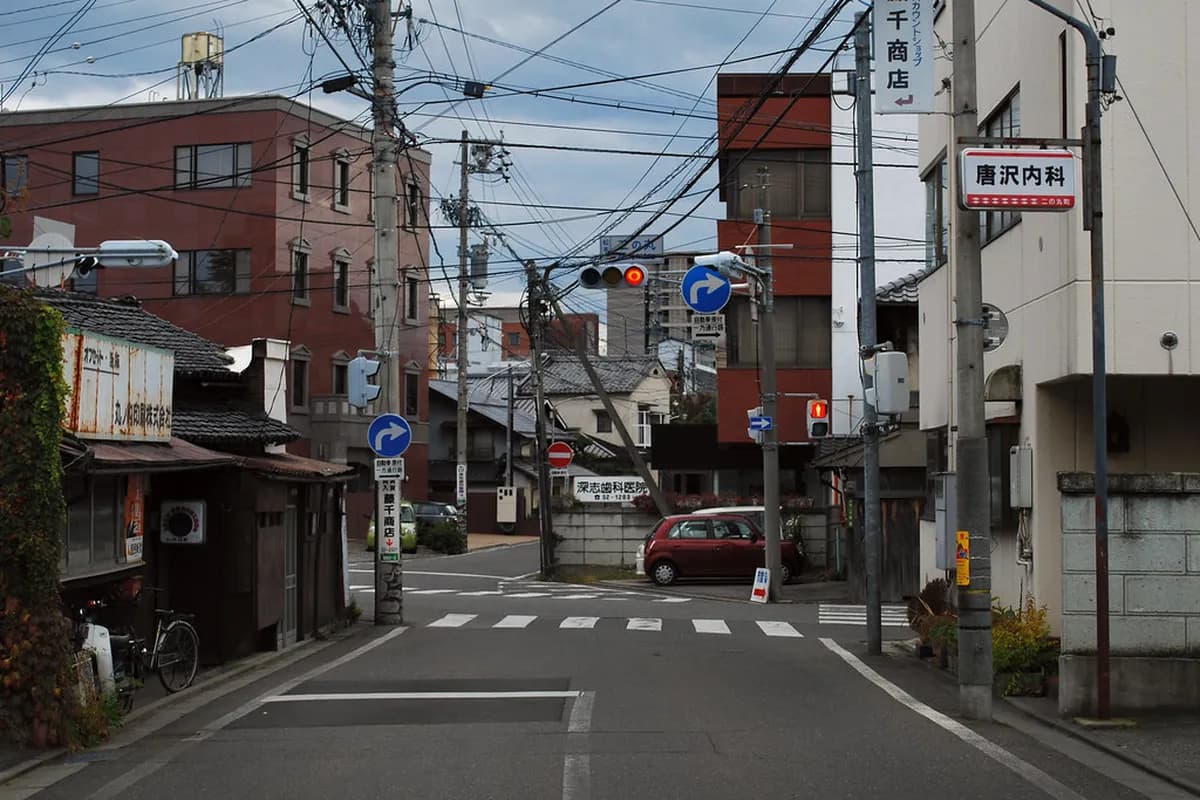
Inuyama Castle Town Day Trip from Nagoya: 30-Min Train Plan
Inuyama is 30 minutes from Nagoya by train. See a original castle, two shrines and a food street in one day, timed to beat the crowds.
On this page
Taking an inuyama castle town day trip from nagoya is one of the best ways to experience feudal Japan without leaving the Chubu region. Inuyama sits about 30 minutes north of Nagoya by train and packs a genuine original castle, two atmospheric shrines, and a walkable historic food street into a single compact day. This guide walks you through exactly how to sequence the visit so you hit the castle before the crowds, work through the shrines, and land at the Jokamachi when the snack stalls are fully running.
Whether you are a first-time visitor or returning to central Japan, Inuyama rewards slow walkers and keen eaters alike. You should check out my 10 Best Nagoya Day Trip Itineraries and Planning Tips for more options if you are building a wider Aichi itinerary. If you are still wondering Is Nagoya Worth Visiting? My Honest 2026 Travel Review, this day trip is the fastest way to answer that question.
How to Get to Inuyama From Nagoya
The Meitetsu Nagoya-Inuyama Line runs directly from Nagoya Station to both Inuyama Station and Inuyamayuen Station. The journey takes 25 to 30 minutes depending on whether you catch an express or local service. Fares are around 580 to 620 yen each way, making the round trip one of the most affordable day excursions from central Nagoya.
The two stations have different practical uses. Arriving at Inuyamayuen gives you a riverside approach to the castle, which is especially scenic during cherry blossom season. Arriving at Inuyama Station puts you at the top of the Jokamachi street, so you walk downhill through the food stalls before reaching the castle. A smart tactic is to arrive at one station and depart from the other — the loop is completely walkable and means you cover the full historic street without retracing your steps.
| Route from Nagoya | Duration | Cost (one way) | Notes |
|---|---|---|---|
| Meitetsu to Inuyamayuen | ~28 min | ¥580–620 | Riverside castle approach |
| Meitetsu to Inuyama Station | ~26 min | ¥580–620 | Top of Jokamachi, walk downhill |
| Castle entry fee | — | ¥550 adult | Open 09:00–17:00 daily |
| Urakuen Garden (Jo-An teahouse) | — | ¥1,200 | National Treasure teahouse, 10 min walk |
A smart tactic is to arrive at Inuyamayuen Station and depart from Inuyama Station (or vice versa) — the loop is completely walkable and means you cover the full Jokamachi food street without retracing your steps. Most snack stalls are cash-only; there is a 7-Eleven ATM that accepts international cards near Inuyama Station.
If you are transiting Japan on the Tokaido Shinkansen, Nagoya Station has coin lockers on the concourse level. Leave your main bags there and travel light to Inuyama — the castle climb is steep and storage inside is minimal. Check the Meitetsu timetable the night before as express frequencies drop after 19:00.
Inuyama Castle: Japan's Oldest Original Keep
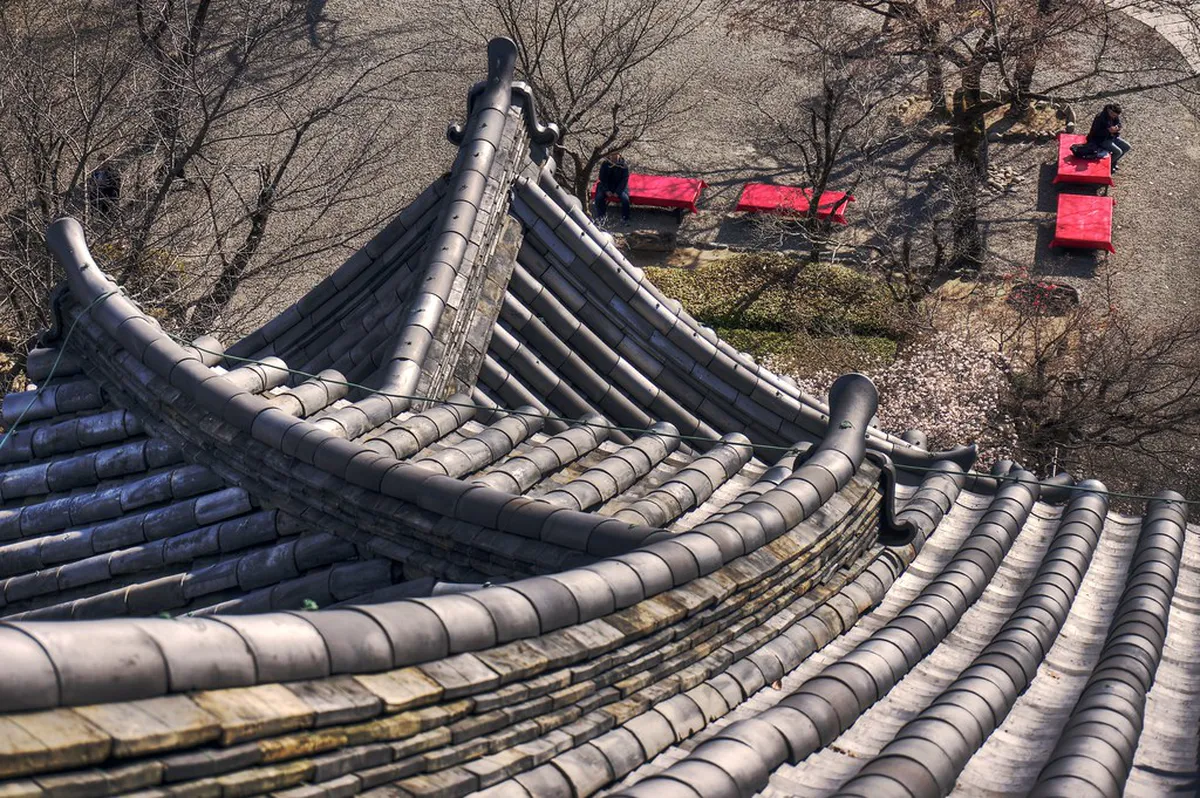
Inuyama Castle was built in 1537 by Oda Yojiro Nobuyasu, an uncle of the famous warlord Oda Nobunaga. It is the oldest surviving wooden castle keep in Japan and holds the rare designation of National Treasure — only five Japanese castles carry that status, alongside giants like Himeji and Matsumoto. This matters because it is not a reconstruction. The floors creak, the staircase angles are punishing, and the timbers carry five centuries of actual history rather than poured concrete covered in plaster.
The castle is directly connected to Japan's most turbulent era of unification. Toyotomi Hideyoshi used Inuyama Castle as his base during the 1584 Battle of Komaki-Nagakute, commanding 120,000 men against Tokugawa Ieyasu. Standing inside the keep knowing those warlords walked the same narrow corridors makes the ¥550 entrance fee feel almost absurdly reasonable. Opening hours are 09:00 to 17:00 daily.
At the top, the balcony wraps around all four sides of the keep and delivers unobstructed views across the Kiso River and into Gifu Prefecture. There is no modern safety netting blocking the sight lines, which is increasingly rare at original castles. Remove your shoes at the entrance and carry them in the plastic bag provided — this is standard practice at all surviving original keeps and protects the ancient wooden floors from damage. The climb involves four floors of steep ladders; allow 40 minutes once you are inside.
Haritsuna Shrine and the Inuyama Matsuri
Haritsuna Shrine sits just below the castle path and is easy to miss if you are rushing straight to the keep. It is a quiet, stone-lantern-lined shrine dedicated to safe childbirth, good fortune, and protection from harm. The atmosphere is distinctly different from the more Instagram-friendly Sanko Inari next door — fewer visitors, more birdsong, and a large stone torii flanked by mature trees.
What makes Haritsuna historically significant is its connection to the Inuyama Matsuri, a festival designated as a UNESCO Intangible Cultural Heritage. The festival traces its origins to this shrine in 1635 and takes place on the first weekend of April each year. Giant three-layered floats (dashi) carrying mechanical karakuri puppets are pulled through the streets, and lanterns are lit after dark for a procession that draws visitors from across Japan. If you can align your 2026 visit with that first April weekend, the combination of cherry blossoms and festival floats is exceptional. Book accommodation and trains months in advance — the town's capacity fills fast.
Outside festival season, Haritsuna still rewards a brief stop. You can pick up an omikuji fortune slip for ¥300 — a sakura or seasonal design depending on when you visit. If the fortune is poor, tie it to a tree on the grounds to leave the bad luck behind, a common Shinto practice.
Sanko Inari Shrine: Hearts, Foxes, and Financial Prayers
Sanko Inari Shrine is built directly adjacent to Inuyama Castle and is the most photographed spot in town for a reason. The walls are covered with pink heart-shaped ema (wooden prayer boards) filled with wishes for love, marriage, and romantic connection. The kanji 縁 — pronounced "en" — appears on many of them, representing the bond or fated connection between two people. The heart shapes have become an unofficial symbol of Inuyama, repeated in food, street decorations, and cafe menus across the Jokamachi.
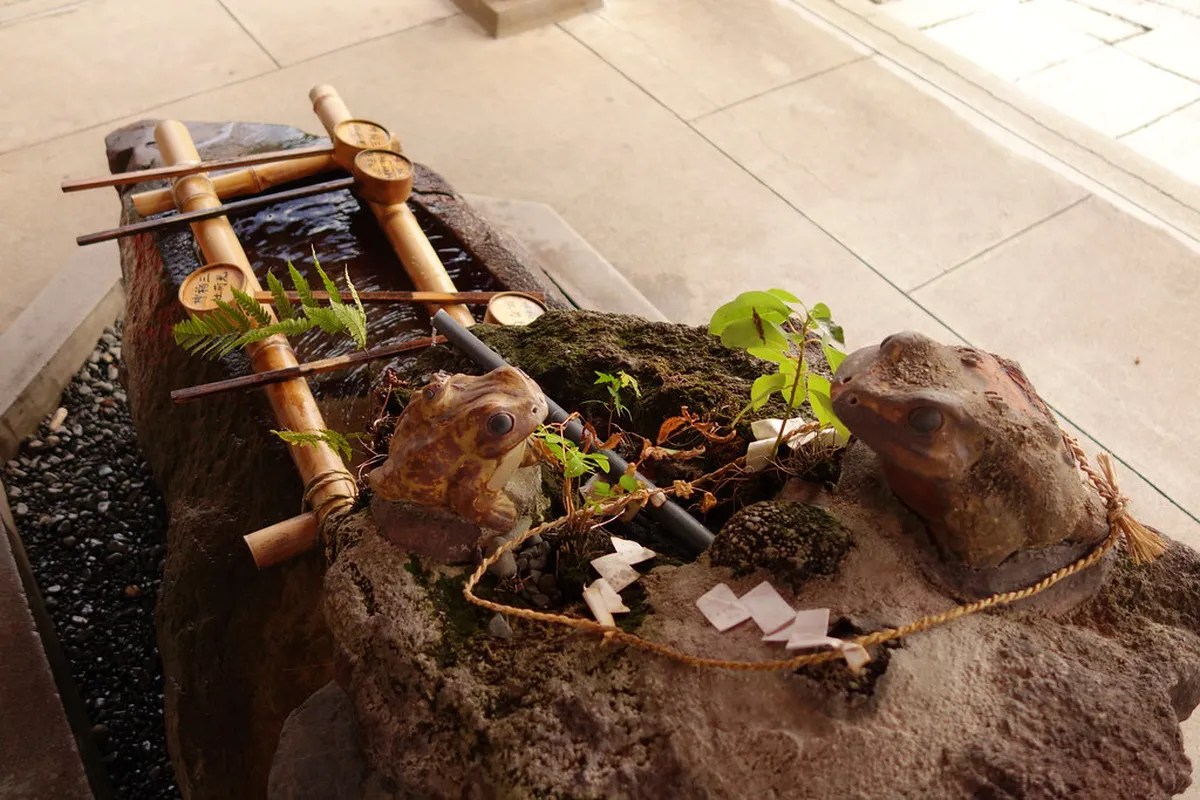
Being an Inari shrine, it also features the characteristic tunnels of bright red torii gates and inari fox statues. Inari shrines in Japan serve dual purposes: romantic and family prayers sit alongside prayers for business success and financial prosperity, which is why you will see both couples writing ema and business owners bowing at the main hall. Near the entrance, a small frog shrine lets visitors wash coins in a ladle and basin — a ritual said to multiply the money that passes through your hands.
Arrive before 10:00 to photograph the torii tunnel without queuing. After that hour, tour groups begin moving through and clear shots become difficult. The shrine has no entry fee and can be done in 20 minutes if you are moving efficiently, or 45 minutes if you want to write an ema and explore the upper sections. It is worth budgeting the extra time.
Snack Time in Inuyama's Jokamachi
The Jokamachi is the castle town street running from Inuyama Station up toward the castle — a long stretch of renovated merchant houses that now operate as cafes, food stalls, and boutiques. Most shops open around 10:00 and close by 17:00, so your snack window is the middle of the day. The street is completely walkable in 15 minutes at pace, but realistically you will spend two to three hours here between stops.
Start with Gohei Mochi — grilled rice cakes on a skewer with a savory walnut or miso glaze. They cost around 200 to 300 yen each and are a regional staple across Aichi and Gifu. The next must-try is Koikomachi Dango, Inuyama's most photographed snack: colorful rice dumplings with rotating seasonal flavors — sakura, matcha, ume — priced at around 400 to 500 yen per stick. If you want something more substantial, look for Hida Beef Sushi, a small piece of lightly seared wagyu on vinegared rice. It runs around 600 to 800 yen per piece and is genuinely exceptional. Consult my 21 Best Dishes and Travel Tips for Nagoya for how these snacks compare to what is available back in the city.
Showa Alley (昭和横丁) branches off the main Jokamachi street near the Koikomachi Dango shop. It is a narrow lantern-lit passage with grilled skewer stalls and retro food vendors that recreate the atmosphere of Japan's Showa era (1926–1989). The grilled miso skewers here are savory and cheap — most items under 300 yen. Several craft breweries have also opened in renovated merchant houses along the main street; they offer tasting flights made with Kiso River water. Smaller stalls often prefer cash, so keep some yen on hand.
For a sit-down lunch, Honmachi Saryo on the main street is a 100-year-old townhouse with a menu built around dengaku — miso-glazed tofu and konnyaku on skewers, with seven flavor variations. A set runs around ¥980 and is plant-based. The cafe at Yoakeya serves matcha raw cheesecake with a heart-shaped monaka wafer for ¥850; it is the correct place to unwind after the castle before catching the train back.
Urakuen Garden: The Detail Most Visitors Skip
Ten minutes east of Inuyama Castle, accessible via the river walk path toward Inuyamayuen Station, sits Urakuen Garden. Most visitors skip it because of the ¥1,200 entry fee — but the garden contains Jo-An teahouse, one of only three teahouses in Japan designated as a National Treasure. That makes Urakuen unique: a single visit gives you two National Treasures in one town (the castle and the teahouse), a combination you will not find anywhere else in the Chubu region.
Jo-An was built in 1618 by Oda Uraku, a tea master and younger brother of Oda Nobunaga — the same Nobunaga whose family built Inuyama Castle. The teahouse was relocated multiple times before landing in its current position in Urakuen in the 1970s. A matcha and sweet set inside the garden costs an additional ¥600. The tea ceremony experience is quiet, unhurried, and runs without reservation on most days. If your group includes anyone with a serious interest in Japanese architecture or tea culture, this is the right stop.
Skip Urakuen if you are on a tight timeline or have already done a tea ceremony elsewhere. But if you plan to exit via Inuyamayuen Station anyway, the garden sits directly on the walking route and the detour adds only 30 minutes. It pairs cleanly with a riverside walk that lets you see the castle from below — a very different perspective from the hilltop balcony view.
Best Time of Year to Visit Inuyama
Spring (late March to early April) is peak season for good reason: cherry blossoms line the riverside approach to the castle, and the Inuyama Matsuri runs on the first weekend of April. The combination is hard to beat, but train platforms at Nagoya and Inuyama fill early. Book the earliest possible departure and arrive at the castle by 09:00 to beat the tour buses.
Autumn (mid-October to mid-November) is the quieter alternative. Foliage along the Kiso River turns red and orange, the castle grounds become atmospheric in a different way, and restaurant queues are shorter. Late May also works well — no blossoms or festival, but lush green scenery, mild temperatures, and noticeably thinner crowds than spring.
Summer (June to August) brings heat, humidity, and the added option of watching ukai (cormorant fishing) on the Kiso River in the evenings. The practice is ancient and culturally significant, though some visitors choose to skip it based on animal welfare concerns. Winter visits are viable — the castle is never closed for weather — but the open balcony at the top can be very cold. Inner layers and a windproof shell matter in December and January.
General Tips for Your Inuyama Day Trip
The castle's top balcony is open to the elements and exposed to wind — it may close temporarily on gusty days or after heavy rain. The four-floor climb involves steep ladders; allow 40 minutes once inside. Remove your shoes at the entrance and carry them in the plastic bag provided to protect the ancient wooden floors.
Wear shoes that slip off easily. You will remove them at Inuyama Castle, possibly at shrines, and at several traditional cafes. Shoes that require unlacing slow you down and cause bottlenecks at castle entrances. Comfortable walking shoes with flat soles also handle the uphill path to the castle without strain.
The castle's top balcony is open to the elements and exposed to wind. On gusty days or after heavy rain, the top floor may close temporarily. Check the weather forecast the night before. If rain is forecast, the Jokamachi still operates fully — most stalls have covered seating, and the museums along the street provide dry indoor options. The Inuyama Jokamachi Shūyūken combo ticket (castle plus three Jokamachi museums) saves money if you plan to visit the Shirotomachi Museum, the IMASEN Karakuri puppet museum, and the Dondenkan float museum alongside the castle.
For 8 Best Areas and Tips for Where to Stay in Nagoya as your base, the Meitetsu train connection makes any central Nagoya accommodation workable. If you want a guided experience with English commentary on the samurai history, there are private tour options to Inuyama that cover the castle, shrine, and a matcha tea ceremony at Urakuen with an English-speaking guide. These run for roughly half a day and suit visitors who prefer context over self-navigation.
Most snack stalls are cash-only. ATMs inside 7-Eleven convenience stores accept international cards; there is one near Inuyama Station. The town is small enough that you do not need a detailed map — follow the main street from the station toward the castle and you will pass every major attraction along the way.
Add Meiji-mura for a Longer Aichi Circuit
If you have a second day in the area, Meiji-mura open-air museum is a short bus ride from Inuyama Station. The park preserves over sixty buildings from Japan's Meiji era (1868–1912) that were relocated here from across the country, including the original lobby of Frank Lloyd Wright's Imperial Hotel from Tokyo. Entry is around ¥2,000 and the park runs from 09:30 to 17:00.
Combining Inuyama Castle Town and Meiji-mura into one day is technically possible but exhausting. Both sites deserve at least three hours of focused time. If you only have one afternoon left in Aichi, choose the castle town — the Jokamachi food experience is harder to replicate, while Meiji-mura is a more conventional museum format that some visitors find less engaging than expected. Check my Nagoya Itinerary 2026: Plan Your Perfect 3 to 5 Day Trip for a structured two-day framework that fits both.
Combine this with our main Nagoya attractions guide for a fuller itinerary.
Frequently Asked Questions
How much time should you plan for inuyama castle town day trip from nagoya?
Plan for at least six to eight hours for this trip. This allows time for the castle, lunch, and a slow walk through the historic town. Most visitors leave Nagoya around 9:00 AM and return by dinner time.
What are the wooden hearts for at the shrine?
These are called Ema, which are prayer plaques used in Shinto shrines. At Sanko Inari Shrine, the pink heart-shaped plaques are specifically for prayers regarding love and relationships. Visitors write their wishes on the back and hang them up.
Is the Inuyama Castle Town day trip budget-friendly?
Yes, it is very affordable for most travelers. The train fare is roughly 1,200 yen round-trip, and castle entry is only 550 yen. You can enjoy many street food snacks for under 500 yen each.
An inuyama castle town day trip from nagoya packs two National Treasures, three shrines, and one of Japan's best castle-town food streets into a single compact day. The ease of access, the authenticity of the castle, and the sheer variety of things to eat along the Jokamachi make it a reliable highlight for any Nagoya itinerary. Go early, carry cash, and wear sensible shoes — the rest takes care of itself.
Free: The Nagoya Essentials guide
Top things to do, where to stay, a perfect day plan, getting around, and the best time to go — a Nagoya mini-guide you can take offline.
You might also like


Continue reading
More guides you'll find useful