

Chie no Mochi & Amanohashidate Sweets: Where to Try Kyoto's Wisdom Mochi
What Chie no Mochi is, which of the four historic teahouses near Chionji Temple to visit, and how to fit the stop into your 2026 Amanohashidate itinerary.
On this page
Last updated August 2026. Amanohashidate sweets center on one name: Chie no Mochi, the 'Wisdom Mochi' sold at four historic teahouses outside Chionji Temple's Sanmon gate. This guide compares the four shops, sorts out their hours and access, and tells you whether to eat your mochi on the spot or carry it home. It also shows how the stop fits into a short Amanohashidate food itinerary.
What Is Chie no Mochi? Amanohashidate's Signature Sweets
Chie no Mochi (智恵の餅) is a bite-sized rice cake topped with a generous layer of sweetened red bean paste, or anko. Shops near Chionji Temple make it with glutinous rice, adzuki beans, and sugar, and serve it alongside a cup of green tea. Its name translates to 'Wisdom Mochi,' a reference to Monju Bosatsu, the Buddhist deity of wisdom enshrined at the temple. The teahouses sit in the Monju area of Miyazu City, Kyoto Prefecture, right at the base of the Amanohashidate sandbar. Four teahouses next to the Sanmon gate sell their own version. Recipes stay close to the original, but texture and toppings shift slightly from shop to shop. In short: rice cake, red bean paste, and tea, a five-minute walk from Amanohashidate Station.
The Wisdom Legend: Monju Bosatsu and Chionji Temple
Local legend ties Chie no Mochi to an old woman who sold rice cakes outside Chionji's gate in devotion to Monju Bosatsu. She reportedly gave her mochi to children who passed by, and one boy known for his intelligence became the center of the story once a visiting monk noticed him. Word spread that the mochi carried the Bodhisattva's wisdom, and the treat kept the 'wisdom' name from then on. Students and their families still visit Chionji to pray for exam success, then stop at one of the teahouses afterward as part of the same outing. How old is the tradition, exactly? Accounts differ. Some describe the legend itself as centuries old, tied to the temple's founding era. Others date the temple's formal decision to license four tea shops to a later period. At least one of today's teahouses cites its own opening year in that same general window. Treat the legend's age, the shops' licensing, and each teahouse's founding date as three separate claims. They're worth asking about locally rather than repeating a single figure as settled fact.
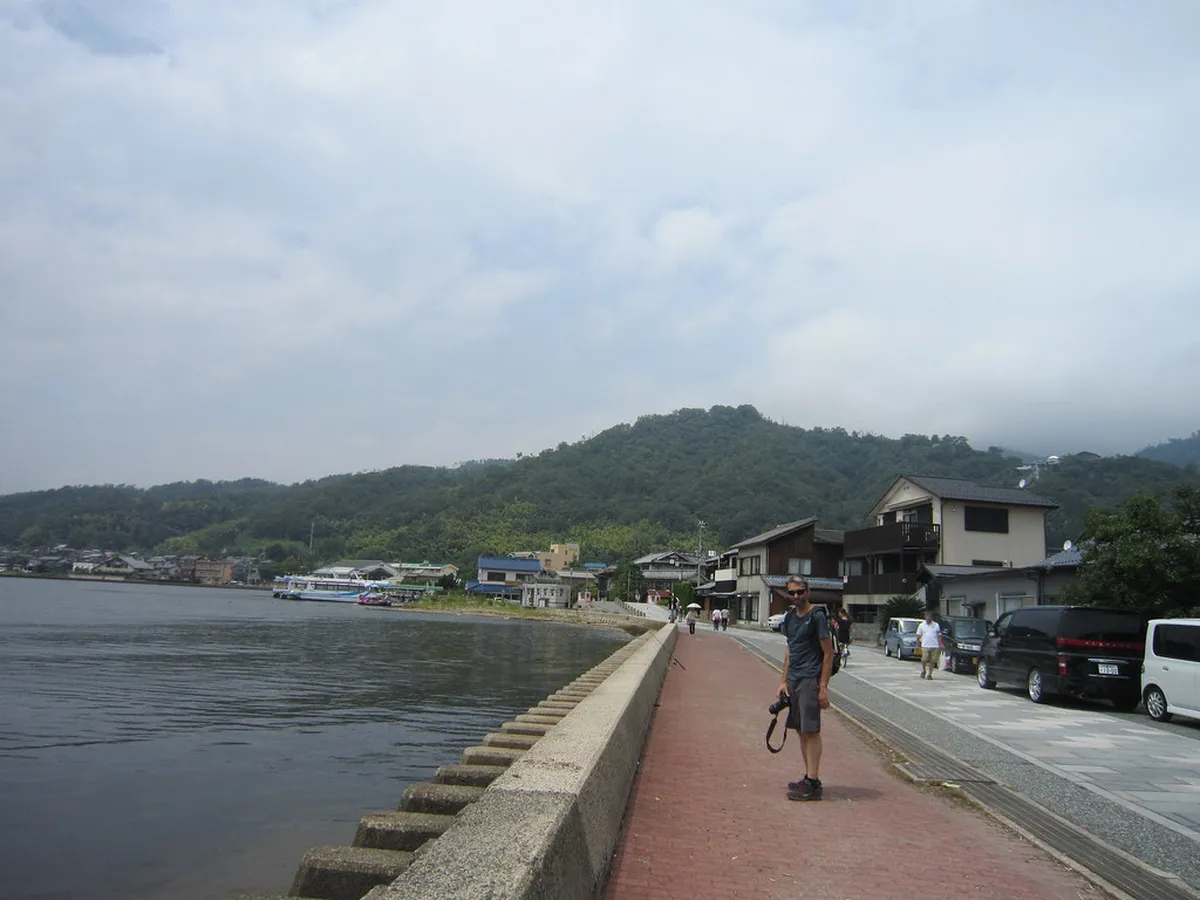
The Four Historic Teahouses, Compared
Exit Chionji's Sanmon gate and the four teahouses are lined up right there: Chitose Chaya, Hikobee Chaya, Kanshichi Chaya, and Yoshino Chaya. Spelling varies across signage and English-language sources, so expect to see Hikobee written as Hikobei, or Kanshichi as Kanhichi. Each sells its own version of Chie no Mochi, and none is officially the best. The choice comes down to what you want: a quick bite, a sit-down tea break, or something to carry onward.
| Teahouse | What Stands Out | Practical Note |
|---|---|---|
| Chitose Chaya | Named among the closest recommended stops right by the gate | Sits next to a small attached cafe for a quieter seat |
| Hikobee Chaya (also spelled Hikobei) | Uses Habutae rice; batches are reportedly handmade several times a day and have sold out within about an hour | Signage is a large kimono-clad figure out front, hard to miss |
| Kanshichi Chaya (also spelled Kanhichi) | Affiliated with the Monjusou ryokan group operating nearby | Worth asking about same-day batch timing when you order |
| Yoshino Chaya | The one shop noted for offering a frozen takeaway option | Best pick if you want to bring mochi home rather than eat on the spot |
Hours, Access, and Getting There from Amanohashidate Station
All four teahouses sit within a few minutes of Chionji Temple's Sanmon gate, close to Amanohashidate Station. Arrive earlier in the day if you want a specific shop's freshest batch, since popular runs can sell out.
- On foot: about 5 minutes from Amanohashidate Station on the Kyoto Tango Railway.
- By car: about 10 minutes from the Miyazu Amanohashidate interchange on the Kyoto Jukan Expressway.
- Hours vary by shop and by season. Listings for the same teahouse have shown different closing times.
- Confirm the current posted hours for your specific shop locally, ideally the same day you plan to visit.
Eat-In or Takeaway: What to Know Before You Buy
None of the four teahouses uses artificial preservatives, so Chie no Mochi is meant to be eaten fresh. Sit at the counter with a cup of tea and it's at its best that way. At Hikobee Chaya, batches are reportedly handmade several times a day using Habutae rice. Fresh runs have sold out within about an hour, according to that account. If you're carrying mochi onward, eat it the same day. Yoshino Chaya is the one shop noted for a frozen takeaway option, useful if you'd rather bring some home. Ask at the counter which option is available before you buy, since offerings can change. The core ingredients are glutinous rice, adzuki beans, and sugar, all plant-based. That makes Chie no Mochi an easy fit for a vegetarian-friendly Amanohashidate food plan. Confirm any specific dietary needs with each shop directly.
How Much Time to Budget for a Chie no Mochi Stop
Plan on roughly 10 minutes for a quick takeaway from the shop closest to the gate. Sitting down with a pot of tea stretches that to about 20 to 30 minutes. Add another 20 to 30 minutes to walk through Chionji Temple's grounds and past the Sanmon gate itself. Combine both and budget 40 minutes to an hour for the full stop. That fits easily into a half-day Amanohashidate itinerary alongside the sandbar walk or a cable car ride up to the viewpoint.
Reserve 40 minutes for the teahouse visit and temple grounds, but remember that popular batches sell out quickly, so arriving early in the day is essential.
Pairing It With the Rest of Amanohashidate's Food Scene
Chie no Mochi is one stop in a broader Amanohashidate food guide, not the whole meal. Pair a morning temple-and-mochi stop with lunch nearby. For seafood, check the area's seafood restaurants near the bay. For a different local specialty, try Tango barazushi, a scattered-sushi dish specific to this part of Kyoto Prefecture. Also worth a detour is Miyazu's curry yakisoba, a local noodle dish a short trip from the station. Spread these across a full day and the mochi stop becomes one course in a longer local food itinerary rather than an isolated errand.
Chionji Temple's mochi stop is only 5 minutes from the station, making it simple to combine with other Amanohashidate activities like lunch at nearby seafood restaurants or a walk along the famous sandbar.
Nearby Attractions to Combine With Your Visit
Chionji Temple sits at the base of the Amanohashidate sandbar, close to several other sights. Amanohashidate Kasamatsu Park, reachable by cable car or chairlift, gives an elevated view of the pine-covered sandbar. Chie no Yu, a public bath near the station, is an option if you want to rest before or after your walk. The sandbar walk itself is a separate, longer activity worth planning extra time for. For the fuller list of things to do in the area, see the Amanohashidate attractions guide.
Mistakes to Avoid
A few small missteps can turn a quick stop into a wasted trip.
- Assuming one teahouse's hours apply to all four — hours vary by shop, so confirm the specific one you're visiting.
- Skipping Chionji Temple itself — the mochi stop and the temple visit are meant to go together.
- Packing mochi for a multi-day trip without checking for a frozen option first.
- Expecting card payment everywhere — small teahouses in this area often lean cash-only, so carry yen.
- Showing up late in the day expecting a full selection — popular batches can sell out earlier.
Frequently Asked Questions
What is Chie no Mochi and why is it called Wisdom Mochi?
Chie no Mochi is a small rice cake topped with sweetened red bean paste, sold at four teahouses outside Chionji Temple's Sanmon gate. Its name means 'Wisdom Mochi,' tied to a local legend about Monju Bosatsu, the temple's Buddhist deity of wisdom.
Which of the four teahouses near Chionji Temple should you visit?
There's no single best shop; each of the four, Chitose, Hikobee, Kanshichi, and Yoshino, sells its own version. Hikobee Chaya is the most documented, known for Habutae-rice mochi and handmade batches, while Yoshino Chaya stands out for its frozen takeaway option.
What are the business hours for the Chie no Mochi teahouses?
Hours vary by shop and by season, and listings for the same teahouse have disagreed on exact closing times. Confirm the current posted hours for the specific shop you plan to visit, ideally the same day.
How do you get to the Chie no Mochi shops from Amanohashidate Station?
It's about a five-minute walk from Amanohashidate Station on the Kyoto Tango Railway to the teahouses outside Chionji's Sanmon gate. By car, it's roughly 10 minutes from the Miyazu Amanohashidate interchange on the Kyoto Jukan Expressway.
Should you eat Chie no Mochi on the spot or take it home?
Eating it in the shop with a cup of tea is the standard way, since none of the teahouses uses artificial preservatives. If you're taking it with you, eat it the same day, or ask at Yoshino Chaya about its frozen takeaway option.
Is Chie no Mochi vegetarian-friendly?
The core ingredients, glutinous rice, adzuki beans, and sugar, are plant-based. It's worth confirming any specific dietary concerns directly with the shop, since recipes can shift slightly between teahouses.
Free guide: Japan's Hidden Gems
12 under-the-radar places beyond Tokyo & Kyoto — with the best season to visit each and a local tip you won't find in the guidebooks.
You might also like


Continue reading
More guides you'll find useful


