
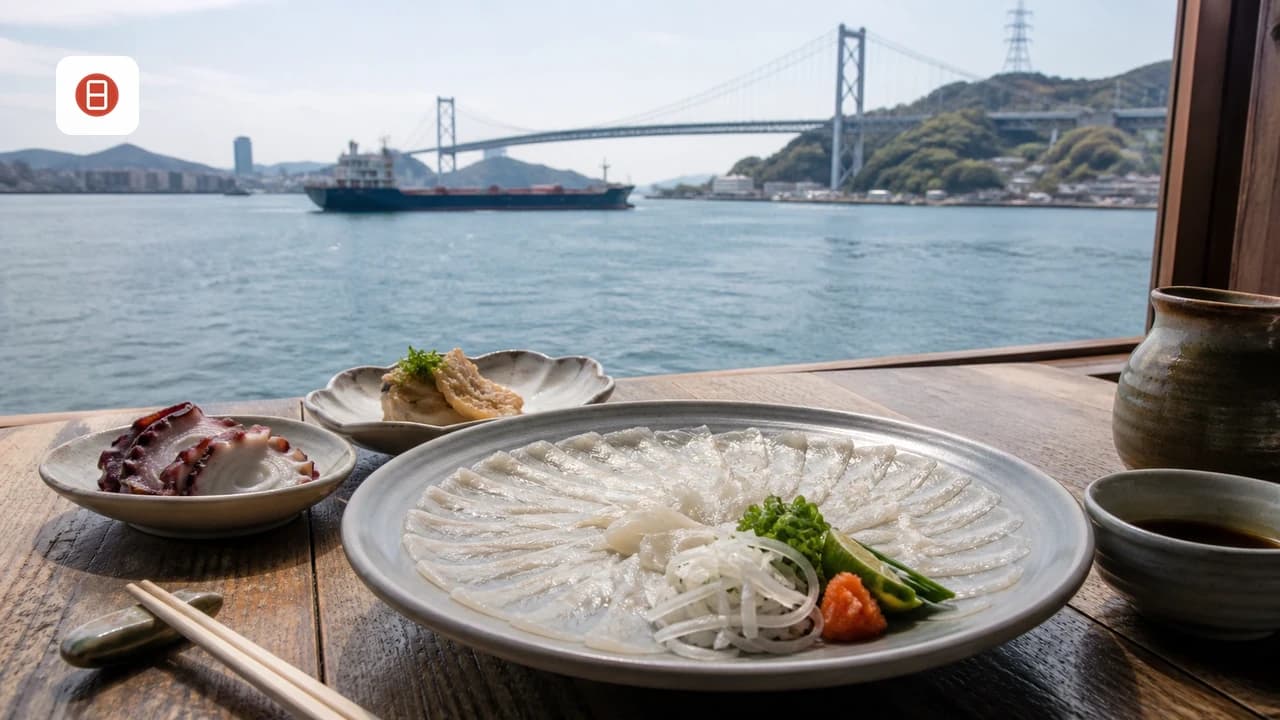
Kitakyushu Fugu and Kanmon Seafood: Where to Eat in 2026
A 2026 guide to Kitakyushu fugu and Kanmon seafood, covering licensed dining in Mojiko Retro, Karato Market prices, safety facts, and how to cross the strait.
On this page
Last updated August 2026, this guide covers Kitakyushu fugu and Kanmon seafood on both sides of the strait. It spans Mojiko Retro on the Kitakyushu side and Karato Market across the water in Shimonoseki. Licensed chefs handle every fugu dish at a registered restaurant, so the reputation for danger says more about folklore than about what's on your plate.
Kitakyushu Fugu and Kanmon Seafood: Why the Strait Is Ground Zero
The Kanmon Strait separates Kitakyushu, in Fukuoka Prefecture, from Shimonoseki, in Yamaguchi Prefecture. A suspension bridge, an undersea pedestrian tunnel, and a short ferry connect the two shores. Both cities built a food identity around pufferfish, which locals call fuku rather than fugu — a variant that shares its sound with the word for luck. Most fugu guides send you straight to Shimonoseki's Karato Market and skip the Kitakyushu side entirely. That skips Mojiko Retro, on the Kitakyushu shore, which has its own tradition of licensed fugu dining. Treating the strait as one seafood destination, rather than two separate city trips, makes it realistic to experience both sides in a day or two. Fugu is one strand of a wider food scene on the Kitakyushu side. The Kitakyushu food guide covers the rest, from ramen to yaki curry.
Is Fugu Safe? Licensed Chefs and Japan's Food Sanitation Act
Fugu contains tetrodotoxin, a neurotoxin concentrated in the liver, ovaries, and skin that has no antidote. That fact built the fish's reputation, and it's also why Japan regulates fugu preparation more tightly than almost any other food. Since the 1947 Food Sanitation Act, only licensed chefs may legally clean and serve fugu at a restaurant. Reaching that license takes a prefectural exam after years of supervised apprenticeship. The exam tests both written knowledge of the fish's anatomy and a practical test of removing every toxic organ without breaking them. Training typically includes years of apprenticeship under a licensed chef before a candidate is allowed to sit the exam. A restaurant that serves fugu displays its license, and every kitchen in Mojiko Retro and Karato Market operates under this system. Restaurants without a licensed chef are not permitted to serve fugu at all. Sourcing your meal from an established restaurant in Mojiko Retro or Karato Market matters more than the price you pay. Ordering fugu at a registered restaurant means a certified professional has prepared it, from a single piece to a full course.
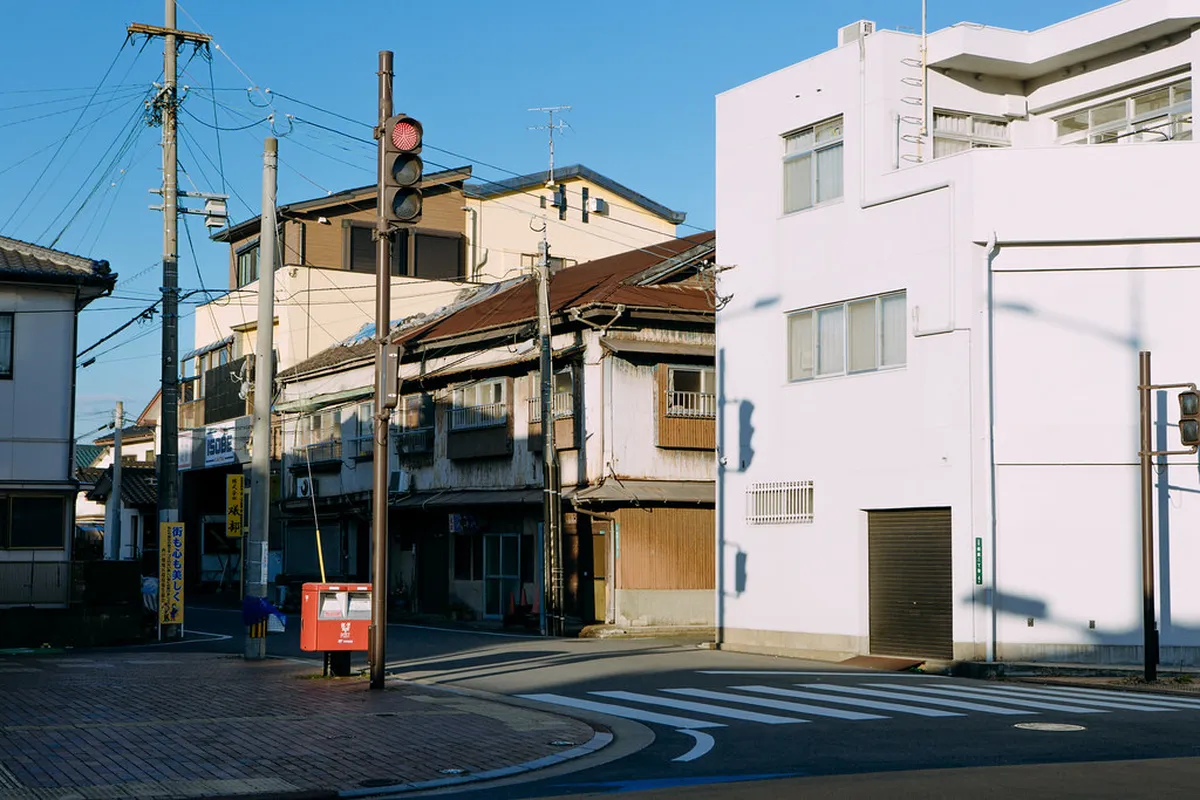
Where to Eat: Mojiko Retro, Karato Market, and Tanga Market
Each seafood hub in the Kanmon area has a different rhythm, so pick based on how you want to eat, not just what's nearby. Karato Market in Shimonoseki runs a weekend event called Iki-iki Bakkan-gai, where stalls sell nigiri and fresh cuts to eat standing at the waterfront. Fugu destined for restaurants across the strait is processed and auctioned first at Shimonoseki's Haedomari Market, which deals exclusively in pufferfish. Mojiko Retro, on the Kitakyushu side, trades market energy for sit-down dining inside the district's own historic buildings. Multi-course dinners at sit-down restaurants typically need a reservation, especially on weekends and during the winter peak season. Market stalls at Karato and Tanga are walk-in only, with no booking required. Kokura's Tanga Market covers seafood beyond fugu. The Tanga Market guide has the stall-by-stall detail.
- Karato Market (Shimonoseki): weekend Iki-iki Bakkan-gai sushi stalls, best for casual variety.
- Mojiko Retro (Kitakyushu): sit-down fugu restaurants in the district's historic buildings, best for a slower, higher-end course.
- Tanga Market (Kokura): general seafood market beyond fugu, best for produce and casual bites.
The Fugu Course: Tessa, Chiri, Karaage, and Hirezake
A full fugu course moves through several dishes, each showing a different side of the fish. Tessa is the sashimi course, sliced thin enough to see the platter through it. Chefs often fan the slices into a chrysanthemum pattern and serve them with ponzu instead of soy sauce. Raw fugu has a crunchy, almost chewy bite that softens completely once it's cooked. Fugu chiri is the hot-pot course. Pieces simmer in a kombu broth with vegetables and fish offcuts until the meat turns tender enough to fall off the bone. Fugu karaage, deep-fried and often compared to high-quality fried chicken, is the course most first-timers find easiest to enjoy. Many restaurants finish the meal with zosui, a rice porridge cooked in the leftover hot-pot broth so none of the flavor goes to waste. Hirezake pairs the meal with hot sake steeped with a grilled, toasted fugu fin. It's considered the definitive way to close a fugu dinner in this region.
- Tessa: paper-thin sashimi fanned into a pattern, served with ponzu.
- Fugu chiri: hot pot with kombu broth, vegetables, and fish offcuts.
- Fugu karaage: deep-fried fugu, often compared to fried chicken.
- Zosui: rice porridge finished in the leftover hot-pot broth.
- Hirezake: hot sake with a grilled fugu fin.
Octopus, Squid, and Other Kanmon Seafood
Fugu draws the headlines, but Kanmon Strait waters support other seafood worth ordering alongside it. Octopus, known locally as tako, is a common menu item at both market stalls and sit-down restaurants, served as sashimi or simmered until tender. Shimonoseki's squid season runs through summer, and several restaurants that serve fugu courses in winter pivot to squid-focused menus once the weather warms. Tanga Market in Kokura shows the broadest range of this seasonal catch beyond fugu. Its stalls turn over with whatever local boats bring in that morning. Asking a stall vendor what's freshest that day usually gets a better answer than picking from a fixed menu. Pairing octopus or squid with a fugu course is a common way to stretch a seafood-focused visit across more than one dish.
Crossing the Kanmon Strait: Ferry, Tunnel, and Train
Getting between the two seafood hubs is part of the appeal, not a chore to plan around. The Kanmon Ferry crosses between Mojiko and Karato in about five minutes, making a two-market seafood crawl realistic in a single afternoon. At the strait's crossing point, a pedestrian tunnel lets you walk beneath the seabed from Kyushu to Honshu. It's a practical way to work off a heavy course between meals. From Kokura Station, a local train reaches Mojiko in about 15 minutes. The Mojiko Retro and Kanmon Tunnel guide covers the rest of the district's sights. If you're routing in from farther away, Shin-Shimonoseki Station sits roughly 30 minutes from Hakata Station in Fukuoka by Shinkansen. From Osaka or Kyoto, expect a 2 to 2.5-hour Shinkansen ride to the same station.
The strait's about 5 minutes by ferry connects two distinct eating styles—standing casual at Karato Market in Shimonoseki versus sit-down courses in Mojiko Retro's historic buildings—making both experiences part of a single meal-focused afternoon.
- Kanmon Ferry: about 5 minutes between Mojiko and Karato.
- Pedestrian tunnel: walk beneath the seabed between Kyushu and Honshu.
- Local train: about 15 minutes from Kokura Station to Mojiko.
- Shinkansen: about 30 minutes from Hakata Station to Shin-Shimonoseki, 2 to 2.5 hours from Osaka or Kyoto.
Budgeting and Timing a Kanmon Seafood Crawl
Budgets across the Kanmon area span a wide range. A market stall runs a few hundred yen per piece, while a formal multi-course dinner costs far more. At sit-down restaurants such as Shimonoseki's Heike Chaya, simple fugu meals start around ¥1,600. Deluxe multi-course sets can run past ¥10,000 per person. Karato Market and Tanga Market are the budget route: order individual pieces and build a meal at market prices instead of a fixed course. Winter is the traditional fugu season, when the fish is considered at its best. Farming and processing now keep it available year-round. Karato Market's stall lineup is thinnest on weekdays, so visiting midweek is the most common mistake first-time visitors make. Most stalls wind down by early afternoon, so arrive before 1 p.m. on a weekend to see the market at full activity.
Simple fugu meals start around ¥1,600, offering an affordable taste of this specialty for visitors traveling the roughly 30 minutes from Hakata by Shinkansen, without committing to an expensive multi-course dinner.
| Style | Typical Cost | Best For |
|---|---|---|
| Market stalls (Karato, Tanga) | Pay per piece | Fast, casual sampling |
| Casual sit-down fugu meal | From around ¥1,600 per person | A simple, first-time fugu course |
| Multi-course ryotei dinner | ¥10,000+ per person | Full tessa-to-hirezake course, special occasions |
Dietary Notes and Alternatives to Fugu
Fugu is optional, not mandatory. The region does not expect every visitor to order it, and dietary restrictions are a common reason to skip it. Most sit-down fugu restaurants also serve other seafood and standard izakaya dishes, so a table can mix a fugu course with simpler orders. Karato Market and Tanga Market both sell non-fugu seafood by the piece. That works well if you'd rather sample sushi and grilled fish without a full fugu course. Strict vegetarian and vegan options are limited at seafood-focused markets and restaurants in this area. Confirm with a restaurant directly before booking if you have dietary restrictions. For a wider spread of budget-friendly and dietary-flexible options around the city, the Cheap Vegetarian and Halal Food in Kitakyushu: 2026 Budget Guide covers what else is available.
Beyond the Fugu Course: Yaki Curry and Yaki Udon
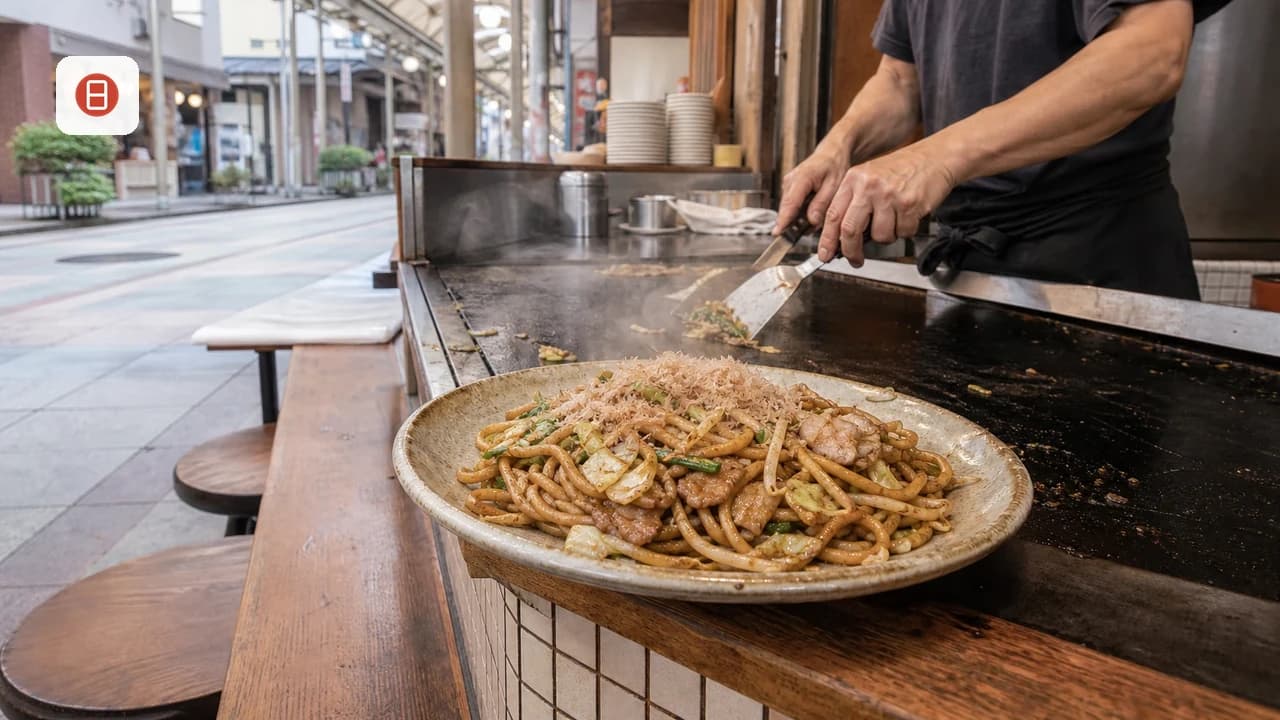
Seafood is not the only reason to eat around Mojiko and Kokura. On the Kitakyushu side, Mojiko's signature dish is yaki curry. It's curry rice baked with melted cheese on top, often with a raw egg cracked in before it goes into the oven. The Mojiko Yaki Curry: A Complete 2026 Guide to Kitakyushu's Baked Curry covers where to find the best versions in the district. Kokura, meanwhile, is known for yaki udon, a stir-fried noodle dish served at izakayas across downtown. The Kokura Yaki Udon Guide: Darumado, History, and Where to Eat in Kitakyushu has the full rundown of where to try it. Pairing a fugu-focused day in Mojiko or Karato with one of these dishes on a different night rounds out a fuller picture of the region's food.
Frequently Asked Questions
Is it safe to eat fugu in Kitakyushu and Shimonoseki?
Yes, at any restaurant licensed under Japan's Food Sanitation Act. Chefs must pass a prefectural exam after years of supervised training before they're allowed to clean and serve fugu. Toxic organs are removed by a certified professional before the fish ever reaches your table. Unlicensed kitchens are not permitted to serve it at all.
What does fugu actually taste like?
Fugu has a mild, subtle flavor rather than a strong fishy one. Texture does most of the work. Raw tessa sashimi is crunchy and slightly chewy, while fugu chiri hot pot turns the same fish tender enough to fall off the bone.
When is the best time to eat fugu around the Kanmon Strait?
Winter is the traditional season, when fugu is considered at its best. Farming and processing mean restaurants serve it year-round, so a visit in any season still works. If you're there in summer, ask about squid-focused courses instead, since that's Shimonoseki's other seasonal specialty.
How much does a fugu meal cost?
Simple sit-down fugu meals start around ¥1,600 per person at restaurants in the area. Multi-course ryotei-style dinners with a full tessa-to-hirezake progression can run past ¥10,000 per person. Market stalls at Karato and Tanga are the cheapest route, since you pay per piece instead of a set price.
How do you get between Kitakyushu and Shimonoseki for a seafood crawl?
The Kanmon Ferry crosses between Mojiko and Karato in about five minutes. A pedestrian tunnel also lets you walk beneath the strait between Kyushu and Honshu. From Kokura Station, a local train reaches Mojiko in about 15 minutes, and the ferry or tunnel covers the rest of the crossing from there.
Do you need a reservation for a fugu dinner?
Multi-course dinners at sit-down restaurants typically need a reservation, especially on weekends and during the winter peak season. Market stalls at Karato Market and Tanga Market are walk-in only, so no booking is required there. If you want a specific restaurant in Mojiko Retro, booking a day or two ahead is the safer plan.
What's the difference between eating at Karato Market and a Mojiko Retro restaurant?
Karato Market is fast and informal: you buy individual pieces from stalls and eat standing at the waterfront, especially during the weekend Iki-iki Bakkan-gai. Mojiko Retro leans toward sit-down dining in the district's historic buildings, with multi-course meals and table service. Choose Karato for variety and pace, and Mojiko Retro for a slower, full fugu course.
Can you eat fugu outside of winter?
Yes. Farming and modern processing keep fugu available at restaurants across the Kanmon area throughout the year. Winter is still considered the peak for flavor. A summer visit won't leave you without options, including squid-focused menus at some of the same restaurants.
Is fugu poisoning still a real risk today?
At a licensed restaurant, the risk is effectively removed by training and law, not by luck. Japan's Food Sanitation Act has required certified preparation since 1947, and inspectors enforce it at the restaurant level. The main risk today comes from unregulated sources, such as someone preparing wild-caught fugu at home, which is illegal and strongly discouraged.
Free guide: Japan's Hidden Gems
12 under-the-radar places beyond Tokyo & Kyoto — with the best season to visit each and a local tip you won't find in the guidebooks.
You might also like


Continue reading
More guides you'll find useful


