

What to Eat in Kitakyushu: 7 Must-Try Dishes and Where to Order Them
What to eat in Kitakyushu: yaki curry, yaki udon, nukadaki, Yahata gyoza and Kanmon fugu, plus exactly where in Kokura, Mojiko and Yahata to order each in 2026.
On this page
Last updated August 2026, this guide covers what to eat in Kitakyushu, from Kanmon Strait seafood to steel-town stamina food. Kokura, Mojiko and Yahata each claim a signature plate, from baked yaki curry to iron-pan gyoza. Each section below groups specialties by neighborhood, so you can plan a route instead of guessing.
Why Kitakyushu Tastes Different From Hakata
Kitakyushu sits at the northern tip of Kyushu, across the Kanmon Straits from Honshu. That location put fresh mackerel, sardines and pufferfish within easy reach of home kitchens and market stalls. A 780-meter pedestrian tunnel also runs beneath the straits, connecting Mojiko to Shimonoseki on the Honshu side, where much of the region's fugu is landed. A second influence came later. Steelworkers at the Yahata mills needed calorie-dense food they could eat fast between shifts, and that need shaped dishes like iron-pan gyoza and quick-fried udon. Fukuoka City's Hakata district is known for tonkotsu ramen and mizutaki hot pot. Kitakyushu's food identity runs on a different track. Three dishes anchor it: baked yaki curry, dry-fried yaki udon, and nukadaki simmered in fermented rice bran.
The 7 Dishes to Eat in Kitakyushu
These seven dishes cover Kitakyushu's core specialties, grouped from Mojiko's baked curry to Kokura's market-stall fish. Each entry names a dish, its neighborhood, and a specific place to order it.
Sukesan Udon's Beef & Burdock Tempura Udon at ¥820 leaves room within the ¥1,500–¥2,000 daily budget for a second sit-down meal plus snacks or market items.
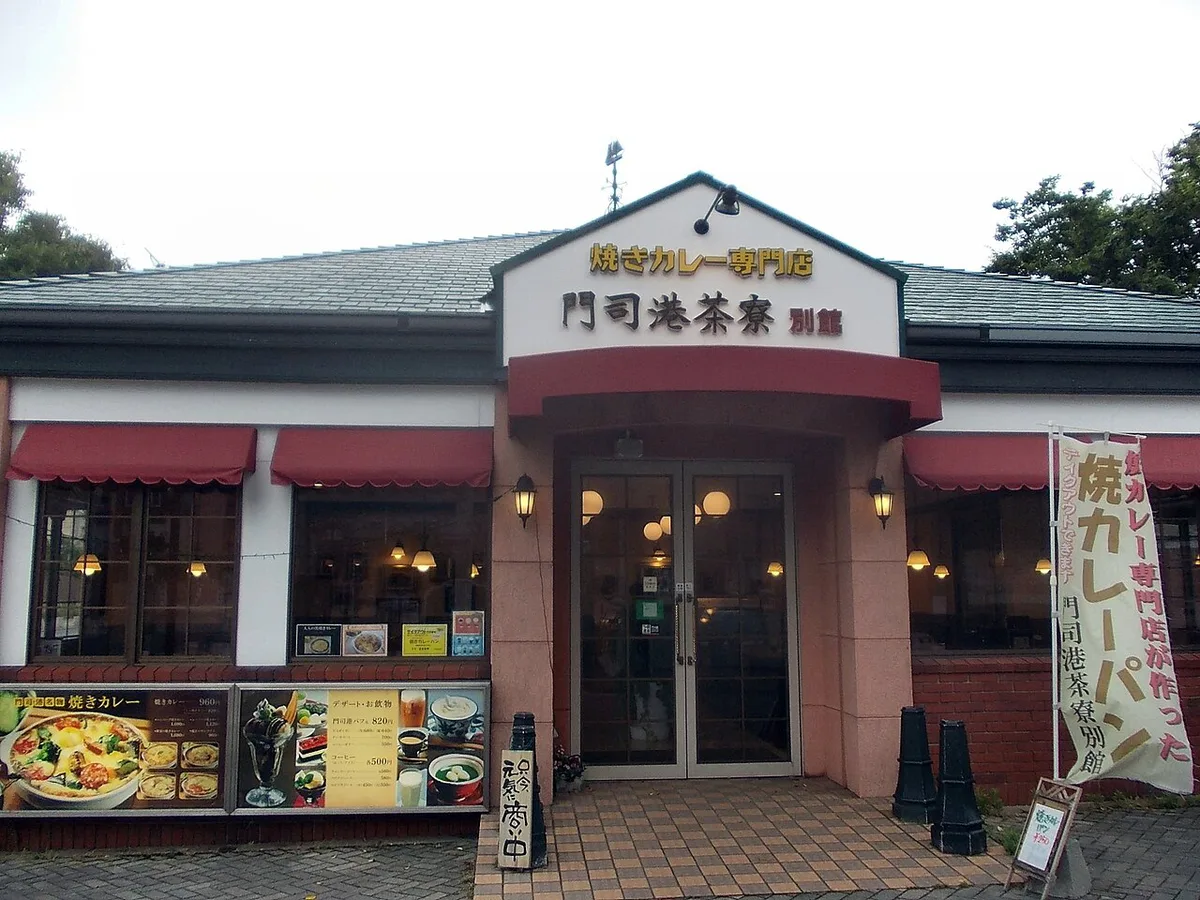
- Mojiko Yaki Curry
- Rice, curry sauce, a cracked egg and melted cheese go into one dish and bake at 320°C until the top browns, a style that originated in Mojiko.
- At Curry Honpo's Outlets Kitakyushu branch, the Seafood Yaki Curry and Kyushu Black Wagyu Yaki Curry (M size) both run ¥1,500, made with a Kyushu wagyu beef bouillon base.
- For the full history and more Mojiko spots, see the Mojiko Yaki Curry: A Complete 2026 Guide to Kitakyushu's Baked Curry.
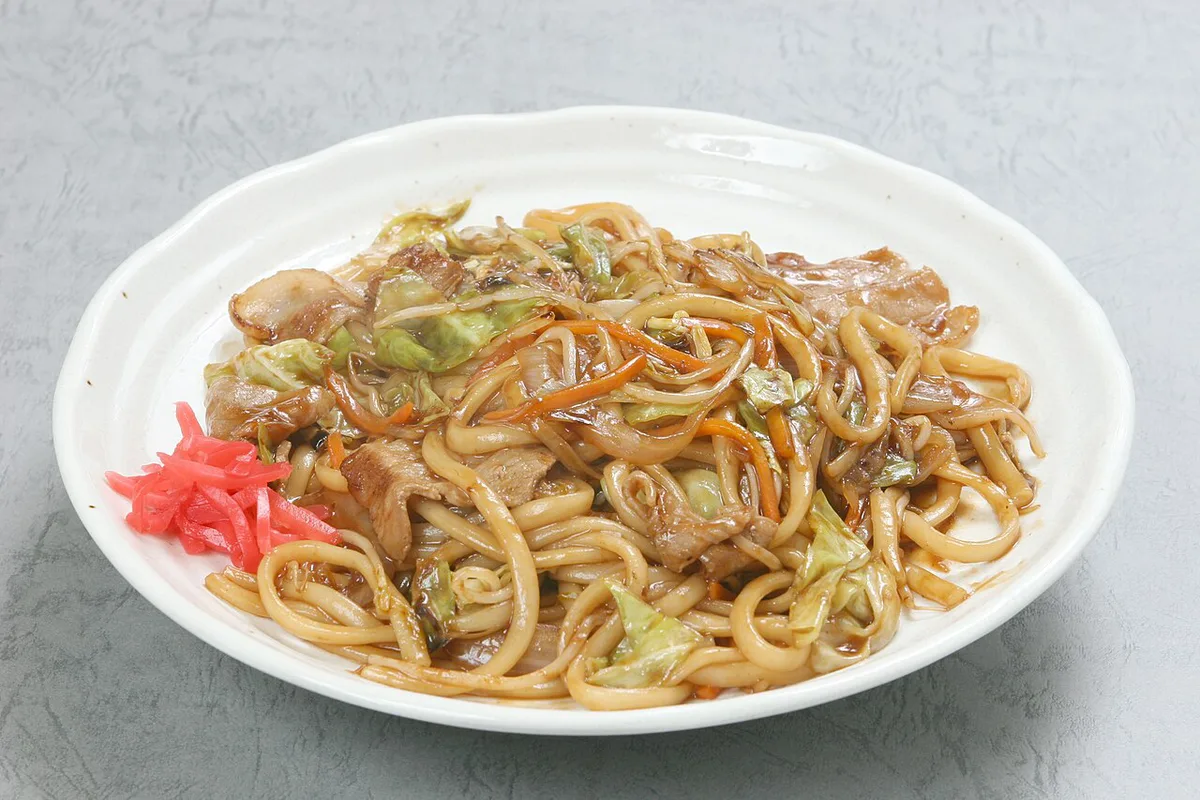
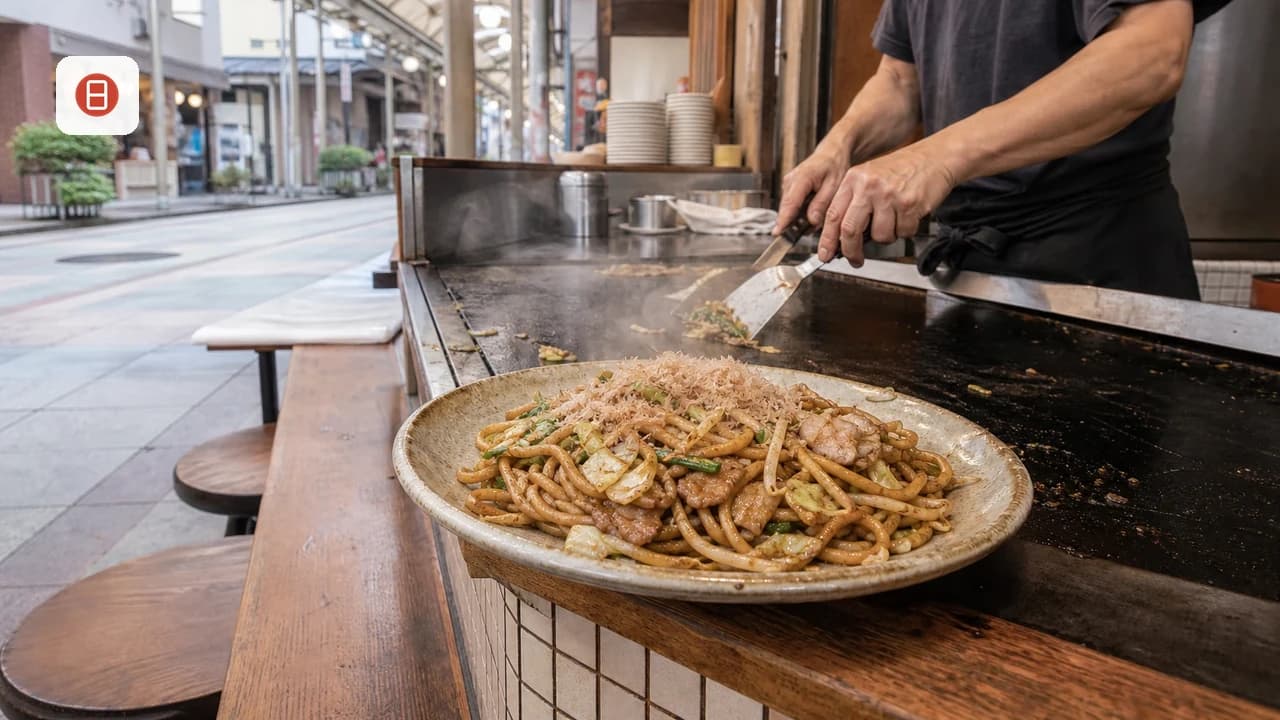
- Kokura Yaki Udon
- Kokura claims the original fried udon, made with dry noodles instead of fresh ones for a crisp surface and a doughy center.
- Cooks add a splash of rice wine to the pan just before the noodles finish, which sharpens the flavor and helps set the texture.
- Read the full technique and restaurant picks in the Kokura Yaki Udon Guide: Darumado, History, and Where to Eat in Kitakyushu.
- Kokura Nukadaki
- Mackerel or sardines simmer in nukamiso, a salt-pickled rice bran paste, in a recipe that traces back to Kokura's Edo-period castle town.
- Locals eat it over rice or alongside sake for its concentrated umami, and souvenir shops now sell shelf-stable nukadaki snack versions.
- Tanga Market is the place to try it fresh; details are in the Tanga Market Food Guide: Nukadaki, Sorameshi, and Local Tips.
- Yahata Gyoza
- Steelworkers at the Yahata mills needed fast, calorie-dense meals between shifts, and gyoza pan-fried in iron pans became the answer.
- The defining touch is yuzu kosho, a citrus-and-chili condiment, served alongside for dipping.
- Yahata's former Imperial Steel Works site carries UNESCO World Heritage status, and the gyoza tradition grew out of that same industrial workforce.
- Tobata Champon
- Tobata's version of champon uses thin, steamed noodles built for a fast bowl, a contrast to the thicker boiled noodles of Nagasaki-style champon.
- It grew out of the same steel-belt need for quick, filling meals between shifts.
- Look for it around the Wakato and Tobata areas rather than in central Kokura.
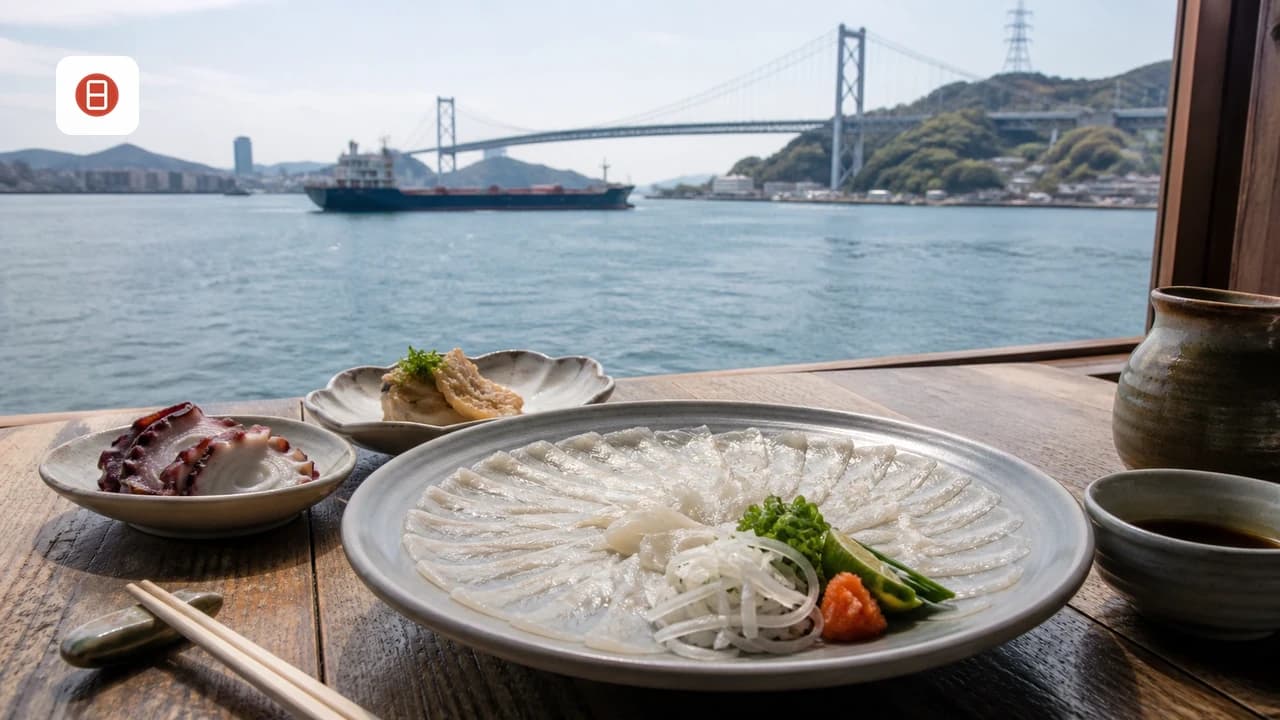
- Kanmon Fugu and Kitakyushu Seafood
- The Kanmon Straits sit across from Shimonoseki, home to Karato Market, Japan's largest fugu (pufferfish) market, and that proximity makes fugu a local specialty here too.
- In Yamaguchi Prefecture, fugu is written as fuku, a homophone for good luck, and the fish is treated as a celebratory food rather than an everyday one.
- For sourcing, seasonality and where to order it, see the Kanmon fugu and seafood guide.
- Kyushu-Style Sushi
- Cold currents around Kitakyushu keep the local catch different from what you would find in Tokyo, and restaurants build sushi around that seasonal supply.
- Chisou Masaki, a two-minute walk from Tanga Station, and Sengyo to Sumibi no Mise kana, near Kokura Station, both turn up on Tabelog's Kitakyushu rankings for seafood and charcoal-grilled dishes.
- Expect an izakaya format with counter seating rather than a formal sushi-only restaurant.
Where to Eat: Kokura, Mojiko and Yahata by Neighborhood
Kitakyushu's food spreads across three districts, and each one rewards a different kind of eater. Match your route to what you want most before you set out.
- Tanga Market
- Known locally as the kitchen of Kitakyushu, this market near Tanga Station is the best stop for fresh nukadaki and street-stall food.
- Chisou Masaki and other seafood counters sit within a two-minute walk, so you can browse the market and then sit down for a meal nearby.
- Tanga Table, a hostel-and-dining spot in the market area, adds izakaya food and cafe options if you want to linger.
- Best for solo travelers and anyone who wants to see ingredients before they are cooked.
- Mojiko Retro
- This port district keeps its late-19th and early-20th century buildings, including the former Osaka Shosen building, and pairs them with yaki curry restaurants and craft beer bars.
- It is the neighborhood for yaki curry specifically, since the dish originated here and most Mojiko-area restaurants run their own version.
- Best for first-time visitors combining a food stop with a walk along the Kanmon Straits waterfront.
- The Outlets Kitakyushu and AEON Mall Yahatahigashi
- These two malls sit side by side near JR Space-World Station, with Curry Honpo and Sukesan Udon both inside, so you can try multiple specialties without changing location.
- Himawari Terrace, also inside the Outlets, sells Kitakyushu and Shimonoseki food souvenirs if you want to bring flavors home.
- Best for families or anyone short on time who wants several dishes plus shopping in one stop.
- Kokura Station Area
- Izakayas cluster within a few minutes of Kokura Station, including Taishu Sakaba Tabu and Sengyo to Sumibi no Mise kana, both around 200 meters from the station.
- Kokura Castle is a further 15-minute walk from JR Kokura Station, making it an easy pairing with a station-area dinner.
- Best for solo diners and evening drop-ins, since the density of restaurants near the station keeps waits short even without a reservation.
One-Stop Mall Hubs: Prices and Hours
The Outlets Kitakyushu and AEON Mall Yahatahigashi work well when time is tight, because both malls put several regional specialties under one roof. Confirm hours before you go since mall restaurant hours can shift seasonally.
The Outlets Kitakyushu's outlet floor closes at 8:00 PM while its Food Forest dining area stays open until 9:00 PM. Izakayas and market stalls stop taking orders 30 to 60 minutes before closing, so timing matters even within one mall.
| Spot | Signature item | Price | Hours |
|---|---|---|---|
| Curry Honpo (Outlets Kitakyushu, 1F Food Forest) | Seafood Yaki Curry (M) | ¥1,500 | 10:00 AM–9:00 PM, last order 8:30 PM |
| Sukesan Udon (AEON Mall Yahatahigashi, 1F) | Beef & Burdock Tempura Udon | ¥820 | 11:00 AM–10:00 PM, last order 9:30 PM |
| Sukesan Udon (AEON Mall Yahatahigashi, 1F) | Botamochi (sweet rice cake) | ¥160 | same hours as above |
| Himawari Terrace (Outlets Kitakyushu, 1F) | Shimonoseki Fugu Ramen (souvenir) | ¥345 | 10:00 AM–8:00 PM |
Budgeting and Timing a Kitakyushu Food Crawl
Plan around two realistic trip shapes. A single day trip from Fukuoka City keeps you in Kokura and Mojiko, hitting yaki curry, yaki udon and nukadaki without a long transit day. An overnight stay opens up Yahata for iron-pan gyoza and a night visit to Mt. Sarakura for city-light views before dinner.
- Day trip from Fukuoka City
- Cover Kokura and Mojiko in one day: yaki udon or nukadaki near Kokura Station and Tanga Market, then yaki curry in Mojiko Retro.
- Budget roughly ¥1,500–¥2,000 per person for two sit-down meals at these prices, plus mall snacks if you stop at the Outlets.
- Kokura Castle, a 15-minute walk from JR Kokura Station, is open 9:00 AM–8:00 PM from April through October and charges ¥350 for adults, so it pairs easily with a Kokura Station food stop.
- Overnight in Kitakyushu
- Add Yahata for iron-pan gyoza with yuzu kosho, and time dinner around a Mt. Sarakura night-view stop.
- This route also allows a slower pass through Tanga Market in the morning, before stalls sell out of the day's nukadaki.
- It leaves room for the malls on a second afternoon without rushing between neighborhoods.
Common Mistakes to Avoid When Eating in Kitakyushu
Small missteps can shape a Kitakyushu food day for the worse. Keep these four in mind before you set out.
- Treating Kitakyushu food as identical to Hakata food
- Hakata, in central Fukuoka City, built its reputation on tonkotsu ramen and mizutaki.
- Kitakyushu's identity centers on yaki curry, yaki udon and nukadaki instead, so do not expect the same menu across the two cities.
- Skipping the botamochi at Sukesan Udon
- The udon gets most of the attention, but the ¥160 botamochi is a signature side.
- It is easy to miss if you order only the noodle set, so add it or try the Sukesan Shiawase sampler set instead.
- Ignoring last-order times
- Local izakayas and market stalls often stop taking orders 30 to 60 minutes before closing.
- Call ahead or check posted hours instead of assuming the listed closing time is your cutoff.
- Assuming all mall hours match
- The Outlets Kitakyushu's outlet floor closes at 8:00 PM while its Food Forest dining area stays open until 9:00 PM.
- AEON Mall's specialty stores run until 9:00 PM but its 1F food court stays open until 10:00 PM, so check which section you're heading to before you go.
Building the rest of the trip? Our Kitakyushu attractions guide covers the sights, districts and logistics around this guide.
Explore food in other cities
Frequently Asked Questions
What is the most famous food in Kitakyushu?
Yaki curry is the dish most associated with Kitakyushu, since it originated in the Mojiko district and remains the specialty most restaurants there build a menu around. Kokura yaki udon and nukadaki are close behind as local signatures.
Is Kitakyushu food the same as Fukuoka food?
Not exactly. Fukuoka City's Hakata district is known for tonkotsu ramen and mizutaki hot pot, while Kitakyushu built its own identity around yaki curry, yaki udon, nukadaki and steelworker dishes like Yahata gyoza.
Can you do a Kitakyushu food day trip from Fukuoka City?
Yes. Both Kokura and Mojiko are reachable from Fukuoka City and cover the core dishes: yaki udon or nukadaki near Kokura Station and Tanga Market, then yaki curry in Mojiko Retro, all in a single day.
Where can you try multiple Kitakyushu specialties in one stop?
The Outlets Kitakyushu and AEON Mall Yahatahigashi sit next to each other near JR Space-World Station. Curry Honpo's yaki curry and Sukesan Udon's beef and burdock tempura udon are both inside, along with the Himawari Terrace souvenir shop.
How much does a typical meal cost in Kitakyushu?
Mall specialties run modestly: Sukesan Udon's Beef & Burdock Tempura Udon is ¥820, and Curry Honpo's Seafood Yaki Curry (M) is ¥1,500. Independent izakayas near Kokura Station and Tanga Market vary more, so check posted menus before you sit down.
Explore Kitakyushu Food and Dining
Use these guides to compare local dishes, dining areas and practical food experiences in Kitakyushu.
Food and Dining Guides
Free guide: Japan's Hidden Gems
12 under-the-radar places beyond Tokyo & Kyoto — with the best season to visit each and a local tip you won't find in the guidebooks.
You might also like

Continue reading
More guides you'll find useful


