
Kokura Yaki Udon Guide: Darumado, History, and Where to Eat in Kitakyushu
A practical 2026 guide to Kokura yaki udon in Kitakyushu: the Darumado origin story, dried-noodle texture, prices, hours, and where to eat nearby.
On this page
Last updated August 2026, this guide walks through Kokura yaki udon, the dried-noodle stir-fry that Kitakyushu claims as its birthplace dish. You'll find the postwar origin story behind Darumado and the noodle texture that separates Kokura's version from yaki udon elsewhere in Japan. It also maps a short list of counters near Kokura Station, with hours, seat counts, and prices in yen.
Kokura Yaki Udon at a Glance
A few core facts frame the rest of this guide before the history and logistics that follow.
- Invented: 1945, at a small restaurant in Uomachi, Kokura
- Birthplace shop: Darumado, now maintained by the Ogura Yaki Udon Research Institute
- Typical price: ¥500–¥800 per plate, 2026 pricing
- Hours: roughly noon to 6:00 PM, closed Wednesdays
- Seats at Darumado: eight, counter-only
- Access: about a 5-minute walk from JR Kokura Station
What Makes Kokura Yaki Udon Different
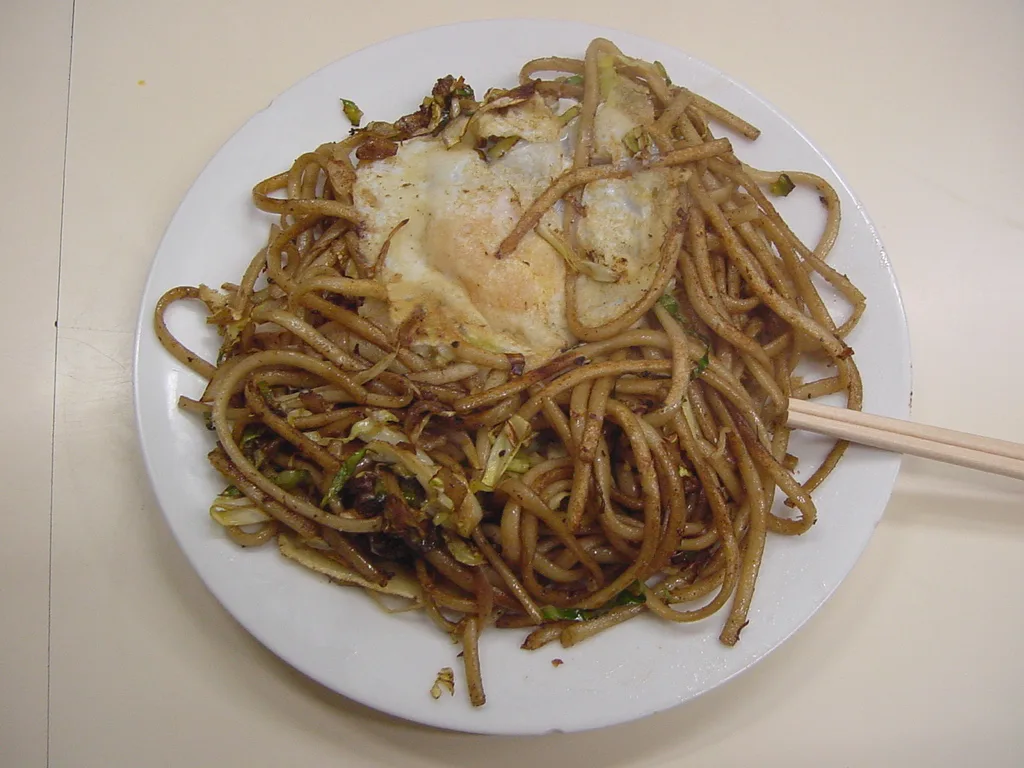
Kokura yaki udon is a stir-fried noodle dish built from dried udon, pork, cabbage, and a soy-and-Worcestershire-leaning sauce. Kitakyushu's Kokura district is widely credited as the birthplace of yaki udon itself, not just a regional variation. From one small restaurant, the dish spread to menus across Japan, and it now shows up on izakaya menus nationwide as a late-night staple. Kokura's own counters still cook it the original way, with dried rather than fresh noodles. That keeps the birthplace version distinct from what most travelers have already tried elsewhere. For a wider view of the city's food scene, the Kitakyushu food guide covers other local specialties beyond noodles.
How Kokura Yaki Udon Was Invented
This dish dates to 1945, in the chaos following World War II. Kokura had briefly been the primary target for the atomic bomb that ultimately fell on Nagasaki instead. Cloud cover over the city on the day of the mission is credited for that last-minute change of target. That spared Kokura, and the small restaurant that would later invent yaki udon survived along with it. Provisions were scarce afterward, and the owner of a small noodle restaurant in Uomachi wanted to serve yakisoba, the fried Chinese-style noodle dish. No soba noodles were available that day, so dried udon noodles got fried on the griddle instead. Customers liked the result, it stayed on the menu, and Kokura yaki udon was born at a restaurant later named Darumado.
A Dish That Outlasted Its War-Era Origins
Darumado's own menu retells the founding story on its back page, tying the shop directly to that history. Even decades ago, visitors were known to arrive with guidebooks in hand specifically to try the original plate, according to accounts published about the shop. That pattern continues today, with the dish functioning as a piece of local memory as much as a lunch order. Kokura's food culture reads as continuous rather than reconstructed, since the same counter, recipe, and eight-seat room have carried the story forward since 1945.
Darumado Today: From Sakata-San to the Research Institute
Darumado's founding owner, known as Sakata-san, ran the grill herself for decades. She passed away in December 2019, and descendants handed the shop to a group called the Ogura Yaki Udon Research Institute. That group now maintains the original recipe and keeps the taste unchanged, according to accounts from regular customers. It has also expanded the brand slightly, running stalls at events around Fukuoka, while keeping the original Kokura counter as the reference point. For visitors, the practical change is mostly behind the scenes: the recipe and hours have stayed close to how Sakata-san ran them.
This restaurant operated under its founding owner from 1945 through December 2019—74 years of continuous family stewardship before transitioning to the Ogura Yaki Udon Research Institute, preserving the original recipe unchanged.
Visiting Darumado: Menu, Hours, and Finding the Door
Darumado sits in an alley off Uomachi Ginza in Kokurakita-ku, marked only by a small だるま堂 sign. Look for a bar called The Peach Pit; the alley runs just north of it into a covered shopping arcade. A restaurant called Suganotei sits across from the noodle counter inside that arcade. Eight seats line the counter, and the room still carries the smoke and grease of thousands of plates cooked on one small griddle.
- Hours: roughly noon to 6:00 PM, later on Fridays and Saturdays
- Closed: Wednesdays
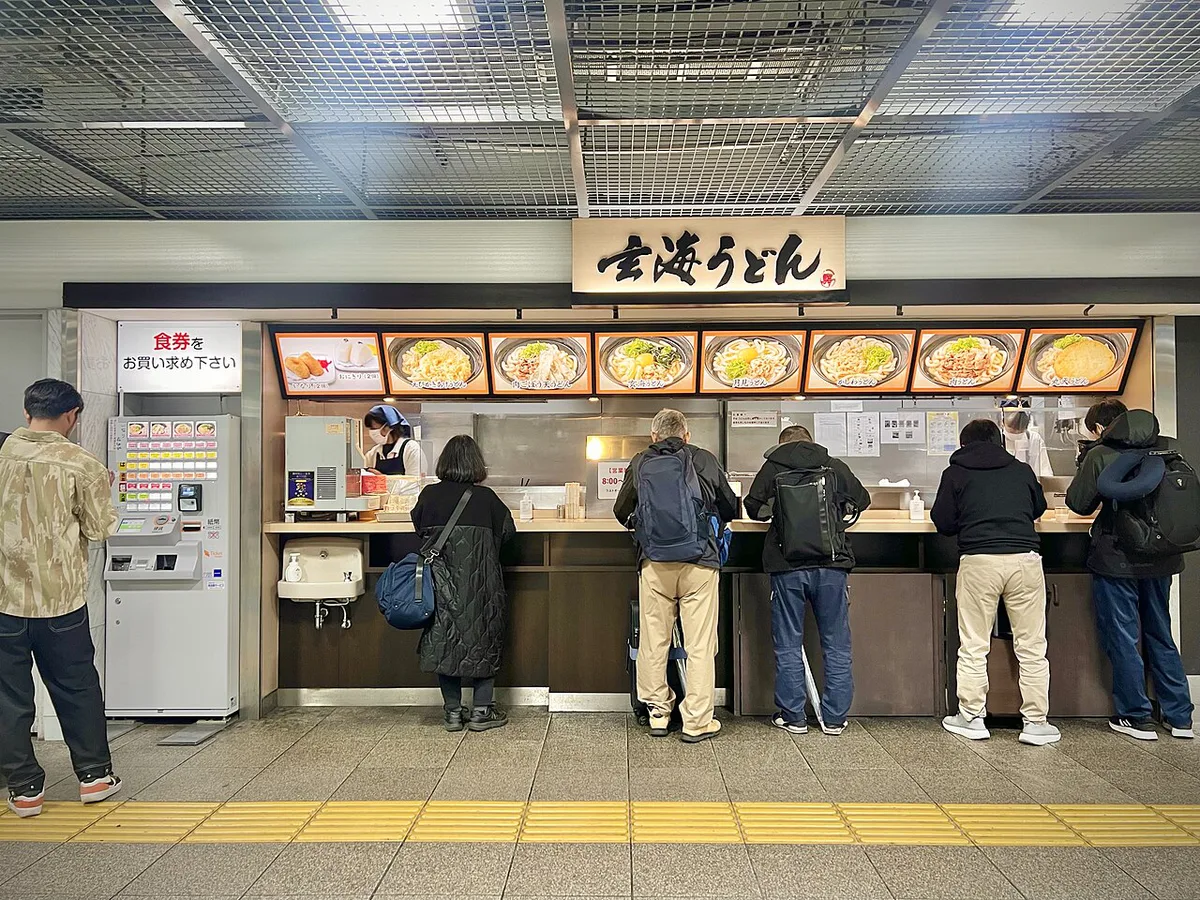
- Menu: five items — plain yaki udon, yaki udon with a fried egg (Tenmado style), rice, sake, and beer
- Seats: eight, counter-only, so a short wait is common at peak lunch
- Check ahead: the Research Institute's Facebook page posts closures for holidays or bad weather
Kokura Style vs. Standard Yaki Udon
Most yaki udon around Japan starts with fresh, vacuum-packed noodles, rinsed and untangled before they hit the pan. Kokura's version uses dried noodles instead, often called Tenmado noodles, rehydrated and steamed before frying. That dried starting point absorbs more sauce than a fresh noodle does, giving Kokura yaki udon a firmer bite and a drier, more concentrated flavor. Its sauce leans soy-based rather than the thicker Worcestershire-style sauce common in yakisoba, the related dish made with ramen-style wheat noodles instead of udon. A heavy dusting of katsuobushi, or bonito flakes, goes on top, along with a small pile of benishōga, the red pickled ginger. Order it Tenmado style at Darumado and a fried egg lands on top, the version most regulars actually order. Darumado itself keeps the plate minimal — noodles, cabbage, and onion, without the extra pork or vegetables that busier kitchens pile on. Fresh-noodle yaki udon found elsewhere in Fukuoka Prefecture tends to taste softer and slightly sweeter, a contrast most obvious after trying both versions back to back.
Where to Eat: Darumado or a Modern Kokura Izakaya
Darumado suits travelers chasing the specific dried-noodle texture and the postwar history behind it, not a filling dinner. Portions are small, the menu has five items, and the point is the story on the wall as much as the food on the plate. Izakayas around JR Kokura Station and the Tanga Market food stalls serve a looser, modern take on yaki udon, usually with bigger portions and more toppings layered on. Tanga Market itself is a covered arcade of small food vendors, useful for pairing a noodle stop with other quick bites in one visit. Choose Darumado for the origin experience, and choose a station-area izakaya when hunger, not history, is the priority.
- Purist choice: Darumado, for the dried-noodle texture and the postwar origin story
- Modern choice: izakayas near JR Kokura Station or Tanga Market, for bigger portions and more topping options
Planning Your Visit: Prices, Timing, and Access
Budget roughly ¥500 to ¥800 for a standard plate of Kokura yaki udon as of 2026, whether at Darumado or a station-area izakaya. It works best as a quick lunch or a mid-afternoon snack rather than a full dinner, matching the eight-seat counter's fast turnover. Arriving earlier in the lunch window improves the odds of a full menu, since small counters like Darumado prep a limited supply of noodles each day. Darumado sits about a 5-minute walk from JR Kokura Station, making it an easy add-on before or after sightseeing. Travelers tracking a tighter daily budget can cross-check the Kitakyushu cheap eats guide for other low-cost meals near the station.
- Price: ¥500–¥800 per plate, 2026 pricing
- Best time: lunch or mid-afternoon, before the noodles run out
- Access: about a 5-minute walk from JR Kokura Station
Mistakes to Avoid at Kokura Yaki Udon Counters
A few expectations trip up first-time visitors to Darumado and similar counters around Kokura. Knowing them ahead of time saves a wasted trip or an awkward order.
- Expecting a polished restaurant: Darumado is a working counter with a grill coated in decades of smoke, not a modern dining room.
- Arriving late: the shop often closes by 6:00 PM, or earlier if the noodles sell out first.
- Skipping the egg: the Tenmado style, topped with a fried egg, is the version most regulars order.
- Expecting a big portion: the classic plate is just noodles, cabbage, and onion, sized to curb hunger, not replace dinner.
Recreating the Kokura Flavor at Home
A home version can't fully match Darumado's grill, but the flavor profile is simple to approximate. Cabbage, carrot, shiitake, and scallion are common stir-fry vegetables, added before the noodles go into the pan. For the closest texture to Kokura's version, use dried udon rather than fresh. Rinse it under cold water after boiling to firm up the strands. Mix soy sauce, sake, mirin, and sesame oil for the base sauce, then pour it over everything at the very end of cooking. Top the finished plate with a handful of katsuobushi and a small pile of benishōga, the same toppings used at counters around Kokura. Pork is the most common protein choice, though a home cook can leave it out entirely and stay close to Darumado's own minimal version. A common starting ratio for two servings looks like this:
Dried udon is the key to replicating Kokura's concentrated flavor. Use 2.5 tablespoons of soy sauce with the dried noodles, matching the technique that gives authentic Kokura yaki udon its firmer bite and stronger umami finish.
- Soy sauce: 2.5 tablespoons
- Sake: 2.5 tablespoons
- Mirin: 1 teaspoon
- Sesame oil: 1 tablespoon
Pairing Kokura Yaki Udon With the Rest of Kitakyushu's Food Scene
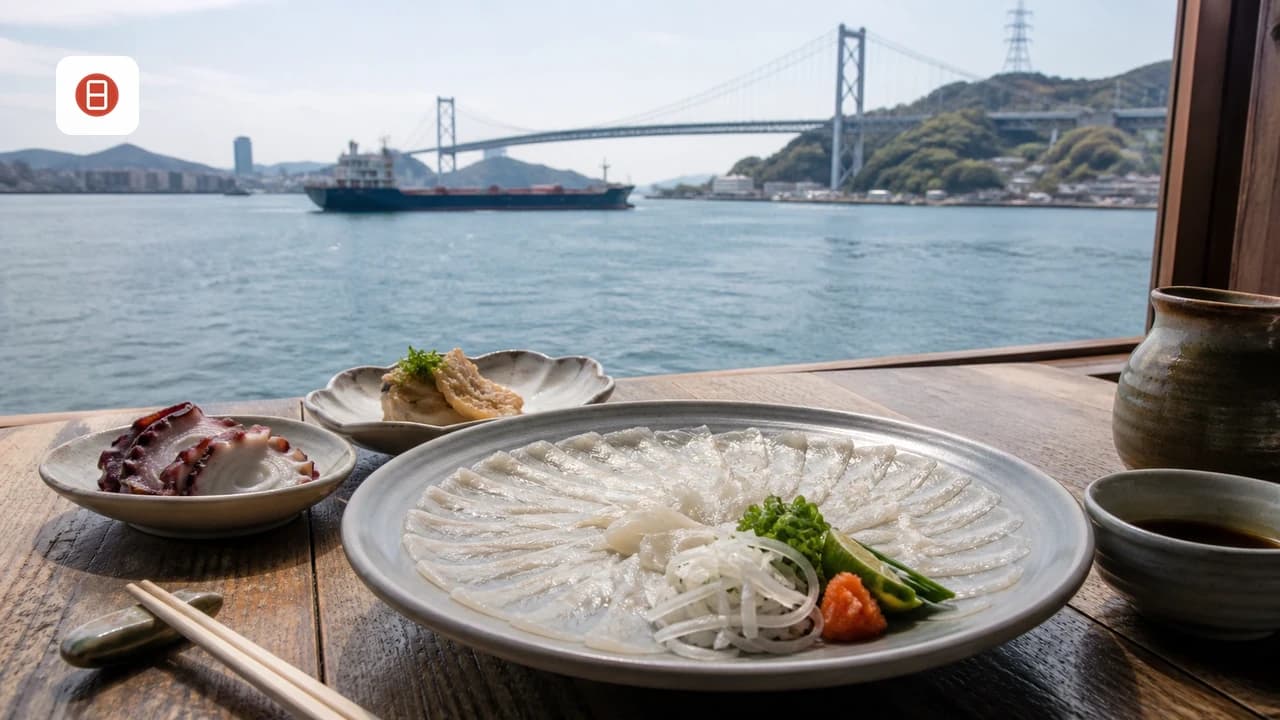
Kokura yaki udon pairs naturally with a short food crawl across Kitakyushu rather than standing as a single stop. Mojiko yaki curry is the other half of the city's signature yaki-food duo, built around curry and rice instead of noodles. Current pricing and details appear in the Mojiko Yaki Curry: A Complete 2026 Guide to Kitakyushu's Baked Curry, though expect it to run heavier and somewhat pricier than a quick plate of yaki udon. For a different kind of specialty entirely, the Kanmon fugu and seafood guide covers the region's pufferfish and seasonal catch, best planned as a separate, more formal meal. Round out a food-focused day by checking the Kitakyushu attractions guide for sights near Kokura Station worth pairing with a noodle stop.
| Dish | Typical Price | Best Time to Eat | Heaviness |
|---|---|---|---|
| Kokura yaki udon | ¥500–¥800 | Lunch or afternoon snack | Light, noodle-based |
| Mojiko yaki curry | Runs higher — see the dedicated guide for current pricing | Lunch or early dinner | Heavier, rice-and-curry base |
Frequently Asked Questions
What does Kokura yaki udon taste like compared to regular yaki udon?
Kokura's version tastes firmer and more concentrated because it starts from dried noodles instead of fresh ones. Dried noodles soak up more of the soy-based sauce, and a heavy topping of katsuobushi adds a smoky, umami finish.
Is Darumado still run by its original owner?
No. Founding owner Sakata-san passed away in 2019, and the shop is now run by the Ogura Yaki Udon Research Institute. That group has kept the original recipe and the eight-seat counter largely unchanged.
How much does a plate of Kokura yaki udon cost in 2026?
Expect roughly ¥500 to ¥800 for a standard plate at Darumado or a station-area izakaya. Prices can run slightly higher at modern spots that add extra toppings or larger portions.
What are the hours for visiting Darumado in Kokura?
Darumado typically opens from around noon to 6:00 PM, staying open a little later on Fridays and Saturdays. It closes on Wednesdays, and it can also close early if the noodles sell out first.
Can you get Kokura yaki udon anywhere besides Darumado?
Yes. Izakayas and food stalls around JR Kokura Station and Tanga Market serve their own versions, usually with bigger portions. Darumado remains the reference point for the original dried-noodle texture and the postwar origin story.
Does Kokura yaki udon need to include an egg?
Not always. It's plain fried noodles with cabbage and sauce, no egg included, by default. Ordering it Tenmado style adds a fried egg on top, and that version is what most regular customers actually choose.
What's the best time of day to try Kokura yaki udon?
Lunch through mid-afternoon is safest, since small counters like Darumado can sell out of noodles before dinner. Arriving right at opening, around noon, gives the best chance at a seat and the full menu.
Free guide: Japan's Hidden Gems
12 under-the-radar places beyond Tokyo & Kyoto — with the best season to visit each and a local tip you won't find in the guidebooks.
You might also like


Continue reading
More guides you'll find useful


