Mojiko Yaki Curry: A Complete 2026 Guide to Kitakyushu's Baked Curry
Plan a Mojiko yaki curry stop in Kitakyushu: prices, top shops like Karii Honpo, the Yaki Curry Map, and the best route through Mojiko Retro in 2026.
On this page
Last updated August 2026, this guide covers Mojiko yaki curry, Kitakyushu's baked curry rice finished with melted cheese and a soft egg. The topping bakes until it bubbles and browns, the look diners expect at nearly every table in Mojiko Retro. More than 25 restaurants serve their own version under one shared club, with prices generally running ¥1,000 to ¥1,500.
What Is Mojiko Yaki Curry? Baked Curry Rice, Explained
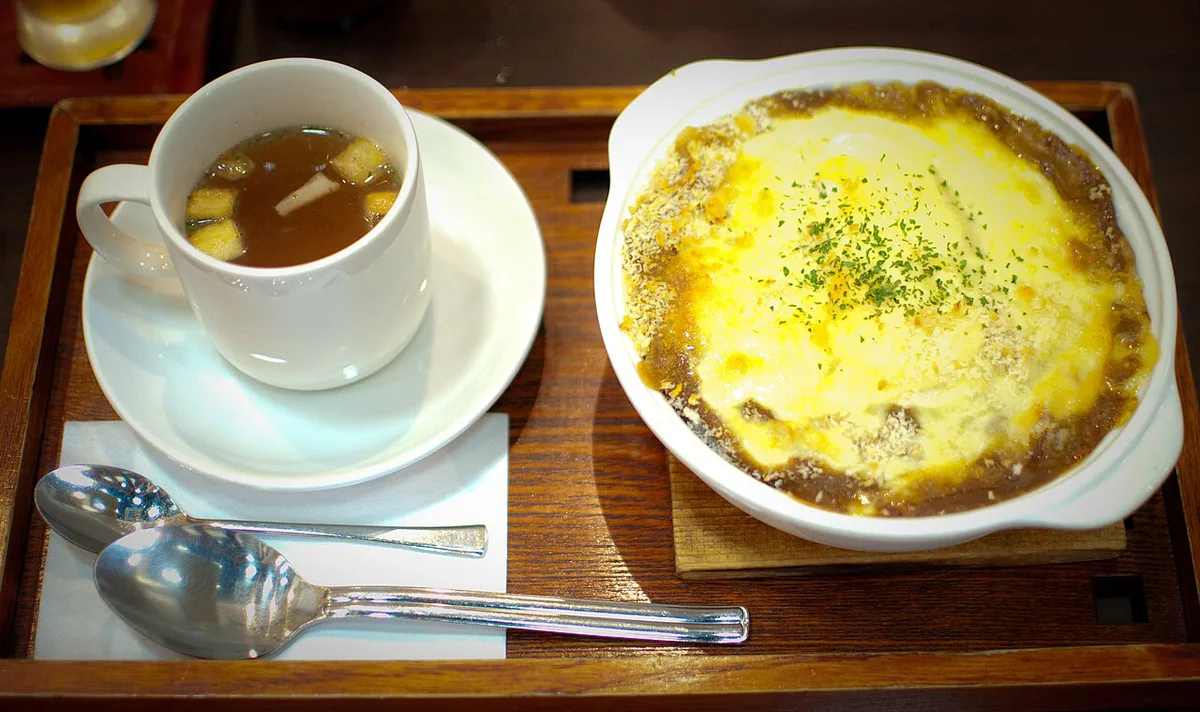
Mojiko yaki curry is Japanese curry rice topped with cheese and an egg, then baked until the top browns. The cheese blisters at the edges while the center stays molten, the look diners expect at nearly every table in Mojiko Retro. Its name comes from Mojiko, the historic port district of Moji Ward in Kitakyushu. Local accounts trace the dish to the 1950s and 1960s, when a café owner reportedly baked leftover curry rice for more texture. That improvised fix became a citywide specialty, and it now sits alongside other dishes covered in the broader Kitakyushu food guide. Mojiko's decades as an international trading port shaped the dish's open style, and several shops still add regional twists rarely seen elsewhere in Japan. Eating it inside Mojiko Retro, surrounded by early-20th-century port buildings, is part of the appeal for day-trippers arriving from Fukuoka and Kokura.
Yaki Curry vs. Curry Doria: What's the Difference
Yaki curry and curry doria look similar, but the two dishes have separate histories worth knowing before ordering. Curry doria was invented in Yokohama by Swiss chef Saly Weil, head chef at the Hotel New Grand. His original version topped a seafood gratin with a creamy white sauce, a different lineage entirely from Mojiko's dish. Mojiko yaki curry skips that white sauce and layers curry roux directly over rice before baking it under cheese and egg. Expect a heartier, spicier result in Mojiko than in a Yokohama-style doria. It's closer in spirit to the rice-forward comfort food found across the region, including Kokura's yaki udon. Menus rarely label the difference clearly, so ask staff which style a dish follows if the description is unclear.
Inside the Bowl: What Makes Mojiko Yaki Curry Different
Every version starts from the same core structure, even as toppings and heat levels vary shop to shop. Rice, roux, egg, cheese, and a hot oven combine to create the format that defines the dish, regardless of which restaurant plates it.
- Rice base: short-grain Japanese rice, pressed into an oven-proof dish before the curry goes on.
- Roux: a dark, slow-cooked curry sauce, often built on beef stock at meat-focused shops.
- Egg: cracked into a well in the curry, served soft-set or fully baked depending on the kitchen.
- Cheese: diced processed cheese in the original Mojiko style, though mozzarella blends appear at newer shops.
- Oven: professional kitchens such as Karii Honpo bake around 320°C for a fast, blistered top.
Choosing Your Restaurant: Karii Honpo, Princess Phi Phi, and the Mitsui Club
Karii Honpo is the standard-bearer near JR Mojiko Station, credited with inventing the now-standard cheese topping. Owner Matsui reportedly covered an egg yolk with cheese to stop it from bursting, and other shops copied the fix. Its signature order is the Old-fashioned yaki curry, made with Japanese black beef and cubes of processed cheese, priced from ¥1,000. Princess Phi Phi takes a different route, building its menu around Southeast Asian spicing and a banana curry not found at the classic shops. One option sits inside the Former Moji Mitsui Club, a preserved building linked to a 1922 stay by Albert Einstein. It serves yaki curry in a more formal, historic dining room. Confirm current hours and menu before visiting, since heritage-building restaurants often run seasonal schedules.
| Restaurant | Signature Dish | Price | Distance from JR Mojiko Station | Reservations |
|---|---|---|---|---|
| Karii Honpo | Old-fashioned yaki curry with Japanese black beef | From ¥1,000 | 2-minute walk | Not accepted weekends, holidays, or weekday lunch |
| Princess Phi Phi | Banana curry with Southeast Asian spicing | Similar range; confirm on arrival | Within the Mojiko Retro core | Confirm directly with the shop |
| Former Moji Mitsui Club | Yaki curry in a preserved Meiji–Taisho building | Check current menu | Short walk from the station | Confirm directly with the venue |
The Banana Curry Tradition
Bananas are a genuine Mojiko quirk, not a gimmick built for visitors. Several shops build menu items around the fruit, tracing back to the port's history moving imported goods through the harbor. Karii Honpo lists a banana yaki curry alongside a winter-only oyster version. Princess Phi Phi built its reputation on banana curry with Southeast Asian spicing. Order banana curry expecting a sweet-savory contrast, closer to a mild curry than to a dessert. Staff can usually explain whether a given banana dish leans sweet or savory before it arrives at the table.
Finding Your Way: The Mojiko Yaki Curry Map and Club
The Mojiko Yaki Curry Club formed in March 2007, when a group of local restaurants joined to build a shared brand around the dish. More than 25 member shops now interpret yaki curry differently, from the classic beef version to seafood, vegetable, and banana takes. Pick up a physical Mojiko Yaki Curry Map near JR Mojiko Station or ask a participating restaurant directly, since exact pickup points can change. Look for club signage in a shop's window to confirm it's an official member. Ask staff if the signage isn't obvious, especially at smaller counters tucked off the main street.
Getting to Mojiko and When to Go
Mojiko Retro sits around JR Mojiko Station, with most yaki curry shops inside a short walk of the platform. Weekday mornings and mid-afternoons are the easiest times to walk into a shop without a wait.
- From JR Kokura Station: about 15 minutes by train.
- From Fukuoka/Hakata: roughly 90 minutes combining train connections.
- By car: about 8 minutes from the Moji Interchange on the Kyushu Expressway.
- Parking: paid lots throughout the Mojiko Retro area, including near Kaikyo Plaza.
- Best window: arrive before 12:00 or after 13:30 to skip the lunch rush.
Avoiding Common Mistakes
Many smaller shops on the Yaki Curry Map are cash-only, even though larger spots like Karii Honpo accept credit cards. Confirm payment methods before ordering, particularly at family-run counters. The ceramic baking dish stays hot well after it leaves the oven, so wait a minute before digging in. Yaki curry is largely a beef-based tradition, and dedicated vegetarian roux is not confirmed as standard at most shops. Ask directly about meat-free options, or check the broader Kitakyushu dietary guide before choosing a shop. Karii Honpo does not take reservations on weekends, holidays, or weekday lunch hours, and lines form quickly during those windows. Skipping the banana and seafood specials because they sound unusual is its own mistake worth avoiding, since they're some of the most distinctly Mojiko options on the menu.
Beyond the Bowl: Nearby Mojiko Retro Attractions
Mojiko Retro rewards a slow walk after lunch, with several landmarks within a few minutes of the yaki curry shops. JR Mojiko Station anchors the district with its preserved early-20th-century building, steps from most restaurants. Blue Wing Moji, a pedestrian drawbridge over the harbor, opens on a set schedule and connects the waterfront to Kaikyo Plaza. Kanmon Pedestrian Tunnel runs underneath the strait toward Shimonoseki, a walkable detour for an afternoon to spare. For a fuller list of stops in the district, check the dedicated Kitakyushu attractions guide. Travelers extending the day toward dinner can compare yaki curry against Kanmon fugu and seafood options. For a different side of Kitakyushu's food scene, head inland to Tanga Market's food stalls.
The Former Moji Mitsui Club preserves a building linked to a 1922 stay by Albert Einstein and serves yaki curry in a formal, historic dining room. Its location within the retro district makes it part of a broader architectural walk rather than an isolated restaurant.
A 3-Hour Mojiko Lunch Loop
This loop fits a full yaki curry stop and a walk through the retro waterfront into about three hours.
Planning around a 3-Hour mojiko lunch loop is feasible for Kokura day-trippers with about 15 minutes of train time. Those from Fukuoka facing roughly 90 minutes of combined train connections have less buffer to fit the complete experience into a single visit.
- Arrive at JR Mojiko Station and pick up a Yaki Curry Map at a nearby shop.
- Eat before 12:00 or after 13:30 at Karii Honpo or another club member to skip peak lines.
- Walk to Blue Wing Moji and cross the bridge when it is open to pedestrians.
- Continue to the Kanmon Pedestrian Tunnel entrance for a short walk toward the strait.
- Finish near Kaikyo Plaza, browsing shops before heading back to the station.
Frequently Asked Questions
What does Mojiko yaki curry taste like?
Expect a dark, slow-cooked curry sauce under melted cheese and a soft or fully baked egg. The baked top adds a browned, slightly crisp edge that a stovetop curry doesn't have. Beef versions like Karii Honpo's Old-fashioned yaki curry lean rich and savory. Banana curry versions add a sweet-savory contrast instead.
How much does Mojiko yaki curry cost?
Prices generally run ¥1,000 to ¥1,500 across the Mojiko Yaki Curry Club's member shops. Karii Honpo lists its yaki curry from ¥1,000. Banana curry and seafood versions can run toward the higher end of that range at some shops.
Is Mojiko yaki curry the same as curry doria?
No, the two dishes have different origins. Curry doria began in Yokohama, invented by Swiss chef Saly Weil at the Hotel New Grand with a white sauce base. Mojiko yaki curry skips that white sauce and bakes curry roux directly over rice under cheese and egg.
Do you need a reservation to eat at Karii Honpo?
No, Karii Honpo does not accept reservations on weekends, holidays, or weekday lunch hours. Lines form quickly during those windows, so arrive before 12:00 or after 13:30 for a shorter wait. Weekday mornings and mid-afternoons tend to be easiest.
How do you get to Mojiko Retro from Fukuoka or Kokura?
From Kokura Station, Mojiko is about 15 minutes away by train. From Fukuoka or Hakata, plan on roughly 90 minutes combining train connections. Drivers reach Mojiko in about 8 minutes from the Moji Interchange on the Kyushu Expressway, with paid parking available throughout the area.
Are there vegetarian options at Mojiko yaki curry restaurants?
Dedicated vegetarian roux is not confirmed as standard at most Mojiko yaki curry shops, since the tradition leans heavily on beef stock. Ask staff directly about meat-free preparation before ordering. Some seafood-topped versions offer a lighter alternative to the classic beef roux, though they still typically use a shared kitchen.
Free guide: Japan's Hidden Gems
12 under-the-radar places beyond Tokyo & Kyoto — with the best season to visit each and a local tip you won't find in the guidebooks.
You might also like


Continue reading
More guides you'll find useful