Shimonoseki Seafood Guide: Uni, Whale, Squid and Monkfish Beyond Fugu
This Shimonoseki seafood guide skips past fugu to cover uni, whale, Kottoi squid and monkfish, with 2026 restaurant hours, addresses and where to eat each.
On this page
Last updated August 2026, this Shimonoseki seafood guide looks past the city's famous fugu to the four other specialties that define its plates. Sea urchin, whale, Kottoi squid and monkfish each have their own season, restaurant and price tier around the Kanmon Strait. The dedicated Shimonoseki Fugu Guide: Eating Pufferfish Safely (2026) covers safety and course details separately, so this piece focuses on what shares the table with it.
How This Shimonoseki Seafood Guide Works: The Kanmon Strait and Five Local Brands
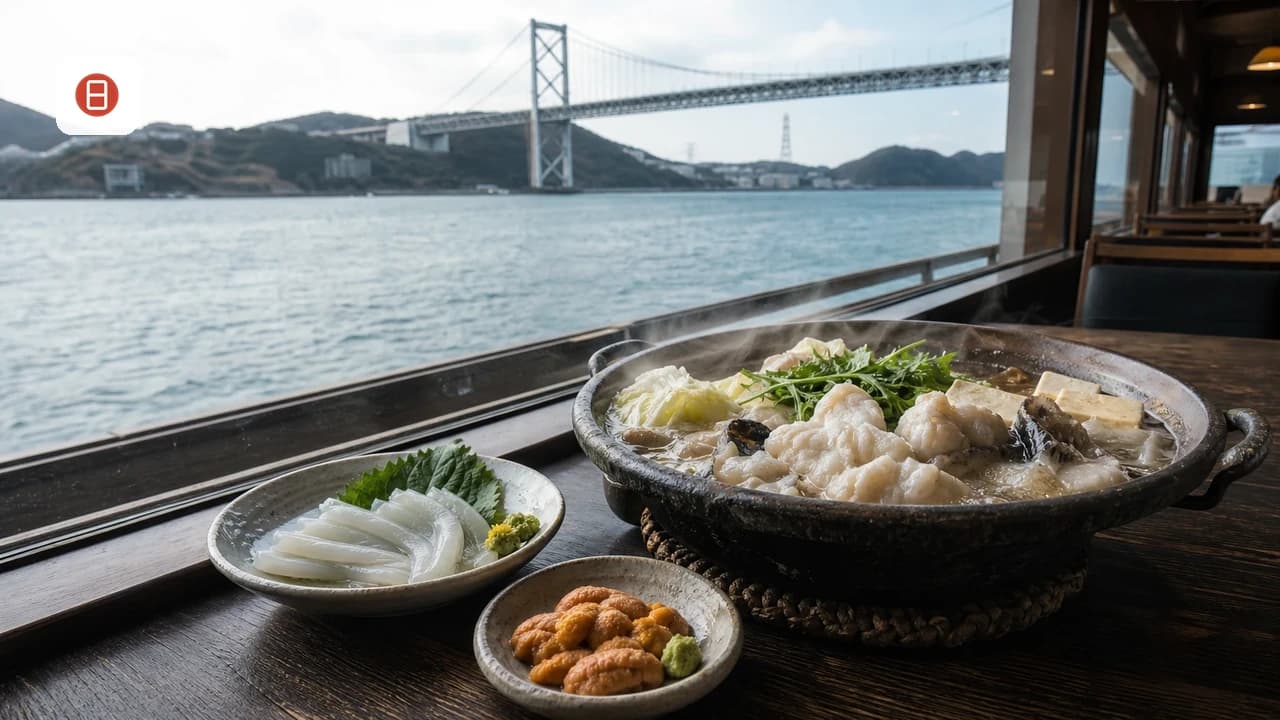
Shimonoseki sits at the westernmost tip of Honshu in Yamaguchi Prefecture, directly across the Kanmon Strait from Kyushu. That strait's fast currents build lean, firm-textured fish and shellfish, which is part of why the catch here tastes different from softer-water ports elsewhere in Japan. Local restaurants group five species into what's known as the Shimonoseki City Five Major Seafood Brands. Fugu carries the city's best-known history, tasted by Prime Minister Ito Hirobumi at the Shunpanro restaurant in 1888, a moment credited with easing Yamaguchi Prefecture's fugu ban. That story has its own guide; this one covers the other four brands and where the wider Shimonoseki food scene fits around them. Yamaguchi Prefecture's fishing fleets supply much of the catch, and the strait's narrow point has long made Shimonoseki a natural trading and processing hub. Expect to see uni, whale, monkfish and squid at markets, conveyor-belt counters and multi-course restaurants alike, often within a short walk of each other near Shimonoseki Station or Karato.
- Fugu (pufferfish): the city's signature brand, covered in the dedicated fugu guide
- Uni (sea urchin): served over rice or as sushi at counters across the city
- Kujira (whale): appears as nigiri, most often the neck cut called Kanoko
- Anko (monkfish): a fall-to-spring specialty at select restaurants
- Ika (squid): includes Kottoi squid, a premium local variety served at Karato-area sushi counters
Sea Urchin (Uni): Where to Find It
Okamoto Fresh Fish Store, a short walk from Shimonoseki Station, built its reputation on the Okamoto Don. That bowl piles roughly ten varieties of seasonal fish over rice, topped with sea urchin and a piece of fried chicken. Depending on the season, the same bowl sometimes adds whale or monkfish, turning one plate into a sampler of several Shimonoseki Five brands at once. Order it with the classic soy sauce, or ask for the house sesame-infused sauce instead. Its owner has walked to the market at 3:00 a.m. to select each day's catch since the shop opened in 1979. Regulars share the counter with guests who book from well outside the region, and that popularity means reservations can fill up to a year ahead. Karato Market's weekend sushi stalls also sell sea urchin nigiri alongside tuna and salmon, a lighter-commitment option for a shorter visit.
Kottoi Squid: Shimonoseki's Local Sushi Specialty
Sushi Yukan's Karato branch, on the second floor of Kamon Wharf at 6-1 Karato-cho, is the reliable spot for Kottoi squid. The chain operates mainly across the Chugoku and Shikoku regions, pairing its signature bluefin tuna with whichever local specialty fish each branch adds. Locals prize the Karato branch's Kottoi squid for its sweetness and creamy texture, served nigiri-style at conveyor-belt prices. The kitchen uses naturally farmed rice and additive-free rice vinegar for its sushi rice. The location overlooks the Kanmon Strait, and the interior is spacious enough for a slower meal than the usual conveyor-belt pace. Weekday hours run 11:00 AM to 3:00 PM and 5:00 PM to 9:00 PM. Saturdays, Sundays and holidays the restaurant stays open straight through, 11:00 AM to 9:15 PM, with no regular closing day. Call 083-228-1722 to check current wait times before a weekend visit.
Whale (Kujira): Shimonoseki's Historic Fifth Specialty
Whale earns its place on the Shimonoseki City Five Major Seafood Brands list through Kanoko Nigiri, a rare cut taken from the neck. Sushi Yukan's Karato branch serves it at the same counter as its Kottoi squid, priced within the chain's standard conveyor-belt range. Whale has been part of the city's fishing-port identity for generations, and Kanoko Nigiri is one of the few places that history still shows up on a menu today. The Okamoto Don sometimes carries whale too, depending on the season, so ask at either counter which cuts are currently available. In our editorial assessment, whale shows up on fewer sushi menus outside this region, which is part of what makes trying it here worthwhile. Availability depends on the day's supply either way, so confirm with staff before ordering.
Monkfish (Anko): A Fall-to-Spring Specialty
AKAMA Fukutei, across from Akama Shrine, runs a full monkfish course from October through March, one of the newer specialties on its menu. Outside that window, the weekday-only KAI Local Flavors Lunch still draws on Karato Market's morning catch for its sashimi and grilled-fish courses, finishing with homemade pudding. A weekend version adds extra side dishes and nigiri sushi to the same format. The restaurant sits at 7-8 Amida-ji-cho, about a 10-minute drive from JR Shimonoseki Station, or a 2-minute walk from the Akama Jingu-mae bus stop. It opens 11:00 AM to 3:00 PM and 5:30 PM to 9:00 PM, closed Mondays, with free parking. Call 083-242-0772 to confirm the monkfish course is still running before making the trip.
- First floor: white interior, suited to solo diners
- Second floor: black interior with private rooms
- Third floor: blue accents, suited to business dinners and banquets
The Shimonoseki Five at a Glance
The table below condenses where each of the four non-fugu specialties is most reliable, since not every restaurant carries every brand on a given day.
| Specialty | Best Place to Try | Season/Availability | Signature Dish |
|---|---|---|---|
| Sea urchin (uni) | Okamoto Fresh Fish Store | Year-round, ask daily | Okamoto Don rice bowl |
| Kottoi squid (ika) | Sushi Yukan, Karato branch | Year-round, ask daily | Kottoi squid nigiri |
| Whale (kujira) | Sushi Yukan, Karato branch | Depends on daily supply | Kanoko nigiri |
| Monkfish (anko) | AKAMA Fukutei | October through March | Full monkfish course |
Where to Eat: A Quick Comparison
None of the restaurants below publish fixed prices online for these specific dishes, so call ahead or check the current menu before visiting. As a rough guide, Sushi Yukan's conveyor-belt sushi runs cheaper per item than AKAMA Fukutei's multi-course kaiseki, with Okamoto Fresh Fish Store's rice bowls sitting in between. Parking varies too: it is free at AKAMA Fukutei and charged at Sushi Yukan's Karato branch.
| Restaurant | Signature Non-Fugu Dish | Location | Good For |
|---|---|---|---|
| Okamoto Fresh Fish Store | Okamoto Don (uni plus about 10 fish varieties) | Near Shimonoseki Station | Hearty rice bowls; book ahead |
| Sushi Yukan Karato Branch | Kottoi squid and Kanoko whale nigiri | 2F Kamon Wharf, Karato-cho | Conveyor-belt prices with a strait view |
| AKAMA Fukutei | Monkfish course (October-March) | Amida-ji-cho, near Akama Shrine | Multi-course seasonal kaiseki |
| Heike Chaya | Seafood paired with Kawara Soba | Kanmon Strait waterfront | Combining two specialties in one stop |
Sequencing a Seafood Day: Uni, Squid, Whale and Monkfish in One Trip
Each specialty sits in a different part of the city, so sequencing a visit saves backtracking. Start near the station, move toward Karato, and finish on the waterfront.
Okamoto Fresh Fish Store's owner sources daily at 3:00 a.m., building the ingredient quality and limited capacity that makes this morning stop worth reserving far in advance.
- Morning: Okamoto Fresh Fish Store for the Okamoto Don, near Shimonoseki Station
- Midday: Sushi Yukan's Karato branch for Kottoi squid and Kanoko whale nigiri, inside Kamon Wharf
- Afternoon: AKAMA Fukutei near Akama Shrine, especially October through March for the monkfish course
- Evening: Heike Chaya on the waterfront, pairing seafood with Kawara Soba
Heike Chaya and Pairing Seafood with Kawara Soba
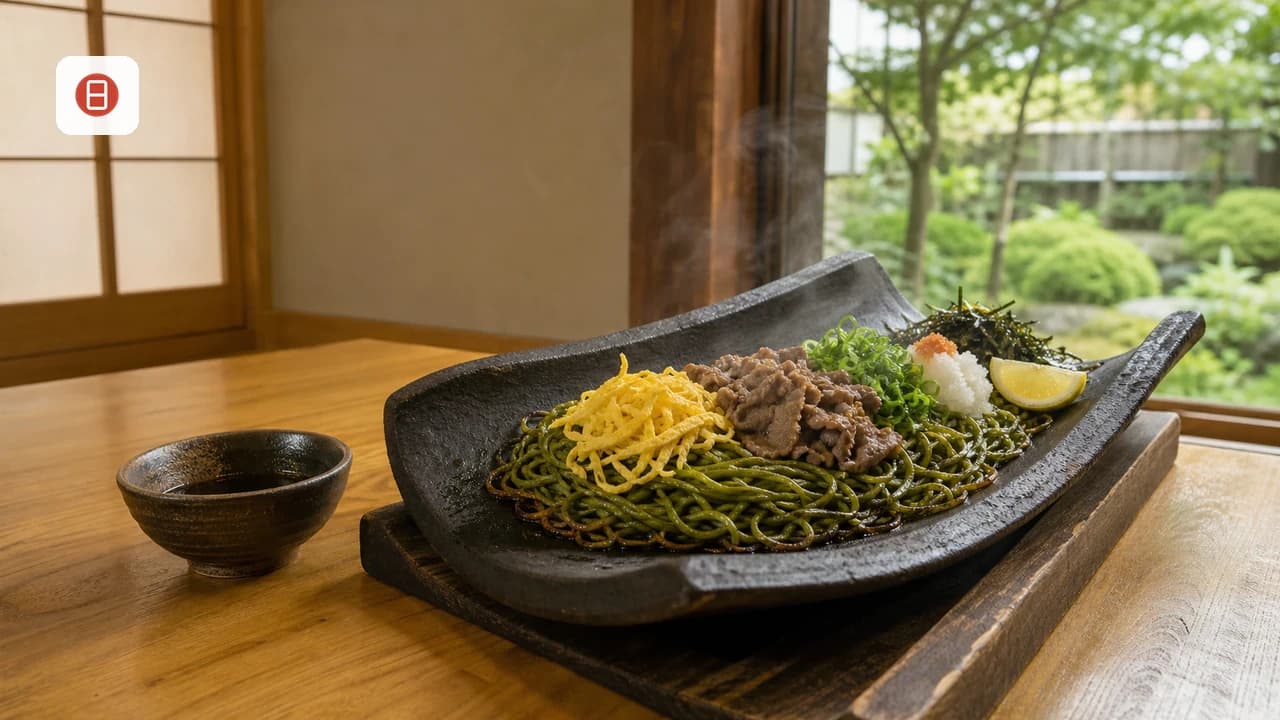
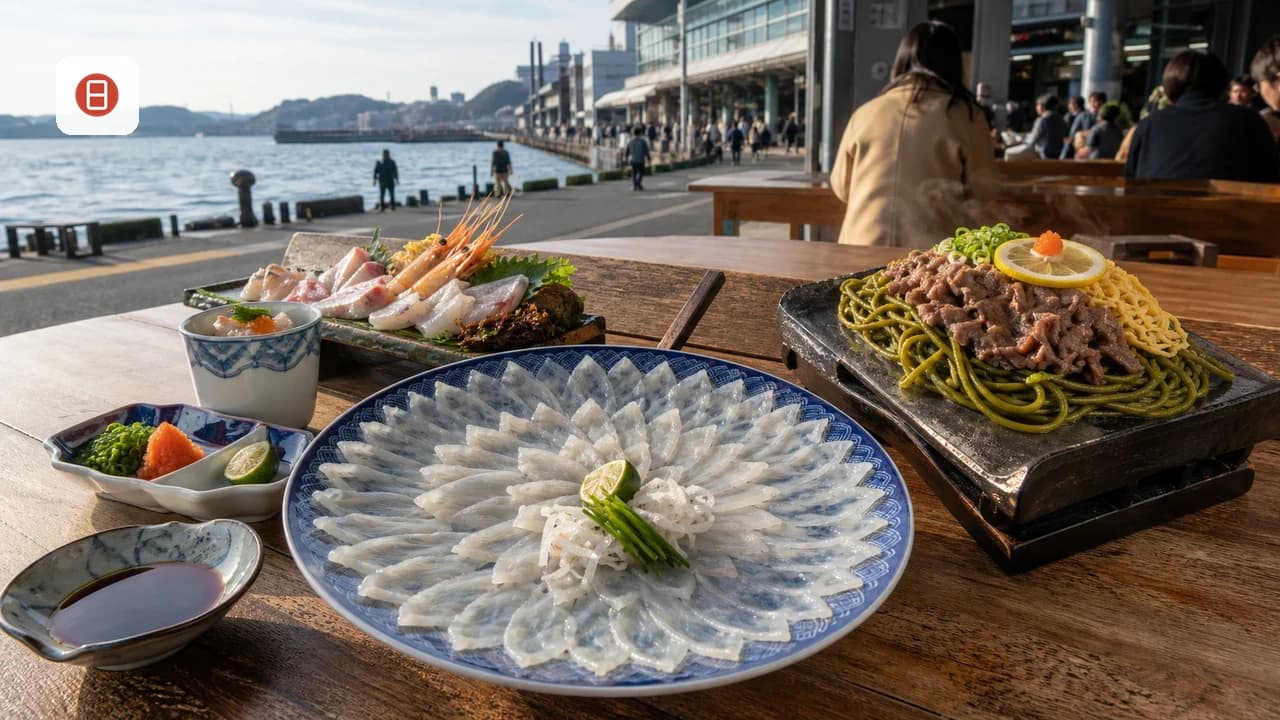
Heike Chaya sits on the waterfront with a view over the Kanmon Strait, close enough to watch ships pass through the channel while eating. Its set meal pairs seafood with Kawara Soba, a Shimonoseki noodle specialty covered fully in the dedicated guide. The Kawara Soba guide details that dish's history and other places to order it. For a second local specialty on the same trip, the Tonchan Nabe guide covers Shimonoseki's hot-pot alternative for evenings when seafood is not the plan. Combining a seafood lunch with either dish turns one stop into a two-specialty meal without adding a second reservation.
Getting There and Timing the Visit
Shin-Shimonoseki, the Shinkansen stop, connects to Shimonoseki Station by a roughly 10-minute local JR ride. From Shimonoseki Station, buses reach the Karato Market area in about 10 minutes, close to several of the restaurants above. Travelers arriving from South Korea can reach Shimonoseki directly on the Kampu Ferry from Busan. For a short detour, a 5 to 10-minute ferry ride connects Karato to Mojiko Port in Kitakyushu, pairing a seafood lunch with an afternoon across the strait. Karato Market itself runs on a general wholesale schedule of roughly 5:00 AM to 3:00 PM, with a separate weekend Iki-Iki Bakangai sushi-stall event drawing the heaviest crowds inside that window. Weekday visits leave more room at Sushi Yukan and AKAMA Fukutei without a wait. The Karato Market guide breaks down which days suit which kind of visit, and the things to do in Shimonoseki guide covers the fuller transit picture. Hoshino Resorts operates RISONARE Shimonoseki in the city, one lodging option for a seafood-focused stay, though every restaurant above welcomes walk-ins regardless of where visitors are staying.
Mistakes to Avoid
A few planning slips repeat often enough to flag before locking in a schedule. Each one is easy to sidestep with a quick call ahead.
Monkfish courses run only October through March, and the required 10-minute drive from Shimonoseki Station to AKAMA Fukutei means this specialty demands advance planning rather than spontaneous ordering.
- Assuming monkfish is available year-round; AKAMA Fukutei's course runs October through March only
- Skipping a reservation at Okamoto Fresh Fish Store; the counter can book up to a year ahead
- Treating Karato Market as the only source for Kottoi squid or Kanoko whale nigiri; Sushi Yukan's Karato branch serves both daily
- Visiting Sushi Yukan expecting fugu-only options and missing the whale and squid nigiri that set the counter apart
- Planning around whale specifically without a backup dish; daily supply varies, so a fixed craving can lead to disappointment
Karato Market: Weekend Sushi Stalls vs. Weekday Visits
Karato Market offers two distinct experiences, so choose the day around how you want to eat. The Iki-Iki Bakangai event runs from Friday through Sunday and on public holidays. Vendors turn the ground floor into rows of takeaway sushi, seafood bowls, grilled items and fried fugu.
Arrive between 10:00 and 11:00 AM for the widest choice. Popular toppings can sell out by early afternoon. After buying several pieces from different stalls, take them to the Kanmon Strait boardwalk outside. Fugujiru, a warming miso soup containing fugu, makes a practical side dish in cooler weather.
Weekdays are quieter and retain more of the market’s wholesale character. Visitors will find fewer takeaway sushi stalls, but the calmer setting makes it easier to inspect the seafood displays. It can also reduce waiting times at the second-floor restaurants.
- Choose Friday through Sunday for variety and a lively market atmosphere.
- Choose a weekday for fewer crowds and a more relaxed restaurant meal.
- Avoid Monday if the weekend sushi stalls are the main reason for visiting.
Explore seafood guide in other cities
Frequently Asked Questions
What are the Shimonoseki Five seafood specialties?
Fugu, sea urchin, whale, monkfish and squid make up the Shimonoseki City Five Major Seafood Brands. This guide covers the four beyond fugu, which has its own dedicated guide with safety and course details.
When is monkfish (anko) in season in Shimonoseki?
AKAMA Fukutei runs its full monkfish course from October through March. Outside that window, ask which seasonal dish has replaced it on the menu.
Where can visitors try Kottoi squid?
Sushi Yukan's Karato branch serves Kottoi squid nigiri on the second floor of Kamon Wharf. It is priced at standard conveyor-belt rates, alongside Kanoko whale nigiri at the same counter.
Do you need a reservation for Okamoto Fresh Fish Store?
Yes. The Okamoto Don has built a following strong enough that tables can book up to a year in advance, so call ahead rather than walking in.
How much time should I plan for a Shimonoseki seafood trip?
A single lunch at one restaurant takes about 1 to 2 hours. Pairing it with a walk through Karato Market or a stop at Akama Shrine fills a half day.
Is whale seafood always available in Shimonoseki?
Not guaranteed. Kanoko Nigiri depends on daily supply at Sushi Yukan's Karato branch, and the Okamoto Don only adds whale seasonally, so confirm with staff before ordering.
Free guide: Japan's Hidden Gems
12 under-the-radar places beyond Tokyo & Kyoto — with the best season to visit each and a local tip you won't find in the guidebooks.
You might also like

Continue reading
More guides you'll find useful