10 Best Things to Do in Shimonoseki: A Local Travel Guide
Discover the best things to do in Shimonoseki, from Karato Market's fugu stalls to the Kanmon Pedestrian Tunnel. Includes 2026 prices, hours, and transit tips.
On this page
Last updated July 2026, this rundown of things to do in Shimonoseki covers Japan's fugu (pufferfish) capital, the gateway city where Honshu meets Kyushu across the 650-meter-wide Kanmon Strait in Yamaguchi Prefecture. The list below moves through the Karato waterfront, the historic shrine district, and the undersea crossing to Kyushu, with the opening hours and admission fees needed to plan a single, efficient day. For readers short on time, the quick answer is to anchor a visit around Karato Market, Akama Shrine. The Kanmon Pedestrian Tunnel, then add Chofu Town or the Kanmon Bridge viewpoints if the schedule allows.
Shimonoseki at a Glance: The Fugu Capital on the Kanmon Strait
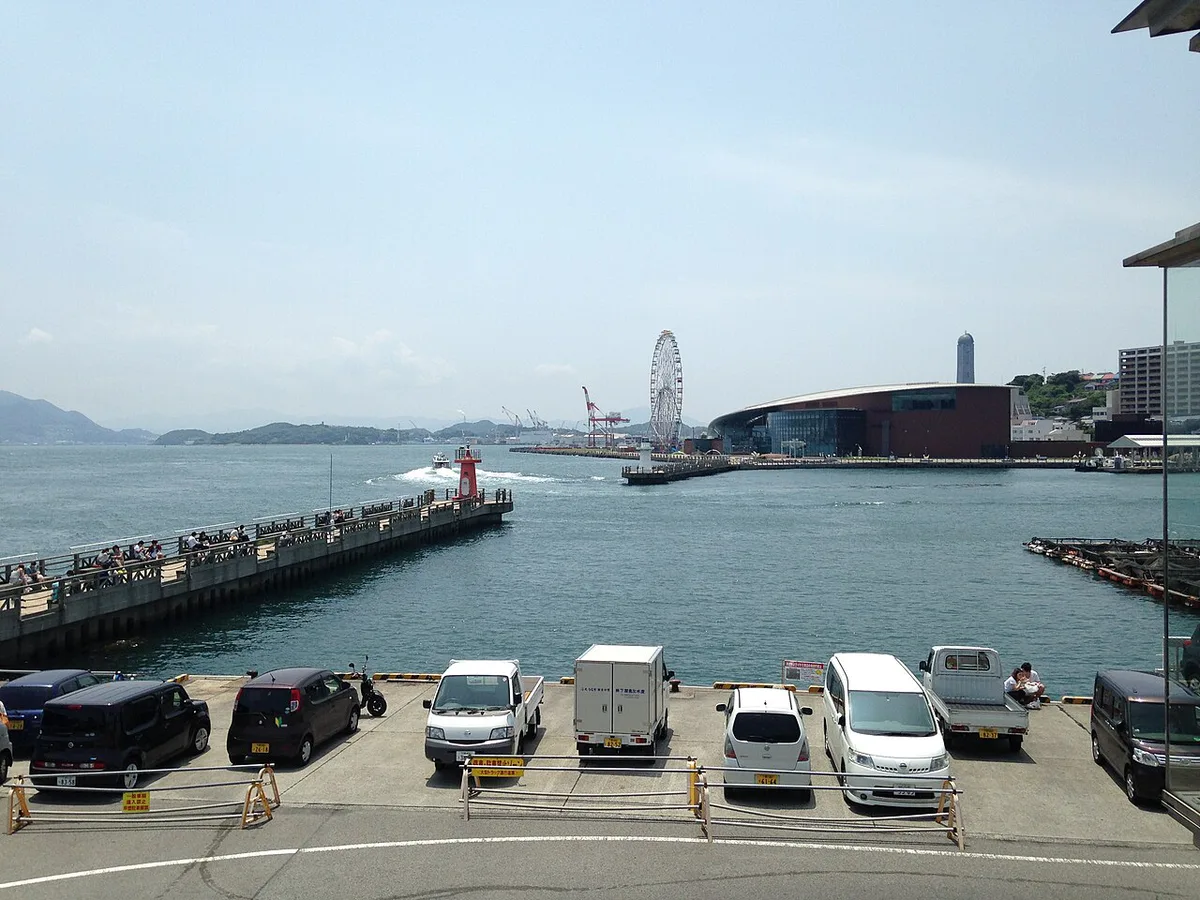
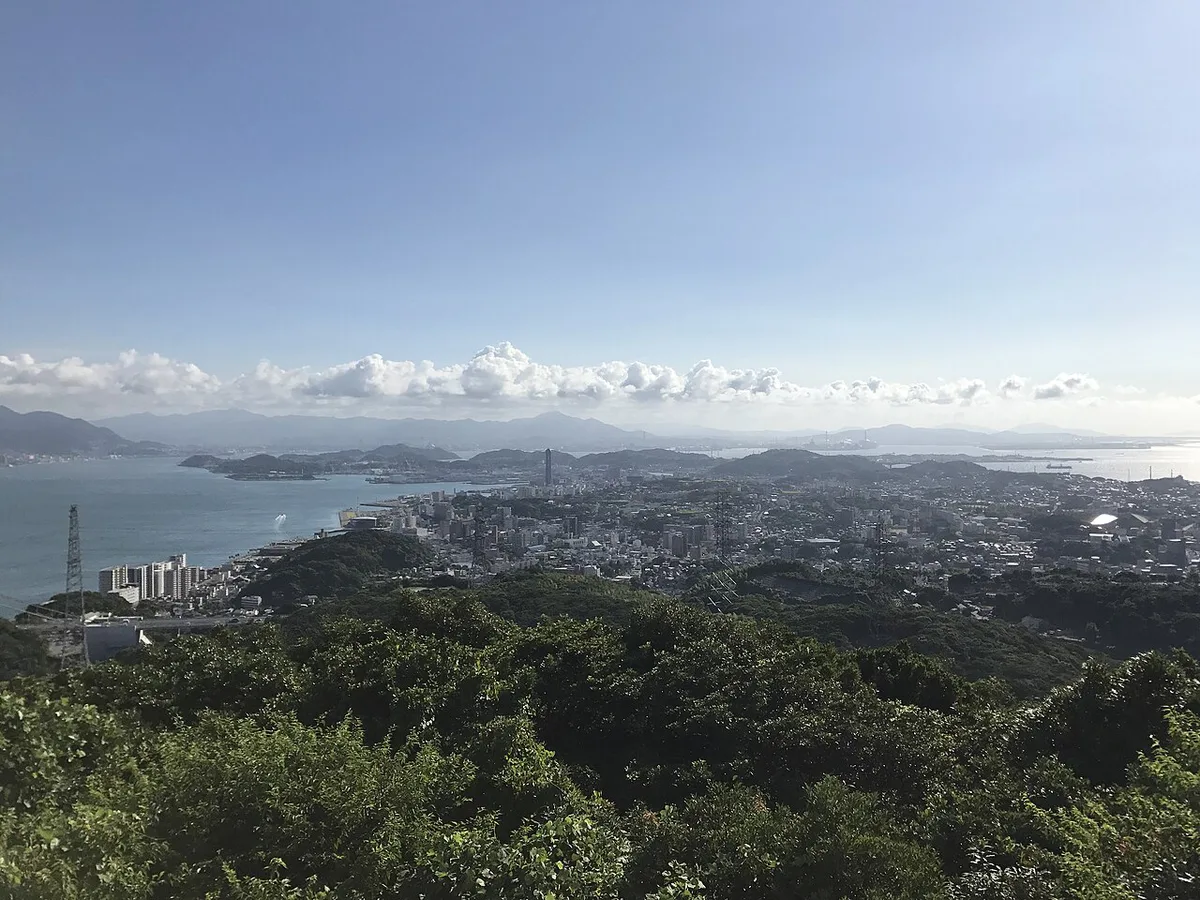
Shimonoseki sits at the westernmost tip of Honshu, separated from Kyushu by the Kanmon Strait, a busy sea lane that narrows to about 650 meters at its tightest point. Surrounded by water on three sides, the city built its identity on seafood. Pufferfish in particular, known locally as fuku, moves through Shimonoseki's fish markets in volumes that support restaurants across the city. Sightseeing splits into three distinct pockets. The first covers the city center and Karato waterfront near Shimonoseki Station. The second surrounds the Kanmon Bridge and tunnel, while Chofu Town forms a third area roughly eight kilometers inland. Treating these as separate legs of the day, rather than one walkable zone, is the difference between an efficient itinerary and a lot of backtracking.
10 Best Things to Do in Shimonoseki
These ten stops cover the waterfront markets, the historic shrine and treaty sites. The crossing into Kyushu, roughly in the order they work best across a single day or a relaxed two-day visit.
- Karato Market
- Karato Market is a working fish market in a waterfront warehouse where auctioneers, wholesalers, and fishmongers handle pufferfish alongside the rest of the daily catch, open 5:00 to 15:00 on weekdays (from 8:00 on Sundays and national holidays).
- The tourist-facing side comes alive during the Iki-iki Bakara-gai sushi event, held Friday through Sunday and on public holidays from 10:00 to 15:00 (8:00 on Sundays and holidays), when stallholders sell sushi and fresh cuts to walk-in visitors.
- Wholesale trading pauses on Sundays and national holidays and the market closes on selected Wednesdays, so weekday visitors get the working-market atmosphere while weekend visitors get the food-stall event; check the Karato Market food stalls schedule before building a day around it.
- Kaikyokan Aquarium
- The Kaikyokan Aquarium sits on the Karato waterfront and houses roughly 500 species of fish, with a standout collection of more than 100 varieties of pufferfish sourced from around the world.
- Beyond the strait's marine life, the aquarium keeps penguins, dolphins, and sea lions, and its penguin enclosure is a consistent highlight for families.
- It's open 9:30 to 17:30 with entry until 17:00, admission runs ¥2,500, and there are no scheduled closing days, making it an easy add-on regardless of which day the trip falls on.
- Kaikyo Yume Tower
- Kaikyo Yume Tower rises 153 meters over the waterfront, about a ten-minute walk from Shimonoseki Station, with an observatory deck at the 143-meter mark.
- Admission is ¥600 and the tower is open 9:30 to 21:30 with entry until 21:00, closing only on the fourth Saturday in January.
- Because the tower is illuminated in the evenings, a late-afternoon or sunset visit gets both the daylight panorama over the Kanmon Strait and the lit-up view on the way down.
- Akama Shrine
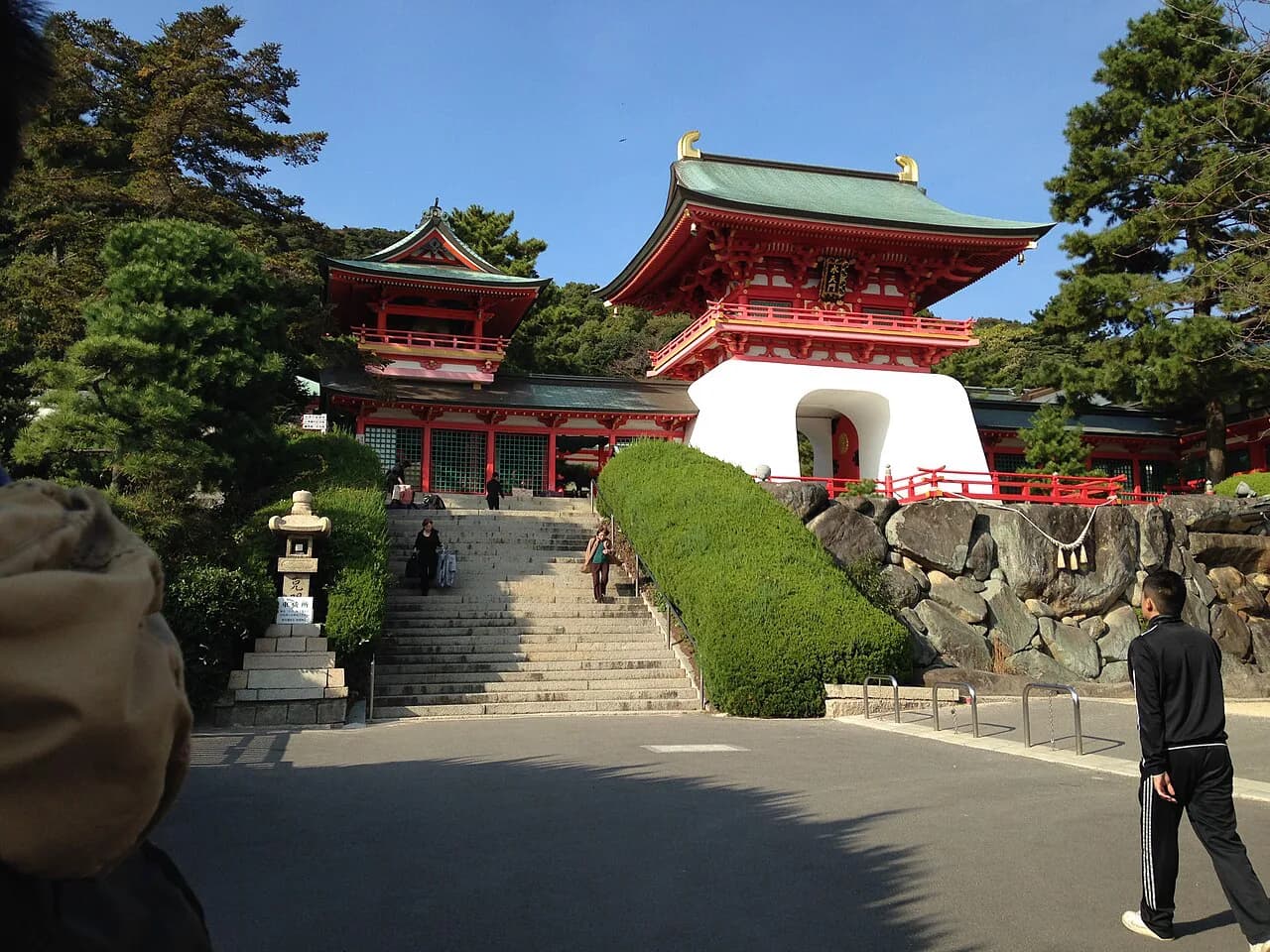
- Akama Shrine overlooks the Kanmon Strait and is dedicated to the spirit of the child Emperor Antoku, who died at the nearby Battle of Dannoura in the late 12th century.
- Its most photographed feature is the Suitenmon gate, a vermilion-roofed structure set on a white arch foundation at the shrine entrance.
- Entry to the shrine grounds is free and always open, while the treasure hall keeps hours of 9:00 to 16:30 for a ¥100 fee; the Akama Shrine grounds pair naturally with a stop at Shunpanro Hall next door.
- Shunpanro Hall (Sino-Japanese Peace Memorial Hall)
- Shunpanro is a hotel and restaurant beside Akama Shrine with roots dating to the Edo Period, looking out over the Kanmon Strait.
- In 1895, its hall hosted the delegates who signed the Treaty of Shimonoseki, ending the First Sino-Japanese War, and the memorial hall preserves that history for visitors today.
- Hours run 9:00 to 17:00 with free admission and no scheduled closing days, making it a quick, low-cost stop directly after the shrine.
- Kanmon Pedestrian Tunnel
- The Kanmon Pedestrian Tunnel runs 780 meters beneath the strait, connecting Shimonoseki on Honshu to Moji Port on Kyushu, and it's open daily from 6:00 to 22:00.
- Reaching the walkway means taking an elevator down to a depth of roughly 50 to 60 meters, and the prefectural border between Yamaguchi and Fukuoka is marked partway along the crossing.
- Admission is free for pedestrians and ¥20 for bicycles and mopeds, and the walk itself is the centerpiece of the city's two-sided Kanmon Strait experience.
- Kanmon Bridge and Mimosusogawa Park
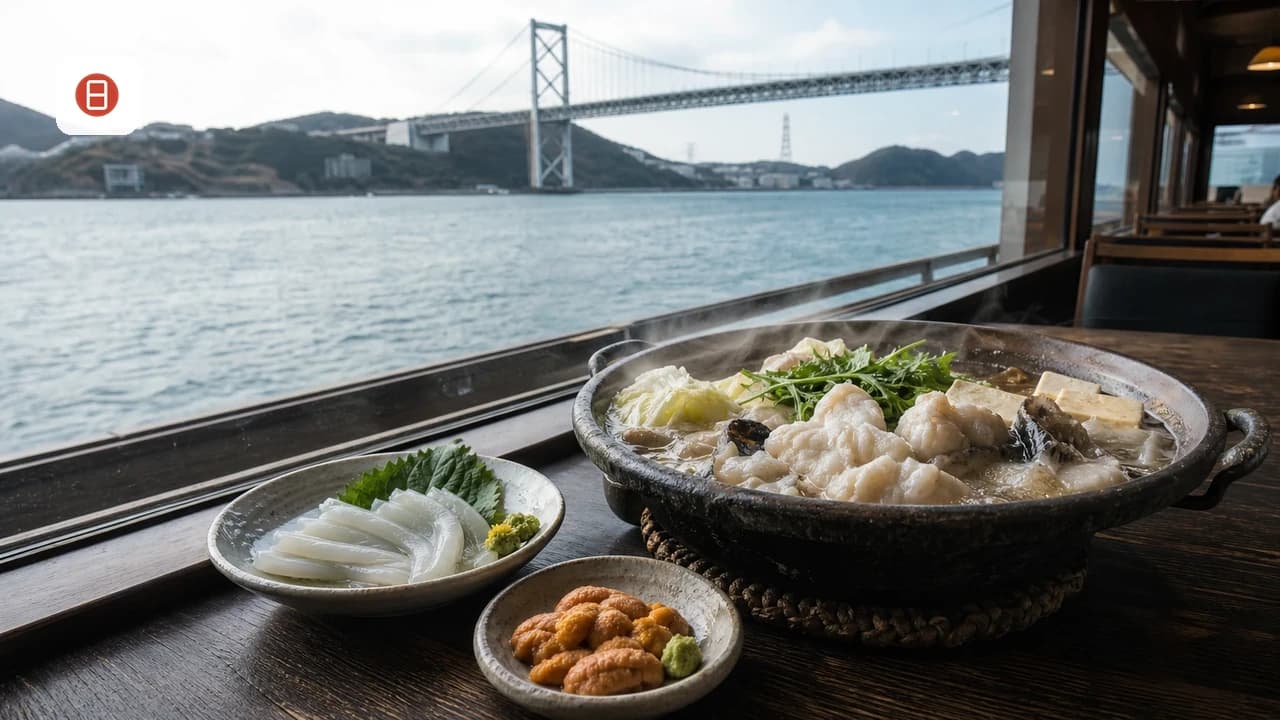
- The Kanmon Bridge is a 1,068-meter suspension bridge carrying six car lanes across the strait to Kyushu, and it's one of the most visible landmarks from either shore.
- Mimosusogawa Park, across the street from the pedestrian tunnel entrance, holds two battle monuments: a row of replica Choshu cannons aimed at the strait and statues of the Minamoto and Taira clan leaders from the Battle of Dannoura.
- Both the park and its monuments are free and open at all times, and the waterfront path here gives one of the clearest sightlines to the bridge itself.
- Hinoyama Park
- Hinoyama Park sits atop Mount Hinoyama and delivers panoramic views over the Kanmon Strait, Moji across the water, and the surrounding mountains.
- The ropeway that normally connects the base near the tunnel entrance to the summit is currently being rebuilt and is not scheduled to reopen until around 2028, so drivers can still reach the Hinoyama Park viewpoint by car in the meantime.
- Given the ropeway closure, pair this stop with a rental car day or plan it around the Kanmon Bridge leg rather than counting on the cable car.
- Chofu Samurai District
- Chofu is a former castle town of the Mori Clan roughly eight kilometers inland from the waterfront, and it makes a quieter counterpoint to the busy Karato area.
- The Chofu Mori Residence, completed in 1903 and once used to host Emperor Meiji, is open 9:00 to 17:00 (entry until 16:40) for ¥210, while nearby Kozanji Temple is one of Japan's oldest Zen-style temples and a national treasure known for autumn color.
- Budget a separate half-day for the Chofu samurai district, since its historical walls and temple grounds reward slower, on-foot exploring rather than a rushed pass-through.
- Kanmon Strait Loop via the Moji-ko Ferry
- Most competitor guides treat Shimonoseki as a self-contained stop, but the more complete experience walks the pedestrian tunnel to Moji Port on the Kyushu side and returns by ferry across the strait.
- The loop turns a one-way tunnel walk into a round trip that shows both the Honshu and Kyushu faces of the Kanmon Strait without retracing the same path twice.
- It also works as a bridge day between Shimonoseki and a Fukuoka-based stay, since Moji-ko sits on the Kyushu side of the same waterway.
Getting There and Around: Avoiding the Station Trap
Shimonoseki Station handles local and limited express trains and sits closest to the Karato waterfront attractions. At the same time, Shin-Shimonoseki Station, several kilometers away, is the Shinkansen stop. Arriving on the bullet train and expecting to walk straight into the market district is the single most common planning mistake. From either station, the waterfront sites cluster within a manageable bus ride or a longer walk. At the same time, Chofu Town and the Kanmon Bridge/tunnel area sit further out and generally call for a bus, taxi, or rental car. Travelers splitting time between Shimonoseki and Moji-ko on the Kyushu side can walk the Kanmon Pedestrian Tunnel one way and take the passenger ferry back. Drivers can use a car for the Kanmon Bridge crossing instead. For a day that mixes several paid sites, weigh a rental car against a regional transit pass on the spot. This is because Chofu Town's distance from the waterfront is the main variable that decides whether walking and buses stay efficient or a car starts to save real time.
Costs, Tickets, and Timing
Free sites like Akama Shrine's grounds, the Kanmon Pedestrian Tunnel, and Mimosusogawa Park can anchor a budget day, while the aquarium and tower are the two paid stops worth planning around. The one hour that matters most is Karato Market's 15:00 close, which cuts the day short if the waterfront leg starts too late.
| Site | Admission (2026) | Hours |
|---|---|---|
| Karato Market | Free | 5:00–15:00 (from 8:00 Sun/holidays); closed selected Wednesdays |
| Kaikyokan Aquarium | ¥2,500 | 9:30–17:30 (entry until 17:00) |
| Kaikyo Yume Tower | ¥600 | 9:30–21:30 (entry until 21:00) |
| Akama Shrine | Free (¥100 treasure hall) | Always open; treasure hall 9:00–16:30 |
| Kanmon Pedestrian Tunnel | Free (¥20 bicycles/mopeds) | 6:00–22:00 |
| Chofu Mori Residence | ¥210 | 9:00–17:00 (entry until 16:40) |
Mistakes to Avoid in Shimonoseki
A few timing and logistics errors account for most disappointing visits to Shimonoseki, and all of them are avoidable with a quick check before setting out.
Arriving at Shin-Shimonoseki rather than Shimonoseki Station compounds the time pressure of Karato Market's 15:00 close, making the station connection a practical constraint that can eliminate the day's anchor attraction.
- Visiting Karato Market on the wrong day
- The market closes on selected Wednesdays and wholesale activity pauses on Sundays and national holidays, so a visit aimed at the lively Iki-iki Bakara-gai event needs a Friday, Saturday, Sunday, or holiday to line up with the 10:00–15:00 (or 8:00–15:00) window.
- Assuming the Shinkansen drops you in the city center
- The bullet train stops at Shin-Shimonoseki Station, not Shimonoseki Station, and only the latter sits near the Karato waterfront and city-center sights, so factor in a transfer or bus connection either way.
- Skipping fugu out of caution
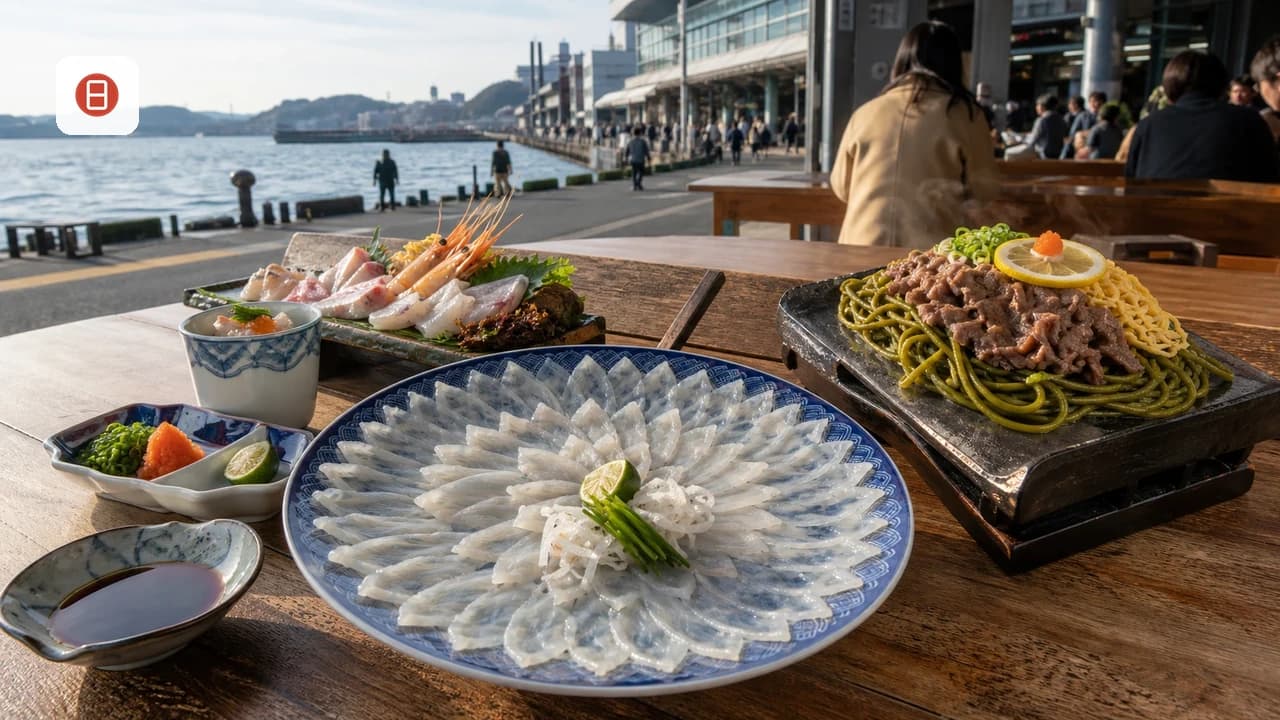
- Pufferfish preparation in Japan is handled by licensed chefs under strict regulation, and beginners can ease in with sashimi or fried karaage rather than the most adventurous cuts; the fugu tasting guide breaks down where and how to try it.
- Counting on the Hinoyama Park ropeway
- The ropeway to Hinoyama Park is currently out of service for reconstruction and isn't due back until around 2028, so drivers should plan to reach the summit by car instead.
Basing Your Trip: Pairing Shimonoseki with Fukuoka
Shimonoseki works well as a day trip or overnight add-on for travelers based in Fukuoka. This is because the Kanmon Strait crossing to Moji-ko puts the two sides of the strait within a single loop rather than two separate trips. After covering the waterfront, shrine district, and tunnel crossing, travelers heading back toward Kyushu can extend the day into Hakata's old town. Its temples and merchant-era streets provide a natural continuation of Shimonoseki's historical sites. The Hakata's old town guide covers that side of the loop in more detail. This pairing also spreads the day's paid attractions and free historical stops across two cities instead of cramming them into one. This keeps the pace closer to a relaxed sightseeing day than a checklist sprint.
Pairing Shimonoseki with Fukuoka spreads costly attractions and free sites across cities, preventing the rush of cramming paid stops and time-sensitive sites like Karato Market's 15:00 close into a single day.
For trip-planning details, see Shimonoseki - Wikipedia and Shimonoseki - Wikivoyage.
Explore things to do in other cities
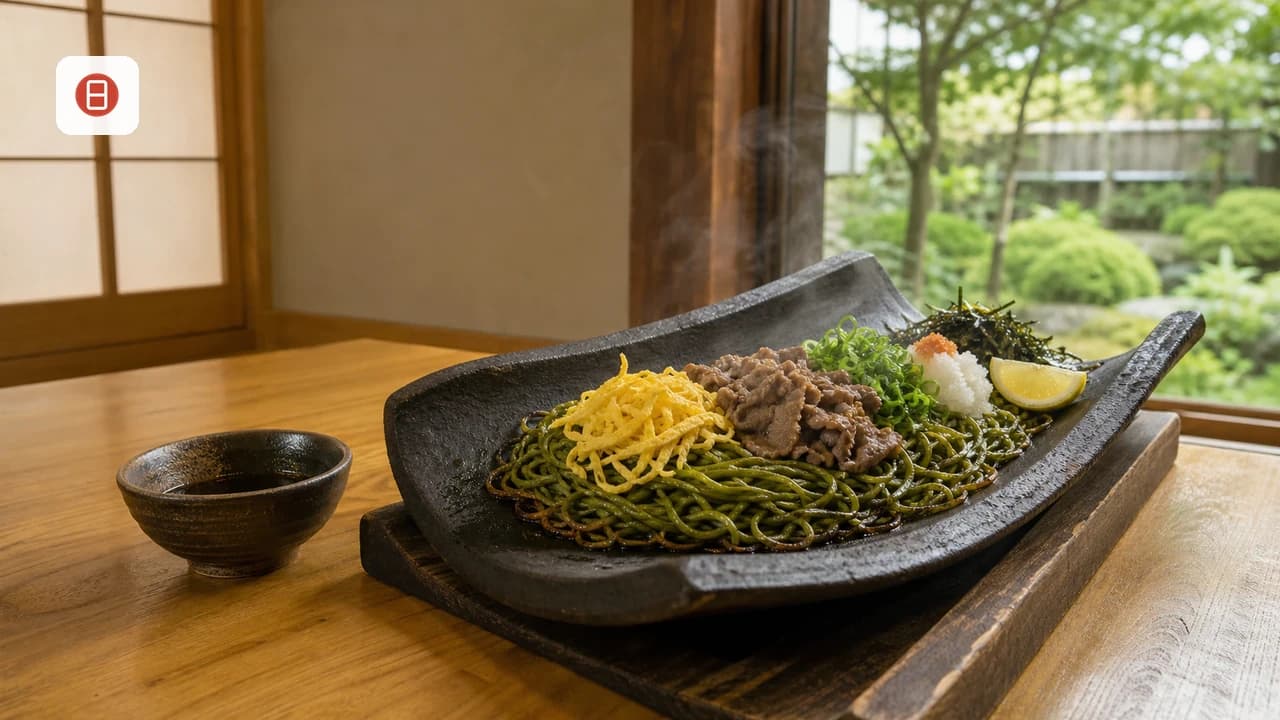
Planning meals as well as sights? Our What to Eat in Shimonoseki guide covers the local dishes, dining districts and meal budgeting this page leaves out.
Frequently Asked Questions
What is Shimonoseki known for?
Shimonoseki is known as Japan's fugu (pufferfish) capital. It is also the gateway city where Honshu meets Kyushu across the Kanmon Strait, with a waterfront built around fish markets, an aquarium, and shrines tied to the Battle of Dannoura.
How many days do you need for things to do in Shimonoseki?
A single day covers the Karato waterfront, Akama Shrine, and the Kanmon Pedestrian Tunnel comfortably. Adding Chofu Town or a full Kanmon Bridge and Hinoyama Park loop is easier to fit into a second, more relaxed day.
Is Karato Market open every day?
Karato Market runs 5:00 to 15:00 on weekdays (from 8:00 on Sundays and national holidays), but it closes on selected Wednesdays and pauses wholesale trading on Sundays and holidays. As a result, check the calendar before planning around it.
How do you get from Fukuoka to Shimonoseki?
Shinkansen trains reach Shin-Shimonoseki Station. This requires a further connection to reach the city center and waterfront near Shimonoseki Station. Travelers can also loop across the Kanmon Strait on foot through the pedestrian tunnel and back by ferry from Moji-ko.
Is it safe to eat fugu in Shimonoseki?
Yes, licensed chefs handle pufferfish preparation under strict regulation in Japan, and Shimonoseki's status as the fugu capital means both sashimi and beginner-friendly karaage are widely available across the city's restaurants.
Explore Shimonoseki
From fugu feasts on the Kanmon waterfront to samurai lanes and Genpei War history, here is how to plan your time in Shimonoseki.
Food & Markets
- Shimonoseki Fugu Guide: How to Eat Japan's Famous Pufferfish Safely (2026)
- Karato Market Shimonoseki Guide
History & Culture
Nature & Views
Nearby Kyushu
Free guide: Japan's Hidden Gems
12 under-the-radar places beyond Tokyo & Kyoto — with the best season to visit each and a local tip you won't find in the guidebooks.
You might also like
Continue reading
More guides you'll find useful