
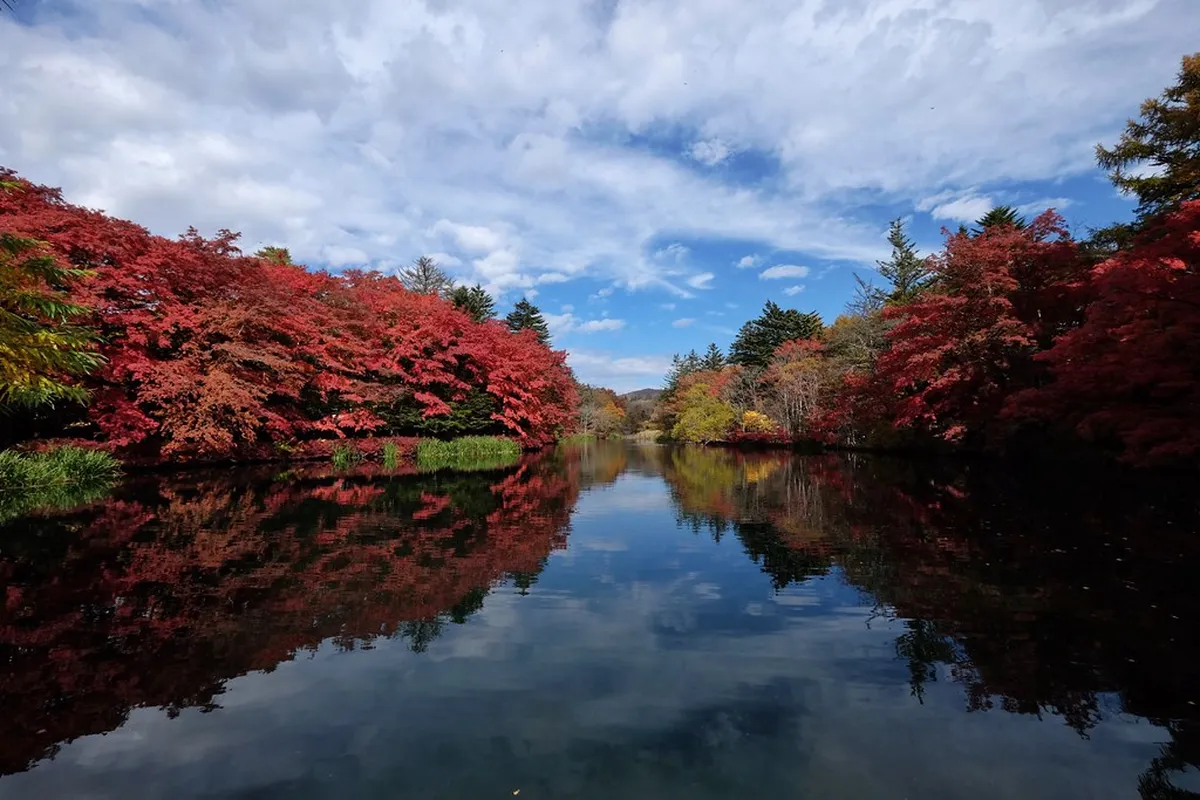
Kumoba Pond
A small forest pond a short walk from Karuizawa Station, ringed by larches that blaze gold and crimson in autumn.
Visitor guide →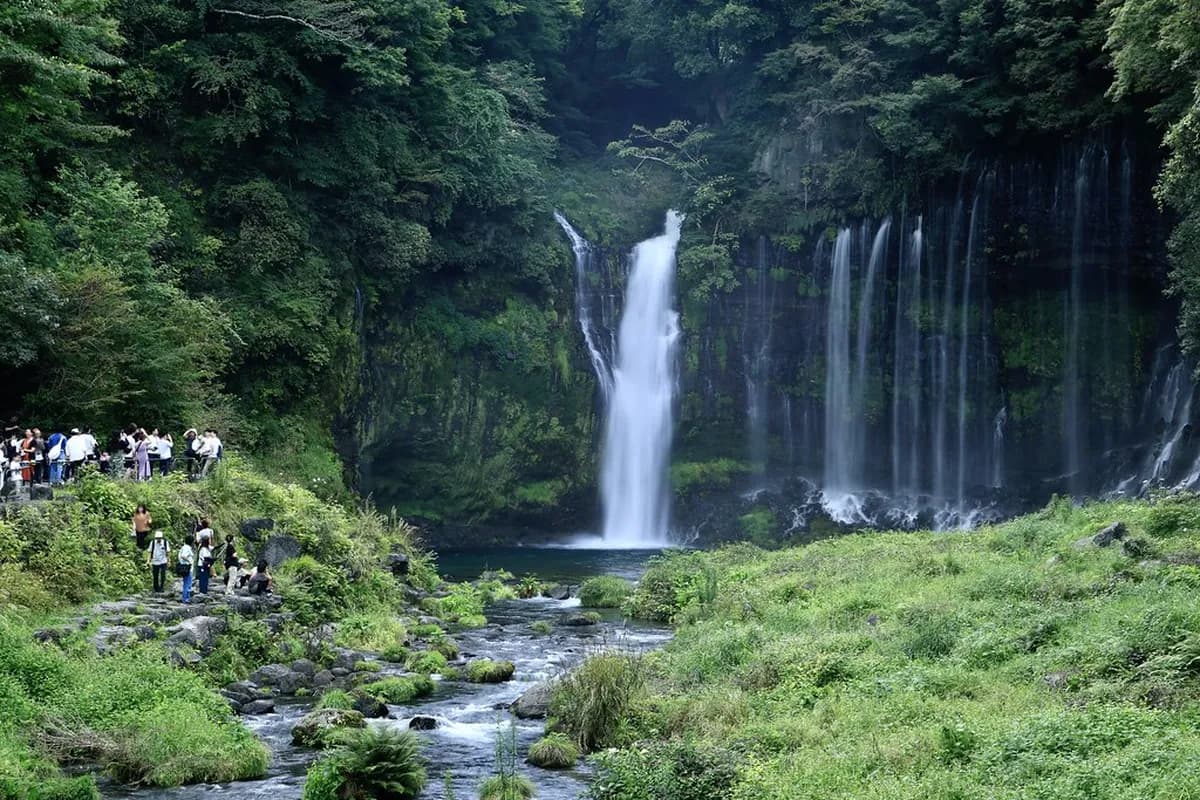
Planning Karuizawa attractions for 2026? Our guide ranks the 7 best things to do — Kumoba Pond, Shiraito Falls, Onioshidashi lava park, Kyu-Karuizawa Ginza, the churches and outlet shopping — plus a day-trip vs overnight itinerary and how to get there from Tokyo.
Karuizawa is the highland resort town in Nagano Prefecture that Tokyo escapes to — a cool, larch-shaded plateau on the slopes of Mt Asama, just 70 minutes from Tokyo Station on the Hokuriku Shinkansen. Once a 19th-century summer retreat for missionaries and the elite, it now blends forest ponds and waterfalls, a dramatic volcanic lava field, historic churches, a buzzing old shopping street, and one of Japan's biggest outlet malls into one compact, walkable getaway. The choice of things to do can feel overwhelming on a first trip, so we've narrowed the field to the 7 best attractions in Karuizawa — each one consistently worth the time and any ticket price.
Every entry in the grid below links to a full visitor guide with verified opening hours, current pricing, and the practical tips that don't make it into the official FAQ. Use this page as your map: read the planning notes underneath the cards to group sights by district, decide between a day trip and an overnight stay, and time your visit to catch Karuizawa's famous autumn leaves.
A small forest pond a short walk from Karuizawa Station, ringed by larches that blaze gold and crimson in autumn.
Visitor guide →
A 70-metre-wide curtain of spring-fed threads in the hills north of Karuizawa, floodlit on summer and autumn nights.
Visitor guide →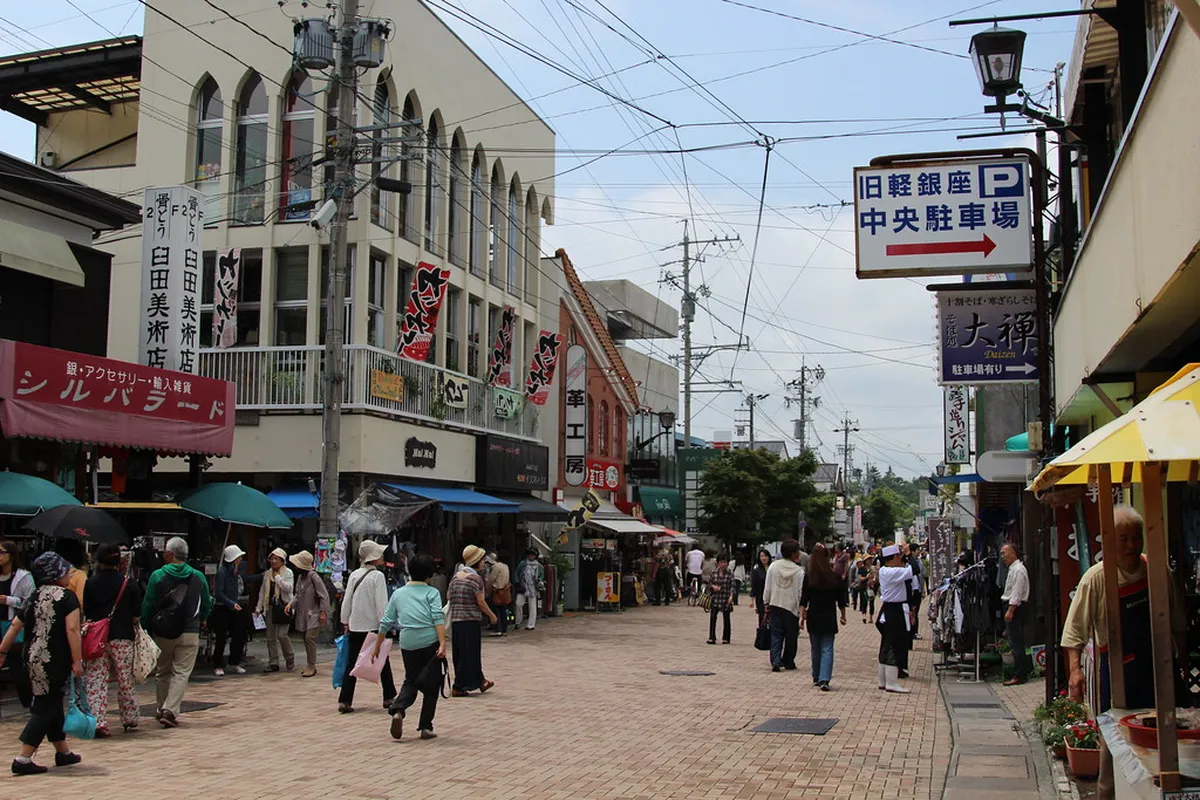
The old-town main street of Karuizawa, lined with cafes, bakeries and boutiques in the historic resort core.
Visitor guide →
One of Japan's largest outlet malls, spread across lawns beside Karuizawa Station with 200+ brand stores.
Visitor guide →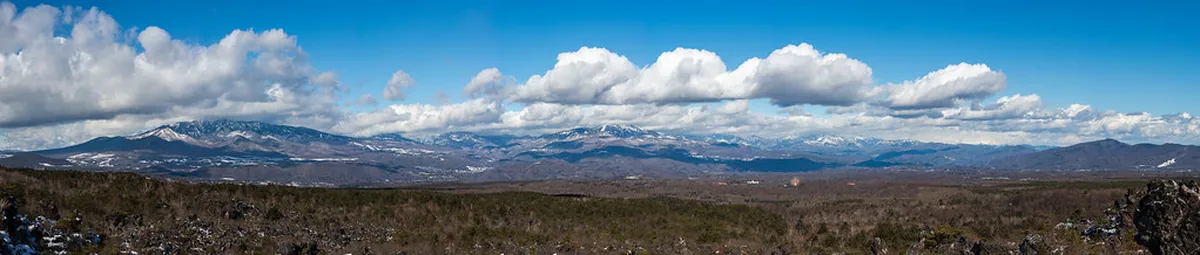
A dramatic park of jagged black lava boulders left by Mt Asama's 1783 eruption, with walking trails and a temple.
Visitor guide →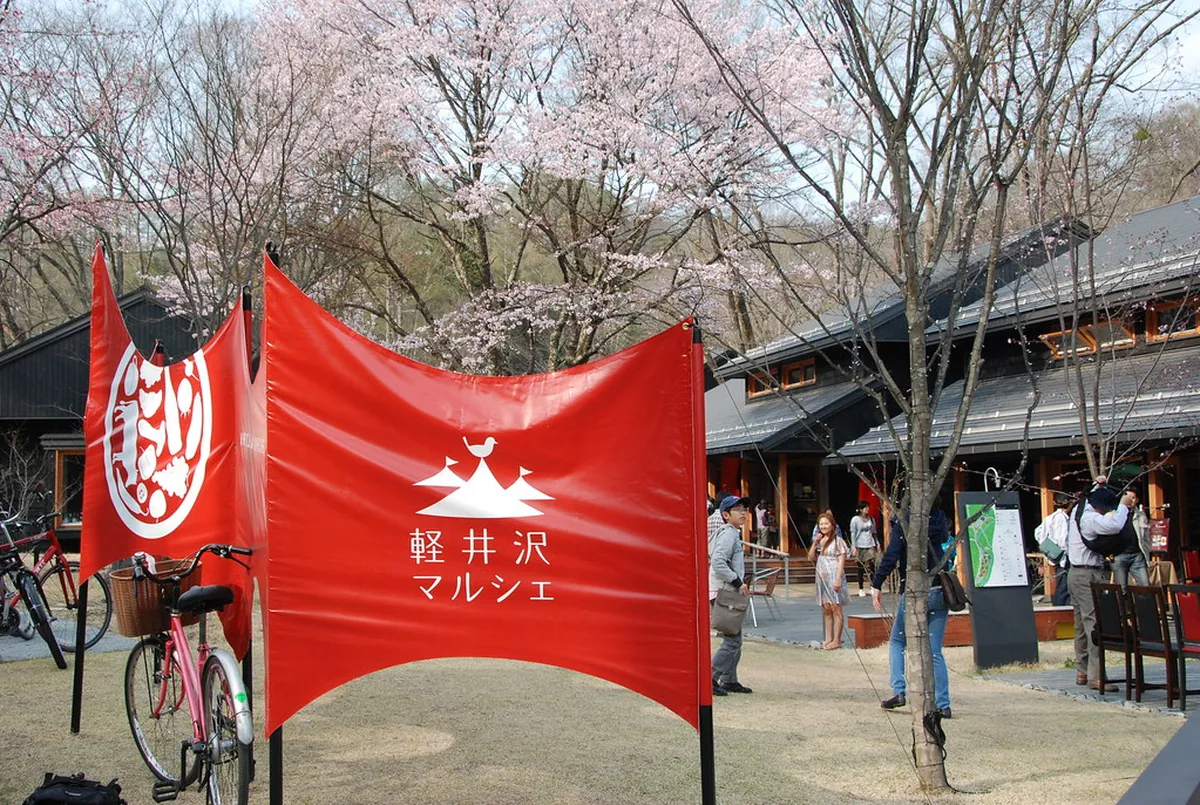
A riverside deck of 16 cafes, restaurants and shops built among elm trees in the Hoshino area of Naka-Karuizawa.
Visitor guide →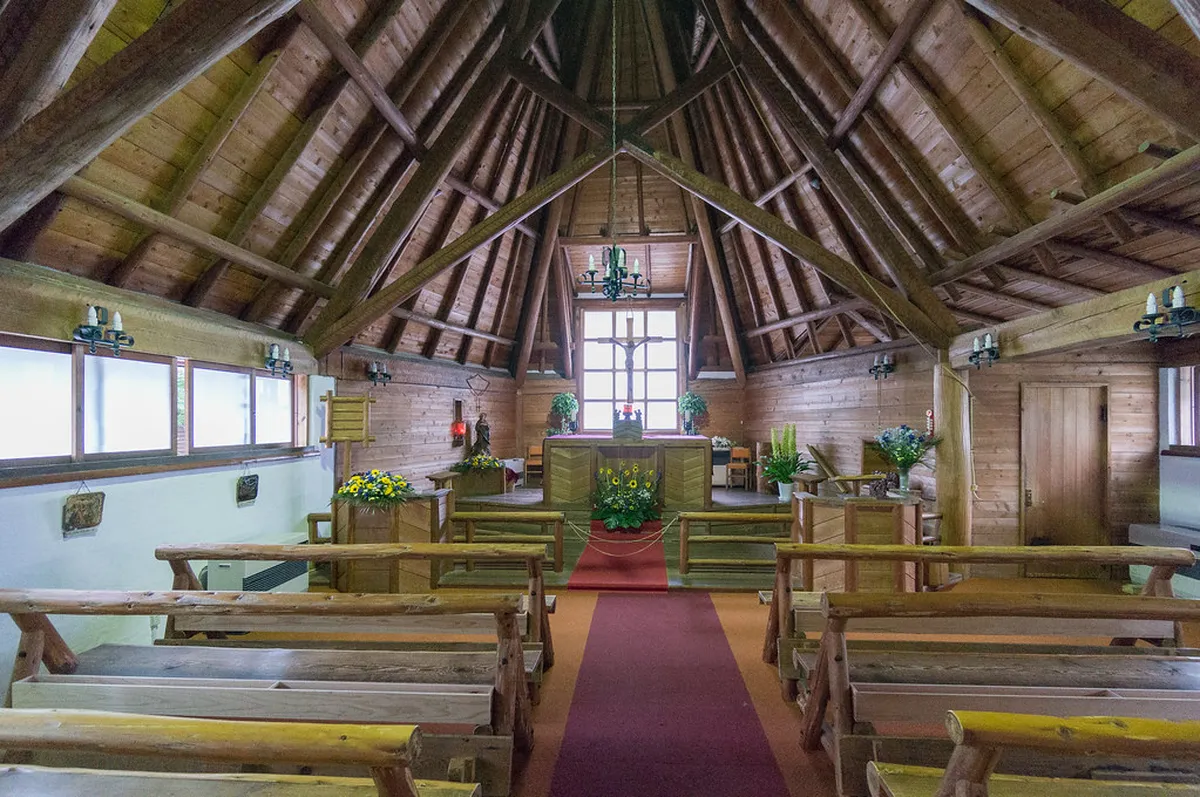
Antonin Raymond's 1935 wooden church with a steep shingled roof, a Karuizawa landmark just off Kyu-Karuizawa Ginza.
Visitor guide →The seven sights above fall into three natural groupings, and understanding them is the key to a smooth itinerary. Karuizawa's geography rewards visitors who cluster their stops rather than zig-zag across the plateau.
Kumoba Pond (sometimes called Swan Lake) is the postcard image of Karuizawa — a small, mirror-still forest pond about a 20-minute walk from Karuizawa Station, ringed by larch and maple that flame gold and crimson in late autumn. Shiraito Falls is a different kind of spectacle: a 70-metre-wide curtain of spring-fed threads tumbling from a mossy rock face in the hills to the north, about a 25-minute bus ride from the station and floodlit on summer and autumn evenings. For raw geology, Onioshidashi-en is unmissable — a surreal park of jagged black lava boulders thrown out by Mt Asama's catastrophic 1783 eruption, threaded with walking trails and crowned by a small temple. Together these three show off the volcanic, alpine landscape that made Karuizawa a retreat in the first place.
Kyu-Karuizawa Ginza Street is the historic resort core — a pedestrian-friendly main street lined with bakeries, jam shops, coffee roasters and boutiques that draws several million visitors a year. A short detour off it brings you to St Paul's Catholic Church, Antonin Raymond's 1935 wooden church with its steeply pitched shingled roof, one of Karuizawa's most photographed landmarks and a favourite wedding venue. These two pair perfectly because they sit within a few minutes' walk of each other in Kyu-Karuizawa (Old Karuizawa).
Karuizawa Prince Shopping Plaza is one of Japan's largest outlet malls — 200-plus brand stores spread across open lawns directly beside Karuizawa Station, with names from Adidas and Coach to local fashion labels. For a slower, woodsier pace, Harunire Terrace in the Hoshino area of Naka-Karuizawa is a riverside deck of 16 cafes, restaurants and shops built among a grove of elm trees — the place to linger over lunch and coffee rather than chase bargains.
One of Karuizawa's best features is how many of its highlights cost nothing to enjoy. Use this split to budget your day.
In practice, you can build a full and rewarding day in Karuizawa for little more than your train fare and a couple of cafe stops — the scenery does most of the work.
Karuizawa works beautifully as a day trip but rewards an overnight stay if you can spare it.
Take an early Hokuriku Shinkansen, arriving by mid-morning. Start with the easy walk to Kumoba Pond, then loop into Kyu-Karuizawa Ginza Street for an early lunch and a stop at St Paul's Church. Spend the afternoon at Karuizawa Prince Shopping Plaza right by the station (it makes catching your return train effortless), or swap it for a bus out to Shiraito Falls if nature is your priority. This keeps everything close and avoids a rushed schedule.
With an overnight stay you can add the sights that need more travel time. Devote a relaxed second day to Onioshidashi-en and Shiraito Falls in the northern highlands, then wind down with lunch and coffee at Harunire Terrace in Naka-Karuizawa. An overnight also lets you experience the cool mountain evenings and the floodlit waterfall in summer and autumn. See our where-to-stay guide for neighbourhood and hotel picks.
Karuizawa is one of the easiest highland escapes to reach from the capital. The Hokuriku Shinkansen runs direct from Tokyo Station to Karuizawa Station in about 70 minutes, and the line is covered by the Japan Rail Pass — full route, fare and timetable details are in our Karuizawa from Tokyo guide.
Once you arrive, the town is built for slow, car-free exploring. The central districts around the station and Kyu-Karuizawa Ginza are walkable, while local buses connect the outlying sights such as Shiraito Falls and Onioshidashi-en. The most enjoyable way to cover ground in good weather, though, is by bicycle: Karuizawa has flat, tree-lined cycling paths and rental shops clustered around the station — see our cycling and bike rental guide for routes and rates. For the complete planning picture across every season and activity, browse our full Karuizawa attractions blog guide.
Karuizawa is a genuine year-round destination, but each season offers something distinct:
For a month-by-month breakdown and crowd-avoidance tips, see our best time to visit Karuizawa guide.
Karuizawa can be done affordably with a little planning:
The top attractions are Kumoba Pond, Shiraito Falls, Onioshidashi-en lava park, Kyu-Karuizawa Ginza Street, St Paul's Catholic Church, Karuizawa Prince Shopping Plaza and Harunire Terrace. Together they cover Karuizawa's nature, history, dining and shopping in a compact area.
Yes. Karuizawa is one of the most rewarding day trips or short breaks from Tokyo, combining cool highland scenery, forest ponds and waterfalls, historic churches, a lively old shopping street and one of Japan's largest outlet malls — all reachable in about 70 minutes by shinkansen.
One full day is enough to see the station-area highlights and the old town. Two days lets you add the northern sights — Onioshidashi-en and Shiraito Falls — at a relaxed pace and enjoy the cool mountain evenings, so an overnight stay is ideal if you have the time.
The Hokuriku Shinkansen runs direct from Tokyo Station to Karuizawa Station in about 70 minutes, and the route is covered by the Japan Rail Pass. It is the fastest and easiest way to reach the town.
Autumn, from mid-October to early November, is the most spectacular season for Karuizawa's celebrated foliage. Summer is popular as a cool retreat from Tokyo's heat, while winter offers skiing and ice skating. The town is genuinely worth visiting year-round.
Most are. Kumoba Pond, Shiraito Falls, Kyu-Karuizawa Ginza Street, St Paul's Church grounds and Harunire Terrace are all free to visit, and entry to Prince Shopping Plaza is free. Only Onioshidashi-en charges a modest admission fee.
The central districts are walkable, local buses reach the outlying sights such as Shiraito Falls and Onioshidashi-en, and cycling is the most enjoyable option in good weather thanks to Karuizawa's flat, tree-lined paths and station-area rental shops.
Ready to go deeper? These guides cover everything you need to plan a smooth visit:
For wider background, see Karuizawa on Wikipedia and the practical traveller overview on Wikivoyage.