

Shiraito Falls in Karuizawa is one of Nagano Prefecture's most distinctive natural sights. A 70-metre arc of spring-fed water fans across a dark volcanic rock face in hundreds of slender, thread-like streams — the name literally means "White Thread Falls." Entry is free, the path from the bus stop takes under five minutes, and the falls are floodlit on summer and autumn evenings.
Note: there is another Shiraito Falls near Mt. Fuji in Fujinomiya, Shizuoka Prefecture. This guide covers the Karuizawa falls in Nagano. The two share a name but are roughly 130 km apart — always confirm your destination before booking transport.
This guide covers how to get here from Tokyo, what to expect on arrival, the best season to visit, and how to combine the falls with other attractions in Karuizawa.
Introduction to Shiraito Falls: Japan's "White Thread Falls"
Karuizawa's Shiraito Falls sits in the hills north of the resort town, fed by underground springs rather than a single river channel. The result is a wide, low curtain of water that seeps through a moss-covered cliff and falls in parallel rivulets — creating the signature "white threads" visible from the main viewing deck. The arc spans roughly 70 metres, making it unusually broad relative to its 3-metre drop.
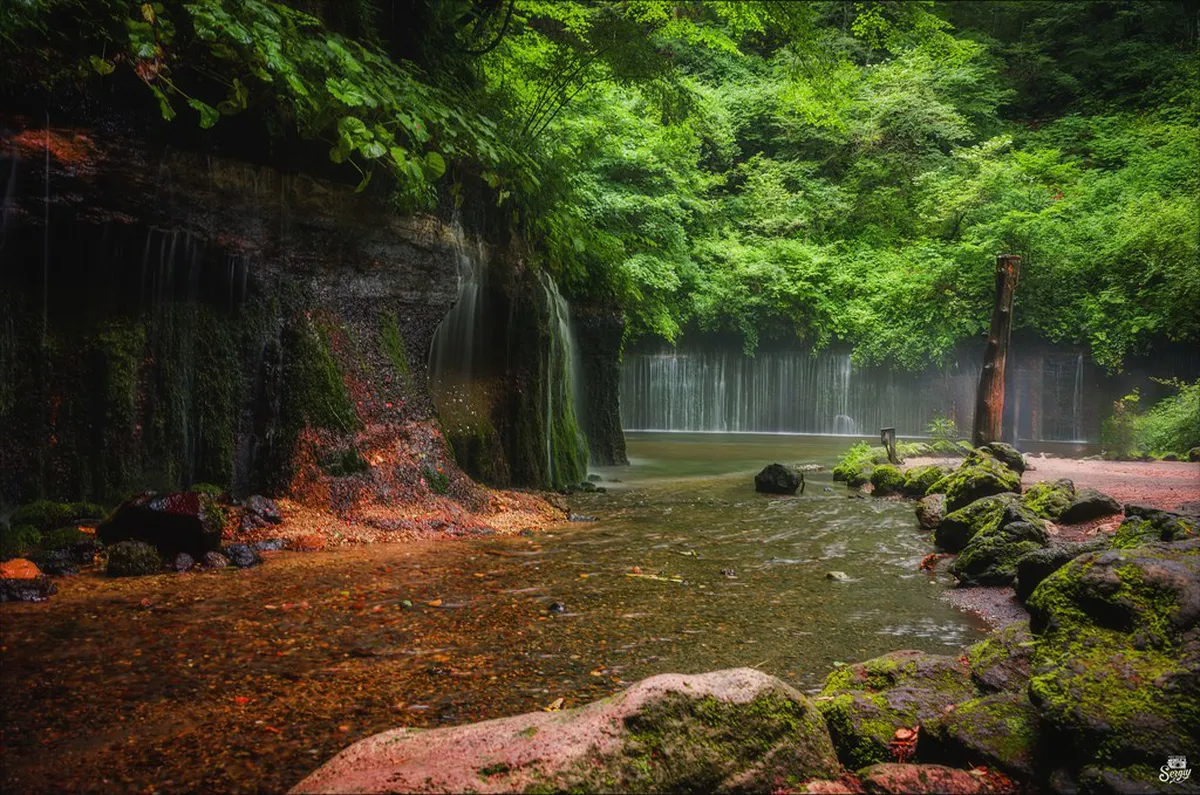
The appearance changes with the weather. After heavy rain, the flows merge into a strong, unified curtain of white. In drier months the individual strands separate and multiply, and the effect becomes more delicate and intricate. Autumn is the most popular season because red and yellow maple branches frame the black stone behind the falls — but the water itself looks most like its name on a dry October morning.
In summer and autumn, the falls are illuminated in the evenings, typically from dusk until around 21:00. This floodlit display is something no competitor guide mentions, and it transforms the site into a completely different experience from the daytime visit. If your itinerary includes an evening in Karuizawa, the short detour is worth it.
How to Get to Shiraito Falls from Karuizawa Station
Karuizawa Station is the gateway to the falls. It sits on the Hokuriku Shinkansen line, which is covered by the Japan Rail Pass. From Tokyo (Tokyo or Ueno station) the ride takes about 75 minutes and costs approximately ¥5,500 on the Asama service — the Asama is the only shinkansen that always stops at Karuizawa, so check your train before boarding. From Nagano the journey is around 30 minutes and costs roughly ¥3,500.
From Karuizawa Station, follow the exit signs for Bus — North Exit, one floor down from the shinkansen platform. Outside, look at the bus map and board the No. 2 line (brown on the map), which runs via Shiraito Falls towards Kitakaruizawa. The bus has English-language marquee signs and announces stops in English. Take a numbered ticket from the machine when boarding and pay on exit — the fare to the falls stop is ¥710 cash, and the ride takes just under 30 minutes on a route that is winding and hilly. A one-day travel pass is available at the station if you plan to use the bus for multiple stops across Karuizawa.
Once you alight at the Shiraito Falls stop, exit towards the food and souvenir stalls on the opposite side of the road and cross to the path. The walk to the falls takes 3 to 5 minutes along a well-maintained track. Driving is also practical — there is a car park near the entrance, with parking fees typically around ¥300 to ¥500 depending on duration.
What to Expect at Shiraito Falls: Viewing Platforms and Trails
The path from the bus stop to the falls is a gentle uphill dirt track with a stream running alongside it. It can become slippery after rain, so wear shoes with a grip. The walk takes around 5 minutes and the sound of water builds steadily as you approach.
At the falls there are several vantage points. The main elevated deck gives you the widest view across the full 70-metre arc and is where most visitors stop for photographs. A lower platform closer to the base puts you within a metre or two of the water — you can feel the spray and see the individual threads up close. On the left side of the falls there are also a few spots where you can get very close to the rock face, useful for detail shots or simply to appreciate the spring-water geology at hand level.
Most visitors spend 20 to 45 minutes at the falls themselves. The shorter end is enough for a casual visit; 45 minutes suits photographers or anyone who wants to explore the full loop of the viewing area. The site is free, open year-round, and accessible 24 hours — the floodlit evening hours in summer and autumn are a bonus that costs nothing extra.
Accessibility is reasonable for the main deck. The approach path is unpaved and slightly inclined, which makes strollers and wheelchairs difficult but not impossible on dry days. Visitors with limited mobility can access the primary view from the upper platform without descending to the lower level.
When is the Best Time to Visit Shiraito Falls?
Autumn — late September through early November — is the most visited season, and with good reason. The maple and oak trees above and around the falls turn red, orange, and yellow, and the fallen leaves collect in the dark pool below, adding colour to the reflection. October gives you the best odds for peak foliage. Weekday mornings in October are noticeably quieter than weekend afternoons, when the falls can feel crowded.
Late spring and summer bring lush green canopy above the rock face and keep temperatures comfortable for the walk. Summer is also when the evening illumination runs, which is a distinct experience worth timing your visit around. Crowds peak on Japanese public holidays in July and August — plan around Golden Week (late April to early May) and Obon (mid-August) if you want a quieter visit.
Winter is the least visited season but offers its own appeal. In cold years the falls partially freeze, forming an icy curtain over the dark stone. Snow on the surrounding trees adds a quiet, monochrome atmosphere. Dress warmly and check road conditions if driving; the bus continues to run but may run less frequently outside peak season.
Opening Hours and Entrance Fees
Shiraito Falls is a natural site with no gates or barriers. It is open 24 hours a day, every day of the year. There is no entrance fee. The only costs involved in a visit are transport (¥710 each way by bus from Karuizawa Station) and parking if you drive (approximately ¥300 to ¥500).
The evening floodlighting in summer and autumn runs from dusk until around 21:00, though exact dates and times vary by year — check the Karuizawa Town official tourism pages for the current 2026 schedule before your visit. Souvenir stalls and food vendors near the bus stop operate during daylight hours only; if you are visiting in the evening, buy food beforehand.
Photography Tips for Shiraito Falls
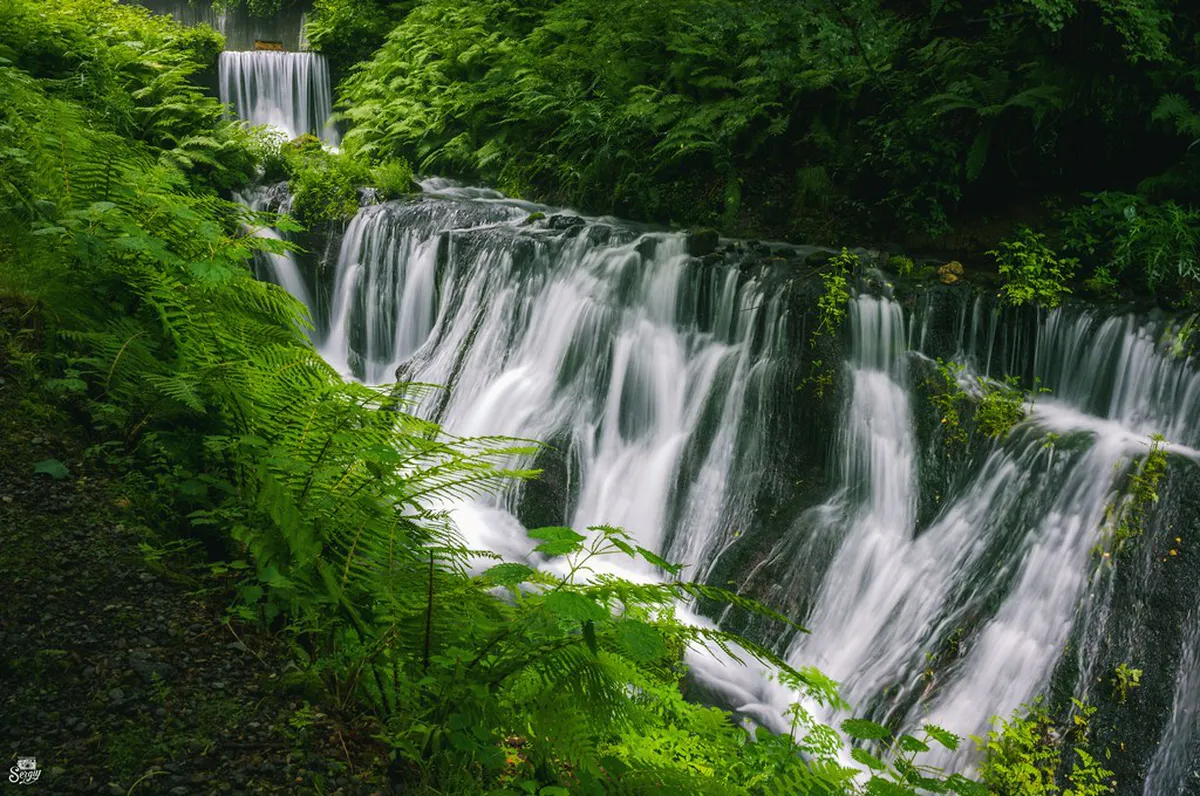
The falls are wide and low, which means you need a wide-angle lens to fit the full arc in a single frame. A tripod is essential — the ground is uneven and you will want a shutter speed of around 1/5 to 2 seconds to blur the water into the silky "thread" effect. Faster speeds reveal individual droplets; slower speeds merge the curtain into a smooth sheet. Both are valid depending on the look you want.
Early morning on a weekday gives you the best combination of soft light and manageable crowds. The falls face roughly south, so morning light hits from the side and creates depth across the rock face. In the afternoon the light flattens against the falls and contrast drops. The evening illumination provides warm artificial light that saturates the white water against the dark stone — long exposures of 5 to 10 seconds work well for the lit version.
For composition variety, use the stream alongside the approach path as a leading line, or get down to ground level on the left side of the falls and use wet rocks and leaves in the foreground. Autumn visits give you fallen leaves in the pool, which add colour contrast to what is otherwise a monochrome scene.
Food, Souvenirs, and Amenities
Across the road from the bus stop, a row of food stalls and small shops sell hot food, drinks, and local goods. The selection is small but reliable — yakitori, corn, soft drinks, and local sweets are typical offerings. Most stalls are cash-only, so carry Japanese yen. Restrooms are located near the stalls and are generally clean and well-maintained.
Souvenir shops stock Karuizawa-specific items including local jams, honey, baked goods, and small crafts. The Karuizawa area is known for its confectionery shops, and some vendors sell seasonal items — mochi with autumn flavours in October, for example. If you want a wider range of souvenirs or a sit-down meal, Kyu Karuizawa Ginza Street back in town has dozens of options and is a 15-minute bus ride away.
Returning to Karuizawa Station and Other Things to Do
When you are ready to leave, walk back down the path to the road and turn right. A short distance past the wooden display board near the bus stop, you will find a bench and a sign marked "Karuizawa Station." The bus schedule is posted on the sign. Buses marked in red on the timetable are express services that skip some intermediate stops and return to the station in around 15 minutes. Regular services take about 30 minutes. Both charge the same ¥710 fare.
If you have time in Karuizawa, the falls pair well with a visit to Kumoba Pond, a quiet lake surrounded by trees about 10 minutes' walk from Karuizawa Station — particularly photogenic in autumn when the foliage reflects in still water. Kyu Karuizawa Ginza Street runs directly north from the station and is lined with cafes, boutiques, and food shops. For a longer day, Sengataki Falls — reached by bus from the station to Sengataki Onsen, then a 3 km trail — is a more strenuous but rewarding complement to Shiraito.
Karuizawa has several onsen facilities if you want to wind down after a day of walking. Karuizawa town is well served by accommodation ranging from budget guesthouses to high-end resort hotels, and staying overnight lets you visit the falls in the evening during floodlit season without rushing back to Tokyo.
Is Shiraito Falls Worth Visiting?
For the cost of a bus ticket and 20 to 45 minutes on the ground, Shiraito Falls delivers a genuinely unusual waterfall experience. The wide, low curtain of spring-fed threads looks different from any other waterfall in Japan, and the free entry means it adds almost nothing to your budget. The evening illumination in summer and autumn is a detail that few visitors know about and even fewer plan around — if you can time your visit to catch it, it makes the short bus ride from Karuizawa Station worthwhile on its own.
First-time visitors to Karuizawa should treat the falls as one stop on a half-day rather than the sole destination. Combine it with Kumoba Pond and Kyu Karuizawa Ginza Street for a well-rounded day that takes in nature, food, and shopping without any backtracking. The route works efficiently: take the No. 2 bus north to the falls, spend 30 to 45 minutes there, then ride back to the station and walk the Ginza Street on your way out.
Frequently Asked Questions About Shiraito Falls
Frequently Asked Questions
Is Shiraito Falls worth including on a short itinerary?
Yes, Shiraito Falls is definitely worth it, even on a short itinerary. Most visitors spend about one hour at the falls, making it an efficient stop. Its natural beauty and UNESCO status make it a compelling attraction. Combine it with nearby Otodome Falls for a complete experience.
How much time is needed at Shiraito Falls?
Most visitors allocate about one hour to explore Shiraito Falls and its immediate surroundings. This allows ample time to enjoy the various viewing platforms and take photos. If you include Otodome Falls, plan for about 1.5 to 2 hours total.
Can you swim in Shiraito waterfalls?
No, swimming is not permitted in Shiraito Falls. The area is a protected natural monument and a UNESCO World Heritage site. Visitors are encouraged to admire the falls from designated viewing areas only. Respect the natural environment during your visit.
How to get to Shiraito Falls from Tokyo?
From Tokyo, take a shinkansen to Shin-Fuji Station or a local train to Fujinomiya Station. From Fujinomiya Station, catch a local bus directly to "Shiraito-no-Taki." The entire journey usually takes about 2 to 2.5 hours. Consider a day trip to Karuizawa for another scenic experience.
Are there food options near Shiraito Falls?
Yes, several small eateries and stalls are located near Shiraito Falls. You can find local specialties like Fujinomiya Yakisoba, snacks, and drinks. Souvenir shops also offer a variety of local products. It's advisable to carry some cash for purchases.
Shiraito Falls in Karuizawa is a compact, free, and genuinely distinctive stop — the spring-fed curtain of threads looks unlike any other waterfall in Japan, and the evening illumination in summer and autumn adds an experience that most visitors miss. From Tokyo the journey is 75 minutes by shinkansen plus a 30-minute bus ride, making it realistic as a day trip or as one stop within a longer Nagano itinerary.
Combine the falls with Kumoba Pond and Kyu Karuizawa Ginza Street to make a full half-day of it. Carry ¥710 in cash for the bus fare, wear shoes with grip for the dirt path, and check whether the evening illumination is running if you are visiting in summer or autumn. Your trip to Japan's "White Thread Falls" is easy to plan and hard to forget.
To verify current details, consult the Shiraito Falls on Wikipedia and Shiraito Falls official site.