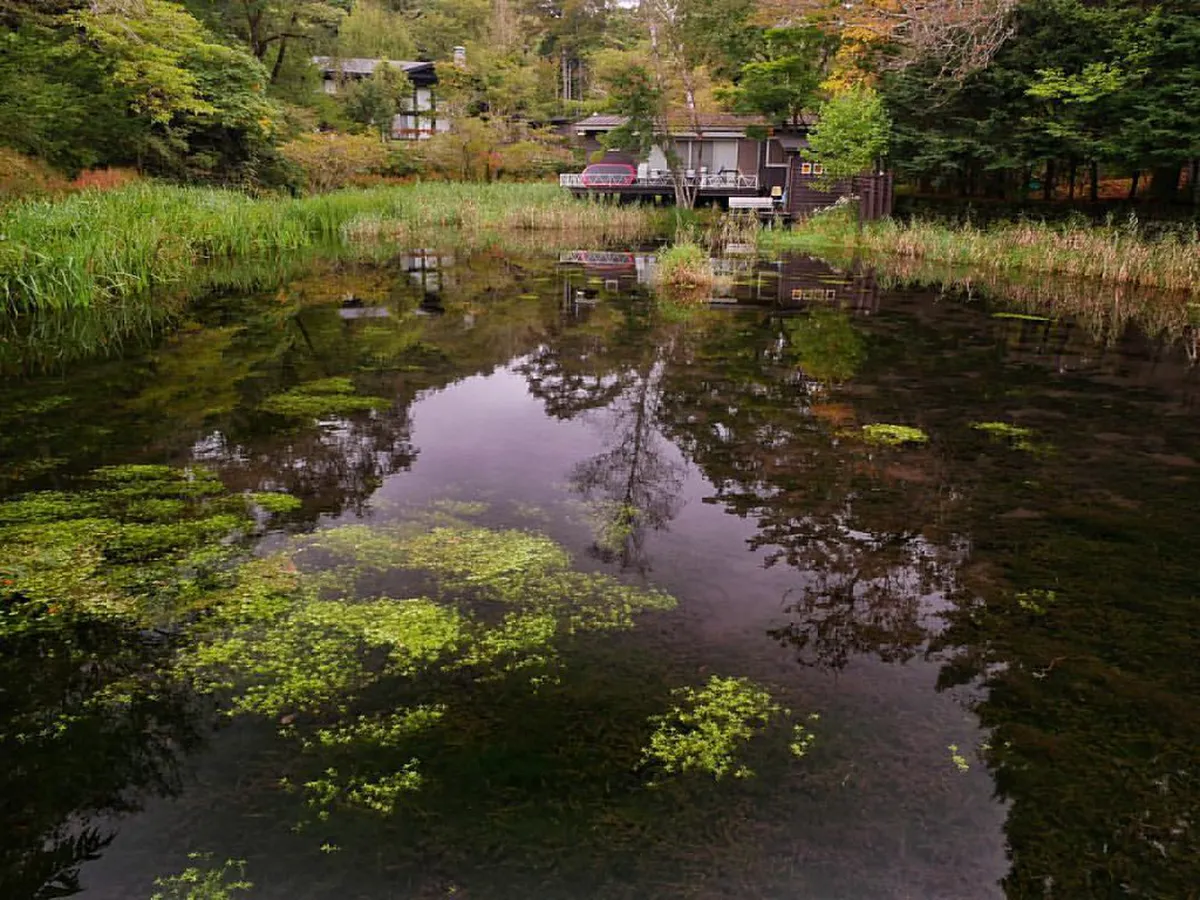
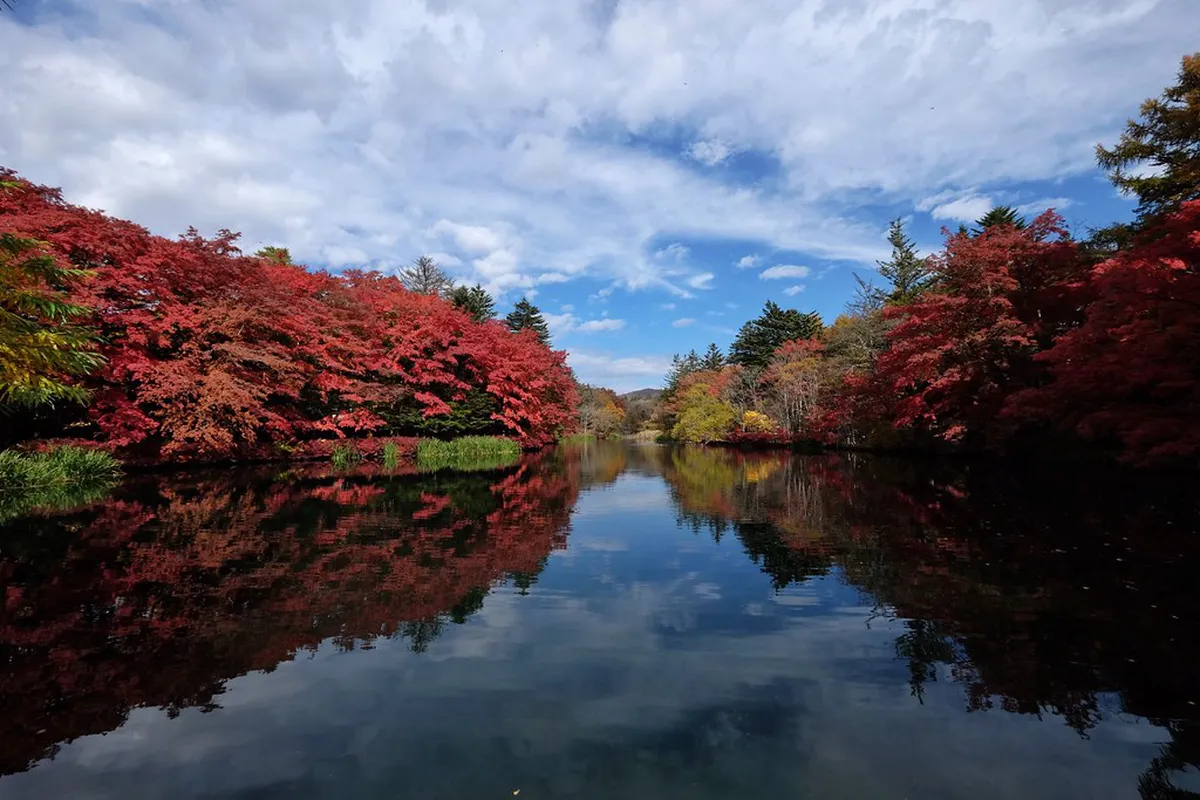
Kumoba Pond, known locally as Cloud Pond, sits a short walk north of Karuizawa Station and ranks among the town's most visited natural spots. Its still water mirrors surrounding larch and oak trees through every season — vivid green in summer, blazing gold and crimson in autumn, and quietly snow-dusted in winter. Entry is free and the path is open around the clock.
This visitor guide covers the pond walk itself, how to get around Karuizawa, nearby attractions worth adding to your itinerary, and the practical details that help you avoid common first-visit mistakes. Karuizawa is just one hour from Tokyo by shinkansen, making the pond an easy half-day stop or a centerpiece of a longer mountain escape.
Walk around Kumoba Pond
The loop trail around Kumoba Pond takes 30 to 40 minutes at a relaxed pace. Most visitors enter from the south side, which has a car park, signage, and the most photogenic wide-angle views of the water. However, the north end of the pond is notably quieter and often overlooked. Entering from the north — where the stream that feeds the pond meets Kajimanomori Street — gives you the whole south-side spectacle as a finale rather than an opening view.
Cyclists must leave their bikes at the parking area near the entrance; you walk the trail on foot regardless. If you arrive by bike rental from the station, the path down to the north entry is straightforward and takes under 15 minutes. The trail surface is well-maintained and suitable for most fitness levels, though a few sections are unpaved near the water's edge.
Right beside the main entrance on the south side is Kumobatei, a small restaurant serving Japanese-Western dishes including corn soup, Japanese curry, and seasonal vegetable plates sourced from local farms. It is a convenient lunch stop before or after the walk, with indoor seating and a terrace. Morning visits before 09:00 tend to be the calmest, particularly on weekends when crowds build by mid-morning.
Autumn foliage typically peaks between mid-October and early November, drawing the largest crowds. Winter is considerably quieter — the pond takes on a peaceful, snow-bordered character and the surrounding larches stand bare against the sky. Both seasons offer distinctly different but rewarding visits.
Getting to Karuizawa from Tokyo
Karuizawa is on the Hokuriku Shinkansen line, reachable from Tokyo Station in approximately one hour. A standard reserved seat costs around ¥5,000–¥6,000 one way in 2026; holders of a JR Pass can ride at no additional charge. Local trains exist but take up to 3.5 hours and save only a modest amount over the bullet train fare — the shinkansen is worth the difference for most visitors.
Driving from central Tokyo takes roughly 2.5 to 3 hours via the Kan-Etsu Expressway. Foreign visitors need an International Driving Permit (IDP) to drive in Japan; these are easy to obtain before departure through an automobile association in your home country. Parking at the pond's south entrance is available and free, making a car convenient if you plan to visit Shiraito Falls or Onioshidashi Park on the same day.
Karuizawa Station sits at the centre of the tourist area, with buses, taxis, and bike rentals all available within a few minutes of the exit. The pond is roughly a 20-minute walk north of the station or a short taxi ride.
How to get around Karuizawa
Karuizawa divides into two main areas. The east side radiates from JR Karuizawa Station and holds most tourist facilities including Kumoba Pond, Ginza-dori, and the Prince Shopping Plaza. The west side centres on Nakakaruizawa Station, roughly one hour's walk away or four minutes by local train, and is where Harunire Terrace, the Stone Church, and Hoshino Onsen are located.
Bicycle rental is the most flexible option for the east side. Rental shops near Karuizawa Station charge around ¥1,000–¥1,500 for a half-day. Dedicated bike paths connect the station area to the pond, Ginza-dori, and the walking courses through the forest. For the west side or for day trips to Shiraito Falls and Onioshidashi Park, local buses run from the station on regular schedules — check departure times in advance as frequency varies by route.
Taxis are readily available at the station and provide the quickest point-to-point option. Renting a car for one day is a practical choice if you want to cover the waterfalls, the Usui Pass, and Onioshidashi Park without depending on bus timings. Local rental offices near the station are accustomed to foreign visitors and have a standardised process. The roads outside central Karuizawa are quiet and speed limits are low, making driving relatively stress-free.
Kogen Church and Stone Church
Karuizawa has more than 15 churches, a legacy of the Canadian Anglican missionaries who settled here in the late 19th century and drew other denominations in their wake. Two of the most architecturally striking are clustered near Harunire Terrace in the Nakakaruizawa area. The Stone Church (Karuizawa Stone Church) was designed to harmonise with the forest and the four seasons, using natural stone and rounded forms that feel grown rather than built. It is open to the public at midday but closes periodically for ceremonies and weddings.
Kogen Church sits nearby and has a simpler profile, though its setting among tall trees gives it considerable atmosphere. Both churches are popular wedding venues, so weekend afternoons may see ceremonies in progress. A quick combined visit takes about 30 minutes and pairs naturally with a stop at Harunire Terrace for coffee along the Yu River.
Kyukaruizawa Ginza-dori (Old Karuizawa Shopping Street)
Head directly north from Karuizawa Station for about 10 minutes on foot and you reach Kyukaruizawa Ginza-dori, the old post-town shopping street. Unlike Tokyo's Ginza, this version is low-rise and unhurried, lined with gift shops, fragrant bakeries, ceramics sellers, and local food stalls. It is a good place to pick up Karuizawa jams, honey, and handcrafted goods.
The street runs for roughly 600 metres and is pedestrian-friendly. Most shops open around 10:00 and close by 18:00; some close on Wednesdays. Browsing the full length and stopping for a light meal or coffee takes about one hour. This area works well as a midday break between Kumoba Pond in the morning and the Prince Shopping Plaza further south.
Karuizawa Prince Shopping Plaza
Directly south of the station, the Prince Shopping Plaza is one of the primary draws for domestic visitors. It is a large mostly-outdoor outlet mall with over 200 shops, covering both Japanese and international brands — many at factory-outlet prices. Sports and outdoor gear, fashion, and lifestyle goods are all well represented. A central pond wraps around the complex, making even a non-shopping stroll pleasant.
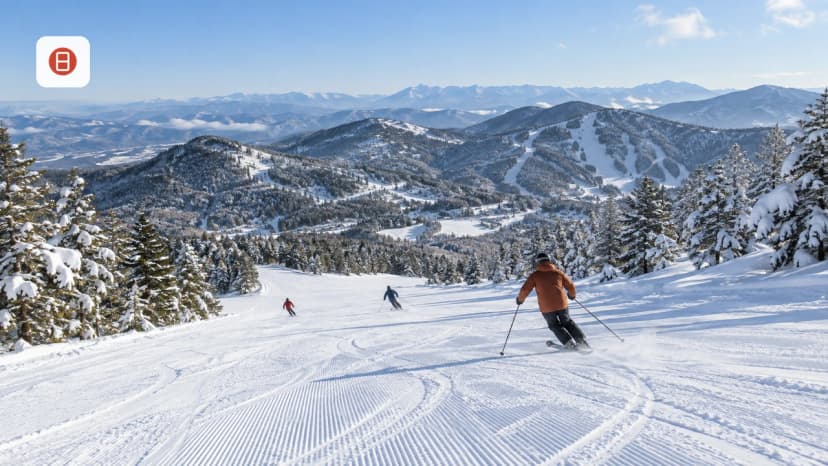
The food court is substantial, with a broad range of fast options alongside smaller local restaurants. November through early January brings illumination displays in the evenings. Allow two to three hours if you plan to browse seriously, or 45 minutes for a quick pass-through and lunch. Stores typically open at 10:00; closing times vary by season.
Onioshidashi Park (30-min bus ride from Karuizawa)
Onioshidashi literally means "pushing out the devil" — a fitting name for a landscape of jagged, tumbled lava rock left by Mount Asama's 1783 eruption. The park sits about 30 minutes from Karuizawa Station by bus or car. Buses operate roughly once an hour; check the current timetable at the station before you go. Admission is charged at the entrance (around ¥700 for adults in 2026).
The trekking circuit inside the park takes roughly one hour. A Buddhist temple is nestled among the lava formations, providing a striking contrast of stone and ceremony. On clear days, Mount Asama's summit is visible from the park. Wear sturdy shoes — the volcanic rock surface is uneven throughout. This makes a logical full-day pairing with Shiraito Falls, which is 15 minutes further north by bus or car.
Shiraito no taki (Waterfall of white threads)
Shiraito Falls earns its name from hundreds of thin water streams that curtain down a wide, shelf-like rock face roughly 3 metres tall and 70 metres across. The effect is genuinely unusual — the rock shelf is so uniformly flat that the fall looks sculpted rather than natural. Entry to the falls area is free.
The bus from Karuizawa Station takes about 25 minutes. Arriving before 09:00 means significantly fewer visitors; the first bus of the day typically arrives after 09:30. If you have a car, an early start rewards you with near-solitude at the falls. The path from the car park to the viewing area is short and flat. Nearby Ryugaeshi Waterfall is less than 10 minutes further by car (20 minutes by bus) and is easily combined in the same outing.
Winter illumination events occasionally run at Shiraito Falls — check local schedules closer to your visit date. If driving in winter, snow tyres are advisable; icy road conditions can make the approach difficult without them.
Take a hot bath at Hoshino Onsen
Hoshino Onsen Tombo-no-yu is the most accessible public bathhouse in the Nakakaruizawa area and welcomes day visitors as well as resort guests. Admission is around ¥1,350 in 2026, which is higher than a standard neighbourhood onsen but reflects the quality of the facilities and the outdoor rotenburo (open-air bath). Visitors with tattoos should note that Hoshino Onsen is tattoo-friendly for smaller tattoos (roughly 8 x 10 cm maximum), with skin-coloured plasters available for purchase at the front desk for around ¥250.
The onsen is part of the wider Hoshino Area, which also includes Harunire Terrace, the Stone Church, and Kogen Church. A free shuttle bus connects Karuizawa Station to the Hoshino Area on a regular schedule. After bathing, the adjacent Sonmin-Shokudo restaurant serves washoku dishes including miso karaage and seasonal hotpot — a satisfying end to the day.
The standard onsen etiquette applies: shower and rinse thoroughly before entering any communal bath, do not bring towels into the water, and keep noise to a minimum. Swimwear is not worn in the traditional baths. Hoshino Onsen provides rental towels for a small additional fee.
You may also like
Kumoba Pond sits at the junction of several easy half-day routes through Karuizawa. The #1 Karuizawa Resort Area Walking Course, mapped by the local Tourist Association, runs through forest neighborhoods and past the town's key churches before ending at the pond — making the pond a natural finale rather than a standalone stop.
The Usui Pass Observation Area rewards visitors with panoramic views from 1,200 metres elevation, straddling the Nagano-Gunma border. The Red Bus runs seasonally from the station (April to late November) to the pass, roughly once an hour, offering a retro ride up switchback roads. At the summit, the Kumano Kotai Shrine occupies both prefectures simultaneously, with separate priests and souvenir shops on each side.
For retail and dining, the Karuizawa Prince Shopping Plaza directly beside the station gives easy access to over 200 outlet shops and a large food court before or after your train back to Tokyo. St. Paul's Catholic Church on Church Street, a few minutes from Ginza-dori, is a worthwhile detour for its distinctive log-cabin interior — a deliberate contrast to grand European Catholic architecture.
Frequently Asked Questions
Why Visit Karuizawa? Japan's Hidden Gem Awaits
Karuizawa is a popular mountain resort town known for its cool climate and natural beauty. It offers a peaceful escape with activities like cycling, hiking, and shopping. The town's historical charm and proximity to Tokyo also make it a favored destination. You can explore more about Karuizawa attractions during your visit.
How many days should I spend in Karuizawa?
Ideally, two to three days allow for a comprehensive Karuizawa experience. A two-day trip covers major highlights like Kumoba Pond and shopping areas. Three days enable a more relaxed pace, including day trips to Shiraito Falls or Onioshidashi Park. This duration ensures you don't feel rushed.
Which kumoba pond visitor guide options fit first-time visitors?
First-time visitors should prioritize a leisurely walk around Kumoba Pond, enjoying the reflections. Consider renting a bicycle to explore the surrounding paths. Visit during autumn for spectacular foliage views. Early morning visits offer a more serene atmosphere for everyone.
How much time should you plan for Walk around Kumoba Pond?
Plan approximately 30-60 minutes for a comfortable walk around Kumoba Pond. This allows time for photos and enjoying the peaceful scenery. If you opt for cycling, allocate a bit more time to explore nearby areas. The duration depends on your pace and interest in photography.
Kumoba Pond is free, open all day, and accessible to visitors of almost any fitness level — making it one of the easiest high-reward stops in Karuizawa. Pair it with Ginza-dori for lunch, the Prince Shopping Plaza for afternoon shopping, or the Hoshino Area for an evening soak. The pond works equally well as a 45-minute detour on a day trip or as the anchor for a longer Karuizawa stay.
Plan transport in advance if you intend to reach Shiraito Falls or Onioshidashi Park — bus frequency on those routes is limited and the first bus of the day typically departs after 09:30. A rental car or an early taxi gives you the most flexibility for those excursions.
For the latest official information, see the Kumoba Pond on Wikipedia and Kumoba Pond official site.