
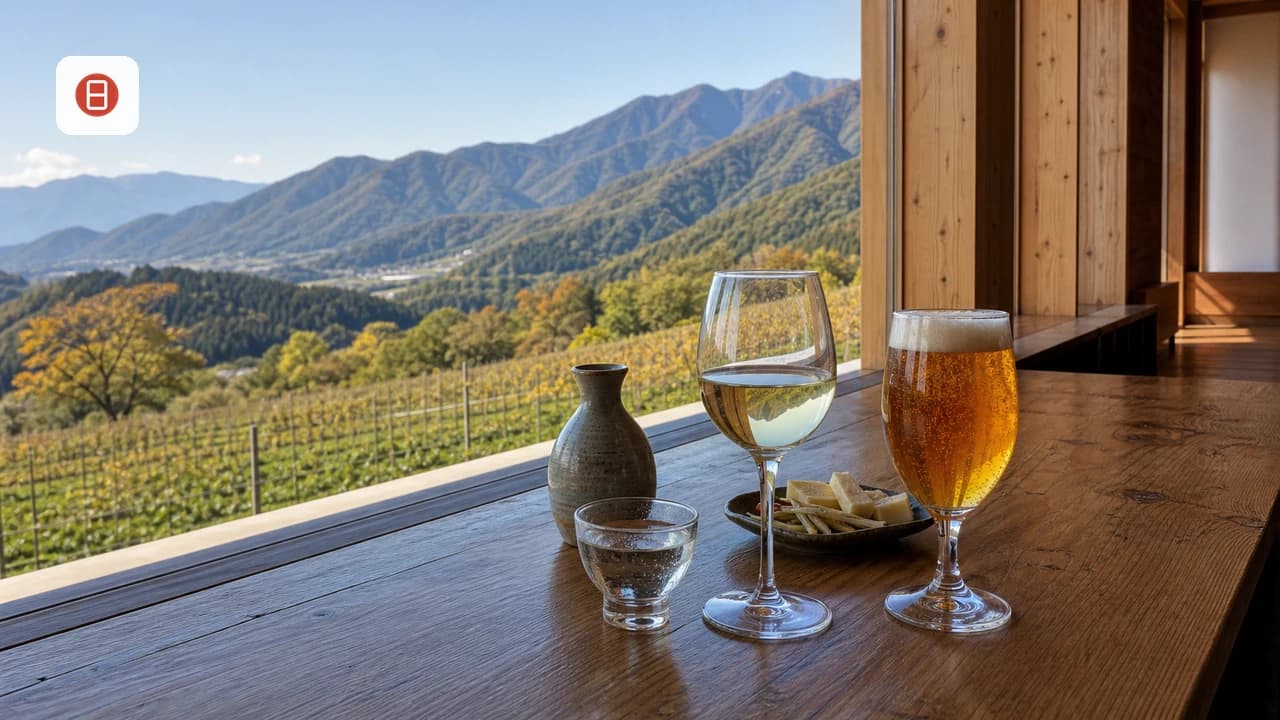
Nagano Sake, Wine, and Craft Beer: A 2026 Tasting Guide
Plan a Nagano sake, wine, and craft beer trip by train and bus, from the Suwa Go-kura walk to Obuse breweries and Nozawa Onsen taprooms.
On this page
Last updated August 2026, this guide to Nagano sake wine and craft beer groups the prefecture's breweries, taprooms, and wineries into plannable regional circuits. Nagano counts roughly 80 sake breweries, the second-highest total of any prefecture in Japan, alongside a ski-town craft beer scene and the Chikuma River wine valley. Each section below groups venues by train line or bus stop, so you can plan a day trip around tastings instead of guessing which town to visit first.
Nagano Sake, Wine, and Craft Beer: Three Regions, One Trip
Sake, wine, and craft beer each draw on a different part of Nagano's mountain geography, so treat them as three separate day trips rather than one long crawl. Sake breweries cluster around former castle towns and post stations, several operating for well over a century. Craft beer took hold more recently in the ski valleys, where taprooms double as après-ski stops. Wine grows along the Chikuma River, where elevation and drainage suit grapes rather than rice. Most of these hubs sit within roughly 90 minutes of Nagano Station, making a single-hub day trip realistic even without an early start. For the wider culinary context, see the regional Nagano food guide.
- Sake: centuries-old breweries, tastings from free up to a few hundred yen, best suited to travelers who want history and craftsmanship.
- Craft beer: ski-town taprooms and brewpubs with a casual, modern feel and several beers on rotation.
- Wine: Chikuma River valley vineyards, fewer public tasting rooms, best combined with scenic train or drive time.
Nagano Sake Breweries and the Suwa Go-kura Walk
The Suwa Go-kura is a row of five sake breweries within roughly 400 meters of each other in Suwa City. Miyasaka Brewery anchors the group and has made sake since 1662, using spring water drawn from the nearby highlands. Its flagship label, Masumi, is sold across Japan and exported abroad. At the storefront, an English-speaking sake specialist explains the differences between styles before you taste. Miyasaka is open 9:00 to 18:00, with tastings priced at ¥300, a 16-minute walk from JR Kami-Suwa Station. Four more breweries share the same short stretch, so most visitors treat the row as one walking course rather than a single stop. Because the walk is short and flat, it works well even in poor weather, and each tasting counter operates independently, since there is no single combined ticket to buy in advance.
The Obuse and Suzaka Sake Hub
Obuse and Suzaka sit one stop apart on the Nagano Dentetsu Railway, an easy pair for a single afternoon. Masuichi Brewery sits in the center of Obuse, a town known for its museums and preserved streetscape. Tastings run pay-per-cup at a hardwood bar backed by a glass wall showing the brewery's cedar fermentation barrels. Masuichi is open 9:30 to 17:00, a 10-minute walk from Obuse Station. Matsubaya and Takasawa breweries sit within a block or two if time allows. The town's compact core makes it easy to combine a brewery stop with a short walk past its museums and craft shops. Endo Brewery, in Suzaka, has operated since 1864 and is best known for Keiryu sake, sold in a distinctive newspaper wrapping at convenience stores around Nagano. Its tastings are free, and the shop stocks a ¥300 gachapon machine dispensing sake-branded prizes. Endo Brewery is open 8:30 to 17:00, a 15-minute walk from Suzaka Station.
Nagano Craft Beer: From Sakagura Roots to Ski-Town Taprooms
Nagano's craft beer scene grew directly out of its sake tradition, and several of the newest taprooms now sit inside ski towns. Together, these breweries show how far Nagano's beer scene has grown beyond simple imports of Western styles, drawing on local rice, water, and even sake know-how.
Miyasaka Brewery has made sake since 1662, decades before Yo-Ho Brewing founded in 1997 and AJB opened in 2014. This region balances centuries-old sake craftsmanship with the recent surge of contemporary craft beer innovation.
- Tamamura Honten (Yamanouchi): a sake brewery since 1805 that added Shiga Kogen Beer in 2004. The No. 10 IPA is brewed with sake rice for a soft, hoppy character. Sake tasting is free; beer costs ¥400 for a half-pint and ¥600 for a pint. Open 9:00-18:00. Take the Yudanaka-Shigakogen line bus to the Shibu Onsen stop, then walk 5 minutes. Hosts the Snow Monkey Beer Live festival each March.
- AJB, Anglo Japanese Brewing Co (Nozawa Onsen): Taproom Libushi sits in the town center, across from Oyu Hot Springs. Established in 2014 and expanded with a 2,500-liter brewery in 2017. Introduced Japan's first oak foeder for barrel-aging in 2019. About 12 beers rotate on tap, alongside the adjoining Pig & Barrel cocktail bar.
- Hakuba Brewing Company (Hakuba Village): opened in 2015 opposite Iwatake Ski Resort, then moved to the Kamishiro area in 2019 near the Karamatsusawa snow valley. Brews with local snow-melt water, English and Canadian malt, and hops sourced from the US, UK, Australia, and New Zealand.
- Yo-Ho Brewing (Karuizawa): founded in 1997, maker of Yona Yona Ale, a hoppy pale ale with a citrus aroma. It is Nagano's most widely distributed craft beer, a practical option if a dedicated brewery stop does not fit the schedule.
Nagano Wine and the Chikumagawa Valley
Wine is the newest of Nagano's three fermentation traditions, concentrated along the Chikuma River in the Chikumagawa Wine Valley. St. Cousair Winery, in Iizuna, is one of the region's better-known names. Its Niagara Blanc carries a muscat aroma and a fresh, fruity profile close to table grapes. Vineyards here sit at notably high elevation for Japanese wine country, which producers credit for good drainage and cooler nights during ripening. Nagano's brewers and vintners describe the prefecture as a broader fermentation region, applying the same mountain water and cool climate to sake, wine, miso, and cheese alike. Local Chardonnay is often paired with river fish; the Shinshu salmon and river fish guide covers specific pairings. Public tastings are less standardized than at the sake breweries, so confirm current tasting-room hours directly with each winery before building a stop around one.
When to Visit for Fresh Sake and Beer Festivals
Sake in Nagano follows two seasonal peaks worth planning around. Namazake, unpasteurized sake with a short shelf life, is typically available from around February through April, right after the winter brewing season ends. Hiyaoroshi, a matured autumn release, typically reaches tasting counters in September and October after resting through summer. Beer has its own calendar marker: Tamamura Honten hosts the annual Snow Monkey Beer Live festival each March, bringing craft breweries from around Japan together at Shiga Kogen. Outside those windows, tastings run year-round at every venue covered above, so there is no wrong season to start, only a better one for the freshest pours.
Getting Between Breweries Without a Car
Japan enforces a strict zero-tolerance policy on drinking and driving, so plan brewery stops around trains and buses rather than a rental car. Most tasting circuits start from Nagano Station, reachable by the Hokuriku Shinkansen from Tokyo, which puts every hub in this guide within a day trip of the capital. The Nagano Dentetsu Railway connects Nagano Station to both Obuse and Suzaka, putting Masuichi and Endo breweries within a short walk of their stations. For Suwa, JR Kami-Suwa Station anchors the Go-kura walk. Reaching Tamamura Honten in Yamanouchi means taking the Yudanaka-Shigakogen line bus to the Shibu Onsen stop, then walking about 5 minutes. Operators such as Snow Monkey Resorts list guided sake tours for travelers who would rather skip the transfers themselves. If time runs short, stop at Shinshu Kuraudo instead, a standing bar inside Nagano Station's Midori Building on the ORAHO 2F level. It pours a rotating lineup of Nagano sake and wine, open 9:00 to 20:00, with a 3-sake tasting set priced at ¥600 and a daiginjo set at ¥1,400. Combine any of these stops with sights from the Nagano attractions guide to round out a full day.
Most tasting hubs sit within 90 minutes of Nagano Station, which the Hokuriku Shinkansen serves from Tokyo. Japan's zero-tolerance drink-driving law makes same-day brewery trips from Tokyo by train both feasible and essential.
The Sake and Soba Day: Nagano City and Obuse
This route pairs two sake stops with a soba lunch and stays inside a single afternoon.
- Ride the Nagano Dentetsu Railway to Obuse and taste at Masuichi Brewery, open 9:30-17:00.
- Break for soba near Obuse, or extend toward Togakushi using the Togakushi soba route guide for that detour.
- Backtrack one stop to Suzaka for free tastings and the newspaper-wrapped Keiryu at Endo Brewery, open 8:30-17:00.
- Return to Nagano City and finish with oyaki dumplings from Nagano's oyaki dumpling guide before the train onward.
The Beer and Hot Springs Day: Nozawa Onsen or Shiga Kogen
This route trades sake for craft beer and works well as a ski-season add-on.
- Start in Nozawa Onsen with a public bathhouse soak, then walk to AJB's Taproom Libushi across from Oyu Hot Springs.
- Alternatively, head to Yamanouchi and sample both sake and Shiga Kogen Beer at Tamamura Honten, reached by the Yudanaka-Shigakogen line bus to Shibu Onsen.
- In ski season, swap in Hakuba Brewing Company near the Karamatsusawa snow valley instead.
- Close the day with a Nagano beer alongside dinner rather than driving anywhere afterward, given Japan's zero-tolerance drink-driving law.
Tasting Etiquette, Costs, and Mistakes to Avoid
A cedar ball called sakabayashi, also known as sugidama, hangs above brewery entrances across Nagano. A fresh green ball signals a new sake season has begun; as it browns through the year, it still marks an active tasting room. Many tasting counters serve yawaragi-mizu, a glass of water poured alongside sake to pace the tasting and cleanse the palate between pours. Clear, filtered sake is labeled seishu, while cloudy, unfiltered versions are labeled nigori. Staff may refer to the toji, the master brewer who oversees fermentation, a role carrying serious weight given Nagano's centuries of brewing history. A floral ginjo sake also pairs well with fruit desserts; the Nagano apple dessert guide covers several worth trying alongside a tasting. The table below summarizes hours and tasting costs at the core stops in this guide.
| Venue | Hours | Tasting Cost | Access |
|---|---|---|---|
| Endo Brewery (Suzaka) | 8:30-17:00 | Free | 15-min walk from Suzaka Station |
| Masuichi Brewery (Obuse) | 9:30-17:00 | Pay per cup | 10-min walk from Obuse Station |
| Miyasaka Brewery (Suwa) | 9:00-18:00 | ¥300 | 16-min walk from JR Kami-Suwa Station |
| Tamamura Honten (Yamanouchi) | 9:00-18:00 | Free sake; beer ¥400-¥600 | Bus to Shibu Onsen stop, then 5-min walk |
| Shinshu Kuraudo (Nagano Station) | 9:00-20:00 | ¥600-¥1,400 tasting set | Inside Nagano Station Midori Building |
- Assuming every brewery offers a guided tour. Most, including Miyasaka and Masuichi, are tasting-room visits rather than full tours.
- Ignoring transit planning. A checked train or bus schedule matters more here than at breweries reachable by taxi.
- Overlooking midweek closures. Some rural tasting rooms and attached restaurants close one day, so confirm hours before a special trip.
- Treating sake as the whole story. Beer and wine are smaller scenes but distinct enough to justify their own stop.
Meet the Five Breweries of Suwa Go-kura
The Suwa Go-kura walk includes Maihime, Reijin, Honkin, Yokobue, and Masumi. All five storefronts stand along the historic Koshu Kaido road near central Kami-Suwa.
Maihime produces the Suwa Goro label alongside its Maihime sake. Reijin has brewed in Suwa since 1789 and also produces local beer. Honkin is a small brewery known for limited-production sake made with Nagano-grown rice. Yokobue is the principal label of Ito Shuzoten. Masumi, brewed by Miyasaka Brewing Company, is the best-known name internationally.
Start at either end of the row and walk between tasting rooms. The entire brewery stretch is about 400 meters, but allow two or three hours for unhurried sampling. Check each brewery’s opening calendar before traveling because holidays and temporary closures vary. Carry water, pace each pour, and return to JR Kami-Suwa Station on foot. The compact route avoids taxis and removes any temptation to drive after tasting.
Frequently Asked Questions
Do you need a car to visit Nagano's sake breweries?
No. The Nagano Dentetsu Railway reaches Obuse and Suzaka, JR service reaches Kami-Suwa Station for the Suwa Go-kura walk, and buses cover Yamanouchi. Given Japan's zero-tolerance drink-driving law, public transit is also the safer choice for tastings.
What is the Suwa Go-kura?
It is a row of five sake breweries in Suwa City, including Miyasaka Brewery, that sit within roughly 400 meters of each other. Visitors typically walk the row and taste at several in one afternoon.
How much does sake tasting cost in Nagano?
Prices vary by brewery. Sake tastings are free at Endo Brewery and Tamamura Honten, Miyasaka Brewery charges ¥300, and Shinshu Kuraudo's tasting sets run ¥600 to ¥1,400.
When is the best time to visit for fresh sake?
Namazake, unpasteurized sake with a short shelf life, is typically available from around February through April. Many breweries also mark the season with a fresh green sakabayashi cedar ball above the entrance.
Can you do a beer and sake day trip without a ski trip?
Yes. Tamamura Honten in Yamanouchi pours both sake and its own Shiga Kogen Beer at one counter, so a single stop covers both without needing the ski towns of Nozawa Onsen or Hakuba.
Is Nagano known for wine as well as sake?
Yes, though its wine scene is smaller than its sake scene. The Chikumagawa Wine Valley, along the Chikuma River, is known for Merlot and Chardonnay, and wineries such as St. Cousair in Iizuna sell tasting-room favorites like Niagara Blanc.
How much should you budget for a full day of tastings?
Between two or three breweries, expect to spend roughly ¥300 to ¥1,000 on tastings alone, plus regular train or bus fares. Shinshu Kuraudo's tasting sets, at ¥600 to ¥1,400, give a useful benchmark if you only have time for one stop.
Free guide: Japan's Hidden Gems
12 under-the-radar places beyond Tokyo & Kyoto — with the best season to visit each and a local tip you won't find in the guidebooks.
You might also like


Continue reading
More guides you'll find useful


