

Nagano Apple Desserts: A Traveler's Guide to Shinshu's Best Sweets (2026)
Find Nagano's best apple desserts, from apple oyaki to the Kanjuku Yukidoke tart, plus Shinshu Three Brothers varieties, picking season dates, and top souvenir shops.
On this page
Last updated August 2026, this guide breaks down Nagano apple desserts for travelers timing a trip around Shinshu's apple season. Nagano ranks second only to Aomori in national apple production, and that output turns up in oyaki, boxed tarts, and orchard soft serve alike. The sections below match apple variety to dessert, list where to buy in Nagano City, and cover when orchard picking opens each year.
Why Nagano Apple Desserts Define Shinshu's Sweet Season
Shinshu is the historical name for Nagano Prefecture, and apples are central to that identity. Nagano's high altitude creates a wide swing between daytime and nighttime temperatures, and volcanic ash-rich soil adds further depth to the fruit. Together, those conditions push local apples toward the size and sweetness that regional bakers build entire dessert menus around. Many apple enthusiasts consider Shinshu apples among the most flavorful in Japan, largely for that sweetness. Packaging across the prefecture often uses the term Shinshu apple rather than Nagano apple, a naming holdover from the region's historical name. Recognizing both terms helps when reading a menu or a gift box label, since shops mix them interchangeably. That branding consistency makes it easy to spot Nagano-grown apples on a shelf that also carries fruit from other prefectures. The prefecture's mascot, Arukuma, wears an apple on its head, reflecting how central fruit is to the region's identity. That reputation is part of why so many Nagano gift shops build entire shelves around apple products, from jam to candy to boxed tarts. This guide sits alongside the broader Nagano Food Guide: Must-Try Dishes & Culinary Experiences (2026) and focuses only on apple desserts, from oyaki to tarts to orchard-side soft serve.
The Shinshu Three Brothers: Choosing Your Apple Flavor Profile
Bakers and orchard staff across Nagano refer to three signature varieties as the Shinshu Three Brothers. Each ripens on a different schedule and suits a different dessert, so naming the variety on a menu or gift box is not just decoration. Ask which brother went into a tart or jam, and the flavor inside becomes easy to predict. Akibae holds its shape under heat, so bakeries that need a filling that will not turn to mush choose it for pies and baked tarts. Shinano Sweet skips the tartness altogether, which is why farm stands push it for out-of-hand eating and fresh juice presses. Shinano Gold's citrus-leaning tang is what shows up in more refined tarts and confections, including many of the premium boxed sweets sold at Nagano Station. Menus and gift boxes that name the variety are worth trusting over ones that just say apple. The variety name is the clearest signal of what the dessert will taste like. Farm stand staff and bakery counters can usually name the variety on request, even when packaging does not. Boxed sets at MIDORI Nagano sometimes mix apples from more than one of the three varieties. Check the box label if a specific flavor profile is the goal.
| Variety | Flavor Profile | Best For |
|---|---|---|
| Akibae | Deep red skin, tart and firm | Baking and pies |
| Shinano Sweet | Very sweet, low acidity | Fresh eating and juice |
| Shinano Gold | Golden skin, citrus-like tang | Tarts and refined sweets |
Apple Oyaki, Tarts, and Soft Serve: Where Tradition Meets the Bakery Case
Apple oyaki uses the same chewy buckwheat-and-wheat dough as the savory versions covered in the full Nagano Oyaki Guide: Best Shops, DIY Workshops & Local Flavors. The filling switches to miso-apple or cinnamon-apple instead of pickled greens or mashed pumpkin. That chewiness sets Nagano's apple oyaki apart from a Western-style hand pie, where the dough is meant to flake rather than stretch. Local retailers typically price oyaki, apple versions included, between ¥100 and ¥250, making it one of the cheapest hot desserts in the prefecture. For a packaged souvenir, look for the Kanjuku Yukidoke Apple Tart made by Shinshuu-Kuraudo in Kita Shinano. Kanjuku translates to fully ripe, and Yukidoke means snowmelt, a name describing apples harvested at peak ripeness. Shinshuu-Kuraudo's tart uses apples grown in Nagano specifically, even though the Kanjuku Yukidoke name is also used for an Aomori variety. Tasters describe its fragrance as floral, closer to a peach than a typical Western apple. Its crust is built with vegetable oil rather than butter, which gives a crisp, wheat-forward bite instead of a rich, buttery one. That makes it a lighter option next to cream-based Western-style tarts. Individually wrapped packaging also travels well for a train ride or a flight home. Prices for the Kanjuku Yukidoke Apple Tart and similar boxed tarts vary by pack size, so compare per-piece cost when choosing between a small box and a larger gift set. Roadside stations, known locally as michi-no-eki, and the shops inside Nagano Station both sell apple soft serve and apple cider during the season. Apple soft serve at these counters tends to track the harvest, so availability outside the September-to-November window is not guaranteed. Those are the fastest option when time is short between trains. For the prefecture's wines, craft beers, and other ciders, see the Nagano craft drinks guide separately from these dessert-counter pours.
Where to Find Nagano Apple Desserts in Nagano City
MIDORI Nagano, the mall built into Nagano Station, is the easiest stop for boxed souvenirs. Its shops stock individually wrapped tarts, jam, and gift boxes aimed at travelers heading straight to a train platform. MIDORI Nagano's own shop directory lists which counters carry apple sweets in a given season. Lineups shift throughout the year, so check before a visit. Because MIDORI Nagano is built into the station itself, it works well as a last stop right before a train departure. Zenko-ji Nakamise-dori, the shopping street leading toward Zenko-ji Temple, works better for a walking snack. Zenko-ji Temple itself draws visitors year-round, and the street stays busy with food stalls regardless of the apple season. Look there for apple-filled manju and fresh-pressed apple juice sold from small storefronts along the street. Obuse Town is known first for chestnuts. Several of its confectioners also sell apple-and-chestnut desserts each autumn. Confirm current offerings directly with the shop, since a chestnut-focused bakery may only run apple items for part of the season. A stop in Obuse also pairs naturally with a broader look at the Nagano attractions guide for sightseeing beyond the dessert case.
Pairing Apple Dessert with a Full Shinshu Meal
Many Nagano restaurants build a full Shinshu set meal around a fish or noodle main, a small side, and a dessert. Apple dessert is a common way to close that meal, especially near Nagano Station and Zenko-ji. A Shinshu salmon main pairs naturally with an apple dessert to finish. The Shinshu salmon guide covers that fish in full, including how it is served. A soba main works the same way in a Shinshu set meal. A look at the Togakushi Soba: A Comprehensive Guide to Nagano's Famous Noodles covers where that dish is strongest in the region. Ordering either main with an apple dessert to finish is a simple way to sample more than one Nagano specialty in a single sitting. Both pairings also work well for a lunch stop between sightseeing at Zenko-ji and a visit to MIDORI Nagano before catching a train.
Apple Picking in Nagano: Timing, Cost, and Access
Apple picking runs from mid-September to mid-November at orchards across the prefecture. Exact opening and closing dates shift by variety and by orchard, so confirm directly with the farm before a visit. Deciding between an orchard visit and a fruit counter comes down to what matters most on a given day. Weekend slots during peak color season can fill faster than weekdays at popular orchards, so confirm availability in advance regardless of the day chosen. Either route delivers Shinshu apples. The choice mostly comes down to whether the goal is a same-day experience or a portable souvenir.
- Cost: Entry fees for timed, on-site picking typically cost more than a bag of already-picked apples at a farm stand. Check current rates on the orchard's own website.
- Best for freshness: Choose an orchard visit for the picking experience and same-day fruit.
- Best for souvenirs: Choose MIDORI Nagano or a department store food hall for a packaged gift box that survives a suitcase.
- Access: The JR EAST PASS covers much of the wider Shinshu region and reaches orchards outside central Nagano City without a rental car. The pass is worth considering for anyone combining an orchard visit with stops farther out in Shinshu.
Souvenir or Snack: Budgeting for Nagano Apple Desserts
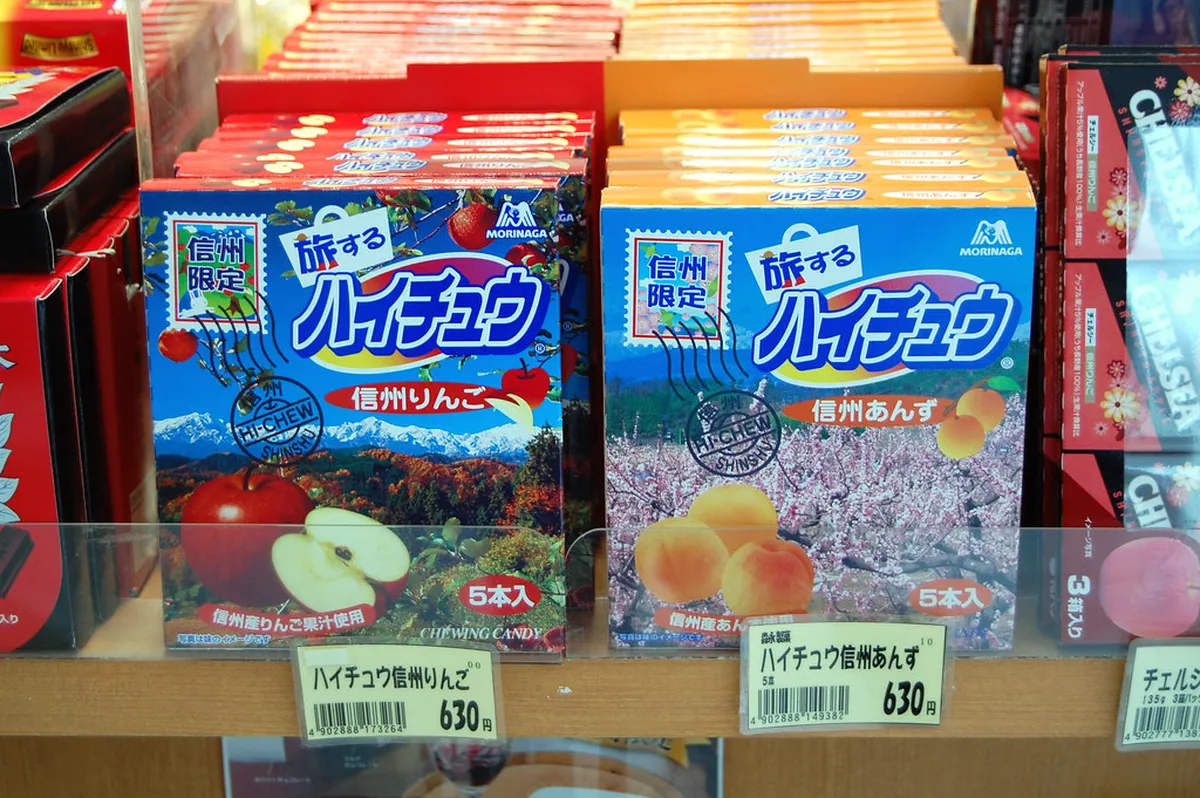
Some Nagano apple desserts travel well, and some do not. Tarts, dried apple slices, and sealed jam jars hold up fine in a suitcase or on a flight home. Fresh whole apples are heavier to pack and bruise more easily than a sealed tart or a bag of dried slices. Most travelers lean toward packaged options for the trip home. Apple oyaki and soft serve are made for same-day eating and rarely survive a full travel day. Sealed tarts and jam jars list a best-by date on the wrapper, worth checking before buying several to bring home. Souvenir shops often shelve apple sweets next to Yawataya Isogoro's shichimi pepper, a savory Nagano staple. Together they make an easy pairing gift for a traveler who wants both something sweet and something spicy. Yawataya Isogoro also sells the shichimi in flavors like yuzu and a ramen blend. Those travel just as well as the apple sweets in the same shopping bag. Department store food halls in Nagano City typically stock the widest variety of boxed tarts and gift sets in one place, useful for comparing several options before choosing. One timing mistake is easy to avoid. Fresh Nagano apples run mid-September through mid-November. Fruit sold as Nagano apples outside that window is usually from cold storage or grown elsewhere. It will not match the fragrance described for in-season fruit like the Kanjuku Yukidoke Apple Tart.
Packaged tarts costing ¥200 to ¥1,000 survive journeys well, unlike fresh oyaki and soft serve. Shoppers prioritizing same-day eating head to Zenko-ji Nakamise-dori's walk-up stalls; those seeking travel-ready souvenirs converge on MIDORI Nagano for selection and convenience near train departure.

- Under ¥200: A single apple oyaki or a cup of apple soft serve from a station kiosk or michi-no-eki.
- Roughly ¥200 to ¥1,000: Individual Kanjuku Yukidoke Apple Tarts, jam jars, or dried apple slices.
- Up to about ¥3,000: Multi-piece gift boxes at MIDORI Nagano or a department store food hall.
Frequently Asked Questions
When is the best time to find fresh Nagano apple desserts?
Fresh Nagano apples are in season from mid-September to mid-November. That window is when orchards run picking and when desserts use the newest fruit. Outside those months, most apple desserts use fruit from cold storage or from other regions.
What is the difference between Akibae, Shinano Sweet, and Shinano Gold apples?
Akibae is deep red, tart, and firm, and it holds up best when baked into pies. Shinano Sweet is very sweet with low acidity, and it works best eaten fresh or juiced. Shinano Gold has golden skin and a citrus-like tang, and it shows up most in tarts and other refined sweets.
Is apple oyaki a dessert or a snack?
Apple oyaki is a sweet variant of a savory Nagano staple. The same chewy buckwheat-and-wheat dough is filled with miso-apple or cinnamon-apple instead of pickled vegetables. It works as either a dessert or an on-the-go snack, and it typically costs ¥100 to ¥250.
Can you bring Nagano apple tarts home on a flight?
Individually wrapped tarts, such as the Kanjuku Yukidoke Apple Tart, travel well in a suitcase. Sealed jam and dried apple slices also hold up for a flight. Apple oyaki and soft serve do not travel as well, since both are made for same-day eating.
Where should you buy Nagano apple desserts near Nagano Station?
MIDORI Nagano, the mall inside Nagano Station, stocks boxed tarts, jam, and gift sets suited to travel. For a walking snack instead, head to Zenko-ji Nakamise-dori for apple manju and fresh-pressed juice.
What does Kanjuku Yukidoke mean?
Kanjuku means fully ripe, and Yukidoke means snowmelt. Together the name describes apples picked at peak ripeness. Shinshuu-Kuraudo's tart uses Nagano-grown apples under that name, even though an Aomori variety shares the same name.
Do you need a reservation to pick apples at a Nagano orchard?
Policies vary by orchard, so confirm current reservation requirements directly on the orchard's own website before a visit. Some orchards take walk-ins during the mid-September to mid-November season. Others require booking ahead, especially on weekends.
What is Arukuma, and why does it matter for apple desserts?
Arukuma is Nagano Prefecture's mascot, and it wears an apple on its head. That detail reflects how closely apples are tied to the region's identity. It also explains why apple desserts show up across so many shops and stations.
Is Obuse worth a stop just for apple desserts?
Obuse is known primarily for chestnuts, not apples. Treat any apple-and-chestnut dessert there as a bonus rather than the main draw. Confirm with individual shops whether an apple item is running that day, since chestnut specialists do not all carry it year-round.
Free guide: Japan's Hidden Gems
12 under-the-radar places beyond Tokyo & Kyoto — with the best season to visit each and a local tip you won't find in the guidebooks.
You might also like


Continue reading
More guides you'll find useful


