

11 Best Things to Do in Nagano, Japan (2026 Guide)
Discover the 11 best things to do in Nagano, Japan, from snow monkeys to ancient temples and scenic hikes. Plan your perfect 2026 trip!
On this page
Nagano Prefecture sits in the heart of Honshu, ringed by the Japanese Alps and laced with ancient pilgrimage roads. It hosted the 1998 Winter Olympics, but the real draw is year-round: a 1,400-year-old Buddhist temple, wild snow monkeys, cedar-lined shrine trails, and alpine valleys that close for winter and reopen each April. This guide covers the best things to do in Nagano in 2026, with practical details on access, cost, and when to go.
Nagano City is the gateway. From Nagano Station you can reach the Snow Monkey Park, Togakushi, and Matsushiro without a car. For Kamikochi, Tsumago-Magome, and the ski resorts of Hakuba, you will need either a bus connection or a rental vehicle. Plan at least three full days to cover the highlights, and five days if you want to hike seriously.
Key Takeaways
- Jigokudani Snow Monkey Park is best December through March when snow sets the scene for iconic photos.
- Zenko-ji Temple is the anchor of Nagano City — walk the Omotesando pilgrim road from the station and arrive before 09:00 for the morning ceremony.
- Togakushi's cedar avenue to Okusha is the single most atmospheric hike in the prefecture — free, and reachable by bus from Nagano Station.
- Matsumoto is a separate city (50 min by Shinkansen or Limited Express), not a day trip from Nagano — see our Matsumoto attractions guide for its full cluster.
Introduction to Nagano: Why Visit?
Nagano is Japan's fourth-largest prefecture by area and entirely landlocked, yet it holds more ski resorts than any other region and more national parks than anywhere outside Hokkaido. The Northern Japan Alps run down its western edge; the Yatsugatake and Chichibu ranges anchor the south. That geography means hiking in summer, foliage in October, and deep powder from December onward — in a single prefecture.
Beyond the mountains, Nagano has genuine cultural weight. Zenko-ji Temple has drawn pilgrims since 642. The samurai enclave of Matsushiro was the Sanada clan's stronghold for two and a half centuries. The Edo-period post towns of Tsumago and Magome sit on what was once the Nakasendo highway between Kyoto and Edo. None of these require a car or multi-day expedition — they are all accessible on day trips from Nagano Station.
Nagano City itself is worth an overnight stay rather than just a transit hub. Its compact center — Zenko-ji, the Omotesando street, and Matsushiro to the south — can fill a full day. The city population is around 370,000, which means walkable streets, minimal congestion, and a restaurant scene that leans heavily on local produce: Shinshu soba, Nagano apples, oyster mushrooms, and the freshwater fish of the Chikuma River.
Getting to Nagano: Access & Transport
The Hokuriku Shinkansen is the fastest route from Tokyo. Kagayaki services reach Nagano in about 80 minutes; Hakutaka services take 100 to 110 minutes. Both depart Tokyo Station and Ueno Station and are covered by the Japan Rail Pass. In 2026, reserved seats on the Kagayaki sell out quickly during Golden Week and Obon — book as soon as your dates are fixed.
From Kyoto or Osaka, take a Tokaido Shinkansen to Nagoya, then the Limited Express Shinano to Matsumoto, and change to a local Shinonoi Line train for the final leg to Nagano. Total journey time from Kyoto is around 3.5 hours; from Osaka, roughly 4 hours. The Shinano route is scenic: it threads through the Kiso Valley, past cypress forests and river gorges, so the connection is worth doing in daylight.
Highway buses run from Shinjuku (Tokyo) to Nagano in around 3.5 hours and are considerably cheaper than the Shinkansen — useful if you are on a tight budget and not holding a JR Pass. The main bus terminal is directly adjacent to Nagano Station, so connections to onward buses for the Snow Monkey Park or Togakushi are straightforward.
Getting Around Nagano City & Prefecture
Nagano City is manageable without a car. Zenko-ji Temple is a 30-minute walk or a 10-minute bus ride from the station (exit the Zenkoji-guchi west exit and take any bus bound for Daimon). The Nagano Dentetsu private railway from Nagano Station reaches Yudanaka in about 45 minutes — that is the base for the Snow Monkey Park. Express buses from Nagano Station serve Togakushi (about 50 minutes) and the Hakuba Valley (about 100 minutes).
For the wider prefecture, the honest answer is that a rental car opens up a different trip. Matsushiro is only 12 km south of central Nagano but bus frequency is low outside commuter hours. Kamikochi is accessible by bus from Matsumoto but you still cannot drive inside the national park — vehicles must be parked at Sawando (¥700 per day) and a bus taken to the valley floor (around ¥1,200 each way). Tsumago and Magome require a train to Nakatsugawa or Nagiso, then a local bus or taxi.
IC cards (Suica, Pasmo, ICOCA) work on JR Nagano lines and most buses within the city. The Nagano-Dentetsu network uses its own IC system. One-day bus passes for the city center cost around ¥600 and are worth buying if you plan three or more bus rides. For winter driving to ski resorts, snow tires are mandatory and chains may be required on mountain passes.
Where to Stay in Nagano: City vs. Rural Bases
Nagano City is the most practical base for first-time visitors. Business hotels cluster around the east exit of Nagano Station, with rates typically ¥8,000–¥15,000 per night for a double. The advantage is direct access to Shinkansen departures and the express bus network, so you can cover the Snow Monkey Park in the morning and Togakushi in the afternoon without driving.
Rural bases suit travelers with specific goals. For onsen immersion, Shibu Onsen (reachable from Yudanaka Station) has nine public baths that guests of registered ryokan can use with a bath-key pass — few experiences in Nagano Prefecture are more atmospheric than hopping between centuries-old konyoku (mixed-gender) baths on a cold evening. For skiing, staying in Hakuba Village puts you at the Happo One ski resort door. For alpine hiking, a ryokan in Kamikochi (open mid-April to mid-November) means you are on the trail before day-trippers arrive from Matsumoto.
One option most guides skip: shukubo (temple lodging) at Zenko-ji. About 14 sub-temples within the Zenko-ji complex accept overnight guests. Rooms are tatami, meals are shojin-ryori (Buddhist vegetarian cuisine), and the pre-dawn morning ceremony is a completely different experience when you are staying on the grounds rather than arriving on the first bus. Prices range from ¥10,000 to ¥18,000 per person with two meals. Book directly with individual shukubo — slots fill months ahead during peak season.
1. Zenko-ji Temple
Zenko-ji is not just Nagano's most important sight — it is one of Japan's most significant Buddhist temples. Founded in 642, it houses the oldest Buddhist statue known to have entered Japan. That statue has never been displayed publicly; even the "replica" shown every six years during the Gokaicho ceremony has been venerated by pilgrims for over seven centuries. The next Gokaicho is scheduled for 2028.
The main hall (Hondo) is a registered National Treasure and one of Japan's largest wooden structures. Inside, the Okaidan-meguri offers a pitch-black underground corridor beneath the altar: visitors feel their way along the wall in complete darkness, attempting to touch an iron key said to grant salvation. The experience costs ¥600 on top of the main hall entry (also ¥600 for adults). The temple grounds are open around the clock; the main hall opens at 09:00 daily.
The Omotesando approach — Nagano's equivalent of Nikko's cedar avenue — runs straight from the station to the Sanmon gate. Along it are traditional shops selling oyaki (stuffed dumplings), seven-flavors chili, and walnut mochi. Budget 2.5 to 3 hours for the full visit: approach road, Sanmon gate climb, main hall, underground passage, and the sub-temple grounds to the west. The morning ceremony at 05:30 (summer) or 06:00 (winter) is free and open to all.
2. Jigokudani Snow Monkey Park
Jigokudani ("Hell's Valley") takes its name from the steam venting from the valley floor, not from any danger to visitors. The hot spring pool where Japanese macaques bathe is a natural feature, and the park is open year-round — but the experience shifts dramatically by season. December through March is the classic window: snow blankets the valley, monkeys soak to stay warm, and the contrast of red-faced primates against white scenery is what fills the photos on travel sites worldwide.
From late April through summer, the monkeys still visit the park but bathe less frequently in warmer water. Spring brings a bonus: newborn infants clinging to their mothers arrive in April and May. Autumn offers rich foliage framing the valley. In summer the park is genuinely less crowded — shoulder-season visitors often have long periods with the troop to themselves.
Getting there: take the Nagano Dentetsu Line from Nagano Station to Yudanaka (about 45 minutes, ¥1,230), then a local bus to Kanbayashi Onsen (¥230), followed by a 30-minute walk through forest to the park entrance. Entry is ¥800 per adult. The park is open 08:30–17:00 in winter, 09:00–16:00 in summer. Arrive before 09:00 to beat tour groups. The Jigokudani Snow Monkey Park guide covers the trail conditions and seasonal tips in full.
3. Togakushi 5 Shrines Hike
Togakushi is a Shinto shrine complex spread across three levels of a forested mountain about 17 km northwest of Nagano City. Five shrines in total — Hokosha and Hinomikosha at the base, Chusha in the middle, Kuzuryusha and Okusha at the top. The mythology behind them involves the Sun Goddess Amaterasu hiding in a cave and the cave door being hurled away: Togakushi literally means "hiding door." The shrines are each dedicated to a deity from that story.
The standout section is the cedar avenue leading to Okusha. The trees are 400 to 800 years old, and the path under their canopy — flat stone paving flanked by root systems taller than a person — is among the most visually arresting walks in Japan. Allow 40 minutes from the car park to the Zuishinmon gate, then another 20 minutes to the main shrine. The full five-shrine route covering all levels runs about 5 km and takes 3 to 4 hours; fit walkers adding the Kagamiike Lake detour should budget 5 to 6 hours total.
The trail is free. Buses from Nagano Station take about 50 minutes (around ¥1,200 one-way); the last bus back is typically 17:00 in peak season — check the Alpico bus timetable before you go. The Ninja Museum near the Okusha parking area costs ¥700 for adults; the adjoining Ninja House maze is worth the extra 30 minutes. See the Togakushi Shrine and Ninja Museum guide for details on the ninja experience and the soba restaurants along the approach.
4. Kagamiike Lake Hike (Togakushi Mountain)
A side trail branches off from the Okusha main shrine and leads to Kagamiike, a small alpine lake whose name means "mirror pond." On clear mornings the Togakushi massif reflects perfectly in the still water — the kind of image that looks digitally enhanced but is not. The hike there and back from the Okusha area takes about 2 hours on a well-marked (but not well-signed in English) forest trail.
The route is broadly flat once you leave the shrine approach but involves some root-covered sections. There is a wooden lakeside rest house at the south end of the lake where light meals and coffee are available in season. If you are pressed for time, a narrow paved road runs directly to the lake and you can drive or take a taxi — the hike is better, but the drive is not cheating. Visit in mid-October for autumn colour reflected in the water, or in late May when the surrounding beech forest turns vivid green.
Kagamiike works best as an add-on to the Togakushi shrine hike rather than a standalone trip. Combine the cedar avenue walk to Okusha with the Kagamiike detour for a full and varied half-day in the mountains.
5. Kamikochi Valley
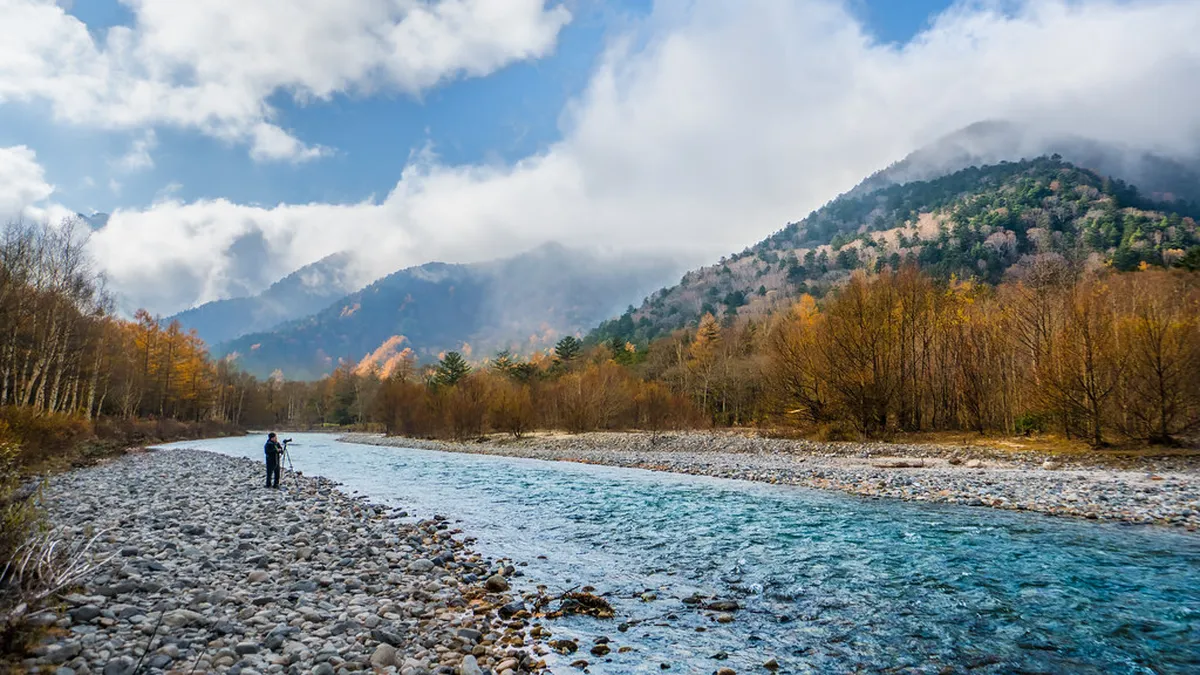
Kamikochi sits at 1,500 m in the Chubu Sangaku National Park, about 90 minutes by bus and train from Nagano via Matsumoto. The valley floor is flat and easily walked; a 3 km riverside path from the Kappa Bridge to Myojin Pond is one of the most straightforward beautiful walks in Japan. The turquoise Azusa River, the hulking ridgeline of Hotaka, and zero private cars (all vehicles except authorised buses are banned) combine to give the place a quality that even heavy tourist traffic cannot entirely diminish.
For more serious hikers, the Yakedake trail starts at the Kamikochi bus terminal. Mt. Yakedake is an active volcano at 2,455 m. The out-and-back route is 12.5 km, gains 980 m of elevation, and takes 6 hours at a steady pace. The first 3 km along the river are flat; beyond that, the ascent is steep and involves some scrambling and short ladder sections. Start before 08:00 to summit by midday and return before afternoon cloud builds. Check the Kamikochi official website for current trail conditions and permit requirements before visiting.
Kamikochi is open mid-April to mid-November; it closes completely in winter. Access from Matsumoto requires a bus to Sawando, parking (¥700 per day), then a connecting bus to the valley (¥1,200 each way). From Nagano City, the easiest approach is the Matsumoto Dentetsu Kamikochi Line to Shin-Shimashima, then an Alpico bus directly to the park. Budget a full day.
6. The Old Edo Towns of Tsumago and Magome
Tsumago and Magome are the two best-preserved post towns on the Nakasendo — the mountain highway that connected Edo (Tokyo) with Kyoto during the Shogunate period. Both towns enforced a ban on modern signage and telephone poles inside their historic zones in 1971, which is why they still look like film sets from the Edo period. Wooden lattice shopfronts, stone-paved alleys, and the background sound of mountain streams create an atmosphere that is hard to find anywhere else in Japan at this scale.
The 8 km trail between the two towns passes through cypress forest and tiny farming hamlets, with one modest ascent of around 200 m. The walk takes 3 to 4 hours at a comfortable pace. A luggage-forwarding service runs between Tsumago and Magome during the main tourist season (late March to November), so you can walk with a day pack and collect bags at your destination. Check the local tourism office for availability and cut-off times.
Access from Nagano City: take the Chuo Line from Nagano to Nakatsugawa (about 90 minutes), then a local bus to Magome (20 minutes). Alternatively, reach Nagiso Station and bus to Tsumago. The Kiso Valley is a significant detour from central Nagano — allow a full day, or combine it with a night in the valley to do the walk at your own pace.
7. Matsushiro: Nagano's Samurai Town
Matsushiro sits 12 km south of central Nagano City and is accessible by local bus (around 30 minutes, ¥400). It was the domain seat of the Sanada clan for roughly 250 years of the Edo period. What survives is a compact and walkable historic zone: Matsushiro Castle Park (the castle itself is a stone foundation with reconstructed earthworks, free entry), the Sanada Residence, the Bunbu Military Academy, and a collection of samurai-era townhouses converted into small museums and shops.
The second attraction — and the one most guides underplay — is the Matsushiro Underground Imperial Headquarters. Excavated in the final year of World War II, the Zozan tunnels were intended to house the Imperial family, the government, and military high command during the anticipated Allied invasion of the Japanese mainland. The network is about 75% of its intended size; the war ended before it was completed. A 500 m section of tunnel is open to the public, free of charge, typically 09:00–17:00. The scale is sobering: concrete-lined corridors wide enough to drive a truck through, dug by conscripted Korean and Japanese laborers under conditions the on-site information boards do not flinch from describing.
Matsushiro makes a good half-day from Nagano City. Combine the samurai residences (budget 90 minutes) with the war tunnels (45 minutes) and lunch at one of the small soba shops along the main street. Afternoon buses back to Nagano run roughly hourly.
8. Obuse: Hokusai, Chestnuts, and Craft Sake
Obuse is a small town 20 km northeast of Nagano City on the Nagano Dentetsu Line (about 30 minutes, ¥680). It is one of the wealthiest historic towns in Nagano Prefecture — during the Edo period it prospered from chestnut production and attracted artists, including Katsushika Hokusai, who spent several extended periods here late in his life and produced some of his final major works in the town.
The Hokusai-kan museum holds the largest public collection of Hokusai's Obuse-period work, including two painted festival floats decorated with ceiling murals that cannot be seen anywhere else. Entry is ¥1,000. The museum is small but unusually well-curated, with English explanations. A short walk away, the Ganshoji Temple displays another Hokusai ceiling painting — the Phoenix panels — in its main hall. Entry is ¥500. Together the two sites take about 90 minutes.
Obuse is also the center of Nagano's chestnut wagashi (traditional confectionery) tradition. Masuichi-Ichimura Sake Brewery, operating since 1755, offers tours and tastings of its Shinshu sake in a beautifully preserved Edo-period complex. The town is compact enough to cover entirely on foot in half a day. It pairs naturally with a morning at the Snow Monkey Park — Yudanaka and Obuse are both on the Nagano Dentetsu Line, so you can do both in a single day without backtracking to Nagano City. See the Obuse guide for the full itinerary.
9. SNOW WOW! Hakuba Tsugaike
Hakuba Valley is Nagano's most internationally known ski destination — it hosted alpine and freestyle skiing events in the 1998 Olympics and now concentrates ten ski resorts across a single valley. Happo One is the largest and most famous, but for non-skiers or families with younger children, SNOW WOW! at Tsugaike Kogen operates a purpose-built snow activity area separate from the ski runs.
Activities at SNOW WOW! include snow tubing, snow rafting, inflatable sledging, and a giant swing over the valley — none requiring any ski experience. Individual activities are priced around ¥1,000 to ¥3,000. The site is at Hakuba Tsugaike Kogen, accessible by express bus from Nagano Station in about 100 minutes (check the SNOW WOW! Hakuba Tsugaike website for current season dates and reservation requirements). Some activities are bookable on the day; others — particularly the giant swing — require advance booking, especially on weekends.
Hakuba is best reached by highway bus rather than train: the bus drops close to resort bases, whereas the nearest train station (Hakuba) is a further taxi or shuttle ride from most slopes. The full Hakuba Valley resort network spans more than 600 hectares of terrain with over 80 km of runs — one of the largest interconnected ski areas in Asia.
10. Iiyama Kamakura Village
Every year from the last week of January through the end of February, the rural town of Iiyama builds about 20 kamakura — igloo-like snow domes each roughly 3 meters tall — as part of a winter festival. Each kamakura is fitted out as a restaurant where guests eat a local hot pot (Noroshi Nabe) inside the snow hut. The combination of the firelit interior, steam rising through the ventilation hole, and snow walls inches thick is genuinely unlike any dining experience in a city setting.
Reservations for the kamakura restaurants are essential and typically open several weeks before the festival. Prices run around ¥3,500 to ¥4,500 per person. Access: Iiyama is on the Hokuriku Shinkansen line — about 20 minutes from Nagano Station by Hakutaka. From Iiyama Station, the Kamakura Village is about 15 minutes by taxi or bus to Nakazuna-Onsen area. Check the Iiyama city tourism website for exact dates and reservation details each season, as the festival calendar shifts slightly year to year.
11. Nagano Tomyo Festival
The Nagano Tomyo Festival transforms the Zenko-ji area every February with thousands of paper lanterns and light installations along the Omotesando approach and throughout the temple grounds. It was established to commemorate the 1998 Winter Olympics and has grown into one of Nagano Prefecture's most visited winter events. Entry is free.
The lighting runs from approximately 17:00 to 21:00 during the festival period, which typically spans 10 days in mid-to-late February. The best strategy is to arrive at Zenko-ji before sunset to see the temple in daylight, then stay as the lanterns are lit. Dress for temperatures that regularly drop below -5°C at night in February. Hot amazake (warm sweet rice drink) and warmed sake are sold along the approach. Combine with a Yudanaka onsen stay nearby for a full winter weekend itinerary.
Bonus: Daio Wasabi Farm (Near Matsumoto)
Daio Wasabi Farm is one of Japan's largest wasabi farms, located near Hotaka in the Azumino area — about 15 minutes by taxi from Hotaka Station on the Oito Line from Matsumoto. Entry to the farm is free. The setting is unusually photogenic: the wasabi is grown in shallow channels of glacier-cold spring water, and the fields stretch flat toward the Northern Alps backdrop.
The farm is open 09:00 to 17:00 daily (16:30 in winter). Onsite shops sell fresh wasabi, wasabi ice cream, wasabi beer, and packaged products. Tours of the cultivation beds run informally — the signage is largely in Japanese but the visual process of grading and harvesting is self-explanatory. The farm is closest to Matsumoto rather than Nagano City, making it a natural add-on to a visit to Matsumoto Castle. See the Matsumoto attractions guide for how to combine both in a single day.
Going deeper on this theme? Our 12 Best Nagano Festivals and Events guide covers it in detail, with the practical planning this page leaves out.
Going deeper on this theme? Our 10 Hakuba Valley Ski Resorts guide covers it in detail, with the practical planning this page leaves out.
Going deeper on this theme? Our 9 Best Things to Do in Nozawa Onsen guide covers it in detail, with the practical planning this page leaves out.
Going deeper on this theme? Our 10 Best Nagano Ski Resorts to Compare Before Your 2026 Trip guide covers it in detail, with the practical planning this page leaves out.
FAQs About Visiting Nagano
Explore attractions in other cities
Frequently Asked Questions
Is Nagano City worth visiting?
Yes, Nagano City is definitely worth visiting as a cultural hub and a convenient base for exploring the wider prefecture. It's home to the historic Zenko-ji Temple and offers excellent transport links to other attractions. The city also provides a good selection of dining and accommodation options.
How many days is enough for Nagano?
We recommend spending at least 3 to 5 days in Nagano Prefecture to experience its diverse attractions fully. This allows enough time for major sights like the Snow Monkey Park and Zenko-ji Temple, plus a day trip to areas like Togakushi or Matsumoto. A longer stay provides flexibility for hiking or winter sports.
What months can you see the snow monkeys in Japan?
You can see the snow monkeys at Jigokudani Snow Monkey Park year-round, but the best time to see them bathing in the hot spring is during the colder months, from December to March. During this period, snow covers the landscape, making for iconic photos. We found January and February to be particularly picturesque.
How long does it take to hike Togakushi Shrine?
The full Togakushi 5 Shrines hike, covering all five shrines and the famous cedar avenue, typically takes between 4 to 6 hours. This estimate includes time for exploring each shrine and enjoying the scenic paths. Shorter sections, like the walk to Okusha, can be completed in about 2 hours.
Nagano rewards travelers who stay longer than a single night. The prefecture-wide spread of attractions — alpine valleys, samurai towns, ancient temples, snow festivals, and farm landscapes — makes it one of the most genuinely varied regions in Japan. Use Nagano City as a base, orient your first day around Zenko-ji and the Omotesando street, and build outward from there. The Snow Monkey Park, Togakushi, and Obuse can all be done on day trips without a car. Matsumoto is a separate city deserving its own cluster of time — link the two together as a central Honshu itinerary rather than trying to fold Matsumoto into a Nagano day trip.
Check transport schedules in advance, especially for rural bus routes to Togakushi and the Kamakura Village festival — frequencies drop sharply outside peak season. Book shukubo at Zenko-ji and kamakura dining in Iiyama well ahead. Everything else in Nagano rewards spontaneity.
Explore More Nagano Guides
In-depth guides for planning your Nagano trip.
Top Sights
- Zenko-ji Temple Nagano: Ultimate Travel Guide & Things to Do
- Jigokudani Snow Monkey Park Travel Guide
- Togakushi Shrine in Winter: Ultimate Guide & Tips
- Things to Do in Obuse, Nagano
- Matsushiro Itinerary: A Half-Day to 2-Day Samurai Town Guide
Onsen & Food
- Yudanaka Shibu Onsen: The Complete Travel Guide
- Togakushi Soba: A Comprehensive Guide to Nagano's Famous Noodles
- Nagano Food Guide: Must-Try Dishes & Culinary Experiences
Plan Your Trip
- Nagano Itinerary: Your 3-Day Alpine & Cultural Guide
- Best Time To Visit Nagano: A Seasonal Travel Guide
- 10 Unforgettable Day Trips from Nagano
- Getting Around Nagano: Your Ultimate Transport Guide
- Where To Stay In Nagano: 9 Best Areas & Accommodations
- Things to Do in Nagano in Winter
- Best Time To Visit Nagano
- 10 Unforgettable Day Trips from Nagano
- Getting Around Nagano
- Jigokudani Snow Monkey Park Travel Guide
- A Half-Day to 2-Day Samurai Town Guide
- Nagano Day Trip From Tokyo
- Nagano Food Guide
- Nagano Itinerary
- 10 Best Things to Do in Nagano in Winter
- The Complete Nagano Chestnut Town Day Trip Guide
- 15 Best Things to Do in Obuse, Nagano
- Snow Monkey Park Japan
- The Complete Guide to Nagano's Five-Shrine Cedar Hike
- Togakushi Shrine in Winter
- Togakushi Soba
- Where To Stay In Nagano
- Yudanaka Shibu Onsen
- Zenko-ji Temple Nagano
Browse the Nagano attractions hub for detailed visitor guides:
- Zenko-ji Temple Visitor Guide: Plan Your Trip to Nagano's Historic Site
- Jigokudani Monkey Park Visitor Guide: Plan Your Trip to See Japan's Snow Monkeys
- Togakushi Shrine Visitor Guide: Plan Your Trip to Nagano's Sacred Trails
- Things to Do in Obuse: Visitor Guide & Day Trip Tips
- Matsushiro Castle Visitor Guide: Your 1-Day Itinerary & Travel Tips
- Joyama Park Visitor Guide: Highlights, Access & Matsumoto Itinerary
Free guide: Japan's Hidden Gems
12 under-the-radar places beyond Tokyo & Kyoto — with the best season to visit each and a local tip you won't find in the guidebooks.
You might also like


Continue reading
More guides you'll find useful


