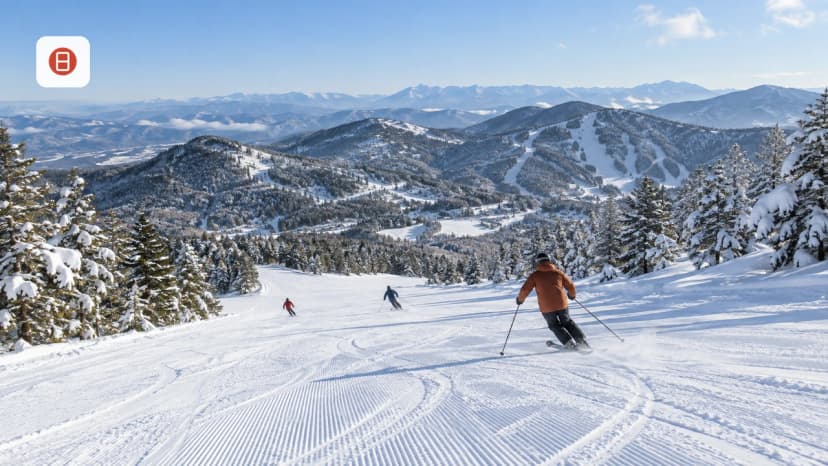
Togakushi Shrine is one of Japan's most atmospheric sacred sites — a complex of five Shinto shrines hidden in the mountain forests northwest of Nagano City. Ancient cedar trees line the final approach to the upper shrine, ninja history permeates the hillside, and buckwheat soba perfected over centuries waits at every turn. This guide covers everything you need to plan a visit in 2026: how to get there, what to see, how long each route takes, and what to pack for each season.
What is Togakushi Shrine? History and Significance
Togakushi Shrine is not a single structure but a collection of five Shinto shrines spread across Mount Togakushi. The name itself tells the founding myth: 戸 (door) + 隠 (hidden) = "hidden door." According to legend, the sun goddess Amaterasu retreated into a cave, plunging the world into darkness. The other gods lured her out with a noisy festival, and when she peered through the entrance, the god of strength hurled the cave door into the sky. It fell to earth in Nagano, forming the jagged peaks of Mount Togakushi.
The five shrines that make up the Togakushi Shrine are Hokosha (Lower), Hinomikosha, Chusha (Middle), Kuzuryusha, and Okusha (Upper). Each enshrines a deity connected to that founding myth and offers a distinct experience. Hokosha is known for its intricate wooden carvings. Hinomikosha, set between the lower and middle shrines, is dedicated to performing arts and marriage. Chusha features a grand torii gate and an 800-year-old cedar that commands its own reverence. Kuzuryusha, adjacent to Okusha, honors the dragon deity of rain and good fortune. Okusha, the most revered, sits at the base of the mountain's main peak and requires the longest hike to reach.
Entry to all five shrine grounds is free. The spiritual weight of the site draws pilgrims, hikers, and photographers in roughly equal numbers — a rare combination that keeps Togakushi feeling purposeful rather than touristy.
How to Get to Togakushi Shrine from Nagano and Beyond
Togakushi sits about 45 to 75 minutes from central Nagano City depending on transport. Most visitors arrive by bus from Nagano Station, which is the practical choice if you do not have a rental car. Buses depart from Bus Stop No. 7 at the Zenkoji Exit — cross the road toward the Don Quijote side and board in front of the Alpico Bus Ticket Office. Check the bus timetable for current schedules, as frequency varies by season.
A one-way bus ticket to the Okusha-iriguchi stop costs approximately 1,550 yen and takes around 55 minutes. The first service departs around 07:00. If you plan to combine Togakushi with a stop at Zenkoji Temple in Nagano City, the Zenkoji Togakushi 1-day ticket (3,000 yen) offers unlimited rides on designated routes and is usually the better value for a full day out from Nagano.
One important 2026 update: as of December 2025, the express bus now stops at the Togakushi Okusha bus stop during winter. The local Togakushi line still does not stop at Okusha in winter — only the express does. Check which service you are boarding before winter travel, since boarding the local line means disembarking at Chusha and walking the extra distance.
Driving offers more flexibility and is faster: about one hour from central Nagano or Hakuba, 1.5 hours from Matsumoto. In winter, the mountain road can be icy — winter tyres and a 4WD are strongly recommended, as this is the same road that climbs to Togakushi Ski Resort. Paid parking is available at the Okushairiguchi lot near the Okusha trailhead; free and paid options also exist near Chusha Shrine.
Best Time to Visit Togakushi Shrine: Seasonal Highlights and Weather
Togakushi is rewarding in every season, but each requires different preparation. Spring (April to June) brings fresh greenery and manageable trail conditions; late April is ideal for avoiding crowds while the forests are vivid. Summer (July and August) offers a cool escape from lowland heat — Togakushi sits high enough that temperatures stay comfortable even in mid-summer. Autumn (mid to late October) is peak-season: the forests around Kagami Pond and the shrine paths ignite in gold and orange, and visitor numbers spike accordingly.
Winter runs from late November through March. Many Togakushi restaurants and some facilities close for the season, but the snowfall transforms the shrine complex into something genuinely otherworldly. Snow lingers at the upper shrine into April. Check weather forecasts for the nearby Togakushi ski resort for a reliable indication of mountain conditions — the shrines sit at slightly lower elevation than the ski area, but the forecast gives you a useful baseline.
For winter visits, pack warm, waterproof layers: thermal underlayers, a fleece or wool mid-layer, and a weatherproof outer jacket. Snowboots or waterproof hiking boots are essential, and crampons are strongly recommended for the final approach to Okusha — the icy stairs on that last stretch catch out even confident hikers with good-tread boots. You can buy crampons at Don Quijote in Nagano City the morning of your visit if you have not packed your own. Snow usually remains into mid to late March.
Exploring the Togakushi Five Shrines Trail: A Detailed Guide
The Togakushi Kodo Trail connects all five shrines through ancient forest, passing moss-covered stone monuments, weathered guardian statues, and occasional clearings that open to views of the surrounding peaks. The full route from Hokosha to Okusha and back covers approximately 14.5 kilometers and takes 6 to 7 hours including a lunch stop. Bus stops serve each shrine area, so you can shorten the route by starting at Chusha if time is limited.
The walk from Hokosha (Lower) to Okusha (Upper) in one direction is 5.5 kilometers and takes around 2.5 hours under dry conditions. In winter, add 30 to 60 minutes for snow and ice on the trail. The section between Chusha and Okusha is about 2 kilometers and takes roughly 1.5 hours return — this is the route most day visitors complete, and it includes the most dramatic scenery.
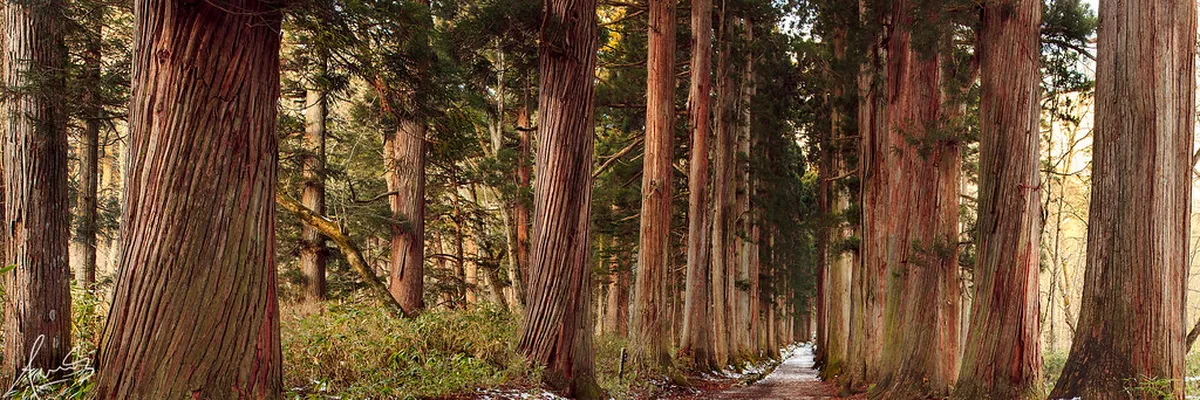
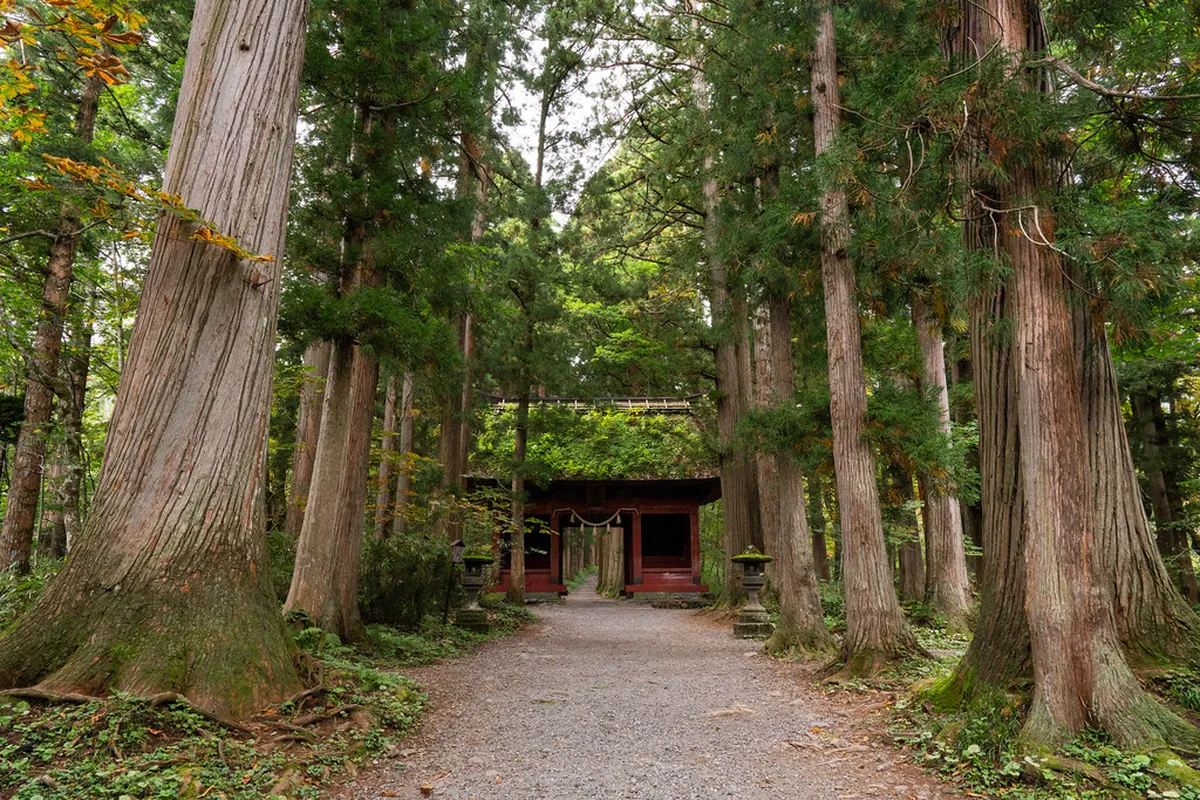
The approach to Okusha is what most people come for. After 20 to 30 minutes from Chusha, you pass the Zuijinmon Gate, a striking red structure flanked by towering cedars. Beyond it stretches the famous cedar avenue — rows of trees 400 years old, their canopies forming a natural tunnel roughly 1.6 kilometers long. This section to Okusha takes around 45 minutes. Kuzuryusha Shrine sits just beyond Okusha at the same end of the trail; combining both adds only a few minutes.
Note: the section of trail beyond the cedar avenue to Okusha itself is closed during winter. The snowshoeing course follows the avenue as far as Kagami Pond instead, with colored flags marking the route through deep powder.
Planning Your Togakushi Hike: Routes, Durations, and Difficulty
The Five Shrines trail is a moderate-distance hike on well-maintained forest paths — demanding in length more than technical difficulty. Wear comfortable walking shoes on dry days; waterproof hiking boots are advisable in any other season. Carry water and snacks, as facilities between shrines are sparse. Trekking poles help considerably on the longer route and in any icy conditions.
For experienced hikers, Mount Togakushi itself offers a separate and considerably harder challenge. The 7.5-hour circuit from the Okusha bus stop (including the 40-minute walk to the shrine and the 55-minute return walk from Togakushi Campground) involves chains, narrow ridgelines, and waterfall descents. The Ari-no-To-Watari — a passage only as wide as one's shoulders, with steep drop-offs on both sides — is the hardest section. This climb is for skilled, fit hikers only, and mountain climbing itinerary forms must be submitted at the trailhead.
Nearby mountains offer more accessible full-day hikes. Mt. Iizuna (1,917 m) has beginner-friendly courses reachable by Togakushi-line bus — alight at Iizuna Tozanguchi and walk 13 minutes to the south trailhead. Mt. Kurohime (2,053 m) is slightly harder; from the nearest bus stop at Togakushi Campground, walk 20 minutes to the Ohashi Rindo trailhead for a 6-hour course. Both offer fine views of the Northern Japanese Alps.
In winter, snowshoeing replaces much of the trail hiking. Several operators near Chusha Shrine and at Togakushi Ski Resort rent snowshoes. The most popular course starts from the Okusha Shrine entrance, follows the cedar avenue to Zuijinmon Gate in around 20 to 30 minutes, then continues through powder snow to Kagami Pond. The contrast of the vermillion gate against white snow and deep-green cedar is the single most photographed view in Togakushi. Consider visiting Jigokudani Monkey Park on the same trip — it pairs well as a second stop on the return to Nagano.
Things to Do in Togakushi Beyond the Shrines
Togakushi's ninja history is deep-rooted and well-documented. According to legend, the 12th-century warrior Daisuke Nishina combined samurai fighting techniques with the mountain ascetic practices of Shugendo to create Togakure-ryu Ninjutsu. Two facilities let you explore this heritage at different levels of depth. The Togakushi Ninja Museum, across from Okusha Shrine, holds actual historical ninja tools and a Karakuriyashiki (trick house) — adults and older children appreciate the serious approach to the history here. For younger children, the Chibikko Ninja Village to the right of Chusha Shrine has obstacle courses, ninja dress-up, and shuriken-throwing practice designed for smaller hands.
Soba noodles are the local obsession, and for good reason. Togakushi's cold climate made rice farming impractical but proved perfect for buckwheat. The result is a soba culture centuries deep, with restaurants clustered near Chusha Shrine serving chilled zaru soba on bamboo trays, hot tempura soba, soba tea, and soba ice cream. For the hands-on experience, Togakushi Soba Museum Tonkururin guides visitors through each step of making soba from scratch — mixing flour, kneading, rolling thin, and cutting with a traditional knife. Staff cook and serve your finished noodles at the end.
Kagami Pond (Mirror Pond) sits about 1.6 kilometers from the Zuijinmon Gate through the Togakushi Forest Botanical Garden, a 45-minute walk. On still, clear days the jagged ridgeline of Mount Togakushi reflects perfectly on the water's surface — autumn foliage season intensifies the effect dramatically. In winter, the pond freezes over and is accessible via the snowshoeing course. The nearby log-built Donguri House serves gratins, tarts, and desserts made with fresh Nagano fruit.
Where to Stay Near Togakushi Shrine
Most visitors base themselves in Nagano City and make Togakushi a day trip. This is the practical choice: the city has a wide range of hotels at every price point, reliable transport connections, and the bonus of being able to visit Zenko-ji Temple the same day. The main downside is the daily commute — roughly an hour each way by bus, which limits time on the trail and means catching the last bus back if you linger.
Staying in Togakushi itself is a genuinely different experience. Temple lodges (shukubo) in the area include Oyado Suwa and Oumeitei Tsuji, both of which offer traditional accommodation with meals prepared from local ingredients. Awai Togakushi, near Chusha Shrine, takes a more refined, minimalist approach — clean lines and mountain views rather than full ceremony. Staying overnight gives you the shrines at dawn before day-trippers arrive, which is as close to a spiritual experience as the site offers in 2026.
Book Togakushi accommodation well in advance for autumn foliage season (mid to late October) and the New Year period (1–3 January), when hatsumode — the traditional first shrine visit of the year — draws visitors to Okusha even in deep snow. Summer is generally easier to book and offers the most trail options.
Essential Tips for Visiting Togakushi Shrine
Accessibility on the Okusha approach is limited. The cedar avenue and final trail to the upper shrine are unpaved and uneven; strollers will not manage them. Families with young children or visitors with mobility challenges are better served by focusing on Chusha and Hokosha shrines, which have more level paths and are accessible directly by bus. Chusha in particular offers a full cultural experience — giant torii gate, the ancient cedar tree, and adjacent soba restaurants — without requiring any long hike.
Cash is essential. Smaller soba restaurants and some parking attendants do not accept cards. ATMs are not available in the Togakushi area itself; withdraw cash in Nagano City before boarding the bus. Cell reception can be patchy in the forest between shrines, so download offline maps before you go and note the last bus return times before leaving Nagano.
Observe basic Shinto etiquette at each shrine: bow before passing through torii gates, wash your hands at the temizuya (purification basin) if available, and keep noise low near the main hall. Photography is generally permitted on shrine grounds but check for signs near inner sanctuaries. The shrines are sacred sites with active religious practice — approach them accordingly.
Check the official Togakushi Shrine website and local tourism boards for any closures before you visit. Trail sections near Okusha close in winter, and maintenance work occasionally affects specific paths. An early start from Nagano — first or second bus of the day — gives you the best light for the cedar avenue and enough time to complete the full trail without rushing the return.
Planning Your Itinerary: Full-Day and Half-Day Options
A full-day itinerary for hikers: catch the first or second bus from Nagano Station (arriving around 08:30–09:00 at Hokosha). Walk north through Hinomikosha and Chusha (allow 2 to 3 hours). Stop for soba lunch near Chusha. Continue to Zuijinmon Gate and the cedar avenue to Okusha (2 to 3 hours from Chusha including time at the shrine). Return to Nagano on the late afternoon bus, arriving before 18:00. Total walking distance: up to 14.5 km. This covers all five shrines and is achievable for a fit adult.
A half-day itinerary for cultural visitors: take the bus directly to Togakushi Chusha (arriving around 10:00). Explore the Chusha area, the torii gate, and the botanical garden (1.5 to 2 hours). Eat soba at a restaurant near the shrine. Walk or take the bus to the Okusha area for the cedar avenue and upper shrine (1.5 hours return). Return to Nagano by early afternoon. This option suits families, slower-paced travelers, and those pairing Togakushi with a Zenkoji visit in Nagano City.
For a winter-only visit: take the express bus to Togakushi Okusha-iriguchi. Rent snowshoes from the Okushamae Naosuke restaurant next to the shrine entrance. Follow the marked snowshoe course through the cedar avenue to Zuijinmon Gate (20 to 30 minutes) and on to Kagami Pond. Return to the bus stop and head back to Nagano. This loop takes 3 to 4 hours including rental and breaks, and requires no advance booking outside busy periods. Consider pairing this with a visit to Jigokudani Monkey Park on the same day trip.
Frequently Asked Questions
How much time is needed at Togakushi Shrine?
A full day, approximately 6-8 hours, is ideal to explore all five shrines and additional attractions like the Ninja Village. For a more focused visit to the main shrines (Chusha and Okusha), a half-day (3-4 hours) is sufficient. Travel time from Nagano City should also be factored in.
Is it worth going to Togakushi Shrine?
Yes, Togakushi Shrine is highly recommended for its unique blend of spiritual history, stunning natural beauty, and cultural experiences. The ancient cedar avenue leading to Okusha Shrine is particularly impressive. It offers a peaceful escape from city life.
What to do in Togakushi Shrine?
Visitors can hike the sacred trail connecting the five shrines, explore the mystical cedar avenue, and learn about ninja history at the Togakushi Ninja Village. Enjoy local Togakushi soba noodles and visit scenic spots like Kagami-ike Pond. There are many unique activities for every interest.
Can you visit Togakushi Shrine in winter?
Yes, you can visit Togakushi Shrine in winter, but conditions will be snowy and icy. Some trails may require snowshoes or crampons. The winter scenery is breathtaking, offering a serene and unique experience. Always check weather and trail conditions beforehand. Dress warmly and wear appropriate footwear.
What is the best way to get to Togakushi Shrine?
The best way to get to Togakushi Shrine is by Alpico Bus from Nagano Station. The bus ride takes about an hour. A Zenkoji Togakushi 1-day ticket can be a convenient option for combining your visit with other nearby attractions. Driving is also an option for more flexibility.
Togakushi Shrine rewards every kind of visitor: pilgrims climbing to Okusha before dawn, families eating soba near Chusha, snowshoers threading through the cedar avenue in January silence. The site is accessible as a day trip from Nagano and deep enough to fill two days if you stay overnight. Plan your season, check the bus schedules, pack crampons if it is winter, and arrive early enough to have the cedar avenue to yourself for at least a few minutes.
For the latest official information, see the Togakushi Shrine on Wikipedia and Togakushi Shrine official site.