12 Best Things to Do in Nagasaki with Kids (2026)
Discover the best things to do in Nagasaki with kids, from the Penguin Aquarium to Huis Ten Bosch. Includes tram tips, stroller advice, and 2026 travel guides.
On this page
Nagasaki offers a surprisingly complete mix of history, animals, and theme-park energy for families. While many travelers focus solely on the city's somber wartime past, the modern waterfront, free-roaming penguin beach, and interactive zoo give younger children more than enough to stay engaged across two or three days. This guide has been updated for 2026 with current admission prices, tram details, and stroller accessibility notes for every attraction. You can find more inspiration for your Japanese adventure on our travel blog where we cover regional highlights, or browse official Japan travel resources for comprehensive planning.
Use the ride-up, walk-down rule throughout Nagasaki: take the tram or ropeway to the highest entry point of each attraction cluster, then descend on foot. This saves energy, protects your stroller, and turns the hills into a feature rather than a problem.
Nagasaki is built across steep hillsides, so planning your route is essential. The core tactic is ride-up, walk-down: use the tram or ropeway to reach the highest point of each attraction cluster, then descend on foot. This saves your energy, protects your stroller, and makes the hills a feature rather than a problem. The twelve attractions below are grouped by geographic logic, not just popularity, to help you build a realistic day-by-day plan.
The Two-Day Geographic Logic for Families
Nagasaki's attractions split naturally into two geographic bands. The northern Urakami district holds the Peace Park, the Atomic Bomb Museum, and the Hypocenter — a morning cluster you can walk between after alighting at the Matsuyama-machi or Hamaguchi-machi tram stops. The Penguin Aquarium sits further north still, requiring a 30-minute bus ride from Nagasaki Station; pair it with a northern afternoon rather than forcing a cross-city double-back.
The central and southern band — Glover Garden, Dejima, Chinatown, and Mount Inasa — works well as a second day. Use Ishibashi tram stop for Glover Garden, walk downhill through the garden, cross to Dejima by tram from Tsuki-machi, and finish the evening on Mount Inasa for the night view. Huis Ten Bosch and Kujukushima Aquarium are Sasebo-area destinations that require a separate half-day by train from Nagasaki Station on the Matsuura Railway or JR Sasebo Line.
A detailed Nagasaki Atomic Bomb Museum guide can help you prepare emotionally and logistically for the morning's first stop. The Nagasaki Peace Park guide covers how to sequence the Hypocenter and Memorial sections without wearing out younger children before lunch.
1. Nagasaki Atomic Bomb Museum
The Atomic Bomb Museum is the city's most important historical site and the right place to begin a Nagasaki trip for school-age children and teens. The permanent collection moves chronologically from prewar Nagasaki through the 9 August 1945 detonation, the immediate aftermath, and the post-war reconstruction. The exhibits include melted roof tiles, a stopped clock, and first-person survivor accounts that make the event tangible in a way a textbook cannot. Budget 60 to 90 minutes; a rushed visit does not serve the content or the children.
Admission in 2026 is ¥200 for adults and ¥100 for ages 6 to 18; children under 6 enter free. The museum opens daily from 08:30 to 18:30 (last entry 18:00). Morning visits before 10:00 beat the school-group rush that typically arrives mid-morning on weekdays. The facility has air conditioning, a rest area with a café, and accessible toilets. Exit at the Hamaguchi-machi tram stop and walk five minutes uphill, or use the Matsuyama-machi stop and follow the signs past the Hypocenter Park.
Stroller note: the museum interior is flat and fully accessible. The Hypocenter Park immediately outside has uneven ground in some sections; a compact stroller navigates it better than a full-size pushchair. The museum is appropriate for children aged eight and older with adult guidance; the National Peace Memorial Hall adjacent to the museum is free and less graphic, making it a suitable option for younger siblings.
2. Nagasaki Peace Park
Peace Park (Heiwa Kinen Koen) is a short walk from the museum and covers two distinct sections. The Memorial Park holds the iconic Peace Statue — right arm extended skyward, left arm horizontal in a gesture of calm — surrounded by monument donations from countries worldwide. The Hypocenter Park, about three minutes' walk away, marks the epicenter of the 1945 blast. Wide paved paths throughout make this one of the most stroller-friendly outdoor spaces in the city.
Both parks are free and open around the clock, though the meaningful visit happens during daylight. Most families spend 45 to 60 minutes across both sections. The water features throughout the park are memorial offerings to victims who died of thirst after the bomb contaminated the water supply; respect the space by not touching them. Toddlers do well here in the open green areas; school-age children can engage meaningfully with the statues and cenotaphs.
3. Nagasaki Penguin Aquarium
The Nagasaki Penguin Aquarium holds nine species of penguins — the largest number of any aquarium in Japan — and its defining feature is the outdoor penguin beach, where birds roam a naturalistic shoreline and occasionally wade into the shallow water beside visitors. This is not a behind-glass encounter. The beach sessions run at scheduled times and give children a physically close, unhurried interaction that standard aquarium tanks do not replicate. Catch the morning feeding at approximately 10:30 to see the birds swim up to the shoreline.
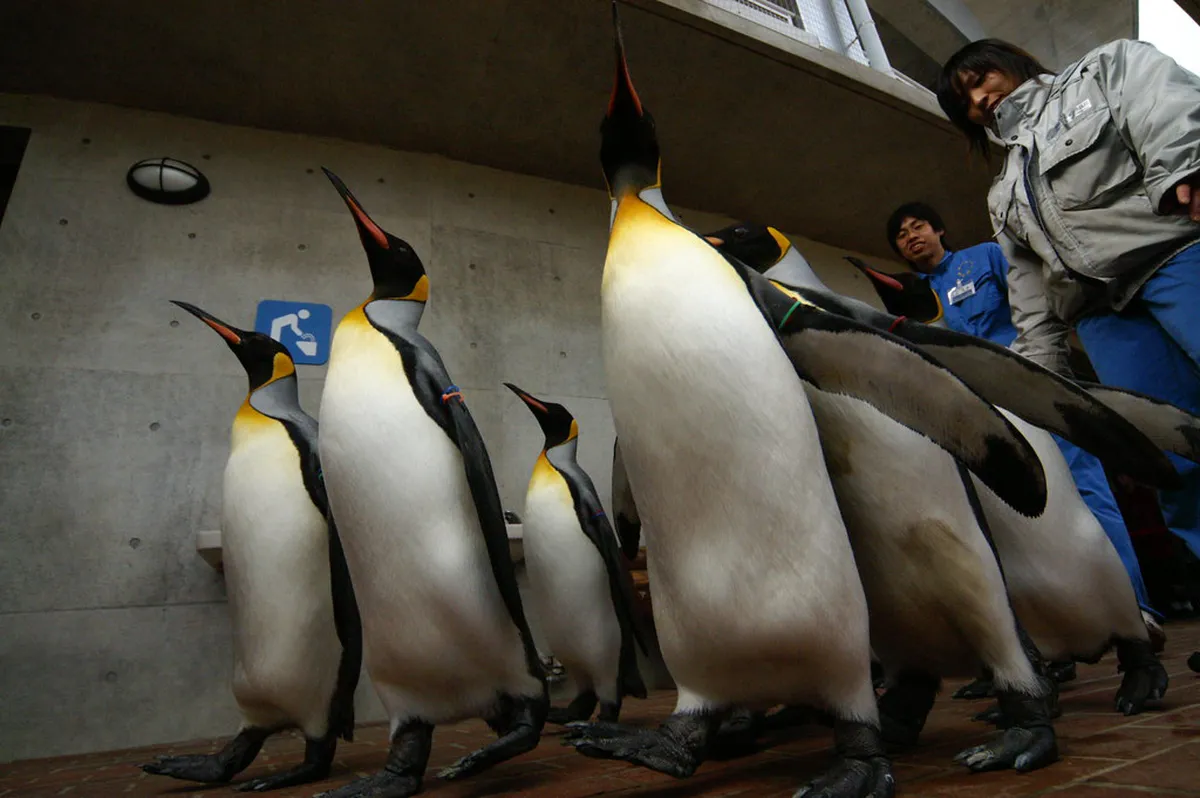
Admission is ¥510 for adults and ¥250 for ages 4 to 15; under 4 is free. Opening hours are 09:00 to 17:00 daily (last entry 16:30). The aquarium is located about 20 minutes by car or 35 minutes by bus (route 30 from Nagasaki Station bus terminal) from the city centre. Plan for a half-day with travel; pairing it with the Peace Park and Museum as a northern-Nagasaki day minimizes backtracking. Check the official aquarium site for the current penguin beach schedule before you go.
Stroller accessibility is good throughout the indoor exhibits. The outdoor beach area has some uneven surface near the water's edge but nothing that blocks access. This attraction works for all ages from toddler upward; it is the single most universally popular stop for families with children under eight.
4. Huis Ten Bosch
Huis Ten Bosch is a full-day theme park in Sasebo modeled on a Dutch city, with canals, windmills, VR attractions, seasonal flower festivals, and a nighttime illumination that draws visitors from across Kyushu. For families, the evening light show along the canal district is a genuine spectacle that children remember long after the trip. The park's seasonal flower events — tulips in spring, sunflowers in summer, illuminated roses in winter — give every visit a different character. A one-day passport costs approximately ¥4,500 for adults and ¥3,500 for children; the park operates from 09:00 to 21:00.
Getting there from Nagasaki Station takes approximately 90 minutes by JR Sasebo Line to Huis Ten Bosch Station, which sits directly at the park entrance. The journey is covered by the Japan Rail Pass. Wear comfortable shoes — the park is large enough that you will cover several kilometres on foot. Arrive by 10:00 to complete the daytime attractions before the afternoon crowds peak, then stay for the evening illumination if your children's stamina allows. A full guide to the park is covered in our Huis Ten Bosch guide.
5. Kujukushima Aquarium Umi Kirara
Umi Kirara sits inside Saikai National Park near Sasebo and showcases the marine life of the Kujukushima islands — 208 islands scattered across a bay of exceptional clarity. The jellyfish symphony room, a darkened chamber with floor-to-ceiling tanks, is consistently the exhibit that stops children in their tracks; the combination of ambient music, blue light, and drifting jellyfish creates a sensory experience that is unusually calm for an aquarium attraction.
Adult admission is approximately ¥1,010 and the aquarium opens 09:00 to 18:00 (to 17:00 in winter). Combining this visit with a short island cruise through the Kujukushima archipelago, departing from Kashimae Pier five minutes' walk away, turns the aquarium into a full coastal day. The boat tour runs approximately 50 minutes and is appropriate for children aged four and up. Stroller access inside the aquarium is smooth throughout.
6. Nagasaki City Dinosaur Museum
The Nagasaki City Dinosaur Museum opened on the Nomozaki Peninsula and overlooks the sea with a floor-to-ceiling window view toward Gunkanjima on clear days. The centrepiece is a full Tyrannosaurus rex skeleton in a main atrium, surrounded by interactive fossil displays and hands-on excavation stations designed for younger visitors. Entry is approximately ¥600 for adults and ¥300 for elementary school children.
The outdoor playground adjacent to the museum gives children room to decompress after the indoor exhibits — useful for energetic younger visitors. Opening hours are 09:00 to 17:00 daily. Getting there by car takes about 40 minutes from central Nagasaki; public transport options are limited, so this attraction suits families with a rental car or those combining it with a Gunkanjima viewing point stop on the Nomozaki Peninsula. Best for ages four to twelve.
7. Glover Garden
Glover Garden is an open-air museum of western-style mansions built by foreign merchants in the 1860s and 1870s, set on a hillside above Nagasaki harbour. The views across the port from the upper terraces are some of the best in the city. Adults pay ¥620; the garden opens 08:00 to 18:00 (to 21:30 in certain summer periods). Use the Glover Sky Road — a series of outdoor escalators running up the hillside from the base of the Ishibashi tram stop — to reach the top entrance, then walk downhill through the exhibits to save your legs.
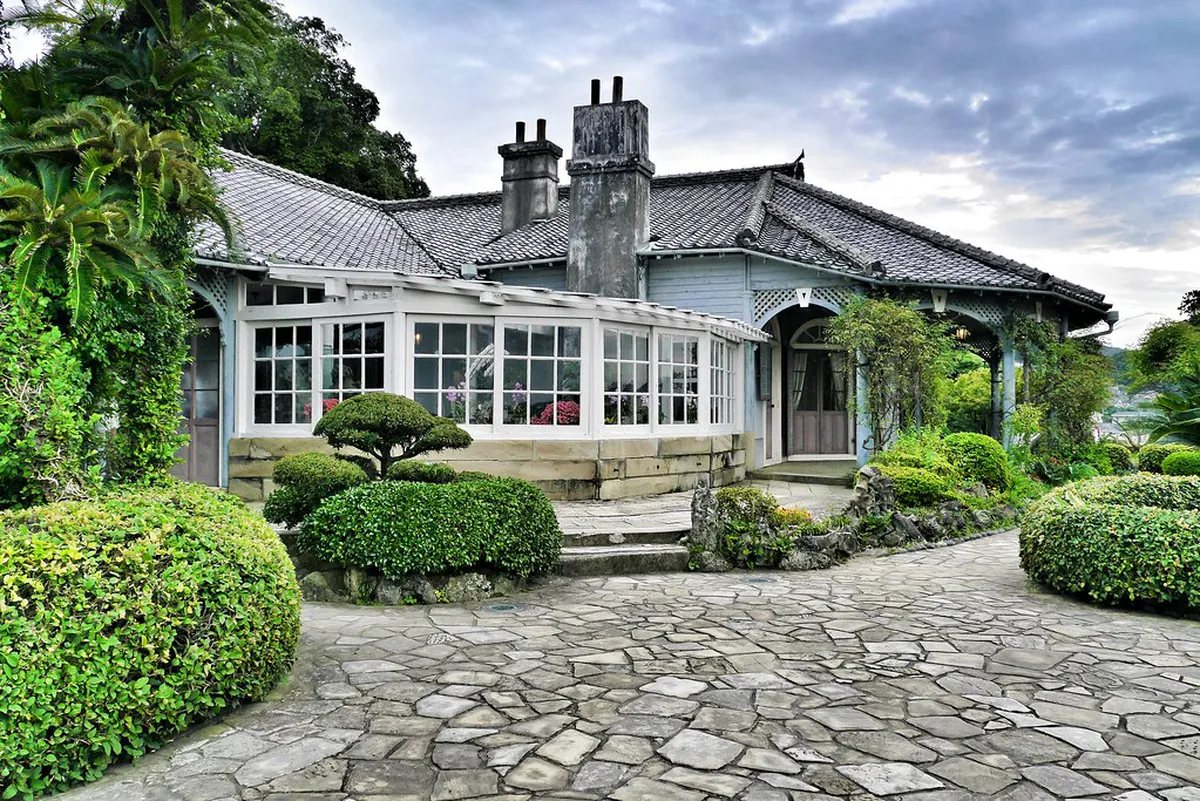
One detail that competitors consistently miss: the Nagasaki Traditional Performing Arts Center is included in the Glover Garden ticket and sits at the bottom of the garden. It displays the enormous festival floats used in the Kunchi Festival, Nagasaki's October matsuri. The floats are shaped like ships and dragons and are dramatic at close range; children almost universally find this room more interesting than the merchant houses above. Budget an extra 20 minutes at the bottom before exiting.
Look for the heart-shaped stones embedded in the paved path near the Madame Butterfly statue — a popular scavenger hunt for younger children. Stroller note: the garden interior has some cobblestone sections and stairways between levels. A compact stroller can manage the main path, but a baby carrier gives more flexibility. Our Glover Garden guide covers the full route and accessibility details.
8. Mount Inasa (Inasayama Park)
Mount Inasa holds one of Japan's three famous night views, alongside Hakodate and Kobe. The summit is reached by ropeway (¥1,250 round trip for adults, ¥630 for children; operating 09:00 to 22:00) or by a free shuttle bus from the Inasayama Park car park halfway up the mountain. The ropeway itself is an experience for children who have not ridden one before. Arrive 30 to 40 minutes before sunset to catch the transition from day view to illuminated harbour.
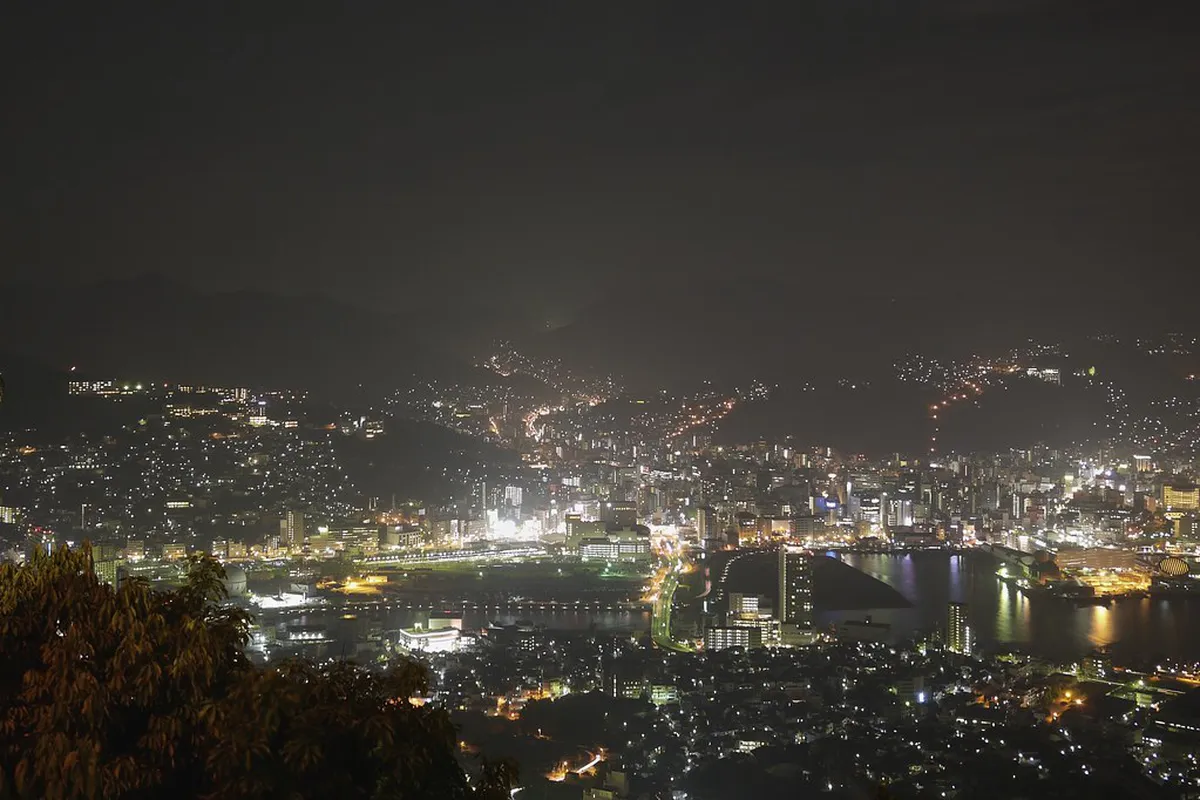
The park at the top has a playground area where children can burn energy while adults wait for the light to change. There is also a small animal enclosure with deer, though conditions in recent visits have been basic. The slope car that runs between the ropeway station and the park is an alternative for families who prefer a more grounded transport option. Stroller access works at the summit plateau but the ropeway gondolas are compact; fold a stroller before boarding. Tram access to the base is via Takaramachi or Akasako stops, then a short taxi or bus ride uphill.
9. Dejima
Dejima is a reconstructed trading post on what was originally a fan-shaped artificial island in Nagasaki harbour — for over 200 years (1641 to 1853), it was the only point of official contact between Japan and the western world. The current site rebuilds the warehouses, residences, and trading offices at original scale, with staff dressed in period Dutch and Japanese merchant costumes who are happy to answer questions and pose for photos. Entry is ¥520 for adults; the site opens 08:00 to 21:00 (last entry 20:40).
School-age children spend 60 to 90 minutes here more productively than at most Nagasaki historical sites because the physical scale is human — it is a small island with rooms you can walk through, not a large open-air park. The miniature model of the original island at the entrance is a useful orientation tool for explaining what Dejima was before the surrounding land was reclaimed. A visit to our Dejima history guide provides the background context that makes the reconstructed buildings meaningful rather than just pretty. Stroller access is smooth throughout the paved island paths.
10. Nagasaki Bio Park
Nagasaki Bio Park is a zoo built around open-enclosure contact feeding, meaning the barriers between visitors and animals are minimal or nonexistent in many zones. Capybaras, lemurs, red pandas, and kangaroos can be approached and hand-fed using food pellets purchased from dispensers throughout the park (100 yen per serving). The capybara hot spring in winter — where the animals soak in heated outdoor pools — is a famous seasonal draw. Adult entry is approximately ¥1,750; opening hours are 10:00 to 17:00 daily.
The Bio Park works for all ages but is particularly strong for children between four and ten who have not had close animal contact before. The walk-in lemur enclosure requires reasonable movement control from young children, so supervise closely. Bring several hundred yen in small coins for the pellet dispensers; they are distributed throughout the park and the kids will want them at every stop. Getting there requires a bus or car from central Nagasaki; the Bio Park bus runs from Nagasaki Station in approximately 60 minutes.
11. Nagasaki Shinchi Chinatown
Nagasaki's Chinatown is one of Japan's three historic Chinese quarters and the most authentically integrated into the city's everyday fabric. For families, it functions best as a food stop between other attractions rather than a standalone destination. Kakuni Manju — slow-braised pork belly in a soft rice-flour bun — is the street food to seek out; it is available from street stalls near the Chinatown gate and consistently stops picky eaters in their tracks. Castella cake shops cluster here and in the Glover Garden approach streets; most offer free samples.
Access is free; most restaurants serve lunch from 11:00 to 15:00. The Lantern Festival in late January or early February transforms the neighbourhood with thousands of paper lanterns and dragon processions — visually extraordinary for children and accessible from the street without tickets. Weekend afternoons are crowded and narrow. For a sensory-sensitive child, a weekday morning visit is more manageable. Our Chinatown food guide covers the specific stalls and restaurants worth queuing for. The nearest tram stop is Shinchi Chinatown on tram line 1.
12. Nagasaki Electric Tramway Museum
The Tramway Museum near the Urakami Depot is a small, low-cost stop that rewards children who have spent two days riding the city's trams and become attached to them. Historic streetcar models, technical displays, and photographs trace the network's history from its 1915 opening to the present. Entry is free or a nominal fee depending on the day; opening is limited to weekends and specific public holidays, so check schedules before building it into your itinerary.
The visit runs 30 to 45 minutes and works best as an add-on to the northern-Nagasaki day after the Peace Park. Train-enthusiast children aged five and up get the most from it. It pairs well with riding the tram one final time using the flat-fare day pass before returning to Nagasaki Station.
Tram and Stroller Logistics for Families
The Nagasaki Electric Tramway runs four lines covering most major attractions on a flat-fare system: ¥150 per adult ride, ¥80 for children aged 6 to 11, and free for ages 5 and under. A One-Day Tram Pass (¥600 adults / ¥300 children) is cost-effective if you plan to board more than four times. Buy the pass at the tourism information counter inside Nagasaki Station or consult JNTO transportation guides. The tram day pass also covers the Nagasaki Seaside Park route, making it easy to break up a heavy sightseeing day with waterfront walking time.
Full-size pushchairs are impractical on Nagasaki's older tram cars, which have narrow doors and limited interior space. Bring a compact, foldable stroller and fold it before boarding. The cobblestone Dutch Slope is also best skipped when stroller-dependent.
Stroller management on the trams requires a compact, foldable model. Older tram cars have narrow doors and small internal spaces; fold the stroller before boarding and keep it at your feet. Full-size pushchairs are genuinely impractical on peak-hour trams. The hillside attractions each have their own solution: Glover Garden has the Glover Sky Road escalator system, Mount Inasa has the ropeway, and the Peace Park complex is flat throughout. The Dutch Slope is beautiful but fully cobblestoned — skip it with a stroller-dependent child or park the stroller at the base and carry.
The ride-up, walk-down strategy is the operational rule for the whole city. At every hill attraction, identify the elevated entry point, take transport to reach it, and walk downhill to exit. This single habit eliminates the uphill leg that depletes young children and stresses stroller-pushing parents before the sightseeing has even begun.
Nagasaki by Age Group: What Works When
Toddlers (under 5) do best at the Penguin Aquarium beach, the Bio Park contact feeding zones, the Peace Park open lawns, and the Seaside Park waterfront. The tram rides themselves count as entertainment at this age. Keep daily attraction counts to two maximum; Nagasaki's hills accelerate fatigue faster than flat cities.
School-age children (ages 5 to 12) get the most from Dejima's reconstructed island, the Dinosaur Museum's hands-on stations, and the Glover Garden festival float room. The Atomic Bomb Museum is appropriate from around age 8 with adult guidance — the Peace Park works for younger siblings in the same visit. Huis Ten Bosch and the Bio Park work across this entire age range.
Teens engage most with the Atomic Bomb Museum at full depth (budget 90 to 120 minutes, not a compressed walk-through), the Gunkanjima boat tour from Nagasaki port, and the Hamanomachi Arcade shopping district which is navigable independently. Mount Inasa night view is a reliable teen anchor for the last evening of the trip.
Kid-Friendly Foods in Nagasaki
Nagasaki's food identity is a fusion of Japanese, Chinese, and Portuguese-Dutch influences that produces several dishes ideal for children. Nagasaki Champon is a mild noodle soup with soft vegetables and seafood in a creamy broth — it is not spicy, it is served in large shared bowls, and it is the city's most family-accessible meal. Ringer Hut, a champon chain with locations near Nagasaki Station and throughout the city, has consistent portions and a visual menu that works for picky eaters.
Castella cake is the consensus snack. The Portuguese-influenced sponge cake has a soft, dense texture and a straightforward sweetness that almost all children accept. Shops near Glover Garden and in Chinatown offer free samples before purchase. Turkey Rice — pilaf, Neapolitan spaghetti, and a pork cutlet served on one plate — is a local specialty that reads to children as a familiar Western meal assembled in an unexpected combination. It is a reliable dinner option when the group is tired of unfamiliar food.
Kakuni Manju from Chinatown street stalls is a sleeper hit: slow-braised pork belly in a cloud-soft steamed bun, eaten while walking. The texture melts and it is not messy. Chirin Chirin ice cream — a flower-shaped soft serve sold from pushcarts near Meganebashi — is a traditional Nagasaki treat that children notice before parents do.
Explore things to do in other cities
Frequently Asked Questions
Is Nagasaki easy to navigate with a stroller?
Nagasaki is manageable with a stroller if you stick to the waterfront and use elevators at hilly attractions. Some older trams are narrow, so a compact, foldable stroller is highly recommended for public transport. Avoid the cobblestone Dutch Slope to prevent a bumpy ride.
What age is appropriate for the Atomic Bomb Museum?
The museum is best suited for children aged eight and older who can understand the historical context. Younger children may find the atmosphere somber, but the facility is physically accessible for all ages. Use your discretion based on your child's sensitivity to heavy topics.
How many days do you need in Nagasaki with kids?
Two to three days is the ideal timeframe to see the main city highlights without rushing. This allows for one day of history and culture, one day for animals or theme parks, and a final day for relaxation. A longer stay is needed if you plan a day trip to Sasebo.
| Attraction | Adult Fee | Child Fee | Hours |
|---|---|---|---|
| Atomic Bomb Museum | ¥200 | ¥100 (ages 6–18) | 08:30–18:30 |
| Peace Park | Free | Free | Open 24/7 (daylight visit) |
| Penguin Aquarium | ¥510 | ¥250 (ages 4–15) | 09:00–17:00 |
| Huis Ten Bosch | ~¥4,500 | ~¥3,500 | 09:00–21:00 |
| Kujukushima Aquarium | ~¥1,010 | – | 09:00–18:00 (to 17:00 winter) |
| Glover Garden | ¥620 | – | 08:00–18:00 |
| Dejima | ¥520 | – | 08:00–21:00 |
| Mount Inasa Ropeway | ¥1,250 (return) | ¥630 | 09:00–22:00 |
| Nagasaki Bio Park | ~¥1,750 | – | 10:00–17:00 |
Nagasaki rewards families who come with a plan. The hillside geography that makes the city beautiful also makes it physically demanding, so the ride-up, walk-down rule and the One-Day Tram Pass are the two tools that determine whether a family day goes smoothly or not. By grouping the northern Urakami sites on one day and the central harbour sites on another, you cut transit time and keep young children in the game longer.
Whether your family is chasing penguins on the beach, tasting pork buns in Chinatown, or watching the harbour lights come on from Mount Inasa, Nagasaki delivers a quality of experience that few Kyushu cities match. Safe travels on your 2026 journey through this historic and vibrant harbour city.
Use our Nagasaki attractions hub to plan the rest of your trip.
For related Nagasaki deep-dives, see our Nagasaki 1 Day Itinerary: The Perfect Route and Nagasaki 3 Day Itinerary: 8 Essential Planning Steps guides.
Free: The Nagasaki Essentials guide
Top things to do, where to stay, a perfect day plan, getting around, and the best time to go — a Nagasaki mini-guide you can take offline.
You might also like


Continue reading
More guides you'll find useful