9 Best Ryokan in Nagasaki: Top Onsen & Traditional Stays (2026)
Discover the best ryokan in Nagasaki, from historic imperial retreats in Unzen to secluded garden inns in Hirado. Compare private onsens, spring qualities, and travel tips.
On this page
Nagasaki Prefecture offers two distinctly different ryokan landscapes. In the volcanic highlands of Unzen, milky sulfur springs rise from active fumaroles and have drawn guests since the Meiji era. Along the Hirado coast, clear hydrogen carbonate waters run through quiet garden inns far from the main tourist trail. Whether you prioritize imperial history, private bath access, or coastal scenery, this guide covers the best ryokan in Nagasaki for a 2026 visit. Fukuoka travelers often extend south to these mountain and coastal properties after visiting the Fukuoka region.
Our editors have cross-referenced current room availability and access routes to ensure all details below are accurate. If you are planning a broader Kyushu trip, consider pairing any of these stays with a nagasaki itinerary that builds in transit time between the city and the hot spring towns. Kumamoto and nearby hot springs are also worth exploring as regional day trips.
9 Best Ryokan in Nagasaki for a Traditional Stay
| Ryokan | Zone | Rate/person (from) | Spring type |
|---|---|---|---|
| Unzen Miyazaki Ryokan | Unzen Onsen | 30,000 JPY | Sulfur (milky white) |
| Saigetsuan | Hirado Onsen | 25,000 JPY | Hydrogen carbonate (clear) |
| Mt. Resort Unzen Kyushu Hotel | Unzen | 40,000 JPY | Sulfur |
| Unzen Fukudaya | Unzen | 18,000 JPY | Sulfur |
| Hanzuiryo | Shimabara coast | 80,000 JPY | Private villa |
| Nagasaki Seifu | Nagasaki City | 15,000 JPY | City harbor views |
| i+Land Nagasaki | Ioujima island | 18,000 JPY | Thermal complex |
Nagasaki's top ryokans spread across three distinct zones: the volcanic resort area of Unzen Onsen, the historic port island of Hirado, and properties on or near Nagasaki City itself. Each zone offers a different spring chemistry, landscape, and access difficulty. The nine properties below represent the strongest options across all three, ranked from most historically significant to most accessible for short stays.
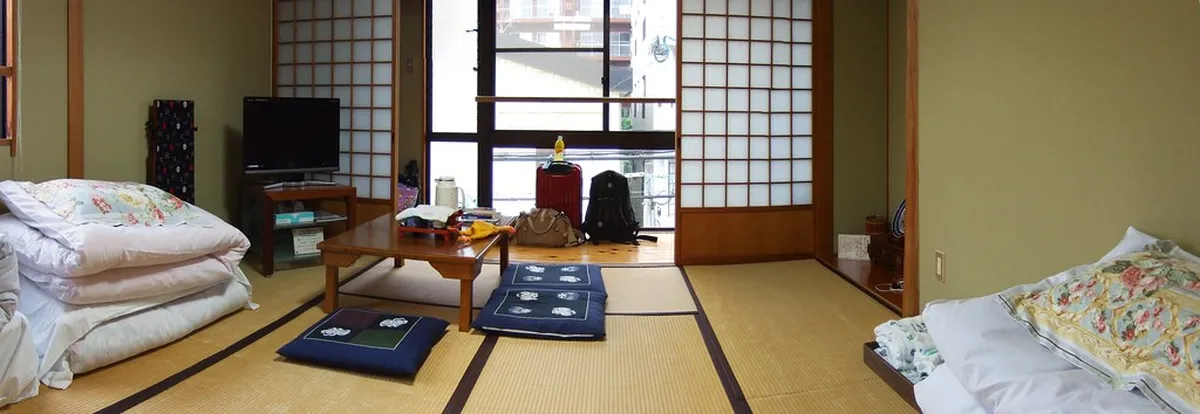
- Unzen Miyazaki Ryokan — Historic sulfur spring inn in Unzen Onsen, established 1929. Seven rooms with semi-open-air private baths; three rental private baths outside guest rooms. Emperor Akihito visited in 1990, Prince Akishino in 2012. Rates from 30,000 JPY per person.
- Saigetsuan — Garden ryokan in Hirado Onsen with 13 rooms. Nine rooms have semi-open-air hot spring baths; four have indoor baths. Hydrogen carbonate spring. The only large property in Nagasaki that explicitly welcomes tattooed guests in all private bath facilities. Rates from 25,000 JPY per person.
- Mt. Resort Unzen Kyushu Hotel — Boutique property in upper Unzen with private semi-open-air baths in every room. Modern kaiseki dining with local Ariake Sea seafood. Rates from 40,000 JPY per person.
- Unzen Fukudaya — Mid-range mountain lodge with multiple public baths and reservable private family baths. Rooftop tub with views of the volcanic peaks. Rates from 18,000 JPY per person, making it strong value for families.
- Hanzuiryo — Ultra-private villa compound near the Shimabara ferry terminal. Each villa has its own dedicated attendant and private onsen. The highest-priced option on this list, from 80,000 JPY per person.
- Nagasaki Seifu — Resort-style inn above the city with outdoor baths overlooking Nagasaki Harbor. Free shuttle from Nagasaki Station. Rates from 15,000 JPY per person, making this the best value for city-based visitors.
- Hotel Lorelei — Onsen hotel adjacent to Huis Ten Bosch theme park in Sasebo. Natural underground spring, accessible to day visitors. Rates from 12,000 JPY per person.
- Yukai Resort Premium Hotel Lanpu — Coastal family resort on Hirado Island with ocean-view communal baths and full buffet dining. Rates from 10,000 JPY per person including two meals.
- i+Land Nagasaki — Island resort on Ioujima with modern Japanese-style cottages and a large thermal complex. Free shuttle from Nagasaki Station (45 minutes). Rates from 18,000 JPY per person.
Unzen Miyazaki Ryokan: A Historic Imperial Retreat
The Unzen Miyazaki Ryokan opened in 1929 and has operated continuously as the most prestigious address in Unzen Onsen. Emperor Akihito visited in 1990 and his brother Prince Akishino followed in 2012, and the inn's creed — "the traditional Japanese spirit, natural hospitality" — has remained unchanged across that span. Thirty-nine rooms make it the largest traditional inn in the area, with seven rooms fitted with semi-open-air private baths and three additional rental private baths available outside guest rooms.
The spring water is drawn directly from the Unzen Jigoku fumarole field. It is a sulfur spring, milky white in color, known to benefit joint pain, skin conditions, and nervous disorders. The view from the inn's outdoor baths looks directly onto the steaming vents of Unzen Hell — an experience that is difficult to find at any other property in Japan. Guests report that the sulfur scent is strongest in the early morning, before the wind picks up from the valley. For a deeper dive into Japanese hot spring culture, the official tourism site offers comprehensive onsen science and health benefits.
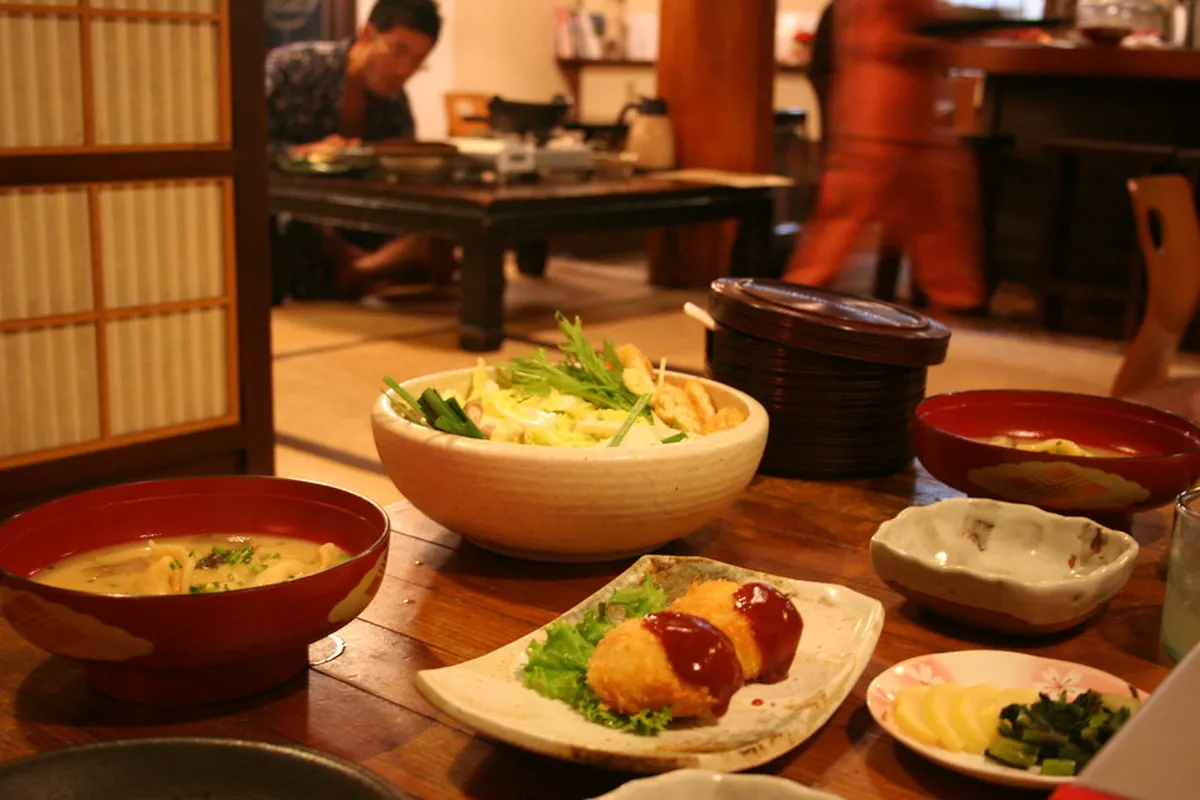
The kaiseki dinner features seasonal seafood from the Ariake Sea and vegetables grown on the Shimabara Peninsula. Service follows a strict omotenashi model, with attendants anticipating needs rather than waiting to be asked. Check the TripAdvisor reviews for Unzen Miyazaki Ryokan for current guest reports on room condition and meal quality.
Saigetsuan: Traditional Elegance in Hirado Onsen
Saigetsuan sits within a formal Japanese garden on the Hirado coast, offering 13 rooms, all with private hot spring baths. Nine rooms have semi-open-air baths facing the garden; the remaining four have indoor baths. The spring is a hydrogen carbonate type — clear water with a soft, silky texture that onsen enthusiasts describe as "bijin no yu" (water of beauty) for its effect on the skin. Unlike Unzen's acidic sulfur waters, hydrogen carbonate springs have a neutral to alkaline pH that is gentle enough for extended soaking.
A practical point that no other major review source highlights: Saigetsuan explicitly welcomes tattooed guests in all private bath areas. Large public gender-segregated baths are not available here at all — the entire facility operates on private bath access only, which removes the standard policy tension for tattooed travelers. This makes it the most straightforward choice for international visitors who might otherwise face restrictions at traditional communal bath properties.
The coastal menu draws on Hirado's reputation as a fishing port, with locally caught tai (sea bream) and ika (squid) featuring heavily in the evening kaiseki. The garden changes through the seasons — cherry blossoms in April, deep green moss through summer, and orange maple leaves from late October into November. See the TripAdvisor reviews for Saigetsuan to see recent photos of the garden and room layouts.
Onsen Spring Quality: Sulfur vs. Hydrogen Carbonate
Saigetsuan in Hirado is the only large property in Nagasaki that explicitly welcomes tattooed guests in all private bath facilities — the entire property operates on private-bath access only, removing the standard communal bath policy tension for international visitors.
Understanding spring chemistry is the most useful thing you can know before booking a ryokan in Nagasaki.
The region offers two fundamentally different types, each suited to different purposes. Unzen's sulfur springs are acidic (pH around 2–3), milky white, and carry a distinct eggy aroma. They are traditionally used to treat skin conditions like eczema, muscle and joint pain, and fatigue. The low pH also means soaking time should be kept to 15–20 minutes per session to avoid irritation, and the water should not be swallowed. The Japan Ryokan Association provides verified health claims and traditional bathing protocols across all member properties.Hirado's hydrogen carbonate springs are the opposite — clear, odorless, and mildly alkaline. The carbonate ions react with sebum on the skin surface to produce a natural cleansing and softening effect, hence the "water of beauty" reputation. These springs are gentler, appropriate for longer soaks, and better suited to guests with sensitive skin or children. The trade-off is less dramatic scenery: clear water in a garden setting versus steaming volcanic vents.
Private onsen options also differ between the two zones. At Unzen Miyazaki, semi-open-air baths are attached to seven specific rooms; if you want a private soak at a non-bath room, you reserve one of three rental baths. At Saigetsuan, every single room includes its own private bath, so there is no competition for access regardless of occupancy. If privacy is your primary criterion, Saigetsuan's structure gives you more certainty when booking.
Local Attractions: Unzen Hell and Coastal Sights
The Unzen Jigoku (Unzen Hell) fumarole field is a short walk from most Unzen ryokans and warrants at least an hour of exploration. The main loop trail passes more than 30 active vents, with the largest ones producing visible columns of steam and the smell of sulfur. The Nita-Toge Pass above the resort area offers hiking trails into Unzen-Amakusa National Park, with views extending across the Shimabara Peninsula on clear days. Shimabara Castle — a fully reconstructed five-tiered castle with a small museum — is a 30-minute drive south and pairs well with a ferry crossing to Kumamoto.
Guests staying in Hirado have access to a different set of landmarks. Ikitsuki Island, reached by bridge from Hirado Island, contains remnants of Japan's hidden Christian communities and a small museum on the fumie (image-trampling) persecution era. The Shiodawara Cliffs and Kawachi Toge Pass are short drives from Saigetsuan and make for half-day excursions before or after your morning soak. The Obae Lighthouse at the island's northern tip offers a coastal walk with views of Goto Island on clear evenings. Consider how these day activities fit into your broader nagasaki itinerary since the Hirado area requires at least two nights to do it justice.
For those staying near Nagasaki City itself — at Seifu or i+Land — the main attractions are within 40 minutes. The Atomic Bomb Museum and Dejima Dutch trading post are both accessible by tram from the city center. The night view from Mount Inasa ranks among Japan's three greatest, and the cable car operates until 22:00, making it easy to combine with an evening onsen session at a city-adjacent property.
Seasonal Advice: When to Visit Unzen vs. Hirado
Unzen is at its most spectacular in autumn. The resort sits at around 700 meters elevation, and the maple and beech trees surrounding the fumarole field peak in color from late October through mid-November. The contrast between the orange foliage and the white steam rising from the vents is the defining visual of the Shimabara Peninsula in autumn. Accommodation books out four to six weeks ahead during this window, so reserve early if traveling in October or November 2026.
Hirado's garden ryokans are best visited in spring. Saigetsuan's Japanese garden has its most photogenic period from late March through early April when cherry blossoms and azaleas bloom simultaneously against the coastal backdrop. Summer is humid but manageable, and the Hirado area is less crowded than Unzen during peak season. Winter visits are viable since all rooms have enclosed or semi-enclosed private baths, but the shuttle bus schedule to Saigetsuan from Tabira-Hiradoguchi station runs less frequently and requires advance booking — confirm your arrival time when reserving.
Travel Guide: Accessing Nagasaki's Top Ryokan Destinations
Unzen Miyazaki Ryokan is reached from Nagasaki Airport by a 50-minute bus to Isahaya Station, then an 80-minute Shimatetsu bus to the Unzen Onsen bus terminal (Oyama no Johokan), followed by a 5-minute walk. Total journey time from the airport is around two and a half hours without delays. From Nagasaki Station the bus to Isahaya is faster — about 35 minutes — before the same mountain bus connection applies. There is no direct train to Unzen; all access from outside the Shimabara Peninsula requires the bus leg.
The shuttle bus from Tabira-Hiradoguchi station to Saigetsuan must be booked in advance — contact the ryokan directly when making your reservation and confirm your train arrival time. Missing the shuttle means a taxi on rural roads at extra cost.
Reaching Saigetsuan in Hirado requires more planning. The standard route from Hakata (Fukuoka) takes 1 hour 55 minutes on the JR Limited Express to Sasebo Station, then 1 hour 20 minutes on the Matsuura Railway to Tabira-Hiradoguchi, and finally a 10-minute shuttle bus to the inn. The shuttle must be booked in advance — contact the ryokan directly when making your reservation and confirm your train arrival time. Missing the shuttle means a taxi, which adds cost and travel time on rural roads.
For guests combining a visit to Nagasaki City with either destination, the most efficient base is Nagasaki Station. From there, the day trip from Fukuoka route via the Nishi-Kyushu Shinkansen (to Nagasaki in 30 minutes from Shin-Tosu, or 23 minutes from Shin-Omura) offers a fast entry point to the region before branching out by bus or rental car toward the hot spring towns.
Frequently Asked Questions
Which ryokan in Nagasaki have private onsens?
Many top-tier ryokans like Mt. Resort Unzen Kyushu Hotel and Hanzuiryo offer guest rooms with private, semi-open-air hot spring baths. Others, such as Unzen Fukudaya, provide private family baths that can be reserved for exclusive use during your stay.
Is Unzen Onsen or Hirado Onsen better for a first-time visit?
Unzen Onsen is generally better for first-time visitors due to its iconic volcanic landscape and variety of stay options. Hirado is a fantastic secondary choice if you prefer a quieter coastal atmosphere and historic garden settings away from the main tourist crowds.
How do I get to Unzen Miyazaki Ryokan from Nagasaki Airport?
The most efficient route is taking an airport limousine bus to Isahaya Station, which takes about 30 minutes. From Isahaya, transfer to the Shimatetsu bus bound for Unzen, which will drop you at the central terminal near the ryokan entrance.
Finding the best ryokan in Nagasaki comes down to two decisions: spring type (sulfur or hydrogen carbonate) and access preference (volcanic highlands or coastal garden). Unzen Miyazaki Ryokan delivers imperial history and dramatic volcanic scenery. Saigetsuan offers total private bath access in every room with a more inclusive policy for tattooed guests. For a first trip, Unzen is the stronger starting point; for a second visit or a more contemplative stay, Hirado rewards the extra travel time.
See our Nagasaki attractions guide for the broader city overview.
For related Nagasaki deep-dives, see our Nagasaki to Fukuoka Transport Guide: 4 Best Ways to Travel and Unzen Onsen Guide: 10 Essential Spots and Travel Tips guides.
Free: The Nagasaki Essentials guide
Top things to do, where to stay, a perfect day plan, getting around, and the best time to go — a Nagasaki mini-guide you can take offline.
You might also like


Continue reading
More guides you'll find useful