Nagasaki to Fukuoka Transport Guide: 4 Best Ways to Travel
Plan your trip with our Nagasaki to Fukuoka transport guide. Compare the Nishi Kyushu Shinkansen, highway buses, and driving with costs, times, and booking tips.
On this page
The Nagasaki–Fukuoka corridor is one of the most-traveled routes in Kyushu. Since the 2022 launch of the Nishi Kyushu Shinkansen, the journey has become faster and more straightforward, though one mandatory transfer still catches many first-timers off guard. This 2026 guide covers every option — the Shinkansen route with its famous cross-platform transfer, the budget highway bus, driving, and the discount Trip Kippu ticket — with exact fares, times, and booking steps.
The distance between Nagasaki Station and Hakata Station in Fukuoka is roughly 150 km. Depending on which method you choose, that translates to 90 minutes by the fastest train or about 2.5 hours by bus. Explore the best nagasaki attractions before you head north, and budget half a day from door to door regardless of which transport you take. You can also consider Kumamoto as an alternative stop in the Kyushu corridor.
Nishi Kyushu Shinkansen and the Relay Kamome Transfer
The Nishi Kyushu Shinkansen (also branded as the Kamome Shinkansen) currently runs between Nagasaki Station and Takeo-Onsen Station in Saga Prefecture — a 30-minute high-speed leg. Because the full extension to Hakata has not yet opened, you complete the remaining 60 minutes on a separate Limited Express train called the Relay Kamome. One ticket covers both segments, and the combined journey takes approximately 90 minutes. The standard adult fare from Nagasaki to Hakata is ¥4,520 (~$30) for an unreserved seat, or ¥6,490 (~$43) with a reserved seat on the Shinkansen portion.
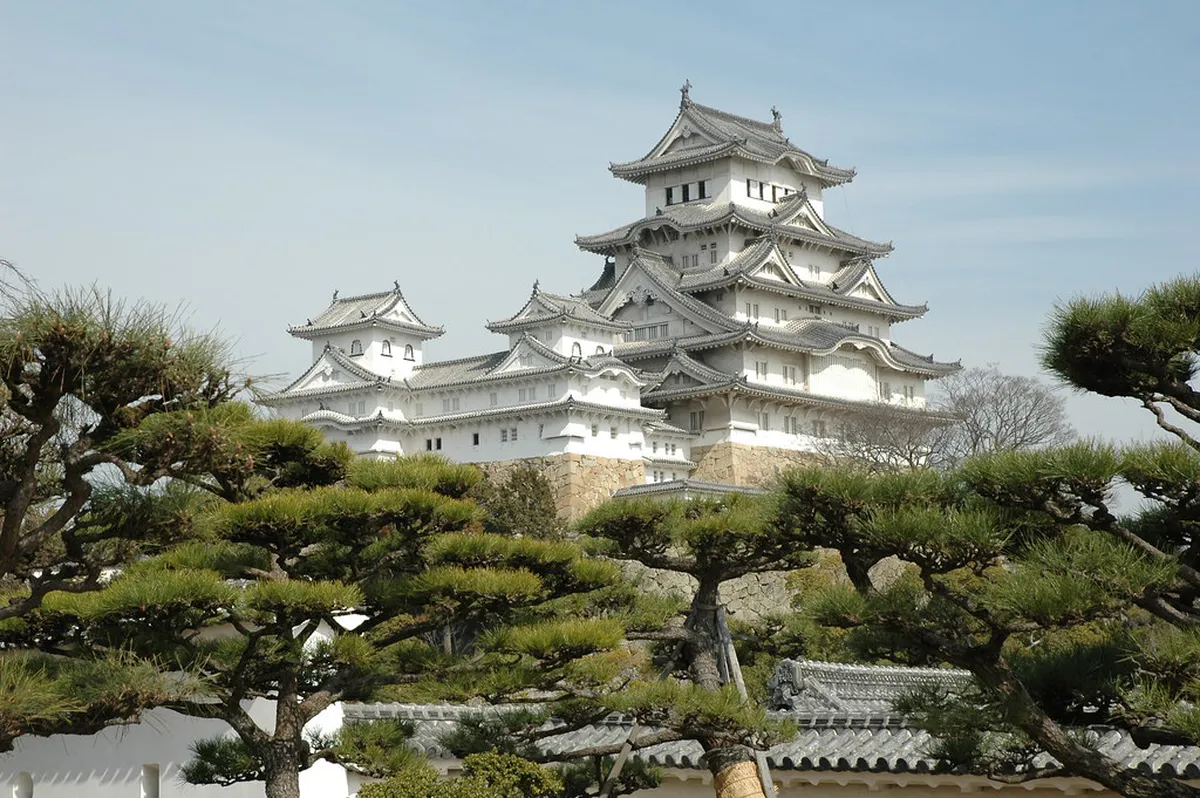
The transfer at Takeo-Onsen is far easier than it sounds. JR Kyushu designed it as a cross-platform interchange: your Kamome Shinkansen arrives on one side of the platform and the Relay Kamome Limited Express is already waiting on the opposite track. You simply cross the platform — ten steps at most — and board. The two trains hold for each other, and JR staff stand on the platform to guide passengers. The connection time is typically three minutes, which is all you need.
The cross-platform transfer at Takeo-Onsen is far easier than it sounds. Your Kamome Shinkansen arrives on one side of the platform and the Relay Kamome is already waiting on the opposite track — just ten steps across. JR staff stand on the platform to assist, and both trains hold for each other.
One important distinction that confuses first-time travelers: the Relay Kamome is a Limited Express, not a Shinkansen. It runs on standard JR gauge track from Takeo-Onsen to Hakata. Do not be alarmed if it looks and feels different from the bullet train you just stepped off — that is normal and expected. Both segments are covered by a single combined ticket, so there is nothing extra to pay or validate at the transfer point.
To book, use the JR Kyushu online portal or the green-screen ticket machines at Nagasaki Station. Reserved seats are strongly recommended during Golden Week (late April – early May), Obon (mid-August), and the New Year period. Unreserved cars are usually available at off-peak times and save a few hundred yen. Both the national JR Pass and the JR Kyushu Pass (Northern Kyushu variant or All-Kyushu variant) cover this entire route. See the JR Kyushu Official Route Information for the current timetable.
Highway Bus: The "Kyushu Go" Service and the Trip Kippu Discount
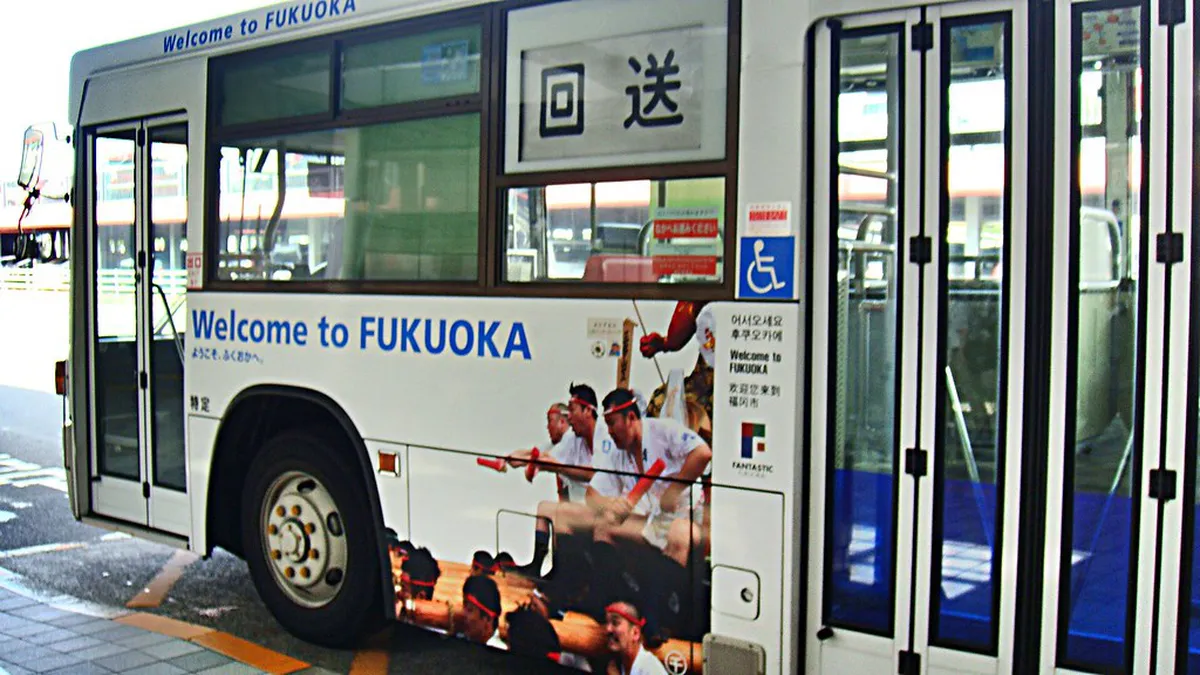
Kyushu Kyuko Bus operates the main highway bus service between Nagasaki and Fukuoka under the "Kyushu Go" brand. Buses depart from Nagasaki Station bus terminal and stop at Fukuoka Airport (both international and domestic terminals), Hakata Bus Terminal, and Tenjin Bus Center. Departures run every 15 to 30 minutes throughout the day. The standard adult one-way fare is ¥2,900 (~$19) from Nagasaki Station, though the fare from Fukuoka Airport is slightly lower at around ¥2,260 (~$15).
The bus offers three seat configurations that differ significantly in comfort. Budget travelers choose the 4-row layout — four seats across — which is the cheapest and most common option. The 3-row layout gives you three seats across, eliminating the middle-seat problem and providing more personal space for the 2.5-hour ride. A small number of departures use a 2-row luxury configuration with reclining seats comparable to a domestic flight. Check the seat type when booking online, as the fare varies by a few hundred yen depending on the layout.
The Trip Kippu discount cannot be collected on the bus itself or at a vending machine. You must answer a short online questionnaire before you travel, then present your confirmation email at the Fukuoka Airport International Terminal bus counter to collect the physical tickets.
The most useful discount on this route is the Trip Kippu (とりっぷきっぷ), issued by Nishitetsu Bus. It is a package of three one-way express bus tickets covering Fukuoka–Nagasaki, Fukuoka–Sasebo, and Fukuoka–Huis Ten Bosch, plus one regular bus connection, sold at a steep discount versus individual fares. The catch that most guides overlook: you must answer a short questionnaire before you travel — typically submitted online — and then present the confirmation email at the Fukuoka Airport International Terminal bus counter to collect your physical tickets. You cannot get the Trip Kippu on the bus itself or at a vending machine; it requires that counter pickup. See the Trip Kippu Official Page for the current questionnaire link and fare breakdown.
Buses are also the only option that drops you directly at Fukuoka Airport terminals without any subway transfer. If your onward journey from Fukuoka is a domestic or international flight, the bus is strictly more convenient than the Shinkansen even at the cost of an extra hour. Most buses now include free Wi-Fi and USB charging outlets. Luggage storage is in the undercarriage hold, with no size restrictions comparable to Shinkansen overhead bins — useful if you are traveling with large suitcases.
Driving Between Nagasaki and Fukuoka
The drive via the Nagasaki Expressway and Kyushu Expressway takes roughly two hours under normal traffic conditions. Toll fees for the one-way trip run around ¥4,500 (~$30), and you should budget an additional ¥1,500 (~$10) for fuel. Combined, driving costs more than the Shinkansen once you factor in Fukuoka's expensive central parking — most garages near Hakata Station and Tenjin charge ¥300–¥500 per 30 minutes with no daily cap. Renting a car in Nagasaki makes more practical sense than picking one up in Fukuoka, as Nagasaki is the harder city to navigate by public transport.

Driving is most justified when you want to stop along the way. The Nagasaki–Fukuoka highway passes near Ureshino Onsen in Saga Prefecture and the Nishiarita Porcelain Park, both worth a 30-minute detour. Winter roads through the mountain passes can require tire chains on rare cold nights; check Nexco West highway conditions before departure. The speed limit on the expressway is 80–100 km/h. Always carry your International Driving Permit alongside your home license.
Comparison: Which Transport Method Is Best for You?
The table below summarizes the key numbers for 2026. Fares are one-way adult prices; bus fares reflect the standard Nagasaki Station departure rate.
| Option | One-Way Fare | Travel Time | Transfers | Destination |
|---|---|---|---|---|
| Shinkansen + Relay Kamome (unreserved) | ¥4,520 (~$30) | ~90 min | 1 (Takeo-Onsen) | Hakata Station |
| Shinkansen + Relay Kamome (reserved) | ¥6,490 (~$43) | ~90 min | 1 (Takeo-Onsen) | Hakata Station |
| Kyushu Go Bus (4-row standard) | ¥2,900 (~$19) | ~2.5 hr | 0 | Hakata / Tenjin / Fukuoka Airport |
| Kyushu Go Bus (3-row comfort) | ~¥3,100 (~$21) | ~2.5 hr | 0 | Hakata / Tenjin / Fukuoka Airport |
| Driving (tolls + fuel) | ~¥6,000–8,000 (~$40–53) | ~2 hr | 0 | Flexible (parking extra) |
Choose the Shinkansen if time matters most or if you hold a JR Pass, in which case the route is covered at no extra cost. Choose the bus if you are on a tight budget, traveling with heavy luggage, or if Fukuoka Airport is your final stop. The Trip Kippu is the best value if you plan to visit both Sasebo and Huis Ten Bosch during the same Nagasaki Prefecture trip — it is not worth it for a single Nagasaki–Fukuoka leg alone. Drive only if you plan detours or are traveling as a group of three or more, which makes the per-person cost competitive with the train.
JR Pass holders should note that the national JR Pass and the JR Kyushu Pass cover both the Nishi Kyushu Shinkansen (Nagasaki–Takeo-Onsen) and the Relay Kamome Limited Express (Takeo-Onsen–Hakata). If you are visiting only Nagasaki and Fukuoka, a point-to-point ticket costs ¥9,040 return — a three-day JR Northern Kyushu Pass costs roughly ¥10,000 and makes sense only if you also travel to Oita, Kumamoto, or Beppu within the validity period. Check the JR Kyushu Pass options on Klook before buying at the station.
One practical note on luggage: the Shinkansen overhead bins accommodate standard carry-on bags, but large checked-style suitcases (over 160 cm in total dimensions) require a reservation for the designated luggage space near the last car. No such restriction applies on the highway bus, where all luggage goes in the undercarriage hold regardless of size. If you are traveling directly from the airport with checked bags, the bus removes the hassle entirely. Use your nagasaki day trip from fukuoka planning to decide whether speed or convenience wins for your specific itinerary.
Where to Stay in Nagasaki and Fukuoka
In Nagasaki, the most convenient base is the area around Nagasaki Station, which puts you a short tram ride from Glover Garden, Dejima, and the Peace Park. The Shinchi Chinatown neighborhood is another popular choice, placing you within walking distance of the harbor and Dejima Wharf. Budget travelers gravitate toward guesthouses in the Shianbashi entertainment district, which has the densest cluster of affordable accommodation and good food. Whatever your price point, staying within the tram network keeps transport costs low for sightseeing.
In Fukuoka, choose between Hakata Ward and Tenjin depending on your priorities. Hakata Ward — centered on Hakata Station — is the transport hub, where you arrive from Nagasaki and connect to the Fukuoka Subway, Shinkansen services to Hiroshima and Osaka, and Fukuoka Airport (just two subway stops away). Tenjin is Fukuoka's main shopping and dining district and slightly better for leisure travelers. Both areas have a wide range of hotels from budget business chains to large full-service properties. Book at least two weeks ahead during the Hakata Gion Yamakasa festival in July, which fills central Fukuoka hotels quickly.
Frequently Asked Questions
How long does the Shinkansen take from Nagasaki to Fukuoka?
The total travel time is approximately 90 minutes including the transfer. The Shinkansen leg takes 30 minutes, while the Relay Kamome takes 60 minutes. This is currently the fastest way to travel between the cities.
Is the JR Pass valid for the Nishi Kyushu Shinkansen?
Yes, the National JR Pass and the JR Kyushu Pass both cover this route. You can use them for both the Shinkansen and the Relay Kamome. Reserved seats can be booked for free at station offices.
What is the cheapest way to get from Nagasaki to Fukuoka?
The highway bus is the most affordable option at ¥2,900 / ~$19 per way. You can save more by purchasing a round-trip ticket or a 'Trip Kippu' pack. These are available at the Nagasaki bus terminal.
The fastest and most comfortable option in 2026 is the Nishi Kyushu Shinkansen combined with the Relay Kamome Limited Express — 90 minutes, one effortless cross-platform transfer, and covered by the JR Pass. The Kyushu Go highway bus is the budget pick at ¥2,900 and door-to-airport convenience. Drive only if you want the flexibility to stop along the Saga and Kyushu expressway corridor. Whichever you choose, check schedules in advance during Japanese national holidays and plan your nagasaki 1-day itinerary to sync with your departure time.
Use our Nagasaki attractions hub to plan the rest of your trip.
For related Nagasaki deep-dives, see our 9 Best Ryokan in Nagasaki: Top Onsen & Traditional Stays and Unzen Onsen Guide: 10 Essential Spots and Travel Tips guides.
Free: The Nagasaki Essentials guide
Top things to do, where to stay, a perfect day plan, getting around, and the best time to go — a Nagasaki mini-guide you can take offline.
You might also like


Continue reading
More guides you'll find useful