Unzen Onsen Guide: 10 Essential Spots and Travel Tips
Discover the best of Unzen Onsen in Nagasaki. Our guide covers 10 essential hot springs, hiking trails, tattoo policies, and how to reach this volcanic paradise.
On this page
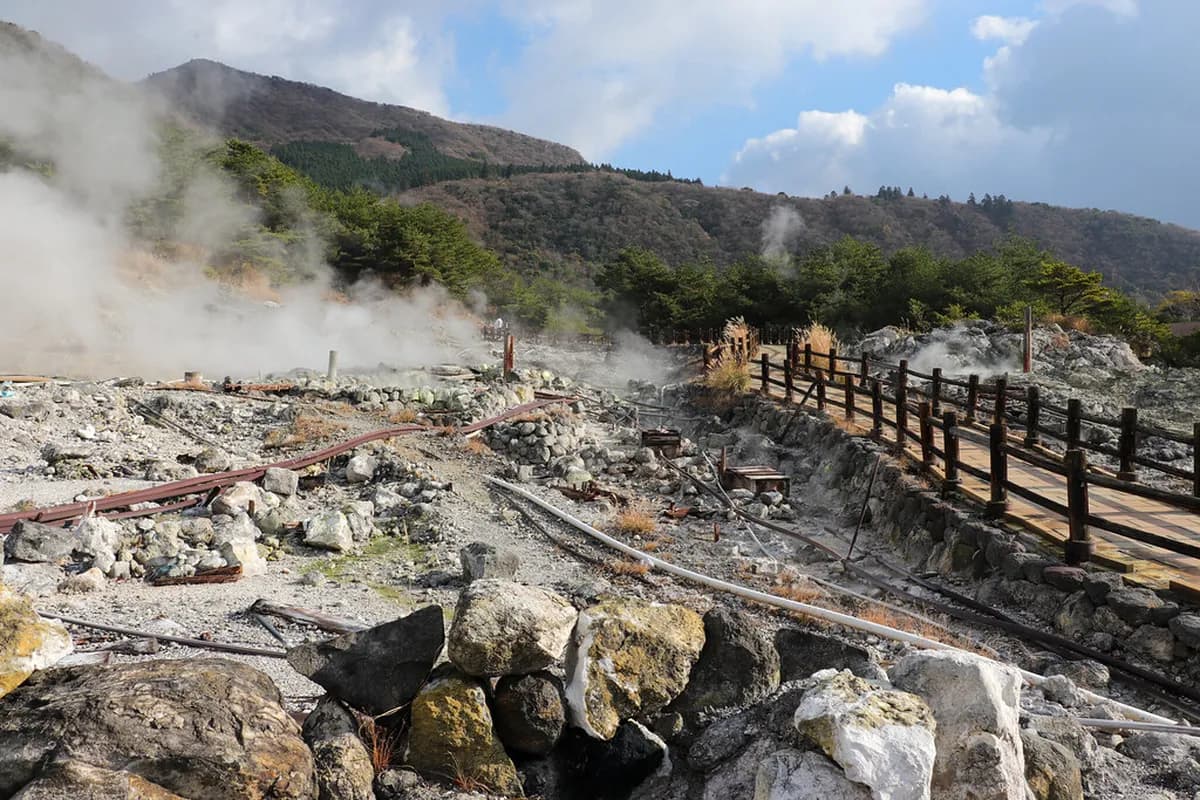
Unzen Onsen is a volcanic escape on the Shimabara Peninsula, about 100 km south of Nagasaki city. This unzen onsen guide nagasaki covers the steaming mountain baths, the salty seaside pools of nearby Obama Onsen, and the practical logistics to get between them. You will find everything from century-old wooden bathhouses to polished modern ryokans. The landscape is defined by dramatic steam clouds rising from the active geothermal fields known as Unzen Jigoku, the Unzen Hells.
The area sits inside Unzen-Amakusa National Park, which was Japan's first designated national park in 1934. The mountain springs sit at around 700 m altitude and produce cloudy, acidic sulfur water. The Obama Onsen coast below offers a completely different experience: clear sodium chloride water with a source temperature of 105 degrees Celsius, the hottest in Japan. Understanding the difference between these two water types is the first step to planning a good visit.
Many travelers combine Unzen with a Nagasaki Day Trip From Fukuoka: 1-Day Itinerary Guide or build it into a broader Kyushu itinerary. This guide covers specific baths, seasonal strategy, hiking trails, onsen etiquette, and transportation options so you can arrive prepared.
What to Know About Unzen Onsen
Unzen Onsen refers to the cluster of hot spring facilities inside the mountain village, but the wider area includes Obama Onsen on the coast below. The two zones produce chemically opposite water: the mountain springs are weakly acidic sulfur springs (pH around 4.3) that turn milky white from dissolved minerals, while the Obama coastal springs are clear sodium chloride springs that heat the body from its core and retain warmth long after you exit.
The Jigoku, or Hells, are the active geothermal vents that run through the center of the Unzen village. You will smell sulfur immediately on arrival, and clouds of steam rise from the cracked ground year-round. Several boardwalk paths weave between the vents and are free to walk. Most hotels tap directly into these geothermal sources, so even a standard room at a mid-range inn gives access to genuine hot spring water.
The Footbath square in the village center is a good orientation point when you arrive. The circular basin fits around 10 people and is free to use. A footbath towel costs 100 yen from the nearby vending machine if you come empty-handed. It is a low-stakes introduction to the water before committing to a full soak.
The Fiery History of Mount Unzen
Mount Unzen is an active composite volcano with a history that directly shapes the landscape you visit today. The most recent major eruption ran from 1990 to 1995 and produced a new lava dome called Heisei Shinzan, now the highest point in Nagasaki Prefecture at 1,486 m. The eruption killed 43 people, including volcanologists and journalists, and destroyed hundreds of homes in nearby Kumamoto. You can see this scarred peak clearly from many viewpoints across the peninsula.
The volcanic activity is what sustains the exceptional quality of the springs. The geothermal heat flows through porous rock layers, picking up minerals before it surfaces. This is why the discharge volume at Kojigoku alone reaches around 440 tonnes per day, and why the source temperatures in Obama Onsen hit 105 degrees Celsius. You can see preserved buildings swallowed by the 1990s pyroclastic flows at the Mount Unzen Disaster Memorial Hall in Shimabara, about 20 minutes by car from the onsen village.
The history also gives the region a particular cultural seriousness. Locals rebuilt and adapted after the eruption rather than leaving. This resilience runs through the nagasaki landmarks and communities of the entire peninsula. Visiting the memorial hall before or after your onsen day provides useful context for the scale of what happened here.
Unzen vs Obama: Which Water Type Suits You
Locals who have used both areas for generations tend to split their visits by season and purpose. Unzen mountain water works best in summer: the altitude keeps air temperatures around 5 to 8 degrees Celsius cooler than Nagasaki city, so a hot acidic sulfur soak feels especially refreshing. The milky-white water is traditionally associated with skin-smoothing benefits, relief from neuralgia, and fatigue reduction. Because the water is acidic, it also acts as a natural antibacterial soak.
Obama Onsen makes more sense in winter and early spring. The sodium chloride spring water holds body heat far longer than sulfur water, which means you stay warm for an hour or two after you leave the bath. This "core warming" effect is well-suited to cold evenings when you will be walking back to accommodation. The clear water and ocean-edge location also appeal to visitors who find the sulfur smell of the mountain baths too strong.
If you have one full day, a practical circuit is to arrive in Unzen for a morning soak and a Jigoku walk, drive or take the bus down to Obama for lunch and the Hot Foot 105 footbath, then finish with a sunset soak at Nami no Yu Akane. The altitude drop from Unzen to Obama is about 700 m and takes around 30 minutes by car. This loop is not covered in most single-destination guides but is the route that residents and repeat visitors actually use.
Kojigoku Onsen (小地獄温泉館)
Kojigoku Onsen is one of the most historically significant public bathhouses in Unzen. It was first opened in 1731 and the current wooden building sits directly over its own spring, which discharges around 440 tonnes of fresh hot water per day. The water is a simple sulfur spring with a pH of 4.3, turning a milky-white color from dissolved minerals. It smells strongly of matchsticks and will turn silver jewelry black if you leave it on.
The interior is deliberately simple: raw stone floors, unpainted timber walls, and a large communal pool with no jet massage or added features. The bath temperature runs hot, typically above 42 degrees Celsius. A local tip is to stir the water from below with your hand before entering, which mixes the cooler water near the bottom with the surface layer and makes the temperature more manageable.
Entry costs 450 to 500 yen and includes use of the changing room. Small towels are available for purchase at the reception desk.
The free Footbath Square in the Unzen village center fits around 10 people and is a good low-stakes introduction to the water before committing to a full soak. A footbath towel costs 100 yen from the nearby vending machine. The Obama Onsen Hot Foot 105 oceanside footbath is also free and 105 metres long — the longest in Japan.
Hoshino Resorts KAI Unzen
For those seeking a premium experience, Hoshino Resorts KAI Unzen offers modern luxury within the village. This ryokan blends traditional Japanese hospitality with contemporary design and its own private hot spring baths exclusive to staying guests. The sulfur water is the same as at the public houses — drawn from the same geothermal system — but the setting, service, and food presentation are considerably more refined. It is widely considered one of the 9 Best Ryokan in Nagasaki: Top Onsen & Traditional Stays for a high-end overnight stay.
The resort also runs cultural activities that contextualize the onsen experience: short sessions on the Jigoku geology, explanations of the volcano's history, and sometimes local craft workshops. International travelers who are new to onsen etiquette often find the guided approach more comfortable than arriving at a standalone public bath without context. Staff can advise on tattoo cover options and private bath availability before you check in.
The main alternative at the public end of the spectrum is Satonoyu, the communal public bath in the village center. Satonoyu is one of Unzen's oldest public baths and uses the same sulfur water as the ryokans at a fraction of the cost. It opens early in the morning and stays open into the evening, which makes it practical for a quick pre-breakfast or post-dinner soak. The two options — KAI Unzen and Satonoyu — bracket the full range of experiences the village offers. Book KAI Unzen several months in advance for autumn and spring periods.
Michinoo Onsen (道の尾温泉)
Michinoo Onsen sits in a suburban district north of Nagasaki city, closer to the urban center than the mountain baths of Unzen. It is a neighborhood bathhouse in the traditional sense: a modest two-story building surrounded by rice fields and hills, with a tatami rest room, massage chairs, drinks vending, and a small library on the ground floor. The water is mildly alkaline, the opposite of Unzen's acidic sulfur springs, and feels slippery and soft on the skin — a quality often described as "beauty water."
The main bath is medium-sized with water jet massage, and there is a steam room. The atmosphere is firmly local: regular patrons arrive after work or before it, and the pace is unhurried. It is not a tourist destination in the way that Kojigoku or Fuku No Yu are, which is precisely its appeal if you want to experience a bathhouse as Nagasaki residents actually use it. The facility has an English-language website at michinoo-onsen.jp, which is uncommon for a neighborhood onsen of this size.
Michinoo is on the JR Nagasaki Main Line (Omura Bay Line), served by local trains. The station is about 500 m from the bathhouse, or you can take a bus heading north on Highway 205 and walk a short distance along a residential road. A free shuttle van also runs from Sumiyoshi Shrine. Management at Michinoo is flexible on tattoos at their discretion — enquire at reception on arrival. It fits naturally into a Nagasaki Itinerary for First-Timers in 2026 as an early evening stop on your way back from a day trip to Unzen.
Inasayama Onsen Fuku No Yu (稲佐山温泉ふくの湯)
Inasayama Onsen Fuku No Yu is a large commercial onsen complex on the slopes of Mount Inasa, best known for its outdoor baths with a panoramic view of Nagasaki harbor. Visiting at night gives you an outdoor soak while looking at what is frequently listed among the world's top three night views. The facility runs a free shuttle bus every 30 minutes from several points near Nagasaki Station, which eliminates the need for a car or taxi.
A single entry ticket costs around 800 yen and covers the entire complex for the day: indoor pools, outdoor tubs, a carbonated spring bath, a salt sauna, a steam room, wooden individual tubs, and a shallow "sleeping bath" where you can lie flat. The downstairs area includes a large tatami rest room and a self-service restaurant. The scale and variety make it suited to families or groups with different preferences for temperature and bath type.
The water is a hot spring source but some of the pools are also artificially carbonated or treated with chlorine. The chlorine smell is noticeable in the main communal pool. The outdoor terrace baths are less affected. Tattoo policy here applies to the public baths — they are not permitted — but private family baths are available for an additional charge. Check the official Fuku No Yu Nagasaki website for current shuttle bus timetables and prices before your visit. Arrive just before sunset for the best combination of light and temperature.
Nami no Yu Akane and the Obama Onsen Coast
Nami no Yu Akane (Hot Water of the Wave, Dark Red) is a reserved private outdoor bath at Hotel Orange Bay in the Obama Onsen district. It sits on the seaward edge of the property, so close to the ocean that at high tide the gap between the bath rim and the sea surface is around 20 cm. The name references the deep red color the sky and sea turn at sunset over Tachibana Bay. The water is sodium chloride spring water: clear, warm, and excellent for retaining body heat after the bath.
Because it is reserved for private use, you book a time slot rather than entering a communal pool. This makes it suitable for travelers who have tattoos, couples, or anyone who prefers a quieter experience than a public facility. The sunset timing between October and March is particularly good — the sun drops into Tachibana Bay directly in front of the bath. You can find current booking information and pricing at the Hotel Orange Bay Akane page.
While in the Obama area, the Hot Foot 105 footbath is a worthwhile stop before or after. It is a 105-meter-long oceanside footbath — the longest in Japan — and reflects the 105-degree Celsius source temperature of the local springs. Entry is free. A large steam pot next to the footbath lets you cook eggs in about 8 minutes or sweet potatoes in about 20 minutes using geothermal heat. Eggs and sweet potatoes are available for purchase on-site if you come empty-handed. The Wakihama public bath is a short walk away and was founded in 1937; it opens from 05:00 and attracts regular morning visitors who have used it daily for decades.
- Obama Onsen quick reference: Nami no Yu Akane (private reserved outdoor bath, sunset views, sodium chloride water); Wakihama hot spring (public bath, open from 05:00, Showa-era atmosphere); Hot Foot 105 (free, 105 m oceanfront footbath with geothermal cooking).
Onsen Etiquette for First-Timers
Japanese onsen follow a consistent set of unwritten rules that apply whether you are at a neighborhood bath in Michinoo or a ryokan in Unzen. The core rule is to wash thoroughly at the shower station before entering any communal pool. Every onsen provides low plastic stools with shower heads; use them to scrub your entire body including your hair, then rinse the stool with hot water before leaving it for the next person. Shampoo and soap are almost always provided.
Bring a small tenugui cloth towel. It is the only towel permitted inside the bathing area. Keep it folded on the edge of the pool or on top of your head — do not let it touch the water. A slightly larger microfibre towel is useful for drying off in the changing room. If you come without either, most facilities sell towels at the entrance vending machine or reception desk for 100 to 200 yen.
Bring cash. Almost all payment is handled via vending machines, and many smaller public baths do not accept cards. 500-yen coins in particular are useful at coin-locker changing rooms. Remove all jewelry before entering sulfuric acid baths — Unzen's acidic water will blacken silver within minutes. After bathing, the traditional practice is not to rinse off, since the mineral water is considered beneficial for skin. At heavily chlorinated facilities like Fuku No Yu, a quick rinse may feel more comfortable. Post-bath, coffee-flavored milk from the vending machine is a time-honored Japanese ritual worth trying at least once.
The Best Hiking Trails on Unzen
Unzen is a serious hiking destination as well as an onsen town. The trails around Mount Fugen wind through a volcanic landscape with steaming vents and seasonal wildflowers that change dramatically by month. Most hikers begin at Nita Pass, accessible by bus or car. From there, a gondola ropeway runs to the upper ridges, or you can hike the well-marked trails on foot. The hike to the summit of Mount Fugen and back from Nita Pass takes three to four hours and is rated moderately difficult. Sturdy walking shoes and a waterproof layer are sufficient for most conditions.
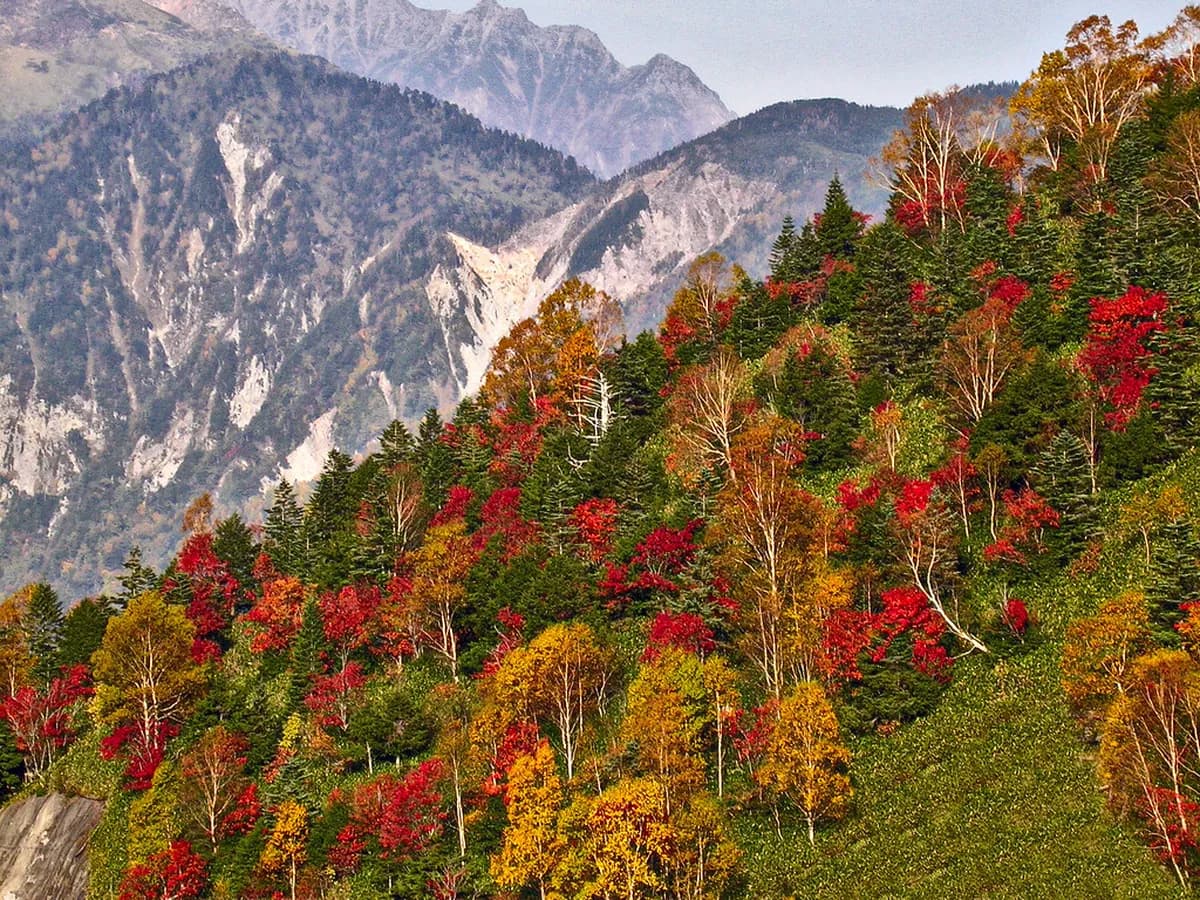
The late May window is when Miyama Kirishima azaleas bloom across the upper slopes, covering the ridges in a dense pink-and-red carpet. This is Unzen's most photographed seasonal event and draws large crowds on weekends from late May into early June. Autumn foliage runs from late October into mid-November and turns the hiking trails orange and red. Winter brings rime ice on the tree branches above 600 m, which is visually dramatic but requires crampons or microspikes on icy sections.
The park's ecosystem is part of the broader nagasaki culture of coexistence with volcanic terrain. You may spot the Japanese serow — a mountain goat-antelope endemic to Japan — on the less-trafficked trails, as well as various migratory raptors during spring and autumn. The Unzen-Amakusa National Park office near the ropeway base station has current trail condition reports and a simple map in English.
How to Get to Unzen Onsen
| Route | Journey Time | Notes |
|---|---|---|
| Direct Shimatetsu bus from Nagasaki Station | ~100 min | Coastal views; check timetable — afternoon departures thin out |
| JR to Isahaya + Shimatetsu bus transfer | Varies | More flexible — trains to Isahaya are more frequent |
| High-speed ferry Kumamoto → Shimabara + bus | ~30 min ferry | Fastest cross-Kyushu option; scenic Shimabara coastline view |
| Rental car via Route 57 | ~1.5 hr from Nagasaki city | Most flexible for Unzen–Obama loop; steep/winding above 400 m |
The most common public transport route from Nagasaki city is a Shimatetsu bus from Nagasaki Station (Ken-ei Bus Terminal). The journey takes around 100 minutes and offers coastal views along the way. Buses do not run continuously — check the Nagasaki Ken-ei Bus timetable in advance as departures thin out in the afternoon. The alternative is a JR train to Isahaya Station, then a Shimatetsu bus for the remaining mountain section; this route has more flexibility because trains to Isahaya are more frequent than direct Unzen buses.
From Kumamoto or Fukuoka, a high-speed ferry from Kumamoto Port to Shimabara Port is the fastest cross-Kyushu option. The ferry takes around 30 minutes and connects directly to the Shimabara Railway, which runs along the peninsula coast toward the Unzen area. Local buses or a taxi cover the final stretch from Shimabara up the mountain to the onsen village. The ferry approach also gives you a close-up view of the Shimabara coastline shaped by the 1990s eruption.
Driving a rental car gives maximum flexibility for the Unzen-to-Obama loop described earlier in this guide. Cars are available from several rental offices around JR Nagasaki Station. The road up to Unzen via Route 57 and prefectural roads is well-maintained but steep and winding above 400 m. In winter, check with the car rental agency about snow or ice conditions before ascending. A SUNQ Pass covers unlimited bus travel across Kyushu (including Nagasaki Prefecture routes) for three or four days and is worth calculating against individual ticket prices if you plan to use buses extensively.
- Key transport options: Direct Shimatetsu bus from Nagasaki Station (100 min); JR to Isahaya then bus transfer; high-speed ferry from Kumamoto Port to Shimabara Port (30 min) then local bus; rental car via Route 57 (around 1.5 hours from Nagasaki city).
Tattoos in an Onsen: What to Expect in 2026
Tattoo policies vary widely across Unzen and Nagasaki facilities. Inasayama Fuku No Yu's public baths prohibit tattoos, though private family baths are available for an extra charge. Kojigoku Onsen is generally more relaxed for smaller tattoos. When in doubt, book a ryokan with an in-room or private bath to bypass communal policies entirely.
Tattoo policies vary significantly across the facilities in this guide, and understanding the specifics before you book avoids awkward situations on arrival. The default in Japan remains that communal public baths prohibit visible tattoos. In practice, the Unzen and Nagasaki area is more relaxed than large-city facilities, but the policies are not uniform.
Kojigoku Onsen has a relatively relaxed stance — many visitors with smaller tattoos report no issues. Michinoo Onsen permits tattoos at manager's discretion; contact the facility beforehand or enquire at reception on arrival. Inasayama Fuku No Yu's public baths do not permit tattoos, though signs are inconsistently enforced; private family baths are available for an additional charge and bypass the restriction entirely. Nami no Yu Akane at Obama Onsen operates as a private reserved bath, so the communal policy does not apply. Satonoyu in the Unzen village and Wakihama in Obama are small traditional public baths where the situation is best confirmed directly with staff before entering.
The safest universal strategy for tattooed travelers is to book a ryokan with an in-room or private bath, or to reserve private bath slots at facilities that offer them. Understanding local etiquette matters beyond just tattoos — always wash before entering, keep the tenugui towel off the water surface, and follow the lead of locals in the bathing room. For more on onsen etiquette, the broader context of nagasaki culture and bathing customs is useful background reading. If a public notice says no tattoos, ask at the front desk whether waterproof stickers are acceptable for smaller designs.
Frequently Asked Questions
Is Unzen Onsen safe to visit given the volcanic activity?
Yes, Unzen Onsen is very safe for tourists. The Japan Meteorological Agency monitors the volcano 24/7 and provides instant updates. You can enjoy the hot springs and hiking trails with confidence. Always follow local signs and stay on marked paths in the geothermal areas.
What is the best time of year to visit Unzen?
Autumn is the most popular time due to the vibrant red and orange maple leaves. Spring is also beautiful when the azaleas bloom across the mountain slopes. Winter offers a quiet atmosphere and the chance to see 'rime ice' on the trees. Summer is cooler than the city, providing a nice escape from the heat.
Are there any free hot springs in Unzen?
While most full-body baths charge a small fee, there are several free footbaths available. The Ashiyu Square in the village center is a popular free spot for visitors. You can also find free footbaths along the coast in nearby Obama Onsen. These are great for a quick rest during your travels.
How much does it cost to visit a public bath in Unzen?
Public baths are very affordable, usually costing between 400 and 600 yen. Luxury ryokans may charge more for day-use access to their facilities. Most places require a small extra fee if you need to rent a towel. It is one of the most budget-friendly ways to experience authentic Japanese culture. Learn more about Japan travel.
Unzen Onsen rewards travelers who treat it as more than a single hot spring stop. The combination of acidic mountain sulfur baths, salty oceanside pools at Obama, world-class hiking through volcanic terrain, and the sobering history of the 1990s eruption makes it one of the most layered destinations in Kyushu. Whether you spend one day or three, this unzen onsen guide nagasaki gives you the framework to move through the area with purpose rather than luck.
Start by choosing your water type — sulfur for skin benefits and summer cooling, sodium chloride for winter warmth retention. Layer in a morning at Kojigoku, an afternoon on the Obama coast at Hot Foot 105 and Nami no Yu Akane, and end with a post-bath meal in Nagasaki city. The steaming hells of Unzen will be waiting every time you return.
Combine this with our main Nagasaki attractions guide for a fuller itinerary.
Free: The Nagasaki Essentials guide
Top things to do, where to stay, a perfect day plan, getting around, and the best time to go — a Nagasaki mini-guide you can take offline.
You might also like



Continue reading
More guides you'll find useful