Nagasaki Castella Cake Guide: Top 4 Shops & Essential Tips
Discover the best Nagasaki castella cake with our guide to the top 4 shops, history, flavors, and storage tips for this iconic Japanese treat.
On this page
Nagasaki offers a culinary landscape shaped by centuries of international trade and cultural exchange. Among its most famous treasures is the golden, moist sponge cake known as castella.
This iconic sweet serves as a bridge between European origins and refined Japanese craftsmanship. You will find these rectangular cakes displayed in elegant boxes throughout the city's historic districts.
Our nagasaki castella cake guide explores the best shops, hidden history, and technical secrets behind this treat. Understanding the nuance of its texture helps you appreciate every bite during your visit.
Whether you are a dedicated foodie or a curious traveler, this guide ensures you find the perfect souvenir. Prepare to discover why this simple sponge cake remains a cornerstone of local identity.
What Is Nagasaki Castella?
Castella, or kasutera in Japanese, is a specialty sponge cake made from flour, sugar, eggs, and starchy syrup. Unlike Western cakes, it contains no butter or oil, which produces a unique bouncy density rather than the crumble of a pound cake.
The cake is classified as wagashi — traditional Japanese confectionery — even though its roots are Western. Its deep, complex sweetness comes from mizuame, a clear liquid sweetener historically made from rice starch, which keeps the crumb moist for days after baking.
Many visitors enjoy exploring the Nagasaki Chinatown Food Guide: 8 Essential Dining Tips & Spots to see how castella fits into the broader local food scene. The absence of dairy means the natural flavor of high-quality eggs takes center stage — top producers source their eggs specifically for yolk richness and color.
Authentic versions are baked in large wooden frames, which insulate the batter evenly and maintain consistent moisture throughout the loaf. This traditional method is why the texture remains soft from edge to center, even days after purchase.
The History of Nagasaki Castella
The history of Nagasaki castella begins in the 16th century when Portuguese missionaries arrived on the northwest coast of Kyushu. They brought a sponge-like bread called Pão de Ló, which served a practical maritime purpose: the cakes stored well at sea and were offered as gifts to build goodwill with local communities.
The name "castella" derives from "Pão de Castela," meaning bread from the Kingdom of Castile in Spain. Japanese bakers over several generations adapted the recipe — replacing butter with mizuame, switching to bread flour for density, and abandoning dairy entirely — until the result bore little resemblance to its European ancestor.
You can learn more about this era by reading the Nagasaki Dejima History Guide: A Complete Visitor's Manual, which covers how the port island of Dejima became Japan's only conduit for foreign trade and culture during the Edo period (1603–1867). Even after the Portuguese were expelled from Nagasaki in 1639, the castella remained — adopted by the Dutch, the shogunate, and eventually the Japanese public.
The cake's elite status solidified quickly. During the Edo period it was presented as a formal gift to feudal lords and the shogun. Commodore Matthew Perry was reportedly served castella during negotiations at Yokohama in 1854. Studying Nagasaki culture reveals just how deeply these international connections shaped the city's culinary identity.
Features of Nagasaki Castella: Texture and Zarame Sugar
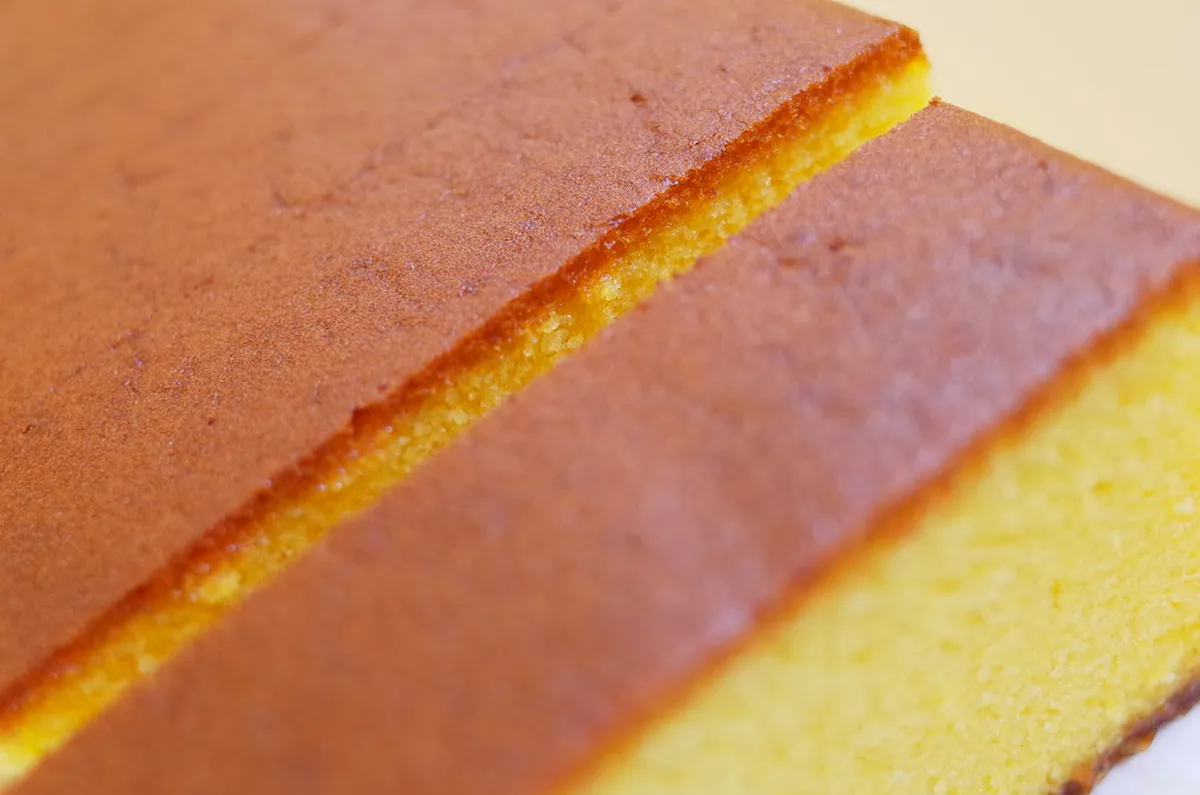
The hallmark of a premium castella is the layer of zarame — coarse brown sugar crystals — found at the bottom of the loaf. Bakers add the crystals to the batter before it goes into the oven, and the heavier granules naturally sink during the long baking process. The result is a crunchy, caramel-edged base that contrasts sharply with the airy crumb above it.
Top-tier bakeries use the betsudate method, which means egg whites and yolks are whisked completely separately before being folded together. According to the Fukusaya making process, this manual technique creates finer air bubbles than machine mixing can achieve, producing a texture that is simultaneously fluffy and moist. Fukusaya still performs this step by hand at its Nagasaki atelier.
Baking temperature control is equally critical. The surface must reach high enough heat to caramelize into a dark brown skin, which provides a mild bitterness that offsets the sweet interior. The wooden frame slows heat penetration on the sides, letting the center bake slowly without drying out.
When evaluating a castella at the shop, look at the bottom: dense, evenly distributed zarame crystals that hold their crunch are a reliable indicator of quality. Cheaper versions use fine-ground sugar that dissolves before it sinks, leaving a flat, sticky base with no texture.
4 Recommended Famous Castella Shops in Nagasaki
Selecting the right shop is essential for experiencing the true range of castella textures. Each established brand in Nagasaki follows a distinct philosophy — from strict adherence to 17th-century hand techniques to creative modern variations. A standard loaf (0.6-go size) typically costs between 1,000 and 2,500 yen depending on the shop and grade.
- Fukusaya (founded 1624) — The most prestigious choice for purists. Fukusaya uses the betsudate hand-whisking method and sources dense zarame crystals for the characteristic bottom crunch. Their flagship store near Nagasaki Station is a beautifully preserved heritage building. Visit the Fukusaya official site for current shop hours before you go.
- Shooken (founded 1681) — Known for the Go-go Castella, a richer variant that uses extra egg yolks for a deeper yellow color and a more custard-like aroma. Located near Megane Bridge, making it easy to combine with the historic center. Shooken's chocolat variety is also a popular seasonal pick.
- Bunmeido — The most nationally famous name, recognized across Japan partly from the legendary TV jingle "Castella number one, phone call number two." Bunmeido produces a consistent, lighter-textured castella with even zarame distribution. Their cakes are widely available in department stores if you miss the city flagship.
- Kinkado — A smaller artisanal producer where craftspeople bake each loaf individually. The texture is notably moist with a pronounced egg flavor. Less crowded than the major brands and worth seeking out for a quieter, more personal buying experience.
| Shop | Founded | Known For | Location |
|---|---|---|---|
| Fukusaya | 1624 | Betsudate hand-whisking, premium zarame | Near Nagasaki Station |
| Shooken | 1681 | Go-go Castella (extra egg yolks), chocolat variety | Near Megane Bridge |
| Bunmeido | Meiji era | Consistent texture, widely available nationally | Central Nagasaki + department stores |
| Kinkado | Modern | Artisanal, individually baked, pronounced egg flavor | City center |
Most of these shops offer gift-wrapped boxes suitable for travel. If you want to compare side by side, buy individual slices at multiple stops rather than a full box at each — most shops sell single portions for 150–300 yen.
Popular Castella Cake Varieties and Flavors
While the honey-colored original is the benchmark, modern bakers have expanded the range considerably. Matcha castella is the most popular variant, blending the cake's sweetness with the earthy, slightly bitter notes of ceremonial-grade green tea. The color shifts to a vivid green that makes it visually distinctive as a souvenir.
Chocolate versions appeal to younger travelers and children, featuring a cocoa-infused sponge that remains light despite the rich flavor. Shooken's chocolat edition and similar products from Iwasaki Honpo use quality cocoa without overwhelming the delicate egg-forward base. You will also find seasonal editions — strawberry appears in spring, chestnut in autumn — which are only available for a few weeks and worth picking up if the timing is right.
One flavor unique to Nagasaki that competitors rarely mention: momo kasutera, or peach-shaped castella. These small, pink sugar-coated cakes are molded into peach shapes as a nod to the Chinese good-luck symbolism embedded in Nagasaki's culture via its long trading relationship with China. They are sold only in the weeks around Hinamatsuri (March 3, Japan's Girls' Festival) and are available at specialty wagashi shops rather than the major castella brands. If you visit in late February or early March, they make a genuinely unusual souvenir.
The Go-go variety deserves its own mention for travelers who want the most indulgent version of the classic. The extra egg yolks produce a custard-like aroma and a deeper gold color that is immediately noticeable when you open the box.
How to Eat, Serve, and Store Your Castella
Always serve castella at room temperature — cold temperatures stiffen the crumb and mute the mizuame sweetness. Leaving a freshly purchased sealed box unwrapped for one to two days lets the cake absorb more moisture and develop a richer flavor.
Always serve castella at room temperature rather than chilled. Cold temperatures stiffen the crumb and mute the mizuame sweetness. If you have refrigerated a piece, leave it out for 20–30 minutes before eating. Some bakers actually recommend leaving a freshly purchased, sealed box unwrapped for one to two days — the cake continues to absorb the mizuame and develops a deeper, more complex flavor as it rests.
Pairing the cake with the right drink elevates the experience noticeably. Plain castella works well with a strong matcha or a smoky hojicha, both of which balance the concentrated sweetness. Matcha castella pairs better with a lighter sencha. For a Western-style pairing, a cup of black coffee with no sugar cuts through the richness effectively.
Beyond eating it plain, castella is excellent as a simple dessert base. Warm a thick slice for 15 seconds, top it with vanilla ice cream, and the contrast of hot and cold makes the mizuame taste more pronounced. You can also slice it into soldiers and use it like French toast: soak briefly in egg and milk, pan-fry, and serve with red bean paste or seasonal fruit for a Japanese-style brunch.
Avoid refrigerating castella unless necessary — the humidity inside a refrigerator dissolves the zarame crystals and stiffens the sponge. If you must freeze it, wrap individual slices, freeze up to one month, and thaw at room temperature for an hour before serving.
For storage: an unopened box keeps for 10 to 14 days at room temperature in a cool, dark place. Once opened, wrap remaining portions tightly in plastic film and consume within two to three days. Avoid refrigeration unless necessary — the humidity inside a refrigerator can dissolve the zarame crystals and stiffen the sponge. If you must freeze it, wrap individual slices, freeze up to one month, and thaw at room temperature for an hour before serving.
Where to Buy: City Shops vs. Nagasaki Airport
The practical question for most visitors is whether to buy castella in the city or on the way out at Nagasaki Airport. The city shops offer clear advantages: you can ask for the freshest batch of the day, compare multiple brands side by side, and sometimes watch the baking process through shop windows. Fukusaya's flagship near Nagasaki Station, Shooken near Meganebashi Bridge, and Bunmeido's central store are all accessible by streetcar, which makes a castella-focused morning loop entirely feasible.
Nagasaki Airport, located about 40 minutes from the city center by limousine bus, stocks Fukusaya and Bunmeido as standard, along with a rotating selection of regional brands. The range is narrower than city shops and the stock is restocked on a fixed schedule, so very fresh morning batches are rare. However, the airport is a reliable fallback if your schedule is tight — and the gift boxes there are pre-packed for travel, with padding designed to protect the loaf during a flight.
One practical tip: if you are catching an early morning flight, buy your castella the afternoon before at a city shop rather than counting on the airport. Most city flagship stores open by 09:00 and the first batches of the day typically come out around 10:00. Larger boxes (1.0-go or above) at city shops often come with a noshi (decorative paper ribbon used for formal gift-giving) if you ask — a detail that airport counters rarely offer spontaneously.
Useful Japanese Phrases for Castella Shopping
Staff at major castella shops in Nagasaki generally speak enough English to handle standard purchases, but knowing a few phrases gets you better service and occasionally access to options not listed on the English menu.
- Ichiban atarashii kasutera wa arimasu ka? — "Do you have the freshest castella?" — Useful for asking whether a new batch has come out that day.
- Noshi wo tsukete itadakemasu ka? — "Could you add a noshi ribbon?" — This formal gift-wrapping request is standard for souvenir boxes going to colleagues or family.
- Kore wo kizande moraemasu ka? — "Could you slice this for me?" — Most shops will pre-slice a loaf for easier sharing or sampling at the hotel.
- Zarame ga ooi no wa dore desu ka? — "Which one has the most zarame?" — A direct question that signals you know what you are looking for and often prompts a knowledgeable recommendation from the counter staff.
If you are traveling in late February or early March and want the momo kasutera, ask: Momo kasutera wa arimasu ka? at wagashi shops rather than the main castella brands, as the peach-shaped version is made by traditional confectioners, not the large castella houses.
Must-See Nagasaki Attractions Near Cake Shops
Planning your castella shopping around major sights makes for a more efficient trip. Many top bakeries sit within walking distance of the Glover Garden Nagasaki Guide: History, Views, and Tips area and the historic Dutch Slope, where the Western-style architecture reflects the same international heritage that gave birth to the castella recipe.
You can easily integrate a tasting session into a broader Nagasaki 3-day itinerary — the Meganebashi Bridge neighborhood, home to Shooken, is also one of the most photogenic parts of the city. Oura Cathedral, Mount Inasa, and Dejima are all within reach of the central shop cluster by streetcar.
The historic atmosphere of these neighborhoods deepens the experience of buying a centuries-old treat. Stopping at a castella shop mid-afternoon and eating a slice with the view of old merchant buildings around you is one of the more complete sensory experiences Nagasaki offers.
Frequently Asked Questions
What is the difference between Nagasaki castella and regular sponge cake?
Nagasaki castella is denser and moister than Western sponge cake because it contains mizuame syrup and no dairy. The signature 'zarame' sugar at the bottom also provides a unique crunch. You can learn more about local treats in our Nagasaki food guide.
Why does Nagasaki castella have sugar on the bottom?
The coarse 'zarame' sugar is added to the batter and naturally settles to the bottom during the long baking process. This creates a crunchy texture that balances the soft cake. It is a hallmark of high-quality, authentic Nagasaki craftsmanship.
How long does Nagasaki castella stay fresh?
An unopened box typically stays fresh for 10 to 14 days at room temperature. Once opened, you should wrap it tightly and consume it within 2-3 days. Avoid refrigeration as it can cause the sponge to become tough and dry.
Which shop in Nagasaki has the best castella?
Fukusaya is widely considered the best for traditionalists due to their hand-whisking methods. However, Shooken and Bunmeido are also highly respected for their quality and variety. Each shop offers a slightly different balance of sweetness and texture.
Is castella considered a wagashi or yogashi?
While it has Portuguese roots, castella is officially classified as wagashi (traditional Japanese sweet). It evolved alongside the Japanese tea ceremony over 400 years. This classification highlights its deep integration into Japan's culinary history and cultural identity.
A trip to Nagasaki is incomplete without experiencing the rich, sweet legacy of its famous castella cake. From the crunch of zarame sugar to the airy crumb, every slice tells a story of cultural fusion spanning four centuries.
By visiting established shops like Fukusaya or Shooken, you support a tradition that has survived Portuguese missionaries, Edo-era trade restrictions, and the evolution of modern Japanese confectionery. These cakes make for an unforgettable souvenir that perfectly captures the spirit of the city.
Use our nagasaki castella cake guide to navigate the best flavors, buying logistics, and nearby historical sites during your journey. We hope your visit to Kyushu is filled with delicious discoveries and beautiful memories in 2026.
Use our Nagasaki attractions hub to plan the rest of your trip.
Free: The Nagasaki Essentials guide
Top things to do, where to stay, a perfect day plan, getting around, and the best time to go — a Nagasaki mini-guide you can take offline.
You might also like


Continue reading
More guides you'll find useful