Nagasaki Suwa Shrine Guide: History, Festivals & Visiting Tips
Discover the history of Nagasaki's Suwa Shrine. Our guide covers the 277-step climb, the Nagasaki Kunchi festival, and practical tips for your visit.
On this page
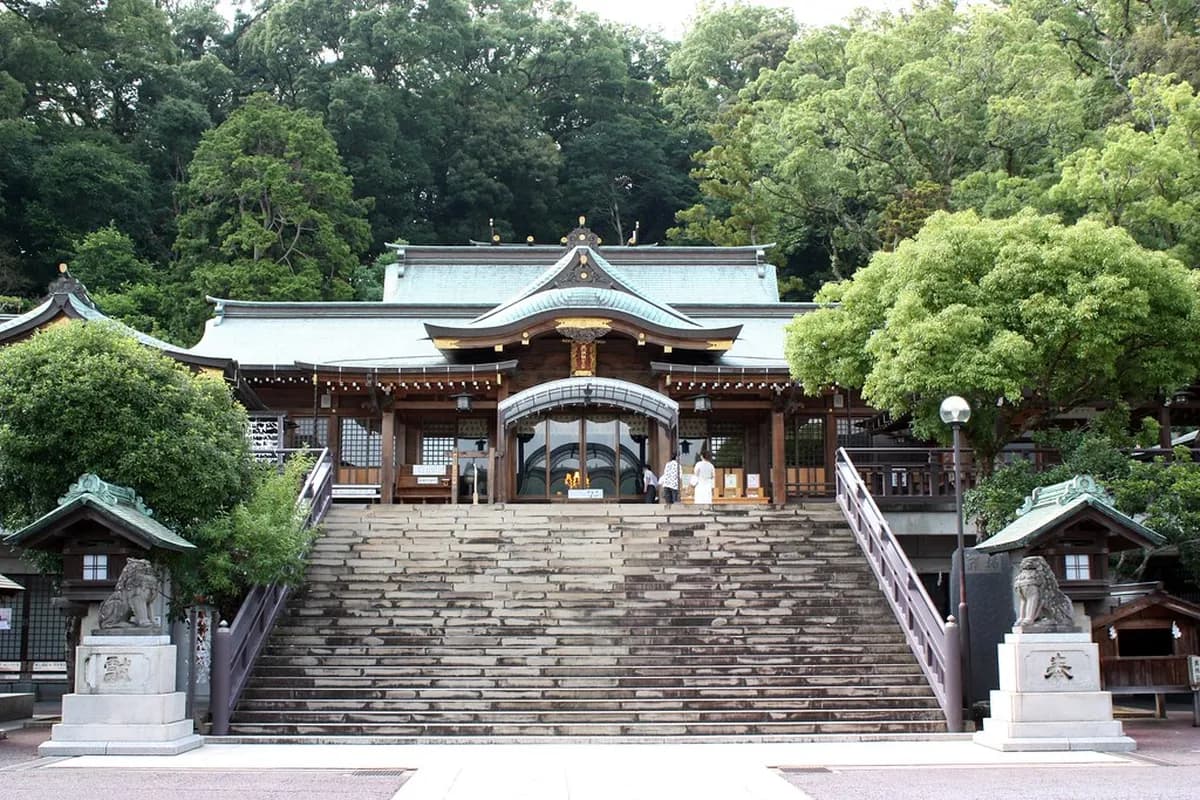
Nagasaki Suwa Shrine — known locally as Suwa Jinja — stands on the forested slopes of Mount Tamazono as the spiritual heart of the city.
Founded in the early 17th century, the shrine has been a centerpiece of Nagasaki's religious and cultural life for over 400 years. It survived the 1945 atomic bombing, outlasted political upheaval, and today draws visitors with its iconic 277-step stone staircase, distinctive guardian statues, and the explosive energy of the annual Kunchi Festival.This nagasaki suwa shrine guide covers everything you need for a well-prepared visit: the shrine's complex anti-Christian founding history, the layout of its buildings and unique komainu statues, the Nagasaki Kunchi festival in full detail, and practical tips on access, etiquette, and dining nearby. Whether you have two hours or a full morning, the shrine rewards careful exploration.
The Historical Significance of Suwa Shrine in Nagasaki
The shrine's founding is inseparable from 17th-century religious politics. Nagasaki had the largest Christian population in Japan, and by the early 1600s the Tokugawa Shogunate had reversed its tolerant stance toward the foreign faith. The shrine was officially established in 1614 — the same year as Tokugawa Ieyasu's Edict against Christianity — as a direct instrument of religious suppression. Buddhist temples and Christian churches that had been built in preceding decades were destroyed, and a powerful Shinto presence was installed in their place.
In 1623, a Shugendo priest named Aoki Kensei arrived in Nagasaki with backing from the shogunate and authority from the Yoshida Shinto council. He oversaw the completion of the main shrine structure in 1626. To draw residents to the new site, dramatic rituals were staged, including the yutate-sai, where priests plunged their hands into boiling water unharmed to demonstrate divine protection. In 1634, an edict was issued requiring all Nagasaki residents to register at the shrine — a mechanism to expose hidden Christians who refused.
The shrine was relocated twice, in 1647 and 1683, moving progressively higher up the mountain. From 1871 to 1946 it held the designation of kokuhei-chūsha, placing it among the mid-ranking national shrines. Despite this stern political origin, the site became genuinely beloved over generations. The main hall was rebuilt after multiple fires, and repairs were required again after 1945. It stands today as a testament to the city's capacity to preserve heritage through repeated catastrophe.
Architecture and Layout of Suwa Shrine
The shrine complex is built into the hillside in a series of ascending terraces, each punctuated by stone lanterns and torii gates painted vermilion. The approach from the Suwajinja-mae tram stop leads first through a large bronze torii at street level, then through wooded paths before the main stone staircase begins. Several smaller sub-shrines are scattered across the grounds, dedicated to deities of business, safe childbirth, and maritime protection — a reflection of Nagasaki's identity as a port city.
The main buildings include the haiden (worship hall), where visitors offer prayers; the honden (main sanctuary), which houses the kami and is not open to the public; and the kagura-den, a dedicated stage for sacred dance performances. A chozuya (purification fountain) stands near the haiden where visitors cleanse their hands before approaching. In 1984, a significant renovation modernized some facilities, including air conditioning in select buildings — an update that was controversial at the time but has allowed the site to serve its community more effectively through Nagasaki's humid summers.
The komainu (guardian lion-dogs) at Suwa Jinja are more varied in style than at most Japanese shrines. Look carefully: one komainu is said to double any money washed in the water flowing from its mouth. A pair dubbed the "Stop Lions" have a distinct tradition where visitors tie paper or string around their front legs to break unwanted habits — gambling, drinking, or smoking. A separate stone sphere in the main courtyard can be spun while making a silent wish. These small rituals give the grounds an interactive quality that distinguishes the site from grander but less personal shrines.
Major Festivals and Events at Suwa Shrine
The Nagasaki Kunchi festival runs every year from 7 to 9 October and is the reason many visitors plan their trip to Nagasaki specifically around this period. It has been celebrated for nearly 400 years and is designated as an Important Intangible Cultural Asset of Japan. Different neighborhoods of the city — called odori-cho — take turns performing every seven years, so each edition of the festival features a rotating cast of groups making an extended, community-wide commitment to the event.
The performances blend Japanese, Chinese, Dutch, and Portuguese influences in a way unique to Nagasaki's multicultural trading history. The dragon dance is the most photographed element: performers guide a giant dragon puppet through the crowds at high speed, its body whipping dramatically as it chases a flaming pearl. Large ship-shaped floats represent Nagasaki's maritime heritage. Traditional Japanese odori dances and acrobatic performances fill the intervals. Crowds are very large; arriving by 07:00 on the opening day (7 October) secures a position with a clear view of the staircase descent. Detailed festival information can be found on the official shrine website.
Other events worth noting: the Doll's Festival on 3 March draws a procession of women in antique kimono; the Atomic Bomb Commemorative Service on 9 August is a rare interfaith ceremony combining Shinto, Buddhist, and Christian elements in one place; and the yutate-sai ritual — a theatrical performance where priests demonstrate communion with the kami — is staged at certain points in the year. Check the shrine's posted calendar when you arrive, as these smaller events are not always listed on tourist sites. New Year (hatsumode) visits are also extremely popular, with long lines forming on 1 January.
Unique Features and Traditions of Suwa Shrine
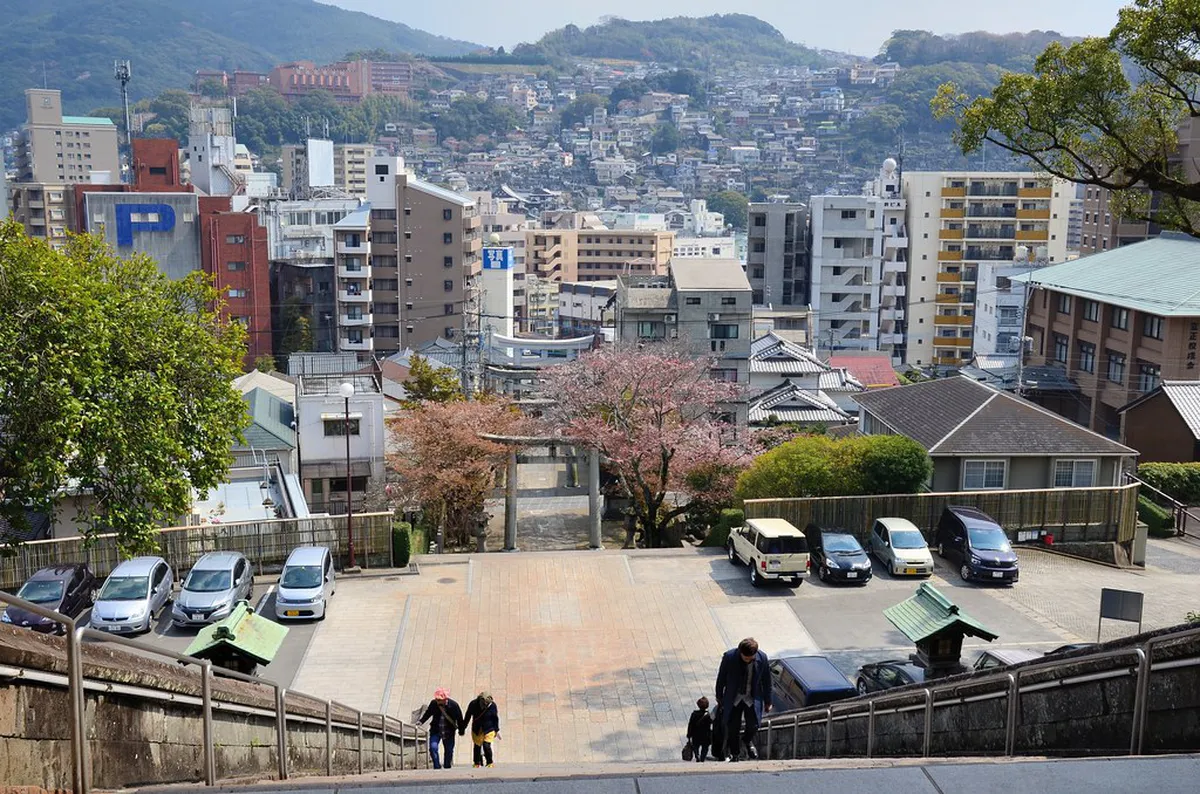
The 277-step stone staircase is the defining physical experience of a visit. The climb is steep and continuous but broken by several flat landings where you can stop, catch your breath, and look back over the rooftops toward Nagasaki harbor. The lower landings offer a partial view; the full panorama only opens at the top platform in front of the haiden. Mornings give the best light for photography. If the stairs are not an option — due to age, injury, or strollers — a paved winding road on the left side of the grounds provides gentler access to the main hall.
The Kappa statues near the sub-shrines are a favorite among local families. Kappa are water imps from Japanese folklore, and the tradition here is to ladle water over the statue's head while making a wish for good health. It is a distinctly playful ritual for a place with such a heavy historical weight. The stone ball in the main courtyard is a separate wish-granting tradition: hold the ball, spin it clockwise, and state your wish silently.
One feature that almost no other guide mentions: Suwa Jinja was a pioneer among Japanese shrines in offering omikuji in English (paper fortune slips). This reflects Nagasaki's centuries-long role as Japan's primary point of contact with the outside world. Foreign visitors who would normally skip this ritual at other shrines can participate fully here. The fortunes range from dai-kichi (great blessing) to kyo (misfortune); the custom when receiving a bad fortune is to tie the slip to one of the pine tree branches near the shrine building to leave the bad luck behind.
The Role of Suwa Shrine in Modern Nagasaki
The shrine remains deeply embedded in the rhythms of everyday life in the city. Locals visit for hatsumode in early January, for Shichi-Go-San ceremonies when children turn 3, 5, or 7, and for Coming-of-Age Day prayers when young adults turn 20. Traditional Shinto weddings are held here regularly, and on weekend afternoons it is common to see a wedding party processing through the grounds in full formal dress — worth timing your visit around if you want to see the shrine at its most ceremonially alive.
The shrine played an active role in Nagasaki's post-1945 rebuilding. Priests led purification ceremonies across bombed areas of the city, and the fact that the main hall survived the blast — despite the hypocenter being only a few kilometers away — was widely interpreted as a sign of enduring protection. This narrative has strengthened the shrine's symbolic importance to residents in the decades since. The site's survival, alongside its earlier history of suppression and rebuilding after fires, makes it an unusually layered place to reflect on the city's identity.
Today, the shrine office sells amulets (omamori) for health, academic success, traffic safety, and safe childbirth. Small community markets and outdoor events are held in the lower plazas on certain weekends. The grounds are maintained jointly by priests and local volunteers, and the cooperative effort itself is a visible expression of the community investment the shrine still commands after four centuries.
Suwa Shrine's Connection to Other Suwa Shrines in Japan
All Suwa shrines across Japan are dedicated to Suwa-no-Kami, a deity associated with valor, water, and agricultural protection. The head of this network is Suwa Taisha (Suwa Grand Shrine) in Nagano Prefecture, which dates back well over 1,200 years and is among the oldest shrines in the country. Nagasaki's branch was established to bring those protective spirits south, and the connection gives the site a resonance that extends far beyond the city.
The Nagasaki branch has, however, developed a distinct identity shaped by the port city's unique history. The Kunchi Festival's multicultural performance traditions — incorporating Chinese dragon dances and Dutch-era maritime imagery — have no parallel at any other Suwa shrine. The anti-Christian founding history is also specific to Nagasaki. These local adaptations demonstrate how a shared Shinto lineage can evolve in genuinely different directions depending on the community it serves.
For visitors interested in comparing Suwa worship across regions, the contrast between the mountain solemnity of Suwa Taisha in Nagano and the seafront energy of Nagasaki's version is instructive. Both share the same kami; almost everything else about them reflects the places they inhabit.
Visiting Suwa Shrine: Practical Information and Tips
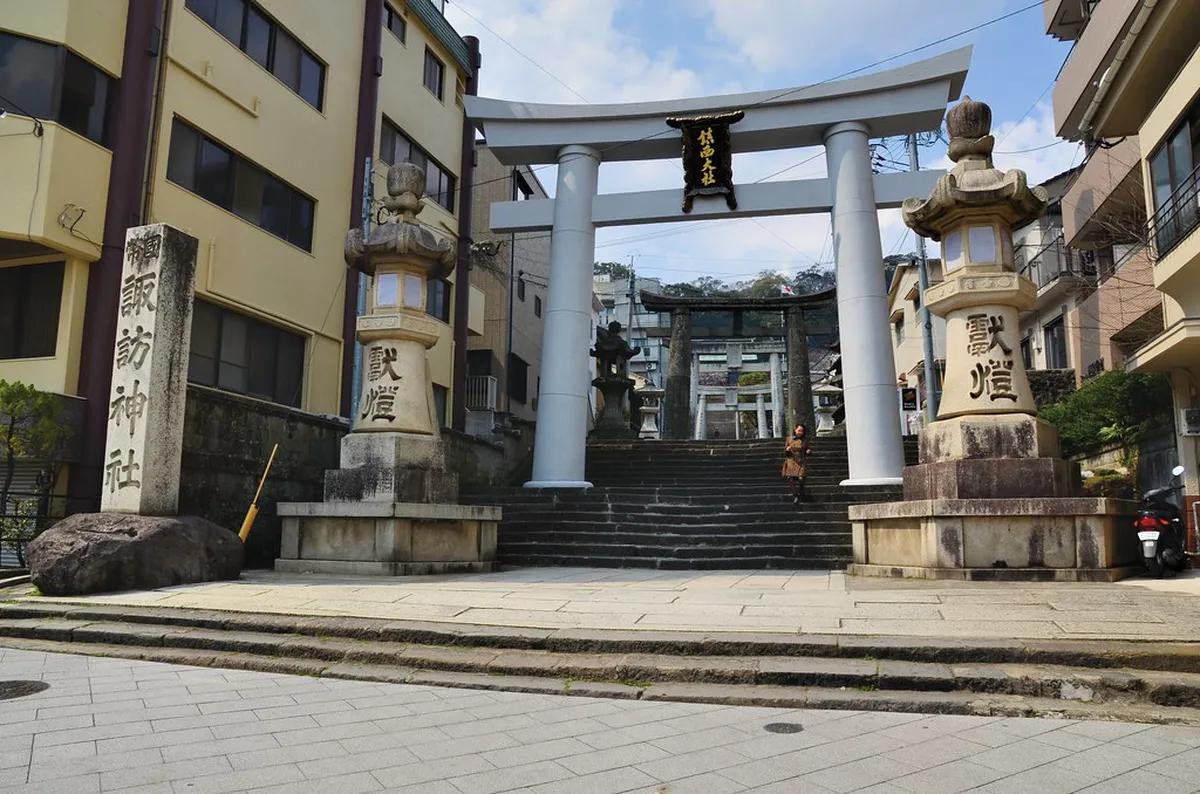
The shrine is located at 18-15 Kaminishiyamamachi, Nagasaki 850-0006. The most direct public transport option is the Nagasaki streetcar: lines 3, 4, and 5 all stop at Suwajinja-mae, a one-minute walk from the base of the staircase. The grounds are open around the clock and free to enter at all times. There is no ticket booth. Budget 60 to 90 minutes for a thorough visit; allow two hours if you want to explore the sub-shrines and sit at the upper platform. Check the Suwa Shrine location on Google Maps to confirm your walking route from the tram stop.
The 277 stone steps become slippery after rain, which is frequent during Nagasaki's summer months (June–September). Wear shoes with grip, or use the paved side road on the left side of the grounds for safer and gentler access to the main hall.
Wear shoes with grip — the stone steps become slippery after rain, which is frequent in Nagasaki's summer months. Arrive before 09:00 to avoid the main tourist groups, and before 08:00 if you want the staircase entirely to yourself. Summer temperatures in Nagasaki regularly exceed 35°C; the forested path up the hill provides shade but limited airflow. Bring water. Autumn (October–November) offers the most comfortable temperatures and the spectacular context of the Kunchi Festival, though crowds around 7–9 October will be large.
Suwa Jinja is one of the few shrines in Japan to offer omikuji fortune slips in English — a reflection of Nagasaki's centuries-long role as Japan's gateway to the outside world. If you receive a bad fortune (kyo), tie the slip to a pine tree branch near the shrine building to leave the bad luck behind.
Observe standard Shinto etiquette: bow slightly as you pass through each torii gate, cleanse your hands at the chozuya (ladle water over each hand from right to left, then rinse your mouth), and at the haiden bow twice, clap twice, offer a silent prayer, and bow once more. Photography is permitted in the outer grounds. Do not photograph people during private ceremonies or active prayer. The shrine has no lockers; leave heavy bags at your hotel or at coin lockers at Nagasaki Station before visiting.
Where to Eat Near Suwa Shrine
The streets descending from the shrine toward Hamanomachi shopping arcade have a solid concentration of mid-range restaurants within a 10-minute walk. Washoku Horita, on a side street just downhill from the tram stop, serves traditional Japanese set meals at lunch for around ¥1,000–¥1,500. The menu changes with the season and draws a mostly local crowd — a reliable sign of quality. Ikesu Izakaya Mutsugoro is a seafood izakaya with a live fish tank that lets you select your meal before it is prepared; expect to spend ¥2,500–¥4,000 per person for dinner.
For a quicker and cheaper option, small shops along the approach sell Nagasaki castella cake — a dense sponge cake with Portuguese roots that has been made in the city since the 16th century. A single slice costs around ¥200 and makes a practical post-climb snack. The Hamanomachi arcade, a 15-minute walk from the shrine, has a broader selection of Nagasaki attractions and restaurants, including chanpon noodle shops where a bowl runs ¥700–¥1,000.
Planning Your Day Around Suwa Shrine
Suwa Shrine pairs naturally with Nagasaki Peace Park and Glover Garden into a single full-day circuit. A logical sequence for a Nagasaki 1-day itinerary: start at the shrine by 08:30 before the crowds arrive, spend 90 minutes on the grounds, then tram south to Glover Garden (allow two hours), and finish at Peace Park and the Atomic Bomb Museum in the afternoon. All three sites sit on the same streetcar network and require no taxis or transfers beyond the tram.
If you are visiting during the Kunchi Festival on 7–9 October, rearrange this sequence: the festival stages run from morning into the evening and require dedicated time. Arrive early, stake a position near the lower staircase, and plan the rest of the day around the performance schedule rather than trying to combine it with other sites. The festival draws very large crowds across the entire city center, so accommodation booked within walking distance of the shrine will save significant time.
| Season / Month | Conditions | Crowd Level |
|---|---|---|
| March–May | Comfortable temperatures, cherry blossoms in spring | Moderate |
| Jun–Jul (tsuyu) | Rainy season; steps slippery, high humidity | Low |
| 7–9 October (Kunchi) | Festival season; dragon dances, large crowds | Very high |
| October–November | Best weather for climbing, colorful leaves | Moderate |
| December–February | Cold but quiet; bare trees open forest views | Low |
Weather matters for comfort at this site. June and July bring the tsuyu rainy season; the stone steps are slippery and the forest humidity can be oppressive. March to May and October to November are the most pleasant months for climbing. Winter visits (December–February) are cold by Kyushu standards but quiet; the bare trees open views through the forest that are hidden in summer, and the shrine grounds feel appropriately austere during the colder months.
Frequently Asked Questions
How many steps are there at Suwa Shrine in Nagasaki?
There are exactly 277 stone steps leading from the base to the main hall of the shrine. The climb is steep but includes several flat landings where you can rest and enjoy the view. If you prefer to avoid stairs, a paved side road is available for easier access.
Is there an entrance fee for Suwa Jinja?
No, there is no entrance fee to visit the main grounds of Suwa Shrine. It is a public place of worship and remains open to all visitors throughout the year. You may want to bring some small change for offerings or to purchase traditional amulets.
What is the best time of year to visit Suwa Shrine?
The best time to visit is during the Nagasaki Kunchi festival in early October for the most vibrant experience. Spring is also excellent for cherry blossoms, while autumn offers cool weather and colorful leaves. For more planning tips, check our nagasaki itinerary guide.
What is the history of Suwa Shrine and Christianity?
Suwa Shrine was established in 1625 by the Tokugawa Shogunate to suppress the influence of Christianity in Nagasaki. It was built on the site of former churches to promote Shinto as the official state religion. This history makes it a significant site for understanding Japan's religious evolution.
What should I eat near Suwa Shrine?
There are several excellent local restaurants within walking distance of the shrine entrance. Washoku Horita is a popular choice for traditional Japanese meals and seasonal dishes. You can also find small shops selling Nagasaki castella cake, a famous local sponge cake with Portuguese roots.
Nagasaki Suwa Shrine is much more than a viewpoint or a place of quiet prayer. It is a site where Japan's religious suppression of Christianity, a devastating wartime atomic blast, and four centuries of festival culture all converge in a single hillside complex. The 277-step climb, the English-language omikuji, the dragon dances of Kunchi, the komainu with their odd local traditions — each layer adds to a picture of a city that has absorbed enormous external pressure and converted it into something enduring.
Plan your visit with comfortable shoes, an early start, and at least 90 minutes on the grounds. The shrine rewards patience and curiosity more than speed. For further planning, check the Nagasaki attractions guide and the Nagasaki Kunchi festival guide for full festival logistics in 2026.
Pair this with our broader Nagasaki tourism attractions guide for the full city overview.
For related Nagasaki deep-dives, see our 7 Essential Tips for Your Nagasaki Peace Park Visiting Guide and Nagasaki Atomic Bomb Museum Guide: 8 Essential Planning Tips guides.
Free: The Nagasaki Essentials guide
Top things to do, where to stay, a perfect day plan, getting around, and the best time to go — a Nagasaki mini-guide you can take offline.
You might also like


Continue reading
More guides you'll find useful