

7 Essential Tips for Your Nagasaki Peace Park Visiting Guide
Plan your visit with our Nagasaki Peace Park visiting guide. Includes museum details, the best time to visit with kids, and a half-day itinerary.
On this page
Nagasaki stands today as a vibrant city of light, resilience, and profound history. Visiting the memorial areas requires a thoughtful approach to understand the local journey from tragedy to harmony. This nagasaki peace park visiting guide helps you navigate the somber landmarks with respect and clarity. You will find detailed logistics to ensure your time in the Urakami district is both meaningful and efficient.
The park serves as a global call for peace following the events of August 9, 1945. Unlike other tourist spots, this space invites quiet reflection and deep education. Travelers can explore various nagasaki landmarks that tell the story of the atomic bombing. Preparing for the emotional weight of these sites allows for a more impactful experience during your stay.
Historical Context: The 1945 Atomic Bombing
Understanding the specific nature of the Nagasaki bombing provides vital context for your visit. The "Fat Man" weapon used here was a plutonium-core bomb, which differed from the uranium gun-type bomb dropped on Hiroshima three days earlier on August 6. This explosion occurred over the Urakami district, which was then the center of the local Christian community. Learn more from historical sources on atomic bombings that document this period. The geography of the surrounding valley contained much of the blast, yet the devastation within the city remained absolute.
A tragic and often overlooked fact is the demographic of those affected by the blast. Records show that approximately 70% of the victims were non-combatants — women, children, and senior citizens engaged in ordinary morning routines. Over 40,000 people died on August 9 alone, with thousands more succumbing to injuries, burns, and radiation illness in the months that followed. Keeping these individuals in mind adds a layer of empathy to every monument you encounter in the park.
The bombing happened at 11:02 AM, a time now immortalized in many park displays. Most residents were at school or work when the sky turned white above Urakami. Historical documents at the nagasaki atomic bomb museum detail these final moments of normalcy. Every day at exactly 11:02, a mournful chime plays throughout the Peace Park complex — a simple but powerful act of remembrance.
Iconic Symbols: The Peace Statue and Fountain of Peace
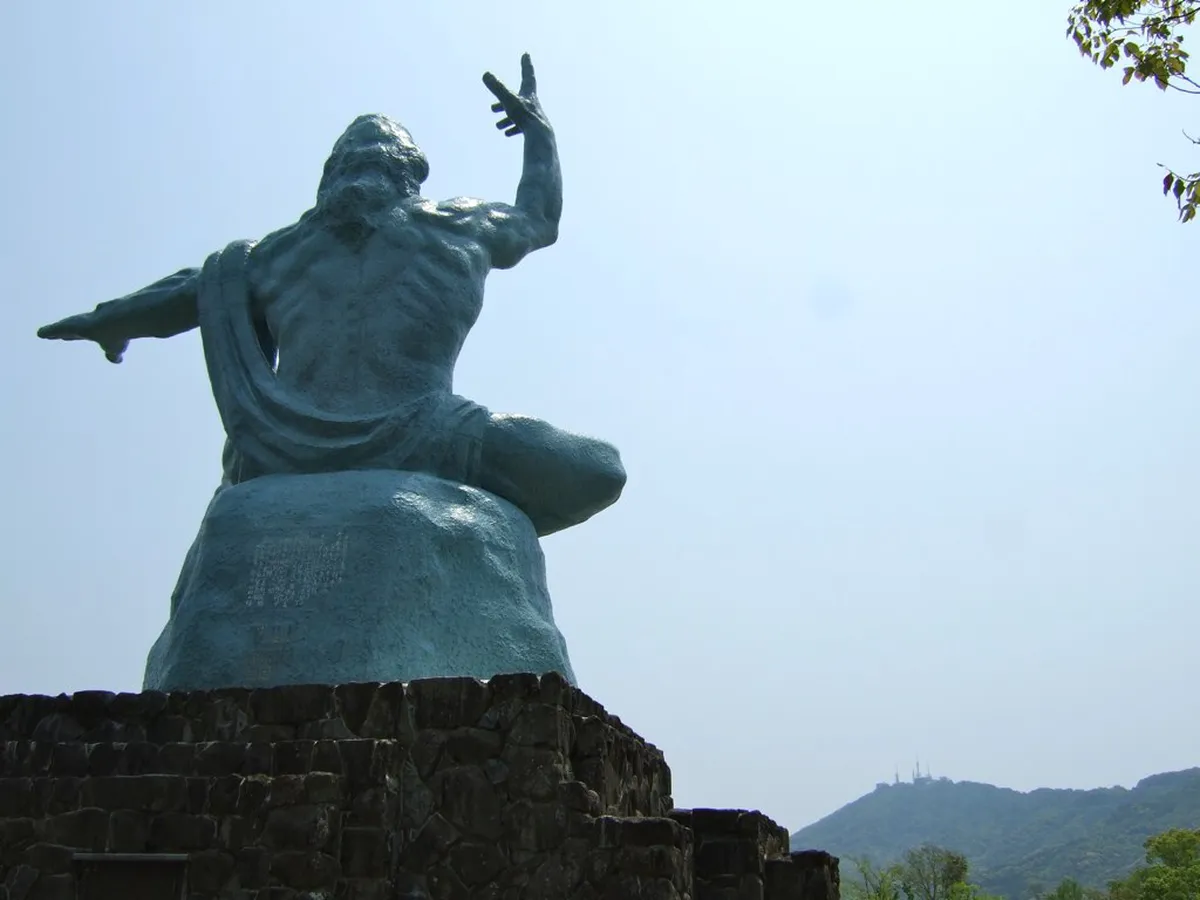
The Peace Statue is the most recognizable feature of the park and stands ten meters tall. Sculptor Seibo Kitamura designed the bronze figure with specific symbolic gestures to convey a layered message. The right hand points upward to warn of the threat posed by nuclear weapons, while the extended left arm signifies a wish for eternal world peace. The closed eyes are held in silent prayer, and the folded right leg reflects a meditative posture, while the left leg is positioned as if rising — a call to action for the living.
The Fountain of Peace offers a different kind of tribute near the park's southern entrance. Its circular design features water jets that mimic the graceful beating wings of a crane, connecting the site to Nagasaki's historical identity as the "Crane Port," a name derived from the harbor's distinctive shape. The water also serves as a symbolic offering to victims who suffered from extreme thirst after the blast, searching desperately for any relief in the immediate aftermath.
Near the Peace Statue stands the Peace Bell (Heiwa no Kane), a detail that most visitors walk past without stopping. Unlike bells at many Japanese temples, this one is freely ringable by all visitors during park hours — no fee, no ceremony, just the act of striking the bell yourself. School groups traditionally ring it in chorus on August 9 each year, but any individual can ring it during a regular visit. It is one of the few participatory moments in an otherwise contemplative space, and families with children find it a memorable focal point.
Visitors often bring colorful paper cranes to leave at various monuments throughout the grounds. Look for the designated glass cases specifically built to protect these offerings — placing cranes elsewhere can cause littering, so following local etiquette matters here. This tradition stems from the story of Sadako Sasaki, a young Hiroshima survivor who folded cranes believing they would bring recovery, and remains a universal symbol of hope across both atomic bomb memorials.
Monuments from Around the World
The Peace Park contains more than 30 sculptures donated by countries across six continents, making it one of the most international memorial spaces in Japan. Most visitors focus on the Peace Statue and miss this wider collection entirely. Walking the full perimeter of the park — a 20-minute circuit — reveals pieces from the Soviet Union, Poland, Cuba, China, Australia, Bulgaria, and the Netherlands, among others.
Australia's contribution, titled "Tree of Life: Gift of Peace," references Aboriginal Piti dishes used for carrying food and water, symbolizing shared resources. The Netherlands donated "Protecting Our Future," a sculpture of a woman shielding her child. China's monument acknowledges the Chinese civilians killed in the blast — a detail that resonates strongly for visitors from East Asia. Each piece reframes the event not as a bilateral military event but as a catastrophe with global human stakes.
A useful approach for families with children is to treat the international monuments as a loose scavenger hunt. Challenge kids to identify which country each piece represents before reading the plaque. This keeps younger visitors engaged during the outdoor walk and makes the abstract theme of international peace concrete and visual.
The Nagasaki Atomic Bomb Museum and Memorial Hall
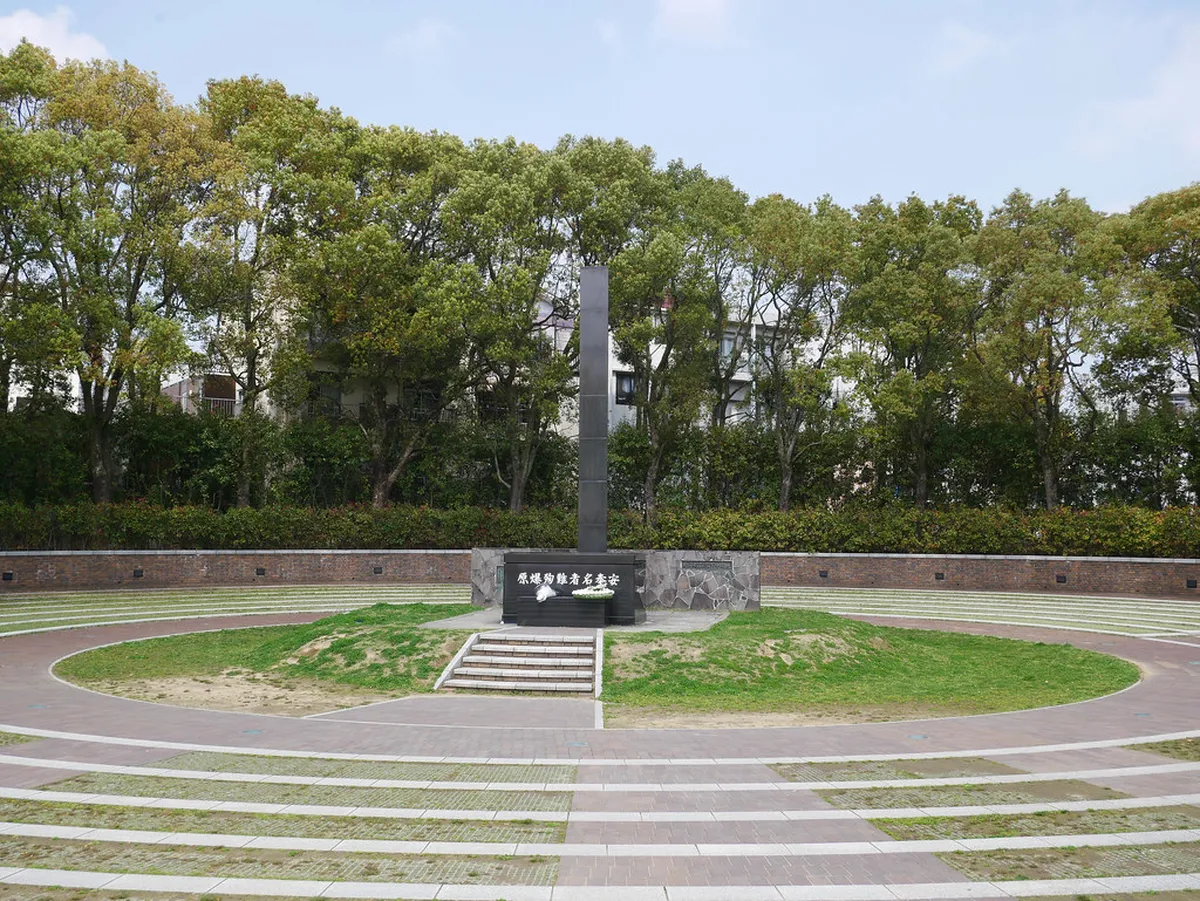
The museum and the memorial hall offer two distinct ways to process the history of the city. At the museum, the focus is on educational displays, physical artifacts, and technical data about the bombing. You can see melted bottles, stopped clocks, and charred personal belongings that provide a haunting look at the heat of the blast. The facility is open daily from 08:30 to 17:30 (last entry 17:00), closed only from December 29 to 31. Admission is 200 yen for adults and 100 yen for students.
The exhibits are organized across four main sections: Nagasaki before the bomb, the blast and its immediate destruction, the city's recovery, and the global nuclear disarmament movement. Survivor testimonies — some recorded, some still given live in the lecture hall by hibakusha now in their eighties and nineties — are among the most affecting parts of the visit. The opportunity to hear first-hand accounts from survivors is narrowing each year, and attending a lecture, when scheduled, is worth building your itinerary around. This facility is essential for those following a Nagasaki Itinerary for First-Timers in 2026 focused on historical depth.
The National Peace Memorial Hall for the Atomic Bomb Victims provides a much quieter and more reflective atmosphere. Its partially underground design uses natural light and water channels to create a space for prayer and remembrance. You can view the Book of Names of the Deceased, sit in the glass-walled Hall of Remembrance for silent meditation, or leave a written message for the victims. This facility is free to enter and stands in deliberate contrast to the intensity of the museum next door.
- Atomic Bomb Museum: open 08:30–17:30, admission 200 yen (adults) / 100 yen (students), closed Dec 29–31
- National Peace Memorial Hall: open 08:30–17:30 (extended to 20:00 in August), free entry, no reservation required
- Outdoor Peace Park: open 24 hours, free entry
| Site | Opening Hours | Adult Admission | Student Admission |
|---|---|---|---|
| Atomic Bomb Museum | 08:30–17:30 (last entry 17:00) | 200 yen | 100 yen |
| National Peace Memorial Hall | 08:30–17:30 (Aug: to 20:00) | Free | Free |
| Outdoor Peace Park | 24 hours | Free | Free |
| Hypocenter Park | 24 hours | Free | Free |
Practical Logistics: Getting There and Entry Fees
Reaching the park is straightforward thanks to the efficient Nagasaki streetcar system. Take streetcar line 1 or 3 from JR Nagasaki Station and exit at Hamaguchi-machi (Atomic Bomb Museum stop) for the museum, or continue one stop to Matsuyama-machi (Peace Park stop) for the upper park area. The walk from either stop to its respective site is under five minutes. Check the Official Nagasaki Peace Site for any seasonal schedule changes in 2026.
A streetcar day pass costs 600 yen for adults. If you make five or more rides across the city in one day — for example combining the peace district with Glover Garden and Dejima — the day pass is cheaper than individual 140-yen fares.
Choosing the right fare option can save money if you plan to see multiple sites across the city. Individual streetcar rides cost 140 yen per journey, but a day pass is 600 yen for adults. The arithmetic is simple: if you make five or more streetcar trips in a day, the day pass is cheaper. For a typical visit to the peace district combined with Glover Garden or Dejima, most travelers comfortably hit that threshold. You can purchase day passes digitally on your smartphone or at major hotel front desks. For additional visitor guidance, consult the official peace park tourism site.
Accessibility is a genuine strength of the peace district. Elevators and ramps connect the museum level to the upper Peace Park, making the site navigable by stroller or wheelchair throughout. The main paths are wide, paved, and largely flat. Restrooms with accessible stalls are located at the museum, the memorial hall, and at the park's main entrance plaza.
A Gentle Approach: Visiting the Park with Children
Families often wonder if the park is appropriate for younger children given the heavy subject matter. The outdoor park area is very accessible and provides plenty of open space for kids to move around. Focusing on the statues, the international monuments, and the Fountain of Peace can make the experience less overwhelming for younger visitors. You might find more tips in our guide on 12 Best Things to Do in Nagasaki with Kids.
The Atomic Bomb Museum contains graphic photographs, stopped clocks, and charred personal belongings that may be distressing for sensitive visitors and young children. Parents should consider previewing exhibits or focusing on the upper-floor recovery sections before deciding which areas to show younger travelers.
The museum contains graphic photographs and artifacts that may be distressing for sensitive or very young children. Parents should consider previewing the exhibits or focusing time on the upper-floor sections, where the displays shift toward recovery and peace advocacy rather than raw destruction imagery. The Memorial Hall is deeply quiet, so ensure children understand the need for calm behavior before entering. Taking breaks in the surrounding park grounds helps balance the educational intensity of the indoor facilities.
To avoid the largest crowds, plan your visit for a weekday afternoon after 14:00 or for weekend mornings. Large school group tours typically arrive on weekday mornings between 09:00 and 12:00, and the museum corridors can feel cramped during those windows. Arriving in the late afternoon also means softer light for the outdoor monuments, which makes the Peace Statue and Fountain of Peace particularly atmospheric. Most families find that 90 minutes at the park plus 60 minutes at the museum covers the core experience without overwhelming younger children.
Optimized Half-Day Nagasaki Peace Itinerary
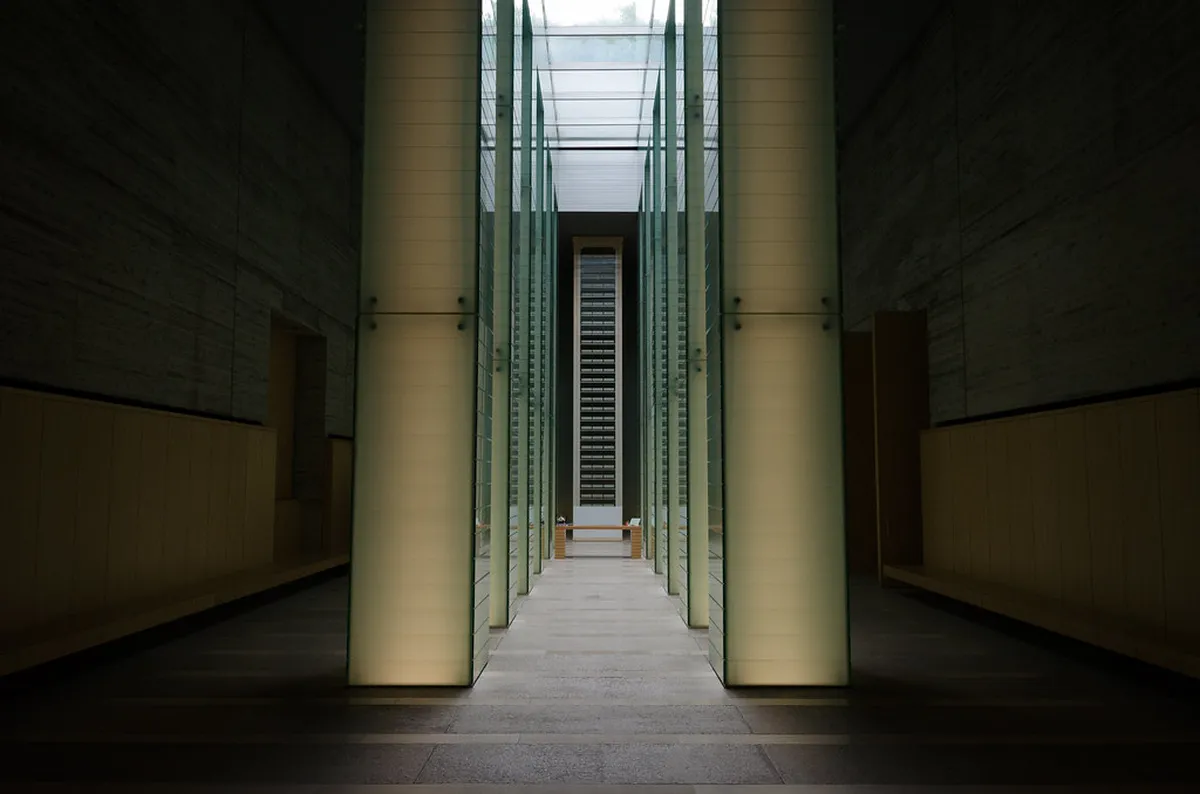
A well-planned four-hour block is usually enough to see the major sites without feeling rushed. Start at the Atomic Bomb Museum when it opens at 08:30 to get the full historical background while the building is quietest. Afterward, walk downhill to Hypocenter Park to see the black monolith marking the exact point 500 metres above which the bomb detonated. This sequence builds understanding from cause to consequence before you reach the commemorative space.
Continue uphill to the Peace Park to see the Peace Statue, the international monuments, and the Fountain of Peace. Ring the Peace Bell near the statue before heading to the Memorial Hall for a final period of reflection. This path follows a logical geographic and narrative arc and minimizes backtracking entirely. It is a core part of any comprehensive Nagasaki 1 Day Itinerary: The Perfect Route.
- 08:30–09:30: Nagasaki Atomic Bomb Museum (arrive at opening for smallest crowds)
- 09:30–10:00: Hypocenter Park — black monolith, broken cathedral pillar, two surviving camphor trees
- 10:00–11:00: Peace Park — international monuments, Fountain of Peace, Peace Bell, Peace Statue
- 11:00–11:30: National Peace Memorial Hall — Book of Names, Hall of Remembrance
- 11:02 (if timing allows): Pause for the daily chime marking the exact moment of the 1945 detonation
Beyond the Park: Nearby Historical Sites in Urakami
The Urakami district holds several other sites that complement your peace district visit. Urakami Cathedral — a short five-minute walk from the park — was once the largest Catholic church in East Asia. The original building was destroyed instantly by the blast; its reconstructed successor houses several charred statues salvaged from the ruins and displayed in a side alcove. This site highlights the deep history of the "Hidden Christians" of Nagasaki, who practiced their faith clandestinely for over two centuries under Edo-period prohibition.
Another significant landmark is the One-Legged Torii Gate at Sanno Shrine, about ten minutes on foot from the Hypocenter Park. The blast knocked down half of the stone torii, leaving the other half standing. Nearby, two camphor trees that were nearly incinerated have grown back into massive, healthy giants — visible evidence of the city's biological as well as human recovery. These living monuments offer a powerful counterpoint to the grief of the formal memorial sites.
Many travelers confuse the Hypocenter Park with the Peace Park, but they are distinct spaces with different purposes. The Hypocenter Park contains a simple black stone monolith and a fragment of the original Urakami Cathedral pillar, marking the epicenter of the explosion with almost no ornamentation. The Peace Park, 400 metres uphill, is the designed commemorative landscape with the statue, fountain, and international monuments. Visit both to understand the difference between the raw geography of destruction and the considered human response to it. Ensure you also explore more nagasaki landmarks in the surrounding area during your stay.
Frequently Asked Questions
How much time should you plan for a Nagasaki Peace Park visit?
You should set aside at least three to four hours to see the park, museum, and hypocenter. This allows enough time to read the exhibits and walk between the sites at a comfortable pace. If you are on a tight Nagasaki Itinerary for First-Timers in 2026, focus on the museum and the main statue.
Is the Nagasaki Atomic Bomb Museum suitable for young children?
The museum is educational but contains graphic photos and artifacts that might be too intense for small children. Parents should use their discretion and perhaps focus on the outdoor park monuments instead. The Memorial Hall offers a gentler, more symbolic way to introduce the topic to kids.
What is the best way to get to Nagasaki Peace Park from the cruise terminal?
The easiest way is to take the green streetcar line from the Ouratenshudo stop and transfer to the blue or red line. The journey takes about 25 minutes and is very affordable for solo travelers or families. You can also take a taxi for a faster, direct route to the park entrance.
Are there entry fees for the Nagasaki Peace Park?
Entering the outdoor Peace Park and the Hypocenter Park is completely free for all visitors. The Atomic Bomb Museum charges a small fee of 200 yen for adults and 100 yen for students. The National Peace Memorial Hall is free to enter and provides a quiet space for reflection.
Visiting Nagasaki offers a unique chance to witness the strength of the human spirit. The Peace Park is not just a place of sadness, but a beacon of hope for the future. By following this nagasaki peace park visiting guide, you can ensure your trip is respectful and deeply informative. We hope your time in this historic city leaves you with a lasting sense of peace.
Remember to check for local nagasaki events that might coincide with your visit. The city continues to evolve while keeping its important history alive for new generations. Safe travels as you explore the beautiful and resilient streets of Nagasaki.
Use our Nagasaki attractions hub to plan the rest of your trip.
Free: The Nagasaki Essentials guide
Top things to do, where to stay, a perfect day plan, getting around, and the best time to go — a Nagasaki mini-guide you can take offline.
You might also like

Continue reading
More guides you'll find useful

