
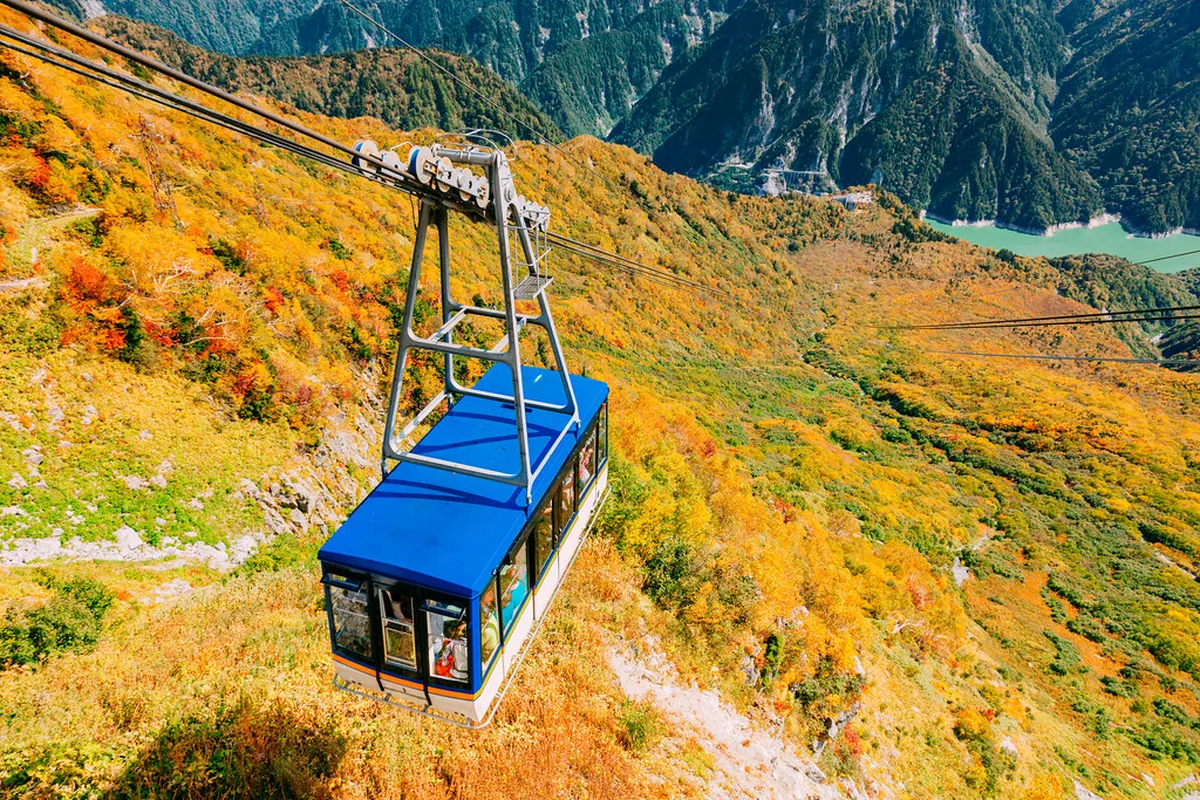
Daikanbo
The grandest viewpoint on the Aso caldera's northern rim (936 m) — a short walk from the car park delivers a panorama of the five Aso peaks across the valley, famous for dawn seas of cloud and fiery sunsets.
Visitor guide →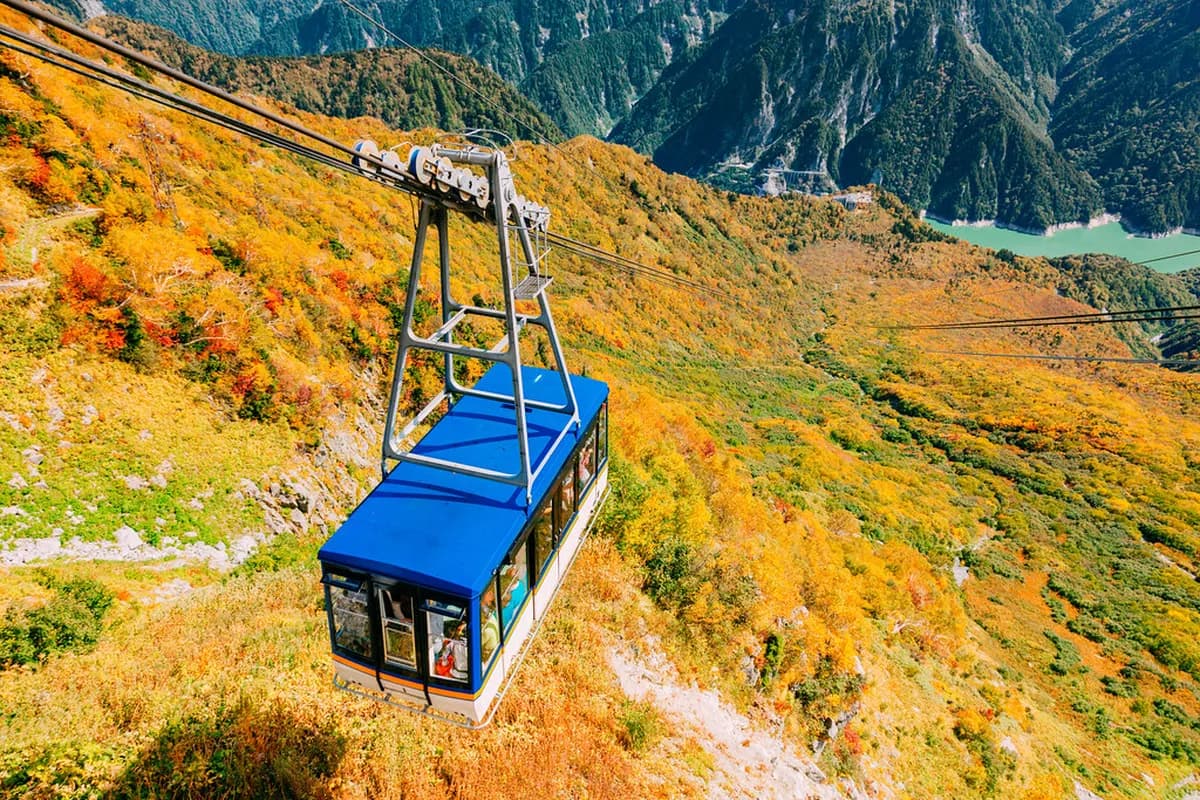
Things to do in Aso for 2026: the Nakadake crater, Daikanbo and Kabutoiwa viewpoints, Kusasenri grasslands, Aso Shrine, the Milk Road, itinerary and access tips.
Aso sits inside one of the largest active volcanic calderas on Earth — a green bowl roughly 25 km across, ringed by five peaks and still venting steam from the smoking Nakadake crater at its center. Most visitors come for that crater alone, but Aso rewards its own full day (or two): sweeping grasslands where horses graze between the peaks, caldera-rim lookouts that catch a "sea of clouds" at dawn, a 2,000-year-old shrine with a dramatically rebuilt gate, and the Milk Road, a scenic drive linking the highland dairy farms to the rim. This guide covers Aso's attractions in full — Daikanbo, Kusasenri, Aso Shrine and Kabutoiwa Observatory — plus how they fit around a visit to the crater itself, when to go, and how to get around a destination built for a car more than a train timetable. Updated for 2026 with current access notes, given the crater's frequent alert-level closures.
The single reason most travelers detour to Aso is Nakadake, the only one of the caldera's five peaks still active — a roughly 4 km-wide crater with a milky turquoise lake, sulfur plumes, and, on a clear low-alert day, a rim-edge viewing area you can drive or ride right up to. It's genuinely the region's must-see sight, but it's also the one attraction on this page you cannot plan around a fixed schedule: Japan's volcanic alert system closes the crater rim at Level 2 and restricts the wider area at Level 3, sometimes with only a few hours' notice, and a section of the crater area has been closed for emergency works through the end of July 2026. Before you build a day around it, read our full Mount Aso (Nakadake Crater) visitor guide for current alert-level status, access options, and a same-day backup plan — then use the rest of this page for the attractions that stay open rain, shine, or Level 3.
The grandest viewpoint on the Aso caldera's northern rim (936 m) — a short walk from the car park delivers a panorama of the five Aso peaks across the valley, famous for dawn seas of cloud and fiery sunsets.
Visitor guide →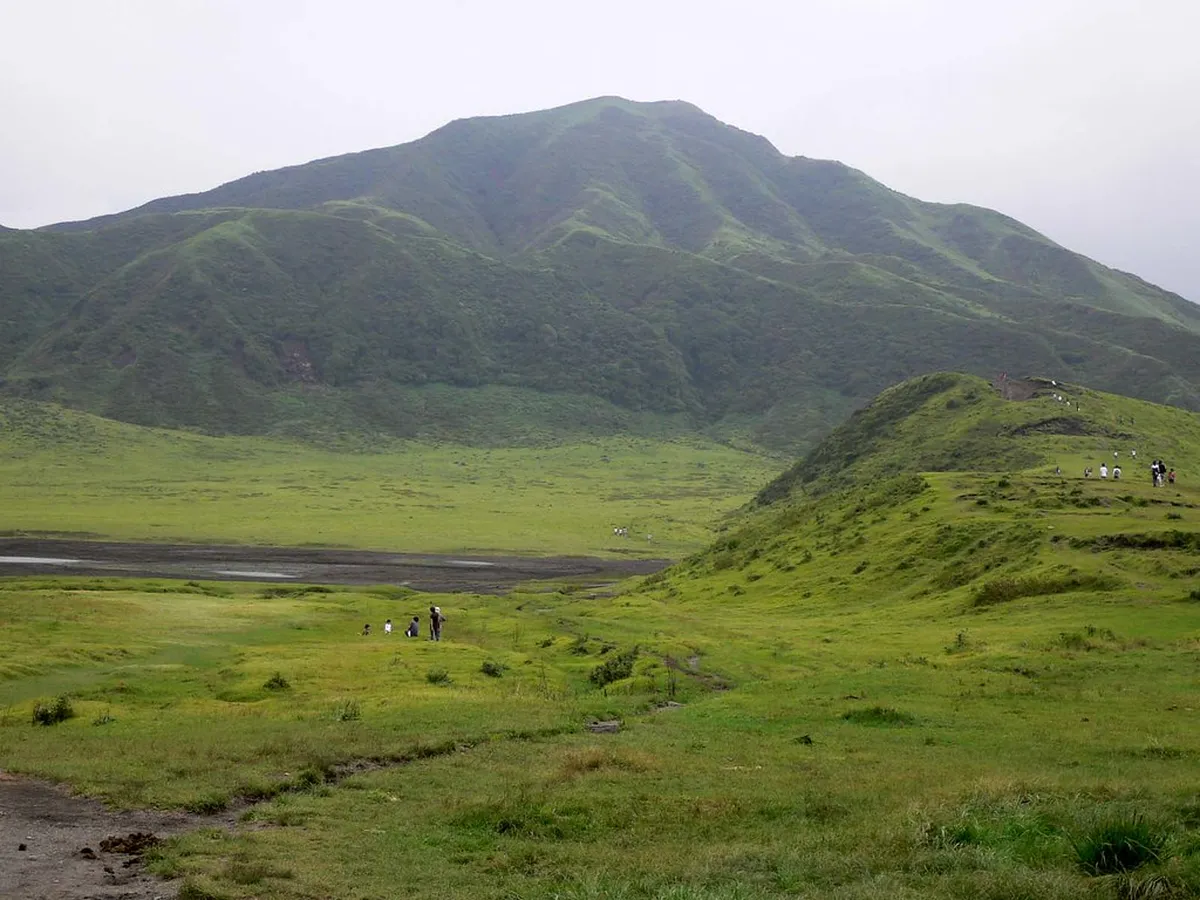
A sweeping grassy caldera basin below the Aso peaks where horses graze in the warmer months, ringed by walking paths and two crater ponds — with the smoking Nakadake crater rising beyond and the Aso Volcano Museum opposite.
Visitor guide →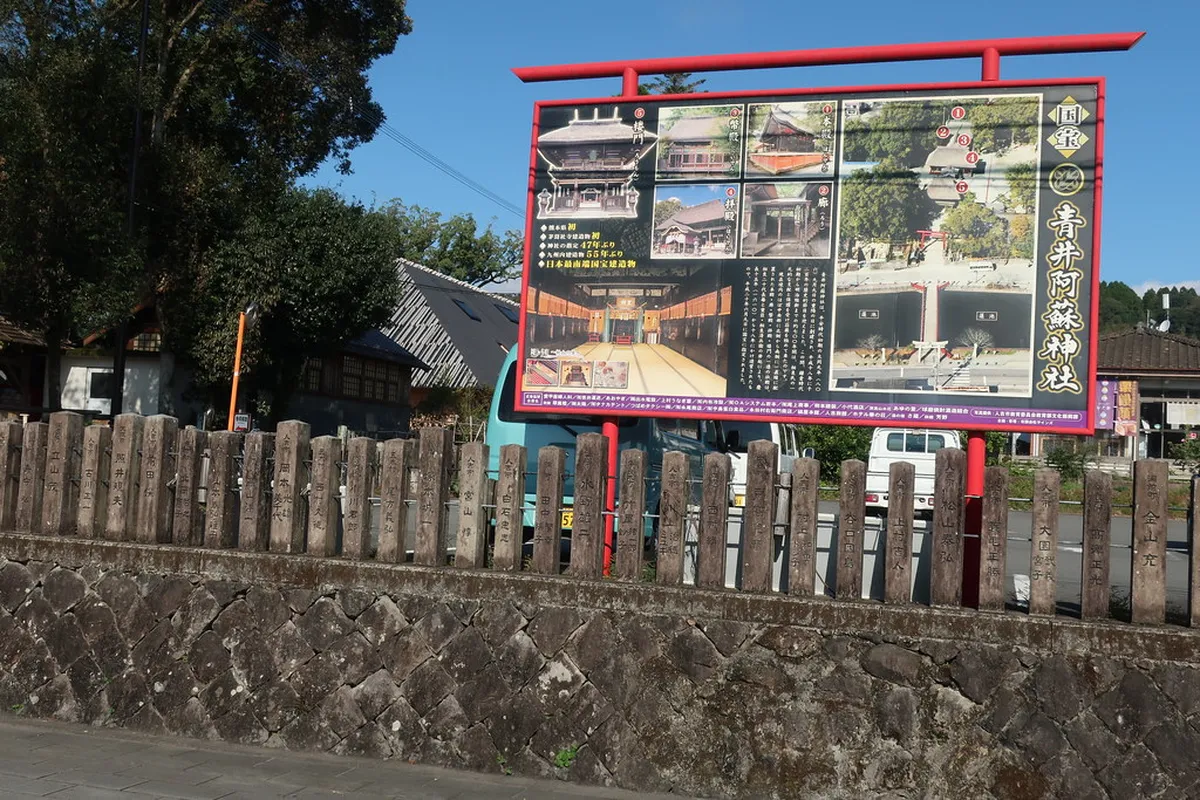
One of Japan's oldest shrines, set on the Aso caldera floor with a rare two-storey rōmon gate — toppled in the 2016 earthquake and painstakingly rebuilt — plus a spring-fed 'water shrine' and an atmospheric old approach street.
Visitor guide →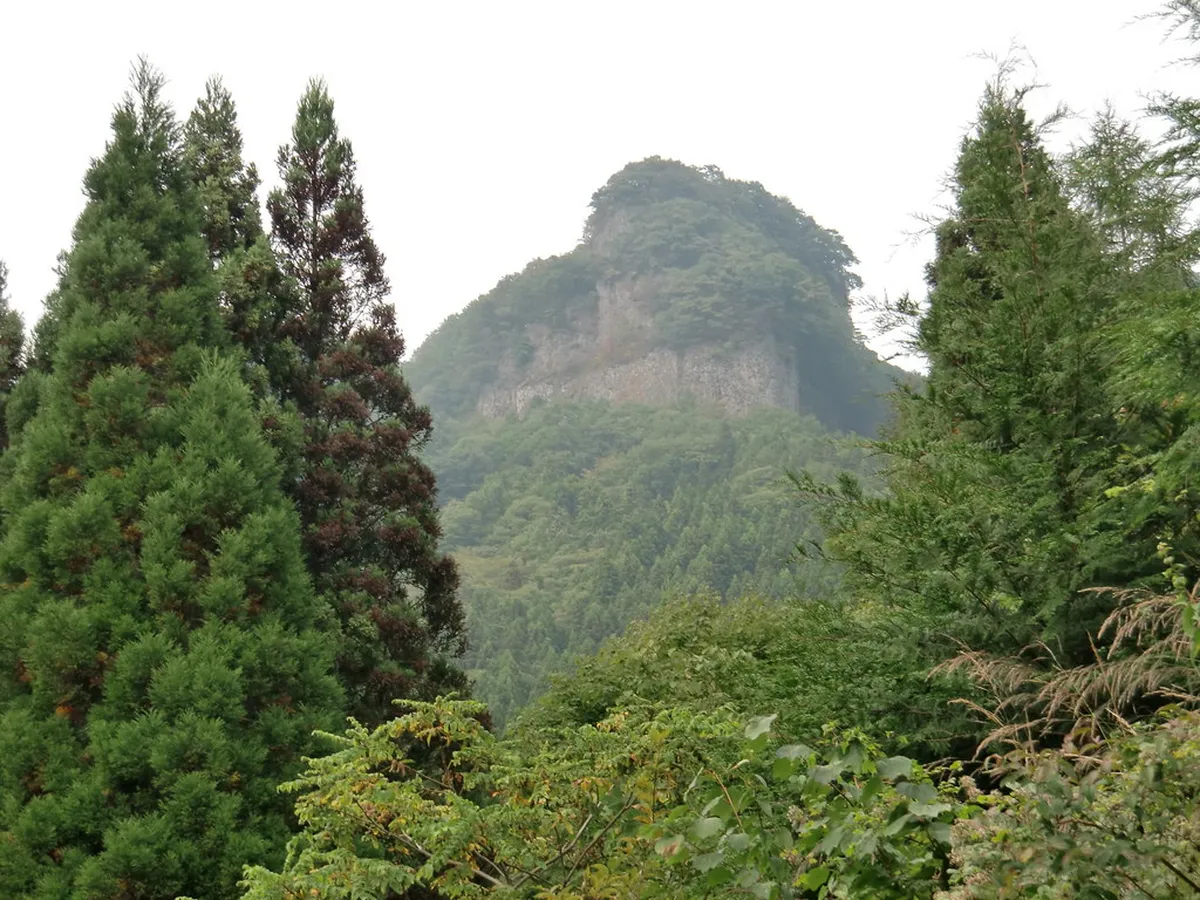
A quieter roadside lookout on the Aso Milk Road named after a samurai-helmet-shaped rock — a favourite of photographers for dawn seas of cloud over the caldera, with parking, toilets and a snack stop.
Visitor guide →Aso's northern caldera rim has two viewpoints worth building a sunrise or sunset around, and they're different enough to justify visiting both if you have the time. Daikanbo, at 936 m, is the classic panorama — a short walk from its car park delivers a wide view across the valley to all five Aso peaks, and it's the busier of the two, especially at dawn in autumn. Kabutoiwa Observatory, further along the Milk Road and named for a nearby rock shaped like a samurai helmet, is the quieter alternative: fewer buses stop there, the crowd thins out, and photographers who've done both often prefer it for the same "sea of clouds" phenomenon with more room to set up a tripod. Both are free, open around the clock, and best between roughly October and December, when clear, still, cool nights set up a temperature inversion that fills the valley with cloud below the rim by sunrise.
Between the peaks, Kusasenri is a sweeping grassy caldera basin with two crater ponds, ringed by walking paths and, in the warmer months, grazing horses. It's free to walk, and the Aso Volcano Museum sits directly opposite with an indoor observation deck and live monitoring feed of Nakadake for days when the crater itself is off-limits. On the caldera floor, Aso Shrine is one of Japan's oldest — with roughly 2,000 years of history as the head shrine of some 500 Aso shrines nationwide. Its rare two-storey rōmon gate collapsed in the 2016 Kumamoto earthquake and has since been painstakingly rebuilt; the shrine also has a spring-fed "water shrine" and an atmospheric old approach street lined with small shops. Both sights are free to enter.
If you're deciding what to prioritize with limited time, it helps to think of Aso's sights in three groups:
One full day covers Aso's core: check the crater's alert status first thing, and if it's open, go early before cloud or crowds build; from there, Kusasenri is a short drive away for a couple of hours among the grasslands and the Volcano Museum, and you can close the day at Daikanbo or Kabutoiwa for sunset. With a second day, add Aso Shrine and a slow drive along the Milk Road, stopping at the dairy farms and cheese and ice-cream stands that give the road its name. For a fuller multi-day breakdown with timings and transport between stops, see our Aso itinerary guide.
The JR Hohi Line runs to Aso Station from Kumamoto (roughly 90 minutes) and from Beppu on the other side of Kyushu, including the Aso Boy! tourist train aimed at families — the line was fully restored in 2023 after 2020 flood damage closed a section for several years. From Aso Station, seasonal shuttle buses reach the crater area and Kusasenri, but service to Daikanbo, Kabutoiwa and the Milk Road is sparse or nonexistent, so a rental car (or a taxi day-charter from the station) is genuinely the practical way to see the caldera rim. If you're day-tripping from Kumamoto city rather than staying overnight, our Mount Aso day trip from Kumamoto guide covers timing and transport options in detail, and our how to get to Aso guide has the full station-by-station breakdown.
Spring (roughly March) brings noyaki, the controlled burning that clears Kusasenri's grassland for the new growing season, followed by vivid green through early summer. Autumn, from around October, turns the grasslands to golden susuki (pampas grass) and is also the most reliable season for a dawn sea of clouds from Daikanbo or Kabutoiwa. Winter brings frost, occasional snow, and a real chance of icy roads on the Milk Road and rim viewpoints, so check conditions before driving; it's also a quieter season with fewer crowds at the shrine and grasslands. The crater's alert status varies independently of season, so whenever you go, check it separately rather than assuming summer or a clear day guarantees access. For a month-by-month breakdown, see our best time to visit Aso guide.
It depends on the day. The Nakadake crater is only open when Japan's volcanic alert level is at 1 and gas readings are safe; at Level 2 the 1 km radius around the crater closes, and at Level 3 the wider area does too. Check current status before your trip in our Mount Aso guide, and treat a crater visit as a bonus rather than a certainty.
Plenty — the caldera itself is as much the attraction as the crater. Kusasenri's grasslands, the Daikanbo and Kabutoiwa rim viewpoints, 2,000-year-old Aso Shrine, and the Milk Road scenic drive are all open regardless of the crater's alert level, and most visitors find they fill a full day on their own.
The JR Hohi Line runs to Aso Station from Kumamoto (about 90 minutes) and Beppu, including the tourist-oriented Aso Boy! train. From the station, local buses reach some sights seasonally, but a rental car is the practical option for the rim viewpoints and Milk Road. See our getting to Aso guide for the full breakdown.
Yes — it's one of the largest calderas on Earth and unlike almost anywhere else in Japan for scenery, with grasslands, an active crater, and rim viewpoints inside a single valley. It rewards a full day at minimum, two if you want to add the Milk Road and a rim sunset.
Roughly October to December, at dawn, from Daikanbo or Kabutoiwa, after clear, still, cool nights. Check overnight temperature and wind forecasts the evening before rather than committing weeks ahead.
One full day covers the caldera's core sights — the crater if it's open, Kusasenri, and a rim viewpoint. Two days lets you add Aso Shrine, the Milk Road drive, and a dawn sea-of-clouds attempt without rushing.
Not to reach Aso Station, but yes for most of what's on this page — buses to Daikanbo, Kabutoiwa and the Milk Road are infrequent or seasonal, and a rental car (or taxi day-charter from Aso Station) is how most visitors actually see the caldera rim.
Aso rewards travelers who treat the crater as a bonus rather than the whole plan — the caldera-rim viewpoints, grasslands and shrine on this page are open every day the volcano isn't, and together they make for a full trip on their own. Start with our Aso attractions overview and itinerary guide to build your schedule, then check how to get to Aso and our Mount Aso day trip from Kumamoto guide for transport.