
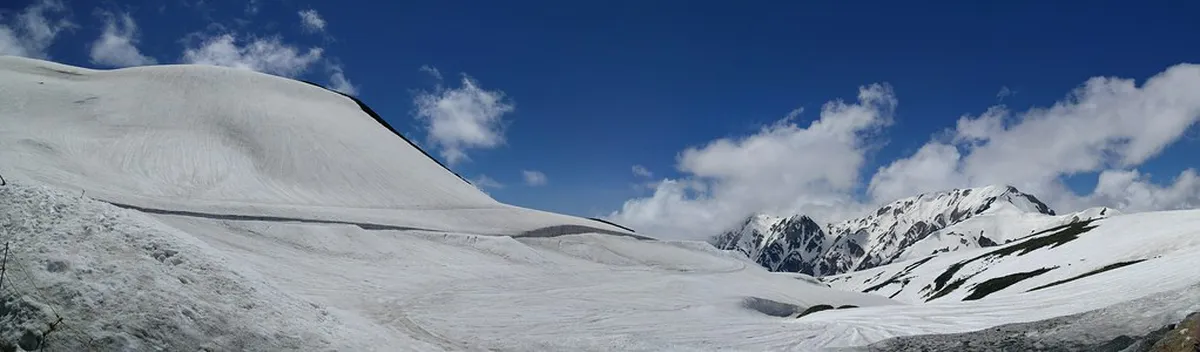
Murodo
The 2,450m high point of the Alpine Route, a volcanic plateau of ponds, steam vents and alpine trails.
Visitor guide →
The top things to do on the Tateyama Kurobe Alpine Route: the 20m Yuki-no-Otani snow wall, Murodo plateau, Kurobe Dam, Mikurigaike Pond and Daikanbo — with 2026 fares, the open season (mid-April to late November) and a one-way Toyama to Shinano-Omachi itinerary.
The Tateyama Kurobe Alpine Route is a 37km mountain-crossing through the Northern Japan Alps that links Toyama Prefecture with Nagano, climbing from lowland valleys to the 2,450m volcanic plateau of Murodo and back down again. There is no road for private cars — you cross the entire spine of the mountains on a relay of eight separate transport modes (cable cars, a highland bus, two tunnel buses, a ropeway and a short walk), each one a sight in its own right. The route is open only from mid-April to late November; it is buried under snow and completely closed every winter, and the famous 20-metre snow walls are a spring-only phenomenon (roughly mid-April to late June).
This hub pulls together the best things to do on the Tateyama Kurobe Alpine Route — the five attractions that consistently reward the time and the ticket price: the high-altitude plateau, the 20-metre snow corridor, Japan's tallest dam, the mirror-like crater pond and the cliff-top observation deck. Each card below links to a full visitor guide with verified opening hours, current fares and the practical tips that don't make the official FAQ. Below the cards you'll find how the route works, what's free versus paid, a one-way itinerary you can actually follow, the eight transport modes you ride end to end, and the best time to come. For a deeper trip-planning read, see our blog pillar on things to do on the Tateyama Kurobe Alpine Route, and zoom out to the wider region via our Japan Alps attractions hub.
Sources: Wikipedia and Wikivoyage.
The 2,450m high point of the Alpine Route, a volcanic plateau of ponds, steam vents and alpine trails.
Visitor guide →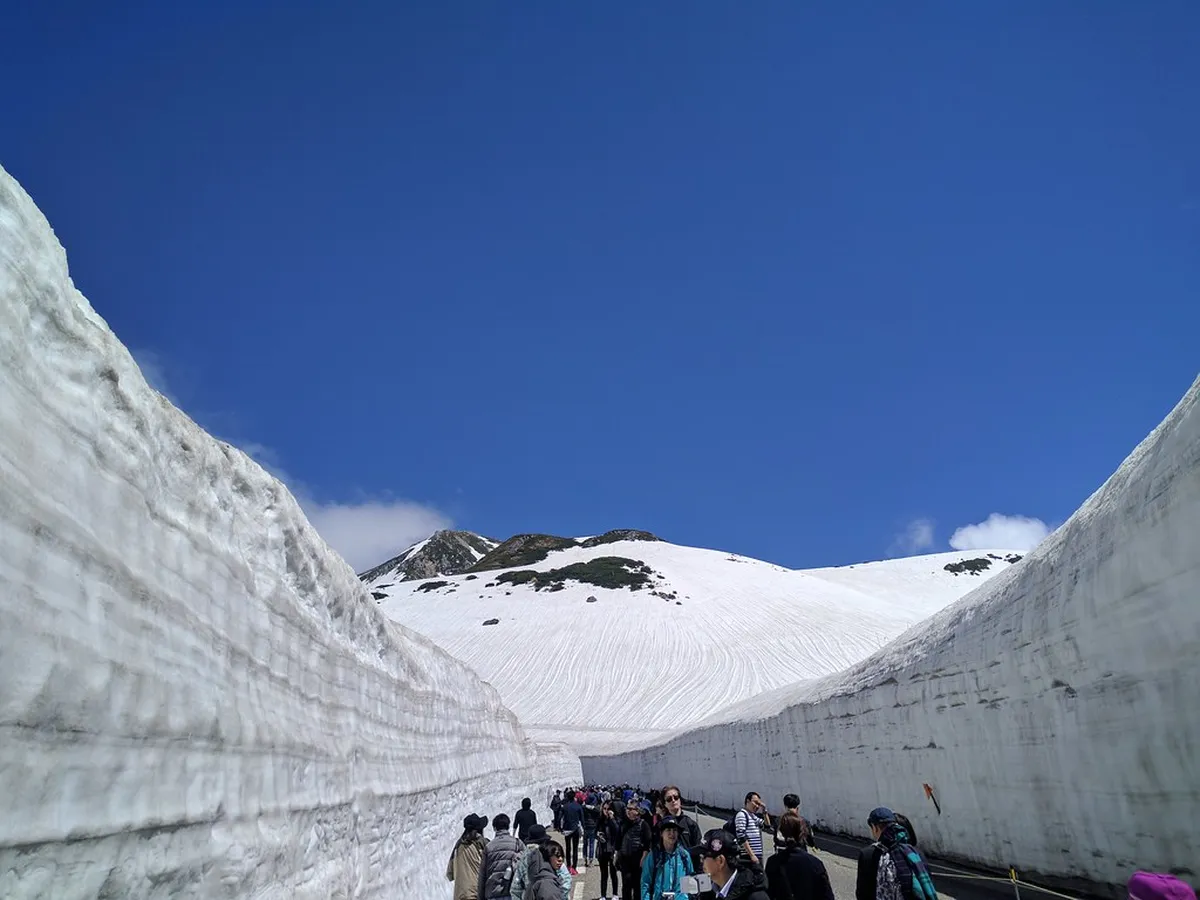
A walkable corridor cut through up to 20m of snow at Murodo, the Alpine Route's spring signature.
Visitor guide →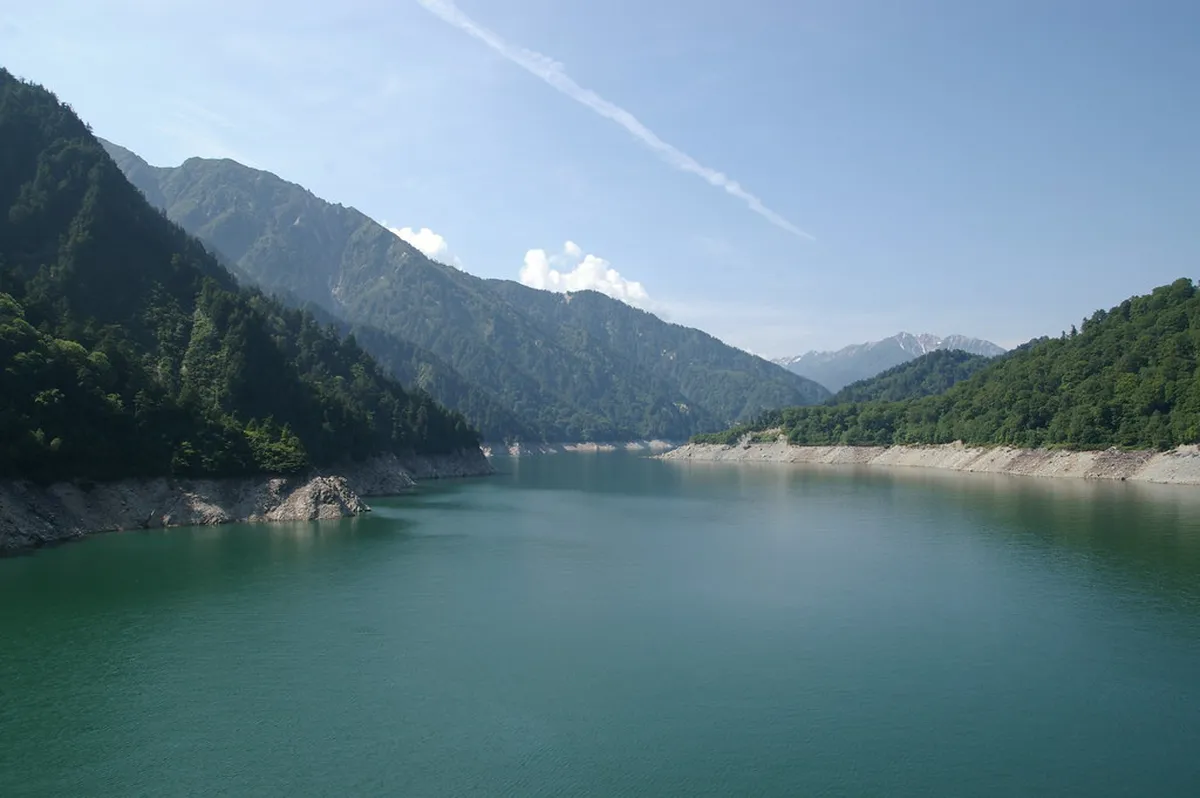
Japan's tallest arch dam (186m), with a dramatic scheduled water discharge and a reservoir cruise.
Visitor guide →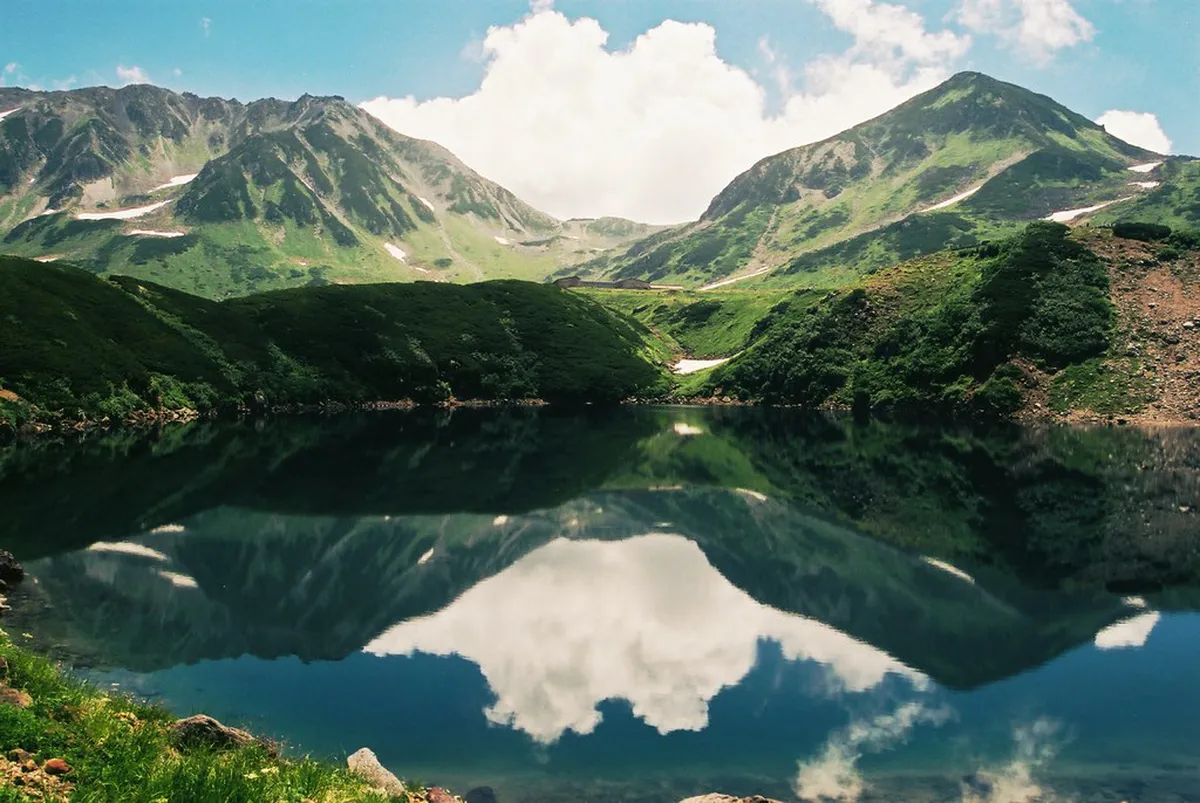
The largest crater pond at Murodo, mirroring the Tateyama peaks beside the steaming Jigokudani vents.
Visitor guide →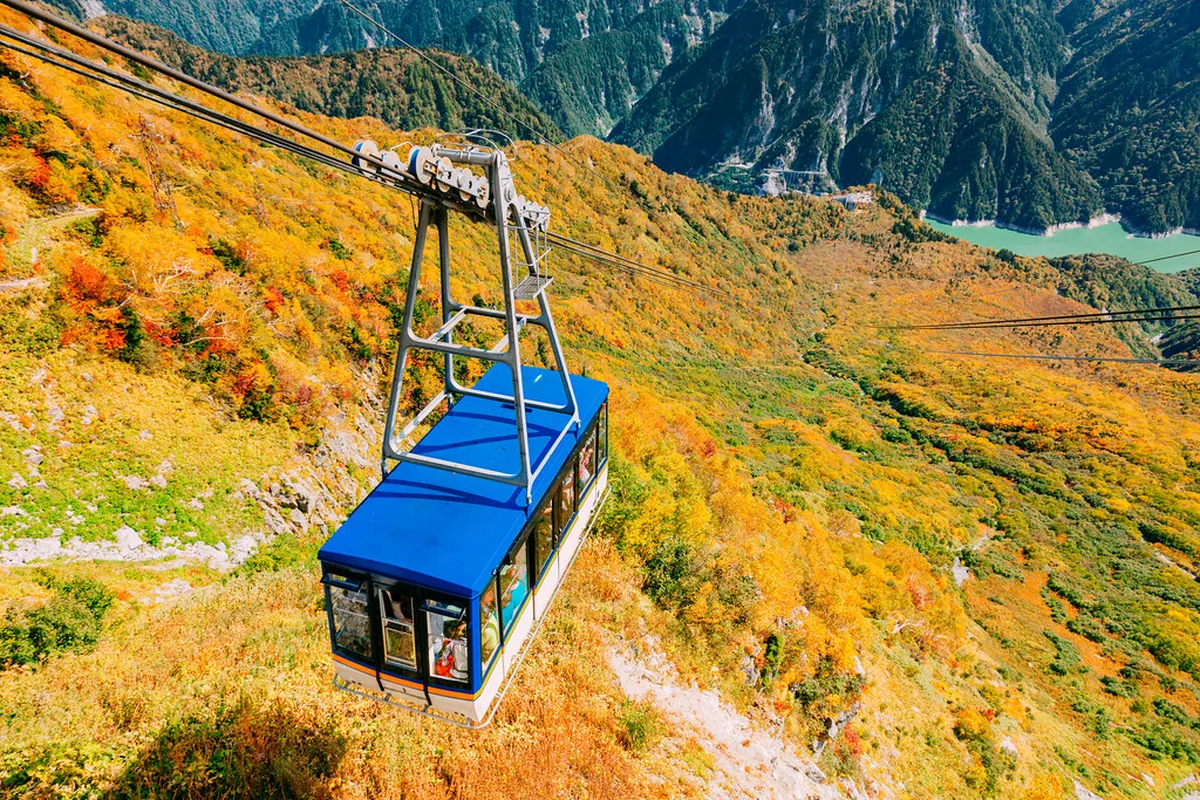
A cliff-top observation deck between the ropeway and tunnel trolleybus, overlooking the Kurobe gorge and Ushiro-Tateyama range.
Visitor guide →The route is linear, so you pass these in sequence rather than choosing between them — but knowing what each one offers helps you decide where to linger and where to keep moving.
Murodo is the highest point on the Alpine Route and the place most travellers spend the longest. Sitting on a volcanic plateau at 2,450m, it's the hub from which everything else radiates: the snow corridor in spring, the crater ponds and steam vents in summer, and the alpine flower meadows that bloom once the snow finally clears. Trails range from a flat 30-minute loop around the ponds to the serious all-day ascent of Mount Tate (Oyama, 3,003m). Even if you do nothing but step off the bus and breathe the thin, cold air, the panorama of the Tateyama range is worth the climb. See the full Murodo visitor guide.
From mid-April to late June, plows carve a walkable corridor through the deepest drifts at Murodo, leaving sheer walls of snow that can tower up to 20 metres on either side of the road. The Yuki-no-Otani snow wall is the single image most people associate with the route, and the pedestrian walk-through season is the busiest stretch of the year. It is strictly seasonal — by July the walls have melted away. Details in our Yuki-no-Otani snow wall guide.
At 186 metres, Kurobe Dam is the tallest dam in Japan, an arch of concrete wedged into a gorge that took seven years and enormous human cost to build. From late June to mid-October it performs a scheduled water discharge — up to 15 tonnes per second thundering into the valley below, often throwing a rainbow into the spray. Climb the 200-plus steps to the upper observation deck for the headline view down the arch, or take the Garbe reservoir cruise (Japan's highest-altitude sightseeing boat) in season. Full details in the Kurobe Dam guide.
A five-minute walk from Murodo station, Mikurigaike is the largest of the plateau's crater ponds and, on a still morning, a near-perfect mirror for the surrounding peaks. Beside it the Jigokudani ("Hell Valley") vents hiss sulphurous steam, a reminder that you're standing on an active volcano. It's the most photographed spot at Murodo after the snow wall. More in the Mikurigaike Pond guide.
Daikanbo sits at 2,316m between the tunnel trolleybus and the ropeway, a rooftop observation deck clinging to a cliff edge with a sweeping panorama over the Kurobe gorge, Lake Kurobe and the Ushiro-Tateyama range. There's nothing to do here but look — but the look is one of the best on the whole crossing, and it's where you board the dramatic single-span Tateyama Ropeway, which drops you toward the dam with an uninterrupted bird's-eye view (no support towers block the glass). See the Daikanbo guide.
The headache for first-timers is that the Alpine Route isn't one ticket — it's a chain of six paid transport segments plus the sights at each stop. Here's the honest split:
In practice almost the entire cost of a Tateyama-Kurobe day is transport. Reserve the through-ticket online in peak season (Golden Week and autumn foliage) — the cable cars and ropeway run on timed slots and sell out.
The classic way to do the route is one-way, crossing the mountains rather than backtracking. Going west-to-east from Toyama you climb the steep Toyama side first and descend the gentler Nagano side — most people prefer this direction. A full traverse takes about 6–8 hours with stops.
If you'd rather not carry bags across, the official luggage-forwarding service ships your suitcase from one end to the other. For a slower two-day version with an overnight at Murodo, see our full Alpine Route route guide.
Most people cross the route in a single day, but staying inside the mountains turns it from a transit into a destination. The only lodgings high on the route are at and around Murodo — Hotel Tateyama (Japan's highest hotel, beside Murodo station) and the Mikuriga-ike Onsen mountain hut on the shore of Mikurigaike Pond, the highest hot-spring bath in Japan. An overnight at Murodo buys you the two things day-trippers never get: a clear-sky sunrise over the Tateyama range, and the reflection of the peaks in the still pond before the crowds arrive. For the route's two flanks, base yourself in Toyama (with easy add-ons to Kanazawa) on the west or in Omachi/Matsumoto on the Nagano side. Lower-altitude alternatives such as the Midagahara and Bijodaira lodges put you mid-mountain without the full Murodo premium. For our full plateau write-up, see the Murodo and Mikurigaike guide.
The two gateways are Toyama (west, Toyama Prefecture) and Shinano-Omachi (east, Nagano Prefecture). From Tokyo you can reach either end by Hokuriku Shinkansen (to Toyama) or by limited express via Matsumoto (to Shinano-Omachi). Many travellers pair the route with Kanazawa on the Toyama side, since both sit on the same shinkansen line. The route is open mid-April to late November only — it is completely closed in winter, and the snow walls run only April to June.
The crossing itself is the attraction. From end to end you ride these eight modes in sequence:
There is no single best season — it depends on what you've come for:
For a month-by-month breakdown including weather, crowds and what's open, read our best time to visit Tateyama-Kurobe guide.
The route operates seasonally from roughly mid-April to late November (typically April 15 to November 30). It is completely closed through winter due to heavy snow. The famous snow walls are only walkable from mid-April to late June.
A one-way traverse from Toyama to Shinano-Omachi takes about 6–8 hours including reasonable stops, with the longest break at Murodo. A rushed crossing with minimal stops can be done in around 4 hours, but you'll miss the point.
A full one-way through-ticket for an adult is roughly ¥12,000–13,000 in 2026, depending on direction and start point. The scenery and walks at each stop are free — almost the entire cost is the chain of transport segments.
From Toyama: train to Tateyama, Tateyama Cable Car, Tateyama Highland Bus, Tateyama Tunnel Electric Bus, Tateyama Ropeway, Kurobe Cable Car, a walk across Kurobe Dam, and the Kanden Electric Bus to Ogizawa. No private cars are allowed across.
Only partly. The snow walls run mid-April to late June, while the dam's water discharge starts in late June and runs to mid-October. There is a brief late-June overlap, but for the full discharge you're better off visiting in summer or early autumn.
One-way (Toyama ↔ Shinano-Omachi) is the classic and recommended option — you cross the mountains rather than backtracking, and a luggage-forwarding service can ship your bags to the far end. Round-trip from one side is possible if your onward travel requires it.
Yes — most visitors do it as a single long day, often as a transit between Toyama/Kanazawa and Nagano/Matsumoto. For a more relaxed pace with an overnight at Murodo or a sunrise hike, build in a second day.
In peak periods (Golden Week, the snow-wall season and autumn foliage) yes — the cable cars and ropeway run on timed slots and sell out. In quieter midweek summer windows you can often buy on the day.
Keep planning with our supporting guides for the route:
External references: Tateyama Kurobe Alpine Route (Wikipedia) and Tateyama (Wikivoyage).