

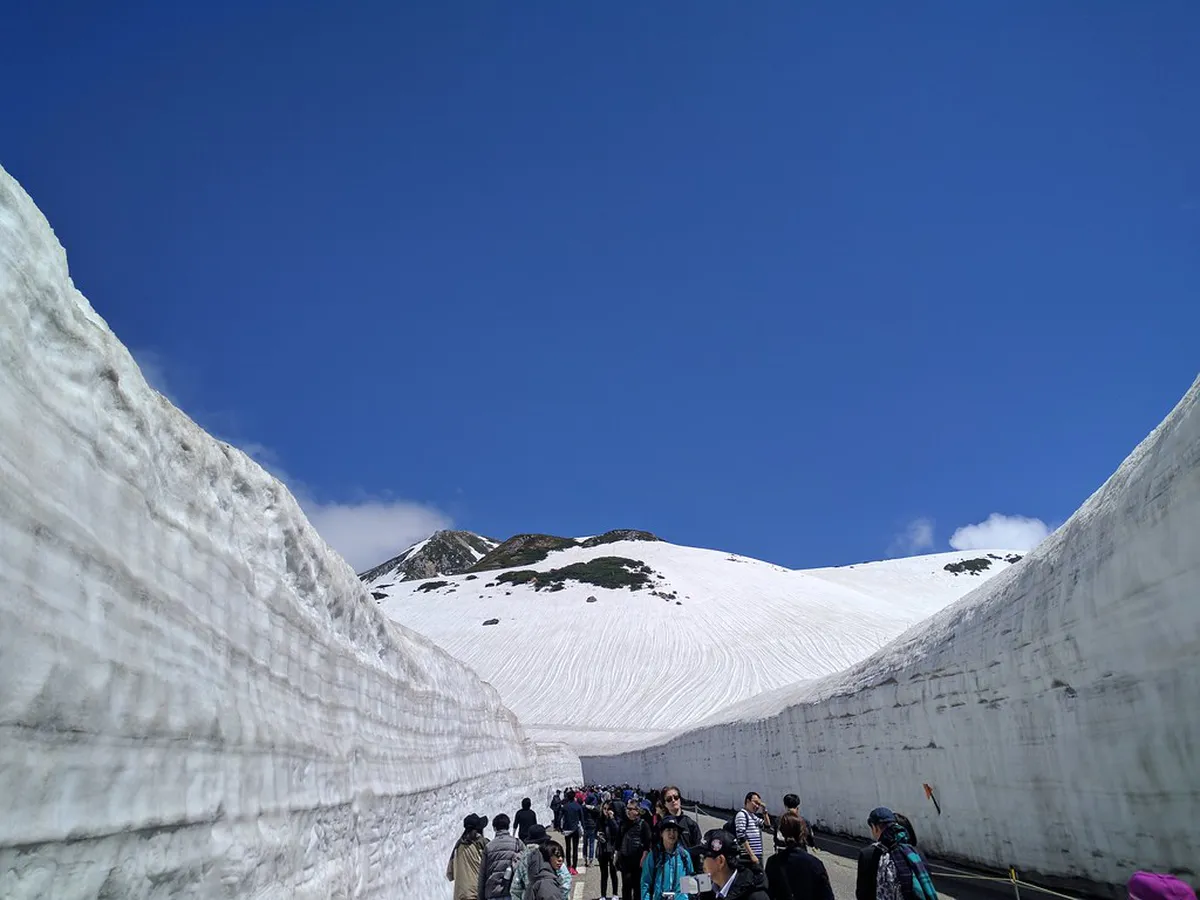
The Yuki-no-Otani Snow Wall is Japan's most dramatic spring spectacle — a 500-meter corridor carved through snowdrifts that rise up to 20 meters on either side.
The corridor sits at 2,450 meters above sea level near Murodo Station, the highest point of the Tateyama Kurobe Alpine Route. Entry to the snow wall walk is free; the cost is in getting there. This guide covers exactly what to expect, when to go, how to get there, and what the experience looks like on the ground.
What is the Yuki-no-Otani Snow Wall and Tateyama Kurobe Alpine Route?
Yuki-no-Otani means "grand snow valley" in Japanese. Each winter, the plateau near Murodo Station accumulates snowfall that regularly exceeds 20 meters. When the Tateyama Kurobe Alpine Route reopens each spring — typically mid-April — snowplows take weeks to carve a single-lane road through the drifts. The walls left on either side of that road form the snow corridor that visitors walk through.
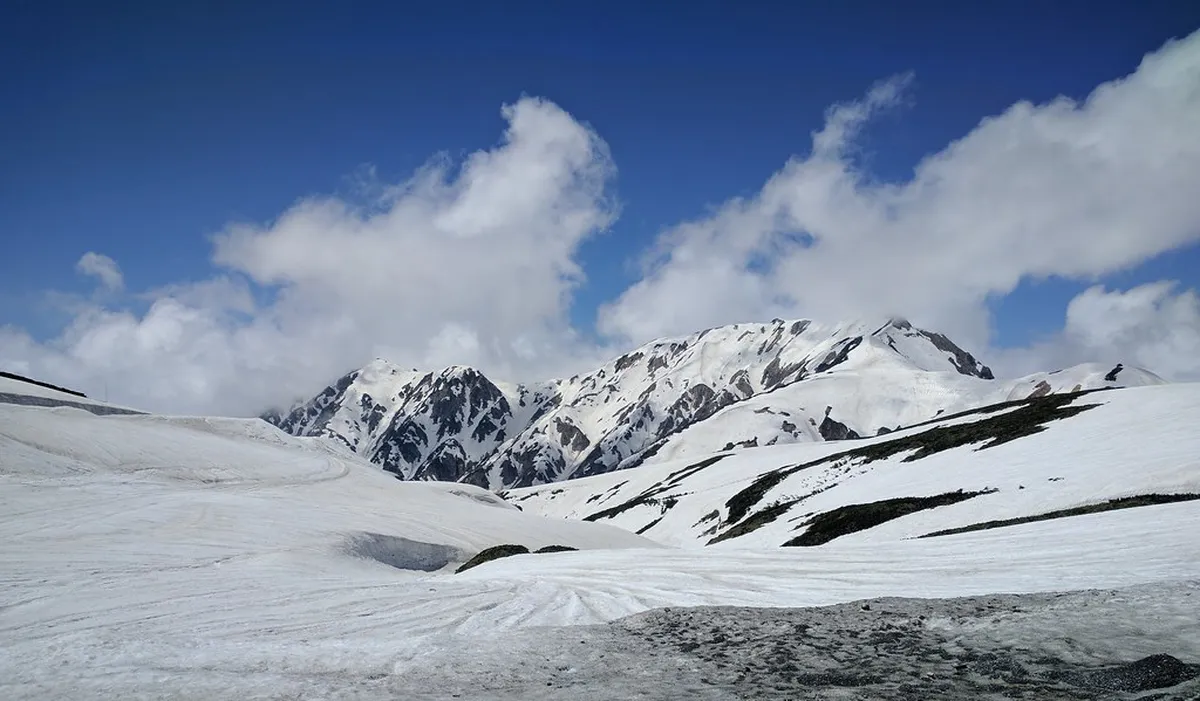
The broader Tateyama Kurobe Alpine Route is a 90-kilometer mountain sightseeing corridor connecting Toyama Prefecture on the west and Nagano Prefecture on the east. Private cars are not permitted. Visitors travel the route using a sequence of cable cars, highland buses, trolley buses, and ropeways — seven modes of transport in total. The route traverses peaks in the Northern Alps that top 3,000 meters, and the snow wall at Murodo is its single most famous stop.
Murodo Station is the highest-altitude station in Japan. Hotel Tateyama, also at Murodo, is Japan's highest hotel at 2,450 meters. From the terminal you can see Tateyama cedars with trunks reaching 6 meters in circumference, and on clear days Shomyo Falls — Japan's tallest waterfall at 350 meters — is visible from the bus. This concentration of superlatives in one place is part of what makes the route so compelling.
When is the Best Time to Visit the Snow Wall?
The Tateyama Kurobe Alpine Route typically reopens in mid-April each year, and the snow corridor at Otani is walkable from that opening day until roughly late June. Wall heights peak immediately after opening — often the full 20 meters — and then diminish steadily as spring warms the plateau. By late May, walls are commonly 10 to 15 meters. By mid-June they are still impressive but noticeably lower. Check current conditions on the official Tateyama Kurobe Alpine Route website before booking.
Mid-April to early May delivers the tallest walls but the most competition for spots. Japan's Golden Week (late April to early May) is the busiest period on the entire route. Buses fill up and wait times for transfers can exceed an hour at each stage. If you are visiting during Golden Week, book accommodation and transport tickets well in advance and aim to arrive at Tateyama Station before 08:00.
Late May to early June is the best balance point for most visitors. Crowds ease after Golden Week, the weather becomes more stable, and temperatures at Murodo are a more manageable 5–10°C rather than the near-freezing conditions of April. The walls are still substantial and the photo opportunities remain excellent. Weekdays in this window are noticeably quieter than weekends.
A secondary consideration is timing within the day. The first buses from Tateyama Station depart around 07:00 and Murodo fills up by mid-morning. Arriving at the snow wall before 10:00 gives you a calmer walk and better light for photography. Return buses can get backed up in the afternoon, so plan your turnaround accordingly.
How to Get to the Yuki-no-Otani Snow Wall and Alpine Route
Most visitors approach from the Toyama (west) side via Tateyama Station. From Tokyo, the Hokuriku Shinkansen reaches Toyama Station in about two hours; a one-hour flight from Haneda to Toyama Kitokito Airport is also viable. From Osaka, a combination of limited express and Hokuriku Shinkansen takes under three hours. From Toyama Station, the Toyama Chihou Railway runs to Tateyama Station in about one hour. Full access details are on the Mt. Tateyama access guide.
From Tateyama Station, the journey to Murodo involves three stages and takes approximately 1 hour 30 minutes. First, a cable car climbs 500 meters over 1.3 kilometers to Bijodaira Station. Then a highland bus continues through alpine terrain to Murodo Terminal. The route is entirely car-free. Tickets for each segment must be purchased — you cannot board without them. Online advance booking is available on the official route website and is strongly recommended during April and May.
Visitors can also enter from the Nagano (east) side, starting from Shinano-Omachi Station. This side accesses Kurobe Dam first, then works toward Murodo. Choosing which direction to enter depends on your base city and whether you want to do a one-way traverse or return from the same side. A full one-way traverse from Tateyama Station to Shinano-Omachi (or vice versa) requires booking transport on both ends.
The Otani Walk: What Actually Happens at Murodo
Arriving at Murodo Terminal, the first stop is the Central Plaza on the ground floor of the terminal building. Here you collect a free certificate of passage — a small souvenir card confirming you walked the Yuki-no-Otani corridor. From the plaza, walk roughly 100 meters along a designated path to reach the entrance of the snow corridor itself. The transition from a heated terminal building to standing between walls of solid snow is immediate and striking.
The snow corridor is approximately 500 meters long and takes about 35 minutes to walk out and back at a comfortable pace. The walls are vertical on both sides, carved cleanly by snowplows. At their peak in mid-April the walls tower overhead and block out peripheral views entirely — the effect is genuinely tunnel-like. An observation deck partway along lets you look out over the corridor from above. There is no admission fee for the walk itself.
In May, a separate Snow Maze is set up near the corridor — a labyrinth cut into the snow banks that is popular with children and families. In June, a Snow Slide opens where visitors can sled down a carved snow ramp. These events run for limited periods and are worth checking on the official site if you are visiting in those months. Neither requires additional tickets beyond your route transport pass.
The Panorama Road is a second, shorter snow corridor near Murodo that opens for a more limited window, typically only while the snow is deep enough in April and early May. It runs parallel to the main Otani corridor and offers elevated mountain views rather than the enclosed wall experience. It is less publicized than the main walk but worth the short detour if it is open during your visit. Check the official route website for current status, as it closes independently of the main corridor.
Top Attractions Along the Tateyama Kurobe Alpine Route
Beyond the snow wall, Murodo Plateau is the starting point for several short walks. The most popular is the Mikurigaike Pond course — a 10- to 15-minute walk from Murodo Terminal to a volcanic crater lake with deep blue water that reflects the three peaks of the Tateyama range. Japanese ptarmigans (raichō), a protected alpine bird species, inhabit the plateau and are occasionally visible near the path. The Murodo area also has a wheelchair-accessible barrier-free walking course along the plateau edge.
Kurobe Dam, reached by continuing east from Murodo, is Japan's tallest dam at 186 meters and 492 meters wide. It stands between Kurobeko Station and the Kurobe Dam Rest House. From June 26th to October 15th the dam discharges large quantities of water daily, creating a dramatic mist curtain visible from the observation decks. The Kurobe excursion ship Garube operates on the reservoir for a lake cruise. A natural trail around the shores passes an 800-year-old beech forest and the ancient giant trees of Kurobe. The Kurobe Dam is a full half-day stop on its own.
The Tateyama Ropeway between Daikanbo and Kurobedaira has no support pillars along its span, giving unobstructed 360-degree panoramic views of the Northern Alps. This segment is one of the most photographed on the entire route. At Daikanbo, an observation platform sits directly above the ropeway and offers views into Nagano on one side and Toyama on the other. On clear June mornings, a sea of clouds fills the valleys below, visible from both the bus and the ropeway — one of the most atmospheric sights on the entire route.
One-Day Itinerary for the Snow Wall
This itinerary starts from Toyama Station and focuses on the snow wall at Murodo, returning the same way. It works best on weekdays from late April through early June.
- 07:00 — Depart Toyama Station by Toyama Chihou Railway toward Tateyama Station (approximately 1 hour). Buy onward route tickets at Tateyama Station.
- 08:00 — Board the cable car at Tateyama Station to Bijodaira Station. Transfer to the highland bus to Murodo Terminal (total journey: 1 hour 30 minutes from Tateyama).
- 09:30 — Arrive Murodo. Collect passage certificate at Central Plaza, then walk 100 meters to the snow corridor entrance. Walk the Otani corridor (35 minutes round trip). If the Panorama Road is open, continue there.
- 11:00 — Walk to Mikurigaike Pond (15 minutes). Lunch at Murodo Terminal restaurant or the adjacent Raichoso facility. Budget 1,500–2,500 JPY for a meal.
- 13:00 — Begin return journey by highland bus and cable car to Tateyama Station.
- 15:00 — Arrive Tateyama Station. Return train to Toyama Station by 16:00.
If you want to include Kurobe Dam, add a full day and plan an overnight stay — either at Hotel Tateyama at Murodo (book months in advance) or at Omachi Hot Spring Village on the Nagano side after traversing the full route. A full traverse from Tateyama Station to Shinano-Omachi takes approximately 6–8 hours including stops.
What to Pack for Your Snow Wall Visit
Temperatures at Murodo during the snow wall season range from around 0°C in mid-April to 5–10°C in late May and June. The plateau is exposed and wind can drive cold air across the open corridor even on sunny days. Dressing in layers is essential. A windproof and waterproof outer shell is the most important single item — pack it regardless of the forecast below.
Inner layers of fleece or merino wool work better than cotton. Jeans are a poor choice; they absorb moisture quickly and become cold. Water-resistant trousers are preferable. Waterproof hiking boots with deep treads are essential for the snow surface — the corridor is compacted but can be slippery, particularly near the edges.
Sunglasses are critical. Snow reflects UV strongly at altitude and eye fatigue builds quickly without them. Sunscreen, a warm hat, gloves, and a scarf round out the essentials. Bring pocket warmers (kairo) if you feel the cold easily — they are available at convenience stores in Toyama and also in the terminal shops at Murodo. The strong midday sun in June means sunscreen matters even when the air feels cold.
Budgeting for Your Yuki-no-Otani Snow Wall Trip
Transport is the main cost. A one-way trip from Tateyama Station to Murodo and back costs approximately 5,500–6,000 JPY per person (cable car plus highland bus, round trip to Murodo only). A full one-way traverse of the entire route from Tateyama Station to Ogisawa Station (Nagano side) is approximately 10,000–13,000 JPY. Prices are set by the individual transport operators and are updated annually — check the Tateyama Kurobe Alpine Route official site for current 2026 fares before booking.
The Otani Walk itself is free. There is no admission ticket for the snow corridor. The Snow Maze and Snow Slide events are also free with your route transport ticket. Kurobe Dam is free to visit. The main paid optional extra is the Kurobe excursion ship Garube, which has a separate boarding fee.
Food at Murodo Terminal runs 1,500–2,500 JPY per meal. Bringing your own packed lunch from Toyama city is a legitimate way to cut costs. Accommodation at Hotel Tateyama at Murodo is a premium option — expect to pay upwards of 20,000 JPY per person per night including dinner. Budget hotels in Toyama city range from 6,000–10,000 JPY. Booking months in advance is necessary for Hotel Tateyama during peak season; Toyama city options are easier to secure last-minute.
Muslim-Friendly Travel in Toyama and the Alpine Route
Toyama Prefecture has made deliberate efforts to accommodate Muslim visitors. A dedicated Toyama Muslim Friendly Restaurants directory lists restaurants across the prefecture offering halal-certified or Muslim-friendly menus, with notes on ingredients and preparation. The directory also covers local specialties such as Black Ramen and Toyama Bay sushi, indicating which variants are prepared to meet dietary requirements.
Along the Alpine Route itself, dedicated halal options are limited. Hotel Tateyama's Restaurant Tateyama serves a Muslim-friendly Malaysian Chicken Curry dish — one of the few explicitly halal options at high altitude on the route. Bringing your own packed halal food from Toyama city is the most reliable approach for the mountain section. Convenience stores in Toyama carry pre-packaged items; check labels carefully.
Prayer spaces are not marked along the route, but the terminal buildings at Murodo have quiet areas. A portable prayer mat is practical to bring. Some Toyama city hotels have become more attentive to Muslim traveler needs over recent years and will indicate Qibla direction and provide prayer mats on request — worth confirming at booking. The Visit Toyama website has current information on halal-friendly services in the prefecture.
Frequently Asked Questions About the Snow Wall
Frequently Asked Questions
How much time should you plan for the Yuki-no-Otani Snow Wall visitor guide?
Plan for at least 2-3 hours to fully experience the Yuki-no-Otani Snow Wall and the immediate Murodo area. This includes walking the 500-meter snow corridor and taking photos. If you traverse the entire Tateyama Kurobe Alpine Route, allocate a full day, typically 6-8 hours. This duration accounts for all transfers and stops along the way.
What should travelers avoid when planning a Yuki-no-Otani Snow Wall visit?
Avoid visiting without checking the opening dates and current weather conditions. Do not underestimate the mountain weather; pack appropriate warm and waterproof clothing. Try to avoid Golden Week if you prefer fewer crowds. Also, avoid relying solely on cash, as some larger stations accept cards. Lastly, do not forget to book accommodation and transport in advance during busy periods.
Is the Yuki-no-Otani Snow Wall worth including on a short itinerary?
Yes, the Yuki-no-Otani Snow Wall is definitely worth including, even on a short itinerary. The unique experience of walking between massive snow walls is unparalleled. You can focus just on the Murodo area for a half-day trip if time is limited. This allows you to witness the main attraction without traversing the entire Alpine Route.
What to wear when visiting the Yuki-no-Otani Snow Wall?
Wear warm, waterproof, and windproof layers, as temperatures can be cold and change quickly. Essential items include a waterproof jacket, warm inner layers (fleece or wool), long pants, and waterproof hiking boots. Don't forget sunglasses, sunscreen, a warm hat, and gloves. Proper attire ensures comfort and protection from the elements.
Are there Muslim-friendly options near the Tateyama Kurobe Alpine Route?
Yes, Toyama city offers several Muslim-friendly restaurants and facilities. While direct halal options are limited along the Alpine Route itself, you can bring your own halal snacks and packed meals. Many hotels in Toyama are also becoming more accommodating. Checking the TOYAMA MUSLIM FRIENDLY RESTAURANTS guide before your trip is highly recommended.
The Yuki-no-Otani Snow Wall is one of those experiences that is genuinely difficult to convey in photographs. The scale of standing between 20-meter walls of compressed snow, at 2,450 meters above sea level, is something that registers in person in a way it simply doesn't on a screen.
Getting there is the work — the multi-stage Tateyama Kurobe Alpine Route requires planning, advance booking, and an early start. But the logistics are straightforward once you understand the sequence, and every stage of the journey — the cable car, the highland bus past Shomyo Falls, the trolley bus through the mountain tunnel — adds to the overall experience. This is not a destination you arrive at by accident.
Use this guide to plan the timing and transport that matches your schedule. Mid-to-late May on a weekday, arriving at Murodo before 10:00, is the practical sweet spot for most visitors in 2026.
For the latest official information, see the Yuki-no-Otani Snow Wall on Wikipedia and Yuki-no-Otani Snow Wall official site.