

Tateyama Kurobe Alpine Route Travel Guide
Plan your tateyama kurobe alpine route trip with transport stages, ticket prices, snow wall timing, and booking tips for a smoother 2026 journey.
On this page
The Tateyama Kurobe Alpine Route Travel Guide is a 90-kilometer crossing of the North Japan Alps that links Toyama Prefecture in the west with Nagano Prefecture in the east. The route rises from 475 meters at Tateyama Station to 2,450 meters at Murodo, the highest point on the journey. Eight different modes of transport — trains, buses, cable cars, a ropeway, and a funicular — carry travelers through one of Japan's most dramatic mountain landscapes.
Unlike a standard sightseeing trip, this crossing is a point-to-point journey that most visitors complete in a single long day. The route passes through Chubu Sangaku National Park and skirts the flanks of Mount Tateyama, one of Japan's three sacred mountains alongside Fuji and Hakusan. It is open only from mid-April to late November each year, so timing your visit matters as much as any logistical planning.
Key Takeaways
- The route is open mid-April to late November only — the snow walls are walkable from mid-April through late June.
- Buy a through-ticket online at the official Alpine Route site; the JR Rail Pass is not valid for any segment of the crossing.
- Start from Nagano rather than Toyama to give yourself more time and avoid the morning ropeway queue from the western side.
- Expect temperatures at Murodo (2,450m) to be 15 to 20 degrees Celsius colder than at the base — always carry a warm layer.
- The baggage forwarding service (¥2,500 per item) between Shinano-Omachi and Toyama makes a single-day crossing far more comfortable.
How to Get to the Alpine Route
There are two gateway cities for the Tateyama Kurobe Alpine Route: Nagano on the eastern side and Toyama on the western side. Most independent travelers start from Nagano, because the last transport connection back to Tokyo departs from Toyama at around 9pm, giving you more flexibility at the end of the day. From Tokyo, the shinkansen to Nagano takes about 83 minutes; a point-to-point ticket costs roughly ¥8,200, and the journey is fully covered by the JR Rail Pass.
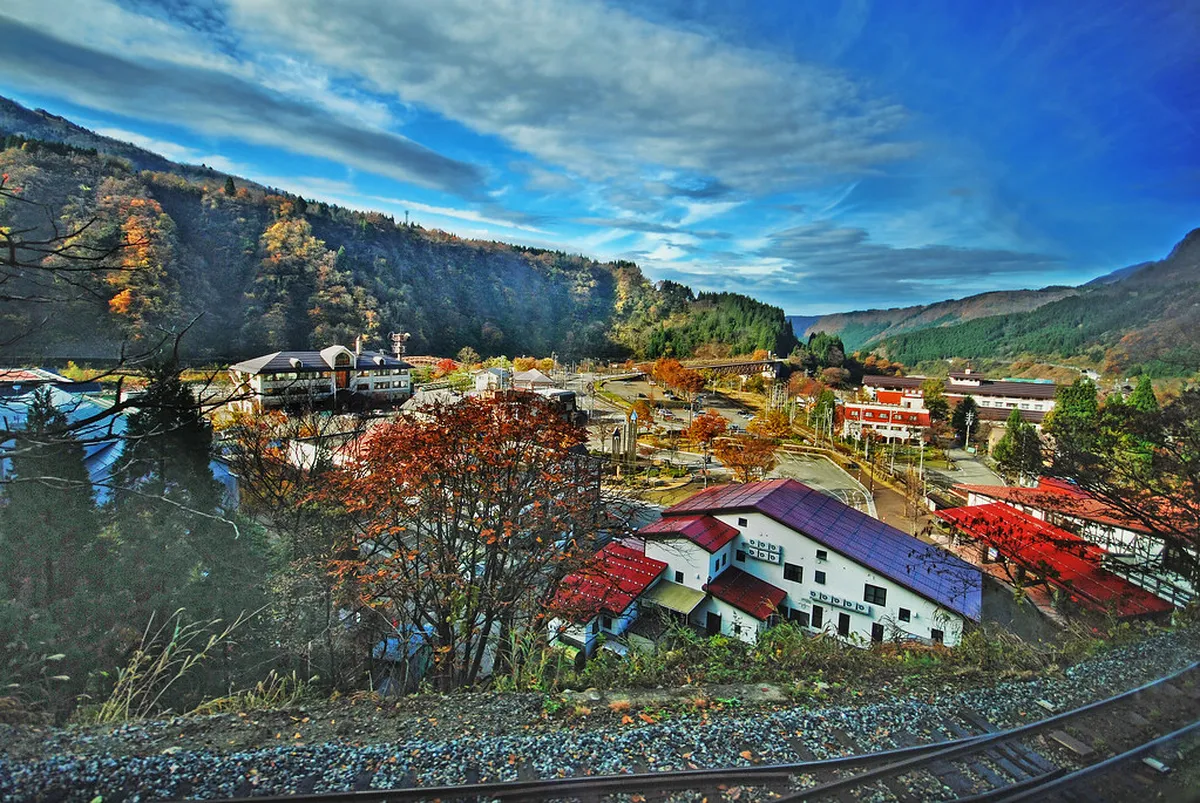
From Nagano Station, take the Alpico Express Bus from the bus terminal on Level 1 to Ogizawa; the ride takes about 100 minutes. The bus has free Wi-Fi, and the second half of the journey climbs into the mountains, where the scenery shifts from green valleys to snow-streaked peaks. Ogizawa is the official eastern gateway of the Alpine Route — this is where your crossing ticket begins.
If you prefer to start from Toyama, the shinkansen from Tokyo takes around 139 minutes, and Toyama Station sits directly above the final station of the route. Traveling west to east (Toyama to Nagano) is equally valid, though you will face the morning crowds at the ropeway from the Toyama side. Whichever direction you choose, confirm the final departure time from your exit station before you set off.
The 8 Transport Stages Explained
The route uses eight different transport modes across multiple stages, and each connection has its own ticket and queue. Buying a through-ticket online before you travel — covering Ogizawa to Toyama or Tateyama — avoids purchasing individual fares at each stop. Allow extra time at every transfer point, since posted journey times do not include queuing, which can add an hour or more at busy periods.
From Ogizawa, the Kanden Tunnel Trolley Bus takes 16 minutes through a mountain tunnel to reach Kurobe Dam at 1,470 meters. After crossing the dam on foot (about 15 minutes), you take the Kurobe Cable Car — a five-minute ride climbing 373 vertical meters inside a tunnel — up to Kurobedaira at 1,828 meters. The Tateyama Ropeway then carries you 1.7 kilometers over open alpine terrain to Daikanbo at 2,316 meters, where the views of the surrounding peaks are especially wide.
A second trolley bus covers the 10-minute run from Daikanbo through a tunnel to Murodo at 2,450 meters, the highest and most famous stop on the route. Descending from Murodo, the Tateyama Highland Bus makes a 50-minute run down to Bijodaira, passing Tengudaira and Midagahara on the way. The final Tateyama Cable Car takes just 7 minutes from Bijodaira down to Tateyama Station at 475 meters, where the Toyama Chiho Railroad local train continues to Toyama City over 60 minutes.
- Alpico Express Bus — Nagano to Ogizawa
- The ride from Nagano Station to Ogizawa takes approximately 100 minutes.
- Buy your bus ticket separately, as it is not included in the main route ticket.
- The bus climbs into the mountains for the second half of the journey toward Ogizawa.
- Kanden Tunnel Trolley Bus — Ogizawa to Kurobe Dam
- This electric tunnel bus covers the first 16-minute segment of the main through-ticket.
- After arriving, walk across the top of Kurobe Dam for about 15 minutes to reach Kurobeko.
- The underground approach means no external views, but the dam itself is a striking reward.
- Kurobe Cable Car — Kurobeko to Kurobedaira
- This 5-minute funicular climbs 373 meters vertically through a mountain tunnel.
- Numbered queue tickets are issued at the Kurobeko station office before boarding.
- Passengers ride inside the mountain with no exterior windows on the ascent.
- Tateyama Ropeway — Kurobedaira to Daikanbo
- This 7-minute aerial ropeway spans 1.7 kilometers over open alpine terrain.
- Expect the longest wait times here — queues can stretch up to 90 minutes in peak season.
- Kurobedaira has a sky garden, shops, and the best lunch options along the entire route.
- Tateyama Trolley Bus — Daikanbo to Murodo
- A 10-minute tunnel ride brings you to Murodo at 2,450 meters above sea level.
- Temperatures at Murodo run 10 to 20 degrees Celsius colder than at the base stations.
- Rubber boots for rent are available at Murodo if snow is present on the corridor walk.
- Tateyama Highland Bus — Murodo to Bijodaira
- This 50-minute bus descends the mountain via the Tengudaira and Midagahara stops.
- In spring, the bus drives through the snow corridor for a seated view of the walls.
- Ask the driver for a stop at Midagahara if you want time at the highland wetland.
- Tateyama Cable Car — Bijodaira to Tateyama Station
- A 7-minute descent through forested alpine slopes brings you down to Tateyama Station.
- This is the final mechanized section before the flat valley railroad takes over.
- The cable car offers open views across the lower Tateyama gorge on clear days.
- Toyama Chiho Railroad — Tateyama to Toyama
- The local train ride from Tateyama Station to Toyama City takes approximately 60 minutes.
- An express train option from Tateyama reaches Toyama faster for a small additional fare.
- Toyama Station connects directly to the shinkansen back to Tokyo or Osaka.
The Snow Walls of Murodo
The Yuki-no-Otani Snow Wall at Murodo is the route's most photographed draw, and the reason many visitors time their trip for spring. Snow walls are carved each April from the massive drifts that accumulate over winter, creating a narrow walking corridor flanked by sheer white faces. At peak height in late April and early May, the walls can reach up to 20 meters — taller than a six-story building, wide enough that the bus passing through looks small by comparison.
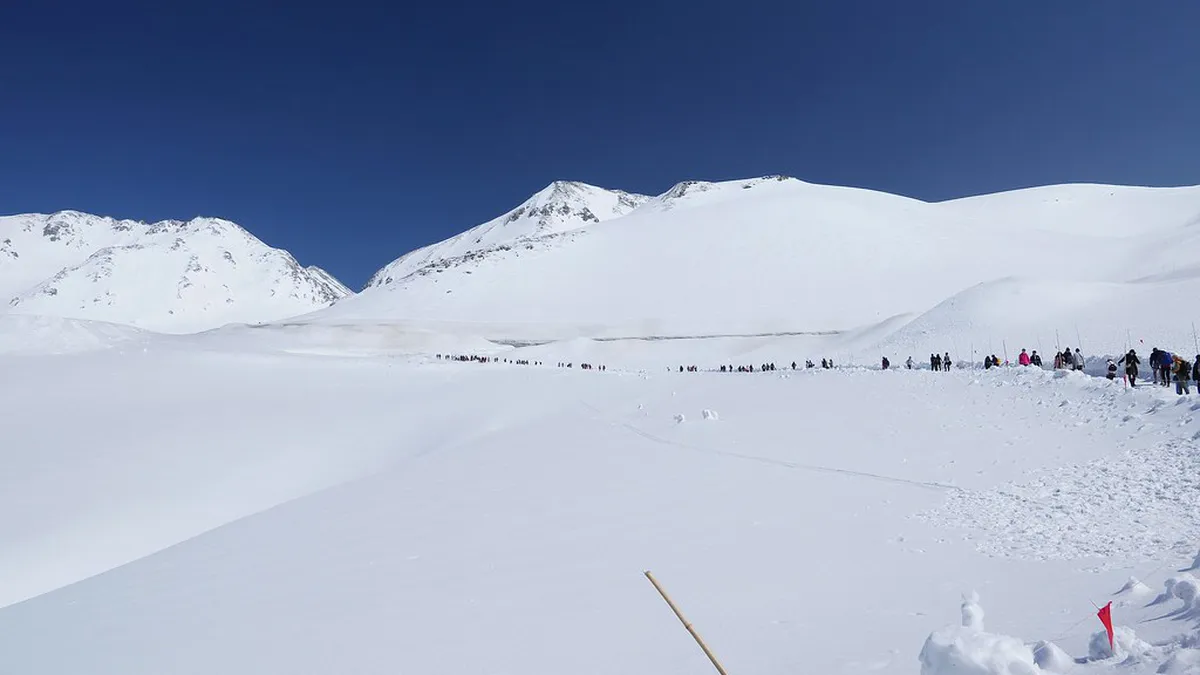
The snow corridor is free to walk once you have reached Murodo on your route ticket; there is no additional entry charge. A one-way snow walk runs roughly 500 meters, and visitors return the same way they came, so plan 30 to 45 minutes for the full experience. A separate panorama walk at Murodo offers wide views over the Tateyama plateau and is worth taking on clear days.
The walls shrink gradually as spring turns to summer, and the corridor typically disappears by early to mid-July depending on snowfall that year. If the walls are your main reason for visiting, target late April through early June, when they remain most dramatic. Check the Tateyama Kurobe Alpine Route official site for live snow depth updates and walkway conditions before your travel day.
Even outside the snow wall season, Murodo remains the most rewarding stop on the route. Hiking trails radiate from the plateau, including a path to the summit of Mount Tate at 3,015 meters and a boardwalk past Jigokudani (Hell Valley), where 136 sulfur vents exhale steam from the ground. Temperature at Murodo can drop to near zero even in July, so always carry an extra layer regardless of the season.
Kurobe Dam, Mikurigaike, and Shomyo Falls
Kurobe Dam: Japan Travel Guide 2026 is the largest arch dam in Japan, standing 186 meters high and nearly 500 meters long. Built during Japan's postwar reconstruction in the 1950s, the project required ten million workers and came at the cost of 171 lives — a history documented in the dam's small onsite museum. A free observatory at the station offers an aerial view of the dam and reservoir; the 200-plus steps are worth the climb, especially as most tour groups skip this detour entirely.
Mikurigaike is a volcanic crater pond at 2,405 meters on the Murodo plateau, and one of the highest hot-spring-fed lakes in Japan. The water shifts from turquoise to deep blue depending on the light, and the surrounding boardwalk passes through alpine wetlands where rare plants grow in soil that stays frozen for most of the year. Adjacent Midagahara, at around 1,930 meters, is a national-natural-monument wetland full of cotton grass and dwarf pines — a quiet counterpoint to the crowds at the snow walls.
Shomyo Falls, accessible from the bus stop at Bijodaira, is the tallest waterfall in Japan at 350 meters with a free-fall section of about 70 meters. The bus from Murodo makes a brief roadside photo stop here without passengers disembarking, but travelers who alight at Bijodaira can walk to the falls viewpoint in under 30 minutes. In late autumn, the falls are framed by red and gold maples — a distinctly different spectacle from the spring snow scene at Murodo.
Ticket Prices and How to Book
The Alpine Route is not covered by the JR Rail Pass; each transport segment runs on its own ticketing system. The most practical option for most visitors is a single through-ticket purchased on the official Alpine Route website, which covers all mechanized transport from Ogizawa to Toyama or Tateyama. In 2023, the Ogizawa–Toyama through-ticket cost ¥12,360 per adult; the shorter Ogizawa–Tateyama section cost ¥10,940 — verify current prices on the official site before booking.
The Alpico Express Bus between Nagano and Ogizawa must be booked separately and costs approximately ¥4,300 per person; the shorter Shinano-Omachi to Ogizawa bus costs around ¥2,000. Book online at least several days ahead during Golden Week (late April to early May) and autumn foliage season (mid-October to early November), when seats and timed-entry slots sell out quickly. When purchasing online, you select your travel date, direction, and preferred departure time; you then exchange the QR code for a physical strip ticket at the Ogizawa station kiosk.
A baggage forwarding service is available between Shinano-Omachi and Toyama for ¥2,500 per item, letting you cross the mountains without hauling a suitcase through every transfer. Drop-off runs from 7:40am to 10:30am, with pickup at the other end between 3:00pm and 6:00pm. The service does not extend to Nagano itself, so if you stay in Nagano, carry bags to Shinano-Omachi to use it.
Best Time to Visit and What to Pack
The best time to visit the Tateyama Kurobe Alpine Route depends on what you want to see most. Spring (mid-April to mid-June) is the only window for the snow walls, which draw the largest crowds and the most dramatic scenery. The route typically opens around April 15 — the exact date varies by year based on snowfall — and the corridor walk closes as the walls melt, usually by late June.
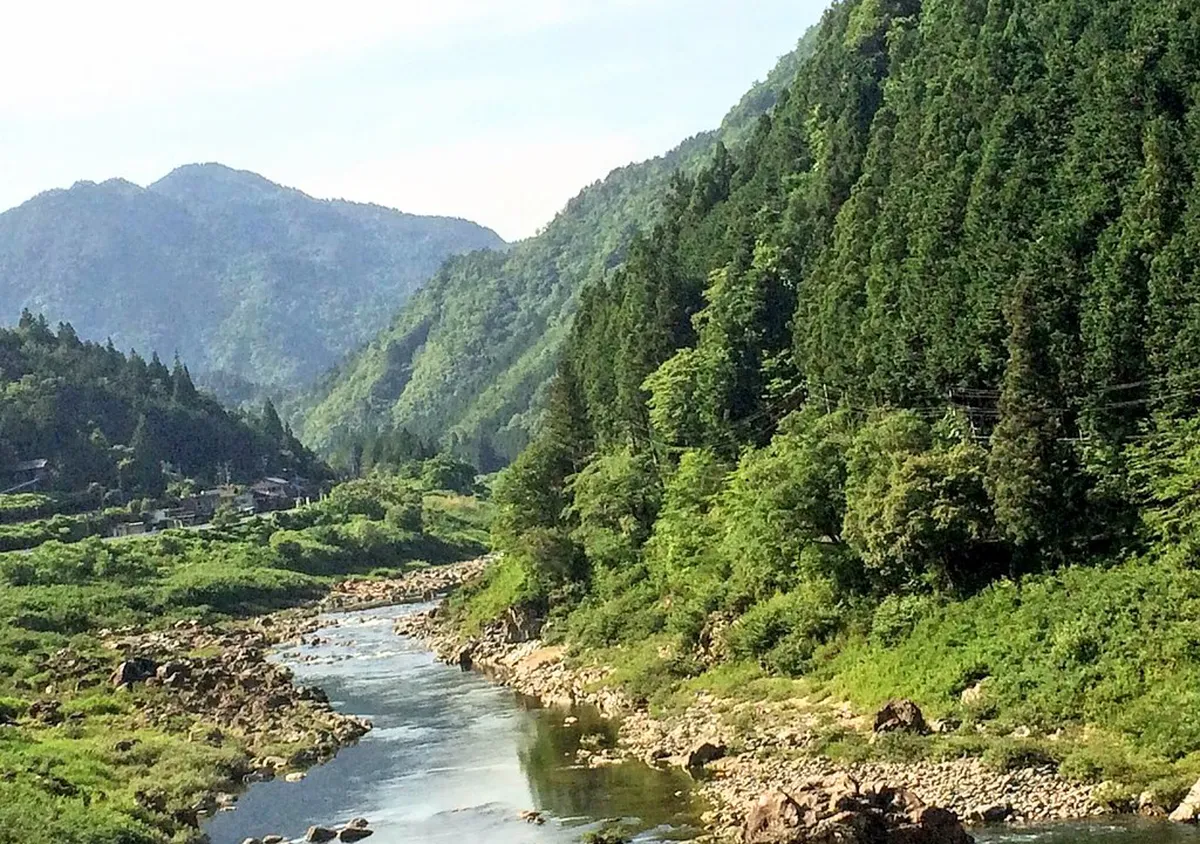
Summer (July to early September) brings mild alpine temperatures around Murodo and opens the full network of hiking trails, including the path to the Tateyama summit. Weekday visits in July and August are considerably quieter than the spring peak, though a national holiday can reverse that pattern quickly. Autumn (mid-September to late November) offers a quieter experience than spring, with the added spectacle of red and yellow foliage on the lower slopes between Bijodaira and Tateyama.
Regardless of season, pack a warm mid-layer and a windproof jacket: temperatures at Murodo (2,450m) can be 15 to 20 degrees Celsius colder than at the base, even in the height of summer. Sunglasses are essential in spring because snow glare on the corridor walk can be intense. Sturdy walking shoes suit the dam crossing and wetland boardwalks well; rubber boots can be rented at Murodo if the snow walk demands them.
Plan to leave your starting city no later than 7:30am to complete the full crossing in a single day with time to linger at Murodo. The last bus from Murodo toward Nagano departs at 4:00pm, and the last shinkansen from Toyama to Tokyo runs at approximately 9:00pm. Building in at least 30 minutes of buffer at each major transfer point is a practical habit, since ropeway queues in particular can be unpredictable.
Going deeper on this theme? Our 9 Best Places to Eat on the Tateyama Kurobe Alpine Route guide covers it in detail, with the practical planning this page leaves out.
Frequently Asked Questions
Is the Tateyama Kurobe Alpine Route worth it?
Yes, for most visitors the crossing delivers an experience unlike any other in Japan. The combination of eight transport modes, the towering snow walls, Kurobe Dam, and the 2,450-meter Murodo plateau creates a full day of varied scenery. The main trade-offs are cost — around ¥12,000 to ¥17,000 per person including buses — and a very long travel day from Tokyo. Travelers who enjoy mountain landscapes and unusual infrastructure find it genuinely memorable.
Can you do the Tateyama Kurobe Alpine Route in one day from Tokyo?
Yes, but it requires an early start and careful timing. Leave Tokyo on the 7:20am shinkansen to Nagano (83 minutes), connect to the Alpico bus for Ogizawa (100 minutes), and begin the crossing. You can reach Toyama by around 5:30pm and catch a shinkansen back to Tokyo before 10pm, making it a 14- to 15-hour day. If you prefer a slower pace, consider staying overnight in Nagano or Toyama instead.
When is the snow wall walk open on the Alpine Route?
The Yuki-no-Otani snow corridor at Murodo typically opens in mid-April and remains walkable through late June, with exact dates varying by snowfall each year. The walls are tallest in late April and early May, often reaching 19 to 20 meters. By July, warmer temperatures usually melt the corridor completely. Check the official Alpine Route website for the current season's schedule before booking.
Is the JR Rail Pass valid on the Tateyama Kurobe Alpine Route?
No, the JR Pass does not cover any segment of the Alpine Route itself. The shinkansen journeys to Nagano and from Toyama back to Tokyo are both JR-operated and fully covered by the standard JR Pass. However, the route's internal transport — buses, cable cars, ropeway, and funicular — requires a separate through-ticket purchased on the official Alpine Route website or at the gateway station.
Is the Alpine Route open in winter?
No. The route closes for winter, typically from late November to mid-April, due to extreme snowfall that makes the transport infrastructure unsafe to operate. In 2024, the closure ran from December 1 to April 14. Verify the opening date for your travel year on the official Alpine Route website, as conditions vary annually. The entire route shuts simultaneously with no partial winter access for general visitors.
The Tateyama Kurobe Alpine Route rewards careful planning with a journey that moves through eight transport modes and five distinct ecosystems in a single day. From the engineering scale of Kurobe Dam to the silence of the Mikurigaike crater pond, every stage offers something different. Book your through-ticket online, pack extra layers, and leave early — the route runs like clockwork when you do.
Whether you time your trip for the spring snow walls, the summer hiking trails, or the autumn foliage on the lower slopes, the crossing is genuinely unlike any other experience in Japan. The cost and the long travel day are real trade-offs, but travelers who make the effort rarely feel it was wasted. For more planning detail on each stage, explore our Japan travel blog for itinerary guides covering the full route.
Explore More Tateyama-Kurobe Guides
In-depth guides for planning your Tateyama-Kurobe trip.
Browse the Tateyama-Kurobe attractions hub for detailed visitor guides:
- Murodo Visitor Guide: Explore the Tateyama Kurobe Alpine Route
- Yuki-no-Otani Snow Wall Visitor Guide: Plan Your Tateyama Alpine Route Trip
- Kurobe Dam Visitor Guide: Plan Your Tateyama Kurobe Alpine Route Trip
- Mikurigaike Pond Visitor Guide & Alpine Route Itinerary
- Daikanbo Visitor Guide: Panoramic Views, Access & Tips for Aso
Free guide: Japan's Hidden Gems
12 under-the-radar places beyond Tokyo & Kyoto — with the best season to visit each and a local tip you won't find in the guidebooks.
You might also like


Continue reading
More guides you'll find useful


