Kurobe Dam is Japan's tallest arch dam and the undisputed highlight of the Tateyama Kurobe Alpine Route. Standing 186 meters tall in the heart of the Northern Japan Alps, it draws visitors from around the world with its thundering sightseeing water discharge, panoramic mountain views, and the extraordinary journey required just to reach it. This guide covers everything you need — access from both the Toyama and Nagano sides, a step-by-step itinerary, ticket options, seasonal timing, and practical packing advice — so you can plan your 2026 visit with confidence.
The Tateyama Kurobe Alpine Route connects Toyama Prefecture to Nagano Prefecture across some of Japan's most dramatic alpine terrain. Kurobe Dam sits near the Nagano end of the route, reached by a sequence of cable cars, trolley buses, and ropeways. The full one-way traverse takes 8–9 hours. The route is open mid-April to late November; winter access is not possible.
What is Kurobe Dam?
Kurobe Dam is Japan's largest arch dam, completed in 1963 after seven years of construction that began in 1956. At 186 meters tall with a crest length of 492 meters and a reservoir capacity of 200 million cubic meters, it is collectively known with the adjacent Kurobe River No. 4 Power Station as "Kuroyon." The project was a national priority in the post-war era, built to relieve a critical electricity shortage as Japan's economy recovered.
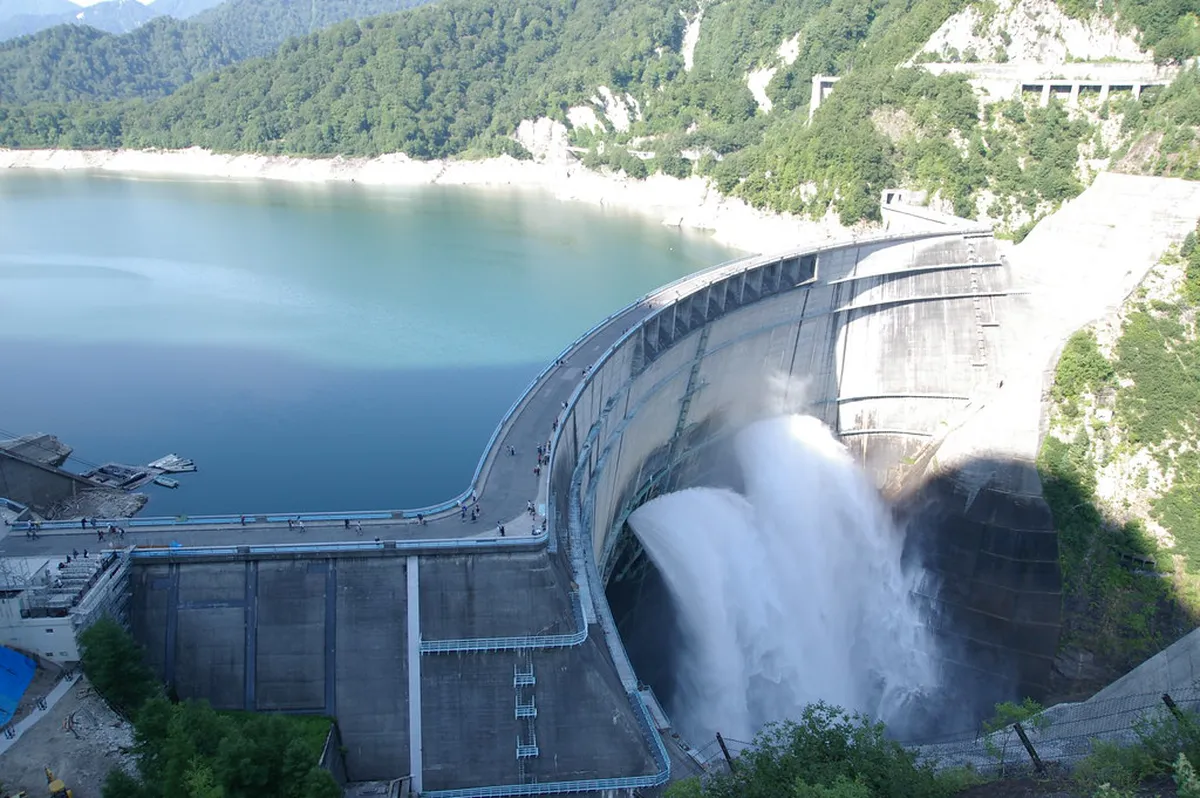
The dam generates hydroelectric power for the Kansai region. But beyond its engineering function, it has become one of Japan's most popular mountain attractions. The sightseeing water discharge — releasing more than 10 tons of water per second — draws huge crowds from late June through mid-October. On clear days, rainbows form in the mist below the discharge point, making it a favourite spot for photographers.
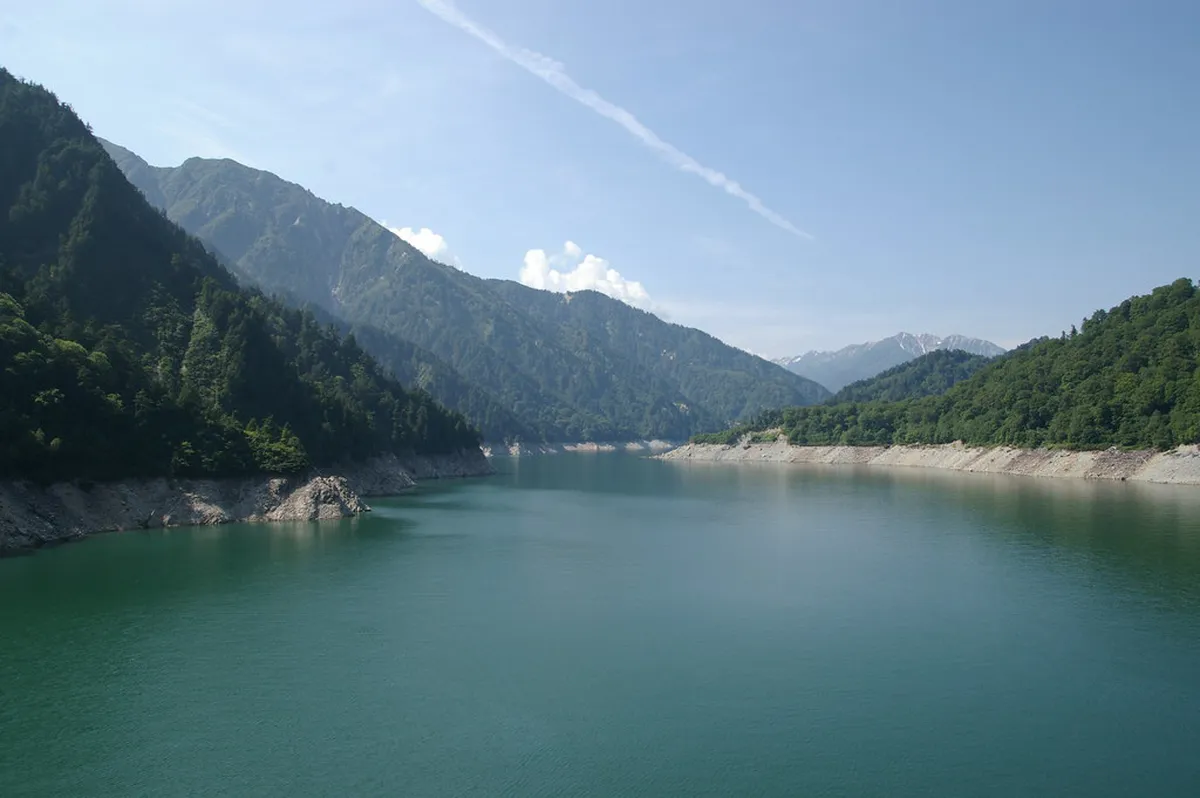
The dam sits inside Chubu Sangaku National Park, part of the Tateyama section. The surrounding Ushirotateyama and Tateyama mountain ranges frame the dam's reservoir, Kurobe Lake, with peaks exceeding 3,000 meters. Entry to the dam embankment and observation areas is free.
How to Get to Kurobe Dam
Private cars cannot reach Kurobe Dam. All visitors arrive via the Tateyama Kurobe Alpine Route, approaching from either the Toyama (western) side or the Nagano (eastern) side. The Nagano side is faster if Kurobe Dam is your only destination. The Toyama side is better if you want to experience the full Alpine Route scenery, including Murodo at 2,450 meters.
From the Nagano Side (faster, Ogizawa approach)
Take the JR Oito Line from Nagano Station or Matsumoto Station to Shinano-Omachi Station. From there, take a local bus or taxi to Ogizawa Station. A direct Kanden Tunnel Electric Bus runs from Ogizawa through a mountain tunnel to Kurobe Dam in about 16 minutes. The fare is ¥1,800 for adults (¥3,200 round trip) and ¥900 for children (¥1,600 round trip). This is the most straightforward route if you want to see the dam without completing the full traverse.
From the Toyama Side (scenic full traverse)
Start at Toyama Station and take the Toyama Chiho Railway to Tateyama Station (about 1 hour, ¥1,200). Tickets for the full Alpine Route, which include the Toyama Chiho Railway leg, go on sale at Tateyama Station 20 minutes before the first departure. From Tateyama, you travel by cable car to Bijodaira (7 minutes), highland bus to Murodo (50 minutes), trolley bus to Daikanbo (10 minutes), ropeway to Kurobedaira (7 minutes), and finally a cable car down to Kurobeko, the station at the base of the dam. A short walk through a tunnel brings you out onto the dam embankment. Allow 5–6 hours from Tateyama to reach the dam, plus exploration time.
One detail most guides overlook: on the bus from Midagahara to Murodo, sit on the left side. The views of the alpine valley on that side are the most dramatic of the entire route, and passengers on the right side largely miss them.
Planning Your Kurobe Dam & Alpine Route Itinerary
The classic approach is a one-way traverse starting from the Toyama side at Tateyama Station and finishing at Shinano-Omachi (Nagano side), or the reverse. Start before 9:00 AM from either end. The cable car from Tateyama typically begins around 9:40 AM, but queues form well before then. Arriving at Tateyama by 8:30 AM is advisable in peak season.
A sample day from the Toyama side: Toyama Chiho train departs Toyama around 8:13 AM, arriving Tateyama at 9:19 AM. Tateyama Cable Car departs around 9:40 AM (7 minutes to Bijodaira). Highland bus to Murodo departs Bijodaira around 10:20 AM, arriving Murodo at 10:50–12:30 AM depending on whether you stop at Midagahara. Spend 1–2 hours at Murodo — walk the boardwalk to Mikurigaike Pond (600 m, 30 minutes) and, if time allows, the Raichozawa trail to the Valley of Hell viewpoint (2.4 km, 2.5 hours). Trolley bus from Murodo to Daikanbo departs around 2:15 PM (10 minutes). Ropeway to Kurobedaira at 2:40 PM (7 minutes). Cable car to Kurobeko at 3:00 PM (5 minutes). Arrive at Kurobe Dam around 3:10 PM with roughly 45–60 minutes to explore before the 4:00 PM trolley bus to Ogizawa. Bus from Ogizawa to Shinano-Omachi departs around 4:00 PM, arriving 4:35 PM.
Consider forwarding your luggage from Toyama Dentetsu Station to Shinano-Omachi Station at the start of the day. The service costs ¥2,500 per piece. Cable cars are crowded and the steps are steep — traveling without bags makes the day significantly more comfortable.
Must-See Attractions at Kurobe Dam
The dam embankment itself is the first thing to explore. The 492-meter walkway along the crest gives you unobstructed views of Kurobe Lake on one side and the discharge valley on the other, framed by the Northern Alps. The embankment is free to walk and open during all Alpine Route operating hours.
The Water Discharge Viewing Stage sits at dam embankment level and is the best spot to watch the discharge up close. More than 10 tons of water per second thunder down the face of the dam here, and on sunny afternoons rainbows form consistently in the spray. A barrier-free slope runs from the Kurobe Dam Rest House to the viewing stage, making it accessible for wheelchairs and strollers — something no competitors prominently mention but worth knowing if you are travelling with children or limited-mobility visitors.
Below the dam, the New Observation Plaza and Rainbow Terrace offer a different angle: looking up at the discharge from below. The mist at close range functions like a natural cooling shower in summer heat. It is the most intense sensory experience of the dam, and few visitors know to seek it out. Access is via stairs from the embankment level.
The Kurobe Lake Sightseeing Boat "Garube" runs 30-minute cruises on the reservoir from early June to early November (Adults ¥1,100, Children ¥550). Operating hours at the Rest House are 09:00–16:00 for the shop and drink corner, and 10:00–15:00 for the restaurant. The signature dish is Kurobe Dam Curry, served in a presentation shaped like the dam lake — popular and worth trying if you have time. The Rest House is about 5 minutes on foot from Kurobeko Station via the connecting passage.
Best Time to Visit Kurobe Dam by Season
The Alpine Route operates from mid-April to late November. Each season offers a distinct experience.
Spring (mid-April to late May) is famous for the Snow Wall at Murodo — walls of snow up to 20 meters high line the road at Yuki no Otani. This is the most crowded period, with many April and early May dates selling out weeks in advance. Book online as early as possible. The dam's water discharge has not yet started in this period.
Summer (late June to early September) is when the sightseeing water discharge runs at full intensity. Specific discharge times in 2026: 26 June–31 July, 06:00–17:30; 1–10 August, 06:30–17:00; but check the official Tateyama Kurobe Alpine Route website before visiting, as discharge can be cancelled due to weather or low water levels. Crowds are high on weekends; weekdays are noticeably calmer.
Autumn (late September to mid-November) brings dramatic foliage, particularly around Midagahara wetlands and the forested valley below Kurobe Lake. The discharge season runs through mid-October. Colours typically peak around late October. This is considered the most visually rewarding season by many photographers. The route closes in late November.
Winter access is not possible. The entire Alpine Route shuts down until the following spring.
How to Buy Tateyama Kurobe Alpine Route Tickets
You can buy tickets on the same day at Tateyama Station (20 minutes before first departure) or Ogizawa Station (40 minutes before first departure). However, during peak season — especially April through early June for the Snow Wall — same-day tickets can be unavailable. Advance purchase is strongly recommended.
Online tickets are available via the Tateyama Kurobe Alpine Route official website. You must register an account before purchasing. On the day of travel, pick up your physical ticket at a WEB ticket counter at Toyama Dentetsu Station or Tateyama Station at least 15 minutes before your first departure. You will receive a QR code by email; scan it at the machine to collect the ticket.
For those travelling around the wider Chubu region, the JR Alpine-Takayama-Matsumoto Area Pass (5 consecutive days) covers the full Alpine Route plus JR trains between Nagoya, Toyama, and Shinano-Omachi. The adult price is approximately US$150.20 (until 30 September), children US$75.10. Note: the standard national JR Pass does NOT cover the Alpine Route. Even with the area pass, you still need to reserve your cable car departure time on the day of travel. A one-way full route same-day ticket from Dentetsu-Toyama to Shinano-Omachi costs approximately ¥13,820 (adults) and ¥6,930 (children) as of 2026 — verify current prices on the official website before purchasing.
Organised tours from Nagano or Kanazawa handle ticket purchase, cable car reservations, and transfers, and are worth considering if you want to avoid logistics entirely. They typically depart early morning and return by evening.
Practical Tips for a Smooth Kurobe Dam Trip
Pack layers regardless of the season. At Murodo (2,450 m) temperatures can be 10–15°C lower than at Toyama even in August. A waterproof windbreaker is essential. At Kurobe Dam itself (1,470 m) it is warmer, but the spray from the water discharge can be substantial. Wear shoes with grip — the tunnel walkways can be slick.
Buy snacks and drinks before reaching Bijodaira. Food options exist at Murodo and the Kurobe Dam Rest House, but they are limited and expensive. The Rest House restaurant closes at 15:00. If you plan to be at the dam in late afternoon, pack food for the return journey.
Crowds peak between 10:00 and 14:00 at Murodo and the dam. The last trolley bus from Murodo to Daikanbo typically departs around 16:30, leaving little margin for late starts. If you find yourself behind schedule at Murodo, skip the Midagahara wetlands detour and take the direct express bus instead. Reserve your seat on the next onward bus as soon as you arrive at each stop — this is particularly important at Midagahara where buses depart every 40 minutes and fill quickly.
The route is well-signposted in English. Green signs indicate the direction toward Shinano-Omachi (Nagano side); blue signs indicate the direction toward Toyama. You will not get lost, but allow buffer time between connections — each transfer involves some walking and queue time.
Where to Stay Near Kurobe Dam
Most visitors complete the Alpine Route as a one-day journey and stay at either end. On the Toyama side, Toyama City and Kanazawa (60 minutes from Toyama by Shinkansen) are the main bases. On the Nagano side, Matsumoto City — about 1 hour from Shinano-Omachi by train — is the most convenient option with the widest range of accommodation. Matsumoto Castle is worth spending a day exploring before or after the route.
For an extraordinary option, you can stay overnight at Murodo. Hotel Tateyama and several mountain huts are situated at the 2,450-meter plateau. Staying here allows you to experience the alpine sunrise, star-gaze above the cloud line, and reach Yuki no Otani Snow Wall before the day-trip crowds arrive. These accommodations book out months in advance for popular weekends — plan well ahead if this interests you.
The Omachi Onsen area, close to Shinano-Omachi on the Nagano side, offers ryokan accommodation with hot spring baths. It is a comfortable base if you want to arrive early the following morning for a Nagano-side entry to the route. Some buses from Ogizawa stop here before continuing to Shinano-Omachi.
Frequently Asked Questions About Kurobe Dam
Frequently Asked Questions
How long should I spend at Tateyama Kurobe Alpine Route?
Most visitors complete the entire Tateyama Kurobe Alpine Route in one full day. This typically takes 8–9 hours, allowing time for transport changes and short stops. An overnight stay at Murodo is recommended for hikers or those wanting a more relaxed pace.
What should I wear to Tateyama Kurobe Alpine Route?
Dress in layers due to significant temperature changes across elevations. A waterproof and windproof outer layer is essential. Comfortable walking shoes are also a must for navigating the various stations and observation decks.
Is the Tateyama Kurobe Alpine Route worth it?
Yes, the Tateyama Kurobe Alpine Route offers incredible natural beauty and a unique travel experience. The engineering marvel of Kurobe Dam and the stunning mountain landscapes make it a worthwhile trip. Many travelers consider it a highlight of their Japan visit.
Can you visit Kurobe Dam in winter?
The Tateyama Kurobe Alpine Route, including Kurobe Dam, is typically closed during winter months. It usually operates from mid-April to late November. The famous Snow Wall (Yuki no Otani) at Murodo is a spring attraction, accessible after the route reopens.
What is the best way to visit Kurobe Dam?
The best way to visit Kurobe Dam is as part of a one-way journey along the Tateyama Kurobe Alpine Route. You can start from either Tateyama (Toyama side) or Ogizawa (Nagano side). Starting early in the morning is highly recommended to maximize your time.
Kurobe Dam rewards the effort to reach it. The combination of Japan's largest arch dam, a thundering water discharge, alpine scenery above 2,000 meters, and one of the most technically varied mountain journeys in the country makes this a genuinely rare travel experience. Book tickets early for spring and autumn travel, start before 9:00 AM, pack layers, and allow the full day — the route is designed to be unhurried.
For authoritative information, refer to the Kurobe Dam on Wikipedia and Kurobe Dam official site.