

Best Time to Visit Tateyama Kurobe: Apr-Jun or Sep-Oct
Late Sep-mid Oct brings peak foliage; mid-Apr-early Jun the famous snow corridor towers over Murodo at 2,450m. Full month-by-month crowd and price notes inside.
On this page
Last updated June 2026. The best time to visit Tateyama Kurobe is late September to mid-October for autumn foliage, or mid-April to early June for the dramatic snow wall at Murodo. Knowing which window fits your priorities makes the difference between a sold-out trip and a smooth one.
The Tateyama Kurobe Alpine Route Travel Guide runs approximately 90 kilometers across the Northern Japanese Alps, reaching a maximum elevation of 2,450 meters at Murodo. The route spans an elevation difference of 1,975 meters and uses seven different modes of transport, from cable cars to trolleybuses, to cross the mountains. Critically, the route operates only from mid-April to late November — in 2024 it ran April 15 to November 30 — and is completely closed in winter.
Each open season delivers a distinct experience: towering snow corridors in spring, alpine wildflowers in summer, and blazing foliage in autumn. Crowds peak in late April (snow wall opening) and mid-October (peak foliage), so timing your visit even one week off-peak can mean shorter queues on the ropeway and trolleybus. This guide walks through each season so you can pick the window that matches your expectations.
Tateyama Kurobe Season Comparison
The Alpine Route's seasons divide cleanly by the main attraction each period offers. Spring brings the famous snow corridor, summer rewards hikers with open trails and mountain wildflowers, and autumn delivers some of Japan's most accessible high-altitude foliage. Because the route closes entirely in winter, there are only about seven months per year to visit.
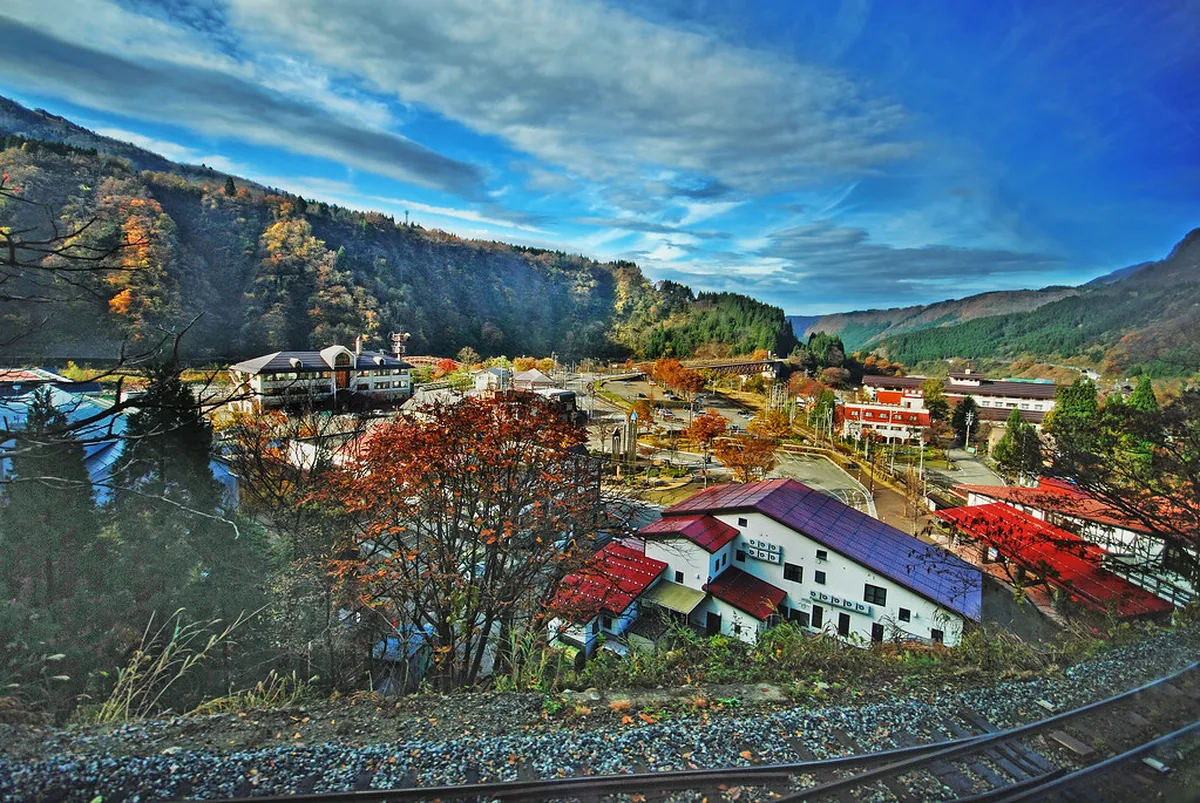
Temperatures vary sharply by elevation throughout the season. On a warm July day in Toyama (around 32°C / 90°F), the temperature at Murodo can be just 12°C / 54°F — a swing of roughly 20°C / 36°F. Packing layers is non-negotiable regardless of which month you visit. Based on typical climate data, Murodo receives over 10 meters of snowfall per year, which explains why the spring snow walls are so dramatic.
| Season | Months | Weather at Murodo | Crowds | Prices | Best For |
|---|---|---|---|---|---|
| Spring (early) | Mid-April to early May | -5 to 5 degrees C / 23-41 degrees F, snow cover | Moderate — opening weeks very busy | Peak (high demand) | Snow wall at maximum height |
| Spring (late) | Mid-May to late June | 5-12 degrees C / 41-54 degrees F, snow melting | Moderate, fewer than peak | Standard season fare | Snow wall plus emerging alpine views |
| Summer | July to August | 10-15 degrees C / 50-59 degrees F, clear days | High (national holidays peak) | Standard season fare | Hiking, alpine wildflowers, Mount Tate climb |
| Autumn (early) | Late September to mid-October | 8-15 degrees C / 46-59 degrees F, crisp and clear | Very high — peak foliage season | Peak (book well ahead) | Best foliage, panoramic mountain views |
| Autumn (late) | Late October to late November | 0-8 degrees C / 32-46 degrees F, first snows above | Dropping as route nears closure | Lower, last-chance deals possible | Quiet foliage at lower elevations, final walks |
| Winter | Late November to mid-April | Route closed | Not applicable | Not applicable | Route not accessible |
When Is the Best Time to See the Snow Wall?
The snow wall — known in Japanese as Yuki no Otani — forms each winter from the extreme snowfall around Murodo Station at 2,450 meters. Road crews carve a corridor through the snow each spring, creating walls that reach up to 20 meters (66 feet) high and stretch for around 500 meters. Walking between these vertical white cliffs is the most iconic single experience on the Yuki No Otani Snow Wall Travel Guide section of the route.
The snow wall is at its maximum height when the route first opens in mid-April. By early May the walls are still impressive at 15 to 18 meters, and visitor numbers are more manageable than on opening weekend. Snow continues melting through May and June, and most years the corridor has fully disappeared by early July. Early May — specifically the first two weeks — offers the best balance of high snow walls, manageable crowds, and slightly warmer temperatures than opening week.
Tickets for the full Ogizawa-to-Toyama section cost ¥12,360 per adult (approximately US$77 based on 2023 pricing, updated June 2026), and the route is not covered by the JR Pass. Booking online through the Tateyama Kurobe Alpine Route official website is strongly recommended, as popular departure times sell out weeks in advance during the snow wall season. A baggage forwarding service operates between Shinano-Omachi and Toyama for ¥2,500 per item, with a drop-off window of 7:40 to 10:30am and pick-up between 3:00 and 6:00pm.
Autumn on the Alpine Route: September and October
Autumn foliage on the Alpine Route descends gradually from the highest elevations to the lowest over about six weeks. The vibrant reds and yellows first appear at Murodo and Daikanbo (above 2,300 meters) in late September. By mid-October, the colours peak at Midagahara wetlands plateau and the Bijodaira beech forest lower on the route. Late October and early November sees the final display at the Kurobe Dam area and Shomyo Falls near the Toyama entrance.
October daytime temperatures at Murodo sit between 8 and 15°C / 46 and 59°F, with evenings dropping to near freezing or below. The crisp air and typically clear autumn skies make this the best season for photography of the Kurobe Dam: Japan Travel Guide 2026, Japan's tallest dam at 186 meters. Weekends and national holidays in October are extremely busy — queues for the ropeway and trolleybus can add an hour or more to the crossing. Visiting on weekdays, especially in the third week of October, gives a noticeably quieter experience while foliage at mid-elevation remains near peak.
The walk across the top of Kurobe Dam, about 800 meters, is a highlight during autumn when the gold-red forest surrounds the reservoir. For hikers, the trail around Mikurigaike Pond at Murodo is manageable in about an hour and offers reflections of autumn peaks in the water. The Midagahara boardwalk trails are flat and accessible for all fitness levels, making them especially popular with families visiting in mid-October.
Which Season Is Right for You?
The right visit window depends almost entirely on what you most want to see. Snow wall visitors and foliage seekers are best served by entirely different months, and summer offers a completely different rhythm focused on hiking. Use the picker below to find the best fit for your travel style.
One often-overlooked window is early November, just before the route closes. Visitor numbers drop sharply after mid-October, prices at Toyama-area hotels ease, and the lower elevations around Bijodaira still show autumn colour. This is the closest thing to a shoulder season on a route that is either very busy or completely shut.
- Pick mid-April to early May if you want
- The snow wall at its tallest and most dramatic height.
- Opening-season atmosphere on a once-a-year landscape.
- Pick late May to June if you want
- Snow walls still present but crowds somewhat lighter.
- Alpine route starting to green up below the snow line.
- Pick July to August if you want
- Full hiking access including the Mount Tate summit trail.
- Alpine wildflowers in bloom across the Murodo plateau.
- Pick late September to mid-October if you want
- Peak autumn foliage from high alpine to lower forest zones.
- Clearest skies of the year for panoramic mountain photography.
- Pick late October to early November if you want
- Quieter route with lower-elevation colour still on show.
- Last chance before the entire route closes for winter.
How to Get to the Tateyama Kurobe Alpine Route
The route has two gateways: Toyama on the western side and Shinano-Omachi (via Nagano) on the eastern side. From Toyama, the journey to Murodo takes 2 to 3 hours and involves the Toyama Chitetsu private railway to Tateyama Station, a cable car up to Bijodaira, and a bus to Murodo. The entire Alpine Route is not covered by the JR Pass, so budget for the full ticket cost separately.
From the Nagano side, trains run to Shinano-Omachi, where a bus connects to Ogizawa Station at the start of the route's eastern section. The electric bus from Ogizawa travels 6.1 kilometers through a tunnel built during dam construction and delivers you directly to Kurobe Dam. Most independent travelers buy a one-way ticket and use one gateway city as their base before moving on. Staying in Toyama gives the easiest access, and the Toyama Chitetsu Hotel sits directly above the final station of the route.
Tickets should be purchased in advance on the official website, especially for popular departure windows in April, May, and October. The full Ogizawa-to-Toyama adult ticket was priced at ¥12,360 in 2023 (prices updated June 2026); the shorter Ogizawa-to-Tateyama section costs ¥10,940. The eastern bus leg between Shinano-Omachi and Ogizawa costs approximately ¥2,000 and must be booked separately.
What's Closed in Low Season
From late November until mid-April, the entire Tateyama Kurobe Alpine Route is completely closed to visitors. All modes of transport along the route — the cable cars, trolleybuses, funicular, and ropeway — suspend operations for the winter. There is no partial access: even Kurobe Dam and the Bijodaira area are inaccessible during this period.
The mountain accommodation along the route, including Hotel Tateyama at Murodo and Midagahara Hotel at 1,930 meters, closes with the route each autumn. The baggage forwarding service between Shinano-Omachi and Toyama only operates during the open season. Some hiking trails above 2,000 meters remain buried under snow well into June even after the route opens, so trail access expands progressively through spring. Shomyo Falls, Japan's tallest waterfall on the Toyama side, is visible from the bus but its dedicated viewpoint access is only open during route season.
What to Pack for Tateyama Kurobe
The Alpine Route's extreme elevation range means the packing list must cover a 20°C / 36°F temperature swing in a single day. Even in midsummer, Murodo at 2,450 meters can feel cold and windy, so layers are essential regardless of the season. Comfortable walking shoes with grip are important as the Murodo plateau trails can be uneven and muddy in any weather.
Spring visitors in April and May face the coldest conditions on the route, with Murodo temperatures often below 0°C / 32°F. Snow boots or waterproof hiking shoes are strongly recommended for walking the snow corridor in April, as the path can be slippery. By late May conditions ease considerably, but a warm mid-layer and waterproof outer shell remain necessary.
- Spring (April–June): snow wall season essentials
- Waterproof jacket and wind-resistant outer layer for sub-zero Murodo wind chill.
- Waterproof hiking boots or snow boots with grip for the snow corridor walk.
- Warm gloves and a hat — temperature at Murodo can be -5 degrees C / 23 degrees F in April.
- Sunglasses with UV protection: alpine snow glare is intense at 2,450 meters.
- Summer (July–August): hiking-ready layers
- Moisture-wicking base layer plus a fleece for the cool summit plateau.
- Lightweight rain jacket: afternoon mountain showers are common in August.
- Sturdy trail shoes for the Mount Tate summit trail and Murodo plateau loops.
- Sunscreen rated SPF 50 or higher for strong UV exposure above 2,000 meters.
- Autumn (September–October): foliage season gear
- Warm fleece and a waterproof shell — October evenings near Murodo drop to 0 degrees C / 32 degrees F.
- Beanie and gloves for early morning arrivals at high elevations.
- Camera or phone with a wide-angle lens to capture panoramic foliage backdrops.
- Extra battery pack: cold temperatures drain phone batteries faster at altitude.
- All seasons: practical kit for the crossing
- Small daypack (luggage forwarding handles main bags at ¥2,500 per item).
- Cash for onsite purchases; card acceptance is limited at mountain-level shops.
- Snacks and a water bottle for the Murodo plateau walks between transport stops.
Frequently Asked Questions
When to go to the Tateyama Kurobe Alpine Route?
The best overall window is late September to mid-October for autumn foliage, or mid-April to early June for the snow wall. The route opens around mid-April and closes in late November. Winter access is completely unavailable, so there is no off-season option.
Is the Tateyama Kurobe Alpine Route worth it?
Yes, for most visitors the crossing is worth the cost. The combination of seven different transport modes, a 1,975-meter elevation range, and scenery unavailable elsewhere in Japan justifies the full-route ticket price of around ¥12,360. Choosing the right season — snow wall in spring or foliage in autumn — maximises the experience significantly.
How long does the Tateyama Kurobe Alpine Route take?
A full one-way crossing from Shinano-Omachi to Toyama takes roughly 7 to 9 hours including waiting and transfer times. Most travellers complete it as a single long day trip. Staying overnight at Murodo or Midagahara allows a quieter early-morning experience before day crowds arrive.
Can you do the Tateyama Kurobe Alpine Route in one day?
Yes — a one-day crossing is the most common approach. Starting from Shinano-Omachi at around 8am and arriving in Toyama by late afternoon is a typical schedule. Budget extra time in October and during snow wall season, as queues at each transport transfer can add 30 to 60 minutes. See our guide to Tateyama Kurobe Alpine Route Travel Guide to plan your stops.
What is the Tateyama Kurobe Alpine Route ticket price?
The full Ogizawa-to-Toyama adult ticket cost ¥12,360 (approximately US$77) in 2023. The shorter Ogizawa-to-Tateyama section is ¥10,940. The route is not covered by the JR Pass, so budget for the full ticket cost separately. Prices are revised each season, so check the official website before booking.
The best time to visit Tateyama Kurobe comes down to a clear choice: mid-April to early June for the snow wall at its most dramatic, or late September to mid-October for peak autumn foliage. Both windows draw the largest crowds of the season, so booking transport tickets and accommodation at least four to six weeks ahead is strongly recommended. Early May and late October are the closest the route gets to shoulder season — still scenic, slightly quieter, and worth considering if flexibility allows.
Whatever season you choose, the 90-kilometer crossing of the Northern Japanese Alps using seven modes of transport is one of Japan's most distinctive journeys. Plan the season first, then build the rest of your itinerary around it — the route anchors a natural stop between Tokyo or Nagano and the Hokuriku coast cities of Toyama and Kanazawa. For the full planning picture, visit the Japan travel blog for more guides to the Japanese Alps and surrounding regions.
Free guide: Japan's Hidden Gems
12 under-the-radar places beyond Tokyo & Kyoto — with the best season to visit each and a local tip you won't find in the guidebooks.
You might also like


Continue reading
More guides you'll find useful

