

Tateyama Kurobe Alpine Route Travel Guide
Plan your tateyama kurobe alpine route guide: tickets, 9 stops, best season, baggage forwarding, and timing tips for a smooth Japan Alps crossing.
On this page
The Tateyama Kurobe Alpine Route is one of Japan's most spectacular mountain crossings, spanning roughly 90 kilometres across the Northern Japanese Alps. It links Toyama Station on the west with Shinano-Omachi on the east, using eight distinct modes of transport along the way. Cable cars, trolleybuses, ropeways, and highland buses carry you from 475 metres up to Murodo at 2,450 metres. The route runs from April 15 to November 30, so planning ahead separates a smooth crossing from a stressful one.
What Is the Tateyama Kurobe Alpine Route?
The Alpine Route cuts through the Hida Mountains, the northern arm of the Japan Alps. It straddles Toyama, Nagano, and Gifu prefectures, with an elevation difference of 1,975 metres from start to finish. The route is entirely car-free, so every leg depends on scheduled transport. That structure rewards travellers who start early and know which stops deserve extra time.
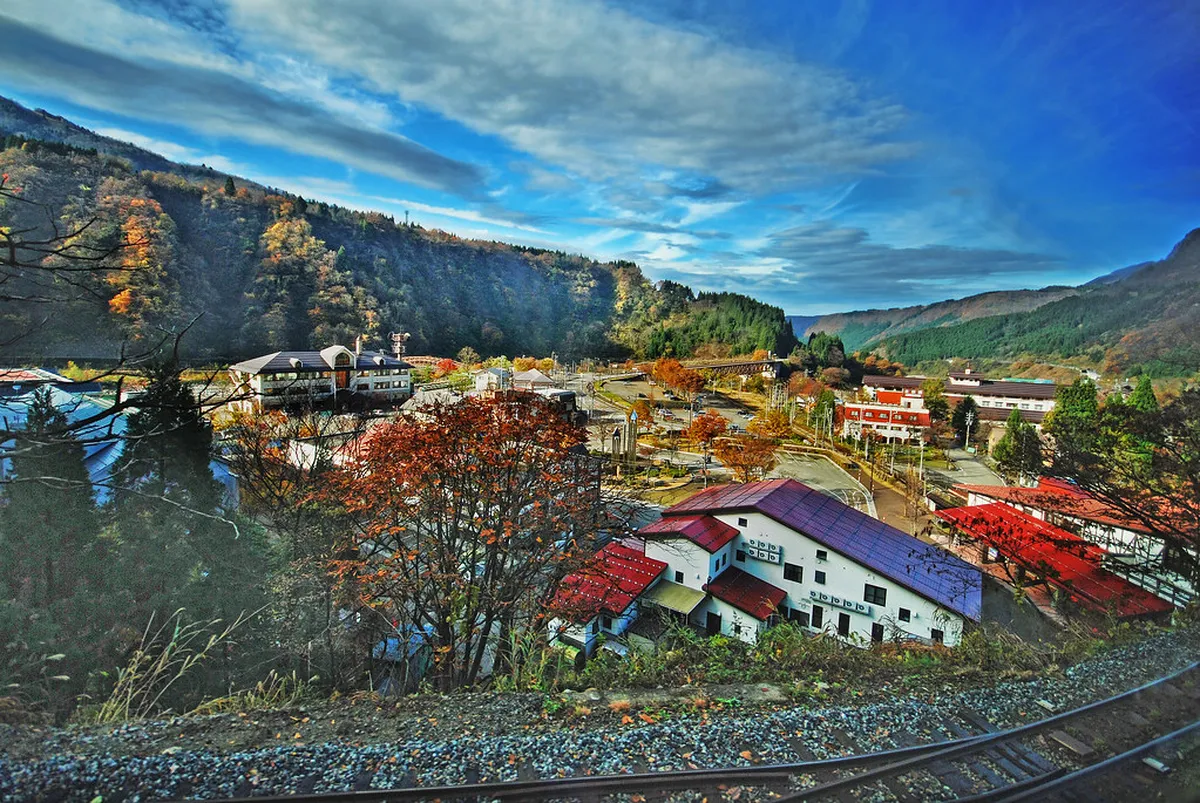
Murodo, at 2,450 metres, is the highest stop and the heart of the experience. In spring, a snow wall rises up to 18 metres beside the walking path here. The Kurobe Dam: Japan Travel Guide 2026 — Japan's tallest arch dam at 186 metres — anchors the eastern half with equal drama. These two landmarks alone explain why the Alpine Route draws hundreds of thousands of visitors each season.
The 9 Stops and 8 Transport Modes
Each section uses a different vehicle, and knowing the sequence removes all confusion when you arrive. Travelling east to west, from Shinano-Omachi to Toyama, is slightly easier to follow because green signs point you toward Toyama at every transfer. West to east works equally well and simply reverses the order.
At Kurobe Dam, budget 30 to 45 minutes to walk the 500-metre dam crest and reach the observation deck. At Murodo, Mikurigaike Pond is a 40-minute easy loop that most travellers finish without falling behind schedule. Both stops have small cafes, but options are limited and prices are high, so carry snacks from a convenience store before you depart.
- Shinano-Omachi to Ogizawa — bus, 40 min
- The bus departs from directly outside Shinano-Omachi Station, rising through forested mountain roads.
- This leg climbs steadily toward the dam and is included in the full-route fare.
- Drop off luggage at the baggage forwarding office at this station before boarding.
- Ogizawa to Kurobe Dam — trolleybus, 16 min
- The electric trolleybus travels through a 5.8 km tunnel carved inside the mountain.
- Kurobe Dam sits at 1,470 metres and discharges 10 tonnes of water per second in summer.
- Climb 220 steps to the observation deck for the best panoramic view of the dam.
- Kurobe Dam to Kurobedaira — cable car, 5 min
- This underground cable car rises steeply inside the mountain face to 1,828 metres.
- Kurobedaira has a viewing terrace and a small restaurant where crowds thin noticeably.
- The transfer to the ropeway is just a short walk from the cable car exit.
- Kurobedaira to Daikanbo — ropeway, 7 min
- The Tateyama Ropeway lifts you 488 metres to Daikanbo at 2,316 metres above sea level.
- Views of turquoise Kurobe Lake from the gondola are among the best on the entire route.
- Daikanbo has an observation platform but no food service, so plan your timing carefully.
- Daikanbo to Murodo — trolleybus, 10 min
- A second trolleybus bores through 3.7 km of Mt Tateyama to reach Murodo at 2,450 metres.
- Murodo is the route's highest point and its main hub for hiking and mountain exploration.
- Hotel Tateyama here offers Japan's highest onsen and overnight accommodation for multi-day visitors.
- Murodo to Bijodaira — highland bus, 50 min
- Sit on the left side of the bus heading west for the clearest mountain views.
- Bijodaira at 977 metres sits inside a primeval beech forest estimated to be 1,000 years old.
- An optional stop at Midagahara wetlands adds 1.5 to 2 hours but reduces time at Murodo.
- Bijodaira to Tateyama — cable car, 7 min
- This cable car descends 487 metres to Tateyama Station at 475 metres above sea level.
- Cars fill quickly during peak season, so arrive at the platform a few minutes early.
- Tateyama is a quiet town with limited sightseeing; most travellers head straight to Toyama.
- Tateyama to Toyama — Toyama Chiho train, 60 min
- The Toyama Chiho Railway train is included within the full Alpine Route ticket fare.
- Toyama Station connects to the shinkansen and Hokuriku lines for easy onward travel.
- A 35-minute train from Toyama reaches Kanazawa, making it a natural base for the night.
How to Buy Alpine Route Tickets
The Alpine Route ticket covers all eight transport legs as a single through-fare. A full adult ticket costs around ¥13,820 for the Toyama to Shinano-Omachi direction. Check the official Alpine Route website for current fares before you travel, as prices adjust each season. Children aged 6 to 11 pay roughly half the adult price.
Online advance purchase is strongly recommended for April through June, when snow-wall season drives tickets to near-capacity. Buy through the Alpine Route advance ticket page and collect the physical ticket at a WEB machine at Dentetsu Station. Collect at least 15 minutes before your first departure, or the reservation lapses. Same-day purchase at station windows is possible but popular spring dates sell out weeks ahead.
The JR Alpine-Takayama-Matsumoto Area Pass covers the full Alpine Route plus JR rail travel nearby. It suits travellers combining the crossing with Takayama, Kanazawa, or Matsumoto over five consecutive days. Note that the standard nationwide JR Pass does not cover the Alpine Route — only the dedicated area pass applies.
When to Do the Alpine Route
Spring — April through June — is peak season because of the famous Yuki-no-Otani snow corridor at Murodo. The snow walls peak at up to 18 to 20 metres in mid-April and shrink to around 10 metres by late June. Expect the largest crowds of the season, and book tickets several weeks ahead for any date in late April or May.
July and August bring reliably clear skies and green alpine meadows ideal for hiking. Temperatures at 2,450 metres average around 15°C even in midsummer, so a wind jacket is essential. Crowds ease slightly in August compared to May, and same-day tickets become more accessible.
September through November offers the most atmospheric conditions, with autumn colour across Bijodaira's ancient beech forest. The season closes on November 30, and late October usually delivers the most vivid foliage. Baggage forwarding typically stops after late October, so confirm availability for any November visit.
Baggage Forwarding and Practical Tips
Carrying a large bag through crowded cable cars and up observation-deck stairs is exhausting for everyone. The baggage forwarding service costs ¥2,500 per bag — one of the most worthwhile decisions on the whole trip. Drop-off at Shinano-Omachi Station runs from 07:40 to 10:30; pick-up at Toyama Station closes at 18:00.
Starting from the Toyama side, the luggage forwarding counter is inside Toyama Dentetsu Station near the ticket window. The service generally operates from mid-April through late October. It closed in November 2023, so confirm availability if you plan a late-season crossing. Hotel-to-hotel forwarding is also available for multi-day travellers through the same operator.
A few timing habits sharpen the experience considerably beyond just the luggage question. Arriving at Tateyama Station or Dentetsu Station before 8:30 puts you ahead of the tour-group rush. Buying lunch from a convenience store in Toyama or Matsumoto matters more than many travellers expect. Mountain-top food options are pricey, and the queues at summit cafes eat into your hiking time.
How Long Does the Alpine Route Take?
Pure transit from Toyama to Shinano-Omachi, boarding each connection immediately, takes roughly six to seven hours. Add 30 minutes at Kurobe Dam and a 40-minute hike at Murodo, and the day reaches nine hours. Most independent travellers complete the route in eight to nine hours total.
Two-day crossings are possible by staying at Hotel Tateyama in Murodo or Midagahara Hotel at 1,930 metres. Spending the night at Murodo unlocks pre-dawn views of the Tateyama range and dawn hikes to Oyama at 3,003 metres. That option rewards travellers who want to avoid the crowds that arrive mid-morning on each bus. For most first-time visitors, though, a single full day is enough — especially with a well-planned itinerary for each stop.
Frequently Asked Questions
Is the JR Pass valid for the Tateyama Kurobe Alpine Route?
The standard nationwide JR Pass does not cover the Alpine Route. You need either a standalone Alpine Route ticket or the JR Alpine-Takayama-Matsumoto Area Pass, which covers all eight route segments plus JR rail travel in the surrounding region. Check the official Alpine Route website for current pricing and pass compatibility before you book.
Can I do the Tateyama Kurobe Alpine Route in one day?
Yes. Most travellers complete the route in eight to nine hours including stops at Kurobe Dam and Murodo. Starting before 9 am from Toyama or Shinano-Omachi gives enough time for a short hike at Murodo without rushing the final connections. Day trips from Kanazawa or Matsumoto work well as base cities on either end of the route.
What is the best time to visit the Tateyama Kurobe Alpine Route?
April and May offer the iconic snow walls at Murodo, reaching up to 20 metres in mid-April. Autumn — late September through October — delivers vivid mountain foliage with slightly smaller crowds. Summer is ideal for hiking and clear skies, while the route closes entirely from December 1 through April 14 each year.
How much does the full Alpine Route ticket cost?
The full one-way adult fare from Toyama to Shinano-Omachi was around ¥13,820 in recent seasons, with children paying roughly half. Prices adjust each season, so confirm current fares on the official Alpine Route website before booking. Online advance purchase is strongly recommended for April through June travel.
The Tateyama Kurobe Alpine Route rewards every traveller who arrives early and plans a little ahead. Securing tickets before spring season and using baggage forwarding eliminates the two most common stress points. Knowing which stops deserve extra time transforms what looks complicated on paper into an outstanding day. The route delivers something memorable at every elevation, whatever season you choose.
For tickets, hours and visitor details, see our Daikanbo Visitor Guide: Panoramic Views, Access & Tips for Aso, Tateyama-Kurobe attractions hub.
Free guide: Japan's Hidden Gems
12 under-the-radar places beyond Tokyo & Kyoto — with the best season to visit each and a local tip you won't find in the guidebooks.
You might also like


Continue reading
More guides you'll find useful

