

Murodo sits at 2,450 meters — the highest point on the Tateyama Kurobe Alpine Route and one of the most dramatic landscapes in Japan. A volcanic plateau ringed by alpine ponds, steam vents, and the sacred peaks of the Tateyama massif, it draws visitors from spring snowmelt through the blazing autumn foliage season. The route operates from mid-April to late November, so timing your trip matters.
Getting here requires a series of cable cars, highland buses, and trolley tunnels — all of which are part of the experience. Use this guide to plan your time at Murodo itself: what to see, when to go, what to pack, and how much to budget. The plateau rewards visitors who arrive prepared.
Welcome to Murodo: The Roof of Japan
Murodo Plateau is often called the "Roof of Japan" — and at 2,450 m, that elevation earns its name. The terrain is volcanic: caldera ponds filled with snowmelt and rainwater, sulfurous steam vents, reddish iron-oxide pools, and stone-paved trails crossing snow well into summer. On clear days, the summits of the Tateyama range rise above the plateau in every direction.
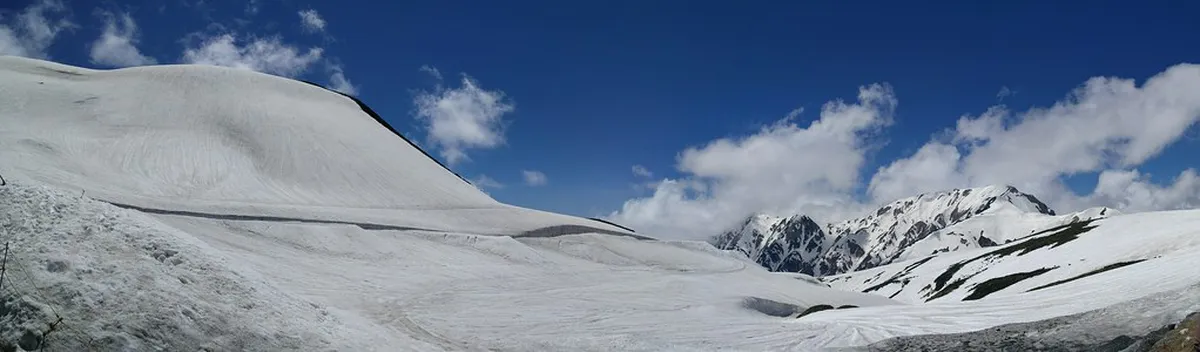
The area carries centuries of religious significance. Mount Tateyama — the massif visible from the plateau — is one of Japan's three sacred mountains alongside Fuji and Hakusan. Pilgrims have crossed this terrain since at least the 8th century, and the route's mountain huts follow paths that once served as spiritual waypoints. That layered history gives Murodo a weight that purely scenic spots lack.
Today the plateau is accessible without mountaineering experience. A 2.1 km boardwalk-and-stone loop circles Mikurigaike Pond at minimal elevation gain. More demanding trails lead up toward the Tateyama summits for those who want them. Both types of visitor leave having seen something genuinely unusual.
Getting to Murodo: Step-by-Step from Both Sides
The Alpine Route has no road access for private cars. You reach Murodo entirely by public transport, and the transport itself — seven different vehicle types across the full traverse — is part of the attraction. Most visitors approach from one side and exit the other, making it a natural point-to-point itinerary.
From Toyama (west side): Take the Toyama Chiho Railway from Toyama Station to Tateyama Station (about 1 hour, roughly ¥1,230). From Tateyama, a cable car climbs to Bijodaira in 7 minutes. A highland bus then carries you up past the Midagahara wetlands to Murodo — allow about 50 minutes in total from Bijodaira. The Toyama-to-Murodo leg costs approximately ¥4,200 for the combined cable car and bus.
From Nagano (east side): Take the JR Oito Line to Shinano Omachi, then a bus to Ogizawa (about 40 minutes). From Ogizawa, an electric trolley bus runs through a tunnel to Kurobe Dam, a cable car continues to Kurobedaira, a ropeway reaches Daikanbo, and a final trolley bus arrives at Murodo. This eastern approach takes roughly 2 hours from Ogizawa and costs around ¥7,200. The full end-to-end traverse from Tateyama to Ogizawa takes 6 to 10 hours depending on stops and runs approximately ¥11,000 one-way in 2026.
Book tickets in advance through the official Alpine Route website, especially around Golden Week (late April to early May) and peak autumn foliage in early October. Queues at Tateyama Station can be significant on clear-weather weekends. An early start — the first bus from Tateyama departs around 07:00 — avoids the worst congestion and leaves time to explore Murodo thoroughly.
Top Attractions and Must-See Sights
Mikurigaike Pond is Murodo's signature sight. This deep volcanic lake reflects the surrounding peaks on calm days, and the outer loop path around it (2.1 km, about one hour) is the most popular short walk on the plateau. The pond stays partially snow-ringed into July. You are likely to spot raicho (rock ptarmigan) along this path — there are about 350 of them living in the Murodo area, and they have no fear of humans, so close sightings are common. See the Mikurigaike Pond page for a full trail guide.
Yuki-no-Otani (Snow Wall Walk) opens in mid-April when snowplows cut a passage through drifts up to 20 meters high. The corridor runs beside the bus road and is open to pedestrians as a free walk, usually through late June. Snow walls this tall create an unusual perspective — standing at the base of a 20-meter cliff of compacted snow is genuinely surreal. This is the single strongest reason to visit in spring. Full details are at Yuki no Otani Snow Wall.
Jigokudani (Hell Valley) is a still-active volcanic zone a short walk from the bus terminal. Steam vents and fumaroles mark the landscape, and the smell of sulfur is noticeable. Direct trail access is periodically closed when volcanic gas levels are elevated — check current conditions at the visitor center before heading over. Nearby, you can also spot the Chinoike ("Blood Ponds"), small reddish pools colored by iron oxide in the soil.
Midorigaike Pond sits further along the loop, smaller than Mikurigaike but lined with alpine wildflowers in summer. Mount Tateyama rises behind it when the clouds cooperate. The trail continues past Tateyama Murodo Sanso mountain hut before completing the loop back to the bus terminal.
Mikurigaike Onsen: Highest Hot Spring in Japan
A five-minute walk from Murodo Bus Terminal along the Jigokudani trail brings you to Mikurigaike Onsen, a small hot-spring facility claiming the title of Japan's highest-altitude hot spring at 2,430 m. The rotenburo (outdoor bath) looks directly toward the Tateyama peaks, and the water is heated by the same volcanic system that powers the steam vents nearby. It is a genuinely unusual combination: snow-dusted alpine scenery and hot sulfurous water in the same frame.
Day-use bathing is available for guests and non-guests alike. The facility also offers overnight accommodation, which means you can be at Mikurigaike Pond at dawn before the day-trip crowds arrive — a very different experience from Murodo at midday. Reservations are essential for overnight stays. The onsen's proximity to Jigokudani makes it a natural add-on to the Hell Valley walk rather than a separate excursion.
Seasonal Highlights: Best Time to Visit
Spring (mid-April to June) is snow wall season. The Yuki-no-Otani corridor opens around 15 April each year, and the walls are at their tallest in the first weeks. Temperatures at 2,450 m hover near 0°C in April and rarely exceed 15°C in June. Snowshoeing tours operate from the visitor center. This is the busiest season — arrive early or book a weekday.

Summer (July to August) sees the snow retreat and alpine flowers appear across the plateau. Temperatures are mild (10–18°C on most days), hiking trails become fully accessible, and the raicho are most visible. The views across the Japan Alps on clear days are unmatched. Fog and afternoon rain are common, so morning timing still matters. The Japan Guide: Alpine Route page posts up-to-date seasonal conditions.
Autumn (September to early November) brings color change across the lower slopes from mid-September. The plateau itself is largely above the treeline, so the best foliage is at Bijodaira and Midagahara on the descent. Temperatures drop sharply in October — below freezing at night — and the route closes in late November ahead of winter snowfall. This season is popular with Japanese tourists and sells out fast.
Activities and Hiking Trails for Every Level
The Mikurigaike outer loop (2.1 km, about 1 hour) is the easiest and most popular walk. The path is well-maintained stone and boardwalk with minimal elevation change. It circles the main pond, passes Midorigaike, goes near Hell Valley, and returns to the terminal. Anyone comfortable walking on uneven stone can complete it — though sturdy footwear is still necessary since the surface is rough in places.
A moderate option is the trail toward Raichozawa Hut, which extends the loop and adds roughly another hour. The terrain becomes more open and exposed, with better chances of spotting ptarmigan away from the main crowds. This trail is suitable for visitors with basic hiking experience and proper footwear.
The summit approach to Mount Tateyama (3,003 m) is a serious mountain hike. The route climbs from the plateau via Ichinokoshi Sanso hut and takes approximately 3 to 4 hours round-trip from Murodo. It requires good physical fitness, proper hiking gear, and a clear weather window. Summit attempts are realistic from late July through September. Always check conditions at the visitor center before departing — mountain weather on Tateyama changes fast, and the upper slopes can be icy even in August. More detail is available at Japan Guide: Murodo.
Tateyama Murodo Visitor Center: What to Expect
The visitor center sits immediately beside the bus terminal — it is the logical first stop on arrival. The ground-floor exhibition covers the Tateyama volcanic system, local flora, and the protected raicho population using dioramas and audio-visual displays. Staff at the counter can give current trail conditions and volcanic gas alerts for Jigokudani, which change day-to-day.
Facilities include restrooms, coin lockers (useful if you want to hike without your bag), a souvenir shop, and a restaurant. The restaurant orders via a vending machine system — you select and pay at the machine, then collect your meal at the counter. This surprises many first-time visitors expecting table service. Expect to pay ¥1,000–¥2,000 for a meal. Hours and menu depend on the season; hot dishes are available from opening until early afternoon, after which snacks and drinks remain. The souvenir shop stocks Murodo-themed confectionery and regional Toyama products.
The center's location at Ashikuraji, Tateyama, Nakaniikawa District, Toyama makes it the natural hub for planning your afternoon if conditions change or trails are closed.
Accommodation and Dining at Murodo
Hotel Tateyama is the standout accommodation option, located directly at Murodo Bus Terminal. It is Japan's highest-altitude resort hotel, offering Western and Japanese rooms, an onsen bath, and dining with views of the Tateyama peaks. Prices reflect the altitude and remoteness — expect ¥25,000–¥45,000 per person including dinner and breakfast. Book as early as April for summer dates.
Tateyama Murodo Sanso is a traditional mountain hut on the plateau loop. It offers dormitory-style accommodation in shared bunk rooms, the kind of experience that trekkers who plan multi-day Tateyama summit routes use as a base. Meals are included in the room rate. Raichozawa Hut, a bit further along the trail toward the summit, serves a similar purpose at a more removed location. Both require advance reservations and fill quickly during peak season.
For a longer stay with more comfort, Midagahara Hotel one stop below on the bus route is a solid mid-range option. It sits amid the Midagahara wetlands and serves regional cuisine including Toyama Bay shiroebi (white shrimp) in season. The full Alpine Route also has dining stops at Daikanbo, which is worth factoring into a full-day traverse. Packing your own snacks and lunch is common and saves money — there are many scenic spots on the plateau loop to stop and eat.
Planning Your Visit: Practical Tips and Budget
What to pack: Layers are mandatory at any season. A mid-layer fleece and waterproof shell are the minimum even in August. In spring, bring gloves and a warm hat — April temperatures at Murodo regularly drop below freezing. Sturdy hiking shoes with ankle support are needed for the stone paths; trail runners are adequate for the loop, but approach boots are better for anything above Ichinokoshi. Bring sunscreen and sunglasses — UV intensity at 2,450 m is noticeably higher than at sea level. A refillable water bottle is practical since there are places to fill up. Pack some cash; while the visitor center and Hotel Tateyama accept cards, smaller huts and vending machines are cash-only.
Budget breakdown for a day visit: Toyama to Murodo return on the highland bus and cable car runs approximately ¥8,400. Meals at the visitor center cost ¥1,000–¥2,000. A one-way full traverse from Tateyama to Ogizawa is approximately ¥11,000. If you are doing the full traverse and staying overnight at Hotel Tateyama, budget ¥40,000–¥60,000 per person for the whole experience including transport, lodging, and meals. Mountain hut stays with meals come in at ¥12,000–¥18,000 per person and are the budget-conscious overnight option.
Respect the environment: Stay on marked trails. The raicho are protected — observe them without approaching closely or feeding them. Do not pick alpine flowers or disturb the volcanic ground near Jigokudani. The Tateyama Nature Conservation Center runs monitoring programs for the ptarmigan population and publishes seasonal sighting updates.
Frequently Asked Questions About Visiting Murodo
Frequently Asked Questions
Which murodo visitor guide options fit first-time visitors?
First-time visitors should focus on the main attractions like Mikurigaike Pond and the Snow Wall (if visiting in spring). Plan for a full day to allow ample time for transport and sightseeing. The Tateyama Murodo Visitor Center offers excellent resources for planning. Consider a guided tour for deeper insights.
How much time should you plan for a Murodo visit?
A typical Murodo visit, including travel on the Alpine Route, takes a full day. If you plan to hike extensively or explore multiple attractions, consider an overnight stay. The full traverse of the Tateyama Kurobe Alpine Route can take anywhere from 6 to 10 hours. This depends on your pace and number of stops.
What are the must-see attractions at Murodo?
Must-see attractions include Mikurigaike Pond, the Yuki-no-Otani Snow Wall (in spring), and the Jigokudani (Hell Valley) observation points. The Tateyama Murodo Visitor Center also offers valuable insights. Do not miss the panoramic views from the hotel area.
When is the best time to see the Murodo Snow Walls?
The Murodo Snow Walls are best seen from mid-April to late June. This is when the snow corridor is open to pedestrians. The walls can reach impressive heights during this period. Check the official Alpine Route website for exact opening dates each year.
Are there hotels or accommodations at Murodo?
Yes, Hotel Tateyama is located directly at Murodo Station, offering comfortable stays. There are also traditional mountain huts like Tateyama Murodo Sanso and Raichozawa Hut. These provide simpler, dormitory-style lodging. Booking in advance is highly recommended, especially during peak season.
Murodo rewards preparation. The plateau is spectacular in any season the route is open, but the experience shifts significantly between spring snow walls, summer ptarmigan sightings, and autumn mountain colors. Pick your season deliberately, book transport and accommodation early, and pack for cold and wet regardless of the forecast.
Whether you are crossing the full Tateyama Kurobe Alpine Route or spending a focused day on the Murodo plateau loop, the altitude and volcanic landscape here are genuinely unlike anything else in Japan. The journey up is half the draw — but Murodo itself is worth the arrival.
To verify current details, consult the Murodo on Wikipedia and Murodo official site.