
Takachiho Gorge
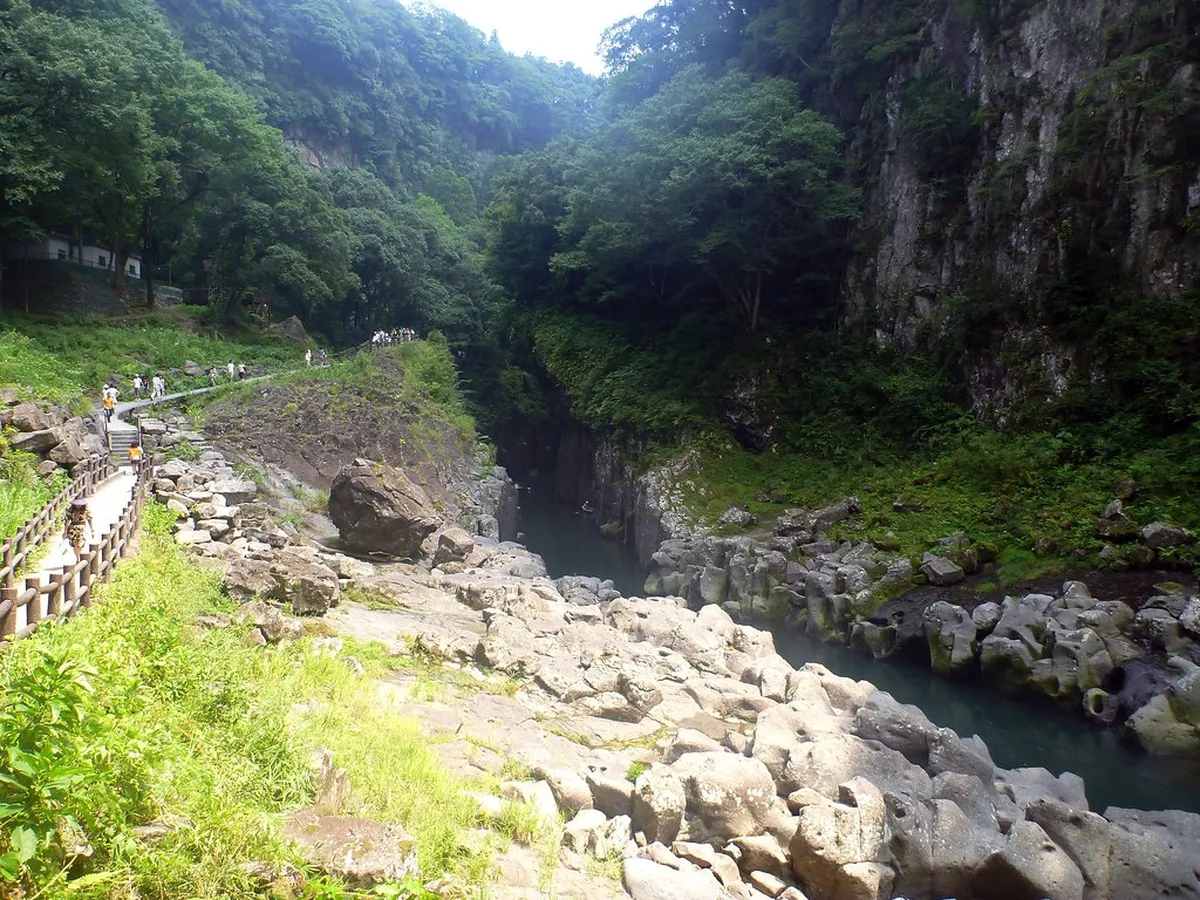
Takachiho's showpiece — a sheer basalt gorge where the 17-metre Manai Falls tumbles into jade-green water. Walk the rim path or, best of all, row a rental boat right up beneath the waterfall.
Visitor guide →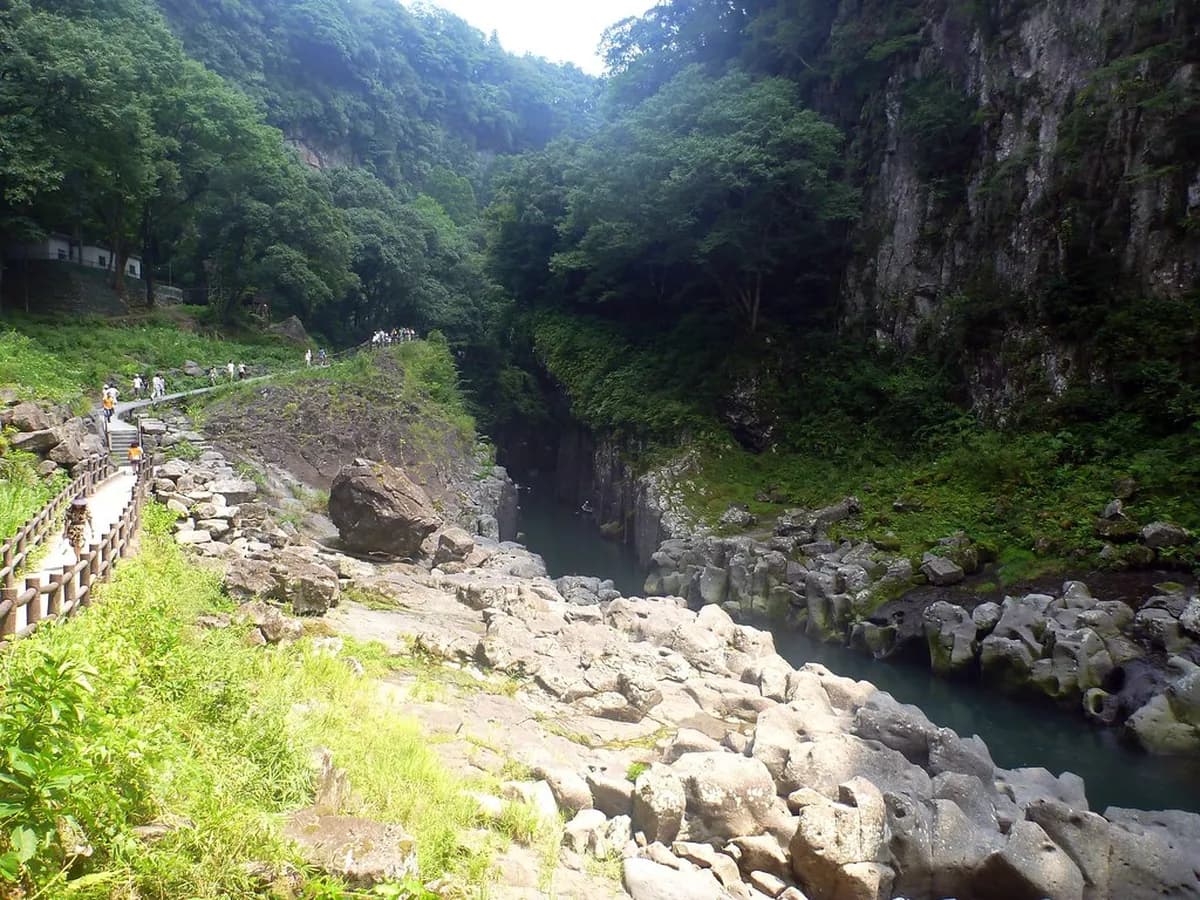
Things to do in Takachiho for 2026: Takachiho Gorge rowboat pricing, the nightly yokagura dance, sacred shrines, a 1-day itinerary, and how to get there.
Takachiho is Japan's mythic gorge town — a remote valley in the mountains of Miyazaki Prefecture, Kyushu, where a basalt gorge carved by an ancient Mount Aso eruption meets the founding myths of Shinto Japan. Legend holds that the sun goddess Amaterasu hid herself in a cave here after being provoked by her brother, plunging the world into darkness, and that her divine descendants first set foot on Japanese soil in these hills. It's a small town with an outsized draw: come for one of Japan's most photographed gorges, stay for shrines that still perform ritual dance nightly, exactly as they have for centuries. Below are the 3 attractions that anchor a Takachiho trip, followed by everything else you need to plan the visit — current pricing, a suggested itinerary, how to actually get here (there's no train), and the best time of year to go.
Takachiho's showpiece — a sheer basalt gorge where the 17-metre Manai Falls tumbles into jade-green water. Walk the rim path or, best of all, row a rental boat right up beneath the waterfall.
Visitor guide →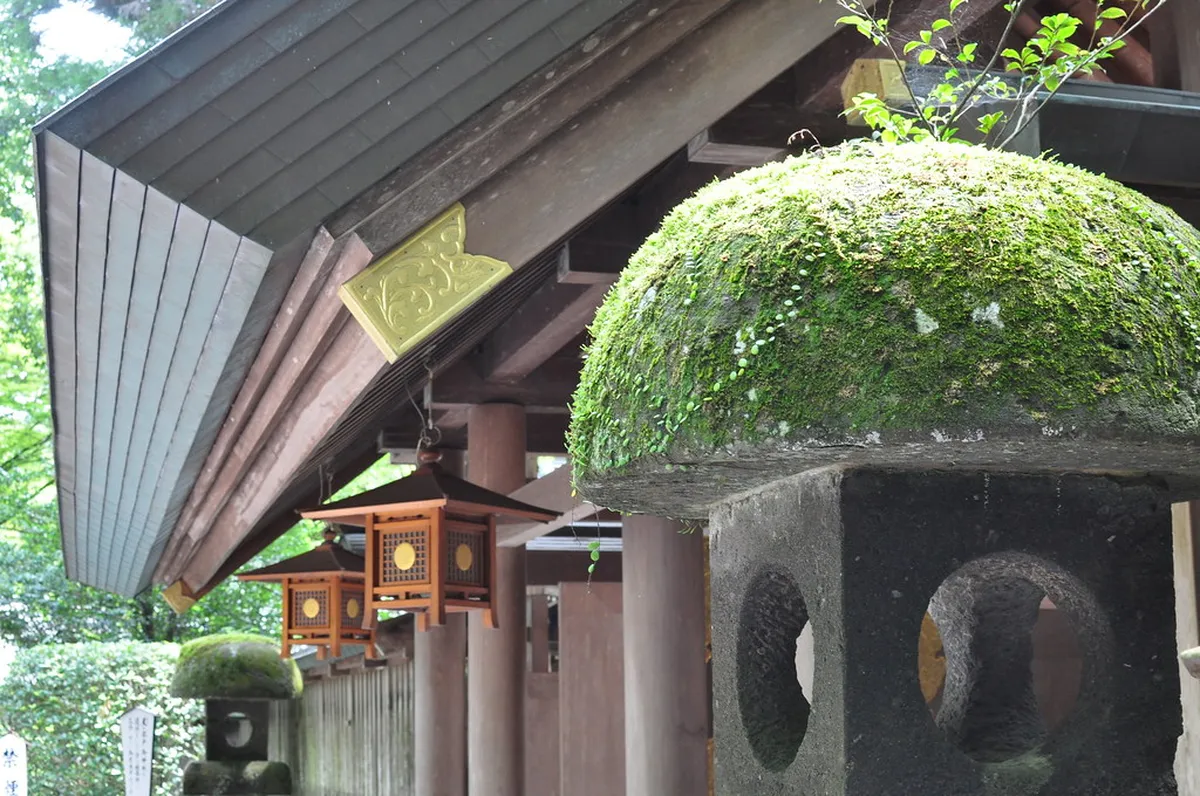
The mythic heart of Takachiho — a shrine honouring the cave where the sun goddess Amaterasu hid the world in darkness, with a riverside walk to Amano Yasukawara, the sacred grotto piled with visitors' stone cairns.
Visitor guide →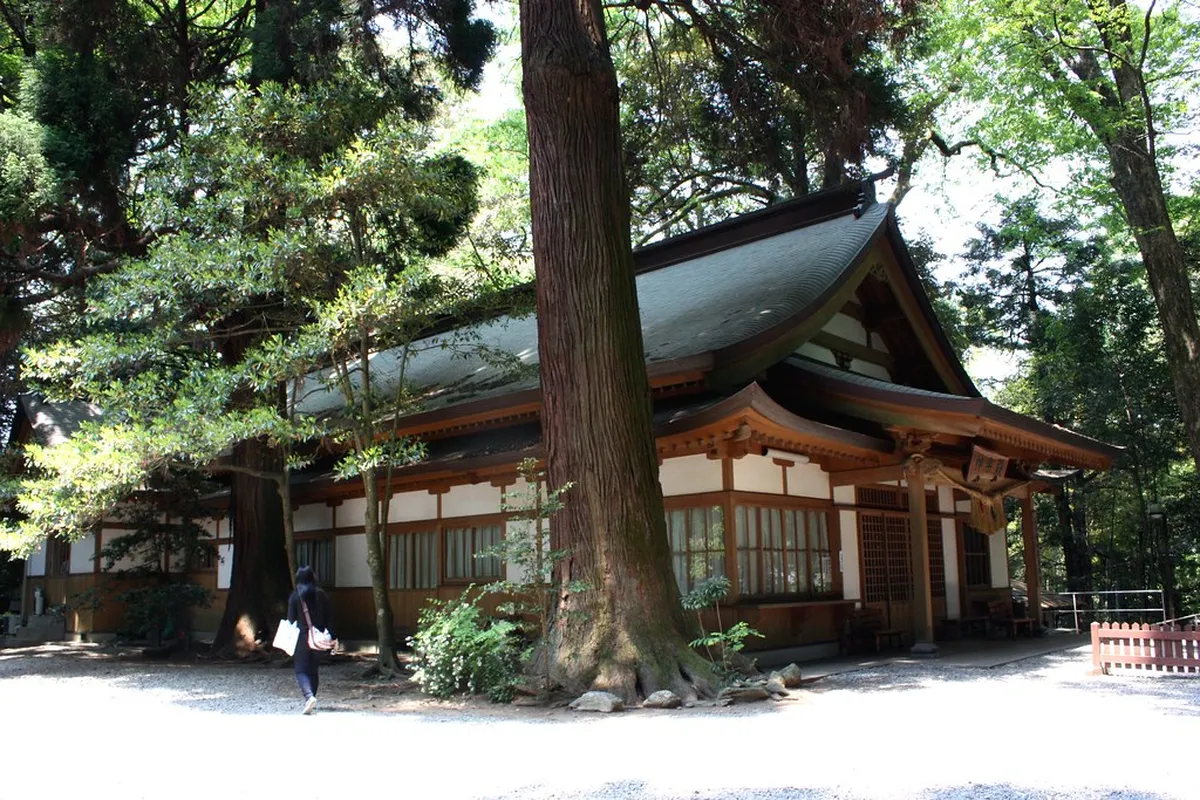
Takachiho's ancient central shrine, wrapped in towering cedars, where every night a one-hour selection of the sacred yokagura dances retells the sun-goddess myth for visitors.
Visitor guide →Takachiho Gorge is the reason most visitors come here in the first place. Around 120,000 years ago, pyroclastic flow from Mount Aso cooled into columnar basalt cliffs, and the Gokase River has spent the millennia since carving a narrow, steep-walled ravine through the rock. The 17-metre Manai Falls drops straight into the jade-green water below, framed by cliff faces striated like organ pipes — it's the single most photographed view in Miyazaki Prefecture, and for good reason.
You can see the gorge two ways. The free option is the paved rim walkway, which runs from the Tono Bridge viewpoint down to river level and back — allow 30-45 minutes. The popular option is a rental rowboat, which puts you on the water directly beneath the waterfall. Boats cost roughly ¥4,100-5,100 for a 30-minute rental (up to 3 people per boat), and demand badly outstrips supply on weekends, holidays, and any day during the autumn foliage peak. Boats are first-come, first-served at the ticket counter near the gorge entrance, and the queue routinely closes before midday once the day's allocation is gone — arrive at opening (usually 8:30am) if a rowboat is the priority, or accept the rim walk as a solid free alternative. Rowboat operation also pauses whenever the river runs high after rain, so build in a backup day if you're set on it.
Takachiho Shrine, ringed by cedars several centuries old, is the town's spiritual center and the venue for its best-known ritual: every night at 20:00, resident priests perform a one-hour selection from the 33 dances of yokagura, the sacred kagura tradition re-enacting the myth of Amaterasu's cave. Tickets cost ¥1,000 and are sold at the door — seating is limited and fills up in high season, so arrive 20-30 minutes early. The shrine itself is free to visit during the day and worth a slower look at the sacred Meoto-sugi (a pair of intertwined cedar trees) before the evening show.
Amano Iwato Shrine is the mythological heart of Takachiho: it honours the cave where Amaterasu is said to have hidden, plunging the world into darkness until the other gods coaxed her out. The shrine itself is free, and a priest-led viewing point lets you look across the river gorge toward the cave (you can't approach the cave directly). From the shrine, a short riverside walk leads to Amano Yasukawara, a cave shrine piled with thousands of small stone cairns stacked by visitors over the years — one of the most atmospheric short walks in the region, and also free.
Takachiho rewards an early start. Between mid-September and late November, head to the Kunimigaoka observation deck for sunrise — arrive by around 5:30-6:00am to catch the "sea of clouds," a temperature-inversion fog bank that fills the valley below the deck on cold, clear mornings and burns off within an hour or two of daybreak. From there, grab breakfast in town and head to Takachiho Gorge as soon as the rowboat counter opens, since tickets sell out by late morning in peak season. Spend early afternoon at Amano Iwato Shrine and the walk to Amano Yasukawara, then move to Takachiho Shrine in the late afternoon to see the cedar grove in good light before the evening's yokagura performance at 20:00. That single loop covers all 3 anchor attractions plus the sunrise viewpoint in one day — for a slower pace, or to add the Takachiho Course walk or Amaterasu Railway, see our full Takachiho itinerary guide.
The single biggest planning surprise for first-time visitors: Takachiho has no functioning train station. The old JR Takachiho Line was damaged by flooding in 2005 and never reopened, so every route in today is by road. Highway buses run from Kumamoto (roughly 90 minutes), Fukuoka (around 3.5 hours), and Nobeoka — the nearest JR station on the coast, with a connecting local bus of about an hour. Miyazaki city also has direct bus service, though it takes longer than the Kumamoto route.
Once in town, local buses between the gorge, the shrines, and the observation deck run infrequently, so most visitors either rent a car for the day or use taxis to string the sights together — a car is genuinely the easiest option if your itinerary includes Kunimigaoka's sunrise, since no public transport runs that early. Full route options and timetables are in our dedicated guide on how to get to Takachiho.
Autumn (late October-November) is the marquee season: maple foliage colours the gorge cliffs, a seasonal night illumination lights up Takachiho Gorge after dark, and the sea-of-clouds phenomenon at Kunimigaoka is most reliable on the crisp, clear mornings this time of year brings. It's also the start of satokagura season (roughly November-February), when individual hamlets around Takachiho each host their own all-night performance of the full 33-dance kagura cycle — a much longer, more immersive version of the nightly 1-hour show at Takachiho Shrine, usually open to visitors for a small donation. Summer is lush and green but humid, with the gorge at its most crowded around Obon in mid-August. Spring brings a modest cherry blossom season and thinner crowds, making it a good shoulder-season pick if the autumn illumination and rowboat queues aren't a priority.
Yes — Takachiho Gorge is one of Kyushu's most striking natural sights, and the combination of the gorge, the Amaterasu shrine mythology, and the nightly yokagura dance gives the town a depth that a lot of "one scenic viewpoint" destinations lack. It's remote, which keeps it from feeling overrun outside peak autumn weekends.
Highway buses connect Takachiho to Kumamoto (about 90 minutes), Fukuoka (around 3.5 hours), and Nobeoka (about an hour, with a JR connection to the coast). There is no train service directly into Takachiho.
A rowboat rental costs roughly ¥4,100-5,100 for 30 minutes and takes up to 3 people. Boats are sold at the gorge entrance on a first-come, first-served basis and often sell out by late morning in high season, so arrive at opening if it's a priority.
Yes. The nightly performance at Takachiho Shrine (20:00, ¥1,000) is a one-hour selection of sacred dances retelling the Amaterasu myth, performed by local priests in full ritual dress — it's a rare chance to see a centuries-old tradition still practiced as a living rite rather than a staged tourist show.
Not directly — the cave itself is across the river gorge and considered too sacred to approach. Shrine priests can point it out from a designated viewing area near the shrine buildings, which is the closest visitors are permitted to get.
One full day covers the 3 core attractions — the gorge, Takachiho Shrine, and Amano Iwato Shrine — plus the evening yokagura. Two days lets you add the Kunimigaoka sunrise, the Takachiho Course walking trail, or the Amaterasu Railway sightseeing train without rushing.
Mid-September through late November, on clear, cold mornings shortly after sunrise. The phenomenon depends on overnight temperature drops, so it's not guaranteed on any single visit, but autumn mornings give the best odds.
It's possible from Kumamoto (about 90 minutes each way by bus) if you commit to a full day, but it's tight. From Fukuoka (around 3.5 hours each way), an overnight stay makes for a much less rushed visit, especially if seeing the sunrise sea of clouds or the evening yokagura performance is on the list.
For the full picture beyond these 3 attractions, start with our Takachiho attractions guide for the complete rundown of what to see, then use our Takachiho itinerary to pace a 1-2 day visit. Since getting here is the trickiest part of planning, check how to get to Takachiho before booking transport, and read more on the town's signature ritual in our guide to the Takachiho yokagura night dance.