
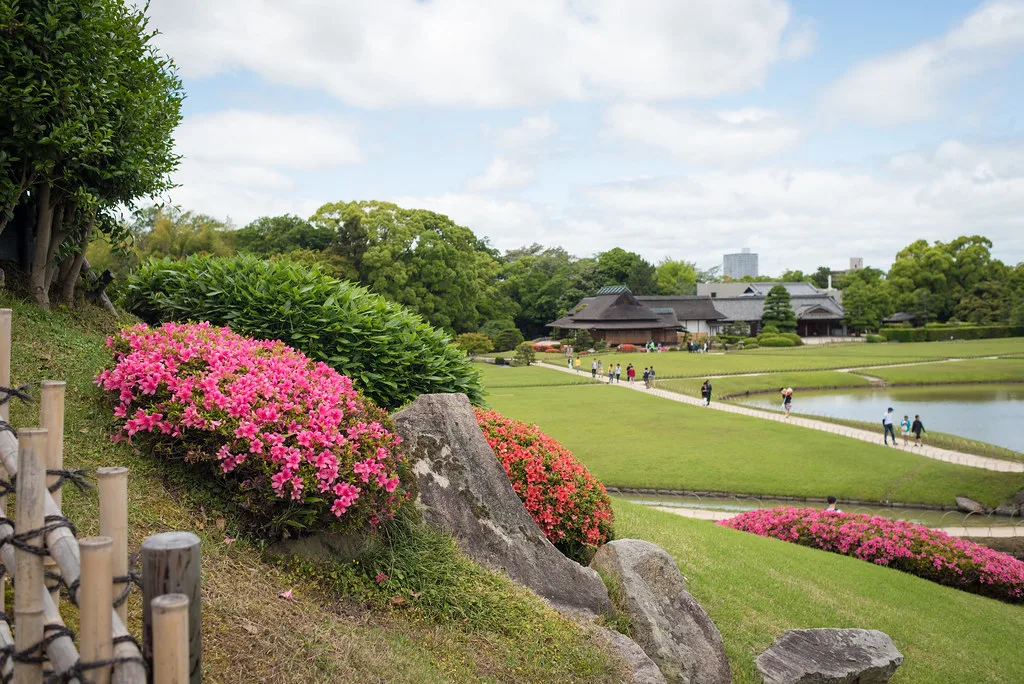
Korakuen Garden
One of Japan's Three Great Gardens, Korakuen is a 13-hectare Edo-era strolling garden on the Asahi River with broad lawns, ponds, tea houses and a borrowed view of Okayama Castle.
Visitor guide →
Okayama attractions and things to do in 2026: Korakuen Garden, Okayama (Crow) Castle and Kibitsu Shrine — verified ticket prices, opening hours, free vs paid sights, day trips to Kurashiki, itineraries and getting around.
Okayama is a relaxed garden city on the Sanyo-Shinkansen line between Osaka and Hiroshima, and its attractions punch far above the size of the city. The headline sight is Korakuen, ranked as one of Japan's Three Great Gardens alongside Kanazawa's Kenrokuen and Mito's Kairakuen — a 13-hectare Edo-era strolling garden of broad lawns, ponds and tea houses laid out on the Asahi River. Directly across the water rises Okayama Castle, nicknamed U-jo, the "Crow Castle," for its striking black-lacquered weatherboards; the two sights are linked by the Tsukimi pedestrian bridge, so you can see both in a single morning. A short ride out of the centre, Kibitsu Shrine guards the Momotaro "Peach Boy" legend behind a 1425 National Treasure hall and a 398-metre roofed corridor.
Okayama also makes the best base in western Japan for day trips: the willow-lined canals of Kurashiki's Bikan Historical Quarter are just 15 minutes away by train, with Bizen pottery, the art island of Naoshima and even Himeji Castle all within easy reach. The city earns its nickname the "Land of Sunshine" — it records some of the fewest rainy days of any major Japanese city, which makes garden-and-castle sightseeing reliable in almost any season. This 2026 guide narrows the field to the three sights that consistently reward the time and ticket price, then adds verified prices, free-vs-paid tips, itineraries, transport and the day trips worth building in. Each card below links to a full visitor guide; bookmark this page as your starting point.
Planning a wider trip? See our Japan travel guide, the things to do in Okayama guide, and getting around Japan.
One of Japan's Three Great Gardens, Korakuen is a 13-hectare Edo-era strolling garden on the Asahi River with broad lawns, ponds, tea houses and a borrowed view of Okayama Castle.
Visitor guide →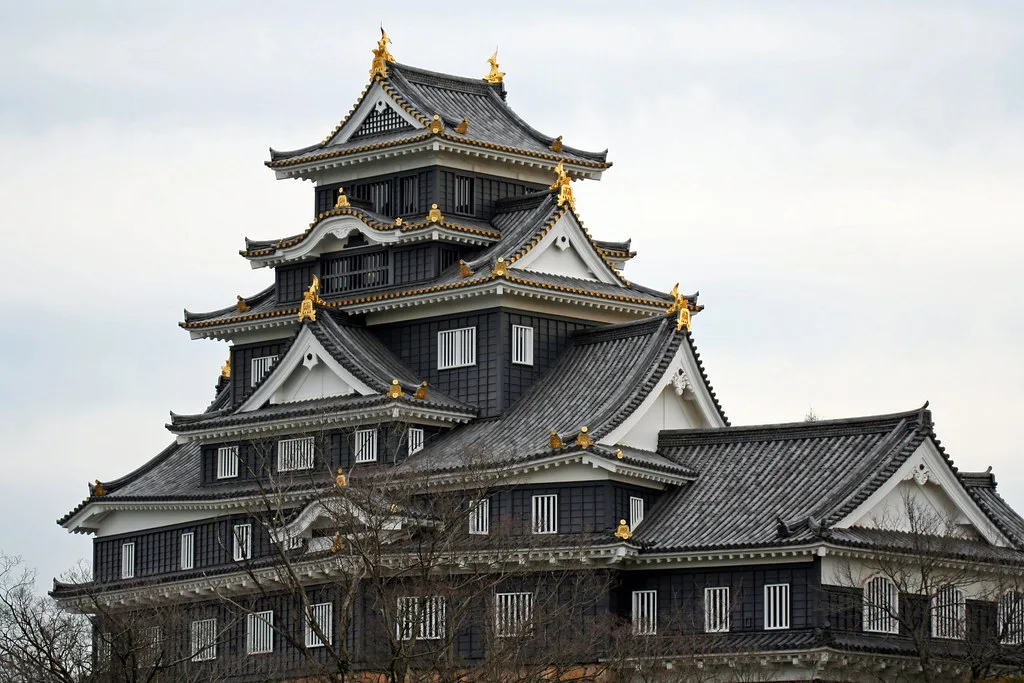
Nicknamed U-jo, the 'Crow Castle', for its black-lacquered weatherboards, Okayama Castle was completed in 1597, destroyed in WWII and rebuilt in 1966; it reopened after a major renovation in 2022 and overlooks Korakuen across the Asahi River.
Visitor guide →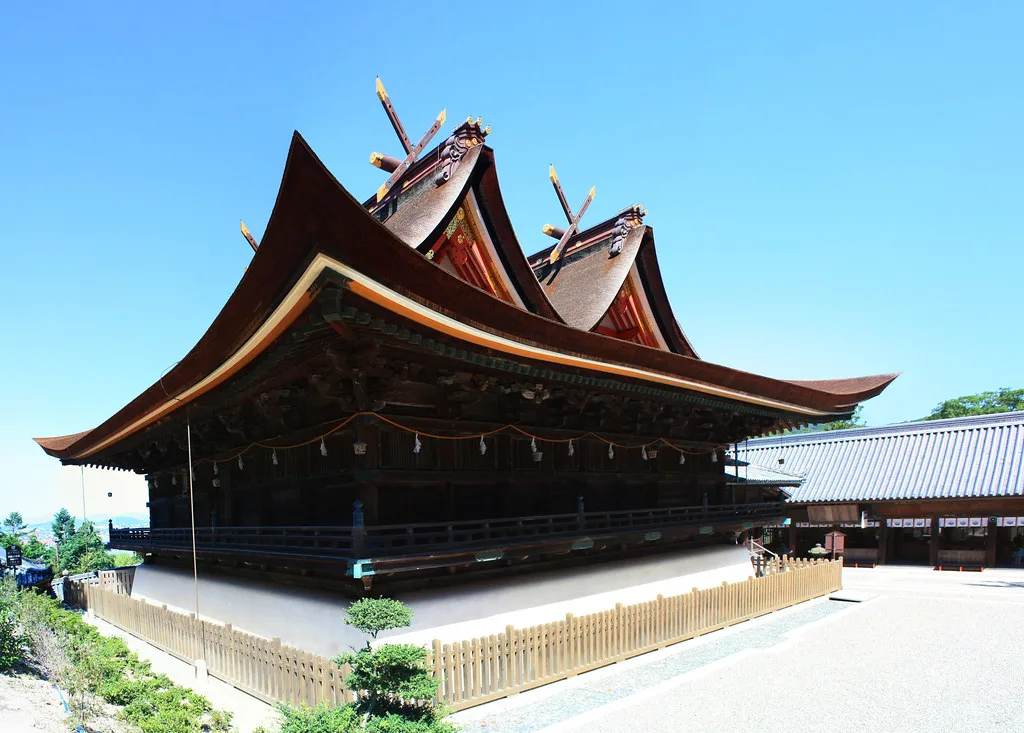
The ichinomiya of former Bitchū Province, Kibitsu Shrine is tied to the Momotaro 'Peach Boy' legend; its 1425 main hall is a National Treasure in the unique kibitsu-zukuri style, fronted by a 398-metre roofed corridor.
Visitor guide →Three sights define a trip to Okayama, and conveniently two of them sit side by side on the Asahi River. Here is what to expect, with 2026 pricing and hours so you can plan the ticket spend before you arrive.
Korakuen Garden is the must-see. Laid out between 1687 and 1700 for the local daimyo, it is one of only three gardens in Japan considered "great," and unlike Kyoto's enclosed temple gardens it is built for strolling — wide open lawns, a central pond, a small rice paddy, tea and plum groves, and a "borrowed" backdrop of the black castle keep. Admission is ¥500 for adults, ¥200 for seniors (65+), and free for children through high school. The garden opens 7:30 a.m. to 6:00 p.m. from March 20 to September 30, and 8:00 a.m. to 5:00 p.m. from October 1 to March 19 (last entry 15 minutes before closing). Budget at least 60–90 minutes.
Okayama Castle stands across the river, a five-minute walk over the Tsukimi pedestrian bridge from the garden. The original 1597 keep was destroyed in WWII and rebuilt in 1966; a major renovation reopened it in 2022, and the interior now houses a slick museum of armour, regional history and hands-on exhibits, topped by a sixth-floor observation deck. Admission is ¥500 for adults and free for children, open 9:00 a.m. to 5:30 p.m. (last entry 5:00 p.m.). If you are doing both — and you should — buy the combined Castle + Korakuen ticket for ¥800, which saves ¥200 over buying each separately.
Kibitsu Shrine sits about 15 minutes west of the centre on the JR Kibi Line. As the ichinomiya (highest-ranked shrine) of the former Bitchu Province, it is tied to the Momotaro legend that may have inspired Japan's famous Peach Boy folk tale. Its 1425 main hall is a designated National Treasure built in the unique kibitsu-zukuri style, and a photogenic 398-metre roofed wooden corridor runs downhill from it. Entry is free, making it the best-value attraction in the city.
Okayama rewards travellers on a budget more than most Japanese cities, because two of its three headline sights cost little or nothing. Here is how the spend breaks down so you can decide what is worth a ticket.
Free: Kibitsu Shrine is free to enter, including its National Treasure hall and the long roofed corridor. You can also admire Okayama Castle's exterior and photograph the black keep from the riverbank or the Tsukimi bridge at no cost, and the leafy outer paths and riverside approach to Korakuen can be enjoyed without paying — as can the free Nishigawa Canal Park strip that threads through the city centre, lovely in cherry-blossom season.
Paid: Entering Korakuen proper (¥500) and climbing inside Okayama Castle (¥500) are the only two tickets you genuinely need. Because they pair so naturally, the combined Castle + Korakuen ticket at ¥800 is the single best-value purchase in Okayama — it covers both sights for less than the cost of two separate entries. With Kibitsu Shrine free, a traveller can see all three of the city's defining attractions for ¥800 plus a couple of short train and tram fares.
Okayama's position on the Sanyo-Shinkansen and the local Kibi rail network makes it one of the best day-trip bases in western Japan. Four trips stand out.
Kurashiki — Bikan Historical Quarter (about 15 minutes). The most popular day trip from Okayama, and deservedly so. A short hop on the JR Sanyo Line drops you at a preserved Edo-era merchant district of white-walled, black-tiled storehouses lining a willow-fringed canal, now filled with cafes, craft shops and the excellent Ohara Museum of Art. Half a day is enough; a full day lets you slow down. Okayama has its own hub for it at Kurashiki attractions.
Bizen pottery town — Imbe (about 40 minutes). Ride the JR Ako Line east to Imbe, the home of Bizen-yaki, one of Japan's oldest unglazed stoneware traditions. Climbing kilns, galleries and hands-on pottery workshops cluster within walking distance of the station — a relaxed, low-crowd contrast to the garden circuit.
Naoshima art island. Japan's celebrated "art island" in the Seto Inland Sea — home to Tadao Ando's Chichu Art Museum and Yayoi Kusama's yellow pumpkin — is reachable from Okayama via the port at Uno (local train, then ferry). It is a long day, so start early and check the ferry timetable before you go.
Himeji Castle (about 20 minutes by shinkansen). Japan's grandest original castle — a UNESCO World Heritage "White Heron" keep — is barely 20 minutes east on the Sanyo-Shinkansen, an easy add-on for castle enthusiasts who want to contrast Himeji's white with Okayama's black.
Okayama's core sights cluster around the Asahi River and a short tram or train ride from the station, so a little or a lot of time both work well. Here are three ready-made routes.
Half-day (3–4 hours): Ride the Okaden tram from Okayama Station to Shiroshita, walk to Korakuen and tour the garden, then cross the Tsukimi bridge to Okayama Castle — the ¥800 combined ticket covers both. Photograph the black keep from the riverbank on your way back. This is the classic "I have a few hours between trains" plan.
One full day: Do the garden-and-castle morning above, lunch on Korakuen-dori or near the station, then take the JR Kibi Line out to Kibitsu Shrine in the afternoon to see the National Treasure hall and roofed corridor. Wrap up with a stroll along the Nishigawa Canal Park back in the centre. Energetic cyclists can swap the afternoon for the flat Kibi Plain cycling route, which links Kibitsu and several other shrines.
Two days (with Kurashiki): Spend day one on Korakuen, Okayama Castle and Kibitsu Shrine as above. On day two, ride 15 minutes to Kurashiki and spend the morning in the Bikan canal quarter and the Ohara Museum of Art, then either return to Okayama or push on toward Hiroshima. Add the optional Bizen pottery town if you have an extra half-day.
Okayama has no subway, but it does not need one — the centre is compact and walkable, and a small tram network covers the rest. The Okaden tram (Okayama Electric Tramway) runs just two short lines from the station: the Higashiyama Line, which stops at Shiroshita, the closest stop for Korakuen and Okayama Castle, and the Seikibashi Line. A single ride is a flat low fare, paid in cash or by IC card, and the garden-and-castle district is only a few minutes' walk from the Shiroshita stop.
For Kibitsu Shrine, take the JR Kibi Line from Okayama Station to Kibitsu Station, then walk about 10 minutes. Day trips run on JR: the Sanyo Line to Kurashiki (15 min) and the Sanyo-Shinkansen to Himeji (about 20 min). Most visitors will not need a rental car — the rail and tram combination reaches every sight in this guide, and Okayama Station itself is a major shinkansen hub between Osaka and Hiroshima, so arriving and leaving is straightforward.
Okayama is nicknamed the "Land of Sunshine" because it logs some of the fewest rainy days of any major Japanese city — sightseeing here is more weather-reliable than almost anywhere else in the country, which is a real advantage for an itinerary built around an open-air garden and a castle.
Spring (late March–early April) is the marquee season: around 280 cherry trees bloom across Korakuen, following roughly 100 plum trees that peak from early February to early March. Autumn (mid-November to early December) is the other highlight, when about 250 maple trees plus cherry and ginkgo turn the garden gold and crimson. Summer brings 3,000 irises to Korakuen in June and the region's celebrated fruit — Okayama is famous for white peaches and Muscat grapes, in season roughly July to September. Both spring and autumn also bring seasonal evening illuminations: the castle's Ujo Togenkyo and Korakuen's Genso Teien light-ups. Overall, March to June offers the most comfortable weather, with spring and autumn the most rewarding for the garden itself.
One full day covers Okayama's three core attractions — Korakuen Garden, Okayama Castle and Kibitsu Shrine. Add a second day if you want to include the Kurashiki Bikan canal quarter (15 minutes away) or other day trips. Travellers with only a few hours between shinkansen connections can still see the garden and castle together in a half-day.
Korakuen Garden is Okayama's top attraction and the reason most visitors come. It is one of Japan's Three Great Gardens, alongside Kanazawa's Kenrokuen and Mito's Kairakuen, and it sits directly across the Asahi River from Okayama Castle, so the two are almost always visited together.
Some are. Kibitsu Shrine is free, and you can view Okayama Castle's exterior and the riverside approach to Korakuen at no cost. Entering Korakuen Garden (¥500) and climbing inside Okayama Castle (¥500) are paid — and a combined Castle + Korakuen ticket costs ¥800, the best-value option for seeing both.
Yes. Okayama pairs one of Japan's three greatest gardens with a dramatic black "Crow Castle" a few minutes' walk apart, plus a free National Treasure shrine and the famous Kurashiki canal district 15 minutes away — all on the main shinkansen line between Osaka and Hiroshima, which makes it an easy and rewarding stop.
Late March to early April for the cherry blossoms at Korakuen, and mid-November to early December for the autumn maples, are the two standout windows. As the "Land of Sunshine," Okayama has unusually few rainy days, so March to June is generally the most comfortable stretch for sightseeing.
Kurashiki's Bikan Historical Quarter is about 15 minutes from Okayama Station on the JR Sanyo Line, making it the easiest and most popular day trip from the city. Half a day is enough to wander the canal, the storehouses and the Ohara Museum of Art.
Ready to go deeper? Our blog has full pillar guides to help you build the trip: start with 10 best things to do in Okayama and the day-by-day Okayama 1–2 day itinerary. To pair Okayama with the canal town, read our Kurashiki Bikan day-trip guide, and for the wider region see the best day trips from Okayama. Each card above also links to a full visitor guide with verified hours, pricing and the practical tips that do not make it into the official sites.