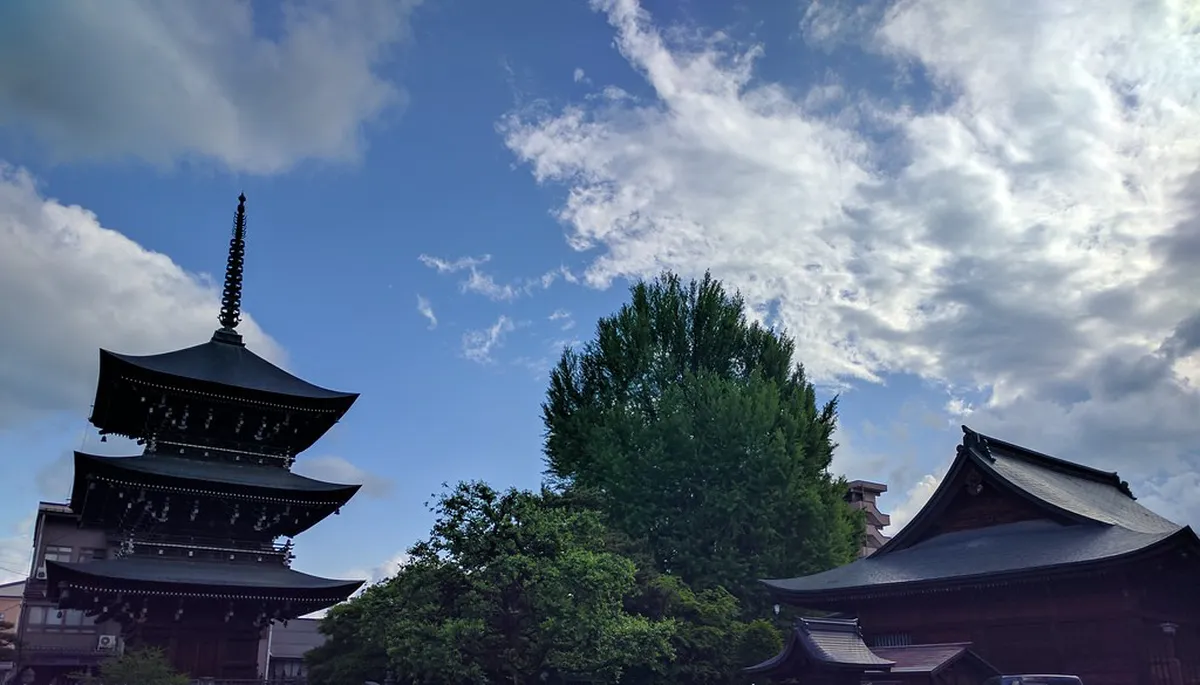
Hida Kokubunji is the oldest temple in Takayama and one of the most spiritually significant sites in all of Gifu Prefecture. Founded in 746 during the Nara period, it draws visitors for its Muromachi-era main hall, a three-story pagoda, and a 1,200-year-old ginkgo tree designated as a National Natural Monument. The temple sits just five minutes on foot from JR Takayama Station, making it a natural first or last stop on any itinerary. Check our Takayama travel guide for more local highlights.
Beyond its age and architecture, Hida Kokubunji functions as what the Japanese call a "power spot" — a place believed to concentrate spiritual energy. Locals come here to collect goshuin stamps, purchase protective charms, and rub the Nade Sarubobo stone statue for blessings. In 2026 the temple continues to operate exactly as it has for generations: free grounds access, a small fee for the treasure hall, and a serene atmosphere that feels genuinely disconnected from tourist crowds just a few streets away.
History of Hida Kokubunji
The temple traces its origins to 741, when Emperor Shomu issued an imperial edict ordering the construction of provincial temples across Japan to spread Buddhism. The Hida version was completed in 746 under the guidance of the monk Gyoki. Some of the original foundation stones from that founding era are still visible on the grounds today — a tangible link to the Nara period that few sites in Japan can match.
Fire destroyed the original structures multiple times over the centuries. The current main hall, built during the Muromachi period, was later repaired in 1587 by Nagachika Kanamori, a retainer of Toyotomi Hideyoshi, at the request of the temple's first restorer Genkai Hoin. The hall received further dismantling and restoration work in 1954 and is now designated as an Important Cultural Property of Japan. The bell tower, relocated from Takayama Castle, holds cultural property status at the city level.
The three-story pagoda has its own distinct history. Its origins trace back to a stupa built in 714, though the structure visible today is the product of 19th-century reconstruction and is recognized as an Important Cultural Property of Gifu Prefecture. The pagoda was originally planned as a seven-story tower; structural and historical pressures reduced it to its current three stories, giving it a more intimate scale than its ambitious original design intended.
One modern addition worth noting is the statue of the Great Compassionate Mother Kannon, erected by Hisako Nakamura — known in Japan as the "Helen Keller of Japan" — adding a 20th-century layer to a site that otherwise reads purely as ancient history.
The Great Ginkgo Tree and Autumn Foliage
The centerpiece of the temple grounds is not the pagoda but the enormous ginkgo tree standing beside the main hall. Estimated at over 1,200 years old, it was designated a National Natural Monument on March 31, 1953. Locals call it "Chichi Icho" — the Breast Ginkgo — because of the numerous aerial roots that hang downward from its branches. A traditional belief holds that mothers who have difficulty producing breast milk will be able to nurse successfully after praying at the tree, and this spiritual association draws visitors even outside autumn.
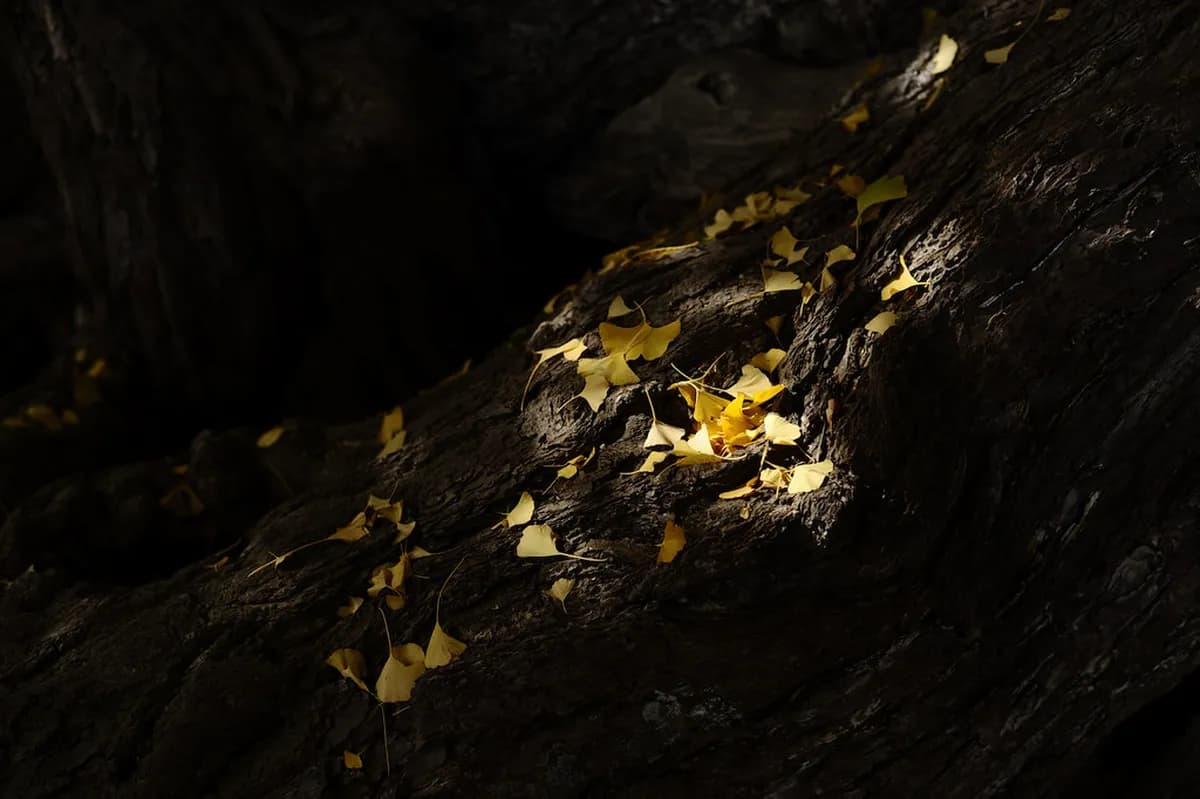
The 1,200-year-old Great Ginkgo tree turns brilliant golden yellow from early to mid-November — the most sought-after time to visit. Local tradition holds that the first snowfall of the season coincides with the last of the fallen leaves. Arrive early morning to photograph the tree before crowds settle in after 10:00.
Peak autumn color typically runs from early to mid-November, when the leaves turn a brilliant golden yellow. The tree's leaves fall in early December, and local tradition says the first snowfall of the season coincides with the last of the fallen leaves — a natural calendar that Takayama residents still reference. The temple's official blog publishes annual photo updates tracking the color change week by week, useful if you are timing your visit around the foliage.
If you arrive in spring or summer, the tree is still worth seeing for its sheer scale and the texture of its aerial roots. The golden autumn display gets most of the attention, but the tree's silhouette against the pagoda makes for compelling photographs in any season. Come early morning to avoid the crowds that arrive after 10:00.
Hida Kokubunji as a Power Spot
The concept of a "power spot" refers to locations in Japan believed to emit concentrated spiritual energy, and Hida Kokubunji is consistently listed among Gifu Prefecture's most notable examples. In front of the main hall at Koshindo Hall, you will find dozens of sarubobo dolls hanging as offerings. Sarubobo — which translates from the Hida dialect as "baby monkey" — are the iconic red faceless cloth dolls of the Hida-Takayama region, believed to ward off misfortune and bring family happiness.
In 2007, the temple installed a stone statue called the Nade Sarubobo for Wishing. Visitors rub specific parts of the statue to seek particular blessings: rubbing the head is said to improve intelligence, touching the heart area is associated with career success, and rubbing whichever part of your own body troubles you is believed to improve health in that area. The statue is modest in scale but consistently draws a small queue of visitors performing the ritual with genuine intent.
The spiritual atmosphere at Kokubunji differs from the more festive energy of Hida Furukawa or the visual spectacle of Sanmachi Suji. This is a working temple where locals still come to pray, not a heritage display. That distinction is worth respecting: keep voices low near the main hall, and be aware that some sections of the inner temple are reserved for worshippers, not sightseers.
Goshuin (Temple Stamps) and Protective Charms
| Item | Price | Notes |
|---|---|---|
| Temple grounds | Free | Open during daylight hours |
| Treasure hall admission | ¥300 (adults) | Daily 09:00–16:00, last entry 15:30 |
| Goshuin stamp | ¥300 | At the kuri reception desk during treasure hall hours |
| Original goshuin book (temple-exclusive) | ¥1,500 | Features pagoda, main hall, and Great Ginkgo illustrations |
| Health Breast Ginkgo Charm (omamori) | ¥500 | Women's health and general well-being focus |
Hida Kokubunji is the first temple on the Hida 33 Kannon Pilgrimage, which makes it a priority stop for anyone collecting goshuin stamps across the region. You can receive a goshuin at the reception desk in the temple's kuri (priest's quarters) for 300 yen per stamp. The temple also sells an original goshuin book featuring illustrations of the main hall, the three-story pagoda, and the Great Ginkgo tree; it costs 1,500 yen and serves as a distinctive keepsake compared to the generic books sold at tourist shops.
The reception desk also stocks omamori (protective charms) inspired by the Breast Ginkgo tree. These charms focus on women's health and general well-being. The Health Breast Ginkgo Charm is priced at 500 yen. Note that the prices listed here were verified as of 2019; small adjustments are possible, but the items themselves remain available. The reception area is open during treasure hall hours (09:00-16:00, last entry 15:30).
For first-time goshuin collectors: bring your own goshuin book if you already have one, or purchase the temple's original version at the desk. The stamp is applied with ink and hand-calligraphy on the spot, so allow a few minutes for the process. The reception staff are accustomed to non-Japanese visitors and handle the transaction efficiently even without shared language.
Setsubun Festival: Seven Lucky Gods Procession
Every February 3rd, Hida Kokubunji hosts a Setsubun Festival with a history of approximately 400 years. The centerpiece is the Seven Lucky Gods Bean-Throwing Procession, a tradition that was discontinued for several years in the 1990s due to a lack of successors before being revived in 2008. Since its revival it has become one of the most anticipated winter events for local shopkeepers and families in Hida.
On the day of the festival, stalls inside the temple grounds sell amazake (sweet rice wine), oshiruko (sweet red bean soup), and mitarashi dango (sweet soy-glazed rice dumplings). Along the procession route, costumed participants represent the Seven Lucky Gods alongside red and blue oni (demons), and there are photo-taking areas specifically designed for children. The bean-throwing ceremony follows, with crowds catching roasted soybeans for luck in the coming year.
The Setsubun event offers a rare opportunity to see the temple in a festive, loud register that contrasts sharply with its everyday quietude. Arrive by 10:00 to secure a position near the procession route. Exact start times are announced through local event calendars and the temple's official channels; confirm before you go as minor scheduling adjustments occur year to year.
Higashiyama Walking Course: Extending Your Visit
No SERP competitor mentions this, but Hida Kokubunji makes a logical starting point for the Higashiyama Walking Course — a 70-minute temple-and-shrine circuit on the eastern edge of Takayama. The route strings together 13 historic temples and shrines through forested hillside paths, passing sites like Soyuji Temple and the Higashiyama area that most day-trippers miss entirely. The full loop covers roughly 3.5 kilometers and can be completed comfortably in 90 minutes including stops.
The practical value here is sequencing: you can walk to Kokubunji first (5 minutes from the station), spend 20-30 minutes at the temple, then continue east on foot to join the Higashiyama circuit. This avoids backtracking and gives you a genuine half-day itinerary anchored around Buddhist and Shinto architecture rather than the tourist-facing merchant district of Sanmachi Suji. The route is well-signposted in both Japanese and English and requires no booking or guide.
For families with children or travelers with limited mobility, the early section of the Higashiyama course near Soyuji is relatively flat. The steeper forested sections near the hilltop shrines can be skipped by returning to the main road. This flexibility makes the combination of Kokubunji plus partial Higashiyama walking a realistic option even for visitors with mixed fitness levels.
Sakurayama Hachiman Shrine and the Festival Floats Hall
The Sakurayama Hachiman Shrine in the northern part of the city houses the Takayama Festival Floats Exhibition Hall, where four of the eleven Yatai (festival floats) used in the autumn Takayama Festival are displayed year-round under climate-controlled conditions. These floats are masterpieces of Edo-period woodcarving, lacquerwork, and metalwork — comparable in craft quality to what you see in the temple architecture at Kokubunji, but on a movable scale. Karakuri mechanical dolls are demonstrated at scheduled times.
The two sites complement each other well. Kokubunji grounds are free; the Floats Exhibition Hall charges admission. Walking between the two takes about 15-20 minutes through residential streets and small local shops. Combining both in a single morning — Kokubunji first, then the shrine and exhibition hall — gives you a rounded picture of Takayama's religious and festive heritage without resorting to a tour bus.
Calligraphy in a 100-Year-Old House
Several workshops near the temple offer Japanese calligraphy sessions inside preserved traditional machiya townhouses. The tatami floors, low wooden tables, and smell of fresh sumi ink create an environment that makes the activity feel substantively different from the generic craft-workshop tourism common in larger Japanese cities. Sessions are typically 60-90 minutes, designed for complete beginners, and produce one or two finished pieces on washi paper that you can take home.
The experience pairs naturally with a temple visit: both slow you down and ask for a degree of deliberate attention. Many workshops are within a 10-minute walk of Kokubunji. Book in advance during peak autumn foliage season (late October through mid-November) and during the spring festival period (April), when these workshops fill up alongside the major attractions. Walk-in slots are more available in January, February, and the quieter summer months.
Access, Parking, and Practical Tips
The treasure hall is open daily 09:00–16:00 (last entry 15:30) for approximately ¥300 (adults). The grounds are free to visit at any time. The temple has its own parking lot (10 cars) open 09:00–16:00 for temple visitors only — not for general public parking.
The temple is at 1-83 Sowamachi, Takayama, Gifu 506-0007 — about a 5-minute walk east from JR Takayama Station. It is also served by the Nohi Bus and Takayama Community Bus; the "Kokubunji" stop is about a 1-minute walk, and the "Asahimachi" and "Takayama Nohi Bus Center" stops are about 3 minutes on foot. For visitors arriving by express bus from Nagoya or Osaka, the Takayama Nohi Bus Center is directly adjacent to the train station.
Visitors arriving by car should know that the temple has its own parking lot (capacity: 10 cars plus large buses) available to temple visitors free of charge, open from 09:00 to 16:00. This lot is not available for general public parking. Several paid municipal lots are nearby: Meitetsu Kyosho Parking on Kokubunji Street No. 2, Paraca Takayama Hatsuta Town No. 1, and Meitetsu Kyosho Parking Takayama Nata Town are the closest options.
Plan about 20-30 minutes to see the main hall, pagoda, ginkgo tree, and treasure hall at a comfortable pace. The grounds are accessible during daylight hours at no charge. The treasure hall is open daily from 09:00 to 16:00 (last entry 15:30); the treasure hall admission is approximately 300 yen for adults. Note: prices and hours should be confirmed directly with the temple before your visit, as changes may occur after the last update in 2026.
Family-Friendly and Budget Notes
The temple grounds are free to enter, making Hida Kokubunji one of the most accessible major attractions in Takayama for budget-conscious travelers. Families can spend a meaningful 30 minutes here without any ticket cost. Children tend to be engaged by the scale of the ginkgo tree, the rows of sarubobo dolls at Koshindo Hall, and the stone Nade Sarubobo statue. The open grounds give younger children room to move without the confinement of an indoor museum setting.
Small protective charms (omamori) and goshuin stamps make low-cost, culturally meaningful souvenirs — significantly more distinctive than the mass-produced items sold on Sanmachi Suji. The temple grounds are stroller-accessible across most areas, though the immediate approach to the main hall involves stone paving that can be uneven. Budget-friendly snack options — including mitarashi dango and Hida beef skewers — are available from stalls a short walk toward the morning market.
Frequently Asked Questions
What is Hida Kokubunji Temple?
Hida Kokubunji is the oldest temple in Takayama, dating back to the Nara period. It features a Muromachi-era main hall, a three-story pagoda, and a 1,200-year-old ginkgo tree. It is a key spiritual site for the Hida province.
Is there an entrance fee for Hida Kokubunji?
Entry to the temple grounds is free for all visitors. There is a small fee if you wish to enter the treasure house to see historic artifacts. Most guests enjoy the pagoda and ginkgo tree for free.
When is the best time to see the giant ginkgo tree?
The best time is usually from late October to mid-November. During this window, the leaves turn a stunning golden yellow. Recent reviews from Jan 23, 2026 from Google highlight the tree's enduring beauty.
How far is the temple from Takayama Station?
The temple is very close to the station, requiring only a five-minute walk. Simply head east from the main exit toward the city center. It is an easy walk for most travelers, including those with luggage.
Hida Kokubunji offers something rare in a popular tourist town: a genuinely active place of worship that doubles as a world-class historic site. The ginkgo tree alone justifies the detour in autumn, but the goshuin stamps, the Nade Sarubobo ritual, and the quiet temple grounds make it worth visiting in any season. Use it as your opening move in Takayama — the five-minute walk from the station means you lose nothing by starting here before the crowds settle into Sanmachi Suji.
For more Takayama trip planning, see our Takayama itinerary, things to do in Takayama, Takayama food guide.
Official sources: For the latest details, see the official tourism site and Wikipedia.