Takayama Food Guide: What to Eat and Where to Eat
Discover the best Hida beef, Takayama ramen, and street food in Gifu. Our Takayama food guide covers top restaurants, sake breweries, and practical dining tips.
On this page
Takayama sits deep in the Japanese Alps and produces some of Japan's most distinctive food. The city's isolation shaped a mountain cuisine unlike anything in Tokyo or Osaka.
This charming city in Gifu Prefecture rewards travelers who eat their way through it — from marbled Wagyu at specialist grills to foraged greens at century-old restaurants.
Our 2026 Takayama food guide covers every major dish, the specific restaurants that do each one best, and the queue strategies that separate a frustrating visit from an effortless one.
Hida Beef: The Alpine Treasure of Japanese Wagyu
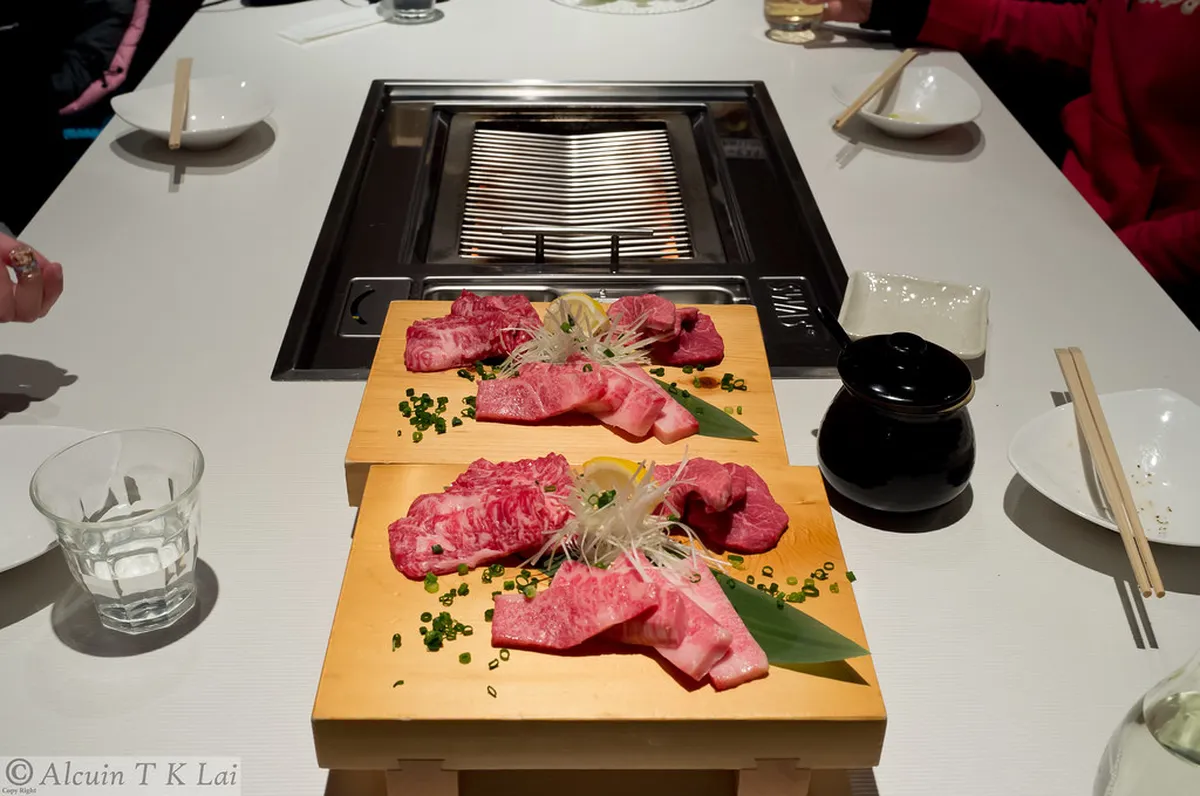
Hida beef is the undisputed star of Takayama's dining scene. It comes from black-haired Japanese cattle raised in Gifu Prefecture, and the marbling is exceptional — regularly compared to Kobe beef but available here at production-area prices, which run roughly 20–30% lower. Travelers who have tried both often describe Hida beef as more buttery and better balanced than Tokyo or Osaka versions.
You can eat it as steaks on a hot plate tableside, in shabu shabu hot pots, as street snacks, or seared on a magnolia leaf with miso. Each format showcases the fat distribution differently, so try at least two styles. Finding the right Hida beef restaurant comes down to one clear variable: whether you can tolerate a queue.
Here is how the three main options break down so you can decide before you arrive:
Hida beef nigiri sushi stalls at Sanmachi Suji — Kotteushi and Sakuraya — typically sell out by 15:00 on busy days. Arrive before 11:00 or aim for the 14:30–15:00 window for the best chance at a fresh piece without a long queue.
- Maruaki Hida-Takayama Store — the most celebrated specialist grill in town. No reservations, ever. Lines form by 10:30 for the 11:00 opening. The cuts are outstanding and the atmosphere is high-energy. Budget 45–60 minutes of queue time on busy days. If you want the best marbling in a restaurant setting and don't mind the wait, this is your spot.
- Kyoya Traditional Restaurant — Hida beef served in a traditional Japanese house with irori hearth cooking. Reservations accepted, which makes it the right call for dinner parties or travelers on tight schedules. Prices run slightly higher, but you are paying for certainty and atmosphere in equal measure.
- Center4 Hamburgers — gourmet Western fusion using Hida beef in burgers. Moderate prices, no lengthy waits, and a genuinely good option for families or anyone who wants the beef without the ceremony.
For a fast hit of the good stuff, look for Hida beef nigiri sushi at street stalls near Sanmachi Suji. Kotteushi and Sakuraya both serve it on shrimp crackers for ¥800–1,000 per piece. Two bites, then it's gone. Arrive before 11:00 or by 15:00 before evening sell-outs.
Takayama Ramen: The Soul Food of Gifu
Locals call their ramen Chuka Soba, and the distinction from other regional styles is immediately apparent. The broth is a clear, dark soy sauce base made from chicken bones and dried bonito flakes — lighter than Sapporo's miso-heavy bowls, more savory than Kyoto's delicate chicken styles. Noodles are thin and curly, providing grip for the broth without overpowering it. Standard toppings are bamboo shoots, scallions, nori, and a slice of chashu pork.
Most shops offer an upgrade to Hida beef noodles for an additional ¥300–500 — worth it if you want the beef in a more casual, broth-forward context. Critical timing note: most ramen shops close once the broth runs out, typically by 13:00–14:00 on busy days. Do not plan for a late lunch.
Two restaurants define the scene, and they suit very different travel styles:
- Menya Shirakawa — the most celebrated ramen shop in Takayama. Menu is Chuka Soba only, reflecting total confidence in one dish. The shop seats fewer than 25. Arrive by 10:30 for the 11:00 opening or accept a 30–45 minute queue. Arriving at noon on a weekend typically means 60 minutes of waiting. For many visitors, the queue is part of the experience.
- Kajibashi — a cosy noodle shop with dark wood panels and a relaxed atmosphere. No queue theater. You can walk in at noon and get a table. The broth skews slightly saltier and the pork is generously cut. The right choice if you want excellent ramen without the performance.
A practical rule: if Menya Shirakawa is a priority, build your morning around it. Arrive at 10:30, queue, eat by 11:15. If you miss the window, Kajibashi never disappoints.
Most ramen shops in Takayama close once the broth runs out — typically by 13:00–14:00 on busy days. If you plan a late lunch at a popular spot like Menya Shirakawa, you will likely find it already shut. Plan for an 11:00–12:00 ramen window to avoid disappointment.
Hoba Miso: Traditional Flavors of the Hida Region
Hoba Miso tells the story of mountain survival most clearly. The origin traces to Hida woodworkers who used the broad, dried leaves of the magnolia tree (hoba) as improvised plates, grilling miso with whatever foraged vegetables they carried. The leaf is not edible — it is a vessel, and a fragrant one.
At the table, a small charcoal or gas grill holds a dried magnolia leaf piled with savory miso paste, sliced mushrooms, leeks, and — in the modern iteration — thin slices of Hida beef laid over the top. The heat releases a woody aroma from the leaf into the bubbling miso. You eat it by scooping the mixture onto rice. The sizzle and smell are part of the appeal.
Many izakayas let you grill Hoba Miso yourself at the table, which makes it ideal for a relaxed evening with sake. Expect to pay ¥1,200–1,800 for a full set with rice. The veggie-only version — mushrooms, negi onions, bell peppers — is widely available and just as satisfying. If you are strictly plant-based, confirm the miso base does not contain katsuobushi (dried bonito flakes), as some versions do.
Street Food & Snacks: A Walking Tour of Sanmachi Suji
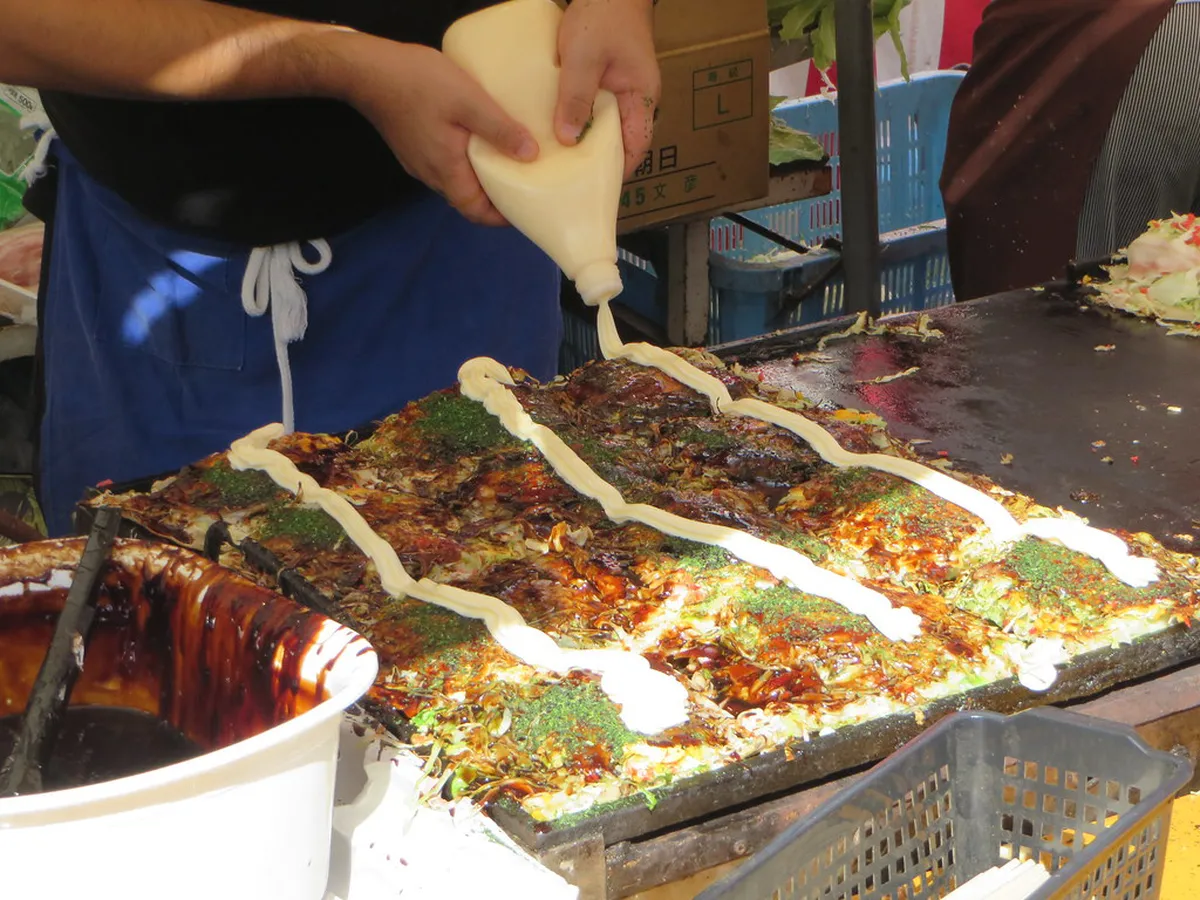
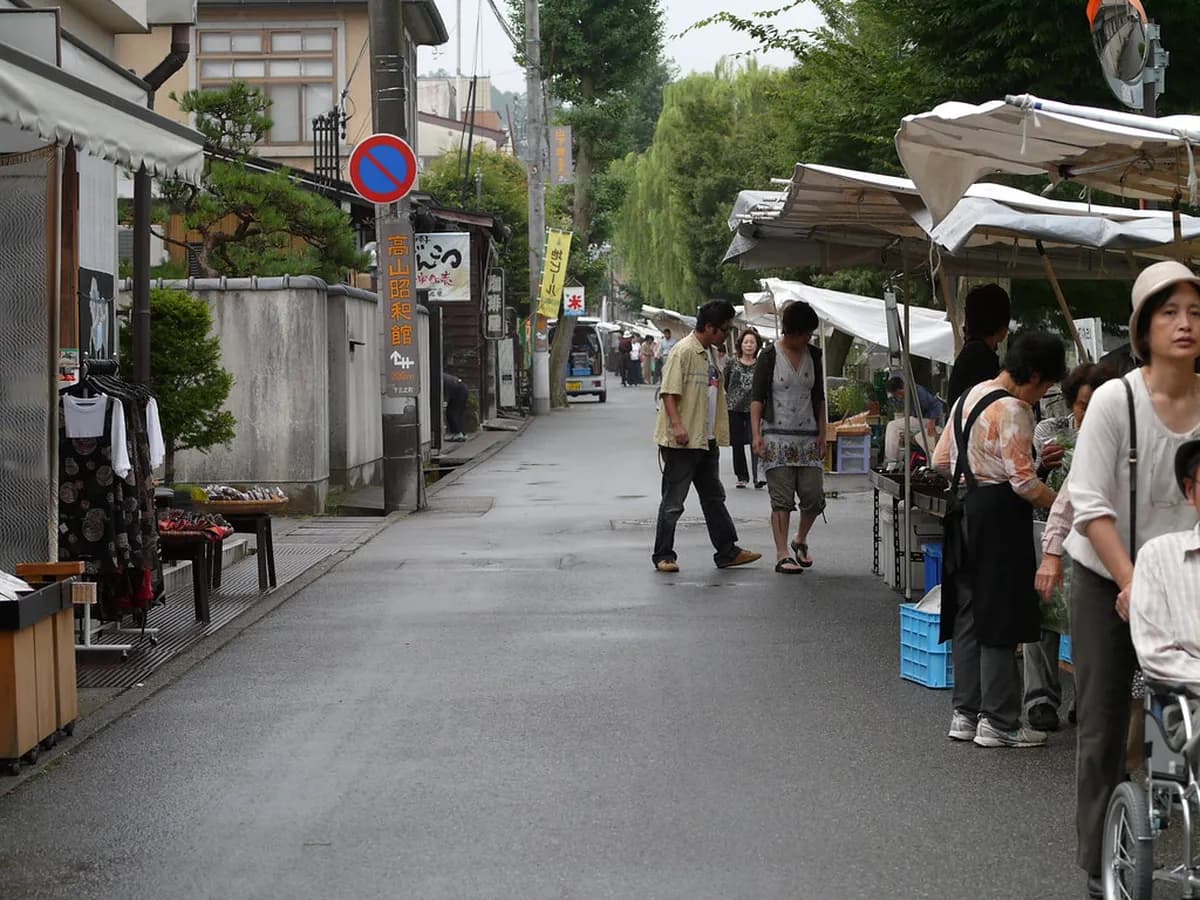
Exploring the Sanmachi Suji district is best done with a snack in hand. The morning markets — Jinya-mae on the west bank and Miyagawa on the east bank of the river — operate daily from 07:00 to 12:00 and are the best places to graze before popular restaurants open. Vendors fire up grills early and popular stalls sell out before tour groups arrive. The district is most photogenic and least crowded before 09:00.
- Hida Beef Nigiri Sushi — lightly seared Hida beef on a shrimp cracker base. ¥800–1,000 per piece. Kotteushi and Sakuraya are the go-to stalls. Eat the cracker while it's still crisp.
- Hida Beef Bun — a plump steamed bun filled with sweet Hida beef and bamboo shoots. ¥430. A good grab-and-go option when the full sit-down queue looks long.
- Mitarashi Dango — rice-flour dumplings grilled with a savory soy sauce glaze. ¥100–150 per skewer. Not the sweet kind found elsewhere in Japan — these are salty and chewy. Corner stalls near bridges carry them.
- Hida Beef Croquettes — mashed potato with minced Hida beef, fried crisp. ¥190–400 depending on the butcher. Best eaten immediately from the fryer. Sukeharu is worth the short detour.
- Hida Beef Skewers — plain grilled strips at Jugemu, ¥450. The simplest way to taste the meat's natural flavor.
- Gohei Mochi — mashed rice on a skewer, grilled with walnut-and-perilla miso sauce. Found near the temple markets. ¥200–250. Filling and cheap.
Budget roughly ¥2,000–3,000 for a full Sanmachi Suji street food circuit. Go savory first, then drift toward dango and gohei mochi as your appetite winds down.
Local Sake: Touring Historic Breweries
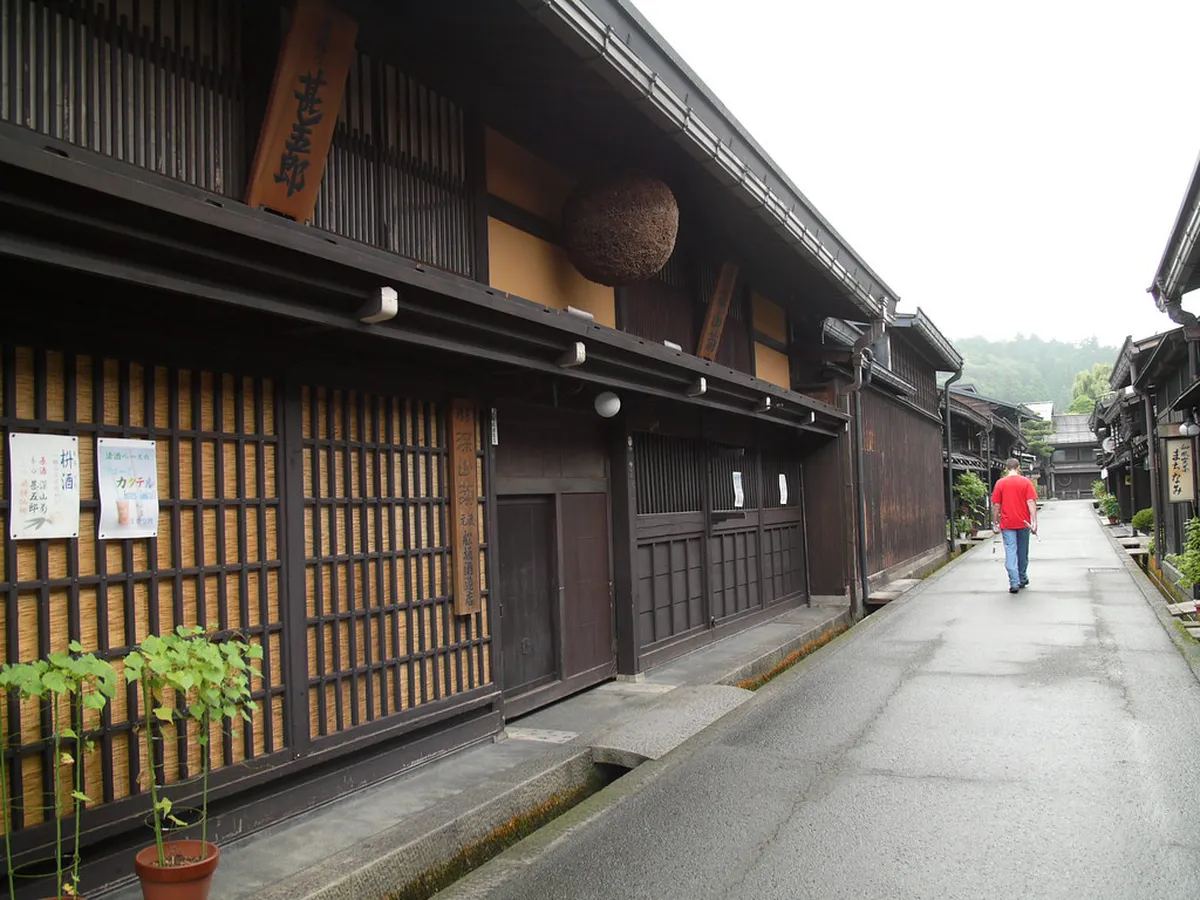
Takayama's old town holds seven historic sake breweries within walking distance of each other, making it one of the densest sake-touring zones in Japan. The combination of pristine Hida spring water, high-quality local rice, and severe winters creates conditions that favor clean, aromatic junmai and ginjō styles that rival Kyoto and Sapporo. Many travelers describe this as the most relaxed tasting circuit in the country.
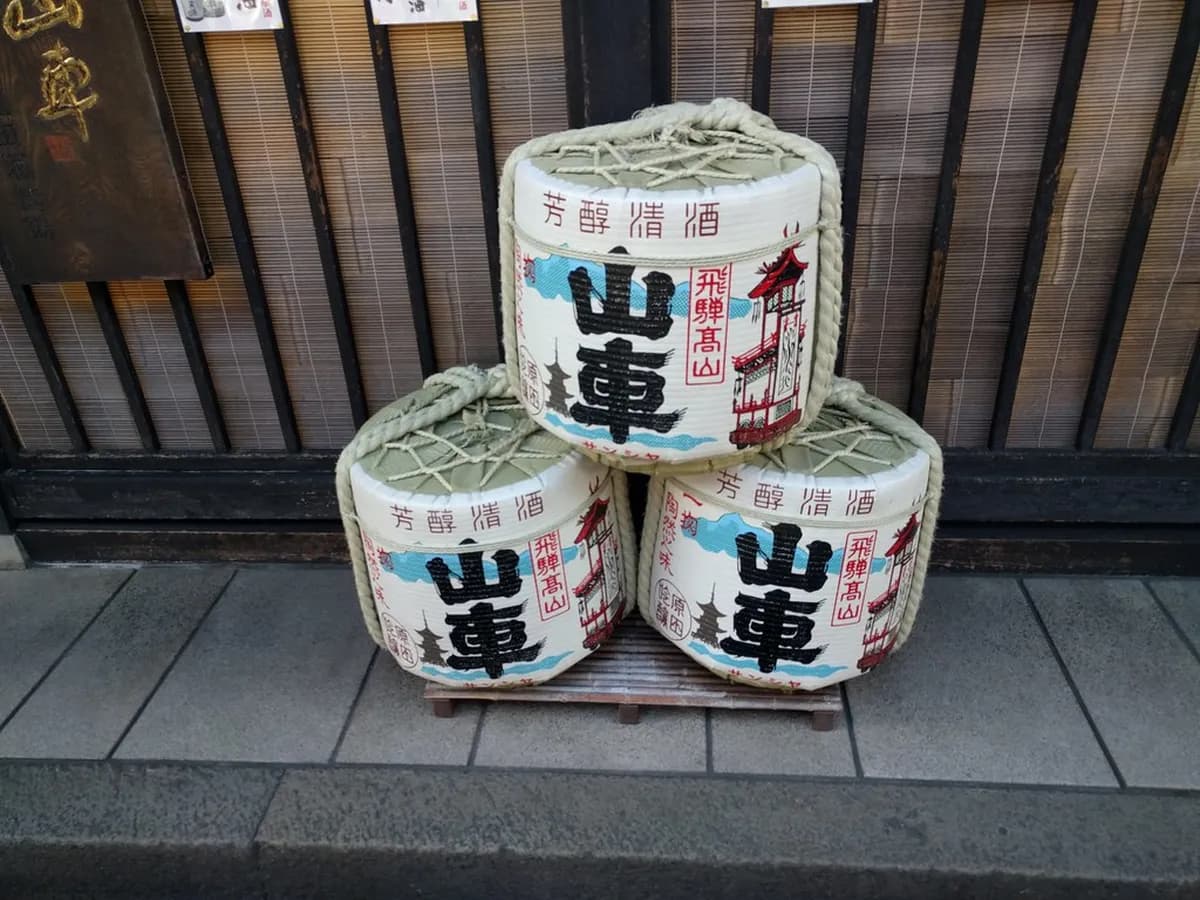
To identify active breweries, look for the Sugidama — a large cedar ball hung above the entrance. A bright green ball signals a fresh batch just brewed. As the season progresses, the ball turns brown, indicating an aged stock. This tradition dates back centuries and is one of the most charming signals in Japanese food culture. A weekday morning visit is strongly recommended; weekend afternoons bring tour groups that make the tasting counters feel rushed.
A logical walking route starts at the south end of Sanmachi Suji:
- Funasaka Sake Brewery — the most visitor-friendly. Has a restaurant, souvenir shop, and sake tastings organized as a self-guided tour. Its junmai ginjō pairs especially well with sansai dishes. Easy to spend an hour here without noticing.
- Hirase Sake Brewery — founded in 1623, the oldest in the Hida region. Smaller, quieter, and more traditional. No restaurant, but the tasting counter is unhurried and the staff are knowledgeable about food pairings.
- Oida Sake Brewery — notable for a unique soy sauce soft-serve ice cream sold on site, made with sake lees. Unusual and worth a detour even if you skip the sake.
Most breweries charge ¥200–500 for tasting flights of three to five cups. Go on a weekday morning to avoid tour groups. If you want a non-sake option that still tastes local, look for Hida Takayama craft beer — their dark lager holds its own against marbled beef.
Sweets and Cafés: Tradition Meets Modernity
The dessert scene in Takayama spans several centuries of tradition and a recent wave of specialty coffee culture. The two coexist along the same narrow streets without conflict.
For traditional sweets, Fuku-an tea house lets you sit beside a manicured garden and order warabi mochi dusted with roasted soybean flour, alongside matcha or hōjicha. The pacing is slow and intentional. The wagashi (traditional confections) change seasonally: cherry blossom jellies in April, chestnut monaka wafers in October. A visit here at 14:30–16:00 is the ideal reset between a morning of markets and an evening of sake — teahouses rarely rush you, so linger.
Takayama Pudding-tei has become famous on social media for visually elaborate puddings in glass jars. The flavor is solid, and it's worth the modest queue for the aesthetic novelty. For coffee, Falo Coffee Roasters on Sanmachi Suji offers high-quality single-origin espresso in a setting that blends exposed timber beams with precision brewing equipment — the old town's best specialty café as of 2026.
Sansai and Kaiseki: Foraged Greens and Haute Cuisine
Sansai means mountain vegetables, and in Takayama they are not a side note — they are a cuisine. Fiddlehead ferns, bamboo shoots, wild mushrooms, butterbur buds, water chestnuts, and a rotating cast of foraged roots and shoots appear on plates from spring through autumn. The flavor profile runs bitter, earthy, and clean — the opposite of the rich fat of Hida beef.
These foraged greens form the basis of shōjin ryōri, Buddhist vegetarian cuisine. A proper sansai set arrives on a lacquered tray with a dozen small compartmented dishes, a bowl of rice, and green tea. The portions look modest but accumulate — you won't leave hungry. Hisadaya (the door sign reads "Antique") is the most discussed specialist for sansai in Takayama. Book a tatami alcove for 17:30–18:00; they seat a small number of parties per sitting and early diners get the best spots.
For vegetarians, sansai is the most reliable category in Takayama. When ordering, confirm: "Niku to sakana haitte imasuka?" (Does this contain meat or fish?) — some broths use katsuobushi (dried bonito), and staff will guide you to fish-free options if asked directly. Most sansai items are plant-based; the dashi is the only variable that requires checking.
Kaiseki is the haute end of the same tradition — a multi-course meal with meticulous plating that draws on seasonal local produce. The most accessible way to experience it is by staying at a ryokan that specializes in kaiseki. Notify dietary needs 24 hours in advance; chefs source ingredients the morning of your meal. Day-guest kaiseki dinners run ¥8,000–15,000 per person.
Keichan: The Local Dish Most Visitors Miss
While Hida beef collects all the attention, Keichan (鶏ちゃん) is what Hida locals actually eat on a Wednesday night. It is a stir-fried chicken dish with cabbage and green onions, marinated in a sauce built from miso, soy, and sesame — sometimes with a hit of garlic or yuzu. The chicken is fatty, the cabbage softens into the sauce, and the whole thing arrives sizzling on an iron plate at your izakaya table.
Keichan is a Hida region staple found across the mountain villages of Gifu, not just Takayama. In the city, you will find it at izakayas along the back streets of the old town, away from the main tourist drag. Most portions run ¥1,000–1,500 and arrive with rice and miso soup. It is the budget-friendly, genuinely local alternative to a full Hida beef dinner — the dish that rounds out a night of izakaya eating without the cost of another steak. Order it with a glass of cold local junmai and ask for extra rice.
Ask at your ryokan or hotel which izakaya does Keichan best. Staff will have a specific recommendation, and the answer will almost certainly not appear in any guidebook. This is a dish worth seeking off-script.
Seasonal Dishes Worth Seeking Out
Most Takayama food guides focus on the year-round staples. But the city's mountain setting means the menu shifts dramatically by season, and some of the best eating happens in narrow windows that tourists miss.
- Spring (April–May): Sansai tempura featuring fiddlehead ferns and butterbur buds fresh from the mountains. Also the time for young bamboo shoots in Hoba Miso.
- Summer (June–August): Ayu (sweetfish) grilled whole on skewers at riverside stalls near Miyagawa. The fish are caught upstream, skewered live, and grilled with salt — a texture and flavor that farmed ayu cannot replicate.
- Autumn (September–November): Chestnut monaka wafers at tea houses, fresh-pressed apple cider from nearby Hida orchards, and matsutake mushroom dishes at specialist restaurants that appear for six weeks only.
- Winter (December–March): Mountain yam hot-pot (tororo nabe) and the lesser-known Pickled Vegetable Steak (tsukemono steak) — Chinese cabbage that has frozen or fermented through winter, stir-fried on an iron plate and bound with egg. Born from Hida mountain frugality, the dish transforms aggressive sourness into layered umami. It appears at local izakayas in January and February when nothing else is growing.
Asking at your ryokan or hotel what is currently in season is the single best move for a food-focused visit. Staff have standing relationships with local suppliers and will know what arrived at the market that morning.
Practical Dining Tips: Timing, Reservations, and Etiquette
Planning meals in Takayama requires more structure than most Japanese cities because popular spots fill quickly, many small restaurants run on skeleton staff, and broth literally runs out. A daily arc that avoids the worst congestion looks like this: morning markets 07:00–09:00, Menya Shirakawa queue by 10:30, street food circuit 11:30–13:00, tea house 14:30–16:00, sansai or izakaya dinner at 17:30. Following this sequence means you encounter each venue at its least crowded window without doubling back.
Most restaurants do not have English-language booking systems. Ask your hotel to call ahead for dinner reservations — this is standard practice and staff will do it without hesitation. Many small restaurants close one day per week, often Wednesday or Thursday, and some close once the day's supply runs out rather than at a fixed hour. Confirm hours on the morning you plan to visit.
Key etiquette points: remove shoes when entering tatami rooms (you'll see a step at the entrance), slurp ramen without apology, say itadakimasu before eating and gochisōsama deshita after. Cash is king at market stalls and small restaurants — carry coins. Card acceptance is improving at larger restaurants in 2026 but remains inconsistent at independent spots.
If you stay at the MONTIS HOTEL Hida Takayama, the concierge speaks English and can handle reservations for harder-to-book spots.
Food Souvenirs: Taking Takayama Home
The morning markets and the covered arcade near Takayama Station are the best places to buy edible souvenirs. The station arcade has a takkyūbin counter where you can ship boxes directly home if luggage is at capacity.
- Vacuum-sealed Hoba Miso kits — the dried leaf and miso paste packaged for home use. Easy to pack and genuinely replicable in a home kitchen.
- Hida beef jerky — vacuum-sealed and TSA-friendly. The best souvenir for carnivores who can't get enough.
- Takayama ramen kits — dried curly noodles with flavoring packets. Widely available and a fair reproduction of the original.
- Keichan spice mix — a local chicken-marinade seasoning blend from the broader Hida region. Underrated and easy to use at home on stir-fries.
- Sarubobo cookies — shortbread shaped like the red faceless folk talisman you'll see everywhere in Takayama. A good novelty gift.
Always check your home country's customs rules before buying meat products. The jerky is usually fine for most destinations when vacuum-sealed, but rules vary.
Explore Takayama Food and Dining
Use these guides to compare local dishes, dining areas and practical food experiences in Takayama.
Explore food guide in other cities
Frequently Asked Questions
What are the absolute must-try foods in Takayama?
You must try Hida beef in any form, especially nigiri sushi or steak. Takayama ramen and Hoba Miso are also essential for a complete culinary experience. Check the morning markets for fresh local produce and snacks.
Where should I try Hida beef in Takayama?
Maruaki is the most famous spot for high-quality cuts and a lively atmosphere. If you prefer a traditional setting with reservations, Kyoya is an excellent choice. Center4 Hamburgers offers a great fusion option with their gourmet Hida beef burgers.
Can vegetarians eat well in Takayama?
Yes, vegetarians can enjoy Sansai (mountain vegetable) cuisine and shōjin ryōri at temples. Always clarify that you cannot eat fish-based dashi, as it is common in many broths. Many cafés also offer vegetable-based curries and traditional sweets like mochi.
How do I avoid long lines at popular restaurants?
Arrive at least 30 minutes before opening for famous spots like Menya Shirakawa. Try dining during off-peak hours, such as early lunch or late afternoon. Making reservations through your hotel for dinner can also save you significant waiting time.
Takayama offers a unique blend of high-end Wagyu and humble mountain traditions. The food culture here is shaped by altitude and isolation in ways that no city restaurant can replicate.
Following this takayama food guide ensures you experience the best the city has to offer. From the first bite of ramen to the last sip of sake, the flavors are unforgettable.
Plan your Takayama Itinerary for First-Timers early to include all these delicious stops.
Use our Takayama attractions hub to plan the rest of your trip.
Free: The Takayama Essentials guide
Top things to do, where to stay, a perfect day plan, getting around, and the best time to go — a Takayama mini-guide you can take offline.
You might also like


Continue reading
More guides you'll find useful