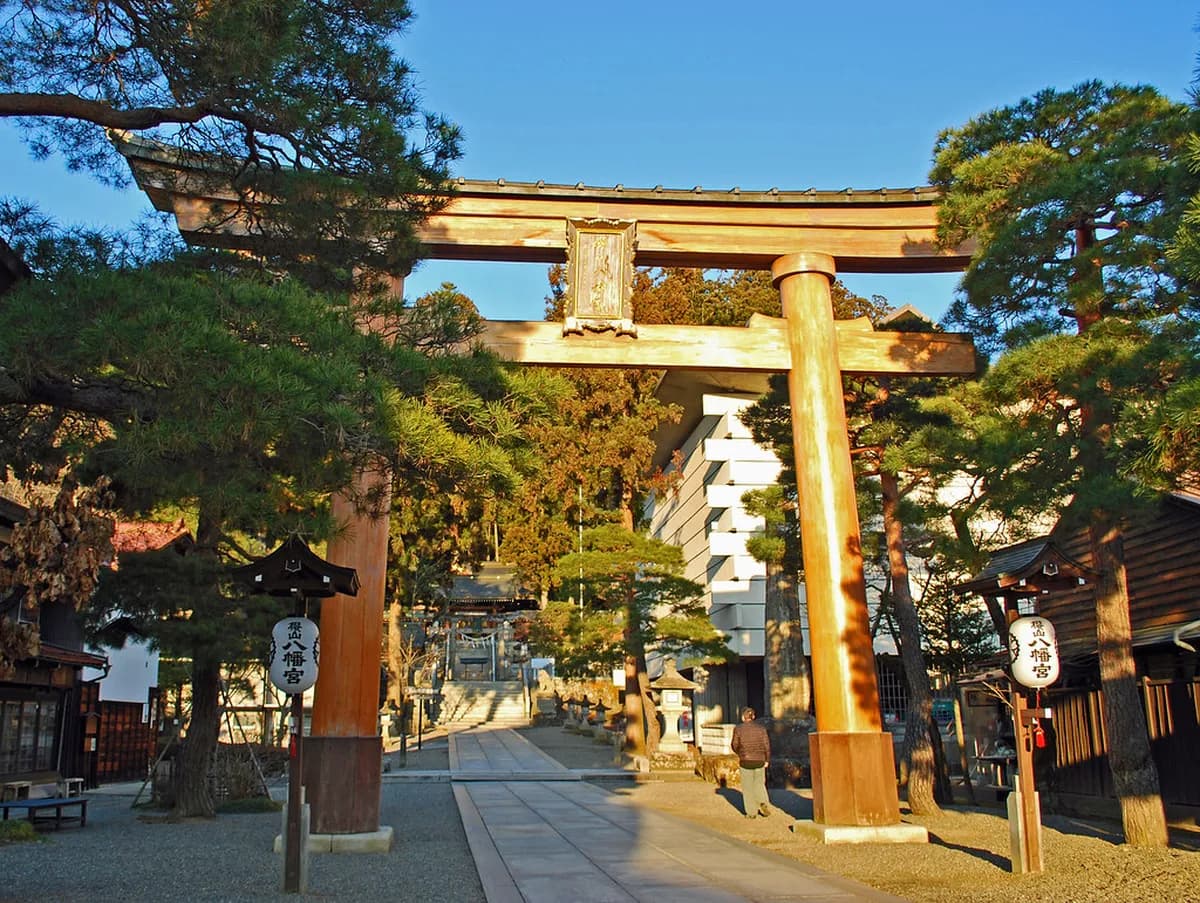
Sakurayama Hachimangu (櫻山八幡宮) is the most important Shinto shrine in Takayama and the spiritual heart of one of Japan's three greatest festivals. It stands at 178 Sakuramachi, about a 20-minute walk from JR Takayama Station. Entry to the grounds is free and open 24 hours. Planning your visit to Takayama with the shrine as your anchor connects you naturally to the festival float museum, the Higashiyama walking course, and the Sanmachi Suji old-town district in a single half-day loop.
A Shrine with Ancient Roots
The founding legend places Sakurayama Hachimangu in the 4th century during the reign of Emperor Nintoku. Local tradition holds the shrine was built to honor the defeat of a mythical two-headed monster named Sukuna. The main deity is Homuda Wake no Mikoto — the same spirit revered at Tsurugaoka Hachimangu in Kamakura — giving this mountain shrine a connection to one of Japan's most widespread divine traditions. Many travelers read reviews of Sakurayama Hachimangu Shrine on TripAdvisor before visiting.
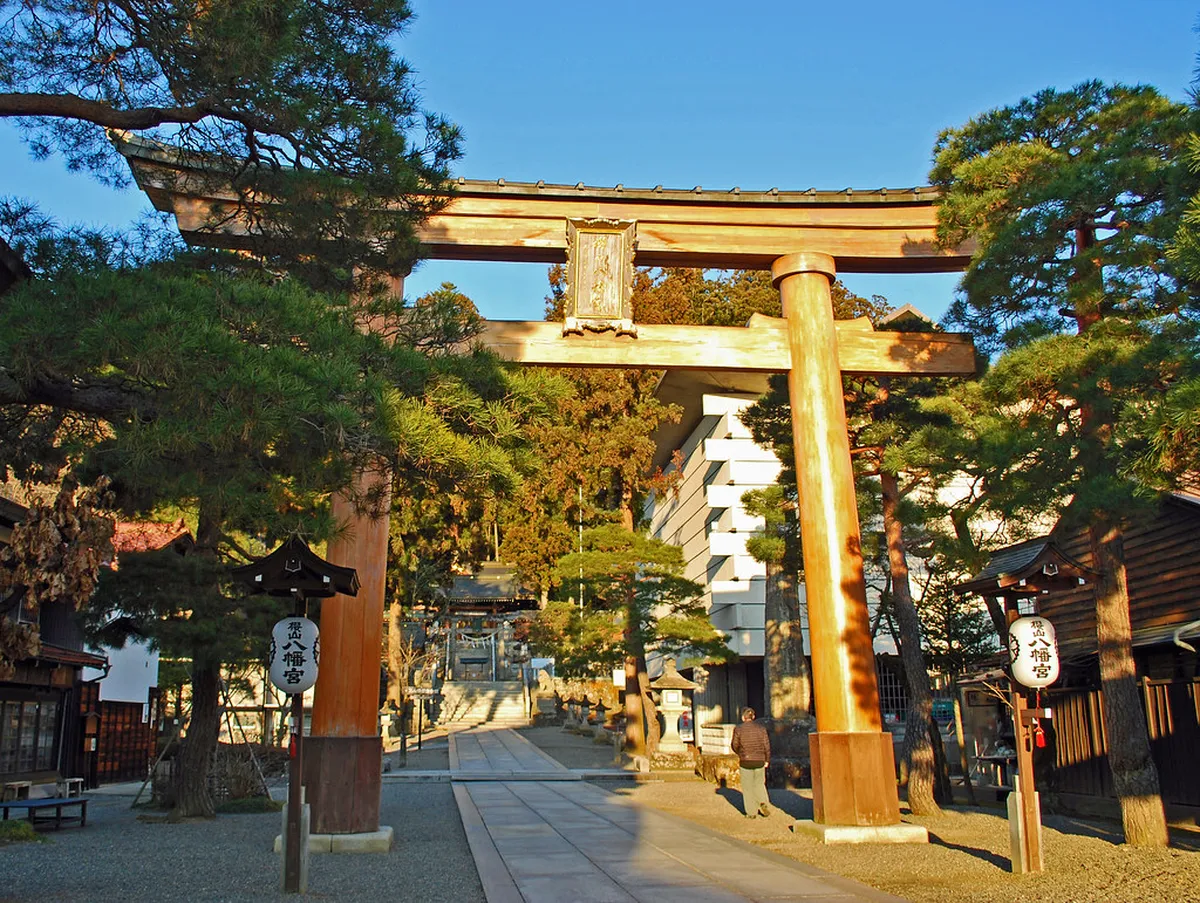
The architecture showcases the Hida carpentry tradition — master craftsmen so prized that the Shogunate conscripted them for construction work in Edo. The main hall's eaves carry carved lions, dragons, and floral motifs cut from local cypress and cedar, assembled without metal nails using a technique called kigoroshi (wood-killing). Centuries of mountain weather have left the carvings largely intact. A broad stone staircase leads from the street up through the main torii to the hall, with smaller subsidiary shrines tucked along the sides. The atmosphere is calmer than Kyoto's famous shrines; most mornings you share the grounds with only a handful of local worshippers.
The Takayama Festival
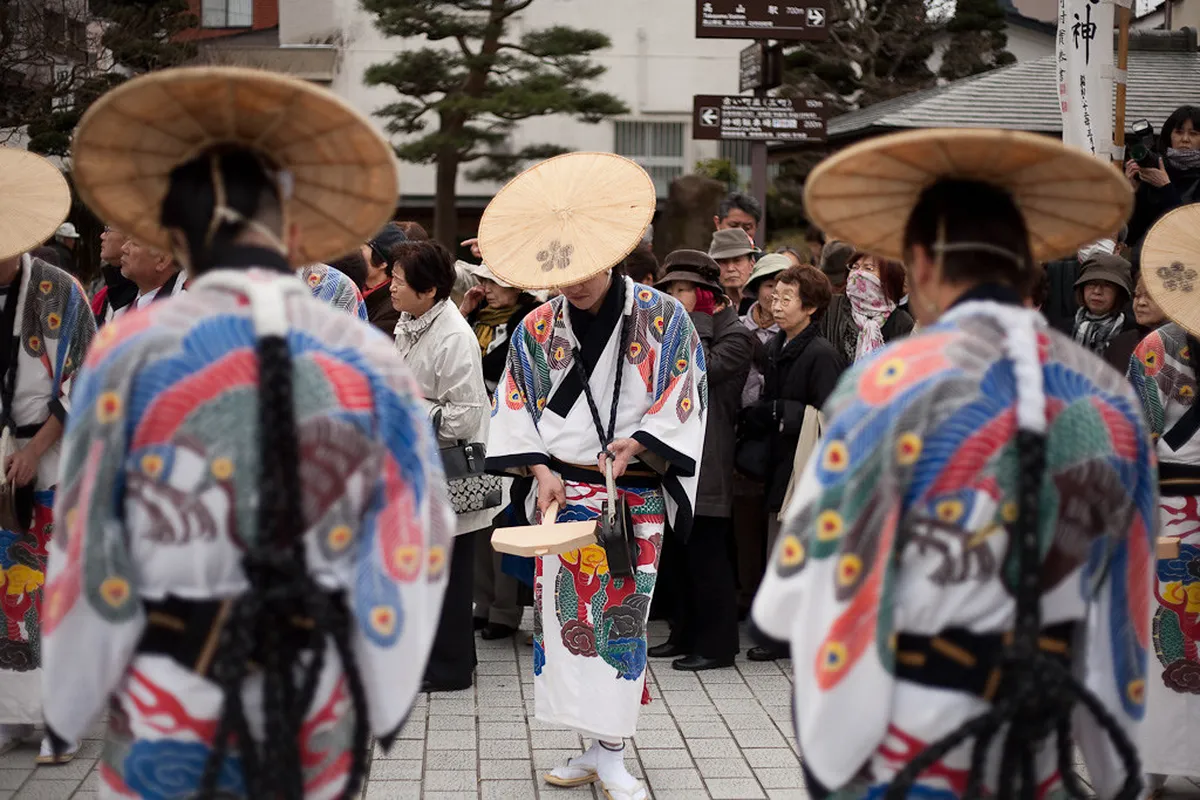
There are actually two Takayama Festivals each year, and understanding the difference matters for planning. The Spring Festival (Sanno Matsuri) belongs to Hie Shrine in southern Takayama and runs on April 14 and 15. The Autumn Festival (Hachiman Matsuri) belongs to Sakurayama Hachimangu and runs every year on October 9 and 10. Both are ranked among Japan's three most beautiful festivals, and both feature the spectacular yatai floats. The autumn edition is slightly larger, drawing hundreds of thousands of visitors over its two days. If the dates fall on a weekend in 2026, accommodation will sell out many months in advance — check the Hida-Takayama Tourism Convention Association for annual reminders.
During the Hachiman Festival, 11 enormous floats are paraded through the streets near the shrine. The most striking feature of several floats is their からくり (karakuri) marionette stages, where intricately jointed mechanical dolls perform choreographed routines operated by hidden pulley systems below the float deck. The performances happen at set times on the parade days, so arrive early enough to secure a position near the float stages. In the evening, hundreds of paper lanterns are lit across the floats, and the glow against the dark timber buildings along the Enako River is one of the most photographed scenes in rural Japan.
Visitors should prepare for narrow streets and dense crowds from mid-morning onward on both parade days. Arriving at the shrine gates by 08:00 lets you see the floats assembled before they depart and allows time for quiet worship before the crowds arrive. The festival schedule is weather-dependent; the organizing committee posts day-of decisions on the official website and local social media by 06:30 each morning. It is wise to book your Takayama accommodation as far in advance as possible for this period.
History Of Takayama
Takayama's prosperity was built on isolation. Surrounded by the Japan Alps, the Hida region developed its own distinct building culture. Lord Kanamori Nagachika began constructing Takayama Castle on Shiroyama hill in the 1580s, but in 1692 the Shogunate took direct control of Hida — turning the city into a controlled source of premium timber and master carpenters. This Shogunate oversight lasted 177 years and explains why the Edo-period streetscape survived largely intact: the administrators had no incentive to redevelop it.
Shrines like Sakurayama Hachimangu were the social centers of this merchant society — the places where accumulated wealth was reinvested in craftsmanship, festivals, and community identity. Modern visitors often call Takayama "Little Kyoto," though locals note the comparison flatters neither city. Kyoto was an imperial capital; Takayama was a mountain merchant town, built for cold winters rather than ceremonial display. Exploring the Hida-Kokubunji Temple nearby offers another layer of this history — the temple predates the shrine and holds some of the oldest ginkgo trees in the prefecture.
Highlights Within the Grounds of Sakurayama Hachimangu Shrine
The main approach rises up a stone staircase flanked by stone lanterns, with the forested hillside on both sides. At the top stands the main hall, where the classic Hida carpentry style is on full display: deep overhanging eaves, precisely fitted bracket systems, and carved panels of mythological creatures. The purification fountain (temizuya) sits beside the steps — rinse left hand, right hand, then mouth before approaching the hall. This takes 30 seconds and is standard Shinto etiquette.
A smaller Inari sub-shrine sits to the right of the main path, marked by a row of vermillion torii gates. Further back along the hill edge are several hundred-year-old cedar trees registered as protected natural monuments. The Yatai Kaikan (Festival Floats Exhibition Hall) sits directly adjacent — four of the eleven parade floats are displayed in rotation with English audio guides, open 08:30-17:00 (March-November) and 09:00-16:30 (December-February). The combined ticket with the Sakurayama Nikko Kan costs ¥820 for adults.
The Higashiyama Walking Course — Start Here After the Shrine
Directly behind Sakurayama Hachimangu, a signed trailhead marks the start of the Higashiyama Walking Course (東山遊歩道). This 3.5-kilometre path runs south along the forested base of the eastern hills, passing through the grounds of 13 small temples and shrines before reaching the Higashiyama temple district. Most guides to Sakurayama skip this trail entirely — yet it is the most practical use of the extra time visitors would otherwise spend retracing the same streets back to the old town.
The course is flat for the first two kilometres, then rises gently toward Shiroyama Park, where the ruins of Takayama Castle occupy the hilltop. From the castle site there is a clear-day view of the Japan Alps. The full route takes about 90 minutes at a relaxed pace. It is free, always open, and signposted in English and Japanese. Best seasons: late March to early April for cherry blossoms, and mid-October to early November when the maples at the temple grounds turn red. Even 20 minutes along the course — past Eryuji and Soyuji temples — adds texture to the shrine visit that no museum display replicates.
Access and Recommended Times for Worship
The shrine address is 178 Sakuramachi, Takayama, Gifu 506-0858. From JR Takayama Station the walk takes 20-22 minutes through the old-town district — follow the Yatai Kaikan signs from the east exit. The terrain is flat until the final stone staircase. On rainy days, the Machinami Bus stops at Hachiman-mae every 30 minutes for a small flat fare.
Grounds are open 24 hours at no charge. The best window is before 09:00 — morning light filters through the cedars between roughly 07:30 and 09:00, priests perform morning rituals, and tour groups have not yet arrived. Late afternoon after 16:00 is a quieter second option; the setting sun catches the carved eaves from the west. Avoid midday weekends in October. If you plan to enter the Yatai Kaikan, note it closes at 17:00 (16:30 in winter) with last entry 30 minutes before closing. Check the official Sakurayama Hachimangu website for any 2026 ceremony closures. Tel: 0577-32-0240.
Activities in Takayama No Traveler Should Miss
The shrine sits within a 20-minute walk of most of Takayama's top attractions. The Sanmachi Suji district — three parallel streets of Edo-period merchant houses — is the natural next stop. Several buildings operate as working sake breweries where ¥100 per cup lets you sample house sake from coin-operated servers. You can read reviews of the Sanmachi Suji District on TripAdvisor before your visit.
Food priorities in Takayama: Hida beef, regional soba, and Takayama ramen. Hida beef is a local wagyu with intense marbling — try it as nigiri sushi (¥500-1,500 per piece from street stalls) or as sukiyaki. Sansai Zaru Soba, served cold on a magnolia leaf with mountain vegetables, is the regional signature. For plant-based options, check vegan options in the city centre, where mountain vegetable dishes suit several local menus. The Miyagawa Morning Market runs daily from 07:00 to noon along the riverbank — free to browse, with local crafts, produce, and snacks.
Seasonal Beauty and Unique Design
Timing your visit meaningfully changes the experience. Late March to early April brings cherry blossoms along the stone approach; combine with the Spring Sanno Festival at Hie Shrine (April 14-15) for the full Takayama festival experience. Summer offers mountain cool well below lowland city temperatures. Autumn from mid-October through early November is peak season — the Hachiman Festival runs October 9-10, the Higashiyama maples turn deep red, and the Hida Folk Village holds evening illuminations through November. Book accommodation early for this period.
Winter transforms the grounds into a quiet white landscape. The heavy-pitched shrine roofs are engineered to shed snow before loads become structural risks — a practical legacy of generations of Hida builders. Weekday winter mornings are among the calmest visits possible. Warm up afterwards at the local attractions in the heated city centre.
Takayama Festival and the Floats Museum
Arrive before 09:00 for the quietest experience — morning light filters through the cedar trees between 07:30 and 09:00, priests perform morning rituals, and tour groups have not yet arrived. Late afternoon after 16:00 is a quieter second option.
The Yatai Kaikan (高山祭屋台会館) is the practical reason to combine the shrine visit with a longer stop at this address. Four of the eleven Hachiman Festival floats are displayed in rotation inside the climate-controlled hall. These are designated Important Tangible Folk Cultural Properties — the largest float stands over five metres tall, weighs several tonnes, yet was built to navigate Takayama's narrow streets. English audio guides explain the layered symbolism; carvings draw on Chinese mythology and Buddhist iconography simultaneously. High-definition karakuri footage plays on screens for visitors who are not here on festival dates. Opening hours: 08:30-17:00 (March-November), 09:00-16:30 (December-February). Phone: 0577-32-5100.
The Hachiman Autumn Festival runs on October 9 and 10 each year. If your dates fall on a festival weekend, accommodation across Takayama fills months in advance — book rooms before anything else in your planning if you are targeting this period.
| Venue | Hours | Admission |
|---|---|---|
| Shrine grounds | Open 24 hours | Free |
| Yatai Kaikan (Festival Floats Hall) | 08:30–17:00 (Mar–Nov) / 09:00–16:30 (Dec–Feb) | ¥820 combined with Nikko Kan |
| Sakurayama Nikko Kan | Same as Yatai Kaikan | Included in ¥820 combined ticket |
The ¥820 combined ticket also covers the Sakurayama Nikko Kan next door — a hall of 1:10 scale models of Nikko's Toshogu Shrine, built by master craftsmen with hand-applied lacquer and working metal fittings. Niche but genuinely impressive for anyone interested in Japanese architecture.
Accommodation in Takayama
For travelers who want a resort base, Hotel Associa Takayama Resort (1134 Echigomachi) offers indoor and outdoor onsen with mountain views, a kaiseki dining course focused on Hida beef, and a free hourly shuttle to Takayama Station. The shuttle takes 10 minutes, so the distance from the shrine is not a practical problem. For those who prefer to be within walking distance of the shrine, several mid-range hotels and ryokan sit inside the old-town district, allowing an 08:00 arrival at the shrine gates without any shuttle logistics. It is one of the top-rated Takayama areas to stay for first-time visitors.
During the Hachiman Festival (October 9-10), rooms at every price point fill many months in advance. If your dates are fixed around the festival in 2026, treat accommodation booking as the first step in your planning, not the last.
Conclusion | Embrace the Spirit and History of Hida
Sakurayama Hachimangu is a living shrine, a festival headquarters, the trailhead for the best walking course in the city, and the neighbor of a world-class float museum. Entry costs nothing. The float museum adds ¥820. The Higashiyama walking course adds 90 minutes and no cost. That combination makes this the highest-value half-day in Takayama for visitors who want cultural depth rather than just a walk through the old-town shops.
Practical priorities: arrive before 09:00 for quiet, book accommodation for October 9-10 as early as possible in 2026, and walk at least the first stretch of the Higashiyama course behind the shrine before heading back. Rinse your hands at the temizuya before approaching the main hall, keep voices low near the worship areas, and follow posted photography signs inside the museum. Before you leave, consider extending to the Hida-Kokubunji Temple to complete your cultural circuit through one of Japan's most carefully preserved mountain cities.
Frequently Asked Questions
What is Sakurayama Hachimangu Shrine? | An Ancient Shrine Honoring the Guardian Deity
Sakurayama Hachimangu is a historic Shinto shrine in Takayama dedicated to Emperor Nintoku. It serves as the spiritual home of the famous Autumn Takayama Festival. Visitors come to admire its ancient architecture and the Yatai Kaikan museum located on the grounds. It is a key cultural landmark in the Hida region.
Is Sakurayama Hachimangu Shrine Worth Visiting?
Yes, it is highly recommended for anyone interested in Japanese history and traditional craftsmanship. The shrine offers a peaceful atmosphere and a unique look at the festival floats. It provides a deeper understanding of local spirituality compared to more crowded urban shrines. It is a must-see in Takayama.
How much time should you plan for a visitor guide experience?
You should plan for approximately one to two hours to see the shrine and museum. If you enjoy photography or want to explore the forest paths, allow for extra time. The Yatai Kaikan museum alone takes about forty-five minutes to view thoroughly. Combine it with a walk through the Old Town for a half-day trip.
What should travelers avoid when planning a visit?
Avoid visiting during the peak of the Autumn Festival if you dislike very large crowds. Do not forget to check the museum hours, as they may change during holidays. Avoid loud behavior or eating while walking on the sacred shrine grounds. Always follow the posted signs regarding photography inside the museum halls.
Exploring Sakurayama Hachimangu provides a meaningful look into the soul of Hida Takayama. The combination of ancient history and vibrant festival culture makes it a unique destination. Your visit will be filled with architectural beauty and spiritual peace.
For more Takayama trip planning, see our Takayama itinerary, things to do in Takayama, Takayama Spring Festival guide.