How Many Days in Japan? 7, 10 or 14-Day Itineraries
Not sure how many days in Japan you need? Compare 7, 10 and 14-day itineraries for first-timers, with what each trip length covers and what to skip.
On this page
Deciding how many days in Japan you need is one of the first and most important trip-planning questions. Japan offers ancient temples, neon-lit cities, mountain villages, and coastal retreats — and most of those experiences don't overlap. The right answer depends on how far you want to travel and how much you want to slow down.
This guide covers the three most practical trip lengths for first-time visitors: 7 days, 10 days, and 2 weeks. For each, you'll find a realistic overview of which cities and regions fit, a cost estimate, and the trade-offs. Practical tips on timing, transport, and what to book early follow at the end.
How Many Days Do You Really Need in Japan?
Seven days is the minimum worth booking a long-haul flight for. Any less and jet lag eats a meaningful share of your trip. Ten days lets you add one destination beyond the Tokyo–Kyoto corridor without feeling rushed. Two weeks is the sweet spot most experienced Japan travelers recommend for a first visit: enough time to cover the highlights and still spend an unhurried morning in a bamboo grove or a full evening exploring Gion.
Your pace matters as much as the number of days. Japan's shinkansen makes covering 500 km in two hours feel effortless, which tempts travelers into over-scheduling. One realistic rule: plan no more than two inter-city moves per week. Cities like Kyoto and Kanazawa each deserve at least two nights to feel like you've actually been there rather than just passed through.
The table below summarizes each trip length at a glance:
- 7 days — Tokyo (3 nights) + Kyoto with a Nara day trip (3 nights). Fast-paced but doable. Best for repeat Asia travelers who already know the region.
- 10 days — Tokyo (3 nights) + Hakone day trip + Kyoto (3 nights) + Osaka or Takayama (2 nights). Balanced pace for most first-timers.
- 14 days — Tokyo (3–4 nights) + Hakone + Kanazawa + Takayama + Kyoto + Hiroshima/Miyajima + Osaka. The classic grand tour. Suits methodical travelers who want depth, not just checkboxes.
| Days | What You Can Cover | Best For |
|---|---|---|
| 7 days | Tokyo (3 nights) + Kyoto (3 nights) + Nara day trip | Repeat Asia travelers; iconic highlights only |
| 10 days | Tokyo + Hakone + Kyoto + Osaka or Takayama | First-timers; balanced pace without rushing |
| 14 days | Tokyo + Hakone + Kanazawa + Takayama + Kyoto + Hiroshima/Miyajima + Osaka | Methodical travelers; grand tour with regional depth |
| 3–4 days | Single city (Tokyo or Kyoto only) | Short layover; one city immersion |
Japan in 7 Days: A First-Timer's Itinerary
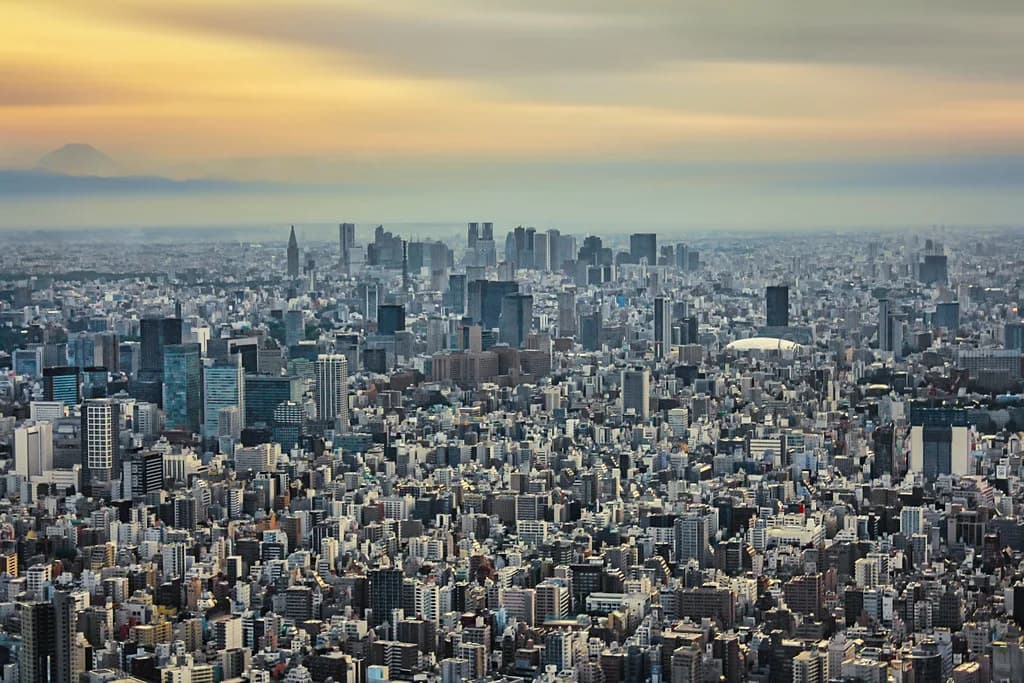
A week focuses tightly on Tokyo and Kyoto, which together represent the two defining faces of Japan: relentlessly modern and quietly ancient. Fly into Narita (NRT) or Haneda (HND) and aim to arrive by early afternoon on Day 1 so the jet-lag day isn't wasted. Spend your first evening in Shinjuku — the Tokyo Metropolitan Government Building offers free city views and is a calm way to orient yourself before the busyness starts.
Days 2 and 3 cover the Tokyo essentials. Meiji Jingu Shrine and Harajuku's Takeshita Street fill a morning. Shibuya Crossing and the surrounding neighbourhood take an afternoon. Day 3 is better for the Imperial Palace East Garden (closed Mondays and Fridays, free), Tokyo Station, and Ginza. On Day 4, take the shinkansen to Kyoto — it runs roughly every 15–20 minutes from Tokyo Station and takes about 2h 15min. Arrive in the afternoon and head straight to Fushimi Inari Shrine; the tunnel of red torii gates is open 24 hours and most beautiful in the late afternoon light.
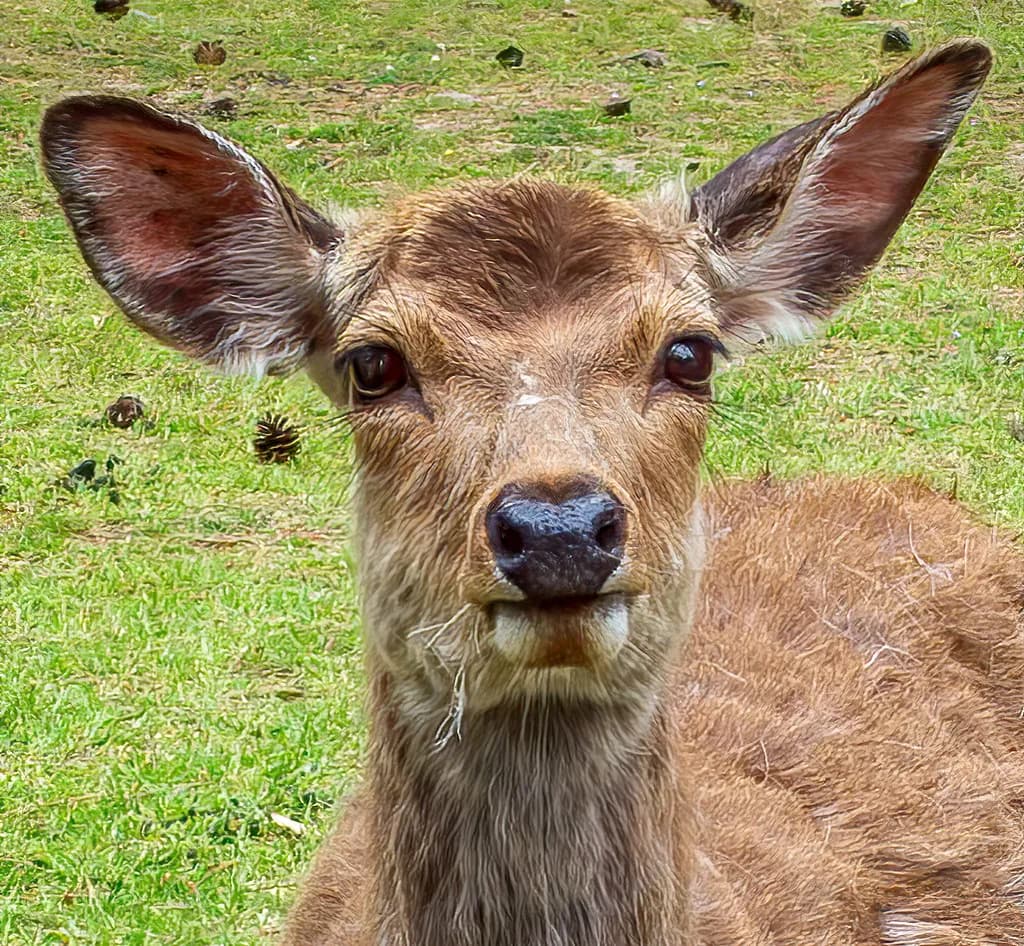
Day 5 in Kyoto: Arashiyama Bamboo Grove is best before 08:00 before tour groups arrive, then Tenryu-ji Temple (¥500, open 08:30), Kinkaku-ji Golden Pavilion (¥500, open 09:00–17:00), and Ryoan-ji Zen Garden. Day 6 is a 45-minute JR train to Nara: Todai-ji Temple (¥600, open 07:30–17:30) and the free-roaming deer of Nara Park. Day 7 allows morning shopping at Nishiki Market before heading to Kansai International Airport (KIX) via the Haruka Express (~75 min, ¥1,800).
For the complete day-by-day breakdown with transport logistics, see the dedicated 7-day Japan itinerary.
Japan in 10 Days: An Immersive Journey
Ten days allows for everything in the 7-day plan plus two meaningful additions: a Hakone day trip for Mount Fuji views, and an overnight in Takayama or Osaka. Most first-timers find this the most satisfying length — you're not rushing, but you're also not sitting still. The extra three days are best spent on Hakone (Day 4), an overnight in Takayama (Days 8–9), and a final morning in Osaka before flying home from KIX on Day 10.
Hakone sits about 1.5 hours from Shinjuku on the Odakyu Romancecar (reserved seats from ¥2,000). The Hakone Ropeway over volcanic Owakudani offers Fuji views on clear days; the Hakone Open-Air Museum (¥1,600, open 09:00–17:00) is worthwhile even when Fuji is cloud-covered. The Hakone Free Pass (¥5,000 from Shinjuku) covers most transport within the area. One honest caveat: Fuji is visible from Hakone on roughly 50–60% of days, especially in summer when heat haze builds. If you arrive and the mountain is hidden, the lake cruise on Lake Ashi and the open-air museum still justify the trip.
Takayama rewards an overnight stay more than a day trip. The Sanmachi Suji preserved street (free, no closing time) is best explored in the morning before tour buses arrive. The Miyagawa Morning Market runs daily 07:00–12:00 and sells local pickles, crafts, and Hida beef nigiri. A night in a traditional ryokan here typically costs ¥15,000–25,000 per person with breakfast and dinner included. Book three to four months ahead for weekends.
The full annotated route is in the 10-day Japan itinerary.
Japan in 2 Weeks: The Ultimate Grand Tour
Two weeks allows the classic grand tour: Tokyo → Hakone → Kanazawa → Takayama → Kyoto → Hiroshima and Miyajima → Osaka. This route flows west along the Tokaido–Sanyo Shinkansen corridor with one northern detour to Kanazawa — a city most first-timers overlook and most repeat visitors wish they had included sooner.
Kanazawa earns two nights. Kenrokuen Garden (¥320, open 07:00–18:00) is routinely ranked among Japan's three finest, and the Higashi Chaya geisha district is far less crowded than Gion in Kyoto. The 21st Century Museum of Contemporary Art (¥360 for the permanent collection, closed Mondays) is a genuine architectural highlight. From Kanazawa, trains to Takayama run via Toyama and take about 2.5 hours.
Hiroshima and Miyajima Island deserve a full day each on Day 12 and 13. The Peace Memorial Museum (¥200, open 08:30–18:00) takes two hours to do properly; rushing it is disrespectful. The Itsukushima Shrine floating torii on Miyajima is best at high tide — check the tide chart in advance, because at low tide the torii sits in mud. The 10-minute ferry from Miyajimaguchi is covered by the JR Pass.
End in Osaka on Days 14–15. Osaka Castle (¥600, open 09:00–17:00), Dotonbori at night, and a morning in Shinsekai before flying from KIX. Osaka functions as the trip's decompression stage: food is the main event, the pace drops, and the city has a looser energy than Tokyo or Kyoto. The full day-by-day breakdown is in the 2-week Japan itinerary.
Best Time to Visit Japan
Spring (late March to mid-April) and autumn (October to mid-November) are the most popular times to visit Japan, and for good reason: cherry blossom season and koyo (autumn foliage) are genuinely as beautiful as photographs suggest. Both periods also bring crowds and higher hotel prices — popular Kyoto accommodations book out months in advance.
Two periods are worth actively avoiding. Golden Week (29 April – 6 May 2026) sees Japanese domestic travel surge: shinkansen seats sell out, hotel prices spike, and major attractions queue for 90 minutes or more. The New Year period (28 December – 3 January) is similarly congested and many smaller restaurants and shops close entirely. If your schedule is flexible, late May and late September–early October offer warm weather, green landscapes, and meaningfully fewer crowds than the peak windows either side.
Winter is underrated. Crowd levels at Kyoto temples drop sharply after mid-November, accommodation gets cheaper, and an onsen in snow is one of the better experiences Japan offers. Summer (July–August) is hot and humid — Tokyo regularly hits 35°C — but it is the only window to climb Mount Fuji (open 01 July–10 September 2026) and the only season with major matsuri (festival) culture at full intensity.
Planning Your Japan Trip: Visas, Transport, and Connectivity
Visa requirements: citizens of over 68 countries — including the US, UK, EU, Canada, and Australia — can enter Japan visa-free for up to 90 days. Always carry your passport on you; Japanese law requires foreign visitors to have it available for inspection. JESTA, Japan's online pre-approval system for visa-waiver travelers, is due by 2028 but not yet in force for 2026 travel. Registering on Visit Japan Web before arrival speeds up immigration and customs paperwork slightly, though lines can still be long at Narita.
For getting around between cities, the shinkansen is the backbone of any multi-city itinerary. Decide on a JR Pass before you leave home — it cannot be purchased inside Japan at the same price. For a 7-day trip focusing on Tokyo and Kyoto, individual tickets typically cost less than a JR Pass. For 10- or 14-day itineraries covering Hiroshima, Kanazawa, or Takayama, the pass usually pays for itself. Use Navitime or Hyperdia to price out your specific route before deciding.
For local transport within cities, load a Suica or ICOCA IC card rather than buying individual tickets. These rechargeable cards work on almost every train, subway, and bus across the country. In 2026, Apple Wallet Suica works seamlessly on iPhone and Apple Watch — you can tap through train gates without ever opening an app or carrying a physical card. Android users with phones bought outside Japan need a physical IC card instead. Pick one up at any major JR station on arrival.
Apple Wallet Suica is game-changing for logistics. Set it up before you leave home via the Suica app, then add it to Apple Wallet and convert to Express Transit mode. You'll tap your iPhone or Apple Watch at every train gate, bus reader, and convenience store checkout without unlocking your phone or opening an app. It also syncs your balance across devices and retains it even if you lose the phone. For Android travelers outside Japan: a physical card is mandatory — you cannot purchase digital Suica within Japan at the same pre-arrival rates.
For data connectivity, a prepaid eSIM set up before departure is the simplest approach. The eSIM for Japan options from providers like Airalo typically cost ¥1,500–3,000 for 7–30 days of data. If your phone doesn't support eSIM, Umobile physical SIMs are available from vending machines at Narita. Always carry cash: many smaller restaurants, shrines, and rural accommodations are cash-only. The most reliable ATMs for foreign cards are at 7-Eleven stores, found everywhere. Note: Japan's tax-free shopping scheme for tourists changes in November 2026 — from that point you claim the refund at the airport rather than at the point of sale, so plan souvenir shopping accordingly.
Tax-free shopping rules change mid-2026. Until November 2026, you claim the tax refund at the point of sale (department stores, electronics, souvenir shops) — staff will staple receipts into your passport. From November 2026 onward, the system switches: you collect receipts in-store, then claim the refund at a dedicated tax-refund desk at the airport before departure. If you're shopping for luxury items or electronics in late 2026, budget extra time at the airport for the refund process. Bring your passport and a valid ID to any counter marked "Tax Refund" or "Tax-Free" — refunds process in yen cash, not your original payment method.
Cultural Etiquette: What to Know Before You Arrive
Japan is remarkably easy to navigate as a first-time visitor precisely because the social norms are consistent. Tipping is not just unnecessary — it can embarrass the person receiving it. Service is a point of professional pride, not an exchange for extra payment. Similarly, eating or drinking while walking is frowned upon in most areas outside festival stalls. If you buy something from a convenience store, eat it inside or just outside the entrance before moving on.
Shoes come off at most ryokans, many restaurants, and some temples. Wear shoes that slip on and off easily. In an onsen (public bath), the protocol is non-negotiable: shower thoroughly before entering the communal bath, never bring a towel into the water, and tattoos are still prohibited in many traditional establishments — check before booking if this applies to you.
On trains, phone calls are considered rude; silent mode and no talking on the phone are the default. During rush hour (07:30–09:00 and 17:30–20:00), wear your backpack on the front or place it overhead. When paying at a shop, place cash on the tray provided on the counter rather than handing it directly to the cashier. Bowing is the standard greeting — a small nod is enough for most tourist interactions; deep formal bowing is reserved for more significant contexts.
What to Book in Advance for Japan
Accommodation in popular cities should be booked three to six months out, particularly in Kyoto and Takayama. Ryokans with kaiseki dinner typically release rooms no more than six months ahead and fill fast for weekend nights and peak seasons. For Kyoto, the Higashiyama and Arashiyama neighbourhoods book faster than central options.
The Ghibli Museum in Mitaka (Tokyo) sells tickets only through a monthly lottery on the 10th of each month via the official website — tickets for the following month go on sale at that point. Universal Studios Japan in Osaka benefits from advance booking for popular express passes, especially during school holidays. Hiroshima's Peace Memorial Museum and most shrines and temples do not require advance tickets, but the ferry to Miyajima on a weekend morning can have queues worth knowing about.
Shinkansen seat reservations are free with a JR Pass but worth making a day or two in advance for the most popular trains (particularly the Nozomi, which the JR Pass does not cover — use the Hikari or Sakura instead). For specific high-demand restaurants, especially tasting-menu counters or sushi omakase places in Tokyo, reservations three to four months out are not excessive. The platform Tableall and concierge services at better hotels can help with those bookings if the restaurant's own website is in Japanese only.
How Much Does a Japan Trip Cost?
Budget travelers who stay in hostels, eat convenience store meals and ramen, and skip paid attractions can manage on around ¥8,000–10,000 ($55–70) per person per day, excluding international flights. That's roughly $400–490 for a week's in-country spending. It's a real figure, not an aspirational one — Japan's convenience store culture makes budget eating genuinely good rather than punishing.
Mid-range travelers — comfortable hotels at ¥10,000–18,000 per night, sit-down restaurant meals, and paid attractions — should budget ¥20,000–30,000 ($140–200) per day. A 7-day ordinary JR Pass costs ¥50,000; a 14-day pass costs ¥80,000. Factor the pass cost into your per-day calculation separately from accommodation and food. My own mid-range week in Kyoto and Tokyo in spring 2025 came to roughly ¥210,000 ($1,450) all-in before flights, which included one ryokan night at ¥22,000 per person.
Luxury travelers — boutique ryokans, kaiseki dinners, and private experiences — should expect ¥50,000–80,000 ($350–550) per day or significantly more. A one-night kaiseki ryokan experience in Kyoto or Hakone routinely runs ¥30,000–60,000 per person with meals. Flagship sushi omakase lunches in Tokyo start at around ¥25,000. These experiences are world-class and worth budgeting for specifically rather than leaving to chance.
Once you choose a trip length, compare the cost of 7, 10 and 14 days with the same travelers and travel style. The calculator separates fixed costs such as flights from expenses that grow with every additional day.
Extra Days and Day Trip Ideas
If your itinerary allows a spare day or two, Japan's rail network makes day trips genuinely easy. From Tokyo, Nikko is about 2 hours north on the Tobu Nikko Line (¥2,700 from Asakusa): the Tosho-gu Shrine complex and the Shinkyo red lacquer bridge justify the trip on their own. The Snow Monkey Park at Yudanaka in Nagano is a longer commitment — about 2h 30min each way from Nagano Station — but watching macaques soak in outdoor hot springs surrounded by snow is unlike anything else on a Japan itinerary. Practical in winter (November–March); the monkeys are still there in summer but less reliably in the pools.
From Kyoto, Uji is 30 minutes by JR Nara Line and offers a quieter alternative to the main temple circuit. The Byodo-in Temple (¥600, open 08:30–17:30) is the building on the back of the 10-yen coin — a fact that delights most visitors once mentioned. Himeji Castle (1h 10min by shinkansen from Shin-Osaka, ¥3,000) is the finest intact feudal castle in Japan and far more impressive in person than photographs convey. The 7-floor interior tour takes 60–90 minutes.
Frequently Asked Questions
How many days are enough for a first-time trip to Japan?
For first-time visitors, 7 to 10 days is generally recommended to experience Japan's main highlights. This allows you to visit major cities like Tokyo and Kyoto without feeling too rushed. A 14-day trip offers a more comprehensive cultural immersion.
Can you visit Tokyo, Osaka, and Kyoto in a week?
While possible, visiting Tokyo, Osaka, and Kyoto in one week is very fast-paced. It's more realistic to focus on Tokyo and Kyoto to avoid excessive travel time. We suggest choosing two main cities for a 7-day itinerary.
Is $5,000 enough for a week in Japan?
Yes, $5,000 is generally more than enough for a comfortable week in Japan, excluding international flights. This budget allows for mid-range to upper-mid-range accommodation, diverse dining, and various activities. You could even enjoy some luxury experiences.
Whether you have 7 days or two weeks, Japan rewards deliberate planning more than most destinations. Pick a trip length that matches your pace, book accommodation and key attractions early, and resist the urge to schedule every hour. The best moments in Japan — a quiet temple at sunrise, a chance conversation with a ryokan proprietor, finding a perfect bowl of ramen down an unlit alley — happen in the gaps between the itinerary.
Use the detailed itineraries on this site to build your specific plan: the 7-day itinerary, the 10-day itinerary, and the 2-week grand tour each go deeper into day-by-day logistics, specific opening hours, and transport options.
Free: The Tokyo Essentials guide
Top things to do, where to stay, a perfect day plan, getting around, and the best time to go — a Tokyo mini-guide you can take offline.
You might also like

Continue reading
More guides you'll find useful