
Hakone Itinerary: 2-Day Travel Plan + Map & Tips
Plan your perfect 2-day Hakone itinerary with our detailed guide, including must-see attractions, transport tips, and local insights for a memorable trip.
On this page
Hakone is one of the easiest and most rewarding day trips or overnight stays from Tokyo. Tucked inside Fuji-Hakone-Izu National Park, it packs volcanic landscapes, a caldera lake, century-old cedar forests, world-class art museums, and genuine hot spring culture into a compact area you can navigate entirely by public transport. This guide covers a tight 1-day loop and a fuller 2-day plan, so you can pick the right pace for your schedule.
The famous Hakone Loop strings together the Tozan mountain railway, a cable car, an aerial ropeway over Owakudani's sulfur vents, a Lake Ashi cruise, and a bus — all covered by a single pass. Understanding that loop is the key to unlocking the whole region without stress. This guide was refreshed in June 2026 to reflect current transport costs, attraction hours, and the temporary Owakudani restaurant closure.
Planning Your Hakone Trip: Essential Pre-Travel Notes
Leave Tokyo early. Attractions in Hakone close between 16:30 and 17:00, and the ropeway stops running by around 16:15. If you depart Shinjuku after 09:00 you will be scrambling to fit everything in on a 1-day itinerary. Target arriving at Hakone-Yumoto by 09:00–09:30.
Weekdays are noticeably quieter than weekends. Golden Week (late April to early May), autumn foliage season (mid-October to mid-November), and cherry blossom season (late March to early April) all bring heavy crowds. If your dates overlap with any of these, plan to be at key spots like Hakone Shrine and Owakudani before 10:00.
Mt. Fuji is shy. The mountain is most visible on cold, clear mornings from roughly October through February. In summer and rainy season (June–July) clouds often block the view entirely. If seeing Fuji is your priority, build in a fallback plan — the cruise and the lake-shore viewpoint near Motohakone-ko are your best shots.
Getting to Hakone from Tokyo takes about 85 minutes on the Romancecar or just under two hours on a regular rapid express (change at Odawara). Both depart from Shinjuku Station on the Odakyu Line. Store any large bags in the coin lockers at Hakone-Yumoto Station before you start the loop — there is a baggage-forwarding counter there that will deliver your suitcase directly to your accommodation in Hakone before 15:00 if you drop it off before 10:00 (show your Free Pass for a ¥100 discount).
Hakone Free Pass: Is It Worth It?
For almost every visitor the answer is yes. The Hakone Free Pass Guide: Prices, Inclusions, & Itineraries covers unlimited rides on eight modes of transport: the Hakone Tozan Train and Bus, the Cable Car from Gora to Sounzan, the Ropeway from Sounzan to Togendai, the Lake Ashi Sightseeing Cruise (pirate ships), and several bus routes including the one to Hakone Yuryo onsen. It also covers one round trip between Shinjuku and Odawara on regular Odakyu trains. On top of transport, the pass gives small admission discounts at many museums and attractions.
In 2026 the 2-day pass costs ¥7,100 for adults and ¥1,600 for children (6–11). The 3-day version is ¥7,500. If you are doing even the basic loop — train, cable car, ropeway, cruise, bus back — those single fares add up to more than the pass price. Buy it online via EMot (the Odakyu e-ticketing platform) for a digital QR code, avoiding the counter queue at Shinjuku's West Ground Gate. Note: the online purchase is only available to tourists (non-Japan residents).
The pass does not cover the Limited Express Romancecar supplement (¥1,150 per trip), the Izuhakone white sightseeing boats on Lake Ashi (only the Hakone Sightseeing Cruise pirate ships are included), or attractions at Gotemba Premium Outlets. The JR Pass also cannot replace the Free Pass — it only covers Shinkansen and JR lines as far as Odawara, not the Odakyu or Tozan lines inside Hakone.
Hakone 1-Day Itinerary: The Classic Loop
One day is tight but doable if you start early and move with purpose. The loop runs best in a clockwise direction from Hakone-Yumoto: bus to Motohakone, Hakone Shrine and cedar avenue, Lake Ashi cruise to Togendai, ropeway to Owakudani, cable car to Gora, Tozan Train back to Yumoto. Allow about five hours of actual travel and sightseeing time, plus stops for food.
- 07:00–07:38 — Depart Shinjuku on the Romancecar (arrives Hakone-Yumoto ~09:00–09:22). Buy your Free Pass in advance online.
- 09:00–09:20 — Store luggage at Hakone-Yumoto Station, grab a quick snack on the shopping street.
- 09:30 — Board the "K" or "T" bus toward Motohakone-ko (35–40 min, covered by Free Pass).
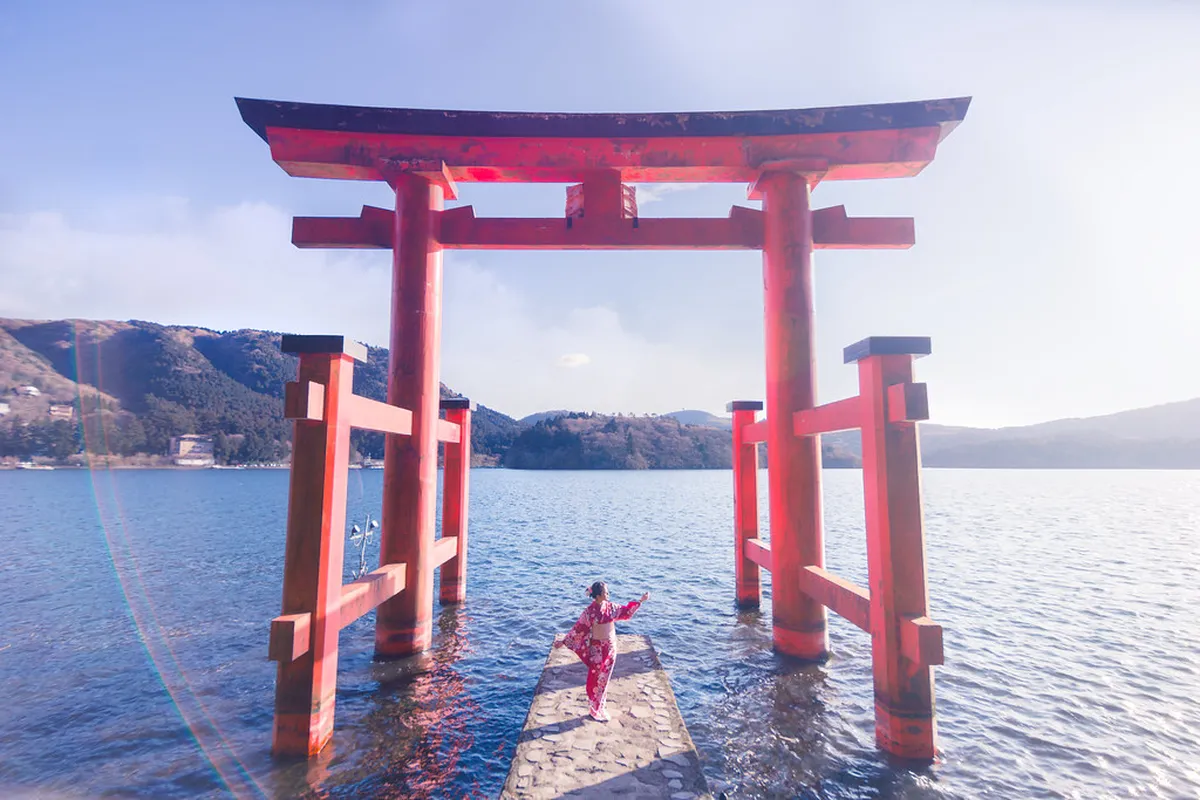
- 10:15 — Hakone Shrine and the floating Peace Torii gate. Walk the lantern-lined forest path down to the lakeside gate. Allow 30–40 minutes.
- 11:00 — Old Tokaido Cedar Avenue (500 m, free). Walk to the Hakone Checkpoint if you want Japanese history context (¥500 admission, 20 min).
- 12:15 — Lunch near Hakone-machi port. Daimasa (3-minute walk from the Checkpoint) is reliable for sashimi set meals.
- 13:10 — Board the Hakone Sightseeing Cruise pirate ship from Hakone-machi pier to Togendai (25 min).
- 14:00 — Ride the Hakone Ropeway from Togendai to Owakudani. Visit Owakudani Station for black eggs and views. Continue ropeway to Sounzan (15 min from Owakudani).
- 15:00 — Take the Hakone Tozan Cable Car from Sounzan down to Gora. Ride the Tozan Train from Gora back to Hakone-Yumoto (40 min).
- 16:30 — Optional: Hakone Yuryo onsen (free shuttle from Yumoto Station). Depart for Tokyo by 18:00–19:00.
If you are only visiting for one day and want to catch the Open-Air Museum, swap Owakudani for the museum: ride the cable car to Gora, take the Tozan Train one stop south to Chokoku-no-Mori Station, and walk 100 metres to the entrance (open 09:00–17:00, ~¥1,600 admission). You will not have time for both Owakudani and the museum in a single day.
Hakone 2-Day Itinerary: Deeper Exploration
Two days lets you cover the loop at a relaxed pace and layer in the cultural and onsen experiences that feel rushed on a day trip. Staying overnight — ideally in a ryokan with onsen access — is the single best upgrade you can make to a Hakone trip.
Day 1 — The Golden Loop: Follow the 1-day itinerary above through Hakone Shrine, the Cedar Avenue, the Lake Ashi cruise, Owakudani, and the cable car to Gora. Instead of rushing back, check into your accommodation at Gora or Hakone-Yumoto by 17:00. Enjoy a kaiseki dinner and your ryokan's onsen in the evening. This is the part of Hakone that most day-trippers never experience.
Day 2 — Culture, Nature, and Onsen:
- 09:00 — Hakone Open-Air Museum (open 09:00–17:00, ~¥1,600). Allow two to three hours for the sculpture park. The Picasso pavilion and the interactive Knitted Wonder Space are highlights. Ride the Tozan Train one stop to Chokoku-no-Mori Station.
- 12:00 — Lunch in Gora or Miyanoshita. Naraya Cafe at Miyanoshita Station has a footbath seating area and light meals — arrive by 11:30 to beat the noon queue.
- 13:30 — Fukazawa Zeniarai Benzaiten Shrine (one stop from Yumoto to Tonosawa Station on the Tozan Train). Cross the pedestrian bridge and find the small money-washing shrine set into the hillside.
- 14:30 — Hakone Yuryo onsen for an afternoon soak. Take the free shuttle from Hakone-Yumoto Station (runs every 15 minutes, 3-minute ride).
- 16:30 — Return to Hakone-Yumoto for last-minute shopping on the station street, then depart for Tokyo.
The 2-day Free Pass covers both days of transport. If you arrive Friday and leave Sunday, the 3-day pass (¥7,500) may not add enough value unless you plan a dedicated hiking day.
Hakone Day Trip Map: Visualizing Your Route
The Hakone Loop is best understood as a one-way circuit, not a hub-and-spoke. Starting at Hakone-Yumoto Station, you travel by bus southeast to Lake Ashi, cross the lake by boat to Togendai in the north, ride the aerial ropeway southwest over Owakudani to Sounzan, take the cable car south to Gora, then descend by mountain train back to Yumoto. Every leg moves you in one direction — almost no backtracking.
The key stops in order: Hakone-Yumoto → (bus) → Motohakone-ko / Hakone-machi → (pirate ship cruise) → Togendai → (ropeway) → Owakudani → (ropeway continues) → Sounzan → (cable car) → Gora → (Tozan Train) → Hakone-Yumoto. The Hakone Open-Air Museum sits between Gora and Yumoto at Chokoku-no-Mori Station — easy to slot in as your last stop before heading back.
Running the loop counter-clockwise (train to Gora first, then ropeway north to Togendai, then boat to Motohakone) also works and is a good option if you are staying in Gora and want to visit the Open-Air Museum early while it is quieter. Either direction takes roughly 4–5 hours of travel time, excluding stops at attractions.
Hakone-Yumoto Station: Gateway and Local Charm
Most visitors treat Hakone-Yumoto as a pass-through, but it rewards a 20-minute explore before you board the loop. As your train slows into the station you will see the Ajisai Bridge — a red pedestrian bridge over the Haya River — framed by mountains. It is a proper welcome to Hakone and a reliable early-morning photo spot before other visitors arrive.
The shopping street running out from the station exit is lined with onsen manju (steamed buns with sweet bean paste, roughly ¥150 each), local sweets, and cured meats. Grande Riviere on both sides of the street is the standout stop for pudding: silky, fragrant, and worth a ¥400 detour. Houjou Mitsufuku Dango usually has a short queue even at opening time. Grab something for the bus ride — there are few good food options at Lake Ashi itself.
If you have 10 extra minutes and a coffee habit, Cafe Timuny is a compact riverside cafe one minute from the station exit. Second-floor window seats look directly down onto the Haya River. It is quiet in the morning and busy at lunch.
Limited Express Romancecar: Comfort and Convenience
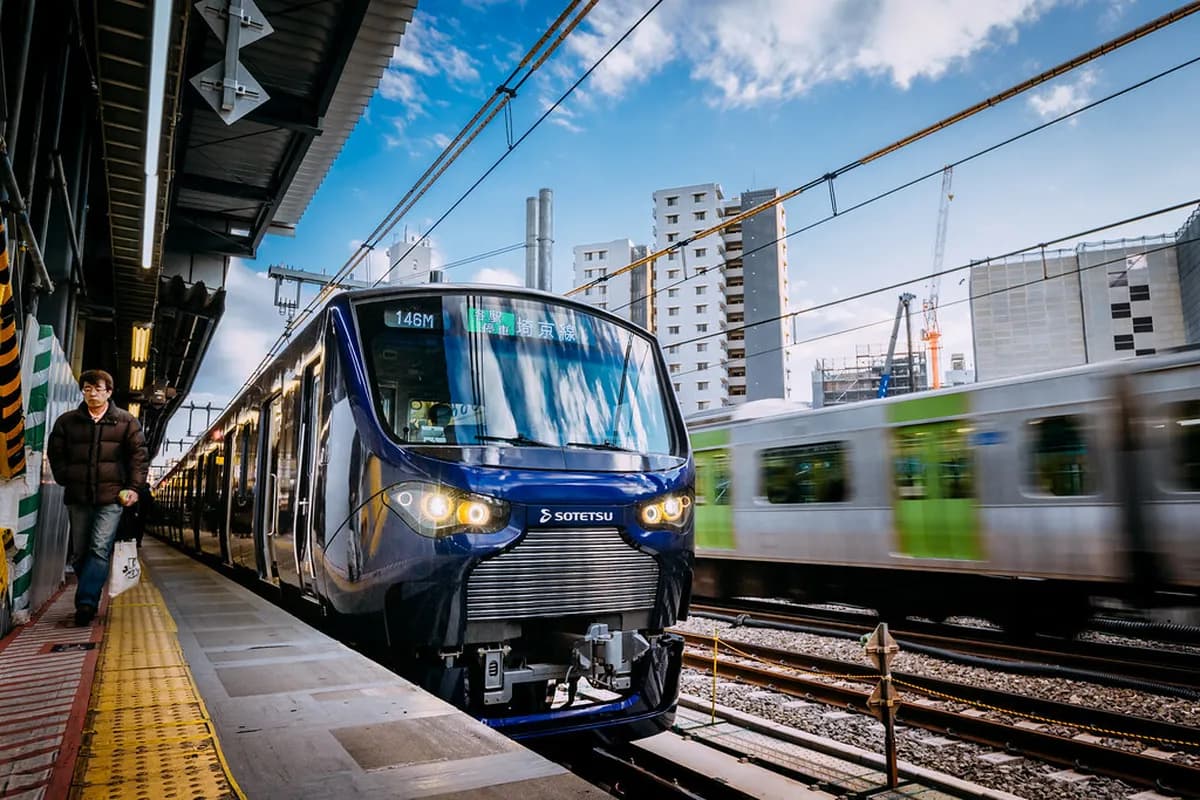
The Romancecar is the Odakyu Line's reserved-seat express running directly from Shinjuku to Hakone-Yumoto with no changes required. The ride takes about 85 minutes versus just under two hours on the cheaper rapid express (which requires a transfer at Odawara). Seats are assigned, face forward or can be rotated to face a companion, and fold-out tray tables let you eat breakfast on the train — a genuinely useful feature if you catch the 07:00 or 07:37 departure. For detailed transport planning, Japan Guide's Hakone section includes comprehensive rail schedules and route maps.
The Romancecar supplement costs ¥1,150 per trip and is not included in the Free Pass. You pay it on top of the pass price. Book online via EMot or at the Odakyu Sightseeing Center counter at Shinjuku West Ground Gate. The earliest departure on weekdays is 07:00 (arrives 08:45); weekends add a 06:30 option. Seats sell out 3–4 weeks ahead for Saturday mornings and Golden Week — book early. The regular rapid express is fine if you do not mind standing and the transfer, and it saves roughly ¥2,300 return.
Old Tokaido Road Ancient Cedar Avenue: A Step Back in Time
The Tokaido was one of Japan's five main feudal highways, connecting Edo (Tokyo) and Kyoto during the Edo period. Samurai, merchants, and pilgrims walked this route for centuries. For more on this historic route's cultural significance, see Hakone on Wikipedia. At Motohakone, a 500-metre section of the original stone-paved road survives, flanked by cedar trees that are hundreds of years old — some reaching three metres in diameter. Walking it takes about 20 minutes at a relaxed pace.
The nearby Hakone Checkpoint (Hakone Sekisho) was one of the most heavily guarded barriers along the entire Tokaido, used to control the movement of weapons and women (who needed permits to travel). The restored buildings include foot-soldier quarters, a guard house, and a lookout tower you can climb for lake views. Admission is ¥500. You can walk through the cedar avenue for free even if you skip the museum.
For a longer version of this walk, the Amazake-Chaya Teahouse sits about 30 minutes on foot up the historic trail from Motohakone. The teahouse has been operating for over 300 years and serves amazake (sweet, non-alcoholic fermented rice drink) and soft mochi for around ¥600. Competitor guides often recommend catching the K bus to the teahouse stop first, then walking the cedar section downhill to the lake — it is easier on the legs and flows naturally into the Hakone Shrine visit.
Owakudani: Black Eggs and Volcanic Vistas
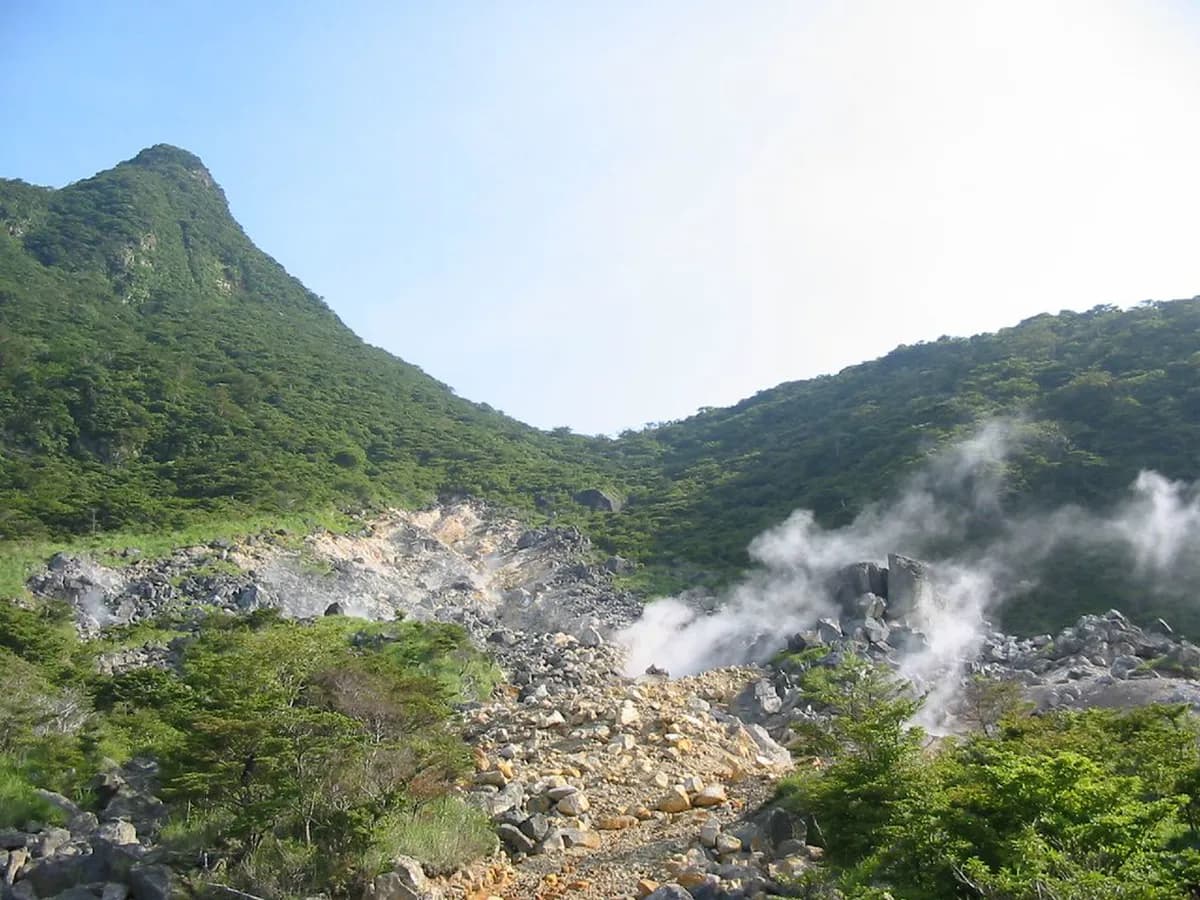
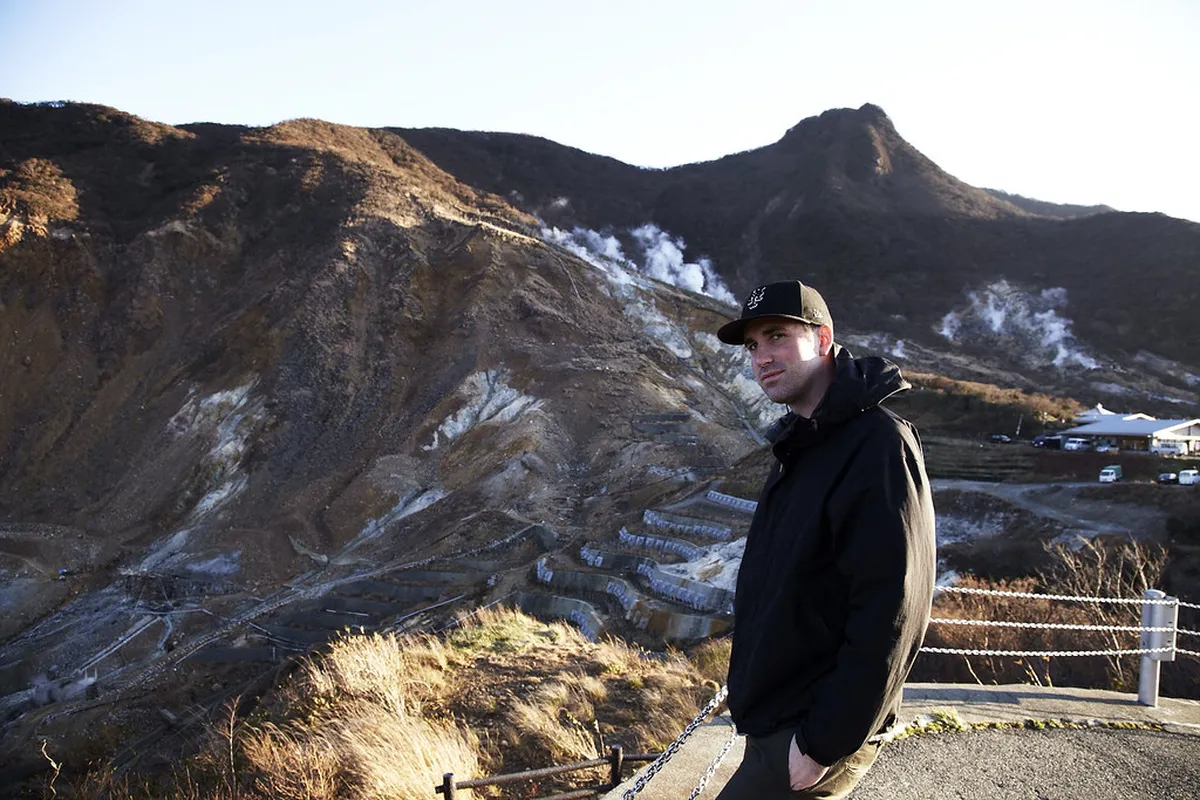
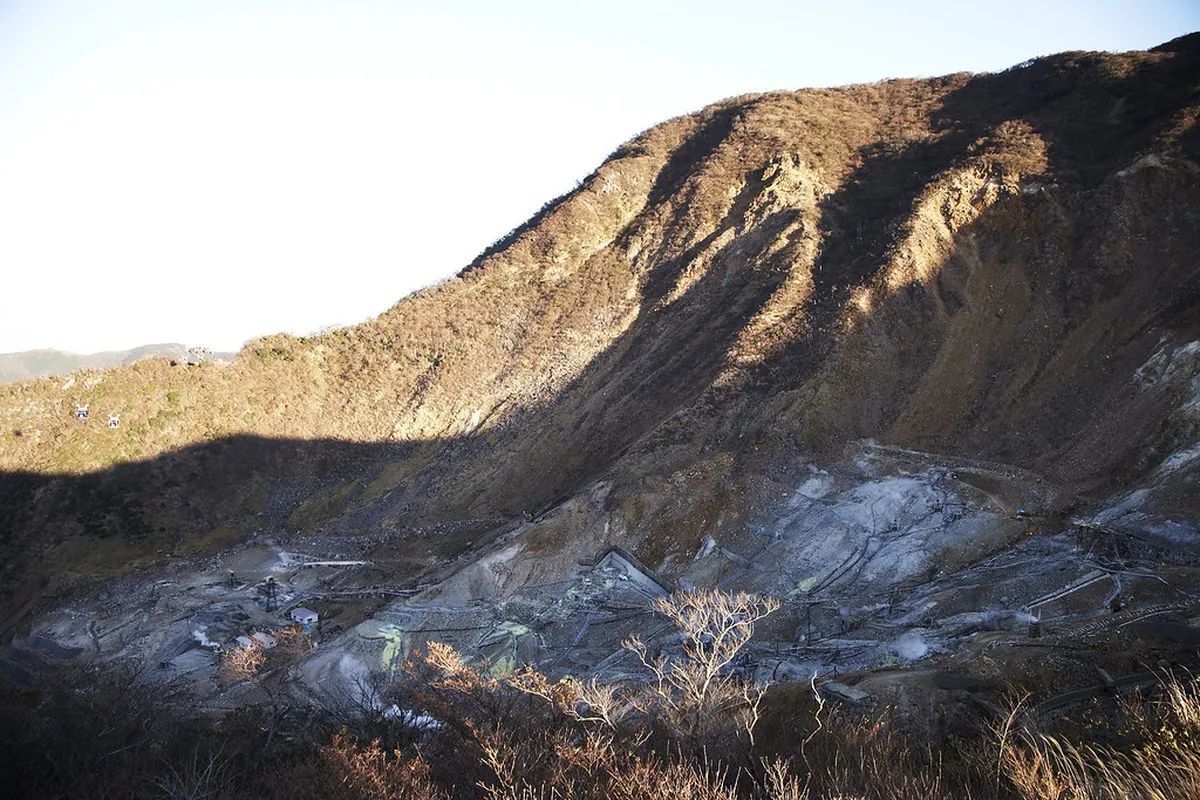
Owakudani is an active volcanic zone where hydrogen sulfide gas seeps from vents in the hillside, turning the landscape an eerie grey-white. The Hakone Ropeway passes directly over it, giving you a bird's-eye view of the steam plumes before you touch down at Owakudani Station. On clear days, Mt. Fuji appears behind the vents — a genuinely dramatic pairing that photographers target specifically. Japan's official tourism board offers more context on Japan's top destinations including Hakone's volcanic heritage.
The famous black eggs (kuro-tamago) are boiled in Owakudani's sulfurous hot spring water, which reacts with the iron in the shell to turn it black. Inside they are ordinary hard-boiled eggs. The local legend says eating one adds seven years to your life. A bag of five eggs costs around ¥500 and is sold at Owakudani Kurotamagokan. Black-egg curry bread and black-colored soft serve are also available at Gokuraku Chaya nearby.
One practical 2026 note: Owakudani Eki Shokudo (the main station restaurant serving curry rice) is temporarily closed for renovation from May 2026 through late July 2026. If you are visiting in this window, eat lunch near the Hakone Checkpoint before boarding the cruise, or bring your own food. The egg and snack stands at Owakudani Station remain open.
Volcanic activity levels are monitored continuously. On rare occasions the ropeway closes and a shuttle bus replaces it between Togendai and Sounzan — this can happen with little notice. Check the Hakone Ropeway's official social media or the Odakyu tourist site the day before your visit if you are traveling in an active period.
Mt. Fuji Viewing Points at Lake Ashi
Lake Ashi sits in the caldera of an ancient volcano, and on a clear day Mt. Fuji rises dramatically above the southwest shore. The best land-based viewpoint is Viewpoint No. 3, located a short walk from Motohakone-ko pier — this is the classic composition with the lake and the mountain aligned. Early morning gives you the best light and fewest people. By 11:00 on weekends the lake shore near Motohakone fills up quickly.
The Hakone Shrine's red Peace Torii gate sits at the waterline near Motohakone-ko. Framing Fuji through the torii requires patience and good timing — the gate faces roughly south, so morning light falls best from around 08:00 to 10:00. Late afternoon can also work in winter when the sun angle is lower. Arrive early if you want photos without crowds in the frame.
From the pirate ship cruise, Fuji is visible looking southwest as you cross the lake. Upgrading to First Class on the cruise costs an extra ¥700 with the Free Pass (¥800 without) and gives access to the uncrowded upper front deck — the single best unobstructed view from the boat. If visibility is poor at Motohakone, the Owakudani ropeway is your second-best Fuji viewpoint, looking northwest over the volcanic valley.
The Hakone Tozan Train and Cable Car: Scenic Ascent
The Hakone Tozan Train runs from Hakone-Yumoto up to Gora through increasingly steep mountain terrain. What makes the ride memorable is the switchback system: because the slope is too steep for a direct climb, the train reverses direction three times on the way up, zigzagging back and forth like a mountain tram. Watch from the windows as the driver walks to the other end at each switchback. The journey takes about 40 minutes and is especially beautiful in summer (hydrangeas line the tracks from late June through July) and autumn (fiery maple foliage in October–November).
At Gora, transfer to the Hakone Tozan Cable Car for the steep 10-minute ride up to Sounzan. The cable car climbs a grade that would be impossible for a regular train, and on clear days you can see ridgelines and forest canopy spread below you. Sounzan connects directly to the ropeway platform — follow the signs, it takes about two minutes to walk between them.
A few small cafes and shops sit along the cable car route at stations like Miyanoshita and Gora. Naraya Cafe at Miyanoshita Station has a free footbath area in the seating garden — a nice way to rest your feet mid-itinerary. Switchback Cafe near Ohiradai Station is positioned right beside the tracks so you can watch trains passing while you drink coffee.
Fukazawa Zeniarai Benzaiten Shrine: Wash Your Money
From Hakone-Yumoto, take the Hakone Tozan Train just one stop to Tonosawa Station (OH52). Cross the pedestrian bridge and look right — the small shrine is set into the hillside above the river. It takes about two minutes to find from the station exit. Admission is free.
The ritual is simple: hold your coins or notes over the sacred spring water in the stone basin and let it flow over them. Local belief holds that money washed here will multiply and bring prosperity. The shrine is dedicated to Benzaiten, the goddess associated with wealth, music, and knowledge. It is genuinely quiet compared to the main tourist circuit — most day-trippers skip it entirely. Budget 10–15 minutes for the stop including the walk.
Hakone Yuryo: Choosing the Right Onsen for You
Hakone Yuryo is the smoothest onsen option for day-trippers — a free shuttle bus runs every 15 minutes from directly in front of Hakone-Yumoto Station and takes 3 minutes. The facility is designed in Edo-period style with excellent private rooms if you are traveling as a couple or family. Private rooms (2 hours) cost ¥9,400–¥14,400 depending on size and day; the public baths cost ¥1,700 on weekdays and ¥2,000 on weekends and public holidays. Book private rooms in advance on busy dates.
One practical point that most itinerary guides skip: tattoo policies vary significantly between onsens in Hakone. Hakone Yuryo does not admit guests with visible tattoos in its public bath. Hakone no Yu (near Hakone-Yumoto) has the same policy. If you or a travel companion has tattoos, Tenzan Onsen (accessible via the "M" bus from Hakone-Yumoto Station) is the most convenient tattoo-friendly public onsen in the area and costs ¥1,350 with the Hakone Free Pass (regular ¥1,400). Private rooms at Hakone Yuryo are handled differently — contact them directly to confirm current policy. Knowing this in advance saves an awkward situation at the entrance.
Hakone Yuryo is best visited in the late afternoon after completing the main loop, so you can soak tired muscles before the ride back to Tokyo. The facility closes at 21:00 (last entry 20:00). If you want a longer onsen stay, an overnight ryokan in Gora or Yumoto with in-room or communal onsen lets you soak morning and evening without any time pressure.
Recommended Accommodation in Hakone
The two most practical base areas are Hakone-Yumoto and Gora. Yumoto is the main transport hub — everything on the loop starts or ends here, there are more restaurants and convenience stores, and the onsen scene around the Haya River is atmospheric. Gora is quieter, sits higher on the mountain with better autumn foliage, and puts you closer to the Open-Air Museum and ropeway on Day 2.
For a traditional ryokan experience, Gora Kadan is one of the most celebrated properties in Hakone, with a kaiseki dining focus and exceptional private onsen rooms (book 3 months ahead for weekends). The historic Fujiya Hotel in Miyanoshita blends Meiji-era architecture with modern comfort — a good choice for travelers who want Japanese character without the full ryokan commitment. Budget travelers do well at Guesthouse Azito in Yumoto, which has a social atmosphere and easy loop access, or Onsen Guesthouse Hakone Tent, which lives up to its name with communal hot spring access. The best base for exploring Hakone depends on whether you prioritize convenience (Yumoto) or atmosphere (Gora or Moto-Hakone lakeside).
Book 2–3 months in advance for popular autumn and cherry blossom weekends. Weeknight rates at most ryokan are 20–40% cheaper than the same property on Saturday. Many accommodations include dinner and breakfast (2-meal plan), which makes sense given Hakone's limited dinner options — especially outside Yumoto.
Frequently Asked Questions
Should you get the 2-day Hakone Free Pass?
Yes, the Hakone Free Pass is highly recommended for most visitors. It covers unlimited rides on eight different transport modes within the Hakone area. This includes the Hakone Tozan Train, Cable Car, Ropeway, and Lake Ashi pirate ship. It also offers discounts at various attractions.
Can I use the JR Railpass from Tokyo to Hakone?
The JR Rail Pass does not fully cover the journey from Tokyo to Hakone. You can use it for the JR Tokaido Line to Odawara Station. However, the subsequent Hakone Tozan Line from Odawara to Hakone-Yumoto is not covered. You will need to purchase a separate ticket or use the Hakone Free Pass.
How much time should you plan for a Hakone itinerary?
A 2-day Hakone itinerary is ideal for first-time visitors. This allows you to experience the main Hakone Loop and explore a few additional attractions. A 1-day trip is possible but can feel rushed. It is best to spend at least one night to fully enjoy the area.
What are the best viewpoints for Mt. Fuji in Hakone?
The best viewpoints for Mt. Fuji in Hakone are from Lake Ashi, particularly from the pirate ship cruise or the shores near Hakone Shrine. The Hakone Ropeway also offers stunning aerial views on clear days. Owakudani and some sections of the Old Tokaido Road provide good glimpses. Always check weather conditions for visibility.
Hakone rewards visitors who arrive early, move through the loop with a plan, and stay at least one night. The combination of volcanic scenery, feudal history, world-class art, and genuine onsen culture is hard to match on any other Tokyo day trip. Use the Free Pass, book the Romancecar in advance, and leave space in your schedule for the moments that are not on any map — a quiet morning at the Shrine before the crowds arrive, or an evening soak looking out over the mountain forest.
For the complete picture of what Hakone has to offer beyond the loop, see our Hakone attractions guide and the dedicated 10 Best Onsen & Ryokan in Hakone: Private Baths, Day Trips & More (2026) roundup. If you are planning a day trip from Tokyo rather than an overnight stay, the Hakone Day Trip Itinerary from Tokyo: Plan Your Perfect Day guide covers transport logistics in more detail.
Free: The Hakone Essentials guide
Top things to do, where to stay, a perfect day plan, getting around, and the best time to go — a Hakone mini-guide you can take offline.
You might also like


Continue reading
More guides you'll find useful


