11 Best Things to Do in Koyasan (2026 Guide)
Discover the best things to do in Koyasan, from the mystical Okunoin Cemetery to temple lodging. Includes transport tips from Osaka and 2026 travel advice.
On this page
Stepping off the cable car at Mount Koya feels like entering a different era of Japanese history. This UNESCO World Heritage site sits roughly 900 metres above sea level in Wakayama Prefecture and serves as the headquarters of Shingon Buddhism, founded by the monk Kobo Daishi in 816. Over 100 temples share the plateau, more than 50 of which offer traditional overnight lodging. The combination of ancient cedar forests, lantern-lit cemeteries, and living monastic traditions makes Koyasan unlike anywhere else in Japan.
Our team last refreshed this guide in 2026 to ensure all transport prices and temple opening hours remain accurate. Temperatures here run 5–10°C cooler than Osaka throughout the year — in winter, overnight lows can reach -5°C inside unheated temple rooms, so packing layers is non-negotiable. Whether you plan a Koyasan day trip or a multi-night retreat, this guide covers every essential experience in the order most visitors find logical.
Key Takeaways
- Best Overall: Stay overnight in a Shukubo to experience morning prayers and the quiet mountain atmosphere after day-trippers leave.
- Best for Atmosphere: Walk Okunoin Cemetery at dusk or dawn, when the lanterns glow and the forest is silent.
- Best Money Saver: The Nankai World Heritage Ticket covers your round-trip train, cable car, and unlimited local buses from Osaka.
- Pro Tip: Pack thermal base layers year-round — temple buildings are historic, have no central heating, and get genuinely cold after dark.
Why Visit Koyasan?
Koyasan offers something rare in modern Japan: a religious community that still functions exactly as it was designed to. The town is the administrative heart of the Shingon sect, with over 3,700 affiliated temples across the country tracing their lineage back here. Walking its single main road, you pass monks in white robes heading to morning services, pilgrims in traditional gear, and temple gates that have stood for centuries. The pace of life slows the moment you cross the Daimon.
The landscape amplifies the atmosphere. Eight-hundred-year-old cedar trees shade the pathways to Okunoin, and mist clings to the valley every morning from autumn through spring. According to the official UNESCO designation, the site represents the fusion of Shinto and Buddhist belief across the Kii Peninsula — a designation shared with the Kumano Kodo pilgrimage trails. For travelers interested in Buddhist vegetarian cuisine, spiritual practices, or simply a profound contrast to city tourism, Koyasan is the right call.
The destination also rewards overnight visitors far more than day-trippers. The magic of the cemetery at night, the Goma fire ceremony at dawn, and the silence after the last cable car descends are experiences that simply cannot be replicated on a rushed afternoon visit from Osaka.
Wander Through Okunoin Cemetery
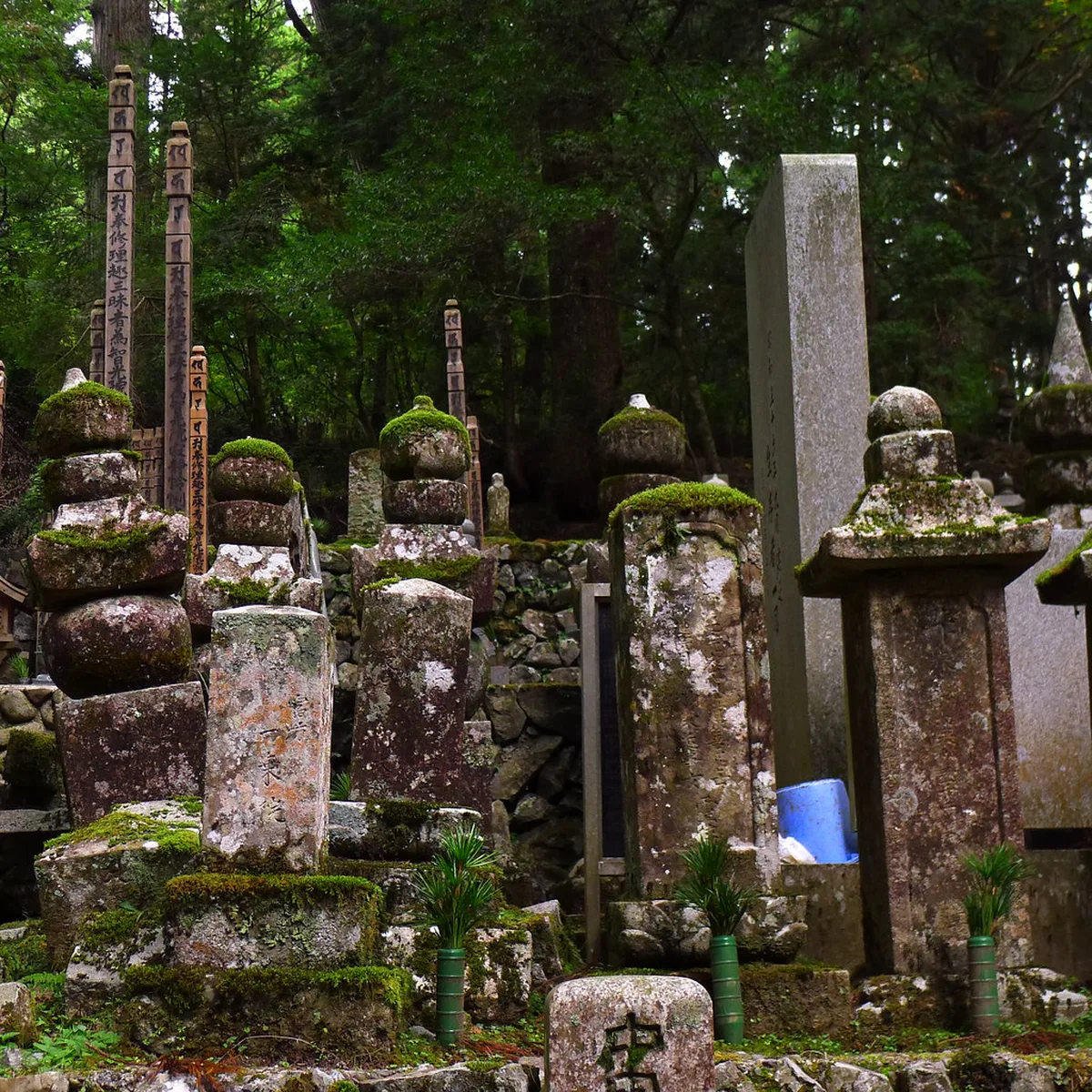
Okunoin is Japan's largest cemetery and the spiritual epicenter of Koyasan. The main path runs two kilometres through towering cedars from Ichinohashi Bridge to the Gobyo, the mausoleum where Kobo Daishi is believed to remain in eternal meditation. Over 200,000 tombstones line the route, ranging from ancient feudal lord memorials to surprisingly modern corporate monuments — look for the coffee cup tribute and the rocket sculpture honoring space workers. The grounds are free to enter and open 24 hours.
The inner sanctuary beyond Gobyohashi Bridge is the most sacred zone. Photography is forbidden past this point, which gives the area an atmosphere of genuine solemnity that photographs could never capture anyway. The Torodo Hall (Hall of Lamps) houses more than 10,000 golden lanterns, said to have burned continuously for over 1,000 years. Torodo is open daily from 06:00 to 17:30 and admission is free. Arrive between 06:00 and 07:30 to walk the path in near-total quiet before tour groups arrive.
The walk from the Ichinohashi entrance to the mausoleum and back takes 60–90 minutes at a relaxed pace. Wear shoes with grip — the stone paths become slippery in rain and during the winter freeze. The cemetery is also the starting point for the guided night tours described further below.
Marvel at Danjo Garan's Great Pagoda
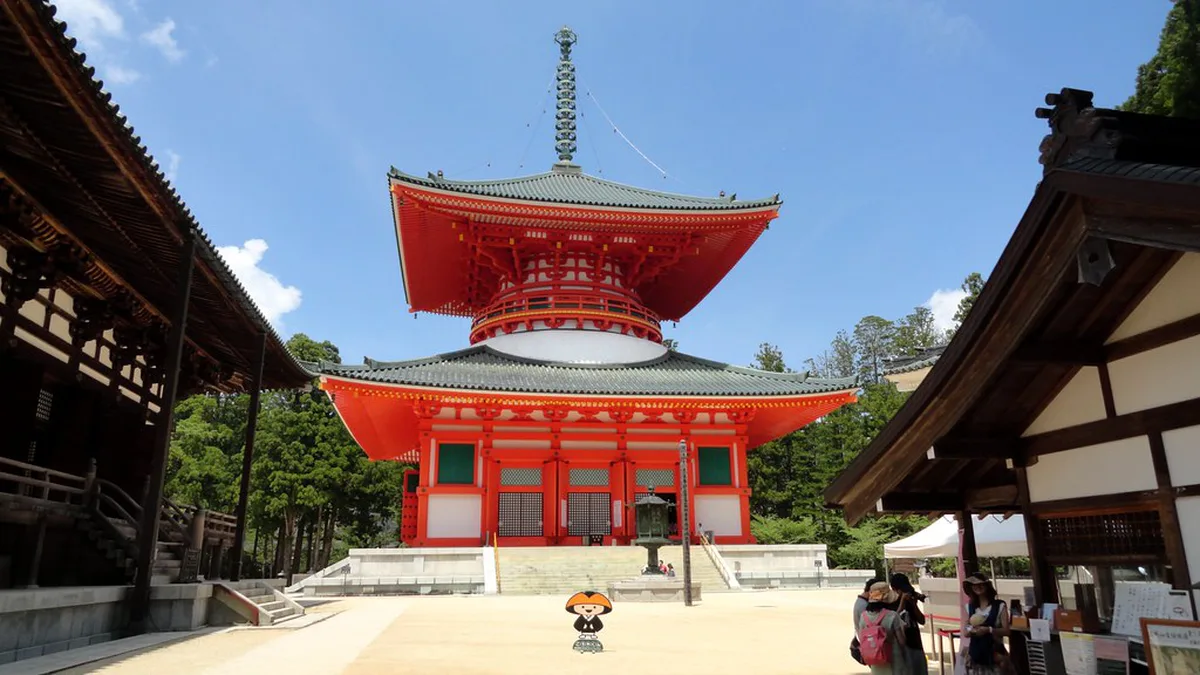
Danjo Garan complex is the original ritual center of Koyasan, begun by Kukai himself in the early 9th century. The complex holds around 20 buildings, of which the vermillion Konpon Daito pagoda is the most iconic. Standing 45 metres tall, it houses a statue of Dainichi Nyorai (the Cosmic Buddha) surrounded by four bodhisattvas — together forming a three-dimensional mandala that is one of the most visually striking interiors in all of Japanese Buddhism. Entry to the Konpon Daito costs 500 yen; the surrounding grounds are free and accessible at all hours.
The Kondo (main hall) is the oldest building on the complex and the site of Koyasan's principal prayer ceremonies. Both the Kondo and the Konpon Daito are open daily from 08:30 to 17:00. The Combination Ticket sold at the Tourist Information Center (2,500 yen) covers entry to both, plus Kongobu-ji and the Reihokan Museum, and pays for itself quickly if you plan to see more than two paid sites. Arrive at Danjo Garan early, before the morning tour buses from Osaka, to have the plaza largely to yourself.
| Sight | Area | Time Needed | Highlight |
|---|---|---|---|
| Okunoin Cemetery | Eastern Koyasan | 60–90 mins | 200,000 tombstones, Kobo Daishi mausoleum, lantern-lit paths at night |
| Danjo Garan | Central plateau | 45–60 mins | Konpon Daito pagoda, vermillion architecture, mandala interior |
| Kongobu-ji | Central plateau | 45–60 mins | Banryutei Rock Garden (2,340 sq m), administrative headquarters of Shingon |
| Reihokan Museum | Central plateau | 60 mins | 21 National Treasures, rotating seasonal exhibitions, Buddhist sculptures |
| Daimon Gate entrance | Western entrance | 15–20 mins | 25-metre gate with giant Nio guardians, sunset photography |
| Shukubo (Temple Lodging) | Various | Overnight | Morning Goma fire ceremony, shojin ryori dinner, temple prayers |
Visit Kongobu-ji, the Head Shingon Temple
Kongobu-ji is the administrative headquarters of the Shingon sect and the most important single temple on the mountain. The current structure dates to the late 16th century, commissioned by Toyotomi Hideyoshi in memory of his mother. Inside, the Ohiroma Room features gilded fusuma (sliding door paintings) by the Kano school, and side rooms continue the theme with plum and willow motifs. Entry costs 1,000 yen (or covered by the Combination Ticket) and includes a cup of matcha with a seasonal sweet — one of the better value-for-money moments on the mountain.
The Banryutei Rock Garden at the rear is Japan's largest rock garden, covering 2,340 square metres. Two formations of granite represent a pair of dragons emerging from clouds to guard the temple. The garden is best viewed in the early morning light before humidity softens the definition of the stone. Kongobu-ji is open daily 08:30 to 17:00 (last entry 16:30). Plan 45–60 minutes here, and combine it with the adjacent Danjo Garan for a logical half-day walking route.
Explore the Reihokan Museum
The Reihokan was established in 1921 to protect the mountain's most fragile cultural assets. Its collection spans an estimated 78,000 items, including 21 National Treasures and 149 Important Cultural Properties — Buddhist sculptures, mandalas, ceremonial objects, and calligraphy that would otherwise be locked away in private temple storage. Exhibitions rotate seasonally, so the specific items on display differ from visit to visit. General admission is 1,300 yen; the museum is open daily 08:30 to 17:30 (until 19:00 from May to October), with last entry 30 minutes before closing.
Budget roughly one hour here. The Heian-period statues and the large-format painted mandalas are the standout pieces for first-time visitors. Check the Koyasan Reihokan Museum Official Site before you travel to confirm any special exhibitions, which occasionally extend into the evening hours. The museum sits directly across from Daishi Kyokai, making it a natural stop on the central temple circuit.
Stand Before the Great Daimon Gate
The Daimon (Great Gate) marks the traditional western entrance to Koyasan and has stood in its current form since 1705. At 25 metres, it houses two of the largest Nio guardian statues in Japan. The gate is free to visit and open at all hours. At sunset, the red-lacquered wood glows against the darkening sky, making it one of the better photographic moments on the mountain. It sits a 15-minute walk from the town center at the western end of the main road.
Pilgrims who hike the Choishi Michi trail arrive through this gate as their final step after the 24-kilometre journey from Kudoyama Station — a deeply symbolic entry. Even for visitors arriving by cable car and bus, walking out to the Daimon at the end of a day and standing before the Nio statues in the evening quiet is a fitting way to close the experience of the mountain.
Overnight stays transform Koyasan from a day-trip destination into something truly sacred. The cemetery at night glows with lanterns, the early-morning Goma fire ceremony fills the temple with smoke and chanting, and after the last cable car descends around 17:30, you have the mountain almost entirely to yourself. A single night is enough to experience all major sites at their most atmospheric times — the reverse itinerary (Okunoin at dawn before the crowds, Danjo Garan mid-morning, temples at noon, night cemetery tour at 19:00) is far superior to any day-trip sequence.
Stay Overnight in a Shukubo (Temple Lodging)
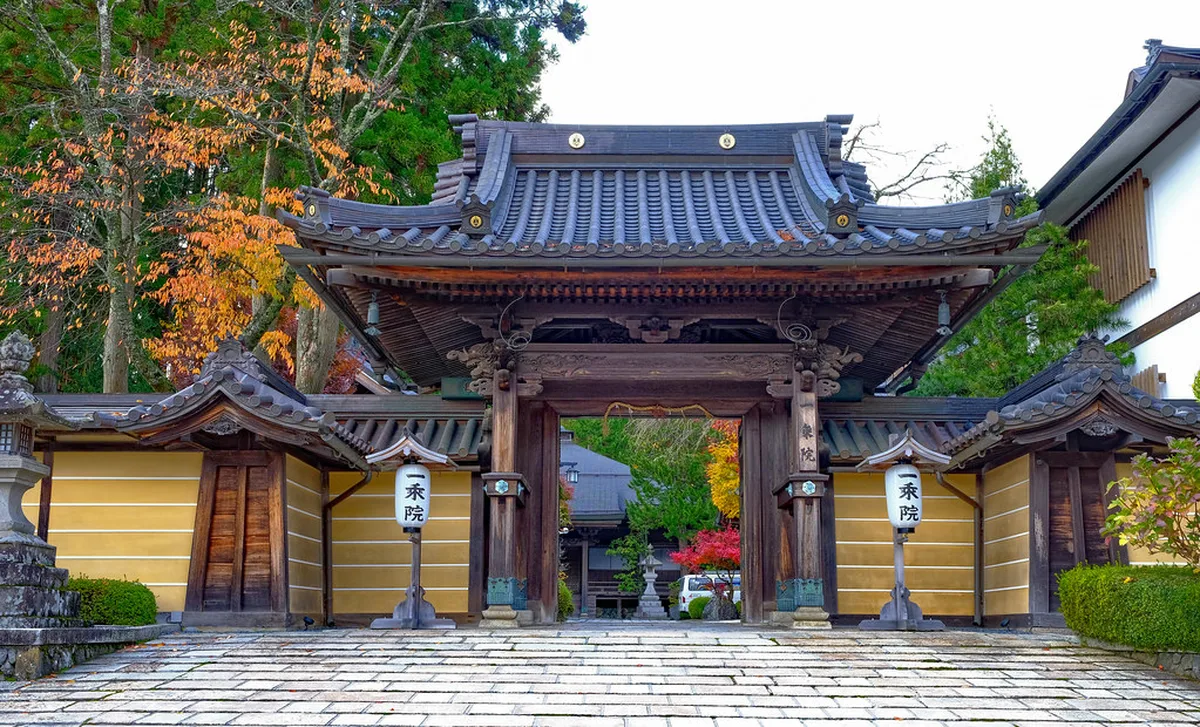
Shukubo are the defining experience of Koyasan. Originally built to house pilgrims, they now welcome guests of any background or faith. A typical stay includes a tatami room with futon bedding, an evening shojin ryori dinner, communal baths (many temples have onsen), and the option to join morning prayers around 06:00. Rates run from approximately 12,000 to 25,000 yen per person, including dinner and breakfast. Book well in advance for autumn weekends, which fill months ahead.
Three temples consistently receive the highest English-language ratings:
- Eko-in — the most internationally known, with English-speaking monks, an active night tour program, meditation sessions, and a Goma fire ceremony most mornings at 06:30. Rates from 16,500 yen per person.
- Fudo-in — quieter and more intimate than Eko-in, praised for warm hospitality and a well-maintained garden. Rates from 14,000 yen per person.
- Shojoshin-in — one of the oldest operating shukubo, with a particularly atmospheric morning ceremony and formal Zen-influenced service. Rates from 13,000 yen per person.
To book, use the Koyasan Shukubo Association portal, which lists all participating temples in English and handles online reservations. Agoda and Booking.com also carry most major shukubo and are useful for direct price comparisons. Note that some smaller temples have Japanese-only booking pages — the Association portal is the easiest single-stop option. Confirm the exact morning prayer time when booking, as it varies by temple and season.
Pack thermal base layers and thick socks regardless of season. Temple buildings are historic, have no central heating, and wooden floors stay cold year-round. In winter months (December through February), expect overnight indoor temperatures close to freezing — hand warmers and additional blankets are typically provided on request, but you will sleep better if you bring your own base layers.
Take a Guided Night Tour of the Cemetery
Walking Okunoin at night is a categorically different experience from the daytime visit. The lanterns along the path cast long shadows across the mossy tombstones, and the only sounds are wind through the cedars. Eko-in runs the best-known guided English-language night tours, typically departing around 19:00 from the temple entrance. Tours cost approximately 2,500 yen per person and last 60–90 minutes. Group sizes are kept small — usually 10 to 15 people — so book at least two days in advance through Eko-in's reception or website.
The monk leading the tour explains the significance of individual tombstones, the meaning behind the lanterns, and the belief that Kobo Daishi continues to meditate in the inner sanctuary. Photography is still prohibited past Gobyohashi Bridge. Wear shoes with solid grip, as the stone paths are unlit beyond the lanterns and can be damp. The tour ends in time to return to your shukubo before the 21:00 curfew common at most temple lodgings.
Attend the Morning Goma Fire Ceremony
The Goma is an esoteric Shingon fire ritual in which a priest feeds wooden sticks into a central flame to burn away mental obstacles and invoke protection for attendees. At Eko-in, the ceremony takes place most mornings at 06:30 in the main hall, roughly 30 minutes before the general morning prayer service. It runs for about 40 minutes. Overnight guests are invited without an additional charge; non-staying visitors can sometimes attend by asking at the front desk the evening before.
The ritual is markedly different from the quieter meditation and sutra copying sessions available during the day. The priest chants in Siddham script (Sanskrit-derived characters used in esoteric Buddhism), the fire grows and contracts with each offering, and the smoke carries written prayers upward. It is one of the more visceral and memorable spiritual experiences available to travelers in Japan, and the reason many visitors say the overnight stay justified itself before breakfast. No prior knowledge of Buddhism is required or expected — respectful observation is entirely appropriate.
Danjo Garan's Kondo Hall also hosts regular Goma ceremonies, particularly on the 21st of each month (Kobo Daishi's monthly memorial day), when a larger public ceremony draws both pilgrims and locals. If your visit falls on the 21st, the Kondo ceremony is worth prioritizing over the temple-based one.
The Nankai World Heritage Ticket (purchased at Namba Station) is essential planning. It covers your round-trip train from Osaka to Gokurakubashi, the cable car both directions, and unlimited local buses within Koyasan — paying for itself in just three bus journeys. Without it, each bus ride costs 170 yen and each cable car costs 900 yen one-way. First-time visitors typically take at least 5–6 bus trips across the mountain, making the ticket a clear financial win and logistics simplifier. Purchase it before boarding at Namba or Shin-Imamiya stations.
Try Ajikan Meditation and Sutra Copying
Most of the larger shukubo offer structured Buddhist practice sessions beyond the morning prayers. Ajikan, the "Moon Disk" meditation central to Shingon practice, involves focusing on a Sanskrit syllable visualized within a white moon disk. Sessions typically last 30–60 minutes and cost 1,000 to 2,000 yen. Sutra copying (shakyo) — tracing sacred texts with a brush — is available at Daishi Kyokai without advance reservation, with sessions from 09:00 to 16:00 at 1,000 yen per session (or covered by the Combination Ticket).
Neither activity requires any previous experience. The rhythmic nature of sutra copying is particularly accessible for visitors who do not speak Japanese — the act of tracing the characters is the point, not comprehension. Eko-in and Fudo-in both run structured meditation programs that can be arranged at check-in. If you want guaranteed participation, contact the temple directly when booking your shukubo stay to confirm session availability during your dates.
Eat Traditional Shojin Ryori (Buddhist Cuisine)
Shojin ryori is the vegetarian cuisine developed in Japanese Buddhist monasteries and refined over centuries at Koyasan. The menu excludes all meat, fish, and animal products. Flavor follows the "rule of five": five tastes (sweet, sour, salty, bitter, umami) and five colors (green, yellow, red, black, white), designed to produce a nutritionally complete meal without stimulants. A typical dinner at a shukubo arrives on a lacquered tray with a dozen small dishes — miso soup, pickled vegetables, rice, simmered root vegetables, sesame preparations, and the mountain's signature dish, Goma-dofu.
Goma-dofu is sesame tofu, made by grinding white sesame paste with kudzu starch rather than soy — the result is denser and richer than ordinary tofu, with a faintly nutty sweetness. It appears at virtually every shojin ryori meal in Koyasan and is sold as a souvenir in several shops near the Senjuinbashi intersection. Lunch sets at specialist restaurants along the main road cost 2,000–5,000 yen and are the most accessible option for day visitors. Be aware that most lunch restaurants close by 15:00, and some close on Mondays. If you are staying overnight, the dinner served at your shukubo will typically be the best version you eat on the mountain.
Hike the Choishi Michi Pilgrimage Trail
The Choishi Michi is the original pilgrimage route to Koyasan, a 24-kilometre path marked by stone pillars placed every 109 metres — a distance representing one cho, a traditional unit of measurement. The full trail begins at Kudoyama Station (accessible from Osaka via the Nankai Koya Line) and ends at the Daimon Gate, taking 7–8 hours at a steady pace. There are shorter entry points at Kii-Hosokawa Station (a 3-hour section) and Kami-Kosawa Station (a 5-hour section) for those who want the pilgrimage experience without the full-day commitment.
The trail is free to hike. Bring your own food, water, and rain gear — facilities are sparse once you leave the trailhead. Sturdy hiking shoes are essential, as sections of the path are steep, rocky, and can be muddy. The route through autumn foliage (mid-October) is spectacular, with the stone lanterns and cedar canopy creating a genuinely otherworldly corridor. Complete the hike by arriving through the Daimon Gate for a satisfying sense of arrival that cable car passengers miss entirely.
How to Get to Koyasan from Osaka (Nankai Koya Line)
The standard route departs from Namba Station in Osaka on the Nankai Koya Line. The Limited Express "Koya" runs directly to Gokurakubashi Station in approximately 80 minutes. Standard express services require a transfer at Hashimoto and take around 100 minutes, but cost roughly 400 yen less. At Gokurakubashi, a cable car ascends to Koyasan Station in 5 minutes. From the top station, a local bus takes another 10–15 minutes to reach the central temple area near Kongobu-ji and Danjo Garan. Budget around 90–120 minutes door-to-door from central Osaka.
The World Heritage Ticket (Nankai Railway) is worth purchasing for almost every visitor. It covers the round-trip Nankai train fare (standard express), the cable car both ways, and unlimited local bus travel within Koyasan. It also provides admission discounts at Kongobu-ji, the Reihokan Museum, and several other sites. The ticket pays for itself if you take three or more bus rides during your visit, which is standard for anyone exploring the full length of the mountain. Purchase it at the ticket counters at Namba or Shin-Imamiya stations before boarding.
Kyoto visitors can also reach Koyasan via a combination of JR to Osaka followed by the Nankai line — total journey time from Kyoto is around 2 hours 15 minutes. There is no direct Shinkansen connection; the Nankai Koya Line is not covered by the Japan Rail Pass.
Getting Around Koyasan Once You Arrive: Buses, Walking and Timing
The temple town stretches along one main road, and the sights are further apart than the map suggests. Plan your movement before you step off the cable car, because the pace of the day is set by bus timetables and early closing times.
Bus, walking or bicycle
- Local bus: Buses run from the cable car station along the main road past Kongobu-ji and Danjo Garan to Okunoin-mae. They are the easiest way to cover the length of the town. The World Heritage Ticket mentioned above includes unlimited rides, so you do not need to count fares.
- On foot: The central cluster of Danjo Garan, Kongobu-ji and the Reihokan is walkable in a few minutes between stops. The Daimon is on the western edge, a bus ride away from the centre. Okunoin is on the eastern edge, so walking from end to end takes well over an hour.
- Bicycle: Rental bikes are available in town in the warmer months. Hills and cold mornings make them a poor choice from December to March.
A sensible order for the day
- Take the bus to Okunoin-mae first and walk the cemetery path in the quiet early hours.
- Return towards the centre on foot or by bus for Kongobu-ji, Danjo Garan and the Reihokan.
- Finish at the Daimon for sunset if you are staying overnight.
Practical tips
- Carry cash. Many temples, small shops and family-run restaurants do not take cards.
- Eat early. Most kitchens and shops close in the early evening, and the town is very quiet after dark. See our guide to the best restaurants in Koyasan for places worth booking, or the Koyasan day trip food guide if you are only visiting for the day.
- Check the last bus and cable car before you commit to a late cemetery walk. Missing the last descent without a lodging booking leaves you stranded.
- Dress for temples. You will remove shoes often, so wear socks without holes and shoes that slip off easily.
Where to Stay: Osaka vs. Koyasan Temple Lodging
The decision between staying in Osaka and day-tripping versus sleeping on the mountain is the most important logistical choice for this destination. Staying in Osaka makes more economic sense if you are on a tight budget — shukubo rates (12,000–25,000 yen including meals) are significantly higher than equivalent Osaka accommodation. The round-trip journey from Osaka takes roughly 3–4 hours including the cable car and buses, leaving a workable 4–6 hour window for a day visit focused on Okunoin and Danjo Garan.
The case for staying on the mountain is harder to argue in a spreadsheet but compelling in practice. After the last cable car descends around 17:30, Koyasan becomes a different place: quieter, darker, and genuinely atmospheric in a way that day visitors never experience. You gain access to the cemetery at night, the Goma ceremony at dawn, and the multi-course shojin ryori dinner. First-timers who stay overnight consistently report it as the more memorable experience. The general recommendation: if you have only one night to spare in the Osaka-Kyoto region, this is one of the best ways to spend it.
If you want to stay overnight but prefer a base in Osaka, a practical middle path is to check into a shukubo for a single night midway through your Kansai trip, then return to Osaka the following morning. Use Agoda or the Koyasan Shukubo Association portal to compare availability across temples and book well ahead for October weekends, Golden Week, and Obon.
Is One Night in Koyasan Enough?
For most travelers, one night covers the essentials comfortably. The typical one-night itinerary runs: arrive by 11:00, visit Danjo Garan and Kongobu-ji before lunch, have a shojin ryori lunch in town, spend the afternoon at Okunoin and the Reihokan Museum, take the night cemetery tour at 19:00, wake at 06:00 for the morning fire ceremony and prayers, then walk the cemetery again before the day-trippers arrive. You leave after breakfast having seen every major site at its best time of day.
A second night makes sense if you want to hike the Choishi Michi (a full day on its own), explore the smaller sub-temples away from the main circuit, or participate in multiple meditation and sutra copying sessions. Serious hikers combining Koyasan with the Kumano Kodo trails will typically spend two or three nights on the mountain. For everyone else — including families, first-time Japan visitors, and those on a two-week Kansai itinerary — one night is the right balance between depth and logistics.
our Koyasan itinerary guide on this site includes a full hour-by-hour breakdown for both one-night and two-night visits, including bus stop names and temple opening times that apply in 2026.
Frequently Asked Questions
What is the best time to visit Koyasan for autumn colors?
The best time for autumn foliage is typically the last week of October through early November. Because of its high elevation, Koyasan peaks several weeks earlier than Osaka or Kyoto. Check our guide on the best season to visit for more seasonal details.
What should I pack for a trip to Mount Koya?
Pack warm layers even in summer, as mountain temperatures are significantly cooler than the lowlands. Sturdy walking shoes are essential for the uneven paths in the Okunoin cemetery. If staying in a temple, bring thick socks as you will be walking on cold wooden floors.
Is the World Heritage Ticket worth it?
Yes, the World Heritage Ticket is worth it for almost everyone visiting from Osaka. It covers the Nankai railway, the cable car, and all local buses, saving you approximately 15% compared to individual fares. The added convenience of not buying separate tickets is a major benefit.
Koyasan remains one of the most evocative places in Japan, offering a direct encounter with a religious tradition that has remained intact for over twelve centuries. Prioritize a temple stay and arrive at Okunoin before 07:30 — those two decisions alone will make this the most memorable stop on any Japan itinerary. The ancient cedars, the perpetual lanterns, and the morning Goma fire create an atmosphere that is simply not replicable anywhere else in the country.
Explore More Koyasan Guides
Plan every part of your visit to the sacred mountain — from an overnight shukubo temple stay and shojin-ryori dinners to Okunoin, Danjo Garan, and how to get there from Osaka or Kyoto.
Temples & Sacred Sites
Temple Stay & Food
Itineraries & Day Trips
Getting There
When to Go
Nearby destinations worth pairing with a Koyasan trip: Osaka and Kyoto.
For ticket prices, opening hours and visitor details on each sight, browse our Koyasan attractions hub.
Free: The Mount Kōya Essentials guide
Top things to do, where to stay, a perfect day plan, getting around, and the best time to go — a Mount Kōya mini-guide you can take offline.
You might also like


Continue reading
More guides you'll find useful